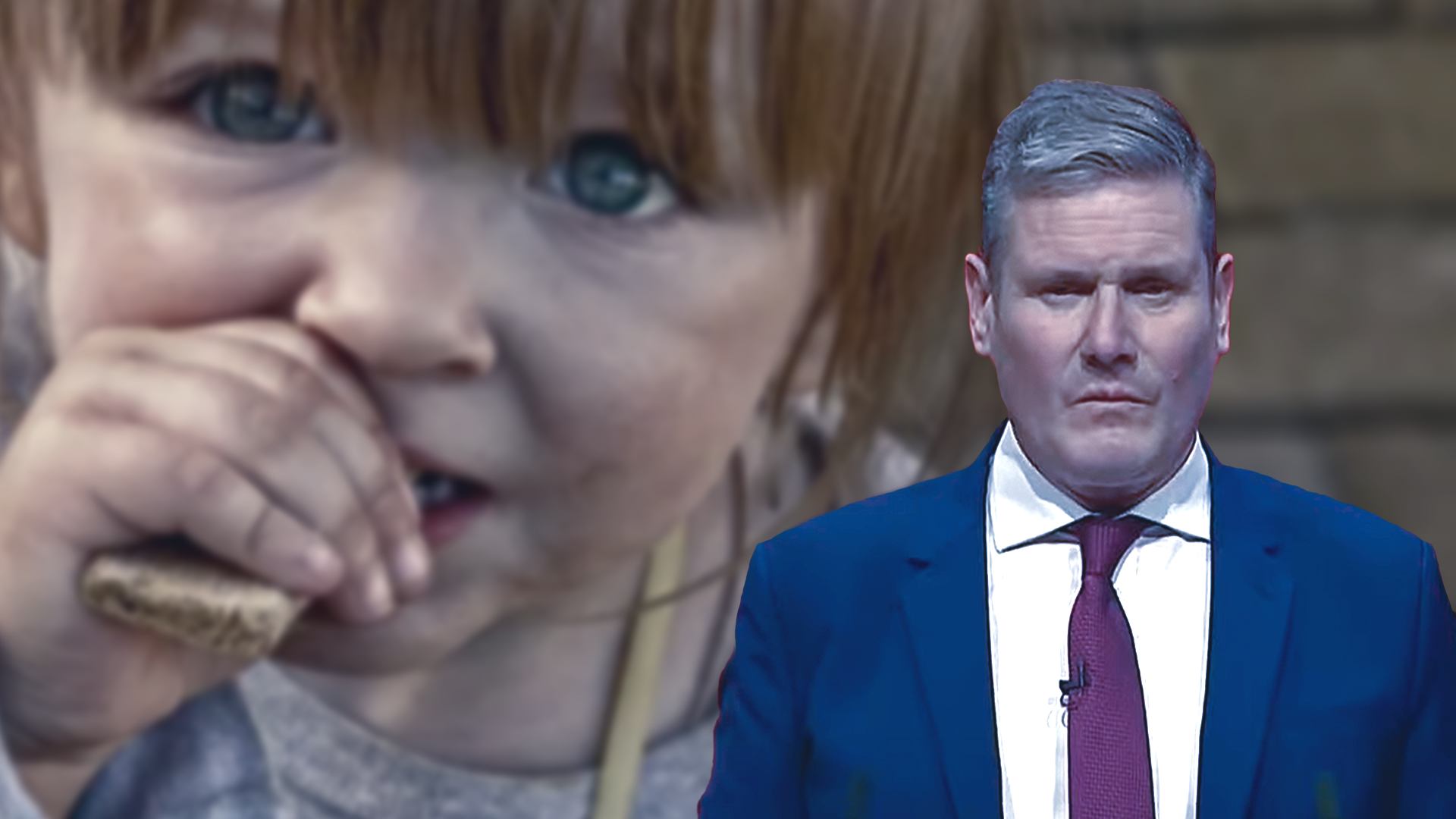
Keir Starmer says pensioners can freeze to death and poor children can starve and be condemned to failure and misery all their lives.
…
So-called austerity is best understood as a massive transfer of wealth — from public to private, from the many to the few, as the fortunes of the super-rich ballooned while Britain endured the longest wage squeeze since the Napoleonic wars.
This is a grotesquely unequal country in which big banks and energy giants post the largest profits in their history, in which the richest 1 per cent own more than the poorer 70 per cent of the population put together, in which millions rely on foodbanks while the number of billionaires increased by a fifth during the Covid crisis alone.
When Reeves gives with one hand and takes away with the other — as PCS leader Fran Heathcote notes she does by offering a 1.7 per cent increase in departmental spending, while setting a 2 per cent savings target for those same departments — she cites pressure on the public finances that could be relieved easily through higher corporation tax, a financial transactions tax or a wealth tax. As Unite’s Sharon Graham notes, a 1 per cent tax on the richest 1 per cent would raise £25 billion, filling the so-called “black hole” in the budget at a stroke.
It is a choice to echo Tory hysteria over benefit fraud, when the amount lost to this is less than goes unclaimed in social security payments people are entitled to. Giving the Department for Work & Pensions power to remove money directly from bank accounts will likely increase non-take-up of benefits by people who need them but understandably fear their personal finances being exposed in this way.
And it’s a choice to hike the cost of a bus ticket by 50 per cent while maintaining a fuel duty freeze — when governments across Europe are making public transport cheaper because it is essential to reduce greenhouse gas emissions.
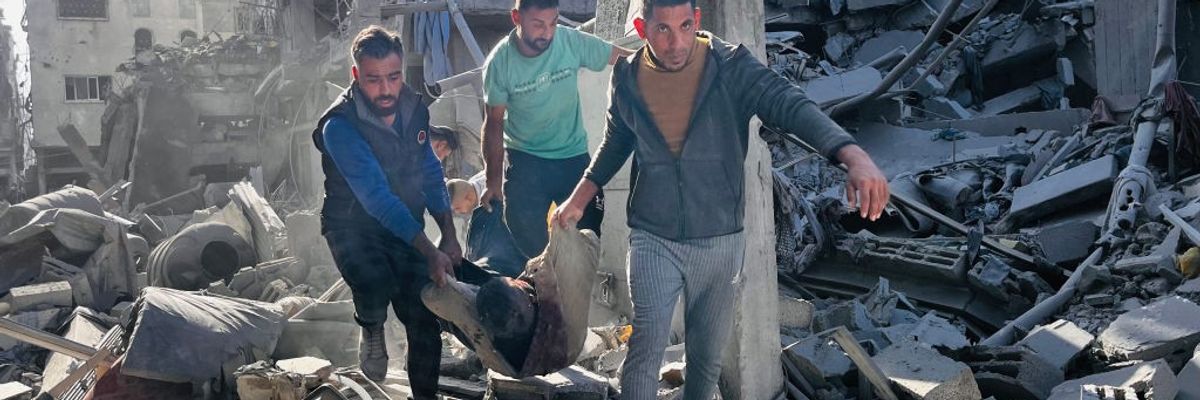
People remove a body from the rubble of a building hit by an Israeli strike in Beit Lahiya, Gaza on October 29, 2024. (Photo: AFP via Getty Images)
“Put simply, those children who have survived so far are running out of time,” said one aid group. “We are pleading with the international community to urgently intervene.”
Israeli forces on Tuesday bombed a crowded residential building in the northern Gaza town of Beit Lahiya, killing around 93 people—including at least 20 children—in the latest atrocity in a region that has been under heavy military siege for weeks.
Eyewitnesses described an appalling scene at the building decimated by the Israeli strike. One person who was helping to remove victims from the rubble told Reuters that there were “body parts hanging on the walls.” Another eyewitness said that “most of the victims are women and children.”
The Israeli strike on the residential building—which was reportedly sheltering roughly 200 displaced people—also wounded dozens, but hospitals in the region are overwhelmed and barely functional after relentless Israeli raids and attacks, leaving them unable to handle an influx of bombing victims.
Dr. Hussam Abu Safia, the director of nearby Kamal Adwan Hospital, told Al Jazeera that “more than 150 dead and wounded had arrived after the attack.”
“However, he warned that many of those injured may die because of a lack of resources,” the outlet reported. “Israeli forces detained dozens of medical staff at the hospital last week, leaving only three doctors.”
https://twitter.com/i/status/1851243781451895240
Israel’s attack in Beit Lahiya was one of a number of massacres committed in recent days in northern Gaza, where an estimated 100,000 Palestinians are trapped with virtually no access to food, medicine, and other essentials.
“There is nothing. You are talking about tens of days that they are not receiving any supplies,” said Mahmoud Alsaqqa, Oxfam’s food security and livelihood lead in Gaza. Alsaqqa said people are “starving to death” in northern Gaza as Israelimpedes humanitarian aid shipments and moves to ban the United Nations’ Palestinian refugee agency.
Dylan Williams, vice president for government affairs at the Center for International Policy, noted Tuesday that “in the last day, Israel passed bills that would block most aid delivery in Gaza and the West Bank and bombed a building sheltering displaced civilians, reportedly killing mostly women and children.”
“Yet [U.S. President Joe] Biden keeps arming Israel counter to U.S. and international law,” Williams wrote on social media.
“Every possible step must be taken to secure a definitive cease-fire and to ensure adherence to international law.”
Internet blackouts in the region, meanwhile, have made it difficult for aid workers and reporters to relay news of northern Gaza’s dire conditions to the world.
“Communication between hospitals, health workers, and aid agencies is becoming sporadic, and ground fighting has made travel increasingly dangerous, making it hard to coordinate care and treatment and accurately collect casualty data,” The Guardian reported Tuesday. “The civil defense service suspended activities last Wednesday after crews were attacked by Israeli forces and tank shelling destroyed their last fire engine.”
Last week, Save the Children decried deadly Israeli attacks on 13 residential buildings in the Jabalia refugee camp and warned that “the threat of attacks and lack of fuel and supplies have left rescue services unable to operate” in the northern part of the Palestinian enclave.
“Attacks by Israeli forces across the Gaza Strip have killed scores of people, including many children and an 11-month-old baby,” said Jeremy Stoner, Save the Children’s regional director. “The attacks have targeted a school-turned-shelter in Nuseirat, Kamal Adwan Hospital, and residential homes in Khan Younis—the very places where children are supposed to be safest, protected under international law.”
“Put simply, those children who have survived so far are running out of time. We are pleading with the international community to urgently intervene,” Stoner added. “Every possible step must be taken to secure a definitive cease-fire and to ensure adherence to international law. Governments must stop fueling the conflict with a supply of weapons and ammunition.”
Médecins Sans Frontières (MSF) staffer Hasan Suboh was among those killed in the wave of Israeli attacks on residential homes in northern Gaza last week, the humanitarian group said in a statement Monday.
“Hasan’s tattered MSF vest, which he wore all the time, was found under the rubble,” the group said. “This vest symbolizes Hasan’s commitment to helping people in distress, but more globally it also symbolizes healthcare and humanitarian assistance.”
“To see it destroyed,” MSF added, “is representative of how in this war, Israel, the U.S. government, and the rest of Israel’s allies have disregarded the protection of healthcare workers, and ripped the rules of war to shreds. The claim that humanitarian workers are protected, that civilian lives are protected, has once again been exposed as a lie for all the world to see.”
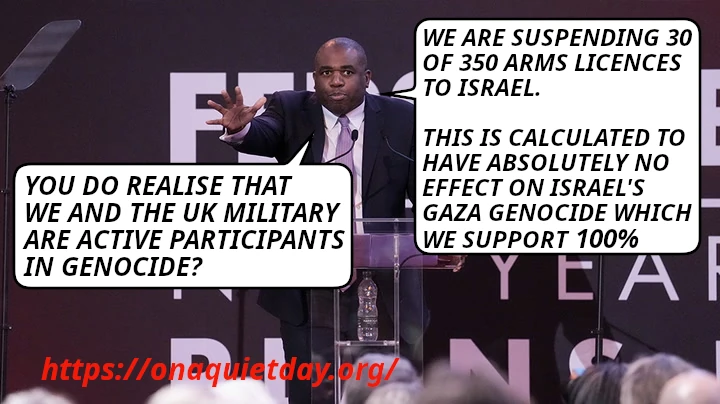
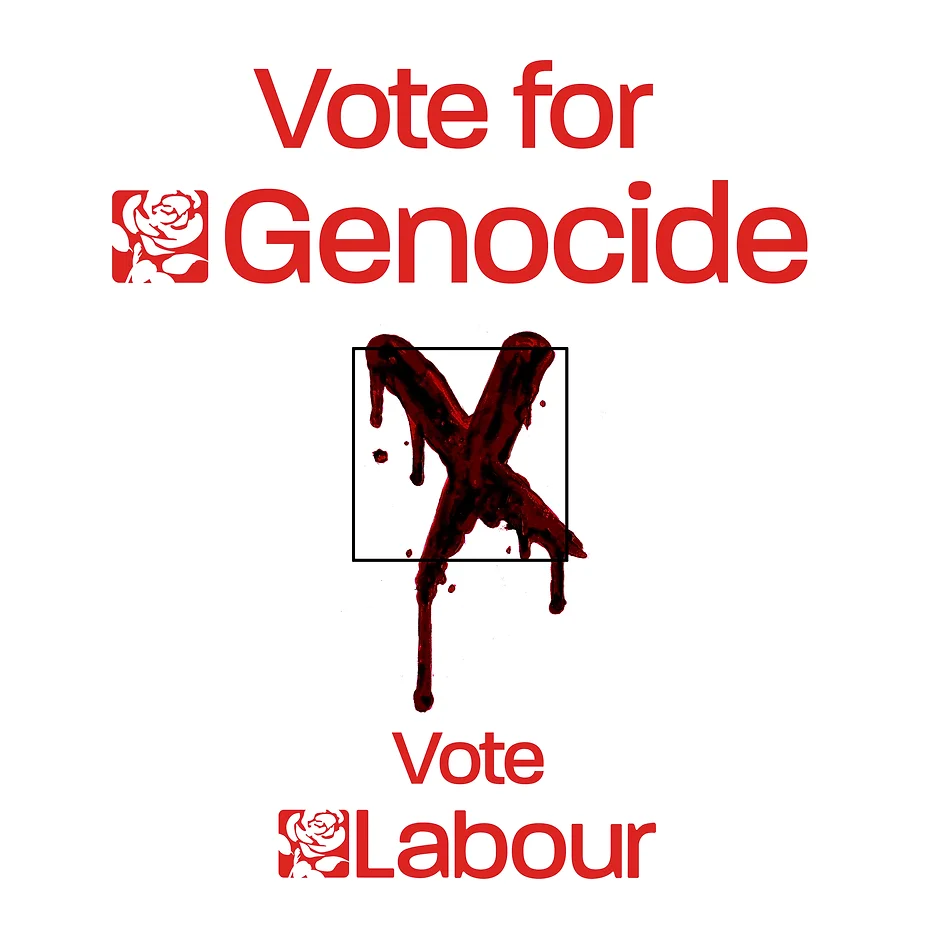
Current UK Prime Minister Keir Starmer is quoted that he supports Zionism without qualification. He also confirms that his active support and that of UK’s air force has been essential in Israel’s mass-murdering genocide. Includes URLs https://www.declassifieduk.org/keir-starmers-100-spy-flights-over-gaza-in-support-of-israel/ and https://youtu.be/O74hZCKKdpAUK Foreign Secretary David Lammy says that UK is suspeding 30 of 350 arms licences to Israel. He also confirms the UK government’s support for Israel’s Gaza genocide and the UK government and military’s active participation in genocide.Vote For Genocide Vote Labour.
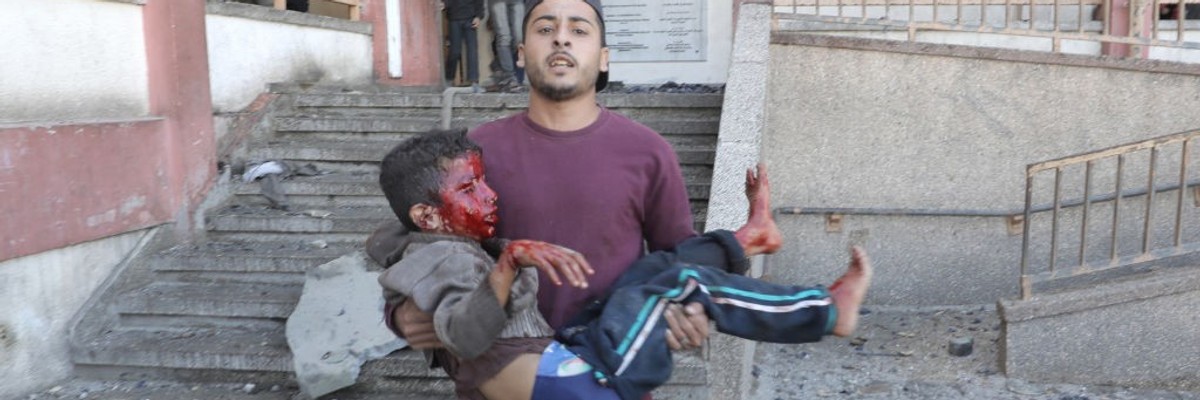
A man carries a child wounded in an Israeli strike on a school housing forcibly displaced Palestinians in the Nuseirat refugee camp, on October 24, 2024 in Deir al-Balah, Gaza, Palestine. (Photo: Moiz Salhi/Anadolu via Getty Images)
“Our ambulances can’t transfer wounded people,” said one overwhelmed hospital director. “Those who can arrive by themselves to the hospital receive care, but those who don’t just die in the streets.”
A devastating wave of Israeli airstrikes across the Gaza Strip on Wednesday and Thursday have killed or wounded hundreds of Palestinians, including many children, according to local and international media reports.
Citing Gaza Civil Defense officials, Palestine’s Quds News Network reported Thursday that at least 150 Palestinian civilians were killed or wounded by Israel Defense Forces (IDF) bombardment of around a dozen apartment towers on Al-Houja Street in the Jabalia refugee camp in northern Gaza.
Local and international media outlets earlier reported at least 17 Palestinians were killed and dozens more wounded by an IDF strike on the al-Shuhada school in the Nuseirat refugee camp in central Gaza.
At least 17 Palestinians, including children, were killed and a number of others were injured in an Israeli bombardment that targeted a school housing displaced people in the Nuseirat camp in the central Gaza Strip. pic.twitter.com/GY1cGLd45I
Medical staff at the al-Awda Hospital in Nuseirat—where many people killed and wounded in the strike were taken—told Al Jazeera that 13 children under age 18 and three women were among the dead.
The IDF said the strike targeted a Hamas command-and-control center. However, survivors and eyewitnesses said that all of the dead were women and children.
Gaza Notifications published the names of 16 people killed in the attack, including at least five children—the youngest of whom was a baby, just 11 months old.
The outlet said a total of 203 Palestinian civilians have been killed so far on Thursday, and that “all medical and rescue operations have been completely halted by the military administration.”
“The Israeli army has warned that ambulances and rescue teams will be directly targeted if they attempt to continue their operations, effectively blocking any humanitarian efforts,” the site added.
Gaza’s Government Media Office reported 34 Palestinians including 11 children were burned alive in an IDF strike on a youth club-turned shelter in the al-Maghazi refugee camp in central Gaza.
Israeli forces have also reportedly attacked hospitals and healthcare workers throughout Gaza. The Palestine Chronicle reported that IDF troops opened fire on Kamal Adwan Hospital in Beit Lahia, “with sick children inside.”
Hussam Abu Safia, the hospital’s director, told Al Jazeera that IDF tanks surrounded the facility and “directly targeted” it, severely damaging the intensive care unit. On Wednesday, Abu Safia said there were more than 150 wounded people in the hospital, including 14 children in the ICU or neonatal ward.
“There is a very large number of wounded people, and we lose at least one person every hour because of the lack of medical supplies and medical staff,” he said. “Our ambulances can’t transfer wounded people. Those who can arrive by themselves to the hospital receive care, but those who don’t just die in the streets.”
The Palestinian Ministry of Health also said several of its employees were wounded by Israeli artillery strikes on Thursday.
Earlier this month, the United Nations Independent International Commission of Inquiry on the Occupied Palestinian Territory released a report detailing how “Israel has perpetrated a concerted policy to destroy Gaza’s healthcare system as part of a broader assault on Gaza, committing war crimes and the crime against humanity of extermination with relentless and deliberate attacks on medical personnel and facilities.”
Israel’s ongoing offensive in northern and central Gaza has killed or wounded more than 2,000 Palestinians this month alone, according to Gaza officials. Since last October, Israel’s war on Gaza—which is the subject of a South Africa-led genocide case at the International Court of Justice—has left more than 153,000 Palestinians dead, maimed, or missing; millions more forcibly displaced, starved, or sickened; and most of the coastal enclave in ruins.
GAZA HEALTH MINISTRY: 42,847 Palestinians have been killed, and 100,544 wounded in Israel’s ongoing genocide in Gaza starting on October 7, 2023. pic.twitter.com/IUGklWnyYT
Thursday’s strikes came as U.S. Secretary of State Antony Blinken traveled to the Middle East, where he is set to take part in cease-fire negotiations with officials from Israel, Egypt, and Qatar in the Qatari capital Doha.
“Going back to the negotiations on ceasefire and the hostages, one of the things we’re doing is looking at whether there are different options that we can pursue to get us to a conclusion, to get us to a result,” Blinken said Thursday.
The United States is Israel’s primary international backer, providing billions of dollars in military aid and diplomatic cover including multiple vetoes of United Nations Security Council cease-fire resolutions.
PEACE: Former Labour Party leader and now independent MP Jeremy Corbyn speaks at a London rally for Palestine, September 11 2024
Speaking at the Podemos congress over the weekend, JEREMY CORBYN MP outlines three crucial areas for building a powerful leftist movement across Europe: opposing austerity, promoting peace and combating the far right
AS we look to build a united left across Europe, there are three key issues that can form the basis of a strong, powerful movement: anti-austerity, peace and opposition to the far right.
Europe is heading toward a renewed era of austerity. We have witnessed attacks on wages and conditions all over Europe. Working-class living standards have fallen. Wages have stagnated. Meanwhile, there are more billionaires than ever before.
Inequality is not inevitable. It is the result of decisions that governments take to take money from the many and give it to the few. Last week, the British government celebrated its 100-day anniversary.
In that time, it has made two supposedly “tough” choices. One is to keep children in poverty by retaining the two-child benefits cap, refusing to lift 250,000 children out of poverty. The second decision was to cut the winter fuel allowance for 10 million pensioners.
We are told that these have been “tough choices.” Every day, my constituents make tough choices. Tough choices like deciding whether to heat their homes or put food on the table. Tough choices like taking out a loan to pay for this month’s rent. Tough choices like selling their home to pay for their family’s social care.
The government knows that there is a range of choices available to them. They could introduce wealth taxes to raise upwards of £10 billion. They could stop wasting public money on private contracts. They could launch a fundamental redistribution of power by bringing water and energy into full public ownership.
Instead, they have opted to take resources away from people who were promised things would change. There is plenty of money, it’s just in the wrong hands — and we will not be fooled by ministers’ attempts to feign regret over cruel decisions they know they don’t have to take.
Austerity is not a tough choice. It is the wrong choice. The British government tells us there is no money. At the very same time, they are committing to raising defence expenditure to 2.5 per cent of GDP.
REMOVING caps on benefits could save the government billions of pounds rather than cost money, a progressive economic think tank says.
The New Economics Foundation (NEF) report, published today, says that the cost of benefit caps could be outweighed by the gains to be made from abolishing them.
Gains include easing extra pressure on the NHS and other services resulting from the poverty caused by the caps, according to the experts.
The benefit cap was introduced in 2013 by the Conservative and Liberal Democrat coalition government and limits the amount of benefits a household can receive.
The two-child limit was introduced by the Tory government in 2017. It restricts the application of child tax credit and universal credit to the first two children in households.
The NEF estimates that axing the caps could save £1.5 billion a year over the next five years alone through lower demand on public services.
In the longer term — in 20 or 25 years — children lifted from poverty could have estimated future net earnings of £920 million a year higher, with an extra £490m returned to government through taxation and reduced spending on social security.
“In reducing child poverty rates, pressures on the NHS, schools and social services will reduce, enabling the reallocation of resources to other areas of high demand,” the report states.