A worker sprays herbicide during a Roadside Invasive Management Workshop held July 29, 2025 at the Winchester Department of Public Works in Connecticut. (Jim Shannon/Connecticut Post via Getty Images)
“While everyone’s distracted by the Trump administration’s erratic actions on the world stage, it keeps approving dangerous forever pesticides right here on our own soil.”
Environmental groups have sued the Trump administration, alleging the Environmental Protection Agency approved a potentially cancer-causing “forever chemical” for use as an herbicide without fully assessing the risk.
The petition was filed Friday in the US Court of Appeals for the 9th Circuit by the Center for Food Safety, the Center for Biological Diversity, and Pesticide Action & Agroecology Network North America, who asked the court to throw out the EPA’s June 30 approval of trifludimoxazin and six products containing it for use on a wide range of crops including corn, wheat, soybeans, and apples.
Trifludimoxazin is part of the family of per- and polyfluoroalkyl substances, synthetic chemicals with strong carbon-fluorine bonds that can take years to fully break down, earning them the nickname “forever chemicals.”
The trifludimoxazin was initially approved in 2021 during the Biden administration. But the company agreed to stop selling the product the following year after environmental groups sued, citing its potential to cause cancer and harm to threatened and endangered fish. But the Trump EPA last year proposed registering it again for widespread use and issued a final approval in June.
The groups argue that the EPA approved the use of trifludimoxazin without accounting for evidence that the pesticide could cause cancer and harm wildlife and ecosystems.
The EPA itself has acknowledged that the chemical could harm many endangered and threatened species, including posing chronic risks to bees and other invertebrates. Meanwhile, rodent studies have found that at high doses, the chemical can cause thyroid tumors and adverse effects on the liver and reproductive systems.
The chemical, which blocks an enzyme in plants needed for growth, has been described as 10 times as potent as dicamba, another weedkiller used on soybeans and cotton, whose products have caused millions of acres of unintended crop damage since its approval in 2017.
But though the EPA’s own guidance states that carcinogenic effects in animals could point to human risk, the agency stated that its final risk assessment found “no human health risks of concern.”
The plaintiffs argue that the EPA did not take all the proper steps to reach this conclusion, having failed to quantify the chemical’s danger, especially when combined with exposure to other approved chemicals.
“Trifludimoxazin is a likely human carcinogen that belongs to a family of weedkillers that also causes reproductive harm, birth defects, and neurological deficits in animal studies,” said Bill Freese, science director at the Center for Food Safety. “As if the health threats weren’t enough, this incredibly potent herbicide can drift to stunt crops and wild plants hundreds of yards from a sprayed field, while runoff threatens wetland plants. Potent biocides like this have no business on the American landscape.”
The lawsuit also notes that two of the approved trifludimoxazin products combine it with another toxic herbicide called saflufenacil, meaning that farmworkers who apply the chemicals could be exposed to the effects of both at once. The plaintiffs said the EPA did not evaluate the risk that would be posed to farmworkers who are exposed to these chemicals.
“While everyone’s distracted by the Trump administration’s erratic actions on the world stage, it keeps approving dangerous forever pesticides right here on our own soil,” said Nathan Donley, environmental health science director at the Center for Biological Diversity. “It’s unconscionable, immoral, and illegal. Our kids and grandkids deserve better than to be saddled with pollution that never goes away.”
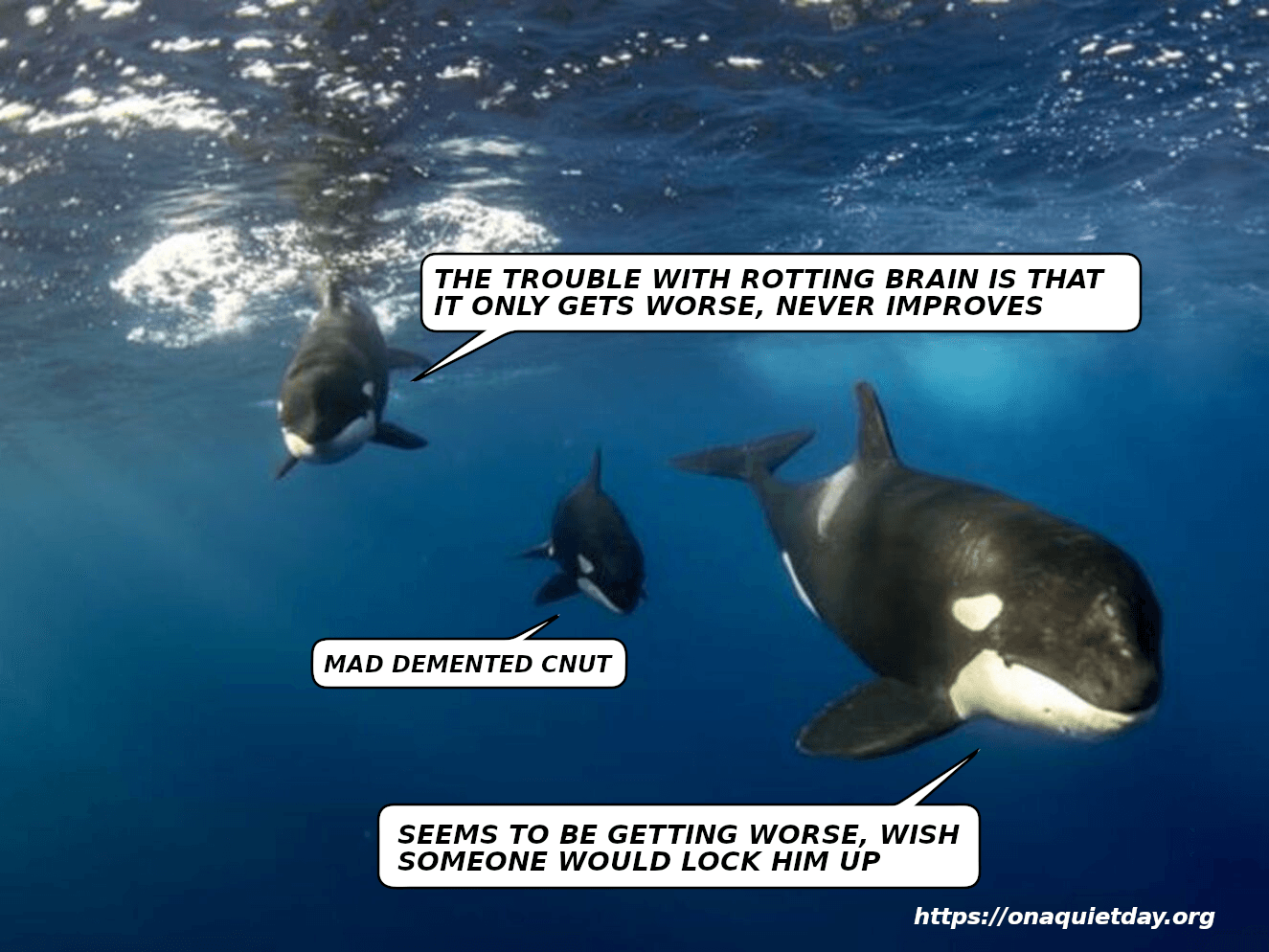
Orcas discuss rotting brain, front Orca says he wishes someone would lock him up, small Orca speaks bluntly.Donald Trump calls for help from NATO allies in securing the Strait of Hormuz despite saying on 7 March 2026 that they don’t need people to join wars after they’ve already won. He’s challenged with the claim that he lies as much as the IDF.Donald Trump says that he obviously deserves a Peace prize because Obama got one and explains why he established his Bored of Peace
Immigration and Customs Enforcement agents confront protesters outside the Delaney Hall detention center on May 26, 2026 in Newark, New Jersey. (Photo by Andrew Lichtenstein/Corbis via Getty Images)
“Introducing low-visibility electric shock weapons into our immigration enforcement system is an unacceptable escalation.”
A group of House Democrats on Monday demanded the immediate cancellation of a nearly $17 million federal contract to provide electric shock gloves to Immigration and Customs Enforcement agents, who have been unleashed on American cities under the second Trump administration and enabled to commit horrific—and, in some cases, deadly—abuses against undocumented immigrants and American citizens.
The Democratic lawmakers, led by Rep. Delia Ramirez of Illinois, expressed “profound alarm” over the contract in a new letter to Department of Homeland Security (DHS) Secretary Markwayne Mullin, whose agency oversees ICE. The letter’s 50 signatories wrote that the devices, known as Generated Low Output Voltage Emitters (GLOVE), are “designed to inflict severe pain without leaving physical evidence or visible optics,” making them “a uniquely dangerous tool for unaccountable abuse.”
“We demand the immediate cancellation of this contract and a total ban on the deployment of these abusive devices across all immigration enforcement and detention operations,” the lawmakers continued. “The rollout of these weapons to thousands of field agents across ICE’s Enforcement and Removal Operations and Homeland Security Investigations contributes to a DHS environment already under widespread scrutiny for state-sanctioned abuse, torture, and arbitrary cruelty.”
The Democrats sent their letter days after ICE granted a $16.7 million no-bid contract to the Kentucky-based firm Compliant Technologies for 6,000 pairs of electric shock gloves, ignoring the protests of lawmakers and human rights groups.
The ACLU, Physicians for Human Rights, and the Center for Victims of Torture (CVT) are among the advocacy organizations that have decried ICE plans to equip its agents with the gloves. CVT has described the devices as “inherently abusive equipment that facilitates torture.”
In their Monday letter, the group of House Democrats warned that the “dangers of these ‘less-lethal’ weapons are not theoretical,” pointing to the case of a 43-year-old man in Kentucky who died after corrections officers shocked him dozens of times with electric gloves.
More than 50 people have died in ICE custody during President Donald Trump’s second term.
“This administration continues to outfit ICE and [Customs and Border Protection] with the tools of an occupying paramilitary force—despite widespread human rights violations carried out by its agents during immigration enforcement actions,” the lawmakers wrote. “Introducing low-visibility electric shock weapons into our immigration enforcement system is an unacceptable escalation that prioritizes physical intimidation and unaccountable force over human safety and administrative accountability.
On top of calling for cancellation of the contract, the House Democrats demanded information on any threat assessments ICE conducted before awarding the contract, whether the agency has trained its officers with electric shock gloves, and whether DHS intends to implement any productions to “prevent officers from using them for punitive measures, retaliation, or against non-threatening individuals.”
“We reiterate our demand that you immediately halt the acquisition and deployment of electric shock gloves, cancel the contract, and refocus the Department’s resources on accountability and humanitarian standards rather than expanding a paramilitary apparatus,” the lawmakers wrote.
Orcas discuss rotting brain, front Orca says he wishes someone would lock him up, small Orca speaks bluntly.Donald Trump calls for help from NATO allies in securing the Strait of Hormuz despite saying on 7 March 2026 that they don’t need people to join wars after they’ve already won. He’s challenged with the claim that he lies as much as the IDF.Donald Trump explains why he established his Bored of Peace
This work by Middle East Monitor is licensed under a Creative Commons Attribution-NonCommercial-ShareAlike 4.0 International License.
Indian Prime Minister Narendra Modi (L) holds a bilateral meeting with Iranian President Masoud Pezeshkian (R) on the sidelines of the Shanghai Cooperation Organization (SCO) Summit in Bishkek, Kyrgyzstan, on August 31, 2026. [Press Information Bureau (PIB) – Anadolu Agency]
Iranian President Masoud Pezeshkian on Monday said that the US was interested in “continuing the war,” in remarks during a meeting with Indian Prime Minister Narendra Modi, Anadolu reports.
The two leaders met in Kyrgyzstan’s capital Bishkek on the sidelines of the 2026 Shanghai Cooperation Organization (SCO) summit, according to Iran’s semi-official Tasnim news agency.
Iran adhered to its commitments stemming from a Pakistan-mediated framework deal with the US, Pezeshkian said, accusing Washington of not fulfilling its commitments.
“However, we continue to try to realize the path of agreement and understanding and believe that the continuation of the war is neither in our interest, nor in the interest of the region, nor in the interest of humanity,” he said.
The solution to the existing issues lies with “dialogue and cooperation,” the Iranian president stressed.
Pezeshkian also called for stronger bilateral ties with India, emphasizing that Tehran is ready to expand cooperation with New Delhi in various fields.
For his part, Modi “expressed concern at the escalation of tensions in the region and reiterated India’s consistent position that all issues must be resolved through dialogue and diplomacy,” a statement by his office said.
The Indian premier also “reiterated the need for continued efforts to ensure lasting peace and stability in the region,” it said.
Calling for “safeguarding the freedom of navigation and commerce,” Modi emphasized that “civilians and civilian infrastructure, including commercial shipping and seafarers must not be harmed under any circumstances,” according to the statement.
It was the first face-to-face meeting between Modi and Pezeshkian since the US-Iran war began in late February, although the two leaders have spoken several times by phone.
The meeting came amid renewed tensions in and around the Strait of Hormuz after the US military attacked Lark Island near the strategic waterway overnight, prompting Iranian retaliation.
Tensions between Tehran and Washington have remained high since the war began with strikes on Iran in late February.
Although a framework agreement was signed in June following mediation by Pakistan and Qatar, the US launched a two-week bombing campaign in July and reimposed a naval blockade after differences emerged over navigation in the strait.
Donald Trump calls for help from NATO allies in securing the Strait of Hormuz despite saying on 7 March 2026 that they don’t need people to join wars after they’ve already won. He’s challenged with the claim that he lies as much as the IDF.Donald Trump explains why he established his Bored of Peace
This work by Middle East Monitor is licensed under a Creative Commons Attribution-NonCommercial-ShareAlike 4.0 International License.
Israeli authorities construct a new settlement road north of East Jerusalem, a Jerusalem governorate official reportedly said on February 5, 2026. [Issam Rimawi – Anadolu Agency]
Israeli authorities established a new illegal settlement on land in the Jenin governorate in the northern occupied West Bank on Monday, according to the official Palestinian news agency Wafa.
The settlement, named “Noa,” was established south of the “Ganim” and “Kadim” settlements on Palestinian land southeast of Jenin, Wafa said.
“A ceremony marking the establishment of the settlement was held in the presence of several Israeli ministers and Knesset members,” it said.
The agency added that the move reflects “growing official Israeli support for settlement expansion in the occupied Palestinian territories.”
Wafa warned that the new settlement was established “amid the escalating Israeli settlement project in the northern West Bank, particularly in areas from which Israeli settlements were evacuated in 2005 as part of the ‘Disengagement’ plan.”
Israel evacuated four settlements in the northern occupied West Bank – Ganim, Kadim, Homesh and Sa-Nur – in 2005 as part of its so-called “Disengagement plan,” which also included withdrawing Israeli settlements from the Gaza Strip.
In recent years, however, Israel has taken steps to reverse restrictions preventing Israeli settlers from returning to the evacuated areas.
Israeli daily Yedioth Ahronoth reported in mid-July that the Israeli Security Cabinet had approved a $370 million budget to establish new illegal settlements in the occupied West Bank. The newspaper said the decision was not publicly announced.
Israel’s current government has described itself as the most supportive of settlement expansion in the occupied West Bank.
Settlement activity has expanded and accelerated significantly across the occupied West Bank, including occupied East Jerusalem, since Prime Minister Benjamin Netanyahu’s government was formed in late 2022.
The UN recognizes the West Bank and East Jerusalem as occupied Palestinian territories.
Around 750,000 Israeli settlers live in 141 illegal settlements and 224 settlement outposts across the occupied West Bank, including some 250,000 in 15 settlements in occupied East Jerusalem.
The UN has repeatedly affirmed that Israeli settlements in the occupied Palestinian territories are illegal under international law and warned that they undermine prospects for a two-state solution.
Donald Trump calls for help from NATO allies in securing the Strait of Hormuz despite saying on 7 March 2026 that they don’t need people to join wars after they’ve already won. He’s challenged with the claim that he lies as much as the IDF.Donald Trump explains why he established his Bored of Peace
This work by Middle East Monitor is licensed under a Creative Commons Attribution-NonCommercial-ShareAlike 4.0 International License.
Hundreds of people gather for a protest against Prime Minister Benjamin Netanyahu and his government and demanding his resignation and early elections in Tel Aviv, Israel on March 16, 2024. [Saeed Qaq – Anadolu Agency]
With 56 days left until Israel’s elections, Prime Minister Benjamin Netanyahu appears increasingly weakened as his rivals gain ground, Anadolu reports.
Israel’s Knesset elections are scheduled for Oct. 27, with polls showing declining support for Netanyahu and his Likud party.
Netanyahu views the vote as decisive for his political and personal future as he faces charges of bribery, fraud and breach of trust.
In addition to corruption charges, Netanyahu has faced an International Criminal Court arrest warrant since 2024 on charges related to war crimes and crimes against humanity in the Gaza Strip.
He sees remaining in power as protection from a possible criminal conviction, as Israel’s Central Court continues to hear the corruption case against him.
Netanyahu hopes the election will either allow him to form the next government or lead to a deadlock in which both he and the opposition fail to assemble a coalition, forcing another election and keeping him in office until a new government is formed.
A poll published Sunday evening by the Israeli public broadcaster showed that if elections were held now, Netanyahu’s bloc would win 52 seats, while the non-Arab opposition would secure 55 seats and Arab lawmakers 13.
A party bloc needs the support of at least 61 lawmakers in the 120-seat Knesset to form a government.
Opposition parties could seek Arab lawmakers’ support to form a government, but most of their leaders reject such a move.
Attention is now turning to former Israeli army chief of staff Gadi Eisenkot, who is seen as the strongest opposition figure to form a government.
His newly established Yashar party has advanced in recent weeks, even overtaking Netanyahu’s Likud, which dominated Israeli politics for years.
According to the poll, Yashar would win 24 seats, compared with 21 for Likud.
The survey also showed Eisenkot ahead of Netanyahu in suitability for premiership, with 40% of respondents saying he is better suited to lead the next government, compared with 37% for Netanyahu.
Netanyahu is using all available means to boost votes for right-wing parties.
He has faced accusations in Israel of turning a blind eye to occupier violence against Palestinians in the West Bank in order to keep occupiers within the electoral base of the hard-right.
Netanyahu and far-right Finance Minister Bezalel Smotrich have also boasted that the government formed in late 2022 approved the construction of 104 illegal settlements and allowed the establishment of 160 agricultural settlement outposts in the occupied West Bank.
But Netanyahu faces two main challenges: the rise of new right-wing parties, which he says could “burn” tens of thousands of right-wing votes, and the unity of three Arab parties under the Joint List, which is expected to increase Arab turnout.
While earlier polls gave Arab lawmakers 10 seats, recent surveys indicate they could win at least 13.
Higher turnout among Arab citizens, who make up around 20% of Israel’s population of 10 million, could reduce the chances of small right-wing parties crossing the electoral threshold, weakening Netanyahu’s ability to form a government and improving the opposition’s chances.
Netanyahu has therefore been trying to unite small right-wing parties under the banner of preventing the loss of right-wing votes.
He called for a merger between Itamar Ben-Gvir’s far-right Jewish Power party and Smotrich’s Religious Zionism party, but the effort failed.
Netanyahu is now backing unity between Smotrich and former Likud lawmaker Moshe Feiglin.
Israeli Channel 24 reported Monday that, as the deadline for submitting election lists approaches, Netanyahu is exerting heavy pressure to form a three-way right-wing alliance involving Smotrich, Feiglin, and either Ben-Gvir or Ofer Winter.
“The situation is Russian roulette that no one wants to play. We are not succeeding in bringing about unity,” the channel quoted an unnamed Likud source.
The channel said only 10 days remain before lists close and less than two months before election day.
Likud officials realize that without right-wing alliances, some parties may fail to pass the electoral threshold, endangering the entire bloc’s seat count, the report said.
Netanyahu has also stepped up interviews with right-wing platforms and Channel 14, which is close to him, trying to present himself as the only figure capable of providing security.
He accused the opposition of planning to end the wars in Gaza, Lebanon and Iran and of allowing the establishment of a Palestinian state.
“What we saw yesterday in Netanyahu’s interview was a bizarre performance by a hysterical, frightened, obsessive, and unfocused man. I’ve never seen him like that. And I was there with him in those situations. It was heartbreaking,” prominent Maariv columnist Ben Caspit wrote on US social media platform X, quoting an unnamed figure who has accompanied Netanyahu through dozens of interviews and election campaigns in recent years.
Donald Trump calls for help from NATO allies in securing the Strait of Hormuz despite saying on 7 March 2026 that they don’t need people to join wars after they’ve already won. He’s challenged with the claim that he lies as much as the IDF.Donald Trump explains why he established his Bored of Peace