POLICE destroyed files relating to anti-war campaigners, unions and several individuals ahead of the undercover policing inquiry, it was heard today.
The Metropolitan Police Special Demonstration Squad (SDS) spied on campaigners for decades.
A public inquiry was set up when it was revealed that the SDS spied on the family of murdered teenager Stephen Lawrence.
It has already heard testimony from victims of the SpyCops, including women activists with whom undercover police officers had relationships with and fathered children without revealing their true identity.
The interim report found the SDS should have been wound up almost as soon as it was established in the 1970s.
The new revelation, released by the inquiry today, shows that the Metropolitan Police deliberately destroyed secret files before they could be seen by the inquiry.
These included reports on the Stop the War Coalition, the Campaign for Nuclear Disarmament, the Fire Brigades Union, the National Union of Mineworkers, the building union Ucatt, the Jean Charles de Menezes campaign, as well as former MP Dave Nellist and top KC Mike Mansfield.
A sticker supporting the strikes on a bin as agency refuse workers collect rubbish in the Saltley area of Birmingham, January 6, 2026
BIRMINGHAM CITY COUNCIL faced a residents’ revolt in court today after a judge refused to immediately ban bin strike supporters from solidarity action.
The Labour-run local authority sought an injunction against “persons unknown” — a catch-all to include any and all protesters — after a series of disruptive demonstrations at the gates of its four bin depots at Birmingham High Court.
It comes after a series of “megapickets” organised by StrikeMap, backed by the Fire Brigades Union and rail union Aslef, twice shut down all collections.
Judge Mr Justice Pepperall announced he will reserve his written decision to a later date after residents stood up against the council in court.
They slammed the authority for seeking to quash protest instead of settling the dispute with Unite, now into its 14th month of strikes.
Retired teacher Stuart Richardson, the only person present in court who claimed to be one of the “persons unknown,” vowed to protest against this “utterly draconian police state measure” that the council is applying for.
He said that all of the several protests he had attended had been peaceful and cited a long tradition of protest and deliberate direct action that must be retained.
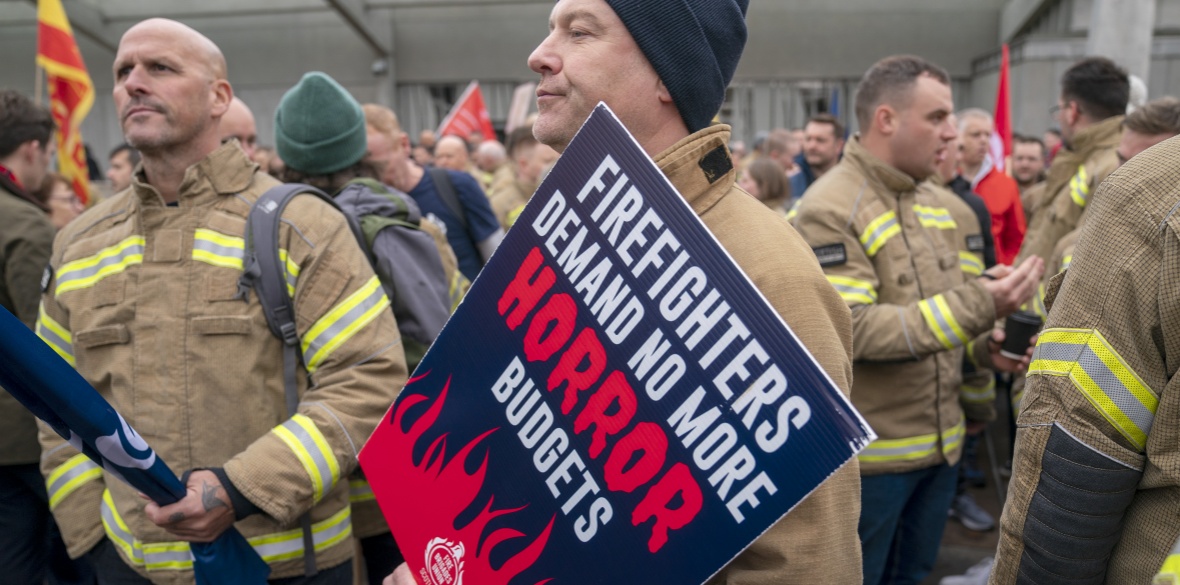
Firefighters from the Fire Brigades Union (FBU) take part in the Cuts Leave Scars rally outside the Scottish Parliament in Edinburgh, calling for an end to cuts imposed on the Scottish Fire and Rescue Service over the last 10 years, October 26, 2023
YEARS of cuts in fire and rescue services in Scotland have left public safety at risk as emergency response times lengthen and fewer fire appliances can be mobilised.
The Fire Brigades Union said (FBU) firefighter numbers are the lowest since eight regional fire brigades merged to form the Scottish Fire and Rescue Service (SFRS) in 2013 — down from 4,159 full-time posts to 3,422, a loss of 737 jobs.
The number of control room staff, who take emergency calls and mobilise crews, fell from 234 to 172.
Part-time retained firefighters, who cover 80 per cent of Scotland, including rural and island communities, saw 344 front-line jobs go.
Exclusive: Fire Brigades Union general secretary Matt Wrack told The Independent that it was ‘a miracle’ nobody was killed in the blaze in Dagenham over the bank holiday weekend
Mr Wrack spoke to The Independent after touring the site of the disaster in Freshwater Road, Dagenham, with deputy prime minister Angela Rayner, who is also in charge of the Ministry of Housing, Communities and Local Government (MHCLG).
The veteran union boss and former firefighter said he has been at the site of many fires before but described the burnt-out block of flats as one of the worst he had seen.
He said his warning to Ms Rayner was that the blaze was the consequence of years of deregulation on building regulations under the Tories and massive cuts to the council departments responsible for checking building standards.
Mr Wrack spoke to The Independent after touring the site of the disaster in Freshwater Road, Dagenham, with deputy prime minister Angela Rayner, who is also in charge of the Ministry of Housing, Communities and Local Government (MHCLG).
The veteran union boss and former firefighter said he has been at the site of many fires before but described the burnt-out block of flats as one of the worst he had seen.
He said his warning to Ms Rayner was that the blaze was the consequence of years of deregulation on building regulations under the Tories and massive cuts to the council departments responsible for checking building standards.
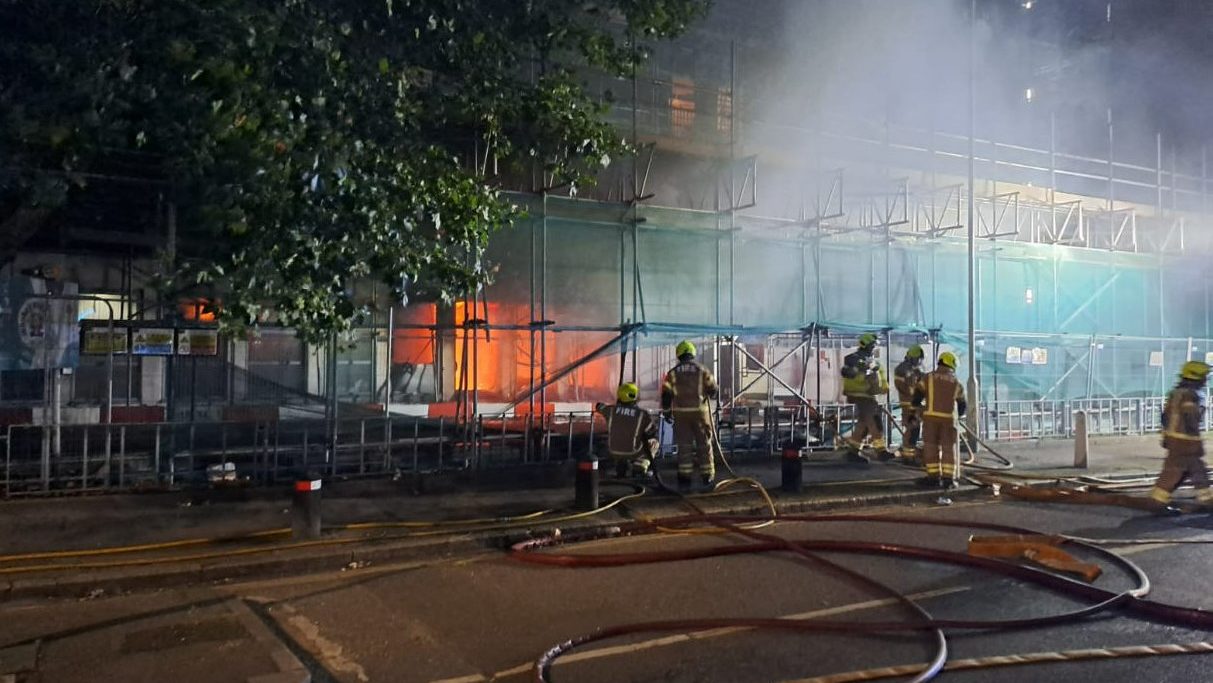
A recent fire in London serves as a stark reminder of the UK’s ongoing failures in building and fire safety, just days before the final report on the 2017 Grenfell Tower tragedy is set to be published
More than 200 firefighters were deployed overnight on Monday, August 26, to combat a fire that broke out in an apartment block in Dagenham, London. The building had previously been identified as a high-risk location by fire brigades, yet it had not seen sufficient safety improvements, similar to other localities across the country that represent housing hazards due to slow progress on necessary fire and building security measures.
London Fire Brigade Commissioner Andy Roe confirmed that the tower block had “a number of fire safety issues” known to the service. Matt Wrack, General Secretary of the Fire Brigades Union (FBU), condemned the situation as a “national scandal.”
“Time and time again, these warnings have been ignored by public authorities and by central government. This must change immediately,” Wrack insisted.
The Dagenham fire comes just days before the final report of the Grenfell Tower Inquiry is set to be published. The similarities between the recent fire in Dagenham and the Grenfell Tower fire in June 2017, which killed 72 people, are difficult to ignore. Both incidents involve buildings with inadequate cladding, a factor believed to have exacerbated the fires.
“Once again, a fire has erupted in a residential building wrapped in inflammable cladding. There needs to be an urgent and swift investigation into how this has been allowed to happen,” Wrack said.
Fortunately, the Dagenham fire resulted in no casualties, but the incident has reignited calls for improved building safety. Grenfell United, a group formed by survivors and families of the Grenfell fire, criticized the lack of progress since the 2017 disaster. The fact that the best outcome in a fire is a near miss “speaks volumes about the progress made since June 14, 2017,” the group said in a statement.
Recent data from the FBU adds to an already worrying picture. Since 2010, cuts to public service have led to the loss of 12,000 firefighter positions across the UK, with London alone losing over 1,300. The union also highlighted that some firefighters might be counted twice in official statistics because they—some 4,000 of them—hold more than one type of contract, suggesting the actual shortfall may be even worse.
These staffing reductions have contributed to slower emergency response times, increasing risks to public safety. “With flooding, wildfires, and storms on the rise due to the climate emergency, firefighters are being asked to do more with less,” Wrack said.
In light of these issues, trade unions and community activists are calling for immediate and decisive action from the Labour government. They are demanding urgent and substantial investment in fire and rescue services, along with the implementation of building safety measures to prevent future tragedies.