100 US Officials Sign Memo Decrying Biden’s Backing of Israeli ‘War Crimes’ in Gaza

Spread the love
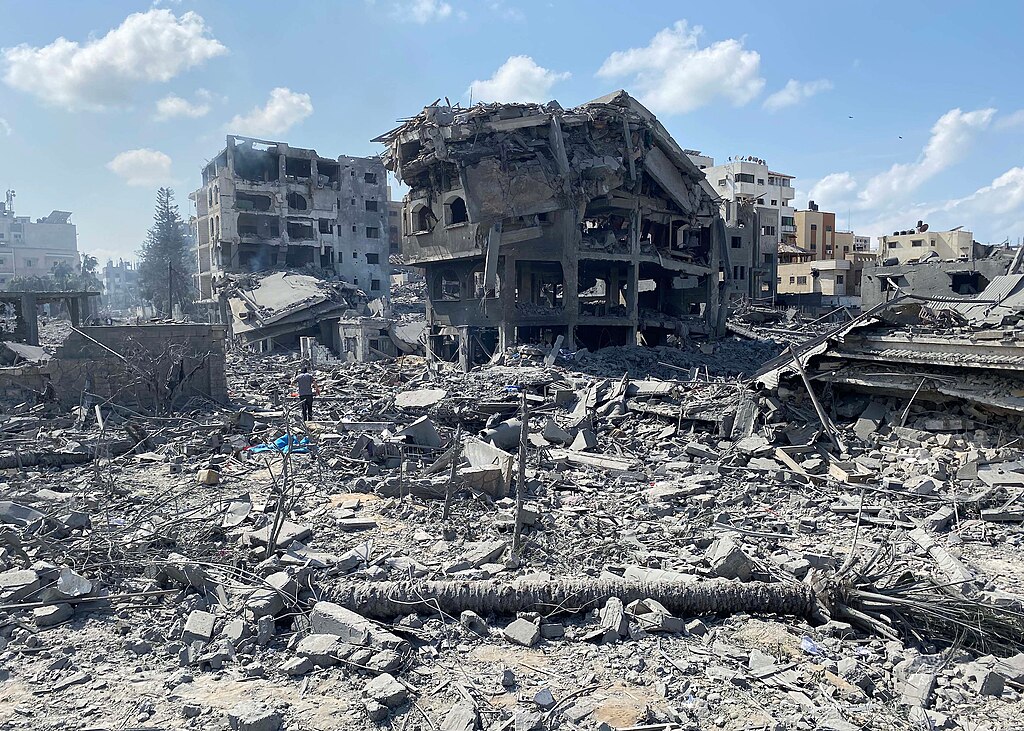
Palestinians inspect the damage following an Israeli airstrike on the El-Remal aera in Gaza City on October 9, 2023. Israel continued to battle Hamas fighters on October 10 and massed tens of thousands of troops and heavy armour around the Gaza Strip after vowing a massive blow over the Palestinian militants' surprise attack. Photo by Naaman Omar apaimages. licensed under the Creative Commons Attribution-Share Alike 3.0 Unported license.
Palestinians inspect the damage following an Israeli airstrike on the El-Remal aera in Gaza City on October 9, 2023. Israel continued to battle Hamas fighters on October 10 and massed tens of thousands of troops and heavy armour around the Gaza Strip after vowing a massive blow over the Palestinian militants’ surprise attack. Photo by Naaman Omar apaimages. licensed under the Creative Commons Attribution-Share Alike 3.0 Unported license.

Original article by BRETT WILKINS republished from Common Dreams under Creative Commons (CC BY-NC-ND 3.0). 
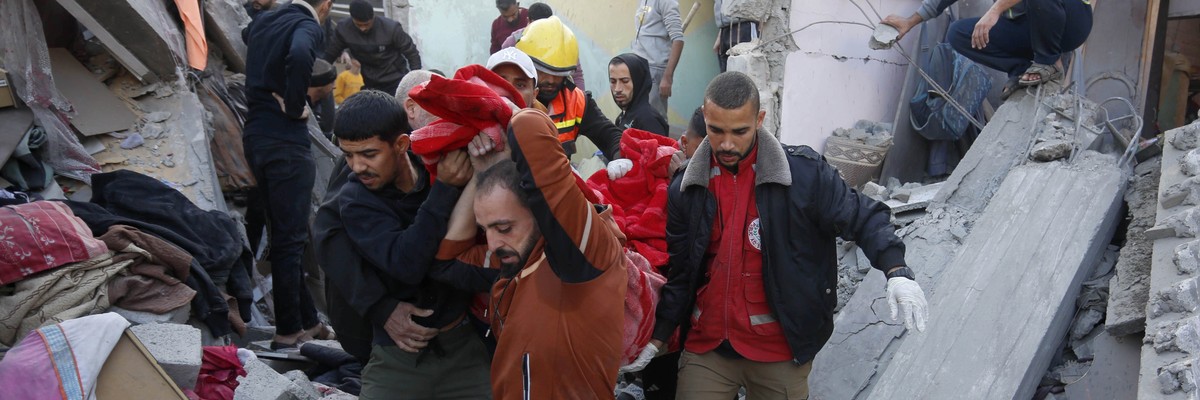
The State Department and USAID staffers denounced the president’s “unwillingness to de-escalate” Israel’s relentless attacks on Gaza, which have killed more than 11,000 Palestinians.

One hundred U.S. foreign service officials have signed a “scathing” internal memo blasting President Joe Biden’s “unwillingness to de-escalate” Israel’s assault on Gaza and his failure to stop Israeli “war crimes and/or crimes against humanity” in the embattled Palestinian enclave.

Axios reported Monday that the five-pageinternal dissent memo was signed by officials at the State Department and the U.S. Agency for International Development (USAID). The memo was reportedly organized by Sylvia Yacoub, a foreign affairs officer in the State Department’s Bureau of Middle East Affairs who earlier this month accused Biden of being “complicit in genocide” as Israeli forces indiscriminately bombarded the Gaza strip by air, land, and sea—killing thousands of Palestinians, mostly women and children.

“Members of the White House and [the U.S. National Security Council] displayed a clear disregard for the lives of Palestinians, a documented unwillingness to de-escalate, and, even prior to October 7, a reckless lack of strategic foresight,” the memo states.

The missive accuses Biden of “disregarding the lives of Palestinians,” over 40,000 of whom have been killed, wounded, or gone missing since Israel launched its retaliatory war that has also displaced over 1.5 million of Gaza’s 2.3 million people.

Israel’s relentless attacks and its cutting off of electricity, food, and fuel supplies to the already besieged territory “all constitute war crimes and/or crimes against humanity under international law,” the memo asserts. “Yet we have failed to reassess our posture towards Israel. We doubled down on our unwavering military assistance to the [Israeli government] without clear or actionable red lines.”

Responding to the October 7 Hamas-led attacks on Israel that killed around 1,200 people, Biden has repeatedly proclaimed his “unwavering” support for Israel and requested another $14 billion in U.S. armed assistance to the key Middle East ally—which already receives nearly $4 billion from Washington annually.

The president has dismissed calls to cut or place conditions on U.S. aid, while Biden administration officials have been derided for claiming they have no leverage over Israel.

Biden has also rebuffed widespread and growing calls for a cease-fire in Gaza, instead advocating for a so-called “humanitarian pause” to allow civilians to flee and aid to enter the strip.

The signers of the memo denounce Biden for “questioning the number of deaths” in Gaza by saying he had “no confidence” in Palestinian health officials’ casualty reports—figures deemed reliable by United Nations agencies, human rights groups, international and Israeli mainstream media, and even the State Department.

Biden was accused of “genocidal denial” following his remarks. Directly contradicting the president, U.S. Assistant Secretary of State for Near Eastern Affairs Barbara Leaf warned last week that the death toll in Gaza may be “even higher” than reported, as thousands of bodies lie unrecovered beneath the rubble of bombed buildings.

The memo’s signers also accused the president of “spreading misinformation” about the war.

Axios said the memo was sent to the State Department’s policy office on November 3 through the official dissent channel established during the Vietnam War era to allow diplomats to express their disapproval of U.S. policies and practices. Dissent memos are meant to stay within the agency, but are sometimes leaked to the public.

Multiple dissent memos about the Gaza war are currently being circulated within the State Department, according toPolitico.

A State Department spokesperson told Axios that the agency “is proud there is an established procedure for employees to articulate policy disagreements directly to the attention of senior department leaders without fear of retribution.”

“We understand—we expect, we appreciate—that different people working in this department have different beliefs about what United States policy should be,” the spokesperson added.

Original article by BRETT WILKINS republished from Common Dreams under Creative Commons (CC BY-NC-ND 3.0). 
Continue Reading100 US Officials Sign Memo Decrying Biden’s Backing of Israeli ‘War Crimes’ in Gaza

UN Rights Chief Says Israel’s Collective Punishment in Gaza Is a War Crime

Spread the love
Palestinians inspect the damage following an Israeli airstrike on the El-Remal aera in Gaza City on October 9, 2023. Israel continued to battle Hamas fighters on October 10 and massed tens of thousands of troops and heavy armour around the Gaza Strip after vowing a massive blow over the Palestinian militants' surprise attack. Photo by Naaman Omar apaimages. licensed under the Creative Commons Attribution-Share Alike 3.0 Unported license.
Palestinians inspect the damage following an Israeli airstrike on the El-Remal aera in Gaza City on October 9, 2023. Israel continued to battle Hamas fighters on October 10 and massed tens of thousands of troops and heavy armour around the Gaza Strip after vowing a massive blow over the Palestinian militants’ surprise attack. Photo by Naaman Omar apaimages. licensed under the Creative Commons Attribution-Share Alike 3.0 Unported license.

Original article by JESSICA CORBETT republished from Common Dreams under Creative Commons (CC BY-NC-ND 3.0). 
“We have fallen off a precipice. This cannot continue.”

United Nations High Commissioner for Human Rights Volker Türk declared Wednesday that “the collective punishment by Israel of Palestinian civilians amounts… to a war crime, as does the unlawful forcible evacuation of civilians.”

Israel’s monthlong war on Gaza has killed over 10,500 Palestinians, wounded thousands more, displaced 70% of the strip’s 2.3 million residents, and decimated civilian infrastructure, including homes, religious buildings, and hospitals.

Türk’s comments came after he visited the Rafah border crossing that connects Egypt to Gaza, which he described as “the gates to a living nightmare—a nightmare where people have been suffocating, under persistent bombardment, mourning their families, struggling for water, for food, for electricity and fuel.”

Long before October 7, when a Hamas-led attack killed over 1,400 Israelis and triggered Israel’s retaliation, Gaza was “described as the world’s biggest open-air prison… under a 56-year occupation and a 16-year blockade by Israel,” he highlighted.

“Even in the context of a 56-year-old occupation, the current situation is the most dangerous in decades, faced by people in Gaza, in Israel, in the West Bank, but also regionally.”

The U.N. rights chief also stressed that “the atrocities perpetrated by Palestinian armed groups… were heinous, brutal, and shocking. They were war crimes—as is the continued holding of hostages.” Israeli officials say there are about 240 hostages.

“We have fallen off a precipice. This cannot continue,” he warned. “Even in the context of a 56-year-old occupation, the current situation is the most dangerous in decades, faced by people in Gaza, in Israel, in the West Bank, but also regionally.”

Türk emphasized that “parties to the conflict have the obligation to take constant care to spare the civilian population and civilian objects,” and as an occupying power, Israel is required “to ensure a maximum of basic necessities of life can reach all who need it.”

“I call—as a matter of urgency—for the parties now to agree [to] a cease-fire on the basis of three critical human rights imperatives: We need urgent delivery of massive levels of humanitarian aid, throughout Gaza,” he declared.

The official also called for all hostages to be freed without condition and said that “crucially, we need to enable the political space to implement a durable end to the occupation, based on the rights of both Palestinians and Israelis to self-determination and their legitimate security interests.”

U.N. Secretary-General António Guterres—who has also been pushing for a cease-fire—called out Israel’s aerial and ground operations for their impact on civilians during a Reuters conference on Wednesday.

“There are violations by Hamas when they have human shields. But when one looks at the number of civilians that were killed with the military operations, there is something that is clearly wrong,” he said.

“We have in a few days in Gaza thousands and thousands of children killed, which means there is also something clearly wrong in the way military operations are being done,” the U.N. leader added.

According to the Palestinian Ministry of Health in Gaza, the Israeli war against Hamas has killed over 4,300 children.

“It is also important to make Israel understand that it is against the interests of Israel to see every day the terrible image of the dramatic humanitarian needs of the Palestinian people,” Guterres said. “That doesn’t help Israel in relation to the global public opinion.”

While French President Emmanuel Macron’s plans to hold a Gaza-focused “humanitarian conference” in Paris on Thursday, the government of Israeli Prime Minister Benjamin Netanyahu is refusing to participate in the event.

Ahead of the conference, 13 human rights and relief groups called on attendees “to do everything in their power to achieve an immediate cease-fire; take concrete steps to free civilian hostages and protect all civilian populations; and ensure the entry of humanitarian aid into Gaza and respect for international humanitarian law.”

Among them was Amnesty International—which, over the past month, has compiled “damning evidence of war crimes as Israeli attacks wipe out entire families.” Some global experts and critics have demanded action from the International Criminal Court on “escalating Israeli war crimes and genocide of the Palestinian people” in Gaza.

In a resignation letter to Türk last month, Craig Mokhiber, who was serving as the New York director for the Office of the High Commissioner for Human Rights, condemned Israel’s war as “a textbook case of genocide.”

“In the immediate term,” Mokhiber wrote, “we must work for an immediate cease-fire and an end to the long-standing siege on Gaza, stand up against the ethnic cleansing of Gaza, Jerusalem, and the West Bank (and elsewhere), document the genocidal assault in Gaza, help to bring massive humanitarian aid and reconstruction to the Palestinians, take care of our traumatized colleagues and their families, and fight like hell for a principled approach in the U.N.’s political offices.”

Original article by JESSICA CORBETT republished from Common Dreams under Creative Commons (CC BY-NC-ND 3.0). 
Continue ReadingUN Rights Chief Says Israel’s Collective Punishment in Gaza Is a War Crime

‘As a Human Being, I Beg’: Doctors Say Cease-Fire in Gaza Only Way to Save Countless Lives

Spread the love

Original article by BRETT WILKINS republished from Common Dreams under Creative Commons (CC BY-NC-ND 3.0). 
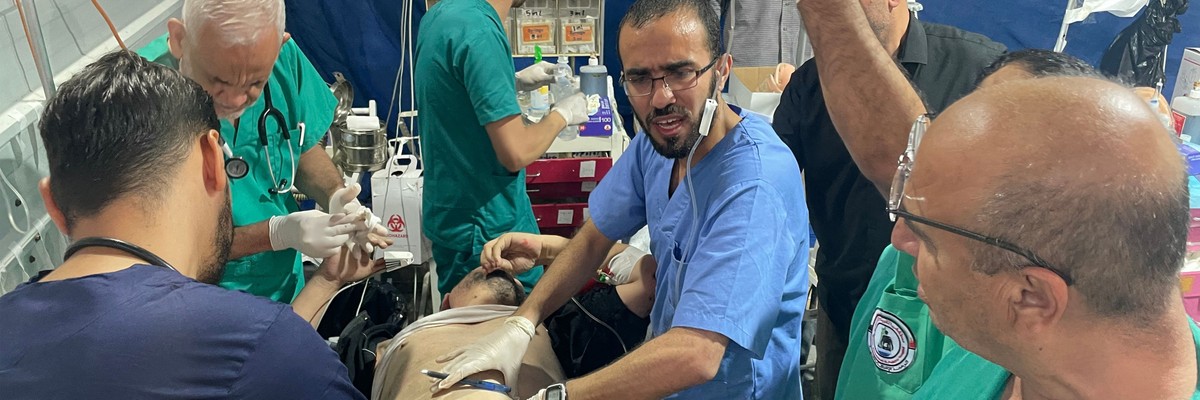
Trauma surgeons treat an injured man after Israeli bombardment, at the Kuwaiti hospital in Rafah in the southern Gaza Strip on October 21, 2023  (Photo: Said Khatib/AFP via Getty Images)

Fresh demands for a major increase in humanitarian aid and an end to the bombing came as Gaza’s only cancer hospital shut down due to a lack of fuel.

As the World Health Organization warns of an “imminent public health catastrophe” in Gaza amid Israeli attacks on medical workers and infrastructure, doctors and other frontline medics said Wednesday that only an immediate cease-fire would give them a fighting chance to save countless lives.

Responding Wednesday to the shutdown of the Turkish-Palestinian Friendship Hospital—Gaza’s only cancer treatment center—due to lack of fuel and damage from Israeli airstrikes, WHO Director-General Tedros Adhanom Ghebreyesus said that “no words can describe our concern for the patients who have just lost the only possibility to receive lifesaving cancer treatment or palliative care.”

Tedros added: “I urge and I plead—for full medical and fuel aid access NOW! The more we wait, the more we put these fragile lives at risk.”

The WHO chief’s plea came a day after Christian Lindmeier, a spokesperson for the Geneva-based United Nations agency, warned that “an imminent public health catastrophe… looms with the mass displacement, the overcrowding, the damage to water and sanitation infrastructure.”

Meanwhile, James Elder, a spokesperson for the United Nations Children’s Fund (UNICEF), said Tuesday that “child deaths due to dehydration, particularly infant deaths due to dehydration, are a growing threat.”

The U.N. Office for the Coordination of Humanitarian Affairs (OCHA) called Gaza a “graveyard” for children, more than 3,600 of whom have been killed by Israeli bombardment, with another 1,000 minors reported missing, according to Palestinian and other officials.

Israeli forces have attacked numerous hospitals, clinics, ambulances, and medical workers, including the Turkish-Palestinian Friendship Hospital and al-Hilu Hospital. The Gaza Health Ministry said Wednesday that the bombardment that damaged al-Hilu “endangers the lives of women in the maternity wards and medical staff.”

According to an “urgent call for protecting healthcare workers in Gaza” published Tuesday in the British medical journal The Lancet, Israeli forces have attacked 57 medical facilities since launching the war on Gaza on October 7, killing 73 workers—including doctors, nurses, paramedics, and others—as of October 24. Sixteen of the medical personnel were killed while on duty.

As Israel’s bombardment of Gaza exacts a heavy toll on overwhelmed medical workers and infrastructure in the besieged strip, frontline medics like Dr. Noureddein al-Khateeb—a 38-year-old resident doctor in the emergency department at the Nasser Medical Center in the southern Gaza city of Khan Younis—say they are living “in a constant state of threat and fear.”

“It’s constant fear on top of the exhaustion we’re experiencing,” al-Khateeb toldThe New Humanitarian on Wednesday. “But one shouldn’t think of that too much. I can’t. If I do, I won’t get any work done.”

Al-Khateeb added that “we’re also afraid for our families’ safety, but what can we do?”

Dr. Mohamed Abu Mousa, a radiologist at Nasser, said one of the few trips he’s made outside the hospital since Israeli bombardment began was to bury his 7-year-old son after he was killed in an October 15 Israeli airstrike on their family home.

“We don’t have the luxury of pausing to grieve,” he told The New Humanitarian. “The heartache is immense, but the wounded are endless. We have to keep going.”

Conditions are dire inside Gaza’s hospitals, which are running out of or low on fuel, medicines, equipment, and other essential services and supplies.

“We’re operating on children without anesthetics,” Léo Cans, who heads the Doctors Without Borders (MSF) mission in Palestine, toldCNN Tuesday. “We don’t have morphine for them.”

On Wednesday, MSF international president Dr. Christos Christou said in a video published on social media that “we’ve seen and heard the stories of the hell being unleashed on Gaza” as “helpless people are being subjected to horrific bombing” and “families have nowhere to run or hide.”

Christou continued:

So many people need help. What medical staff can do is just a drop in the ocean compared to the immense needs. Our teams working in Gaza are exhausted and terrified. Our staff tell us that pregnant women can’t get to hospitals to deliver. People are stuck under the rubble of shelled-out buildings. Children are having limbs amputated while lying on the floor.

“An immediate cease-fire is the only way the people of Gaza can find safety and the essential aid they urgently need,” Christou asserted. “The bombing, the all-out assault, needs to stop now… As a human being, I beg—stop the bombing and allow people in Gaza to live.”

The Gaza Health Ministry said Wednesday afternoon that at least 8,796 Palestinians—including nearly 2,300 women and over 3,600 children—have been killed in Israeli attacks, while around 23,000 other people have been injured.

Original article by BRETT WILKINS republished from Common

Dreams under Creative Commons (CC BY-NC-ND 3.0). 
Continue Reading‘As a Human Being, I Beg’: Doctors Say Cease-Fire in Gaza Only Way to Save Countless Lives

Climate change could lead to food-related civil unrest in UK within 50 years, say experts

Spread the love
Baby-Spider/Shutterstock

Sarah Bridle, University of York and Aled Jones, Anglia Ruskin University

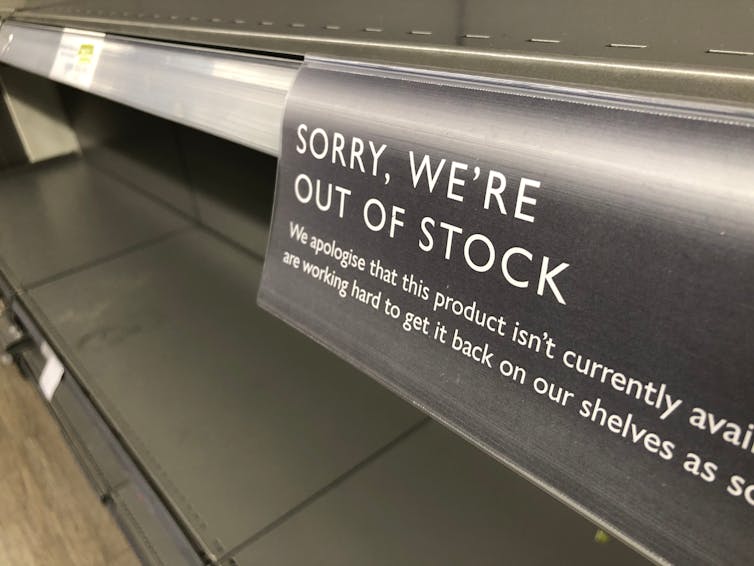
The emptying of supermarket shelves during the COVID pandemic demonstrated the chaos that disruption to the UK’s food supply can provoke. Could this type of disruption have a different cause in the future? And what might the impact on society be?

These are the questions we sought to answer in our new study, which involved surveying 58 leading UK food experts spanning academia, policy, charitable organisations and business.

Our findings indicate that food shortages stemming from extreme weather events could potentially lead to civil unrest in the UK within 50 years. Shortages of staple carbohydrates like wheat, bread, pasta and cereal appear to be the most likely triggers of such unrest.

The UK’s food system appears to be particularly vulnerable to significant disruption. This vulnerability can be attributed, in part, to its emphasis on efficiency at the expense of resilience (the ability to withstand and recover from shocks). This approach includes a heavy reliance on seasonal labour and practices like “just-in-time” supply chains, where products are delivered precisely when needed.

Our study emphasises the importance of developing plans to help the UK prepare for, and respond to, the risks associated with food shortages in the future.

Out of Stock sign on a supermarket shelf.
Customers emptied supermarket shelves in a panic during the COVID pandemic.
Kauka Jarvi/Shutterstock

Expert survey

We asked food experts to rate the likelihood of a scenario occurring in the UK in which more than 30,000 people suffered violent injury over the course of one year through events such as demonstrations or violent looting.

Just over 40% of these experts said they thought such a scenario was either “possible” or “more likely than not” in the next ten years. Over 50 years, nearly 80% of experts believed civil unrest was either possible, more likely than not, or “very likely”.

The experts were then asked about the potential causes of food system disruption that would lead to unrest. They were asked whether they thought this disruption would stem from an overall scarcity of food, or from issues related to food distribution, which could prevent food from reaching the right places and thus create isolated pockets of hunger.

Our results show that most experts (80%) hold the belief that, within the next ten years, logistical distribution issues leading to shortages are the most probable cause of food-related civil unrest.

However, when contemplating a 50-year timeframe, the majority (57%) said an insufficient food supply to sustain the UK population would be the most likely cause, potentially due to events such as a catastrophic harvest failure.

Extreme weather – including storm surges, flooding, snow and drought – was chosen as the leading cause of future food supply shortages and distribution issues over both the ten- and 50-year time frames.

UK already at risk

Just under half of the UK’s entire food supply is imported, including 80% of fruit, 50% of vegetables, and 20% of beef and poultry. Any disruption to imports and supply chains can thus have a significant impact on food availability in the UK. A fall in the availability of food can lead to rising prices and, potentially, social unrest.

COVID, Brexit and the cost of living crisis have highlighted the UK’s vulnerability to such a risk. Between April and August 2022, as inflation squeezed household incomes, over half of independent food banks in the UK reported that 25% or more of the people they supported hadn’t used their services before.

Extreme weather events are also occurring more frequently. Many of these events are driven by climate change. It’s entirely possible that extreme weather will cause major crop yield failures across “multiple breadbaskets” in the coming decades.

This scenario is not far-fetched. We have witnessed numerous instances of major shocks to food production in recent decades.

One notable example, in 2007, saw an 8% decline in global cereal production due to droughts, floods and heatwaves in Australia, India and the US. These events, combined with low global cereal stocks, financial speculation and high fertiliser prices, resulted in cereal prices more than doubling. The crisis sparked food riots in more than 30 countries.

To reduce the risk of civil unrest occurring in the UK as a result of food shortages, it’s crucial to address food poverty. By ensuring people can access and afford the food that is available, trust can be built between communities, government and food supply chains over time.

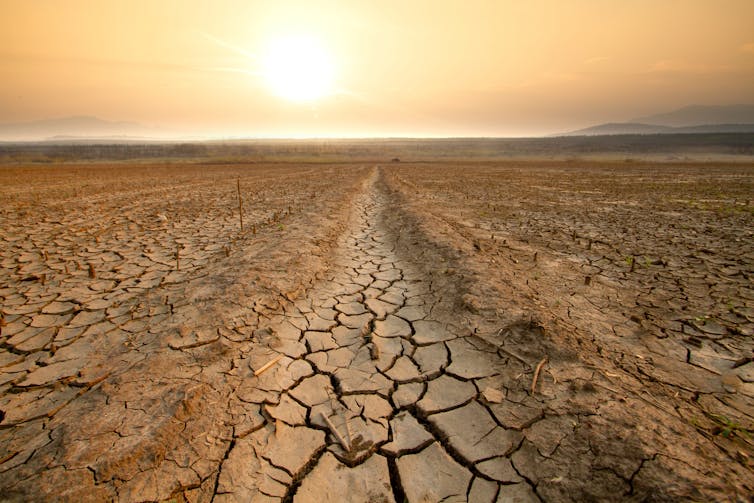
A field baked by drought.
A scenario where crops fail catastrophically is not far-fetched, say food experts.
Piyaset/Shutterstock

Redesigning the food system

The UK needs a food system designed not just for optimal efficiency, but also for resilience. Government agencies and businesses must explore and fund options to make the food system more robust to shocks.

This should include restoring degraded soils and the habitats used by pollinators, improving working conditions within the food supply chain, and prioritising sustainable farming practices.

Growing more robust crop varieties and species, using resources more efficiently, and establishing backup storage and distribution systems to move away from just-in-time delivery are all key aspects of a more resilient food system too.

Efforts to curb the harmful effects of climate change – the most probable cause of future food shortages and distribution issues – should also be ramped up.

The COVID pandemic saw major challenges with food distribution, from which lessons can be learned. Creating a food system that is both resilient and efficient will safeguard against future disruptions, ensuring that food is accessible and affordable while preventing the emergence of civil unrest.


Imagine weekly climate newsletter

Don’t have time to read about climate change as much as you’d like?

Get a weekly roundup in your inbox instead. Every Wednesday, The Conversation’s environment editor writes Imagine, a short email that goes a little deeper into just one climate issue. Join the 20,000+ readers who’ve subscribed so far.The Conversation


Sarah Bridle, Professor of Food, Climate and Society, University of York and Aled Jones, Professor & Director, Global Sustainability Institute, Anglia Ruskin University

This article is republished from The Conversation under a Creative Commons license. Read the original article.

Continue ReadingClimate change could lead to food-related civil unrest in UK within 50 years, say experts

Climate extremes like this summer’s heatwaves threaten UK food imports from Mediterranean

Spread the love
Cerberus heatwave Europe 2023
© contains modified Copernicus Sentinel data (2023), processed by ESA / Heatwave across Europe / CC BY-SA 3.0 IGO CC BY-SA IGO (Ausschnitt)

Analysis of extent of UK food imports from Mediterranean region show scale of threat which increasingly severe climate impacts pose to UK food security.

With parts of Europe and north Africa suffering extreme high temperatures and wildfires, analysis of the extent of UK food imports from the Mediterranean region show the scale of threat which increasingly severe climate impacts pose to UK food security.

The report, by the Energy and Climate Intelligence Unit (ECIU) shows that in 2022, just over a quarter of UK food imports – 9.8 billion kilograms, worth just over £16 billion – came from the Mediterranean region, most of which was staple fresh produce like fruit and vegetables. Spain alone, which is experiencing some of the worst climate impacts in the region, accounted for 7% of our food imports – worth £4 billion.

Europe has warmed at twice the rate of the global average over the last three decades, with the nations in southern Europe and northern Africa, around the Mediterranean experiencing some of the worst heat extremes ever in the last few years.

This has caused harm to food production as water shortages, extreme heat and fire damage crops, reduce quality and lower yields. Reduced yields mean less food in our shops and markets, and higher prices for the commodities affected. Previous ECIU analysis found that climate change and fossil fuel prices added more than £400 to household shopping bills in 2022, increasing the total annual UK food shopping bill by around £11.4 billion.

Continue ReadingClimate extremes like this summer’s heatwaves threaten UK food imports from Mediterranean