[Extinction Rebellion NL] are demanding that the bank stop providing financing and services for the fossil fuel industry. ING was based in the building near the planned blockade until 2014. Due to its unusual shape, it has nicknames alluding to its similarities to a boot, a shoe, an ice skate and a hairdryer. As such, it is somewhat of a landmark that is easily visible from the A10, and why XR believes it is the best place for the demonstration.
Amsterdam Mayor Femke Halsema has forbidden the blockade. The city indicated that the motorway is “irresponsible” as a demonstration location. The A10 is five driving lanes wide, and the speed limit is around 100 kilometers an hour. The VU Medical Center is nearby, and therefore, it is an essential route for ambulances. Traffic to and from the rest of Noord-Holland also passes through the road, which could lead to long traffic jams.
…
ING also announced last week that they will stop financing oil and gas projects by 2040. The climate activist group believes the commitments are “insufficient” to “secure a livable future.”
The hottest year in recorded history casts doubts on humanity’s ability to deal with a climate crisis of its own making, senior scientists have said.
As historically high temperatures continued to be registered in many parts of the world in late December, the former Nasa scientist James Hansen told the Guardian that 2023 would be remembered as the moment when failures became apparent.
“When our children and grandchildren look back at the history of human-made climate change, this year and next will be seen as the turning point at which the futility of governments in dealing with climate change was finally exposed,” he said.
“Not only did governments fail to stem global warming, the rate of global warming actually accelerated.”
After what was probably the hottest July in 120,000 years, Hansen, whose testimony to the US Senate in 1988 is widely seen as the first high-profile revelation of global heating, warned that the world was moving towards a “new climate frontier” with temperatures higher than at any point over the past million years.
Now director of the climate programme at Columbia University’s Earth Institute in New York, Hansen said the best hope was for a generational shift of leadership.
“The bright side of this clear dichotomy is that young people may realise that they must take charge of their future. The turbulent status of today’s politics may provide opportunity,” he said.
Severe conditions brought turmoil across the world, impacting small towns and major cities, as storms, heatwaves, floods, and droughts claimed many lives and destroyed communities.
There are many milestones to pass in the transition from a high to low-carbon sustainable energy system. There is the first hour without coal, or oil, or gas generation (or all of them together) and the point when the last coal, oil or gas power plant (or all of them together) are finally retired.
Another milestone that feels important is the first year when renewables generate more electricity than fossil fuels. For the past three months we have been tracking the data for Great Britain (not Northern Ireland, which shares an electricity grid with the Republic of Ireland) and we believe it is on track to pass this milestone in 2023, but it will be very close.
Using the broadest definition, renewables actually first overtook fossil fuels in the odd, COVID-affected year of 2020 (although not in the subsequent years of 2021 and 2022). However, that includes 5% or so of Britain’s electricity that is generated through “biomass” plants (which burn wood pellets, often imported from forests in America).
Trees can of course be regrown, so biomass counts as renewable. But the industry has its critics and it’s not globally scalable in the same way as the “weather-dependent” renewables: wind, solar and to a certain degree hydro power.
When we use this narrower, weather-dependent definition that is more appropriate for a global transition, then there is a very good chance these renewables will overtake fossil fuels for the first time ever in 2023. Once this milestone has been passed, we also think it is unlikely (though not impossible) that gas and coal will ever again generate more of Britain’s electricity than wind, solar and hydro over a full year.
Whether Britain passes the milestone in 2023 will come down to the final few days of the year (from here on we’ll use “renewables” to refer to the tighter, biomass-excluding definition).
The chart above can be used to track progress and will update with the latest data each day. The lines show the running total of the difference between how much electricity has been generated by renewables and fossil fuels.
When the line is increasing, this shows more renewables than fossil fuels for that period. The horizontal axis shows the day of the year, so, if at any point the line is above the zero axis, that indicates that the year so far has had more renewable than fossil fuel generation. If the red line ends the year above zero, then Britain will have achieved the milestone.
(One caveat is that we know from the official statistics published later that there are some differences from “missing” and estimates for embedded generation; this typically only accounts for around 1%-2% of the final total.)
It depends on the weather
As we write this, with ten days of data left in 2023, renewables are very slightly ahead (by just over 1000 GWh – about the same level as a peak day of electrical demand). However if they are to stay ahead it will depend on the weather – especially the wind.
The reasoning here is that Britain uses less electricity over the holiday period due to less industrial and commercial demand. As wind power is clean and has become cheaper, it tends to be used first, meaning when demand is low or it is sufficiently windy there is less need to generate electricity with fossil fuels.
There are nuances around this such as where the generation is located, and the amount of electricity imported from other countries, but the general principle of renewables taking market share away from fossil fuels is a factor of Britain’s electrical market.
An important area to also highlight is the continued drop in electrical demand. 2023 is on track to have a lower demand than 2022, which itself was lower than the COVID-impacted year of 2020 (against our predictions) due to record prices. The drop in electrical demand means that additional generation was not needed, much of it inevitably from fossil fuels.
Additional milestone also likely to be passed
However 2023 could be the first year where renewable generation exceeds domestic electricity demand (homes comprise 36% of total electrical demand). This means the annual electricity generated by Britain’s wind turbines, solar panels and hydro resource will now be greater than that consumed over the year by its 29 million households.
The above bar chart demonstrates the trend towards this point since 2009. In the first half of 2023, renewable output was less than domestic electrical demand by 1.5 TWh (1500 GWh), but strong renewable performance since then means it is likely to end the year with total generation in excess of household demand.
If either of the milestones described here do not happen for 2023, then they will almost certainly occur in 2024, during which another 1.7 GW of offshore wind capacity will begin generating and Britain’s last coal-fired power station is scheduled to cease producing electricity altogether.
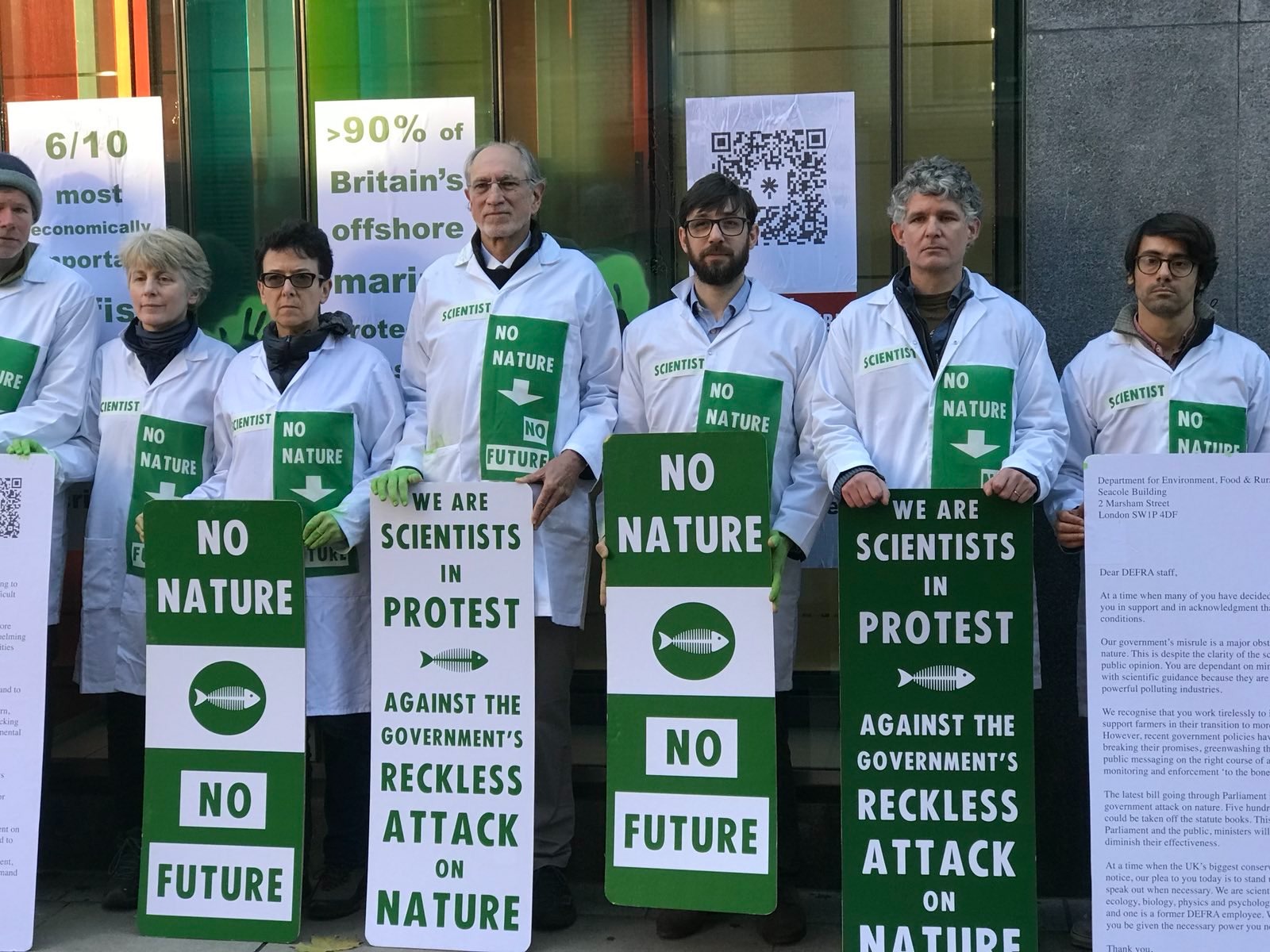
Scientists protest climate inaction 25 November 2022
Dubai, UAE – Analysis released today by the Pacific Islands Climate Action Network (PICAN) and Oil Change International confirms that:
At least 127 countries have called for or endorsed a decision to phaseout fossil fuels at this year’s UN climate negotiations
These countries account for 71.7% of the Parties to the UN Framework Convention on Climate Change, and represent 46.5% of global greenhouse gas emissions and 69.7% of global GDP
By comparison, at last year’s UN climate negotiations, 80 countries called for a phaseout or phase down of fossil fuels – and that call was limited to only the electricity sector. This analysis confirms that there is now unprecedented momentum to phaseout all fossil fuels.
Of those countries that have not yet endorsed phasing out fossil fuels, very few have actively opposed. Almost all the remaining countries would likely agree to phaseout fossil fuels if this was tied to financial support, coupled with a successful outcome on adaptation, and differentiated developed and developing countries.
Lavetanalagi Seru, Regional Coordinator for the Pacific Islands Climate Action Network, said:
“A call that originated in the Pacific has now become an unstoppable global force. Pacific nations were the first to call for an end to fossil fuel expansion and a just and complete phaseout of fossil fuels, as a matter of vital necessity, to guarantee our collective survival. Now, we urge countries present at COP28 to heed this call and deliver an agreement on the end of the fossil fuel era. A small minority of blockers cannot be allowed to jeopardize the future of our nations”.
Romain Ioualalen, Global Policy manager for Oil Change International, said:
“There is unprecedented people-powered momentum – supported by 127 countries – for a historic agreement on fossil fuel phaseout at COP28 to finally tackle the root cause of the climate crisis: oil, gas, and coal. The opposition comes from two groups. First, a small group of rich and powerful governments and companies are trying to prolong the fossil fuel economy, as illustrated by a letter sent by OPEC to OPEC member countries encouraging them to reject any language on fossil fuel phaseout. Second, there are developing countries who would agree to phaseout fossil fuels if wealthy nations provided real assurances of finance and support, unlocked a meaningful outcome on adaptation, and agreed to act first and fastest to phase out fossil fuels.
“We must call out the fossil fuel lobby’s lies, and push wealthy nations to hear developing states’ demands for equity and justice. 2023 can still be the year where countries commit to phaseout fossil fuels. As the negotiations heat up in their final hours, countries’ actions must match their words. There is no time to waste. We need action commensurate with the scientific consensus: a full, fast, fair, funded phaseout of fossil fuels.”
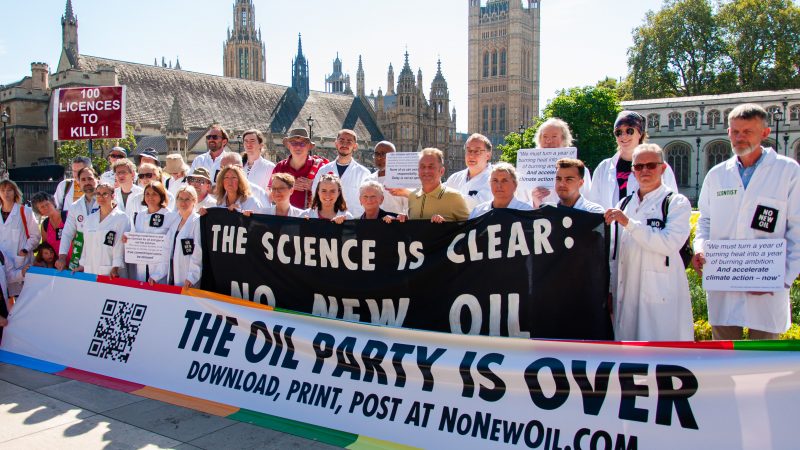
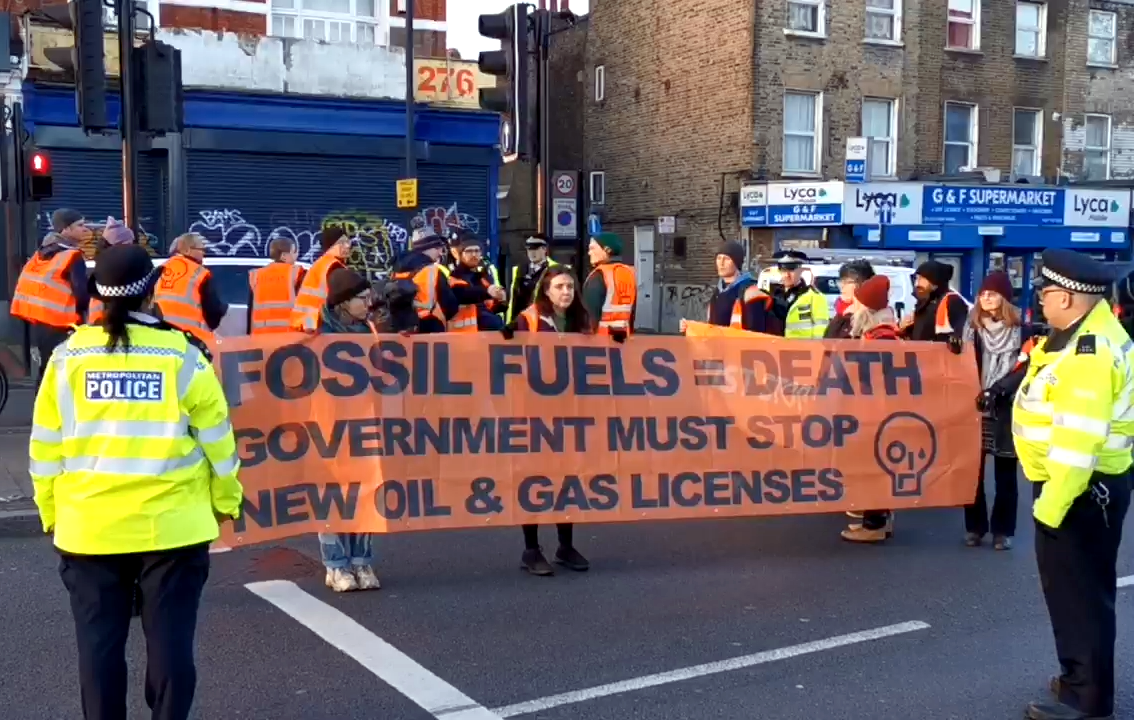
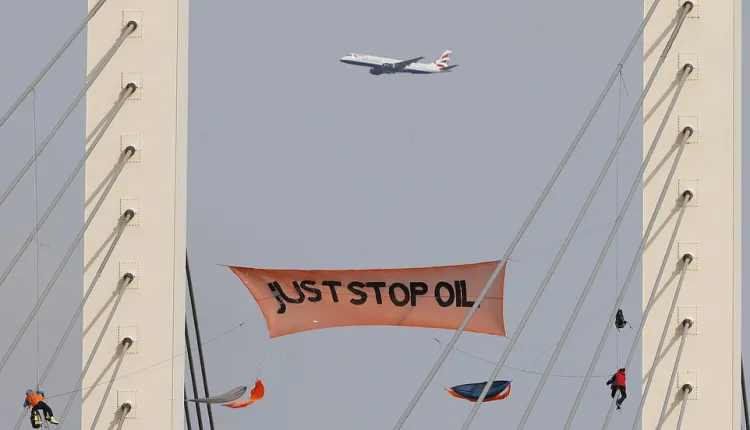
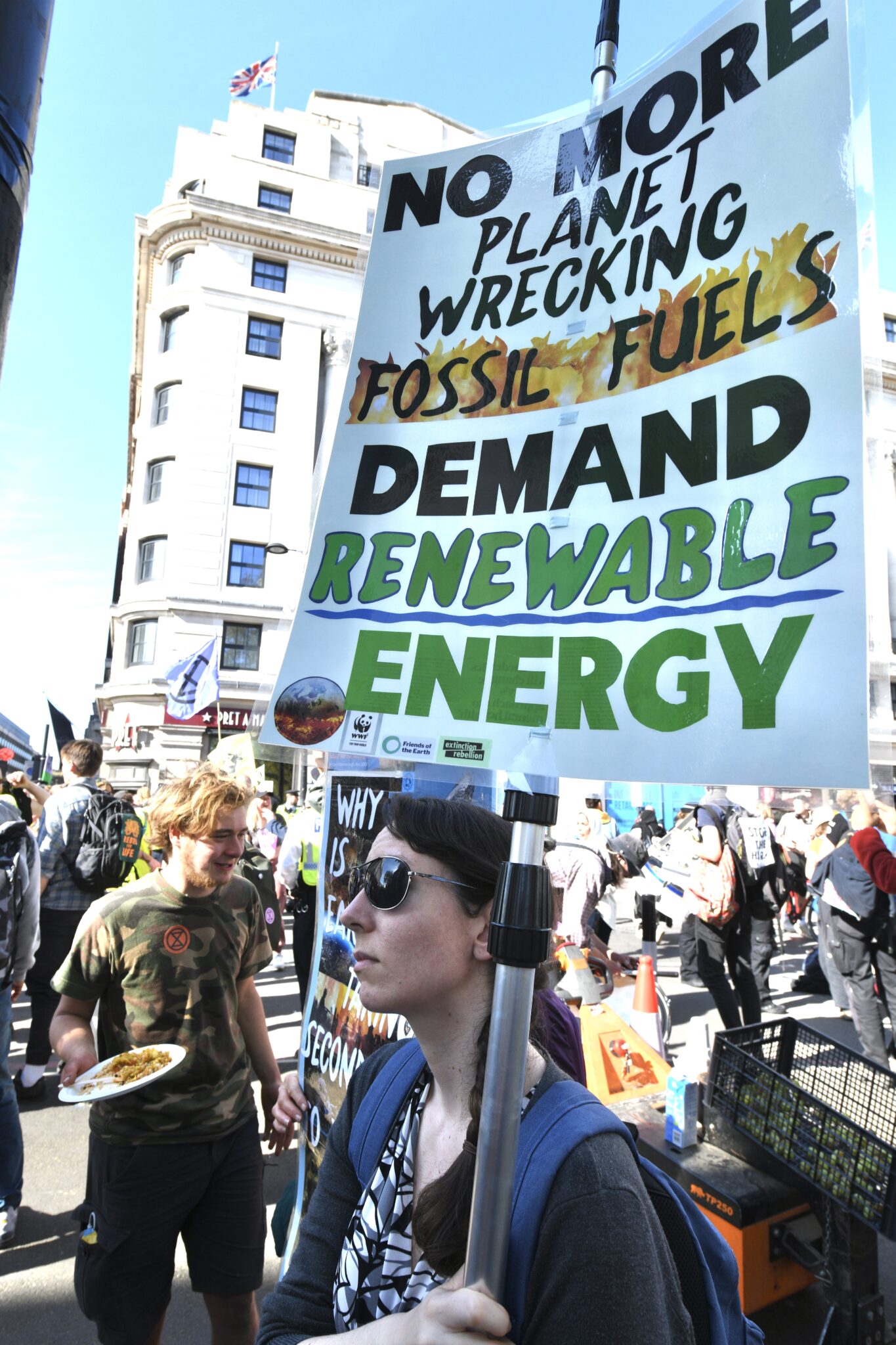
Scientists protest at UK Parliament 5 September 2023.Just Stop Oil protesting in London 6 December 2022.Morgan Trowland and Marcus Decker protest and close the M25 Dartford Bridge.
The next few days could be the world’s last chance of keeping global heating within safe limits, nations meeting for the Cop28 UN climate summit have been told.
With talks in Dubai now entering their final phase, the world’s governments are still far apart on the central question of whether to phase out fossil fuels.
Dan Jørgensen, Denmark’s climate minister, who has been charged with one of the key roles in forging an agreement among deeply divided governments, said: “We cannot negotiate with nature. The climate cannot compromise. No well meaning words will change a single thing unless we act. This week may be our last opportunity to bring us on course to keeping 1.5C alive.”
Jørgensen, along with the South African minister Barbara Creecy, will chair negotiations on the global stocktake, a process under the 2015 Paris climate agreement that assesses progress – or the lack of it – towards meeting the treaty’s goals of holding global temperature rises “well below” 2C and “pursuing efforts” to keep them to 1.5C above pre-industrial levels.
It is well established that the world is far off track to stay within those limits, which scientists say are vital to staving off the worst impacts of the climate crisis. Average temperatures for this year are likely to break records and come close to the 1.5C threshold, and on current trends the world will hit 3C of heating, rendering swathes of the planet effectively uninhabitable.
For those reasons, the global stocktake will also contain recommendations to governments for a “course correction”, asking them to change policies and bring in measures that will reduce greenhouse gas emissions drastically. The latest draft was published on Friday, and is currently being examined, but there are likely to be more iterations of it before the end of the talks.
…
Romain Ioualalen, global policy manager at Oil Change International, a pressure group, said: “It shows unprecedented momentum for an agreement on phasing out all fossil fuels, owing to the relentless pressure from people and governments that are aligned with the science. The Cop president emphasised again today that 1.5C is his north star – and he must deliver on that promise with a Cop decision to build a fast, fair, full and financed fossil fuel phase-out rooted in equity, and enabled by governments redirecting trillions in finance from fossil fuel industry handouts to the real solution: renewable energy and energy efficiency.”
As well as phasing down fossil fuels, countries are being asked to triple global renewable energy generation and to double energy efficiency. The former is already likely to be met, on current trends, and the latter should save money amid high fossil fuel prices and a cost of living crisis around the world.
Developing countries are also concerned that a target to double the amount of finance they get to help them adapt to the impacts of the climate crisis has also not been met. Stiell called for more progress on this issue. “I don’t want to see diversions and political tactics that hold climate adaptation hostage,” he warned.
Failure to agree a phase-out of fossil fuels at the UN Cop28 climate summit would push the world beyond the crucial 1.5C temperature limit and into climate breakdown, the UK’s former climate chief has warned.
Alok Sharma, who was president of the Cop26 summit in Glasgow, said it was vital that governments made a clear commitment in the next few days to eliminate coal, oil and gas.
“If you’re going to keep 1.5C alive, you’re going to have to have language on a phase-out of fossil fuels,” he told the Observer in an interview. “And you’re going to need to accompany that with a credible implementation plan.”
He urged governments to act. “We are running out of time. The window on 1.5C is closing fast, and unless we are willing to act now, with the urgency that this issue demands, we will lose that 1.5C,” he said. “We are literally in the last chance saloon to save our children’s future.”
More than 190 governments are meeting in Dubai for the final days of the Cop28 summit, which runs until Tuesday, with the question of whether to phase out fossil fuels at the top of the agenda. At least 100 countries are in favour of a phase-out, but some major fossil fuel producers – including Saudi Arabia, China and India – are opposed.
Sharma was credited with keeping 1.5C “alive” against the odds at the Glasgow summit he led in 2021, when he managed to forge a deal among more than 190 squabbling countries that focused on the goal of limiting global temperature rises to 1.5C above pre-industrial levels.
Greenpeace: COP28 must answer the call for a fossil fuel phase out
Dubai, UAE – As COP28 resumes for a second week, negotiators will be faced with answering the call for a commitment to a Fossil Fuel Phase Out in Dubai. Never before have we heard so many voices, coming from so many directions to seize the moment and commit to phasing out oil, coal and gas. And never before have alternative formulations on fossil fuel phase out made it this far into a draft text. But there are still no guarantees on a decision on fossil fuels, so all is in play.
Kaisa Kosonen, Head of the Greenpeace COP28 delegation said: “We are here to make fossil fuels history. By now governments know they can’t leave this summit without an agreement to end fossil fuels, in a fast and fair manner. Now the question is what is the package of solutions, support and cooperation that will get us over the finishing line. It’s clear that developed countries are the ones that need to take the lead here.
The solutions are ready – a fast and fair transition to renewable energy is possible – but it won’t happen fast enough unless we push the fossil fuel industry out of the way.