‘This Is Huge’: Judge Sides With Montana Youths in Historic Climate Ruling

Spread the love
Youth climate activists attend the Minnesota March for Science held in St. Paul in April 2017. Lorie Shaull / Flickr

Original article by JULIA CONLEY republished from Common Dreams under Creative Commons (CC BY-NC-ND 3.0).
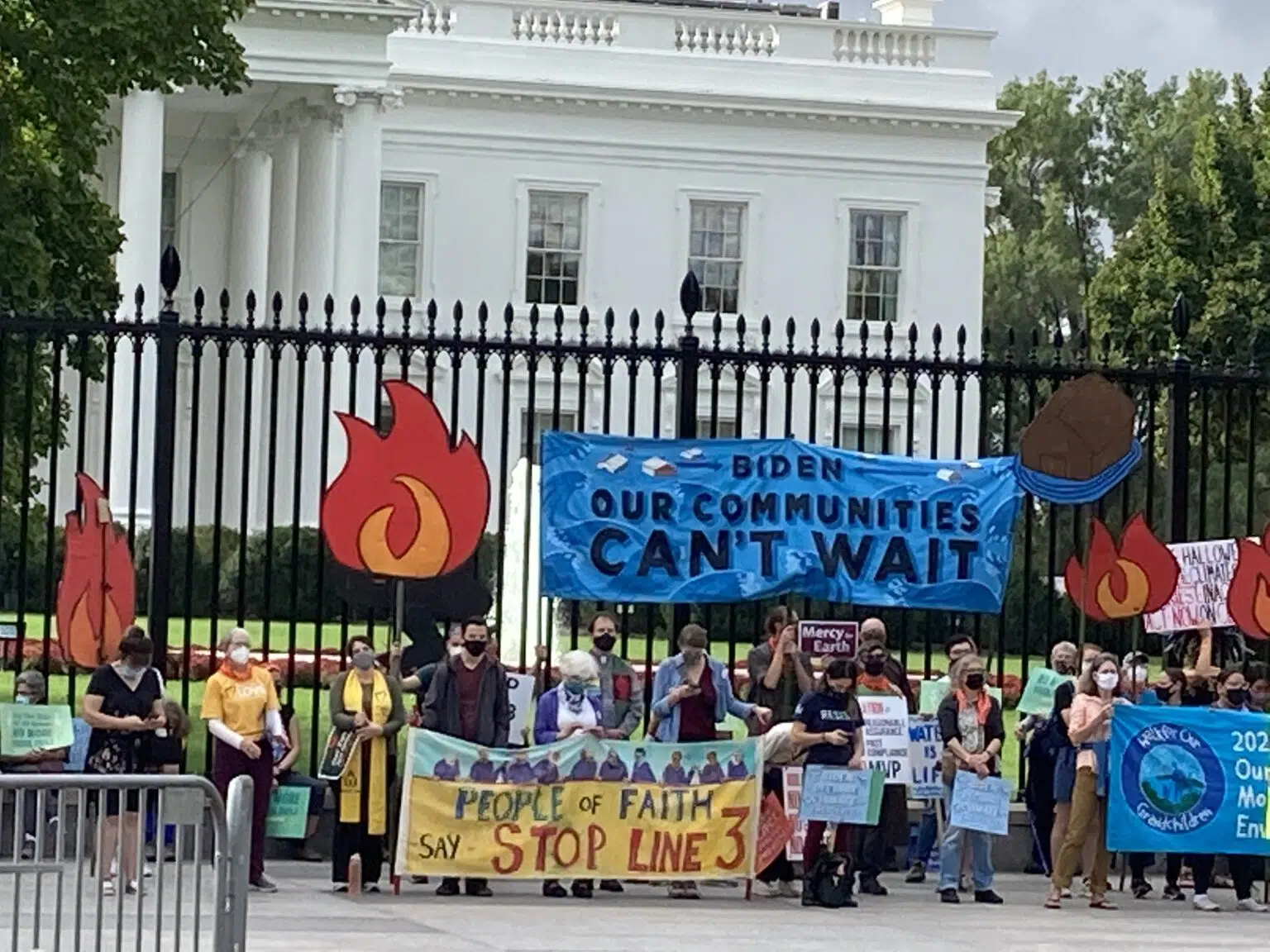
“As fires rage in the West, fueled by fossil fuel pollution, today’s ruling in Montana is a game-changer that marks a turning point in this generation’s efforts to save the planet,” said one attorney representing 16 young plaintiffs.

Climate advocates on Monday expressed hope that an unprecedented ruling by a state judge in Montana, siding with 16 young residents who argued the state violated their constitutional rights by promoting fossil fuel extraction, will mark a sea change in the outcomes of climate lawsuits.

In Held v. State of Montana, District Court Judge Kathy Seeley ruled that rights of the plaintiffs—who range in age from 5 to 22— have been violated by the Montana Environmental Policy Act because the law has prevented the state from assessing the climate impacts of mining projects.

Fossil fuel emissions including Montana’s “have been proven to be a substantial factor” in heating the planet and causing pollution, Seeley said in the nation’s first ruling on a constitutional, youth-led lawsuit regarding the climate.

Because the Montana Constitution guarantees residents a “clean and healthful environment,” the state’s environmental policy law violates the document, said Seeley.

“This is HUGE,” said meteorologist Eric Holthaus.

“This is a landmark decision establishing enforceable principles of intergenerational justice.”

Julia Olson, founder of Our Children’s Trust, the non-profit law firm that helped represent the plaintiffs, called the victory a “sweeping win” that could have reverberating effects on the hundreds of lawsuits that have been filed in the U.S. arguing against the continued extraction of fossil fuels.

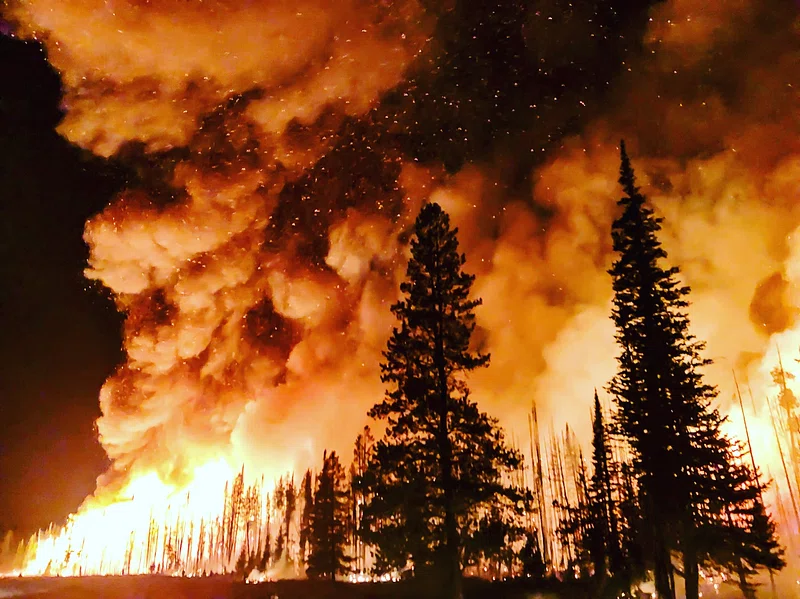
“As fires rage in the West, fueled by fossil fuel pollution, today’s ruling in Montana is a game-changer that marks a turning point in this generation’s efforts to save the planet from the devastating effects of human-caused climate chaos,” said Olson in a statement.

In their defense, state attorneys argued that Montana’s fossil fuel emissions are insignificant compared to global emissions, but Seeley said in her ruling that the state’s per capita emissions are “disproportionately large” and rank in the top six per capita emissions in the United States.

The state also ultimately rested its case on the argument that the state legislature should take up the issue of the environmental law rather than the judiciary—an admission, said Michael Gerrard of the Sabin Center for Climate Change Law at Columbia University, that the climate science underpinning the plaintiffs’ case was indisputable.

“Everyone expected them to put on a more vigorous defense,” Gerrard told The Washington Post Monday. “And they may have concluded that the underlying science of climate change was so strong that they didn’t want to contest it.”

During the trial, the plaintiffs testified about their own suffering due to pollution and extreme weather, while climate experts explained the connection between the state’s fossil fuel activities and planetary heating, the wildfires and scorching heat that have overwhelmed parts of the West, and other extreme weather.

“Judge Seeley’s decision comes at a time when we’re seeing the impacts of climate change accelerate—from low streamflows and lake levels to unprecedented heat waves, floods, and wildfires,” said Melissa Hornbein, senior attorney at the Western Environmental Law Center, which along with McGarvey Law also represented the plaintiffs. “These are the climate realities the youth plaintiffs and expert witnesses told us about on the stand, while the state disclaimed any responsibility and dismissed them.”

“We’re relieved that the court recognized that these youth plaintiffs are already feeling the impacts of the climate crisis, as well as the dangers threatening their future if the state doesn’t take meaningful action to address it,” Hornbein added. “We’re also delighted that Judge Seeley recognized Montana’s significant role as an emitter on the global stage, as well as its ability—constrained only by a resistant government—to rectify its disproportionate contribution to the climate crisis.”

The Sunrise Movement, the youth-led climate action organization, said the ruling is “proof that our generation is unstoppable—we have the power to bring down the fossil fuel industry and win a Green New Deal.”

As Common Dreams reported last month, lawsuits around the world have emerged as a key driver of climate action as a wide range of plaintiffs—from children in the U.S. to senior citizens in Switzerland—have argued that their human rights have been violated by the companies and lawmakers that have promoted fossil fuel production despite scientific evidence of the danger it poses.

Out of approximately 2,200 worldwide climate cases, about three-quarters have been filed in the United States, according to the United Nations Environment Program and the Sabin Center, and the number of legal challenges has more than doubled since 2017.

The outcome of the Montana case could “open up the floodgates for more climate lawsuits,” said Jamie Henn, director of Fossil Free Media.

Sen. Bernie Sanders (I-Vt.) said that the next plaintiff to file a case against the fossil fuel industry should be the federal government, to hold companies accountable “for their role in the climate crisis.”

“This is a landmark decision establishing enforceable principles of intergenerational justice,” said Roger Sullivan, an attorney at McGarvey Law. “Simply stated, the government elected by this generation must abide its obligation to pass on a stable climate system to future generations.”

Original article by JULIA CONLEY republished from Common Dreams under Creative Commons (CC BY-NC-ND 3.0).
RELATED

Continue Reading‘This Is Huge’: Judge Sides With Montana Youths in Historic Climate Ruling

‘Time to Do It for Real,’ Advocates Say as Biden Claims He’s ‘Practically’ Declared Climate Emergency

Spread the love
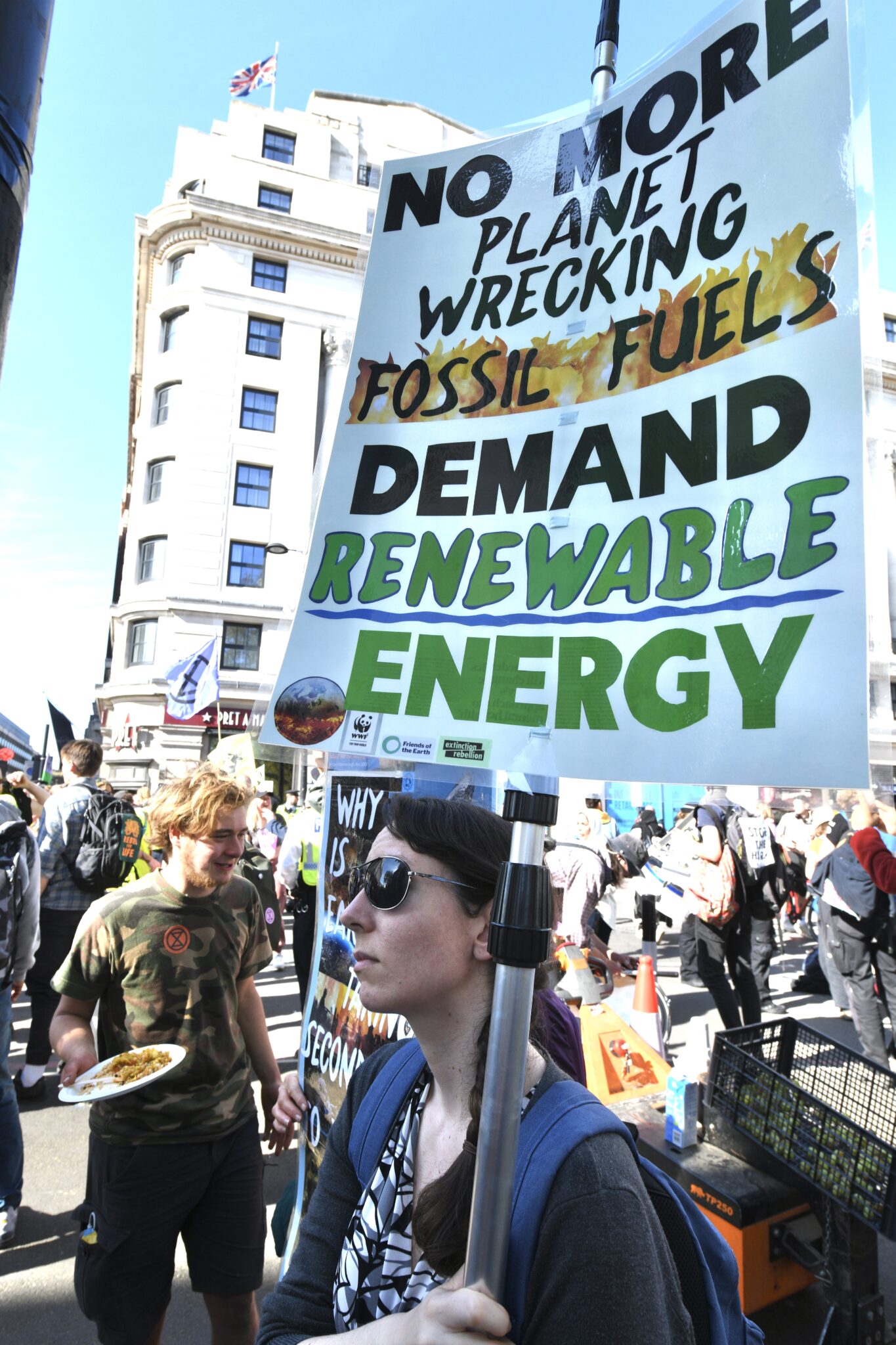
Extinction Rebellion protest, banner reads NO MORE PLANET WRECKING FOSSIL FUELS DEMAND RENEWABLE ENERGY

Original article by Julia Conley republished from Common Dreams under Creative Commons (CC BY-NC-ND 3.0).
“There’s nothing more important than what happens today,” said one environmental lawyer. “And there’s no person in the world with more power to do good than Joe Biden.”

In an interview with The Weather Channel Wednesday, U.S. President Joe Biden signaled he has no plans to formally declare a climate emergency, claiming that his climate policies are sufficient and that, “practically speaking,” a national emergency has already been declared.

When asked if he will take the unprecedented step in order to unlock executive powers to drastically cut fossil fuel emissions, Biden told correspondent Stephanie Abrams, “I’ve already done that.”

The president pointed to $368 billion that was included in the Inflation Reduction Act to invest in clean energy production, actions being taken to conserve land, and his decision to rejoin the Paris climate agreement as evidence that he is taking all the steps that experts have said are necessary to fight the climate crisis.

“We’re moving,” Biden said.

The interview aired days after a reporter asked White House Press Secretary Karine Jean-Pierre about the status of Biden’s reported climate emergency deliberations, noting that NASA climate scientist Peter Kalmus recently wrote in an op-ed that not declaring an emergency is “anti-science.”

Jean-Pierre did not directly address the question but defended Biden’s record, saying he “believes in science” and “talks about climate change.”

“And, you know, it is such a difference to what we see from Republicans who don’t even acknowledge climate change,” she added. “We’re going to continue to move forward to do everything that we can not just here in America, but globally, to be a leader in fighting climate change.”

Kalmus called Jean-Pierre’s response “barely coherent” and demanded to know why the White House won’t declare a climate emergency.

“It’s not enough for Biden to ‘practically’ declare a climate emergency,” said the Institute for Policy Studies on Wednesday after Biden’s interview aired. “It’s time to officially announce one.”

Last summer, Biden reportedly began considering declaring a climate emergency as extreme heat overtook much of the country.

As numerous climate action groups have outlined, a climate emergency declaration would be far from a symbolic gesture. The action, taken under the National Emergencies Act, would allow the White House to:

  • Reinstate the federal ban on crude oil exports—lifted by Congress in 2015—which could slash fossil fuel emissions by as much as 165 million metric tons per year;
  • End oil and gas drilling in more than 11 million acres of federal waters;
  • Halt the investment of hundreds of billions of dollars in fossil fuel projects abroad; and
  • Unlock federal funds that could be used to construct renewable energy infrastructure in communities that are especially vulnerable to climate disasters.

Biden’s comments came weeks after scientists said last month was the hottest month on record, with millions of people from Asia to Western Europe and the United States facing temperatures close to 130°F. The World Weather Attribution said in late July that the extreme heat would have been “virtually impossible” without the climate crisis and continued emissions of heat-trapping gases by the fossil fuel industry.

“As we suffer through these fossil fuel heatwaves, megafires, and floods, [Biden]’s leaving immense powers on the shelf for combating the crisis,” Kassie Siegel, director of the Climate Law Institute of the Center for Biological Diversity, told Common Dreams. “But now is the time for him to actually declare a climate emergency under the National Emergencies Act.”

Siegel added that by dismissing direct questions about an official climate emergency declaration, the White House appears to be employing “the oldest strategy in the book,” long used by administrations that have denied the climate crisis and the need to shift the renewable energy.

“The unfortunate reality is that doing some good things is simply not enough, because we are in a physical climate emergency,” Siegel said. “It is a question of survival and every day counts. There’s nothing more important than what happens today… And there’s no person in the world with more power to do good than Joe Biden.”

While the president has taken some steps to undo harm done to communities by extractive industries—announcing protections from uranium mining for one million acres near the Grand Canyon on Tuesday and launching a $20 billion initiative to invest private capital into clean technology projects last month—he also infuriated climate advocates and experts earlier this year when he approved the Willow drilling project in Alaska. The project could produce more than 600 million barrels of crude oil over three decades and lead to roughly 280 million metric tons of carbon emissions.

The White House also drew criticism last month for its announcement of new regulations for fossil fuel leasing, despite Biden’s campaign promise to ban oil and gas leases on federal lands.

“The truth is, the Biden administration has devastated communities and wildlife by backing disastrous fossil fuel projects from Alaska to Appalachia,” Siegel told Common Dreams. “And what he does today is going to make a huge difference for how much devastation comes in the future.”

Siegel added that with the United Nations set to convene a Climate Ambition Summit on September 20 in New York, “there has never been a better time for Biden to actually declare a climate emergency.”

At the summit, U.N. Secretary-General António Guterres aims to “accelerate action by governments, business, finance, local authorities, and civil society.”

The People vs. Fossil Fuels coalition, comprised of more than 1,200 advocacy groups, said it plans to mobilize ahead of the summit for a March to End Fossil Fuels in New York, aiming to “push President Biden to make a climate emergency declaration official and stop approving these deadly fossil fuel projects once and for all.”

“Now that President Biden says he’s ‘practically’ declared a climate emergency, it’s time to do it for real,” said the coalition. “The president should follow through on his rhetoric and immediately declare a national emergency that would unlock new executive powers to speed up the deployment of clean energy and halt fossil fuel expansion.”

Original article by Julia Conley republished from Common Dreams under Creative Commons (CC BY-NC-ND 3.0).

Continue Reading‘Time to Do It for Real,’ Advocates Say as Biden Claims He’s ‘Practically’ Declared Climate Emergency

World cannot meet climate targets relying on carbon capture and storage

Spread the love

[Hopefully globalwitness will not mind me quoting them at length. Rishi Sunak’s UK government has been promoting CCS recently.]

https://www.globalwitness.org/en/campaigns/fossil-gas/world-cannot-meet-climate-targets-relying-carbon-capture-and-storage/

Fossil fuels

United Kingdom

Unable to ignore the catastrophic emissions produced by burning fossil fuels, the fossil fuel industry has turned to carbon capture and storage (CCS) as a solution that allows them to carry on business as usual.

But with serious concerns about this unproven technology, Global Witness and Friends of the Earth Scotland have commissioned world-renowned climate scientists at the Tyndall Centre in Manchester to assess the role of fossil fuel-based Carbon Capture and Storage (CCS) in the energy system, and its ability to help to achieve the Paris Agreement goal of limiting global average temperature increases to 1.5°C.

This ground-breaking research finds that CCS cannot be relied on to deliver global 2030 emissions reductions, whilst the majority of CCS that exists is being used to extract more oil. It finds:

Current status of fossil fuel-based CCS in the energy system

  • The scale of deployment of CCS to date is significantly less than proponents have predicted, with only 26 CCS plants currently in operation globally.
  • Global operational CCS capacity is currently 39MtCO2 per year, this is about 0.1% of annual global emissions from fossil fuels and less than Scotland’s territorial emissions in 2018.There is no operational CCS capacity in the UK or the EU at all.
  • 81% of carbon captured to date has been used to extract more oil via the process of Enhanced Oil Recovery (EOR). This means CCS is being predominantly used for carbon-emitting oil extraction that wouldn’t have otherwise been possible.
  • Current CCS projects usually target 90% capture at peak capacity. The Petra Nova facility missed capture targets by around 17% between starting in 2017 and its mothballing in May 2020.

Key implications for delivering Paris Agreement goal to limit warming to 1.5°C

  • Fossil fuel-based CCS is not capable of operating with zero emissions. Many projections assume a capture rate for CCS of 95%, however, capture rates at that level are unproven in practice.
  • Fossil fuel-based CCS will continue to entail residual, process and supply chain greenhouse gas emissions. There must be consideration of whether fossil fuel hydrogen with CCS is sufficiently low-carbon relative to remaining carbon budgets.
  • Even if the technology is to become economically and technically viable at scale, optimistic forecasts do not anticipate significant CCS capacity until at least the 2030s.
  • A focus on CCS will not help achieve 2030 CO2 emission reduction targets being adopted by Governments, which have to be met if we are to prevent a climate catastrophe. The research emphasises the real danger of reliance on CCS in energy for delivering these vital emission reductions, given they cannot be expected to any degree until at least 2030.

On the basis of this research, Friends of the Earth Scotland and Global Witness believe the promotion of CCS in energy is a distraction from the rapid growth of renewable energy and energy efficiency required. We urge instead reliance on technologies that can deliver the emissions reductions required by 2030 if we are to deliver on the Paris Agreement goals.

Download a summary brief of the report produced by Global Witness and Friends of the Earth Scotland: Downloads

The full report is available to download from the Tyndall Centre website and below.

Full Report: A Review of the Role of Fossil Fuel Based Carbon Capture and Storage in the Energy System

https://www.globalwitness.org/en/campaigns/fossil-gas/world-cannot-meet-climate-targets-relying-carbon-capture-and-storage/

Continue ReadingWorld cannot meet climate targets relying on carbon capture and storage

Climate change: Rishi Sunak must reject Rosebank oil field and join the countries calling for fossil fuels to be urgently phased out – cross-party group of politicians

Spread the love

https://www.scotsman.com/news/opinion/columnists/climate-change-rishi-sunak-must-reject-rosebank-oil-field-and-join-the-countries-calling-for-fossil-fuels-to-be-urgently-phased-out-cross-party-group-of-politicians-4231467

Politicians from all the main political parties have written an open letter to Rishi Sunak calling on him to prioritise action on climate change

Rishi Sunak and Grant Shapps

By Caroline Lucas, Hilary Benn, Lord Goldsmith, Daisy Cooper, Tommy Sheppard and others

Published 25th Jul 2023, 14:42 BST

Dear Prime Minister, We are writing to you with an urgent call to action. In just 129 days, world leaders will gather in Dubai for the United Nations climate summit COP28. Since countries last gathered in Egypt for COP27, the impacts of climate breakdown have become frighteningly common, with experts predicting a temporary overshoot of the 1.5C limit between now and 2027. Going forward we cannot be complacent in tackling climate change, for there is simply no time left to waste. Instead, we must step up, work together, and strengthen the momentum to keep 1.5C alive.

COP28 in Dubai this November must be the moment that the global community agrees to urgently phase out fossil fuels. For this to happen, the UK has an important role to play in leveraging its international influence, and working constructively with all parties, to help secure an agreed package that clearly names the requirement to phase out all fossil fuels and set goals for the upscaling of renewables. There must also be a clear commitment to ensuring that fairness and justice run at the heart of the global energy transition, and a clear focus on addressing the root cause of the climate crisis: fossil fuel production. And, above all, there can be no room for distractions or false solutions.

Working to guarantee a successful outcome at COP28 is not just essential for the health of people and the planet, but economically the right thing for Britain. As the Office for Budget Responsibility advised last week, continuing to rely on gas at the current level will come at double the cost of transitioning to net zero. Equally, as you were recently warned by top energy companies: backing away from green policies would be catastrophic for the economy. We know that pursuing a clean energy economy brings with it the potential to create jobs, address regional inequality and, perhaps most importantly in the context of extraordinarily high gas prices, it can provide permanent energy affordability and security for the whole country. This is why over 95 per cent of voters placed their confidence in parties committed to reaching net zero by 2050 or sooner at the last election.

The UK has a proud, cross-party, history of being a first mover on green issues. From being the first country in the world to pass a Climate Change Act in 2008, to the first major economy to legislate for net zero by 2050 in 2019, we should be proud of this record. And let’s not forget the outcomes at COP26, which happened under the UK’s leadership, that helped to make significant advancements towards protecting nature and reducing greenhouse gas emissions. However, the Climate Change Committee’s recent 2023 Progress Report to Parliament is unequivocal that mixed signals on the UK’s commitment to serious climate action are undermining this work, damaging our reputation, and risks us permanently surrendering our status as a world leader on climate action.

Now is a crucial moment for you to demonstrate to the world that the UK is not demoting itself to become a passive observer in international action on climate change, that we remain a trusted partner and committed to delivering on our promises. Therefore, we are asking you to:

● Attend the COP28 summit in person and appoint a Secretary of State-level UK Climate Envoy ahead of the United Nations General Assembly in September. This would send a clear statement to the world that tackling climate change is a priority for you and your government and will help to ensure that the UK is properly represented in critical global climate discussion. Your championing of COP28, and your attendance, would encourage other heads of state and governments to do the same.

● Support our allies in calling for an end to the fossil fuel era and move more quickly towards a clean energy world by joining other countries such as Denmark, France, Germany, and others in championing the need for an “urgent phase out of fossil fuels”. As recommended by the CCC, the UK should also set out a clear position and plan to move beyond oil and gas through a just transition, and strengthen the UK’s language on this in all international climate fora, such as the G7, G20 and the UN Secretary General’s Climate Ambition Summit in September, which we also hope you attend. Doing this will drastically improve the chances of a meaningful outcome in Dubai later this year.

● Demonstrate leadership by taking action at home including by rejecting the expansion of new fossil fuels which the CCC is clear are not compatible with net zero. In line with the report’s arguments, Lord Deben, the CCC’s outgoing chair, has asserted that new fossil fuel developments are both “unnecessary” for the UK and a “bad example” to the world. In light of this, we believe that the government must reject new fossil fuel infrastructure including the Rosebank oil field which will do nothing to enhance energy security because the field is 90 per cent oil, likely for export, and therefore won’t save households money on their energy bills either. Instead, the government should concentrate its efforts on making action on net zero easier, including by lifting the ban on onshore wind, embedding a net-zero test across government and within the planning system, and accelerating the rollout of energy efficiency measures which will bring bills down permanently.

● Not to forget nature. There is no pathway to a zero-carbon society without nature, no better ally to fight climate change than forests, peatlands, and other ecosystems. The UK must reaffirm its commitment to the Glasgow Leaders Declaration and continue accelerating momentum to halt and reverse forest loss and land degradation by 2030.

Prime Minister, we want you to know that in working to achieve net zero both at home and abroad, you have the support of an overwhelming majority of not just Parliament, but the country too. We also want to remind you that consistently prioritising climate action is a job for all governments today, not tomorrow.

We look forward to seeing how you respond to the asks we have set out and hope that, come November, the UK government is once again positioned as a climate leader on the world stage backed up by the delivery of an ambitious agenda at home.

Yours sincerely,

Caroline Lucas MP chair, All-Party Parliamentary Group on Climate Change, Rt Hon. Hilary Benn MP Former Secretary of State at Defra, Rt Hon. Lord Goldsmith, Former International Environment Minister at FCDO, Daisy Cooper MP Liberal Democrat, Deputy Leader, Wera Hobhouse MP, Liberal Democrat Spokesperson for Energy and Net Zero, Baroness Parminter, chair, House of Lords Environment and Climate Change Committee, Olivia Blake MP, Pauline Latham MP, Rt Hon. Lord Randall, Clive Lewis MP, Nadia Whittome MP, Baroness Boycott, Zarah Sultana MP, Rachael Maskell MP, Baroness Bennett, Rebecca Long-Bailey MP, Tommy Sheppard MP, Baroness Young, Christina Rees MP, Martyn Day MP, Baroness Willis, Barry Gardiner MP, and Lord Teverson.

https://www.scotsman.com/news/opinion/columnists/climate-change-rishi-sunak-must-reject-rosebank-oil-field-and-join-the-countries-calling-for-fossil-fuels-to-be-urgently-phased-out-cross-party-group-of-politicians-4231467

21 Aug 2024 Through NLA Media Access Limited the Scotsman newspaper issued a DMCA takedown notice for this article along with 3 more of my articles. I have quoted only an open letter published by many authors. I pointed out that copyright to this content belongs to the authors of the letter and not the Scotsman newspaper. I also pointed out that they clearly intended for it to be published (in the same way that the Scotsman newspaper has published it). I dispute the other claims of copyright infringement that the Scotsman claims under “fair dealing” provisions of copyright laws – that small sections may be quoted with attribution to the source. It has caused problems for me with my web hosting and search engine indexing while I find that NLA media access are arrogant and unresponsive to my representations. For example, they don’t accept that it was a mistake to issue a DMCA takedown notice – since withdrawn – for this article despite me pointing out that the Scotsman doesn’t own the copyright to it.

Continue ReadingClimate change: Rishi Sunak must reject Rosebank oil field and join the countries calling for fossil fuels to be urgently phased out – cross-party group of politicians

The Fossil Fuel Interests Behind Liz Truss’s ‘Growth Commission’

Spread the love

Original article by Peter Geoghegan republished from DeSmog

The new free market ‘taskforce’ is almost entirely made up of senior figures from US and UK think tanks who have been funded by fossil fuels, climate change deniers, and more.

ByPeter Geoghegan

onJul 13, 2023 @ 10:54 PDT

Former Prime Minister Liz Truss. Credit: Simon Dawson / 10 Downing StreetCC BY-2.0

Liz Truss was back in the headlines this week, when she appeared at the launch of a new lobby group called the Growth Commission on Wednesday.

Some commentators pointed out the irony of a prime minister who tanked the pound – and failed to outlast a lettuce – saying that her widely criticised mini budget “may pay off in the long term”.

Truss’s acolytes, on the other hand, lapped it up. Conservative MP Simon Clarke was even given a column in the Times to talk up the Growth Commission. 

But what is the Growth Commission? And, more importantly, who is funding it?

I decided to take a look. And guess what? The self-styled free market task force seems to be yet another dark money outfit in British politics – led by senior figures from US and UK free market think tanks who have been funded by fossil fuels, the Koch Brothers, climate change deniers, the tobacco industry and much more.

A spokesman for the commission told me that it is funded by donations from private individuals. It wouldn’t give any names.

You might expect that after the disaster of Truss’s short-lived free market experiment, the Institute of Economic Affairs (IEA) would be keeping a low profile. But you’d be wrong.

The IEA is the oldest think tank in Britain, with a history of taking money from tobacco companies, big oil, and has received millions from foundations funded by US billionaires, some of which have been among the biggest sponsors of climate change denial.

The 13 ‘commissioners’ listed on the Growth Commission website – Truss is not one of them – include two IEA veterans: Truss’s former advisor Shanker Singham, and IEA Economics Fellow Julian Jessop. 

The Growth Commission describes Singham as “one of the world’s leading international trade experts”. (Some trade experts have disagreed.)

What is indisputable is that Singham is among the most active lobbyists on the free market right in Britain. In recent years, Singham has worked for Legatum, then the IEA, earning rebukes from the Charity Commission for his Brexit trade papers at both Legatum and the IEA.

Singham also runs his own lobbying firm called Competere. Competere doesn’t list its clients, but it has had over a dozen meetings with government ministers in less than two years. 

I have sent Freedom of Information requests about many of Competere’s meetings, and I am still waiting for information. (Full disclosure: Singham previously stepped down as an advisor to then International Trade secretary Liam Fox in 2018 after I revealed he had also taken a job with a lobbying outfit.)

‘Ground Zero for Deregulation’

Almost a quarter of the Growth Commission is made up staff from the Mercatus Center, a right wing think tank operating out of George Mason University that has been described as “ground zero for deregulation policy in Washington”.

The chairman of the Mercatus Center, Tyler Cowen, and Mercatus Centre fellows Alden Abbott and Christine McDaniel are all listed on the Growth Commission.

Founded in 1978 by a former vice-president of Koch Industries – a serial funder of climate science denial – Mercatus has been particularly active in pushing for environmental deregulation.

Mercatus has previously suggested that climate change is “beneficial” and “making humans better off” and recommended “work to facilitate movement of people from areas likely to be harmed by climate change” instead of lowering emissions.

Another Growth Commissioner, Ewen Stewart, is director of Global Britain, a Eurosceptic think tank co-founded by former UKIP leader Malcolm (Lord) Pearson. 

Stewart’s co-director at Global British, former Scottish Tory Member of Scottish Parliament Brian Montieth, was behind a slew of dark money funded Facebook ads in the run-up to the 2021 Scottish parliamentary elections.

Meanwhile, commissioner Stephen J. Entin comes from the US-based Tax Foundation, which has been heavily bankrolled by the Koch Brothers, who also heavily funded influential Washington right wing think tanks such as the Heritage FoundationCato Institute, and Americans for Prosperity.

‘Victim of a Political Conspiracy’

Truss is a big fan of US conservative think tanks: in April, she gave a speech at the Heritage Foundation in Washington in which she praised Ronald Reagan and Margaret Thatcher and portrayed herself as a victim of a political conspiracy.

I asked the Growth Commission who its funders were and was told: “Commissioners serve voluntarily, with travel expenses and costs for auxiliary support like report printing covered by the Growth Initiative Ltd, which receives donations from private individuals.”

The Growth Commission would not say what private donations it had received, but it did correct its website after I asked for evidence for the claim that commissioner Srinivasa Rangan currently held a position at Harvard. (He had previously been attached to the university.)

Rangan is currently a professor at Babson College, a private business school near Boston where Shanker Singham was previously based. Singham led a project that aimed to create low-tax, privatised ‘enterprise cities’ across the globe. 

The Growth Commission has said that rather than outlining policy suggestions it will focus on analysis around ‘large scale fiscal events’.

Presumably this will include climate change. Truss has long been a firm friend of the fossil fuel industry. Her Tory leadership campaign took £100,000 from the wife of a former BP executive. She has backed fracking (and been backed by fracking interests), and more. (George Monbiot has an excellent run through of Truss’s environmental positions here.)

Wonder what position the Growth Commission will take on climate? 

This article was originally published on Peter Geoghegan’s Substack, Democracy for Sale.

Original article by Peter Geoghegan republished from DeSmog

Lettuce complains about being compared to Liz Truss. The lettuce says "It's bd enough being compared to a Tory, never mind an imbecile"
Lettuce complains about being compared to Liz Truss.
Continue ReadingThe Fossil Fuel Interests Behind Liz Truss’s ‘Growth Commission’