Climate Crisis Reality Check (2)

Spread the love
The Paris Agreement 2015 is the latest international treaty on climate change.
  
Quoted from wikipedia 
 
...
The Paris Agreement's long-term temperature goal is to keep the rise in mean global temperature to well below 2 °C (3.6 °F) above pre-industrial levels, and preferably limit the increase to 1.5 °C (2.7 °F), recognizing that this would substantially reduce the effects of climate change. Emissions should be reduced as soon as possible and reach net-zero by the middle of the 21st century.[3] To stay below 1.5 °C of global warming, emissions need to be cut by roughly 50% by 2030. This is an aggregate of each country's nationally determined contributions. 
...
According to the 2020 United Nations Environment Programme (UNEP), with the current climate commitments of the Paris Agreement, global mean temperatures will likely rise by more than 3 °C by the end of the 21st century.
...
Countries determine themselves what contributions they should make to achieve the aims of the treaty. As such, these plans are called nationally determined contributions (NDCs).
...
In 2021, a study using a probabilistic model concluded that the rates of emissions reductions would have to increase by 80% beyond NDCs to likely meet the 2 °C upper target of the Paris Agreement, that the probabilities of major emitters meeting their NDCs without such an increase is very low. It estimated that with current trends the probability of staying below 2 °C of warming is 5% – and 26% if NDCs were met and continued post-2030 by all signatories.
...

The message from the above quotations is
1. The Paris Agreement is an attempt to limit climate change effects by keeping global mean (average) temperatures below 1.5C or 2C.
2. We are likely looking at global temperature rises between 2C and over 3C by the end of the century. 


We are currently at 1.1 or 1.2C global mean temperature above pre-industrial levels. There are extreme climate events now never mind at 1.5, 2 or over 3C. 

2022 saw record-breaking heat in UK while there were heatwaves and vast wildfires in North America, record-breaking temperatures and huge wildfires across France and Western Europe, huge drought followed by severe flooding in Pakistan, repeated flooding in Eastern Australia and currently East Africa is suffering the worst drought in decades.  

We are in a climate crisis at 1.2C. The crisis is now. 

The main cause of global warming is the use of fossil fuels. The best response to the climate crisis is to stop the use of fossil fuels as much as we possibly can and to transition to renewable sources of energy instead. This would also involve a programme of insulation to reduce the use of fossil fuels. 

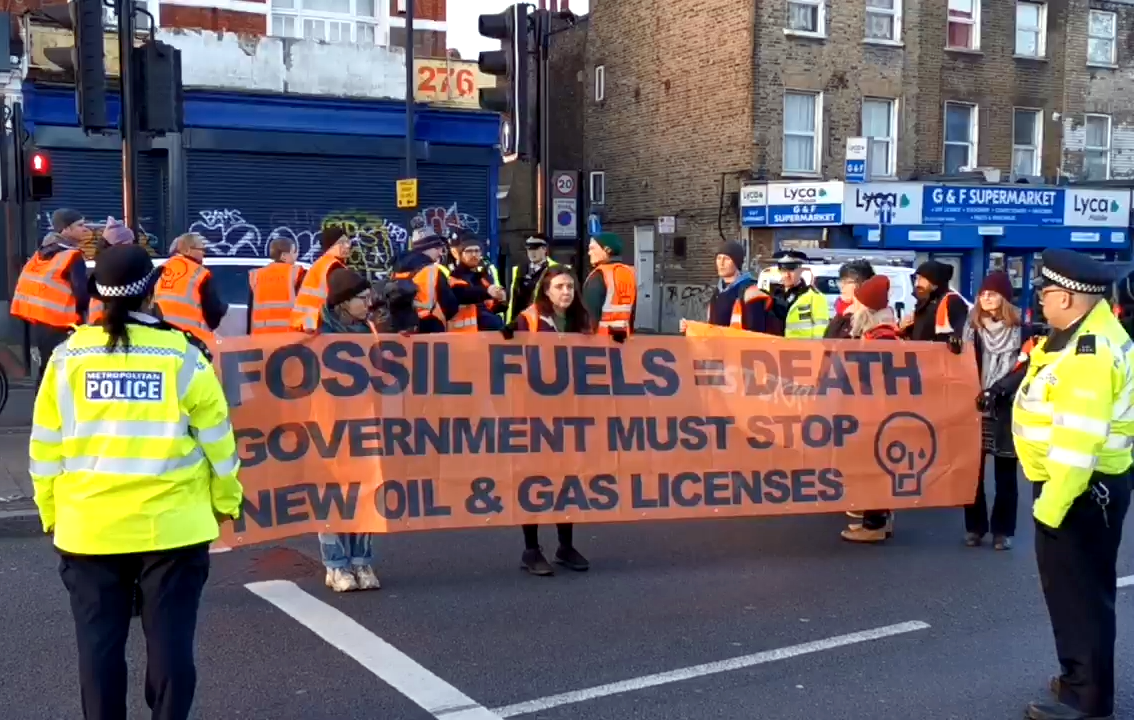
Politicians worldwide are neglecting to address the climate crisis in any meaningful way. The protest group Just Stop Oil is calling for no new development of fossil fuels. Grant Shapps, UK's Secretary of State for Business, Energy and Industrial Strategy is so totally out of touch that he's not even familiar with Just Stop Oil's objectives: “I’ve no issue with people arguing for lower levels of petrol, gas or whatever other thing they want to campaign for usage, that is fine, that is one thing. But don’t go disrupting other people’s lives - it’s unacceptable, it’s illegal!”, the Business Secretary said.  

Young people particularly should get active opposing climate destruction because it's fekking their futures and otherwise they're just going to keep on getting totally disregarded, shat on. Extreme weather events at 1.2C are so serious, 3C may well lead to extinction and next to nothing is being done to prevent it.

Some links - try searching for your own e.g. extreme weather events 2022
https://en.wikipedia.org/wiki/Paris_Agreement
Met Office: Unprecedented extreme heatwave (UK), July 2022
Analysis: Africa’s unreported extreme weather in 2022 and climate change
Over 20,000 died in western Europe’s summer heatwaves, figures show

16/12/22 Climate Reality Check 2021


Continue ReadingClimate Crisis Reality Check (2)

‘Another Terrible Failure’: COP27 Ends With No Action to Cut Off Climate-Wrecking Fossil Fuels

Spread the love

Republished from Common Dreams under Creative Commons (CC BY-NC-ND 3.0). Feel free to republish and share widely.

“If all fossil fuels are not rapidly phased out, no amount of money will be able to cover the cost of the resulting loss and damage,” said one climate justice advocate.

KENNY STANCILNovember 21, 2022

Despite mountains of iron-clad evidence that extracting and burning more coal, oil, and gas will exacerbate deadly planetary heating, negotiators at the United Nations COP27 climate conference failed yet again to directly confront the fossil fuel industry whose insatiable quest for profits is putting the future of humanity in jeopardy.

“More fossil fuels equals more loss and damage.”

“In a critical year, this COP made no progress towards the just and equitable phase-out of fossil fuels needed to avoid the worst impacts of climate change,” Oil Change International executive director Elizabeth Bast said Sunday in a statement. “Despite important progress on the establishment of a loss and damage fund, the final outcome reiterated unambitious language on fossil fuels that will lead to catastrophic consequences.”

In what climate justice advocates called a major breakthrough, the United States on Saturday dropped its opposition to the establishment of a loss and damage fund that aims to compensate low-income nations for the devastating effects of global warming. Through no fault of their own, the world’s poorest people are most vulnerable to the deadly impacts of increasingly frequent and intense extreme weather caused primarily by wealthy polluters. A committee of 24 countries has one year to hammer out details, including which governments will contribute to the fund and which will benefit from it.

However, “COP27’s key steps toward a loss and damage fund are deeply marred by the lack of progress on fossil fuels,” said Collin Rees, U.S. campaign manager for Oil Change International. “Despite unprecedented discussion of equitably phasing out oil, gas, and coal, the end result was yet another COP without formal recognition that Big Oil is driving the climate crisis and harming communities.”

“The failure of leaders at COP27 to commit to an unqualified phase-out of oil, gas, and coal not only pushes 1.5ºC further out of reach, it also undermines progress on loss and damage,” Nikki Reisch, director of climate and energy at the Center for International Environmental Law, wrote on social media. “The plain truth is that more fossil fuels equals more loss and damage. Remedy requires cessation of the harm.”

“In settling for a copy-paste of the Glasgow Pact’s incomplete and loophole-ridden language on a ‘phasedown of unabated coal power’ and ‘phase-out of inefficient fossil fuel subsidies,'” Reisch continued, “governments at COP27 took a giant step backward.”

This critical assessment was shared by many observers.

“If all fossil fuels are not rapidly phased out, no amount of money will be able to cover the cost of the resulting loss and damage,” said Yeb Saño, executive director of Greenpeace Southeast Asia. “When your bathtub is overflowing you turn off the taps, you don’t wait awhile and then go out and buy a bigger mop.”

Republished from Common Dreams under Creative Commons (CC BY-NC-ND 3.0). Feel free to republish and share widely.

Ahead of the COP27 summit, the U.N. found that Earth is on currently track to be up to 2.9°C hotter than the preindustrial average by century’s end. Existing emissions reductions targets and policies are so weak, the body warned, that there is “no credible path to 1.5°C in place,” and only “urgent system-wide transformation” can prevent the world from crossing dangerous tipping points that will lead to the most cataclysmic outcomes.

Temperature rise of roughly 1.2°C to date has already unleashed chaos around the world, including calamitous flooding in Nigeria and Pakistan, along with several other disasters in various places this year.

Despite the worsening nature of the fossil fuel-driven climate emergency, hundreds of corporations are planning to expand dirty energy production in the coming years, including several proposed drilling projects and pipelines in Africa. To make matters worse, delegates at COP27—where more than 630 fossil fuel industry representatives made their presence felt—refused to endorse a complete phase-out of coal, oil, and gas.

“We are at risk of a major surge of new oil and gas production.”

“I don’t in any way want to diss the great success by poorer nations in achieving a loss and damage agreement,” environmental journalist George Monbiot tweeted Sunday, though he predicted that “rich nations will break their promises to pay,” as they have when it comes to providing $100 billion each year to fund climate action in the Global South. “There was no progress on stopping climate breakdown. COP27 is another terrible failure.”

“Whenever an agreement is reached at one of these meetings, people celebrate, largely with relief at having got to the end,” Monbiot added. “It’s only afterwards that we begin to ask, ‘What exactly has been achieved?’ If it’s is anything other than decisive action, the answer is not much.”

David Tong, global industry campaign manager at Oil Change International, said that “some people turned up to negotiate for their futures, but oil and gas lobbyists turned up to negotiate for their wallets.”

“The reality is that the only way to safely limit warming to 1.5ºC is to equitably phase out oil, gas, and coal,” said Tong. “Instead, we are at risk of a major surge of new oil and gas production.”

Tong noted that “new fields and shale wells approved from 2022-2025 could result in 70 gigatonnes of additional climate pollution—and every single tonne of that would take us further beyond 1.5ºC because burning just the oil and gas in already existing fields would exhaust our carbon budget for a 50% chance at 1.5ºC.”

“Although this COP failed to call for an equitable phase-out of oil, gas, and coal,” Tong continued, “momentum is growing. A remarkable group of countries across numerous negotiating blocs spoke up together, urging the phase-out of fossil fuels.”

Notwithstanding the anti-extraction struggles being waged by communities and climate justice campaigners the world over, Seve Paeniu, minister of finance for the Pacific island nation of Tuvalu, denounced his fellow policymakers for omitting language that explicitly demands a fossil fuel phase-out. Tuvalu called for a Fossil Fuel Non-Proliferation Treaty at COP27, becoming the second country to do so, after Vanuatu at the U.N. General Assembly in September.

“We have finally responded to the call of hundreds of millions of people across the world to help them address loss and damage. So this is a defining COP in that respect,” said Paeniu. “However, it is regrettable that we haven’t achieved an equal success in our attempt to achieve the 1.5ºC target. It is regrettable that we haven’t got strong language included in the cover decision before us on phasing out fossil fuel.”

“It is regrettable that we haven’t got text on peaking emissions before 2025,” Paeniu continued. “It is regrettable that we haven’t managed to get stronger mention of methane reduction.”

“In Glasgow, we saw a phase-down of coal,” Zeina Khalil Hajj, head of global campaigning and organizing at 350.org, said in a statement. “At COP27 in Sharm El-Sheikh, we needed to see an equitable and just phase-out of all fossil fuels.”

“A text that does not stop fossil fuel expansion, that does not provide progress from the already weak Glasgow Pact makes a mockery of the millions of people living with the impacts of climate change,” Hajj continued. “The agreement on loss and damage is a major breakthrough, but without action to phase out the expansion of the fossil fuels that will cause further loss and damage, COP27 has failed to make the progress needed. And we are building a fund for our own destruction.”

Bast, for her part, said that “even with this disappointing outcome, we’re seeing growing momentum from individual governments making meaningful commitments to phase out fossil fuels through initiatives like the Beyond Oil and Gas Alliance and the Statement on International Public Support for the Clean Energy Transition.”

“Most importantly, COP27 has showcased the growing power of the climate justice movement,” said Bast. “Throughout these two weeks, civil society voices have demanded a phase-out of fossil fuels and called for rich countries to pay up for climate debt.”

“Every day, we are seeing the power of communities resisting harmful oil, gas, and coal projects,” she added. “We are seeing massive growth in the breadth and depth of the movement. With this people power, we will force an equitable end to fossil fuels and a just transition to clean energy.”

Republished from Common Dreams under Creative Commons (CC BY-NC-ND 3.0). Feel free to republish and share widely.

Continue Reading‘Another Terrible Failure’: COP27 Ends With No Action to Cut Off Climate-Wrecking Fossil Fuels

Fossil Fuel-Linked Companies Dominate Sponsorship of COP27

Spread the love

From software giants to soft drinks makers, the vast majority of partners at climate talks in Egypt are enmeshed with the oil and gas industry, researchers find.

Republished from DeSmog according to their republishing guidelines.

Stella Levantesi

ByStella Levantesi

onNov 16, 2022 @ 09:05 PST

Series: COP27 COVERAGE

Eighteen of the 20 companies sponsoring U.N. climate talks in the Egyptian resort of Sharm El-Sheikh either directly support or partner with oil and gas companies, according to a new analysis shared with DeSmog. 

The findings underscore concerns over the role of the fossil fuel industry at the negotiations, known as COP27, which have become a focal point for deals to exploit African natural gas

“These findings underline the extent to which this COP has never been about the climate: It’s been about rehabilitating the gas industry and making sure that fossil fuels are on the agenda,” said Pascoe Sabido of Brussels-based Corporate Europe Observatory, which co-produced the analysis with Corporate Accountability, a nonprofit headquartered in Boston. 

“These talks are supposed to be about moving us away from fossil fuels, phasing them out,” Sabido told DeSmog. 

A previous analysis by the two organisations and research and advocacy group Global Witness identified at least 636 fossil lobbyists who have been granted access to COP27 – an increase of more than 25 percent compared to the previous COP26 talks held in Glasgow a year ago; and twice the number of delegates from a U.N. body representing indigenous peoples.  

“This is part of the bigger problem which is linked to the overall corporate capture of the U.N. climate talks,” Sabido said. “We need to kick big polluters out.” 

Social license

As documented in the latest edition of DeSmog’s Gaslit column, fossil fuel sponsorship of COP27 represents an extension of a decades-long effort by oil and gas companies to buy social legitimacy by bankrolling sports, arts, and education around the world. 

COP27 partner Hassan Allam Holding, one of the largest privately owned corporations in Egypt, has announced plans to invest  $17.1 billion to turn North Africa into a regional natural gas hub, and $830 million in oil projects over the next two years, the analysis found. 

Sponsors also include Cairo-based Afreximbank, which plans to finance new oil and gas projects through the creation of a multi-billion dollar “energy bank”, and Mashreq, the oldest private bank in the United Arab Emirates, which refinances oil and gas projects. 

Microsoft, which uses cloud-based artificial intelligence to help companies such as Chevron optimize oil and gas extraction, is a partner at COP27, along with rival Google. 

Google says it has cracked down on climate misinformation on its platforms. But the company is still taking money from oil and gas companies to place adverts in search results that present their industry as environmentally friendly, a report found.

German engineering company Siemens, another COP27 sponsor, services firms such as Cairo-based Orascom Construction, which built one of the world’s biggest gas power plants in Egypt in 2018. IBM, also a sponsor, works with pesticide and fertiliser companies to promote “carbon farming” – a carbon offsetting technique that generates carbon credits for storing carbon in soils. Many climate groups believe such practices will provide an excuse for big companies to continue polluting. 

Conflict of interest

The predominance of fossil fuel sponsorship at COP27 cuts a stark contrast with demands from countries facing an existential threat from climate change for urgent action to cut emissions.

Last week, the island states of Vanuatu and Tuvalu became the first countries to back calls to cut greenhouse gas emissions at source by developing a treaty modeled on Cold War-era nuclear arms control agreements to wind down oil, gas and coal production.

Advocates of the campaign for such a Fossil Fuel Non-Proliferation Treaty, including a growing number of cities and municipalities, also want to ban fossil fuel advertising and sponsorship. 

“We’ve got numerous countries calling for a Fossil Fuel Non-Proliferation Treaty and yet COP27 is sponsored by the same companies either directly funding them [fossil fuels], facilitating the extraction of oil and gas, or using their products,” Sabido said. 

The Boston Consulting Group, an American consulting firm and one of the main COP27 partners, works with Anglo-Dutch oil major Shell. COP27 lead partner Coca-Cola, which relies on plastic bottles derived from hydrocarbons, was named the world’s top plastic polluter for five years in a row by the Break Free From Plastic movement in its annual brand audit. The oil industry is banking on expanding production of plastics and other petrochemicals for its future growth. 

Only two out of the 20 COP27 sponsors, renewable energy provider Infinity Power and real estate developer Sodic, have no strong ties to the fossil fuel industry, the analysis  found. 

Corporate Europe Observatory and Corporate Accountability are calling for the U.N. body that organises the annual climate negotiations to adopt a conflict of interest policy that would exclude fossil fuel companies and their partners from attending or sponsoring the events. 

More than 450 organizations have already supported a campaign to Kick Big Polluters Out of COP27.

“What we need to do is end big polluter sponsorships of the talks, they shouldn’t be allowed to bankroll this process,” Sabido said. “They shouldn’t be allowed to greenwash their image through their presence at COPs.” 

Republished from DeSmog according to their republishing guidelines.

Continue ReadingFossil Fuel-Linked Companies Dominate Sponsorship of COP27

Just Stop Oil attempt to get into Downing Street before pausing activism

Spread the love

[ed: O}n day 32 of their activism my friends ;) at Just Stop Oil attempted to scale the gates of Downing Street and blocked Whitehall to demand that the government halts all new oil and gas licences and consents.

At 11:20am yesterday, a group of Just Stop Oil supporters swarmed towards the entrance to Downing street on Whitehall and attempted to scale the gates. A further group sat down in the road with banners to block Whitehall.  Some glued themselves to the tarmac. 22 people were involved in the actions.

A Just Stop Oil spokesperson said:

“Rishi Sunak is about to U-turn on attending COP27. We demand that he also U-turn on new oil and gas.  This genocidal policy will kill millions of people, while failing to address the worst cost of living crisis this country has ever seen.

“Its time for a serious windfall tax on big oil, without the get-out-of-jail-free tax credits that will encourage more oil and gas that we cannot afford. Vulnerable people will be freezing to death in their homes this winter, unable to afford a can of soup,  while his government refuses to tax the rich and the big energy companies that are profiting from our misery.

“We owe it to our young people to stop fossil fuels, we owe it to our workers to create a just transition to a zero carbon economy, we owe it to our old people to enable them to live with dignity. We are not prepared to stand by and watch while everything we love is destroyed. 

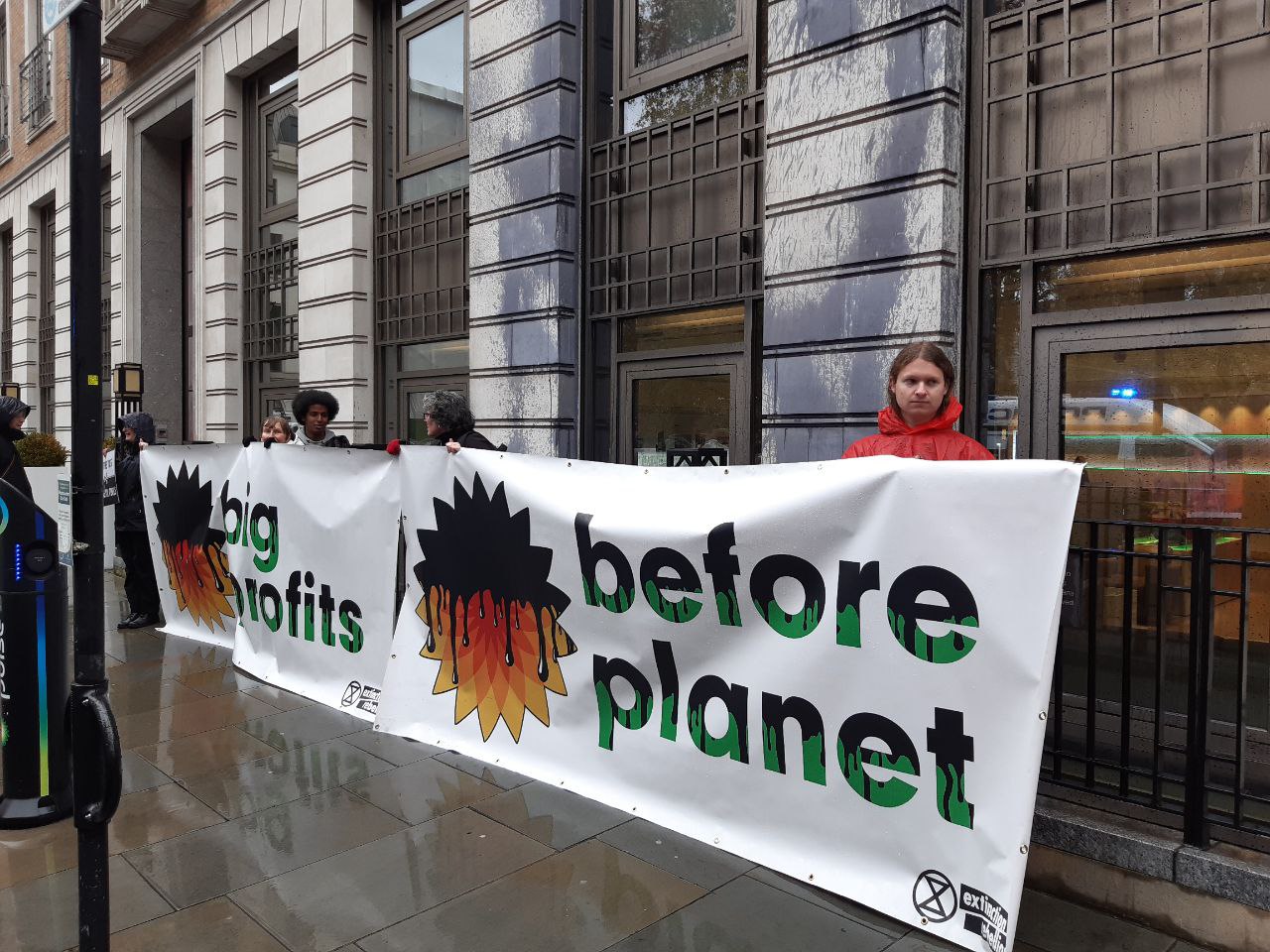
The action yesterday followed BP’s announcement of a bumper profit of £7bn for the last quarter alone, while it expects to pay only £700m in windfall tax on its North Sea operations for the whole year. It also announced that rather than reinvesting its profits in the transition to renewable energy as it claims or in reducing costs for customers, it is prioritising transfers to wealthy shareholders by spending $8.5bn so far this year on share buy backs. 

Yesterday’s action follow four weeks of continuous civil resistance by supporters of Just Stop Oil during which the police have made 678 arrests. Since the campaign began on April 1st, Just Stop Oil supporters have been arrested nearly 2,000 times, with 6 supporters currently in prison.

This week’s UN Report states that “Staying under 1.5C is no longer credible.” 

Going over 1.5C locks in the loss of the coral reefs, the loss of 25% of the world’s fish stocks, the destruction of hundreds of millions of livelihoods and millions of innocent lives.

Going over 1.5C means island nations going underwater and this is just the beginning.

Just Stop Oil will be pausing its campaign of civil resistance from yesterday. They say that they are giving time to those in the government who are in touch with reality to consider their responsibilities to this country at this time.

[This report is sourced mainly from Just Stop Oil press bulletins.]

Continue ReadingJust Stop Oil attempt to get into Downing Street before pausing activism

Greenpeace to Rishi Sunak: Tax Fossil Fuel Profits and Lower Energy Bills Now

Spread the love
Dozens of climate and energy justice campaigners call for a stronger windfall profits tax to fund home insulation and renewable power generation from inside the U.K. Parliament in London on October 24, 2022. (Photo: Suzanne Plunkett/Greenpeace)

[The situation on fracking has changed since this article was published 3 days ago. The new UK government under Rishi Sunak has made clear that fracking is not permitted in UK.] Republished from Common Dreams under Creative Commons licence (CC BY-NC-ND 3.0).

“Delay has cost lives. Chaos costs lives. And it will cost more lives this winter and every winter,” campaigners say. “No one benefits except the oil and gas profiteers.”

KENNY STANCILOctober 24, 2022

Hours after lawmakers from the ruling Conservative Party voted to make Rishi Sunak the United Kingdom’s third prime minister this year, more than 30 climate and energy justice activists occupied the lobby of Parliament to demand that the government fund home insulation and renewable power generation through a more robust tax on oil and gas corporations’ windfall profits.

Almost seven million people in the U.K.—nearly a quarter of the country’s population—are facing fuel poverty as winter quickly approaches. Meanwhile, heavily subsidized fossil fuel giants are raking in record profits, which they use to block policies that would facilitate a green transition and rein in their destructive industry.

Greenpeace campaigners, armed with sky-high utility bills from across the country, read the testimonies of people struggling to make ends meet amid a historic cost-of-living crisis that Sunak’s right-wing predecessors—Boris Johnson and Liz Truss—and Tory colleagues have, according to progressive critics, exacerbated through adherence to neoliberal orthodoxy.

Stressing that “chaos costs lives,” activists made the case for simultaneously addressing soaring energy prices and the worsening climate emergency by taxing fossil fuel profits and using the revenue to invest in better residential insulation and expanded clean energy production.

“Thanks to spiraling gas prices and the oldest, coldest housing in Europe, millions of people are being pushed into fuel poverty,” Greenpeace U.K. noted in a blog post. “People across the country have waited for government after government to provide enough help to lower their energy bills—but mostly what we’ve had is political chaos.”

The group continued:

Rising energy bills and cold homes will cost lives. The U.K. already has the sixth highest rate of excess winter deaths in Europe. Higher bills also disproportionately impact disabled and older people, people of color, and those from impoverished communities. For instance, many medical and mobility devices require electricity. Meaning, on average, disabled people have much higher energy bills just for using equipment they need in their day-to-day lives. Political leaders have failed to put people first and provide sufficient support for the energy crisis.

It’s political choices that have caused the levels of inequality and fuel poverty we’re facing. If this government properly taxed record fossil fuel profits, it could help fund extra support for those in need, and help pay for a nationwide program to insulate homes. Instead, the last six weeks have seen u-turns on the Conservative manifesto pledge on fracking and new commitments to North Sea oil and gas, which will wreck our climate and won’t lower our bills.

Two months ago, the U.K. Treasury estimated that the nation’s energy firms are poised to enjoy up to £170 billion ($191.9 billion) in excess profits—defined as the gap between money made now and what would have been expected based on price forecasts prior to Russia’s invasion of Ukraine—over the next two years.

A 25% windfall tax on oil and gas producers approved in July is expected to raise £5 billion ($5.6 billion) in its first year. However, the existing surtax on excess fossil fuel profits contains loopholes allowing companies to drastically reduce their tax bill by investing more in oil and gas extraction, which the industry claims will boost supply. The recently enacted windfall tax, which lasts through 2025, also exempts eletricity generators, even though Treasury officials attribute roughly two-fifths of the £170 billion in excess profits to such actors.

With winter energy bills projected to triple compared with last year, calls are growing in the U.K. to increase the windfall tax rate on excess fossil fuel profits and extend it to electricity generators benefiting from rising oil and gas prices.

While Truss vehemently opposed windfall taxes—asserting that they “send the wrong message to investors”—Sunak introduced the current windfall tax in May when he was Johnson’s chancellor of the exchequer.

According to Greenpeace, Monday’s action was meant to show Sunak that “he can’t ignore the almost seven million households facing fuel poverty.”

The life-threatening crises of surging utility bills and unmitigated greenhouse gas pollution are both caused by fossil fuel dependence, the group noted. Consequently, these problems have lifesaving solutions that are straightforward and aligned.

“To lower our bills long-term and reduce our emissions,” Greenpeace urged Sunak to do the following:

  • Commit to investing £6 billion [$6.8 billion] immediately to kickstart a street-by-street insulation program to keep bills low for good;
  • Shift to renewable energy, like wind and solar, which are cheaper and quicker to build than oil and gas; and
  • Properly tax oil and gas companies’ excess profits so they pay their fair share, given how much money they’ve made off these crises.

“It’s time we have a government that brings down bills for good and plays its part in tackling the climate crisis,” the group added.

On social media, Greenpeace encouraged people to sign a petition imploring U.K. lawmakers to “keep people warm this winer.”

“Delay has cost lives. Chaos costs lives. And it will cost more lives this winter and every winter,” the group emphasized. “No one benefits except the oil and gas profiteers. If the government were on the people’s side, the U.K. really could get on track to quitting oil, gas, and sky-high energy bills, forever.”

Republished from Common Dreams under Creative Commons licence (CC BY-NC-ND 3.0).

Continue ReadingGreenpeace to Rishi Sunak: Tax Fossil Fuel Profits and Lower Energy Bills Now