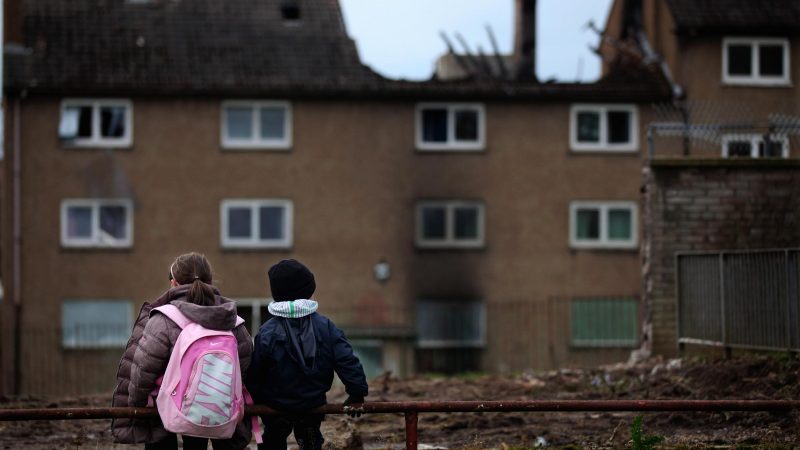
‘Great stories begin in social homes. But we’re living in a housing emergency, and we need to build more. Now.’
In England alone, 1.3 million households are stuck on waiting lists for housing. 145,800 children are growing up in temporary accommodation. During the last decade, 19,000 social rent homes have been lost every year. 90,000 social homes need to be built every year for the next ten years to end the housing emergency.
These alarming statistics are provided by the housing and homelessness charity Shelter. The research, carried out by Shelter and the National Housing Federation, found that the building of 90,000 social homes a year would pay for itself within three years, add over £50bn to the economy over 30 years, and support 140k direct jobs in the first year.
In the run-up to the general election, the charity has launched a Vote for Home campaign. Over 35,000 people have already put their signature to a letter calling on political leaders to fix the country’s housing crisis by building new social homes.
It urges Rishi Sunak, Keir Starmer, Ed Davey, Carla Denya, and Adrian Ramsey to build social homes and “create a fairer renting system that will end the housing emergency.”
The letter notes how none of the leaders have promised to prioritise fixing the housing emergency.
A record 145,800 children are now homeless in England, the government’s latest quarterly homelessness stats have shown, highlighting once more the sheer scale of the housing crisis in the country.
The number of children living in temporary accommodation is now at the highest ever level recorded and up 15% on last year.
Almost 320,000 households were assessed as homeless or at risk of homelessness – also a record high, while the number of households threatened with homelessness and owed a prevention duty because of a section 21 notice is the highest on record, at 25,910 over the last year. It was only last week that the government failed to set a date for banning section 21 no-fault eviction notices, which continue to have devastating impacts for low-income and vulnerable households up and down the country.
Reacting to the record figures, Matt Downie, chief executive at Crisis, said: “Today’s statistics need to be a wake-up call. We are failing to stop people being forced into homelessness and we are failing to help them back out. These are the appalling consequences of our failure to get a grip on this crisis.
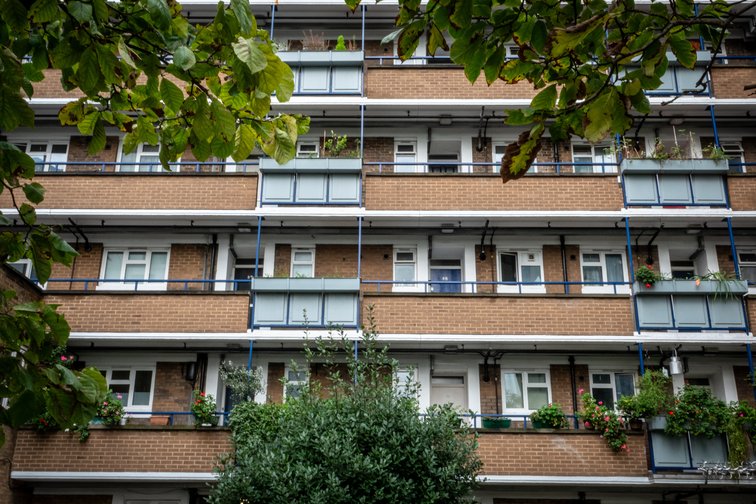
Flats originally built for social housing | Photo by Matt Cardy/Getty Images
More social rent homes were sold or demolished than built last year, new government figures show
The number of social rent homes in England continues to plummet with almost 10,000 lost last year, according to new government statistics.
The country’s housing crisis continues to deepen amid a lack of supply and soaring rents, with evictions and homelessness surging.
According to figures released yesterday by the Department of Levelling Up, Housing, and Communities (DLUHC), a net 9,379 homes for social rent were lost in 2022/23.
Social rent homes – historically known as council houses, though they are no longer solely provided through councils – are already massively oversubscribed. There are 1.2 million people on housing waiting lists across the country and people can languish on these for decades before being offered a home. Last year openDemocracy revealed that in 2022 2,300 people had died while on the waiting list.
Labour MP Nadia Whittome, who sits on parliament’s housing select committee, told openDemocracy: “I see the devastating impact of the lack of social housing in my inbox and my advice surgeries every week. Without social homes, too many people simply have nowhere else to go – they cannot afford to rent privately.
“At a time when we desperately need to increase the number of social homes, it’s outrageous that government policy means we’re losing them instead. The homelessness crisis is being fuelled by Right to Buy and the failure to build social housing.”
The latest figures show 18,799 social homes in the “low-cost rental” category were sold last year, while another 3,224 were demolished – totalling 22,023. According to the government, 86% (about 18,940) of these losses were social rent homes, with the remainder classed as so-called “affordable” rent, “intermediate” rent or “London affordable” rent.
With just 9,561 social rent homes completed in the same year, that brings the total losses to 9,379.
Social housing used to be the second most common type of home in the UK after home ownership. But following Margaret Thatcher’s Right to Buy policy introduced in 1980, the country has seen a huge sell-off of homes into private ownership. Councils sold 10,896 through Right to Buy last year.
These statistics come as the supposed landmark private renters bill, the Renters Reform Bill, has been delayed again, with no update on when one of its key tenets, banning ‘no-fault’ section 21 evictions, will come in. News of the delay coincided with the publication of damning statistics that show the number of these evictions has rocketed by a third in 12 months.
Section 21 evictions are the number one cause of homelessness in the UK and figures released by the Ministry of Justice show 30,230 landlords began section 21 court proceedings in 2023 – a 28% rise on 2022. There was also a surge in the number of these evictions where bailiffs were involved.
Housing minister Lee Rowley was recently criticised for a misleading boast about a “significant increase” in all types of social housing under the Conservative government, while being questioned about a policy that only affected social rented homes.
Rowley is yet to correct his statements.
Separate statistics from the government’s own Regulator of Social Housing shows there has been a decrease of 225,102 genuine social rented homes since 2012, though this is offset by the addition of 361,560 so-called “affordable” rent homes.
“Affordable” rent homes are rented for up to 80% of market rates and remain out of reach for many of the people on housing wait lists. Poverty campaigners, the Chartered Institute of Housing, and even a Conservative MP have criticised the government’s use of “affordable” homes figures to massage the dire state of social rented stock.
Conservative MP Bob Blackman told openDemocracy that building more social homes at social rents was essential.
“I feel disappointed,” he told openDemocracy. “I’m not worried about the number of homes sold, or the numbers demolished. What I’m concerned about is that we’re not replacing them. That’s the problem.”
Blackman insisted the Conservative government had not failed on social housing, but added: “I agree that we haven’t built enough whatsoever.”
A spokesperson fro DLUHC told openDemocracy: “Our £11.5 billion Affordable Homes Programme is delivering thousands more affordable homes to rent and buy right across the country.
“Last year also saw the highest levels of completions of social rent since 2013. The total stock of [all types of affordable housing] has grown by 151,000 since 2010, whereas in the previous 13 years it fell by 420,000. Despite the economic climate we remain on track to build one million homes this parliament and our long-term plan for housing will allow us to go even further to deliver the homes we need.”