Unprecedented rains cause floods and landslides in Nepal, killing nearly 200 people

Spread the love

Original article by Abdul Rahman republished from peoples dispatch under a Creative Commons Attribution-ShareAlike 4.0 (CC BY-SA) license.
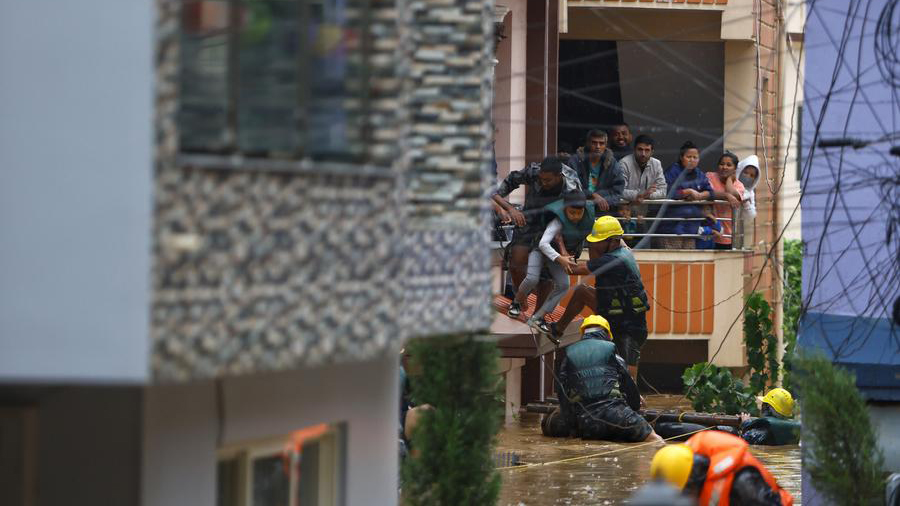
Rescuers evacuate flood victims in Lalitpur, Nepal ((Photo: Sulav Shrestha/Xinhua)

Meteorologists in the Himalayan nation have observed a pattern of change in the local climate in the last few years, with monsoon season lasting longer than usual and erratic rains affecting millions

Over 200 people have been killed or missing in the floods and landslides caused by unprecedented rains lashing Nepal for the last five days. Thousands have been displaced in different parts of the mountainous country.

On Monday, authorities announced the shutting down of all educational institutions. Several school and university buildings have also been damaged after facing the brunt of the torrential rains.

The capital Kathmandu has been one of the most affected regions in the country with a large number of neighborhoods flooded or covered with the mud due to rain water, which has also caused the water levels in the Bagmati river to rise. The flood and landslides have destroyed numerous homes, bridges, roads, and vehicles, leaving a large number of people stranded.

Many flooded areas are localities where poor and working class people live. Their houses have been inundated with water and mud, which may take longer to clear, raising the risk of the breakout of epidemics after the water recedes.

According to Nepal’s Ministry of Transport, 47 out of 80 highways in the country have been affected by the rains and landslides, greatly impacting transportation. Over one hundred flights were canceled due to heavy rains, and the Kathmandu airport stopped operating on Friday and Saturday for several-hour-long periods. It re-started operations again on Sunday morning.

Several power plants have also been damaged due to the flooding and landslides, disrupting the power supply to different parts of the country.

The Communist Party of Nepal (UML) issued a statement earlier asking the government to increase its efforts to relief and rescue work. The party also asked cadres to participate in flood relief efforts.

The heavy rains in Nepal could also have a significant impact in India. In Indian states like Bihar, the flooding was already worsening in the last couple of weeks. Thousands of people have been displaced in several bordering regions in Bihar in the last couple of days, with most of the rivers in the region flowing far above the danger mark.

According to official data, at least 1.6 million people on the Indian side of the border are already severely affected due to the floods. Several schools and other public services have been affected. Local power grids are also shutting down due to flooding, leaving thousands without electricity.

Effects of climate change

Heavy rains during the monsoon season in South Asia are normal. However, in the last few years, local meteorological officials have claimed the severity of rains has increased and the monsoon has been significantly prolonged. The monsoon has shifted its usual duration. Its withdrawal, stretching until the month of October, is quite unusual, resulting in larger repercussions on the region’s agriculture.

From Thursday to Saturday, Kathmandu received 322 mm rainfall against an annual average of around 2,700 mm, causing a sudden rise in the water levels in the region’s rivers. On Saturday alone, some parts of the city received 240 mm rainfall within 24 hours, a record in over two decades.

Several studies indicate that Nepal has emerged as one of the most vulnerable countries in the context of climate change. The rise in the country’s average temperature is much higher than that of the global average (0.056 degrees Celsius against the global average of 0.03 degree Celsius), for example. The rise in temperature has caused the melting of several glaciers in the country, again endangering the local climate as well as the livelihoods of millions of people.

Despite the seriousness of the climate situation in Nepal, most of the developed world has largely been indifferent to its concerns in the climate negotiations so far. Raising the issue, Prime Minister KP Sharma Oli, while speaking during the ongoing UN General Assembly’s 79th session on Thursday said that the world needs to pay attention to the possible effects of climate change in a country such as Nepal which is a “natural climate stabilizer” vital for maintaining balance in the global environment.

Given its significance for global climate concerns, “it is essential that the mountain agenda receive due attention in climate negotiations,” Oli said.

Original article by Abdul Rahman republished from peoples dispatch under a Creative Commons Attribution-ShareAlike 4.0 (CC BY-SA) license.
Continue ReadingUnprecedented rains cause floods and landslides in Nepal, killing nearly 200 people

‘Enough Is Enough’: Indian Doctors Stage Nationwide Strike After Rape, Murder of Trainee

Spread the love

Original article by BRETT WILKINS republished from Common Dreams under Creative Commons (CC BY-NC-ND 3.0).

Indian doctors take part in an August 17, 2024 protest in Guwahati, Assam against the rape and murder of a trainee physician in a Kolkata hospital. (Photo: David Talukdar/Anadolu via Getty Images)

“This is both about the Kolkata doctor who was brutalized and every woman who has faced sexual violence or harassment in the country,” said one protester.

Indian doctors and healthcare workers on Saturday ramped up a nationwide strike in response to the rape and murder of a trainee physician in a state-run hospital in Kolkata, shutting down all hospital services except for emergency care in a bid to force action to protect women from sexual assault.

The August 9th murder of the 31-year-old doctor at R.G. Kar Medical College and Hospital in Kolkata sparked massive demonstrations that began Monday and continued throughout the week. On Wednesday, protesters at a “Reclaim the Night” march attacked the hospital where the woman was killed. Protests also took place in cities including Delhi, Hyderabad, Mumbai, and Pune.

Saturday’s strike, which was organized by the Indian Medical Association, is set to last for 24 hours, during which all treatment in government hospitals and outpatient clinics has been canceled. The IMA condemned the “crime of barbaric scale and the lack of safe spaces for women” in the world’s most populous nation.

“This is both about the Kolkata doctor who was brutalized and every woman who has faced sexual violence or harassment in the country,” one Kolkata protester toldThe Guardian. Other demonstrators in the West Bengal capital shouted slogans including, “We want justice,” “Enough is enough,” and “Hands that heal shouldn’t bleed.”

“We don’t feel safe,” Antara Das, a medical student who joined the Kolkata protest, told Al Jazeera. “If this happened inside a hospital that is second home to us, where are we safe now?”

Indian physicians called for the implementation of the Central Protection Act, a proposed law meant to shield healthcare workers from violence.

“We just want to be safe while we are doing our duty,” Sapna Rani, a 27-year-old female doctor in New Delhi, told Al Jazeera.

One man has been arrested in connection with the doctor’s rape and murder. According to the Indian Express, the suspect’s wife filed multiple complaints with police accusing him of assault, including while she was pregnant. The suspect is reportedly a “civic volunteer” who worked closely with police.

In stark contrast to the nationwide protests, local police and the principal at the victim’s medical college, Dr. Sandip Ghosh, claimed the murdered doctor, who was sleeping in the hospital’s seminar hall when she was attacked, killed herself.

Ghosh then claimed that the victim—who was found bleeding from her eyes, mouth, and genitals, and who had extensive traumatic injuries to her body—was still to blame for her own death.

“It was irresponsible of the girl to go to the seminar hall alone at night,” he said, according to The Wire.

Ghosh was interrogated Saturday by India’s Central Bureau of Investigation. Earlier in the week, he tendered his resignation from R.G. Kar. Instead of accepting his resignation, the government transferred him to serve as principal of Calcutta National Medical College, where students staged a protest against the move.

India Today reported Saturday that the West Bengal government has canceled Ghosh’s transfer.

Original article by BRETT WILKINS republished from Common Dreams under Creative Commons (CC BY-NC-ND 3.0).

Continue Reading‘Enough Is Enough’: Indian Doctors Stage Nationwide Strike After Rape, Murder of Trainee

Left and civil society groups demand India end its complicity in Israel’s genocide

Spread the love

Original article republished from peoples dispatch under a Creative Commons Attribution-ShareAlike 4.0 (CC BY-SA) license.
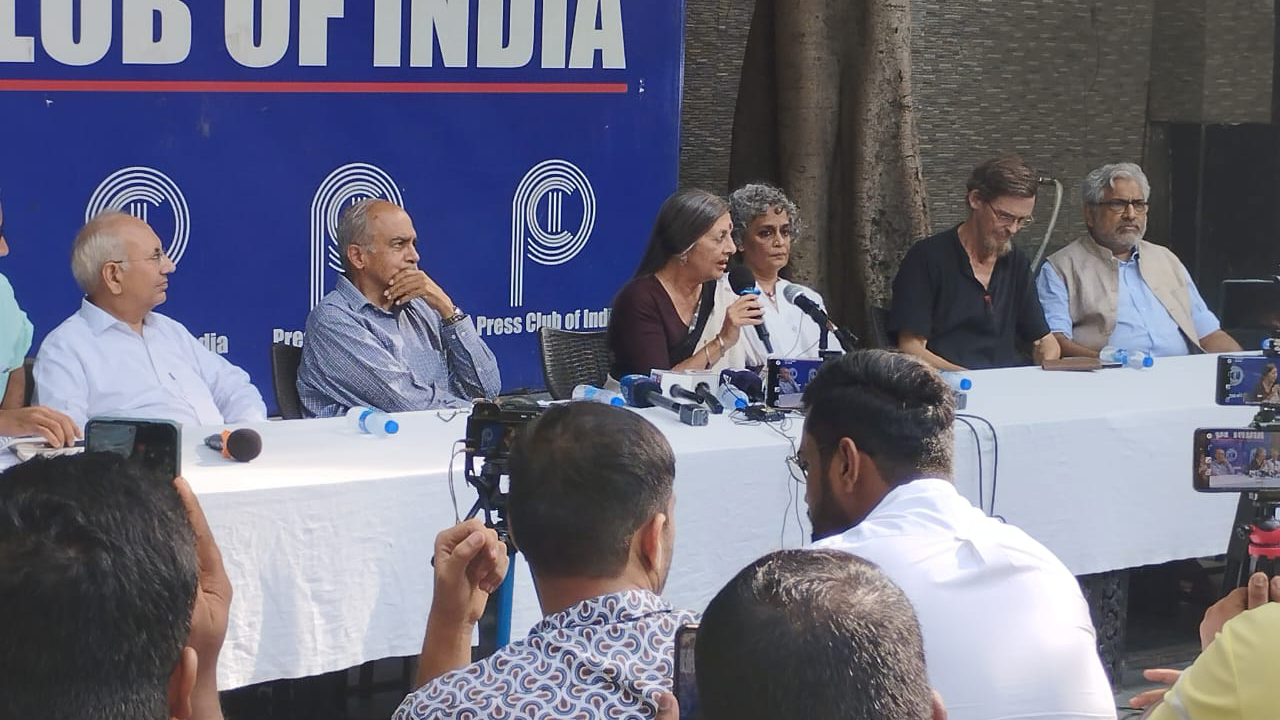
Brinda Karat, CPI (M) polit bureau member speaking in the press conference in New Delhi on Thursday, August 1

Left parties will observe a day of solidarity with Palestine on August 3 to pressure the Indian government to stop sending weapons to Israel and to end the genocide

Five left parties in India issued a joint call, asking the Indian government to stop supplying weapons to Israel, and demanding immediate comprehensive international sanctions over its continued violations of international law and the genocide of Palestinians in Gaza. Similar calls were made by civil society groups as well.  

The parties include the Communist Party of India (Marxist), the Communist Party of India (CPI), the Revolutionary Socialist Party (RSP), Forward Bloc, and the Communist Party of India (Marxist-Leninist) Liberation, issued a joint call for a nationwide protest mobilization on August 3, in solidarity with the Palestinian people. 

Apart from calling for an immediate ceasefire in Gaza and creation of a Palestinian state on pre-1967 borders, the left parties demanded Israel be declared an apartheid state, and denounced Israel’s continued defiance of UN resolutions, existing international laws and the rulings of the International Court of Justice (ICJ).  

“In the light of brazen violations of UN resolutions, the ICJ rulings against the genocide by Israel in Gaza and the escalation of such genocide against the people of Palestine,” the left parties call upon “Indian people to express their solidarity with the Palestinian people and against the genocide and atrocities being carried out by Israel backed by the United State of America” the text of the joint call reads.  

The left parties also demanded that the government of India “cancel all export licenses and permissions to various Indian companies for the supply of military arms and ammunition to Israel, and halt all arms imports from Israel” and “end all forms of complicity with Israel’s illegal military occupation and genocide [which is] based on the principles of colonial apartheid.”

Speaking in a press conference organized by civil society groups on Thursday in New Delhi, Brinda Karat, a CPI (M) polit bureau member said that, “our deep and abiding solidarity for Palestinian freedom requires us to hold our own government accountable for actions which help the perpetrators of the continuing barbaric horrors against the children, the people of Palestine.”

Speaking in the press conference, economist and right to food activist Jean Dreze accused the Indian government of complicity in genocide and starvation of Palestinians, by refusing to stop cooperation with the Zionist state and by refusing to press Israel to stop its war in Gaza.

Almost 40,000 Palestinians have been killed and over 90,000 injured so far in the Israeli genocide on Gazam which began on October 7 of last year.   

Stop aiding Israeli genocide in Gaza!

Several prominent figures, including former judges of the Supreme Court of India, scholars and activists wrote a joint letter to India’s defense minister Rajnath Singh on Wednesday, asking the country to immediately halt all supplies of weapons to Israel, claiming it violates India’s obligations to international laws and its own constitutional provisions.  

Quoting media reports about Spain not allowing the docking of at least two ships allegedly carrying military equipment from India to Israel in recent months, as well as labels of “made in India” found on some of the missiles dropped by Israel in Gaza, the civil society members claimed in a press conference on Thursday that the Narendra Modi-led government of India has forgotten its own commitments to the Genocide Convention and other international laws, and even failed to implement its historical positions on the Palestinian issue. 

The joint letter to India’s defense minister provides evidence of how at least three Indian companies are manufacturing missile parts and Hermes drones, which are used by Israel to launch attacks inside civilian areas in Gaza. 

“Any supply of military material to Israel would amount to a violation of India’s obligations under international humanitarian law and the mandate of Article 21 read with Article 51 (c) of the Indian constitution. We urge you, therefore, to cancel the concerned export licenses and halt the granting of any new licenses to companies supplying military equipment to Israel,” the joint letter reads.   

India’s billions of dollars of arms trade with Israel contradicts its own stated positions of “peaceful resolution in Palestine” and its voting patterns on successive UN resolutions most of which support an immediate ceasefire and the creation of a Palestinian state on the occupied territories, various speakers said in the press conference on Thursday. 

Speakers, including Karat, demanded that the Indian government should stop trying to be a beneficiary of the Israeli occupation and stop indulging in opportunistic practices, such as sending its workforce to replace Palestinians in Israel.  

Last year, the Indian government agreed to send workers to replace thousands of Palestinians whose work permits were canceled by Israel after the beginning of the war on October 7.

Siddharth Varadarajan, editor of the Wire, said that India’s policy on supporting Israel during the war goes against the Modi government’s stated position of preserving Indian interests, as Israeli acts such as the assassination of Ismail Haniyeh in Iran earlier this week could result in the eruption of regional warm which can force around 5 million Indians working in the Gulf countries to return home.

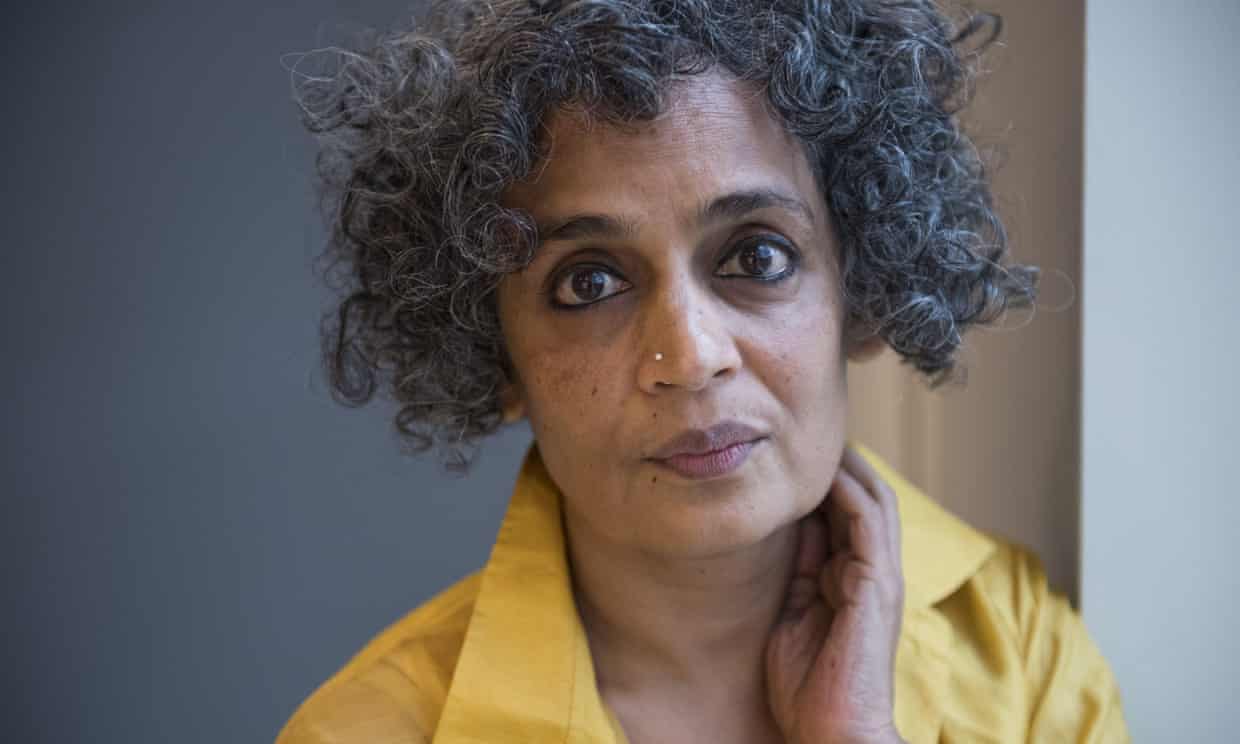
Lawyer Prashant Bhusan, and prominent writer Arundhati Roy, also underlined that any clandestine deal between India and Israel violates India’s democratic principles and its historic commitments to anti-colonial struggles around the world. 

Original article republished from peoples dispatch under a Creative Commons Attribution-ShareAlike 4.0 (CC BY-SA) license.
Continue ReadingLeft and civil society groups demand India end its complicity in Israel’s genocide

India: author Arundhati Roy to be prosecuted over 2010 Kashmir remarks

Spread the love

https://www.theguardian.com/world/article/2024/jun/15/india-author-arundhati-roy-to-be-prosecuted-over-2010-kashmir-remarks

Arundhati Roy has stood out as one of the most high-profile critics of Modi’s government, which has been accused of suppressing free speech. Photograph: TT News Agency/Alamy

Official from ruling BJP party allows action against Booker winner under controversial anti-terrorism law

Indian authorities have granted permission for the prosecution of the Booker prize-winning Indian novelist Arundhati Roy over comments she made about Kashmir at an event in 2010.

The top official in the Delhi administration, VK Saxena, gave the go-ahead for legal action against Roy, whose novel The God of Small Things won the Booker prize in 1997, under anti-terrorism legislation, alongside a former university professor, Sheikh Showkat Hussain.

The action against Roy and Hussain, a former professor at the Central University of Kashmir, is over allegedly making provocative speeches, the Press Trust of India reports, citing officials from Saxena’s office.

Saxena, who is serving as the lieutenant governor, is a politician from prime minister Narendra Modi’s ruling BJP.

While Roy, 62, is one of India’s most famous living authors, her activism and outspoken criticism of Modi’s government, including over laws targeting minorities, have made her a polarising figure in India.

https://www.theguardian.com/world/article/2024/jun/15/india-author-arundhati-roy-to-be-prosecuted-over-2010-kashmir-remarks

Continue ReadingIndia: author Arundhati Roy to be prosecuted over 2010 Kashmir remarks

Climate crisis made May heatwaves 1.5C hotter in India, study says

Spread the love
Experienced climbers scale a rock face near the historic Dumbarton castle in Glasgow, releasing a banner that reads “Climate on a Cliff Edge.” One activist, dressed as a globe, symbolically looms near the edge, while another plays the bagpipes on the shores below. | Photo courtesy of Extinction Rebellion and Mark Richards

https://www.independent.co.uk/climate-change/news/india-heatwaves-climate-change-delhi-50c-b2558588.html

Hundreds of deaths have been attributed to heatwave that saw temperatures approaching 50C in Delhi

The unprecedented heatwaves that scorched northern and central India in May were made 1.5 degrees Celsius hotter by the climate crisis, a new scientific assessment has found.

In the last week of May, India experienced a spell of severe heatwaves, with 37 cities recording temperatures above 45C, prompting warnings of heatstroke. The capital Delhi saw a record temperature of 49.1C.

The heatwaves led to hundreds of deaths, including one voter and several workers conducting the mammoth national election, which ended after six weeks on 1 June.

The heatwaves were nearly 1.5C warmer than the hottest heatwaves the country had seen previously despite occurring later in the typical summer season, according to a report published by ClimaMeter, a research project funded by the European Union and the French National Centre for Scientific Research, or CNRS.

The study found that the heatwaves were “a largely unique event whose characteristics can mostly be ascribed to human driven climate change”.

This May was the hottest ever on record globally, completing an entire year of record-breaking extreme heat for the planet.

Article continues https://www.independent.co.uk/climate-change/news/india-heatwaves-climate-change-delhi-50c-b2558588.html

Continue ReadingClimate crisis made May heatwaves 1.5C hotter in India, study says