300 million on the streets in a historic national strike in India

Spread the love

Original article by Abdul Rahman republished from peoples dispatch under a Creative Commons Attribution-ShareAlike 4.0 (CC BY-SA) license. See the original article for embedded content.

The strike was called jointly by the worker unions and farmers groups to demand the withdrawal of the anti-people policies, such as the four new labor codes and the recently signed trade deals with the US and the EU.

The strike was called jointly by the worker unions and farmers groups to demand the withdrawal of the anti-people policies, such as the four new labor codes and the recently signed trade deals with the US and the EU

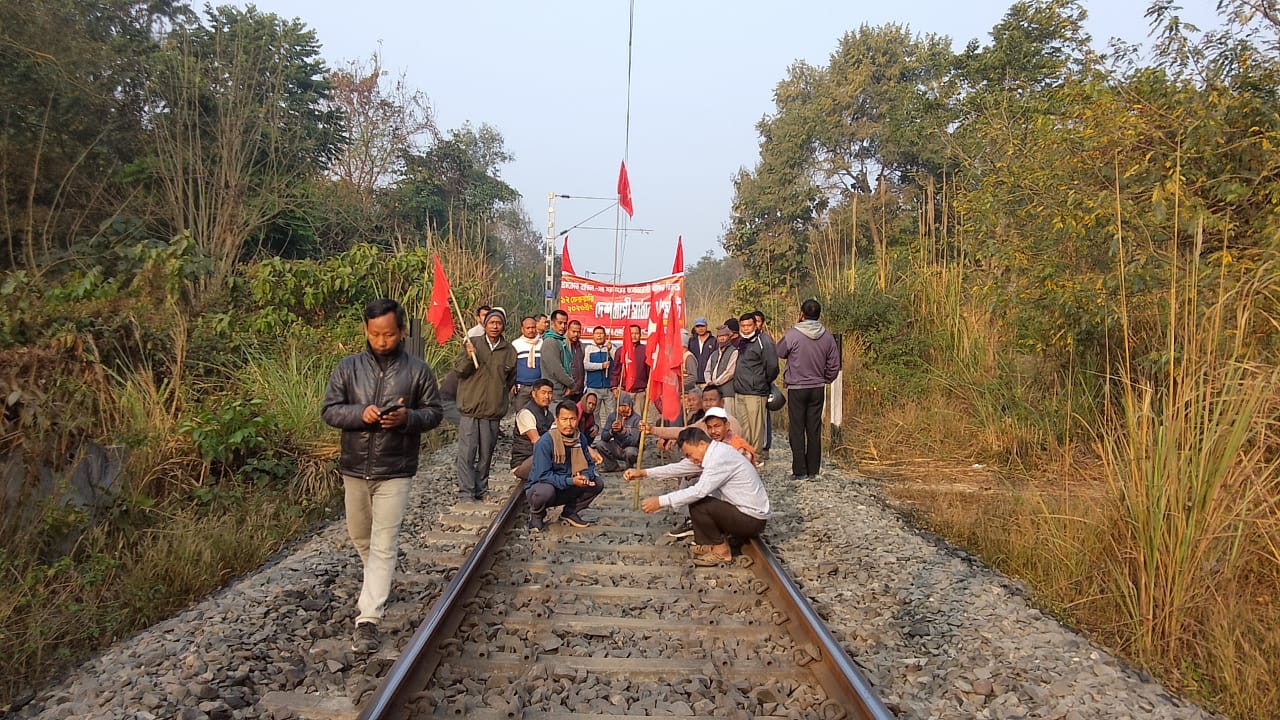
300 million workers, farmers, students, and professionals from various fields took to the streets across India on Thursday, February 12, in defense of their rights and to denounce the policies of the ultra-right-wing government in the country.

Workers went on strike shutting down thousands of coal fields, refineries, factories, banking, and transportation in remote corners of the country, heeding the call of the Central Trade Unions (CTUs), a joint platform of major trade unions in India, including the Centre for Indian Trade Unions (CITU), the All India Trade Union Congress (AITUC), the All India Central Council of Trade Unions (AICCTU), and the Hind Mazdoor Sabha (HMS), among others.

#12thFebruaryGeneralStrike a Historic Success

The All India Kisan Sabha (AIKS) congratulates crores of Indian workers, agricultural workers and toiling peasantry for making the 12th February 2026 General Strike a historic success. The anger of working people against the (1/n) pic.twitter.com/jfItzhDVeg

— AIKS (@KisanSabha) February 12, 2026 

The workers were joined by millions of farmers and agricultural workers from across the country under the call of the Samyukta Kisan Sabha (SKM) and the All India Agricultural Workers Union (AIAWA), among others. The farmers and agricultural workers demonstrated at all the district headquarters and the village centers across India.

is a warning to the ruling dispensation: Withdraw the slew of anti-people bills and acts and restore the pro-worker and pro-farmer policies. If the Modi government fails to respond adequately to the demands of the toilers of the country, it will be inviting a much longer (9/n) pic.twitter.com/UT0eVGOlqU

— AIKS (@KisanSabha) February 12, 2026 

In several places, workers and farmers were joined by students, women’s organizations, and other civil society groups who extended their solidarity with the strike call.

Strikers in many areas defied attempts by factory owners and security forces to stop the strike by picketing the factory gates and marching on the streets to implement the strike. 

https://www.facebook.com/plugins/video.php?height=476&href=https%3A%2F%2Fwww.facebook.com%2Freel%2F2229112557619929%2F&show_text=false&width=267&t=0

In several states, such as Kerala, Odisha, and Tripura, among others, most of the business establishments were shut in solidarity with the strike call. Demonstrations were held at government offices with thousands marching, shouting slogans, carrying banners, posters, and red flags.

general strike in the coming days.

Red Salute to the 12th February 2026 General Strike!

Long Live Worker-Peasant Unity!@DrAshokDhawale
President@VijooKrishnan
General Secretary pic.twitter.com/UJEBYFYoIq

— AIKS (@KisanSabha) February 12, 2026 

In the capital, Delhi, workers held large gatherings at the state secretariat. Later they also gathered at Jantar Mantar, where the central leadership of the CTUs and the SKM made speeches calling the strike a success.

Sudip Dutta, president of the CITU, claimed that the one day strike is just symbolic and if the Narendra Modi-led government fails to fulfill their demands it should be ready to see larger and longer strikes in the coming days as workers and farmers will not allow the government to harm their interests or sell India’s national sovereignty to the US and other foreign powers.

https://www.facebook.com/plugins/post.php?href=https%3A%2F%2Fwww.facebook.com%2Fphoto.php%3Ffbid%3D1462121498612975%26set%3Da.544818833676584%26type%3D3&show_text=true&width=500

Major demands

One of the major demands of the strike was the withdrawal of the trade deals India has recently agreed to with the US and the EU. The CTUs, SKM, and left parties in India have called the deals a surrender of the country’s sovereignty and harmful to the interests of the millions of farmers in the country as they allow open access of Indian markets to foreign farm products.

general strike in the coming days.

Red Salute to the 12th February 2026 General Strike!

Long Live Worker-Peasant Unity!@DrAshokDhawale
President@VijooKrishnan
General Secretary pic.twitter.com/UJEBYFYoIq

— AIKS (@KisanSabha) February 12, 2026 

Another key demand was the withdrawal of the four new labor codes brought by the Modi government despite long term opposition by the trade unions, and withdrawal of a new rural employment guarantee act called the VB GRAM G Act.

The SKM and the AIAWU have claimed that the VB GRAM G Act actually makes the right to employment ineffective. They want the earlier MGNREGA back which was withdrawn by the government.

general strike in the coming days.

Red Salute to the 12th February 2026 General Strike!

Long Live Worker-Peasant Unity!@DrAshokDhawale
President@VijooKrishnan
General Secretary pic.twitter.com/UJEBYFYoIq

— AIKS (@KisanSabha) February 12, 2026 

Farmers and workers in India have also been demanding the withdrawal of a series of laws brought by the Modi government, such as the electricity law, seed bill, and others, calling them pro-corporate and anti-people.

Punjab Electricity Employees, Peasants and Agricultural Workers on #GeneralStrike#12thfebgeneralstrike pic.twitter.com/RDDVwL10Zo

— CPI (M) (@cpimspeak) February 12, 2026 

The protection of India’s secular and democratic polity was one of the major demands raised during the strike. The CTUs, the SKM and others believe that the Hindu supremacist Bharatiya Janata Party (BJP)-government is threatening the secular and democratic nature of India by pursuing majoritarian and authoritarian actions.

The #12FebGeneralStrike was observed across West Bengal with marches and rallies. #GeneralStrike pic.twitter.com/icu1ZfPJFD

— CPI (M) (@cpimspeak) February 12, 2026 

The major left parties in the country: Communist Party of India (Marxist), Communist Party of India (CPI), Communist Party of India (Marxist-Leninist) Liberation and others also supported the strike call.

The CITU and the SKM thanked millions for participating in the strike on Thursday, calling it “historic”. They mentioned the large-scale participation of workers from unorganized sectors and peasants and cautioned the government to listen to their demands. 

Original article by Abdul Rahman republished from peoples dispatch under a Creative Commons Attribution-ShareAlike 4.0 (CC BY-SA) license.

Continue Reading300 million on the streets in a historic national strike in India

Tens of thousands across India mobilize to oppose US attacks on Venezuela

Spread the love

Original article by Abdul Rahman republished from peoples dispatch under a Creative Commons Attribution-ShareAlike 4.0 (CC BY-SA) license.


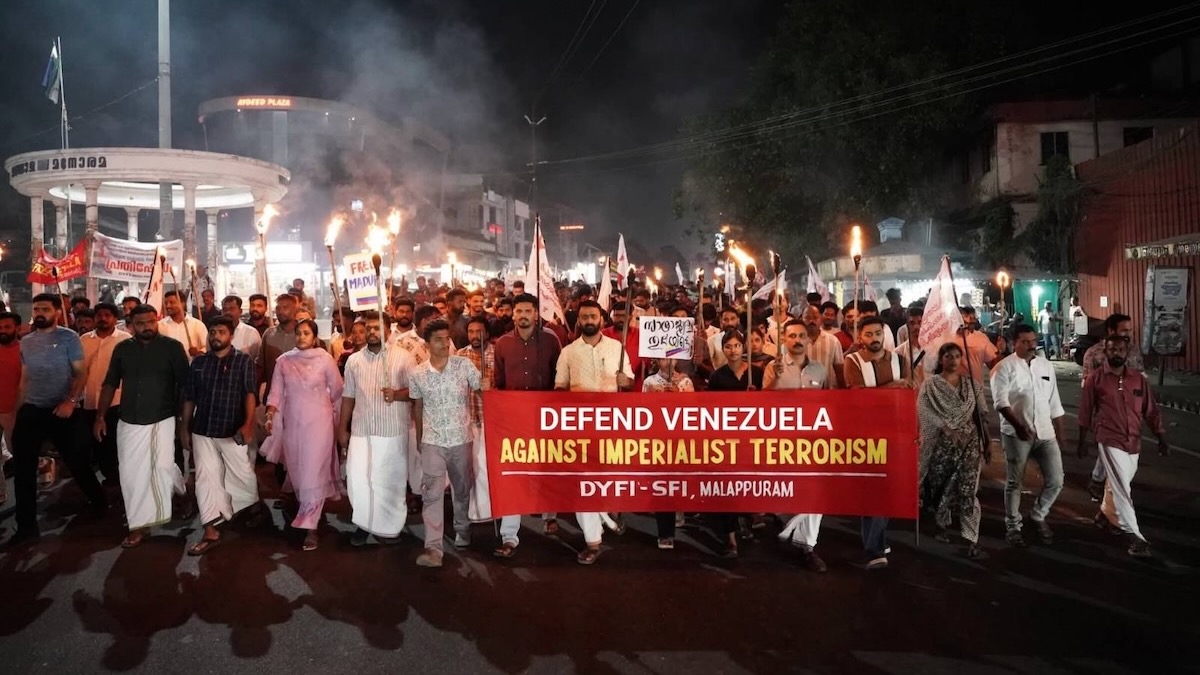
Protests by the Democratic Youth Federation of India – Central Executive Committee in Kerala condemning the US assault on Venezuela and the abduction of President Nicolas Maduro and First Lady Cilia Flores. Photo: CPI(M)

The Indian government’s failure to condemn the US aggression against Venezuela’s sovereignty, despite it being in violation of the country’s long-standing position and its expressed commitments to the UN charter, has invited strong domestic criticism.

Tens of thousands of people across India continued to mobilize on Wednesday, January 7, the fourth consecutive day, in opposition to the US aggression in Venezuela and the abduction of its president, Nicolás Maduro, and his wife Cilia Flores.

Workers, in response to the call made by one of India’s largest trade union federations, the Center for Indian Trade Unions (CITU), organized large-scale protests near their workplaces across the country on Wednesday.

In various places they burned the effigies of US President Donald Trump, calling him the killer of democracy.

Workers across the country employed in various sectors, from hydel power plants to modern manufacturing industries, organised protest demonstrations at the call of @cituhq against US aggression on #Venezuela and the kidnapping of President #NicolasMaduro and his wife Cilia… pic.twitter.com/92OJqSG1k0

— CPI (M) (@cpimspeak) January 7, 2026

Large scale protests were organized in different parts of the country by the student, youth and women’s groups as well. The protesters expressed solidarity with the people of Venezuela and denounced Washington’s acts of aggression against the sovereign nation.

US forces attacked various places inside Venezuela, including the capital, Caracas, on Saturday and abducted President Maduro and his wife. At least 80 people, including 32 Cuban guards defending the president, were killed in US aggression.

Protests in every corner of India

In the northern state of Jammu and Kashmir, Yousuf Tarigami, leader of the Communist Party of India (Marxist), led a protest of workers and students on Tuesday. Addressing the protest, he called the attack on Venezuela an act of naked imperialism.

Tarigami questioned Trump’s attempts to dictate terms to other countries. He called the US acts illegal and asserted that the sovereignty of all countries must be respected.

In the southernmost state of Tamil Nadu, CPI(M) and various women, youth, and student groups have carried out marches and protests for the last four days. The protesters shouted slogans against the imperialist aggression and demanded the release of President Maduro and his wife Cilia.

joint protest of all left parties was also organized in the north-eastern state of Assam on Tuesday against US imperialist attacks on Venezuela. The protest was joined by all the major parties, such as CPI (M), Communist Party of India (Marxist-Leninist) Liberation, and the Communist Party of India (CPI), among others.

Student and youth organizations held large protests all across Kerala, one of the southern states in defense of Venezuela’s sovereignty and against imperialist aggression. The protesters held torchlight marches in some places shouting slogans such as “Death to Imperialism” and “Hands off Venezuela!”

The @dyficec held protests across Kerala condemning the imperialist US assault on #Venezuela and the abduction of President Nicolas Maduro and First Lady Cilia Flores pic.twitter.com/4U7KEHMz4C

— CPI (M) (@cpimspeak) January 6, 2026

Similar protests were held in states such as TelanganaMaharashtra, Bihar, and West Bengal as well. The left parties have called for further anti-imperialist protests in the coming days.

India must condemn US aggression

Left parties in India have also demanded that the Indian government issue a condemnation of the unilateral US military action and to exercise diplomatic measures to assure the release of Maduro and his wife immediately.

The ultra-right-wing government in the country, led by Prime Minister Narendra Modi, has come under attack from the left and progressive forces for its refusal to condemn the US aggression.

India has merely expressed “deep concern” over the developments in Venezuela, in an official statement issued hours after the outbreak of the news of the US aggression and Maduro’s kidnapping.

The left parties have called India’s official position “shameful” and “unworthy” of the country’s long-held position of independence and sovereignty of nations.

CPI (M) called India’s silence on the issue a “pro-US stance” claiming it was “in line with the Modi government’s right-wing ideology and strategic ties with the Trump administration.” It further stated that by taking such a position, India has “abdicated any claim to represent the interests of the Global South.”

Original article by Abdul Rahman republished from peoples dispatch under a Creative Commons Attribution-ShareAlike 4.0 (CC BY-SA) license.

Elon Musk urges you to be a Fascist like him, says that you can ignore facts and reality then.
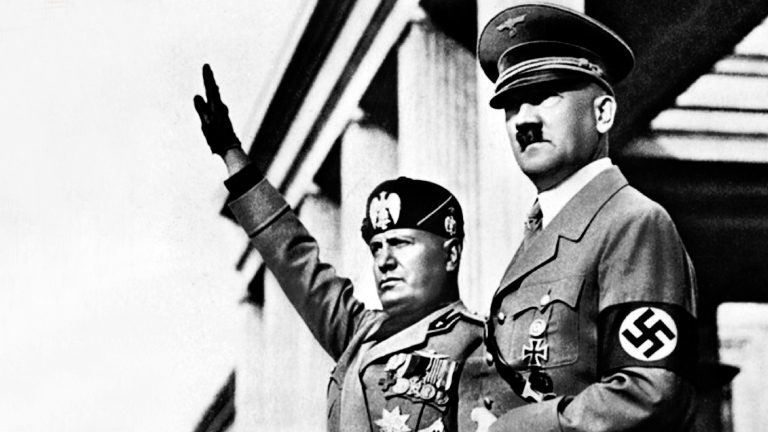
Image of the original Fascists Mussolini and Hitler.
The original Fascists Mussolini and Hitler
Orcas discuss how Trump was re-elected and him being an obviously insane, xenophobic Fascist.

Continue ReadingTens of thousands across India mobilize to oppose US attacks on Venezuela

Tata Group’s ties with Israel: How Indian capital fuels occupation and genocide

Spread the love

This work by Middle East Monitor is licensed under a Creative Commons Attribution-NonCommercial-ShareAlike 4.0 International License

An Indian National Flag waves in New Delhi, India. [Amarjeet Kumar Singh – Anadolu Agency]

by Ranjan Solomon

The mask of modernity

For over a century, the Tata Group has been celebrated as the conscience of Indian capitalism — a family of companies that fused profit with philanthropy, progress with ethics. To millions of Indians, “Tata” evokes trust: a brand woven into the very narrative of modern India. Yet behind this carefully cultivated image of virtue lies a darker reality – one that now links Tata directly to the Israeli war machine devastating Gaza.

A new report released by the U.S.-based South Asian collective Salam, titled “Architects of Occupation: The Tata Group, Indian Capital, and the India–Israel Alliance,” alleges that Tata is “at the heart” of the India–Israel military partnership and is “fundamentally embedded in the architecture of occupation, surveillance, and dispossession.” TRT World’s coverage of the report further details how the conglomerate’s various subsidiaries feed directly into Israel’s military-industrial complex.

The findings: A web of complicity

The report identifies several subsidiaries of the Tata Group as active participants in Israel’s defence and security ecosystem.

Tata Advanced Systems Limited (TASL), one of India’s largest private defence manufacturers, has long-standing partnerships with Israel Aerospace Industries (IAI). Together, they manufacture key components for the Barak-8 surface-to-air missile system, which forms the backbone of Israel’s naval defence and is used in strikes on Gaza. TASL also produces aerostructures for F-16 fighter jets and fuselages for Apache attack helicopters, both extensively deployed by the Israeli Air Force.

Jaguar Land Rover (JLR), another Tata subsidiary, is alleged to provide the chassis for MDT David light armoured vehicles used by Israeli forces in West Bank patrols and urban crowd-suppression.

READ: Israeli Defence Minister meets Indian counterpart in Tel Aviv as $900 million security deal takes shape

Tata Consultancy Services (TCS), the IT giant, is reportedly involved in building digital infrastructure for Israel’s governmental and financial sectors, including participation in Project Nimbus — the controversial cloud-computing contract co-run by Google and Amazon that facilitates Israeli state surveillance.

The Salam report argues that these are not isolated commercial arrangements but part of a systemic integration of Indian capital within Israel’s “occupation economy.”

Tata’s public sponsorship of global events, such as the New York City Marathon, is described as “sports-washing” — a means of masking its participation in war profiteering behind gestures of global modernity and social responsibility. Despite repeated inquiries, Tata Group has not issued a public response to the allegations.

From state to corporation: The India–Israel nexus

Tata’s complicity does not exist in a vacuum. It is the corporate mirror of a larger state transformation in India’s foreign and defence policy.

Since the 1990s, and more assertively under Narendra Modi, India has shifted from quiet engagement with Israel to a full-blown strategic partnership. India is now the largest buyer of Israeli arms, accounting for roughly 40–45 per cent of Israel’s defence exports.

Joint ventures proliferate:

  • The Barak-8 missile project, co-developed by DRDO and IAI, is assembled in part at Tata facilities.
  • India’s purchase of Heron drones, Phalcon AWACS systems, and Spike anti-tank missiles are products of the same industrial network that sustains Israel’s occupation of Palestine.
  • Several of these systems are used by India in Kashmir, linking one occupation to another — and revealing a disturbing symmetry between the surveillance of Palestinians and Kashmiris.

In this geopolitical alignment, Hindutva nationalism and Zionism converge on the ideological front. Both justify domination through a rhetoric of “security” and “counter-terrorism.” Both normalise militarism as a form of patriotism. And both have turned their societies into laboratories of digital surveillance and ethno-religious control.

Thus, the Tata Group’s partnerships are not merely commercial. They are the economic expression of a shared political project — where corporate capital, state power, and ideology intertwine.

READ: India supports Trump’s Gaza peace plan, top diplomat tells Israeli counterpart

Corporate complicity and ethical evasion

Tata is hardly alone. Global corporations have long buttressed the Israeli state’s apparatus of control. Hewlett-Packard, Caterpillar, and now Google and Amazon have all been accused of enabling occupation and surveillance. What makes Tata’s case particularly striking is its moral posture.

A company that invokes Gandhi and philanthropy in its advertising now profits from an economy of death. Its own code of conduct commits it to the UN Guiding Principles on Business and Human Rights, which prohibit participation in human-rights violations. Yet there is no visible accountability mechanism — no disclosure of its defence revenues, no public audit of ethical compliance, and no internal oversight on the human impact of its contracts.

The Salam report calls this “ethical evasion through corporate nationalism”: the idea that Indian companies can deflect scrutiny by invoking patriotism and “Make in India” rhetoric. This is a convenient cover for profiteering from war.

Silence and complicity in India

Mainstream Indian media have barely reported on the Tata revelations. Nor has the Indian government shown any interest in investigating them. On the contrary, officials continue to trumpet the India–Israel “strategic embrace” as a model of technological progress.

Civil society, too, has grown hesitant. Decades ago, India was a vocal defender of the Palestinian cause. Today, solidarity has been replaced by silence, fear, and a dangerous normalization of genocide. Universities that once hosted discussions on occupation now avoid the subject. Protesters risk arrest under draconian laws.

The corporate capture of conscience mirrors a broader moral collapse in public life.

What accountability looks like

International law is clear: any company knowingly supplying equipment or services that enable war crimes may be complicit in those crimes. The Rome Statute of the International Criminal Court and the UN Guiding Principles both outline corporate responsibilities in situations of armed conflict.

Tata’s alleged manufacturing of components for weapons used in Gaza should therefore be subject to independent investigation. Investors, trade unions, and consumers have the right — and duty — to demand transparency.

There are precedents: in the 1980s, global campaigns pressured companies to divest from apartheid South Africa. A similar moral movement must emerge against those profiteering from Israeli apartheid. The boycott, divestment, and sanctions (BDS) campaign is one such call, and Indian civil society should not remain absent from it.

When conscience is outsourced

Tata’s silence in the face of genocide is not just a corporate failure; it reflects the hollowness of India’s moral claim to be the land of Gandhi. What remains of that heritage when its flagship corporation contributes to the machinery of ethnic cleansing?

As Gaza’s children starve and entire families are buried under rubble, the Tata empire continues to sell technology to the state that kills them — while its advertisements preach compassion and “building a better tomorrow.”

No nation can claim moral leadership while its corporations build profit from the blood of the oppressed. The time for polite silence is over. India must confront what it has become — and reclaim the humanity it once pledged to the world.

OPINION: The empire that disregards history: Why Israel and the US are losing the future

The views expressed in this article belong to the author and do not necessarily reflect the editorial policy of Middle East Monitor.

This work by Middle East Monitor is licensed under a Creative Commons Attribution-NonCommercial-ShareAlike 4.0 International License

Experiencing issues with this image not appearing. I suspect because it's so critical of Zionist Keir Starmer's support of and complicity in Israel's genocides.
Genocide denier and Current UK Prime Minister Keir Starmer is quoted that he supports Zionism without qualification. He also confirms that UK air force support has been essential in Israel’s mass-murdering genocide. Includes URLs https://www.declassifieduk.org/keir-starmers-100-spy-flights-over-gaza-in-support-of-israel/ and https://youtu.be/O74hZCKKdpA
Keir Starmer objects to criticism of the IDF. He asks how could anyone object to them starving people to death, forced marches like the Nazis did, bombing Gaza's hospitals and universities, mass-murdering journalists, healthworkers and starving people queuing for food, killing and raping prisoners and murdering children. He calls for people to stop obstructing his genocide for Israel.
Keir Starmer objects to criticism of the IDF. He asks how could anyone object to them starving people to death, forced marches like the Nazis did, bombing Gaza’s hospitals and universities, mass-murdering journalists, healthworkers and starving people queuing for food, killing and raping prisoners and murdering children. He calls for people to stop obstructing his genocide for Israel.
Orcas discuss Genocide-supporting and complicit Zionists. Donald Trump, Keith Starmer, David Lammy, Rachel Reeves, Angela Rayner and Wes Streeting are acknowledged as evil genocide-complicit and supporting cnuts.

Continue ReadingTata Group’s ties with Israel: How Indian capital fuels occupation and genocide

Left-ruled Kerala becomes the first Indian state to eradicate extreme poverty

Spread the love

Original article by Abdul Rahman republished from peoples dispatch under a Creative Commons Attribution-ShareAlike 4.0 (CC BY-SA) license.

Kerala’s LDF government celebrates the eradication of extreme poverty in the state. Photo: Pinarayi Vijayan

The Communist Party of India (Marxist)-led Left Democratic Alliance (LDF) government achieves a unique feat in India which, according to the World Bank, has the world’s largest number of extremely poor.

On Saturday, November 1, India’s southern state of Kerala officially declared itself free of extreme poverty. This makes the left-ruled state the first and only state in the country to achieve such a milestone.

Announcing the achievement during a session of the state’s legislative assembly, left leader and Chief Minister of the state Pinarayi Vijayan called it a “historic and proud moment” for the state and its people and hoped that “our experiments will become a model that states in the country can benefit from.”

India has the world’s largest population living in extreme poverty, as per the data released by the World Bank last year.

“Kerala has etched a new chapter in history—erasing extreme poverty to become the first place in India and the second in the world to achieve this milestone,”John Brittas, member of India’s parliament from the Communist Party of India (Marxist) said on X.

In February 2021, China became the first country in the world to announce the end of extreme poverty, a decade ahead of the UN schedule under its sustainable goals.

On Saturday, Chinese ambassador to India Xu Feihong also congratulated Kerala’s government for its achievement, saying “to eliminate poverty is the common mission of humanity.”

From long-term policies to micro planning

After being elected to power for the second time in a row in 2021, the Pinarayi-led Left Democratic Front (LDF) government proclaimed that it would eradicate extreme poverty in the state by the end of its term.

In May 2021, the LDF government launched the Extreme Poverty Eradication Project (EPEP). The project had initially identified over 100,000 households as extremely poor. However, after the final analysis on the basis of access to food, income, shelter, and healthcare the number of households in extreme poverty came down to 64,006.

In the last four years extensive targeted attempts were made to provide sustained access to whichever element a particular family was lacking among these 64,006 families. This involved different government agencies and local self government bodies across the state.

In April of this year, after declaring Dharmadam (his own constituency) the first to be free from extreme poverty in the state, Vijayan had announced that by the state formation day on November 1 the state will finally achieve its goal set four years ago.

Socialist policies deliver

Kerala, which has mostly hilly terrain and a very high population density was once one of the poorest states in India with close to 60% of its population living in poverty.

Due to long-term welfare and development policies based on socialist distribution, such as land reforms, decentralization, high social expenditure on health and education, a robust public distribution system, among others adopted by the successive left governments in the state, the percentage of poor decreased drastically to just over 11% in 2011-12, when the last pan-India census was held.

The figure has been substantially lowered even further in the 15 years since then.

According to the central government’s multidimensional poverty index released in 2021, Kerala had the least multidimensional poverty among the Indian states, with less than 1% of its population (0.7%) identified as poor.

Kerala’s achievement is a result of the sustained efforts of successive left governments and their policies, claimed Thomas Issac, former finance minister and a leader of the CPI(M).

“From 60% poverty in 1973, Kerala declares itself free from extreme poverty. This is the real Kerala story of land reforms, increase in wages, universal education, healthcare and social security. Finally, 4 years of micro planning to lift 64,006 from extreme poverty” Issac said in a post on X. 

Vijayan also acknowledged the role of long-term policies in achieving zero extreme poverty in the state.

“The process of eradicating extreme poverty is a continuation of the steps taken earlier for universal public distribution system and for the eradication of landlessness and homelessness. Kerala has made remarkable progress in the sustainable development index envisioned by the UN by eradicating extreme poverty,” he said on Saturday.

Original article by Abdul Rahman republished from peoples dispatch under a Creative Commons Attribution-ShareAlike 4.0 (CC BY-SA) license.

Continue ReadingLeft-ruled Kerala becomes the first Indian state to eradicate extreme poverty

Pakistan, Afghanistan agree to a temporary ceasefire after week-long clashes

Spread the love

Original article by Abdul Rahman republished from peoples dispatch under Creative Commons Attribution-ShareAlike 4.0 (CC BY-SA) license.

Khawaja Asif, interim Presient in South Afirica, Photo:.US – Pakistan Clean Energy Business Opportunities Conferenc

Pakistan accuses the Taliban government in Afghanistan of acting as a proxy of India and sheltering and aiding militant groups involved in carrying out attacks on its civilians and military installations.

Neighboring Afghanistan and Pakistan agreed to a temporary ceasefire on Wednesday, October 15, after almost a week-long series of heavy cross-border clashes between their armed forces killed and wounded scores of people and caused substantial damage to the civilian infrastructure.

In a statement, Pakistan’s foreign office claimed that the ceasefire was initiated at the request of Afghanistan and will last for 48 hours from 6 pm on Wednesday. It said that “during this period, both sides will make sincere efforts to find a positive resolution to this complex but solvable issue through constructive dialogue,” Dawn reported.

However, the statement posted by the Taliban’s spokesman Zabihullah Mujahid on his X page claimed the ceasefire was agreed upon Pakistan’s request and will last until it is violated.

Pakistan also acknowledged that the ceasefire was reached through the intervention of some “friendly countries”, without naming them.

Pakistan’s Defense Minister Khawaja Asif, in a TV interview, also acknowledged the role played by the “friendly countries” in achieving the ceasefire. However, he expressed his apprehensions, claiming the ceasefire may not last long.

He accused the Taliban administration in Afghanistan of fighting a proxy war against his country on India’s behalf.

India and Pakistan have fought several wars since their independence from British colonial occupation in 1947 over Kashmir and other issues. In May this year, armed forces from both countries clashed for days over the attack on tourists in Kashmir’s Pahalgam, killing scores of civilians on both sides of the border.

Though the Taliban traditionally has been close to Pakistan, where it was born as an armed religious movement during the US-backed war against Soviet presence in Afghanistan during the 1980s, the dynamics between them have changed since it took power in Afghanistan in August 2021, after the US withdrawal.

Pakistan has accused the Taliban government of aiding and supporting Tahreek-e-Taliban Pakistan (TTP) which is its offshoot in the country. The TTP has been banned by the Pakistan government after holding it responsible for carrying out several attacks and killing thousands of its civilians and armed forces.

Clashes across Durand Line

The present cross-border hostility between Afghanistan and Pakistan emerged on October 11, after the Taliban allegedly launched an attack on the Pakistani border post, killing 23 of its soldiers.

Before that, on October 9, the Taliban had accused Pakistan of carrying out airstrikes inside Afghanistan territory. Though its forces are engaged in an operation against the TTP in the border regions, Pakistan did not respond to the Taliban’s accusation.

In response to an alleged Taliban attack, Pakistan forces launched multiple military attacks inside Afghanistan, reportedly killing hundreds of Taliban soldiers and civilians.

On Tuesday, Pakistan again alleged that the Taliban launched a coordinated attack on its Chaman border in its Balochistan province, destroying the Pakistan-Afghanistan “friendship gate” and injuring several civilians.

Pakistan claimed it launched air strikes on certain targets in Kandahar and several other places inside Afghanistan on Wednesday in retaliation.

The Taliban-led government denied claims of attacks on Tuesday calling Pakistan’s attacks on Wednesday unprovoked.

There were also reports of clashes between Taliban and Pakistan army across the over 2,500 kilometers long border known as Durand line just before the ceasefire was announced.

Explosions were recorded in Kabul as well though it was not clear whether it was due to attacks carried out by the Pakistani forces.

Following the clashes, Pakistan has shut its Turkham border crossing with Afghanistan, leaving thousands of people who move across the border every day for trade and other purposes stranded.

Both the countries have warned each other not to launch further attacks, vowing stronger responses. Ishaq Dar, Pakistan’s foreign minister, also reiterated his country’s demand that the Taliban take concrete measures against TTP and other such groups.

The UN had urged both the countries to cease hostilities and resolve their differences through dialogue. Its mission in Afghanistan, UNAMA, welcomed the declaration of a ceasefire on Thursday.

Original article by Abdul Rahman republished from peoples dispatch under Creative Commons Attribution-ShareAlike 4.0 (CC BY-SA) license.

Continue ReadingPakistan, Afghanistan agree to a temporary ceasefire after week-long clashes