Brits will have to die defending Israel in war with Iran, says UK envoy to Tel-Aviv

Spread the love

Original article republished from MEMO under  a Creative Commons Attribution-NonCommercial-ShareAlike 4.0 International License.

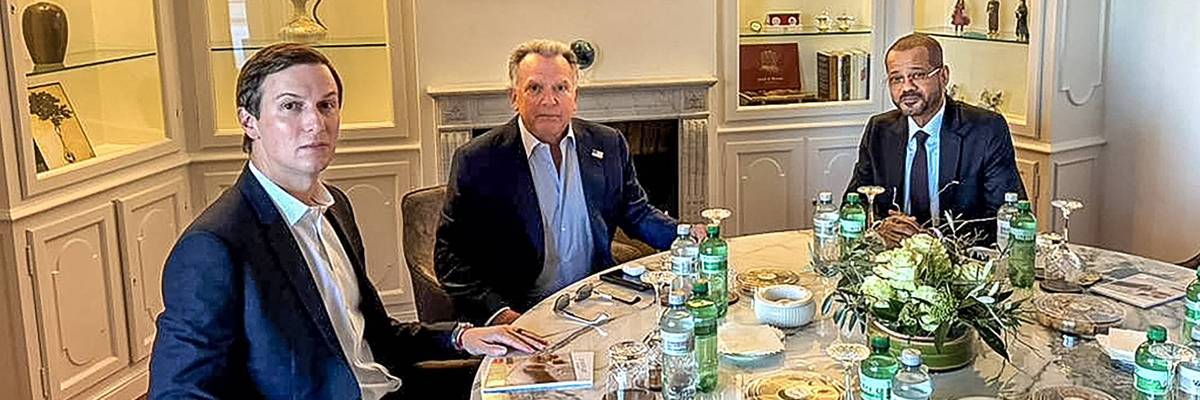
Simon Walters, UK Ambassador to Israel, speaks at the “International Rally – United We Bring Them Home” rally in Hostage Square on May 18th, 2024 in Tel Aviv, Israel. [ Alexi J. Rosenfeld/Getty Images]

British military personnel will be put in “harm’s way” to defend Israel against Iran, the UK’s Ambassador to Israel has declared in a stark admission that could see British forces ordered to risk their lives defending the apartheid state.

Speaking to Israeli journalists at his Ramat Gan residence, Ambassador Simon Walters made the extraordinary commitment that “the United Kingdom will be a close ally and is prepared to put its own aircraft and its own personnel in harm’s way to defend Israel.”

Walters revealed that British forces have already been actively involved in military operations supporting Israel, noting that the Royal Air Force flew alongside Israeli and US pilots during Iran’s missile and drone attack in April. “Without going into detail, on October 1, the British armed forces again played a role in trying to disrupt the Iranian attack on Israel,” Walters disclosed.

These revelations come as an Al Jazeera investigation has exposed the extent of British military support for Israel’s genocide in Gaza. The investigation found that the UK and the US have established an air bridge crucial for sustaining Israel’s military campaign. In revelations that are highly controversial, British forces have conducted nearly half of all reconnaissance missions over Gaza since Israel’s assault on Gaza began. Reconnaissance carried out by the UK is said to have surpassed Israel’s own surveillance operations by more than double.

READ: Hamas accuses the UK of assisting Israel in operations in Gaza

With Israel facing genocide charges at the International Court of Justice (ICJ) and Prime Minister Benjamin Netanyahu and former Defence Minister Gallant having been served arrest warrants by the International Criminal Court (ICC) for war crimes and crimes against humanity, Britain’s direct military support could expose London to allegations of complicity in international crimes. Under international law, states providing material assistance to forces committing serious violations can be held responsible as accomplices

Addressing the ongoing controversy over British arms sales to Israel, Walters acknowledged that the risk of violations of international law “is evidently present here”. He noted that UK NGOs are currently pursuing legal action against the government to force additional restrictions on arms exports to Israel, battles which the government is actively contesting in court.

The Ambassador also expressed concerns about Israel’s treatment of Palestinian prisoners, pointing out that Israel has denied Red Cross access to detainees from Gaza. “Had the Red Cross visited regularly, it would provide reassurance of the conditions, it would not only protect the prisoners,” he stated, adding that such visits would also protect guards from accusations.

Israel is accused of torture and sexual abuse of Palestinians, including rape of detainees in prisons. Famous Gaza surgeon, Dr Adnan Al-Bursh, is the latest high-profile figure who was killed by Israel while in detention. Al Bursh is said to have been severely tortured. His body was left naked from waist down suggesting that he was also raped by the Israeli army.

On the situation in Gaza, Walters challenged the notion that military pressure alone could achieve Israel’s objectives. “I hear people calling for the continuation of the war until Hamas is destroyed and I think they are kidding themselves,” he said. “They are imagining an outcome that will never come.”

Walters also highlighted concerns about Palestinian rights in the illegally Occupied West Bank, particularly regarding restrictions around olive harvesting and attacks by Israeli extremists. “At the end of the day, this is an aspect of the Occupation, which many Israelis do not see and are not aware of,” he concluded.

READ: Senior diplomat resigns over UK’s complicity in ‘war crimes’ in Gaza

Original article republished from MEMO under  a Creative Commons Attribution-NonCommercial-ShareAlike 4.0 International License.

Experiencing issues with this image not appearing. I suspect because it's so critical of Zionist Keir Starmer's support of and complicity in Israel's genocides.
Genocide denier and Current UK Prime Minister Keir Starmer is quoted that he supports Zionism without qualification. He also confirms that UK air force support has been essential in Israel’s mass-murdering genocide. Includes URLs https://www.declassifieduk.org/keir-starmers-100-spy-flights-over-gaza-in-support-of-israel/ and https://youtu.be/O74hZCKKdpA
Genocide denying UK Foreign Secretary David Lammy says that UK is suspending 30 of 350 arms licences to Israel. He also confirms the UK government's support for Israel's Gaza genocide and the UK government and military's active participation in genocide.
Genocide denying UK Foreign Secretary David Lammy says that UK is suspending 30 of 350 arms licences to Israel. He also confirms the UK government’s support for Israel’s Gaza genocide and the UK government and military’s active participation in genocide.
Continue ReadingBrits will have to die defending Israel in war with Iran, says UK envoy to Tel-Aviv

I sought safety in the UK. I was sent to prison instead

Spread the love

Original article by Samyar Bani and Melissa Pawson republished from Open Democracy under a Creative Commons Attribution-NonCommercial 4.0 International licence.

Border force and police officers take people to shore after they arrived in Kent in October 2022
 | Stuart Brock/Anadolu Agency/Getty Images. All rights reserved

I was labelled a ‘smuggler’ and spent over two years in prison for touching the tiller on a dinghy. That’s not justice

Samyar Bani, 42, is an Iranian refugee who travelled to the UK in a dinghy on 1 June 2019. He was arrested on arrival and convicted of assisting unlawful entry into the UK in November 2019. His initial sentence of six years was later reduced to five. An appeal hearing in December 2021 then acquitted him of all charges. The appeals judge determined that the law had been interpreted incorrectly, as Bani and co-passengers had intentionally been picked up by police before disembarking on UK shores. This interview has been edited for clarity and length, and the final transcript was reviewed by Samyar before publication. It is part of the series How migration became a criminal offence.

Melissa Pawson (BTS): Can you tell us why you left Iran?

Samyar Bani: I had a problem with the government there. So I came to England to ask for help as an asylum seeker.

Melissa: What was the journey from Iran like?

Samyar: I left my home country on 1 January 2017. First, I went to Turkey and stayed there for six months. Then I went to Greece. There are so many refugees in Greece. I tried to claim asylum there, but they didn’t accept my claim.

I like Greece. They have good weather, and Athens reminds me of my city, Shiraz. But I wasn’t allowed to stay. So I went to Germany. I was there for four months, but I couldn’t stay there either. They made a mistake in my asylum claim and rejected me as well.

I liked living in Germany, because I have a sister there. But Germany doesn’t like me. So I came to England.

Melissa: Did you travel through Calais?

Samyar: Yes, I lived in the Jungle there for around two months. There were too many people in the Jungle, and everyone was planning to go to England to claim asylum.

Editor’s note: the Jungle was the nickname of a large informal encampment on the outskirts of Calais, France. It was demolished in 2016 but undocumented people continued to live in the area.

When I was going to France from Germany on the train, I was searching on Google and Telegram and Facebook, and I found lots of information telling me that England supports people like me. I read that England understands that Iran isn’t a democracy. Because of that, I thought UK would support me.

So me and four other Iranians bought a boat together to come here.

Melissa: Why did you decide to buy the boat by yourselves?

Samyar: Because smugglers are so expensive. I think they charge around £2,500 per person. I don’t have that kind of money. Instead, each of us put in £500 for the boat to come here. We were six in the boat, including a child around 10 years old.

Melissa: So you crossed the English Channel and were picked up by the UK Border Force boat. Did they arrest you straight away?

Samyar: The police arrested everyone and sent us to the immigration detention centre. We stayed there the first night, and they transferred me to a hotel in London the next day.

They arrested me at the hotel after I’d been there for just one night. It was 6 or 7pm. Six people came to the hotel. One of them had a gun – it was a big one like a machine gun. There was no interpreter. They put my hands behind my back and arrested me. Then they transferred me to Kent police station.

I touched the tiller for maybe four or five seconds, that’s it

Melissa: You must have been very confused and scared.

Samyar: I was really confused. I was lying awake in the cell thinking maybe I’m not in England. Maybe I came to a different country. Every night after that I was talking to myself, asking, why does England think I’m a smuggler, why did England arrest me? This is wrong. This isn’t Iran, it’s not a dictatorship.

I kept thinking maybe the police would come to apologise. They would tell me, Mr. Bani, we were wrong. Sorry, you’re free now. Later, this just became a wish.

I was scared and stressed. It was a very dark time for me. I was alone, with no family or friends. I didn’t speak English.

Melissa: Did an interpreter and a lawyer explain what was happening at any point?

Samyar: After I’d been in the police station for two days, an interpreter came to speak to me. But he was from Afghanistan and spoke Pashto – I speak Farsi, which is a completely different language. Then a solicitor came. Then I got a different solicitor. I wasn’t allowed to choose either of them, they were just assigned to me. The second solicitor didn’t have time for me, he was really busy. He just came once and spoke to me for a short time. My case was very serious, but he barely gave me any time.

Melissa: Did they tell you what you had been accused of?

Samyar: They said I’m a smuggler. But I’m not a smuggler, I’m not trafficking people. They said they had video evidence showing me driving the boat, but the video was very short. When I took the tiller I was just following the orders of the police who were directing our boat. Before they took the video, there were different people driving boat.

We had bought the boat together. I wasn’t in command of this trip. I’m not a boat driver – I don’t even know how to swim, and I’d never seen a boat before the day we bought one. But I sat in the wrong place in the dinghy, near the engine, and ended up touching the tiller for maybe four or five seconds. That’s it. But that was enough.

The police know that real smugglers don’t come to England, but every boat has to be steered somehow. The people on board do that. So why not put everyone in jail? Why just me?

Melissa: Did you see the police recording you while you were in the boat?

Samyar: Yes, we saw them. And when the police took us onto their boat, everybody was scared. But I told them, “the police won’t kill you.” They want to help refugees.

Melissa: Were you able to speak to your family while you were being held?

Samyar: No, because I didn’t have their phone number. I had saved their number on my phone, like anyone else would, but the police took it from me when I went into custody.

I couldn’t speak to my wife for three years. She thought I’d died.

I wrote dozens of applications to ask my caseworker, my solicitor, anyone, to please get me back my mobile. Just so I can write the number down and then they could take back it again.

Melissa: That must’ve been incredibly difficult for you and your family. How did you find her number again?

Samyar: My sentence finished in December 2021, but they didn’t give me my phone back right away. I was living on the streets, with nowhere to go, when I found out about a charity called Care4Calais. They helped me to contact a solicitor and I was transferred to a hotel.

That solicitor wrote to the court so many times. It took maybe five months for the police to give my phone back. Maybe the police just really liked my mobile, I don’t know.

It hadn’t been used in more than two years and wouldn’t turn on at first. But I finally got the phone numbers from it and I called my wife.

Melissa: What was that phone call like?

Samyar: She was very confused. She asked me why I hadn’t spoken to her in three whole years. It was very, very hard.

I was so scared I’d be recognised. All the newspapers said I’m a smuggler. My picture was in the BBC

Melissa: How is your wife now, is she okay?

Samyar: She’s doing better now. She was struggling with depression before because I had disappeared.

Melissa: And how did the sentencing affect you?

Samyar: I changed my hair and my beard because I was so scared I’d be recognised. All the newspapers said I’m a smuggler, and my picture was in the BBC.

That wasn’t all undone when the appeal went through. I didn’t see any big headlines saying, ‘Bani is not guilty, he’s not a smuggler’. So I didn’t feel safe, even though I was free again.

It’s not been easy. I’m doing better now at least – better than prison.

Melissa: Can you tell us what your time in prison was like?

Samyar: I was in prison for just over two years after the sentencing. Including my time in remand, I was in prison for two and a half years.

Prison is bad for everybody. But for people who are not guilty, it’s so much worse. All the time, you’re thinking, why am I here?

I was in there with people who had been jailed for life. Some of them had murdered people, committed rape, attacked people, robbed, laundered money, run drugs operations. I remember asking someone what they’d done and they said, “I just killed one person”.

It was terrible.

Melissa: This sounds like a really scary experience. Can you tell us about the appeal?

Samyar: I went to the Royal Courts of Justice in London, and three judges reviewed my case. Three or four days later, they all agreed that a big mistake had been made because I hadn’t broken the law. They said I hadn’t come here illegally because we were transferred to the port by the police.

So then I was free. But I had to wear an electronic tag on my leg for six months. The Home Office said this is an immigration tag, but if that’s the case then I don’t understand why they don’t make everyone wear one. Surely the law is for everybody?

And when I got to the hotel two weeks later, there were lots of other asylum seekers there. But I was the only one with an electronic tag.

In Iran, if you change your religion the government will put you in prison and you could get the death penalty. That’s if people don’t kill you first

Melissa: You said you were first homeless after you were released – where were you sleeping?

Samyar: I slept on the streets for two weeks. It was rainy and people were everywhere getting ready for Christmas. It was a very hard time.

I went to a church and I told them I’m homeless. I showed them my immigration papers, but they said they couldn’t help because I didn’t have refugee status or a visa. And I wasn’t allowed to rent a house – I could only get support from the Home Office.

Melissa: What happened after that?

Samyar: My solicitor wrote lots of letters to the Home Office, and finally they helped me to get accommodation in a hotel.

But it wasn’t a hotel for asylum seekers, it was a quarantine hotel. So many people had Covid 19, and I caught it too. I had a very high temperature, I felt like I was dying. I was there for maybe two months, and then I was transferred to a hotel in Newcastle. After that they sent me to a shared house in Stockton-on-Tees.

Six months after I was released from prison, the Home Office sent me a letter telling me I have leave to remain for five years. That was in June 2022. I had good evidence and lots of paperwork, because I changed my religion in Iran.

I don’t believe in Islam, so I converted to Christianity. But in Iran, if you change your religion the government will put you in prison and you could get the death penalty. That’s if people don’t kill you first. Some people think that if they kill a convert, they’ll be rewarded by Allah.

This is fake. My religion is for me, and your religion is for you.

Melissa: Was this one of the reasons why you had to leave Iran?

Samyar: Yes, because I was scared that the government would arrest me and kill me. Then I came to England, and it was the same thing I was afraid of in Iran. I wasn’t guilty, but I was in prison anyway.

Melissa: And what’s your situation like now in Birmingham?

Samyar: I had to leave the Home Office accommodation two months after I got my visa, but I had no way of renting a place without help. I needed council support because I don’t have a guarantor.

I went to a charity called Open Door and they supported me to rent a shared room. I was 40 years old at the time – it’s hard to be sharing.

Then later an Iranian person helped me to rent a room in a house in Birmingham.

I haven’t started work yet because of my mental health and the arthritis in my back. I often get flashbacks from my time in prison – maybe one day is good, then the next day is bad. The Job Centre supports me but it’s not very much. I get around £300 in benefits for food and everything, and some of that has to go towards rent.

I’d like to get back into work, and I have lots of skills. I’m a tradesman – I design and fit kitchens. In Iran I had a house fitting company, and we did tiling, plumbing, plastering.

The Job Centre said I should do a very basic job like cleaning, but I can do more than that. I tried to take the certificates for plumbing and carpentry. I tried three times. But they refused me because my English isn’t good enough.

I’m working on that. I’m doing an English course, but my brain is so busy worrying about my family. Maybe after my family comes and we live together, I’ll feel well enough to focus on my courses, and I can get the certificate to do a carpentry job.

Melissa: Are you applying for your wife and daughter to join you in the UK?

Samyar: I already did, but it was refused. It’s because I had an Islamic marriage. I don’t believe in Islam, and I didn’t want an Islamic marriage. But if I’d had a different marriage in Iran, the government would’ve arrested me. My mother and father are Muslim, so I had no choice.

This has created a big problem for me. The Home Office said I didn’t have the right evidence, but I do. I have the marriage contract, and I have pictures and evidence showing that me and my wife lived together for a long time.

I’m appealing, but my solicitor said there’s a waiting list. It could be two years, it could be ten years. I don’t know. I just have to wait.

Melissa: It must be very hard, having been apart from them for so long.

Samyar: I have no choice. I can just talk to my wife on the phone. We can’t live together. The courts and immigration offices in this country, they don’t care about love. All they’re interested in is evidence.

Police understand who a smuggler is, and they don’t sit in the boat. They just do this so they can close the border to refugees

Melissa: We spoke before about how the courts decided you were a smuggler. What does the word ‘smuggler’ mean to you?

Samyar: A smuggler lives in France or a different country. You’ll never see a smuggler. They’re very clever, they won’t sit in the boat because it’s dangerous. A smuggler is someone who just likes money. They just take money.

Police understand who a smuggler is, and they don’t sit in the boat. They just pretend it’s different so they can close the border to refugees. It’s the same as the plan for Rwanda.

It’s not good for human rights. A better plan would be a visa for refugees, so we don’t have to make this journey in the first place.

Melissa: How would life have been different if this kind of visa had been available to you?

Samyar: I didn’t want to sit in the dinghy to come to UK. But I didn’t have a choice. Humans need life. My country wasn’t safe for me, so I came to the UK. That’s why I left my father, my mother, my wife and my daughter. I didn’t come here for money. I just came here to get help because Iran isn’t safe for me.

I had a good job in Iran – I liked my work, I liked my city. Shiraz is very beautiful, and it has good weather. All my family live there too – I have a big family. Now I’m alone here.

I like human rights, and I thought I might have mine respected here. But this is just a wish now. No country has real human rights.


Explore the rest of the series

This series looks at how the UK, EU and bordering countries are increasingly treating migration as a criminal offence, and targeting migrants and solidarity actors in the name of ‘anti-smuggling’ and ‘border control’.

Original article by Samyar Bani and Melissa Pawson republished from Open Democracy under a Creative Commons Attribution-NonCommercial 4.0 International licence.

Continue ReadingI sought safety in the UK. I was sent to prison instead

Dr. Mustafa Barghouthi: the US could restrain Israel, but has chosen not to

Spread the love

Original article by Aseel Saleh republished from peoples dispatch under a Creative Commons Attribution-ShareAlike 4.0 (CC BY-SA) license.

Dr. Mustafa Barghouthi. Photo: Wikimedia Commons

According to a report released by Brown University’s Costs of War project, from October 7, 2023 to September 30, 2024, the US sent 17.9 billion dollars in military aid to Israel, which accounts for the largest amount of military funding ever granted to Israel in a single year. Israel’s ongoing genocide against the Palestinian people, as well as its 76-year project of colonization of Palestine would not be possible without the vital military, financial, diplomatic, and political support of the United States.

The US presidential elections, which will see Democrat Kamala Harris face off against far-right Republican Donald Trump, are set to be held on Tuesday, November 5. The elections are being held over a year into Israel’s genocidal war on Gaza, and the result of the elections may cast a shadow on the current situation in particular, and the Palestinian cause in general.

To discuss more about the impact of US policy, and the possible repercussions of the US presidential elections on the Palestinian cause, Peoples Dispatch interviewed prominent Palestinian politician, physician, and activist Dr. Mustafa Barghouthi.

Dr. Mustafa Barghouthi is the Secretary General and co-founder of the Palestinian National Initiative, and member of the Palestinian Legislative Council (PLC).

Peoples Dispatch: What has the last year of Israeli genocide revealed about US policy towards the region?

Dr. Mustafa Barghouthi: It has revealed that the United States can restrain Israel if it wants, but it did not, which makes the United States complicit in the genocide being carried out by Israel against the Palestinian people. A clear example that proves that the US has an influence on Israel, is its ability to restrain the Israeli aggression on Iran.

Peoples Dispatch:  Were people expecting more from Democrat Joe Biden?

Dr. Mustafa Barghouthi: The Palestinian people were completely disappointed by Biden and his administration, including his State Secretary, Defense Secretary and National Security Advisor, who all came to take part in Israel’s war cabinet meetings, and gave their blessing to Israel during its genocidal aggression on Gaza. They further sent American fleet, ships, aircrafts to support Israel. Biden has provided Israel with no less than 17.9 billion dollars of military equipment, and more than 50,000 tons of explosives and weapons. All of that was used in committing the genocide against the Palestinian people.

Peoples Dispatch: Are any major changes expected if either Kamala or Trump gets elected? Does the outcome of these elections impact the Palestinian struggle?

Dr. Mustafa Barghouthi Trump’s election may make the situation even worse, while it is still unclear about Kamala Harris, who maybe will be more sensitive regarding the changes that are happening inside the Democratic Party, where the majority of the younger generation are against the policy of Biden in relation to what has been happening in Gaza and to Palestinians in general.

However, so far she could not make any definite decision or take any definite position to stop the genocide against the Palestinian people. Like Biden, Harris continued with the biased approach towards Israel. This needs to be completely changed, because when it comes to the reputation of the United States it has been negatively affected by the policy of this administration, not only in Palestine but also worldwide. We shouldn’t forget that Kamala Harris was the US vice president during the genocide, she was not outside the administration. Perhaps, she will adopt a different approach in comparison to Biden, but that needs to be proved in reality and in action.

Peoples Dispatch: With regards to the broader region, one of Trump’s pet projects while president was advancing normalization with Israel. What is your view of how Israel’s genocide has impacted the process of normalization? Have there really been major setbacks? Will these setbacks be recovered or is it irreversible?

Dr. Mustafa BarghouthiThe war crimes in Gaza did not affect the existing normalization agreements between three Arab countries and Israel. Unfortunately, it has not changed at all, but the war crimes in Gaza and the genocide have restrained other countries from proceeding in normalization with Israel. Even the countries that maintained normalization agreements with Israel, are very embarrassed about the current situation, because their peoples are against normalization. It is not apparent yet whether the genocide will have further impact on normalization. The largest popular protest against normalization is happening in Morocco, and it is the most important country among the three countries that normalized with Israel”, the prominent Palestinian politician said, referring to Morocco, United Arab Emirates (UAE) and Bahrain, which signed the US-backed normalization agreements with Israel known as “the Abraham Accords” in 2020.

Keep reading Peoples Dispatch for analysis and news on the US elections from a perspective you won’t see on mainstream media.

Original article by Aseel Saleh republished from peoples dispatch under a Creative Commons Attribution-ShareAlike 4.0 (CC BY-SA) license.

Continue ReadingDr. Mustafa Barghouthi: the US could restrain Israel, but has chosen not to

Despite History of Fabrication, Press Uncritically Covers IDF-Provided Documents on Hamas

Spread the love

Original article by Bryce Greene republished from FAIR under a Creative Commons Attribution-NonCommercial-NoDerivs 3.0 Unported License.

The New York Times (10/12/24) says it “verified” supposed Hamas documents provided to the paper by Israel—which turns out to mostly mean that that the Israeli military “concluded the documents were real.”

Earlier this month, the New York Times (10/12/24), Washington Post (10/12/24) and Wall Street Journal (10/12/24) each published front-page articles based on different sets of documents handed to them by the Israeli military.

Israel claims it seized all the documents—in the form of meeting minutes, letters and planning documents—in its ground invasion of Gaza, and that they reveal insights into Hamas’s operations prior to the October 7 attacks. The documents include alleged evidence of Hamas’s pre-10/7 coordination with Iran, plans to blow up Israeli skyscrapers, and even a scheme to use horse-drawn chariots in an attack from Gaza.

Documents received directly from intelligence agencies should always be treated with skepticism, and that’s especially true when their government has a well-documented history of blatant lying. Yet leading newspapers took these Israeli document dumps largely at face value, advancing the agenda of a genocidal rogue state.

A history of lying

Fake “Hamas” documents were being cited in the press as recently as September 2024 (Middle East Eye9/9/24).

Israel’s use of fabrications to shape public perception is well known, and was put on display early in the assault on Gaza that began last October. After an explosion at Al Ahli hospital killed and injured hundreds (misreporting of which caused a great deal of confusion), the media naturally pointed the finger at Israel. The Israeli government, concerned about the public backlash, denied responsibility, claiming that the explosion was caused by a misfired rocket from Palestinian Islamic Jihad. (See FAIR.org11/3/23.)

To back up their claims, Israel released a recording allegedly capturing two Palestinian militants discussing Palestinian Islamic Jihad’s responsibility for the strike. However, an analysis by the firm Earshot found that the audio was the result of two separate channels being edited together (Channel 4, 10/19/23). In other words, Israel engineered a phony audio clip in an attempt to clear itself of war crimes  in the public mind.

Investigations based on open sources have since come to various conclusions about the attack (Guardian, 10/18/23Bellingcat, 10/18/23; Human Rights Watch, 11/26/23AP, 11/22/23; Michael Kobs, 2023New Arab, 2/19/24), but Israel’s fraudulent attempt to manipulate evidence certainly suggests that they had something to hide, and demonstrates their lack of reliability as a media source. Recently, the UN released a report accusing Israel of systematically targeting healthcare infrastructure in Gaza, making their denials of this earlier attack far less credible.

In another instance, Israel presented 3D renderings of a supposed Hamas “command center” beneath Al Shifa hospital, claiming it was based on intelligence. However, no such command center was ever found (FAIR.org12/1/23). Upon storming the hospital, Israel staged scenes in order to bolster claims that the facility was used by militant groups. The deception was so blatant that mainstream outlets were openly calling it out.

Recently Israel was caught actually providing fabricated documents to the press with the aim of manipulating public opinion. Earlier this year, the Israeli government provided documents to both the Jewish Chronicle (9/5/24) and the German paper Bild (9/6/24) that purportedly showed that Hamas had no interest in a ceasefire, and had a plan to sneak the late Hamas chief Yahya Sinwar out of Gaza to Iran, along with some of the remaining hostages. The reports were then uncritically repeated in outlets like the Times of Israel (9/6/24).

Shortly after these documents were published, the Israeli paper Yedioth Ahronoth (9/8/24) reported on an internal IDF investigation that found that they had been leaked to foreign media as part of a campaign to “shape public opinion on Israel.” The documents were determined to be forgeries, after a comprehensive search of all databases containing documents found in the wake of Israel’s operations. The IDF told the paper that an investigation was underway to determine the origin of the leak.

This non-exhaustive list of examples demonstrates a pattern of Israel engineering misleading narratives to shape public opinion, and fabricating the evidence needed to do so.

Questionable authenticity

WaPo: Captured documents reveal Hamas’s broader ambition to wreak havoc on Israel
The Washington Post (10/12/24) reported that “the documents’ authenticity could not be definitively established”—but there’s no trace of that doubt in the story’s headline or subhead.

Whether they are authentic or not, it is clear that the documents leaked to the Wall Street Journal, New York Times and Washington Post serve the same purpose of propagandizing on behalf of Israel. In an attempt to preserve some journalistic integrity, the Post and Times both gave separate justifications for why they believed the respective documents leaked to them were authentic.

The Post was quick to note that “the documents’ authenticity could not be definitively established,” but gave readers the impression there was reason to believe they were real. First, it claimed that the contents of the documents it received were

“broadly consistent” with US and allies’ post–October 7 intelligence assessments about Hamas’s long-range planning and complex relationship with Iran.

Then it wrote that unnamed US and Israeli officials they shared the documents with did not express concerns about their authenticity. (Iranian and Hamas officials they consulted didn’t comment on the documents but accused Israel of having a history of “fabricating documents.”)

The New York Times consulted former Hamas member Salah al-Din al-Awawdeh, whom the paper frequently quotes on matters related to Hamas, and an unnamed Palestinian analyst with “knowledge of Hamas’s inner workings.” It also said an internal Israeli military report concluded the documents were authentic, and the paper “researched details mentioned in the meeting records to check that they corresponded with actual events.” It said “Hamas and Hezbollah did not respond to requests to comment” and that Iran “denied the claims made in the minutes.”

The Wall Street Journal story did not describe any attempt to verify the authenticity, and only reported that the paper “hasn’t independently verified the documents.”

But given Israel’s track record, there is no epistemologically sound way of verifying the validity of documents provided by the Israeli government without confirmation from Hamas itself. Citing sources who say that the documents resemble Hamas documents, without noting Israel’s history of creating credible forgeries, creates a patina of credibility without actually substantiating anything.

Advancing Israel’s agenda

Haaretz: Leaked Hamas Documents, Aimed at Aiding Netanyahu, Reveal His Responsibility for October 7
Haaretz (10/14/24): The documents bolster Netanyahu’s claim that Israel is “fighting a terrifying ‘axis of evil’ led by Iran that threatens to destroy Western culture as a whole.”

The Israeli paper Haaretz (10/14/24), which took the documents as authentic, argued that their release by Israel was “Aimed at Aiding Netanyahu.” While both the Times and the Post have largely advanced Israel’s agenda over the past year of bombing (FAIR.org10/13/232/1/2410/7/24), both papers are considered to be on the critical end of the press spectrum in the US, particularly towards Netanyahu. As Haaretz explained, this perception enhances the propaganda value of the document leak: “The Times and the Post enjoy greater credibility when they fall in line with Israel’s narrative.”

While Haaretz made no note of the leaked documents provided to the Wall Street Journal, the article ironically acknowledged that

having them published by Fox News or even the Wall Street Journal would have looked like an Israeli public diplomacy operation rather than a legitimate journalistic investigative report.

Haaretz noted that the documents promote narratives that “Israel would be happy to burn into the world’s consciousness,” namely the well-known propaganda effort to equate Hamas with organizations that are universally reviled by Americans. The Post documents purportedly outlined a Hamas plan to blow up a skyscraper in Tel Aviv, evoking the September 11 attacks against the World Trade Center:

The Hamas documents are supposed to bolster Netanyahu’s claim that Israel isn’t fighting against a liberation movement seeking to free the occupied Palestinian people, or even against a paramilitary organization that is poorly funded and trained and lacks planes, the Iron Dome anti-missile system, tanks and artillery….

Rather, it is fighting a terrifying “axis of evil” led by Iran that threatens to destroy Western culture as a whole.

Haaretz also argued that this kind of propaganda campaign was designed to ensure that the violence continues to escalate:

In this spirit, the documents are supposed to justify Israel’s counterattack, which has so far caused enormous death and destruction in Gaza and, to an increasing degree, also in Lebanon.

Obvious PR value

WSJ: Israel Says Documents Found in Gaza Show Hamas’s Attack Planning, Iran Ties
Unlike the New York Times or Washington Post, the Wall Street Journal (10/12/24) acknowledged in its headline that the revelations in the documents are what “Israel says” they show.

While Haaretz overlooked the story from the Wall Street Journal, the same logic can be applied to the documents given to that paper as well. The Journal was apparently curious about the political purpose of the documents, noting that “the officials who provided the documents declined to say why they were releasing them now.”

The Journal wrote that the documents “suggest that Hamas leader Yahya Sinwar was negotiating with Iran over funding for a planned large-scale assault on Israel as far back as 2021,” and gave specific dollar amounts that Iran provided to Hamas’s armed wing. The obvious public relations value of these documents was that they boosted the negative image of Iran prior to Israel’s recent attack on that country.

Israel’s campaign of genocide in Gaza and greater war in the Middle East has been successful in part because the Israeli government can count on Western press to present and contextualize facts in a way that advances their narrative. Despite Israel’s long history of fabrications, the corporate media will dutifully republish documents, statements and explanations with complete credulity.

Original article by Bryce Greene republished from FAIR under a Creative Commons Attribution-NonCommercial-NoDerivs 3.0 Unported License.

Continue ReadingDespite History of Fabrication, Press Uncritically Covers IDF-Provided Documents on Hamas

Female student arrested in Iran after stripping off in public on university campus

Spread the love

https://www.euronews.com/2024/11/02/female-student-arrested-in-iran-after-stripping-off-in-public-on-university-campus

Amnesty Iran called for the immediate and unconditional release of the student who reportedly stripped down in protest against the university’s strict dress code law.

An Iranian woman has been arrested after she stripped partially naked on a university campus, reportedly in protest against the strict dress code after she was physically harassed by security officers for wearing her hijab incorrectly, according to Amnesty Iran.

Video circulating on social media platform X, filmed by other university students in a classroom overlooking the Tehran Islamic Azad University campus, has attracted a lot of attention online, with many people applauding the woman for her “boldness” and “courage”.

No further information has been released about the identity of the individual.

In a post on X, Amnestry Iran pressed for her immediate and unconditional release.

The organisation called for the protection of the woman from “torture and other ill-treatment” pending her release and demanded that she must be granted access to family and a lawyer.

https://www.euronews.com/2024/11/02/female-student-arrested-in-iran-after-stripping-off-in-public-on-university-campus

Continue ReadingFemale student arrested in Iran after stripping off in public on university campus