Chancellor of the Exchequer Rachel Reeves during a meeting at Downing Street in London with regulators. She is expected to use the meeting to announce more detail on how the Government will cut the cost of regulation by a quarter and set out plans to slim down or abolish regulators themselves, March 17, 2025
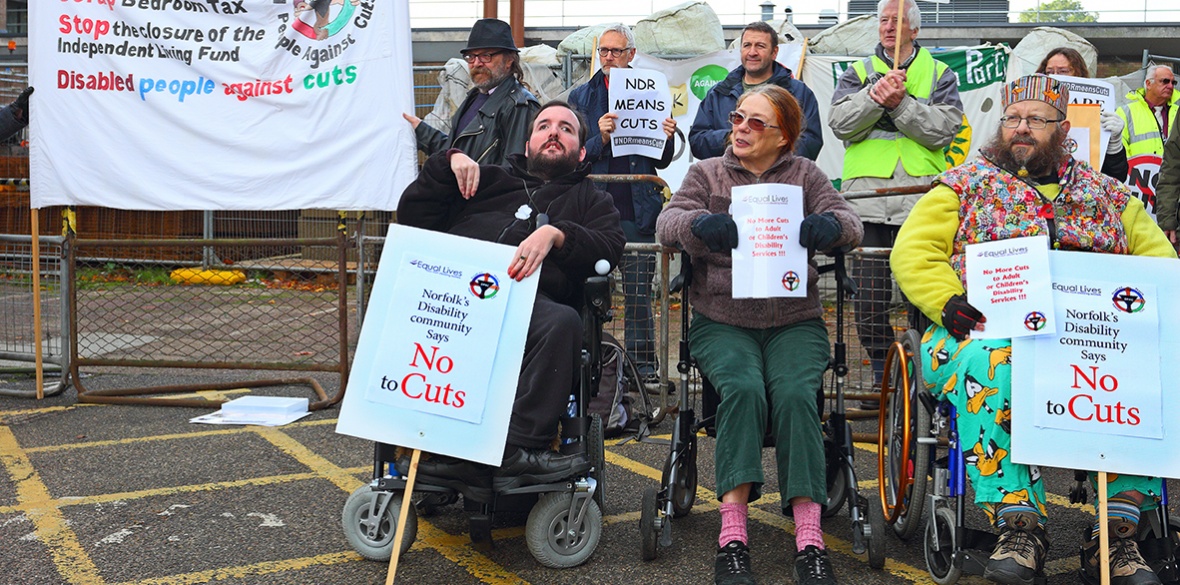
CHANCELLOR Rachel Reeves is set to announce a huge new programme of spending cuts as unemployment rises and anger at Labour’s assault on disability benefits mounts.
She will use her spring spending statement next week to unveil a fresh austerity programme as the government continues to rule out tax rises on the wealthy as an alternative.
Despair is turning to anger among backbench Labour MPs and trade unions at the government’s course, which is already seeing Labour plunge to record lows in the opinion polls.
Ms Reeves’s death-wish economics come as official statistics showed joblessness increasing, including among young workers.
Unemployment is up by 0.1 per cent, with a youth unemployment rate of 12.9 per cent.
Commenting on the figures, Public and Commercial Services union general secretary Fran Heathcote said: “The labour market figures today highlight the cruelty of the government’s reforms to disability benefits.
“Unemployment is rising, and the wider measure of underemployment is now at 4.75 million with only 816,000 vacancies in the economy — meaning there are already nearly six people chasing every vacancy.
“Those figures exclude disabled people currently deemed unable to work or with only limited capacity for work.
“The reality is that the government’s proposals will not help disabled people off of benefits and into work, but off benefits and into deeper poverty.”
Keir Starmer says pensioners can freeze to death and poor children can starve and be condemned to failure and misery all their lives.Keir Starmer explains the moral case for cutting disability benefits. He says work will set you free.
“It’s one thing to say the economy is not doing well and we’ve got a fiscal challenge … but cutting the benefits of the most vulnerable in our society who can’t work, to pay for that, is not going to work. And it’s not a Labour thing to do.”
So says former Labour big beast turned centrist-dad podcaster Ed Balls about the government’s welfare reform proposals. Cue furious nods from all those who were hoping and expecting better – or at least not this – from Keir Starmer and Rachel Reeves.
Reactions like these are wholly understandable. After all, the Labour party has long viewed support for the welfare state as both a flag around which the party can rally, and a stick with which to beat the Conservatives.
But while that may have been the case in opposition, in office things have been a little more complicated.
Going all the way back to the MacDonald and Attlee governments, through the Wilson era, and into the Blair and Brown years, Labour governments have often seen fit to talk and act tough to prove to voters, the media and the markets that they have a head as well as a heart. And if that means upsetting some of their MPs, their grassroots members and their core supporters in the electorate, then so be it.
Want more politics coverage from academic experts? Every week, we bring you informed analysis of developments in government and fact check the claims being made.
Welfare encompasses a raft of policies that are as much symbolic as they are substantive. Choosing between them has tangible implications for those directly affected. But those choices also say something – and are intended to say something – about those politicians and parties making that choice.
For Labour governments – and in particular Labour chancellors – cuts in provision, even (indeed perhaps especially) if they involve backtracking on previous commitments, have always been a means of communicating their determination to deal with the world as it supposedly is, not as some of their more radical colleagues would like it to be.
On every occasion, those decisions have provoked outrage: a full-scale split in the 1930s, the resignation of three ministers (including Harold Wilson and leftwing titan Nye Bevan) in the 50s, parliamentary rebellions and membership resignations in the 60s, more generalised despair in Labour and trade union ranks the 70s, and yet another Commons rebellion in the 90s.
But what we need to appreciate is that the fallout is never merely accidental. Rather, it is a vital part of the drama. For the measures to have any chance of convincing sceptical markets and media outlets (as well as, perhaps, ordinary voters) their authors have to be seen to be committing symbolic violence against their party’s own cherished principles.
The proof that sacred cows really are being sacrificed is the anger (ideally impotent anger) of those who cherish them most – Labour’s left wingers. Their reaction is not merely predictable (and expect, by the way, to see Labour’s right wingers employ that term pejoratively in the coming days), it is also functional.
The cruelty is the point
Away from the Labour party itself, both those directly affected by the changes to sickness and disability benefits and those who campaign on their behalf, are – rightly or wrongly – already labelling those changes as cruel. But, likewise (and to put it at its most extreme) the cruelty, to coin a phrase, is the point.
The government will naturally be hoping that, in reality, as few people as possible will be significantly hurt by what it is doing. But the impression that it is prepared to run that risk in pursuit of its wider aim is, in many ways, vital to its success.
As to what that wider aim is? Labour’s essential problem is that, for all its social democratic values, it understandably aspires to become the natural party of government in what is an overwhelmingly liberal capitalist political economy.
It has all too often sought to achieve that, not so much by creating expectations among certain key groups and then rewarding them, as it has by aiming to demonstrate a world-as-it-is governing competence.
That, in the view of its leaders (if not necessarily its followers), is the master key to the prolonged success experienced by the Conservative party – a party which has traditionally enjoyed the additional advantage of being culturally attuned to the market and media environment in which governing in the UK has to be done.
So, no, Ed Balls, you’re wrong: for good or ill, this week’s announcement is very much “a Labour thing to do”.
Keir Starmer commits to play the caretaker role for Capitalism through the “hard times”.Keir Starmer confirms that he’s proud to be a red Tory continuing austerity and targeting poor and disabled scum.
[21/3/25 dizzy: I had better say that I disagree with “… what is an overwhelmingly liberal capitalist political economy”. It’s only that way because the left is denied opportunity. Consider Corbyn’s popularity for example and the many forces that attacked him.]
… Keir Starmer’s Labour government has just declared war on some of the most vulnerable people who live in this country – that is, disabled people.
According to leaked proposals to ITV, there will be cuts of £6bn to the social security budget, and £5bn will come from an attack on Personal Independence Payments – that is, PIP. That’s the main disability benefit for adults of working age, providing support of between £1,500 and £9,610 a year.
The eligibility criteria for receiving it will change so that some people with disabilities and long-term illnesses will no longer receive these payments at all.
…
There has been a longstanding widespread campaign of demonisation against people claiming benefits, portraying them as scroungers, as people who aren’t really eligible. Well, this government policy will cut the amount of support being given to disabled people who nobody disputes need support.
Even those with extreme disabilities in the unfit to work category are likely to lose money under new government plans.
PIP isn’t an out-of-work benefit – it goes to people who are disabled or have long-term illnesses who are in or out of work to help cover the extra costs imposed by disability or ill health so that they can live as independent and fulfilling lives as possible – for example, paying for care or mobility needs.
As it is, last year it was reported in the Observer that the government was rejected more than 40% of applications for PIP from people with multiple sclerosis, cerebral palsy, and arthritis, and one in four applications from amputees, along with other thousands of applicants from people with cancer, post-traumatic stress disorder and emphysema. They even reject 30% of applicants with Huntingdon’s disease and Parkinson’s.
Keir Starmer explains that he feels no shame or guilt benefitting personally from gifts from the rich and powerful while insisting on policies of severe austerity causing suffering and death.
INCREASED NHS funding during the last Labour government masks how privatisation reduced its efficiency, says a groundbreaking new expert report which was launched in Parliament this week.
The Rational Policy-maker’s Guide to Rebuilding the NHS was produced by academics and NHS professionals at the 99% Organisation and Keep Our NHS Public (KONP).
Cross-party MPs, policy-makers attended the event sponsored by Labour MP Richard Burgon.
Today he said: “This report lays bare the truth that underfunding and creeping privatisation have left our NHS in crisis. But there is a way forward.
“Proper public investment and a commitment to keeping the NHS free at the point of use can rebuild our health service and improve patient outcomes.
“The government must take note: this is not just about economics, it’s about saving lives.”
The report warned that ministers “must skilfully avoid the pitfalls of the past” Labour government, including failing to tackle social care.
…
Founder of the 99% Organisation Mark E Thomas said: “There is no dispute that the NHS is struggling badly, but there is certainly dispute about how to fix it.
“This report demonstrates that calls for further privatisation or an insurance-based system would be catastrophic for both public health and the economy.
“The only viable solution is proper funding, preventive healthcare investment, and tackling the root causes of ill health, including poverty.”
KONP co-chair Dr John Puntis said: “Decades of market-driven policies have eroded our NHS.
“This report makes it clear that the way forward is not more outsourcing or corporate involvement, but a properly funded, publicly run health service that puts patients before profit.
Labour’s refusal to honour an ombudsman recommendation to compensate Waspi women has been deeply unpopular
LABOUR MPs have been banned from publicly criticising government policies in a new clampdown by the beleaguered Starmer regime, it was revealed today.
It is understood that Labour whips have written a threatening letter to the 10 Labour MPs who voted against the government’s refusal to compensate the Waspi women over pension maladministration, as recommended by an ombudsman.
In an unprecedented injunction, the letter includes the warning that “you are not entitled to criticise the government in public.”
The move forms part of an increasing authoritarianism by Labour’s leadership as the government’s popularity plummets in the polls.
Three left MPs have had their six-month suspension for an earlier rebellion over the two-child benefit cap extended for an open-ended period, indicating that they are unlikely ever to be readmitted to the parliamentary party.
Government business managers had only imposed a one-line whip, the lightest form of parliamentary discipline, on the Waspi vote, since it was on a purely symbolic motion tabled by the Scottish National Party.