16 killed by police in Kenya on anniversary of historic anti-Finance bill protests

Spread the love

Original article by Nicholas Mwangi republished from peoples dispatch under a Creative Commons Attribution-ShareAlike 4.0 (CC BY-SA) license.
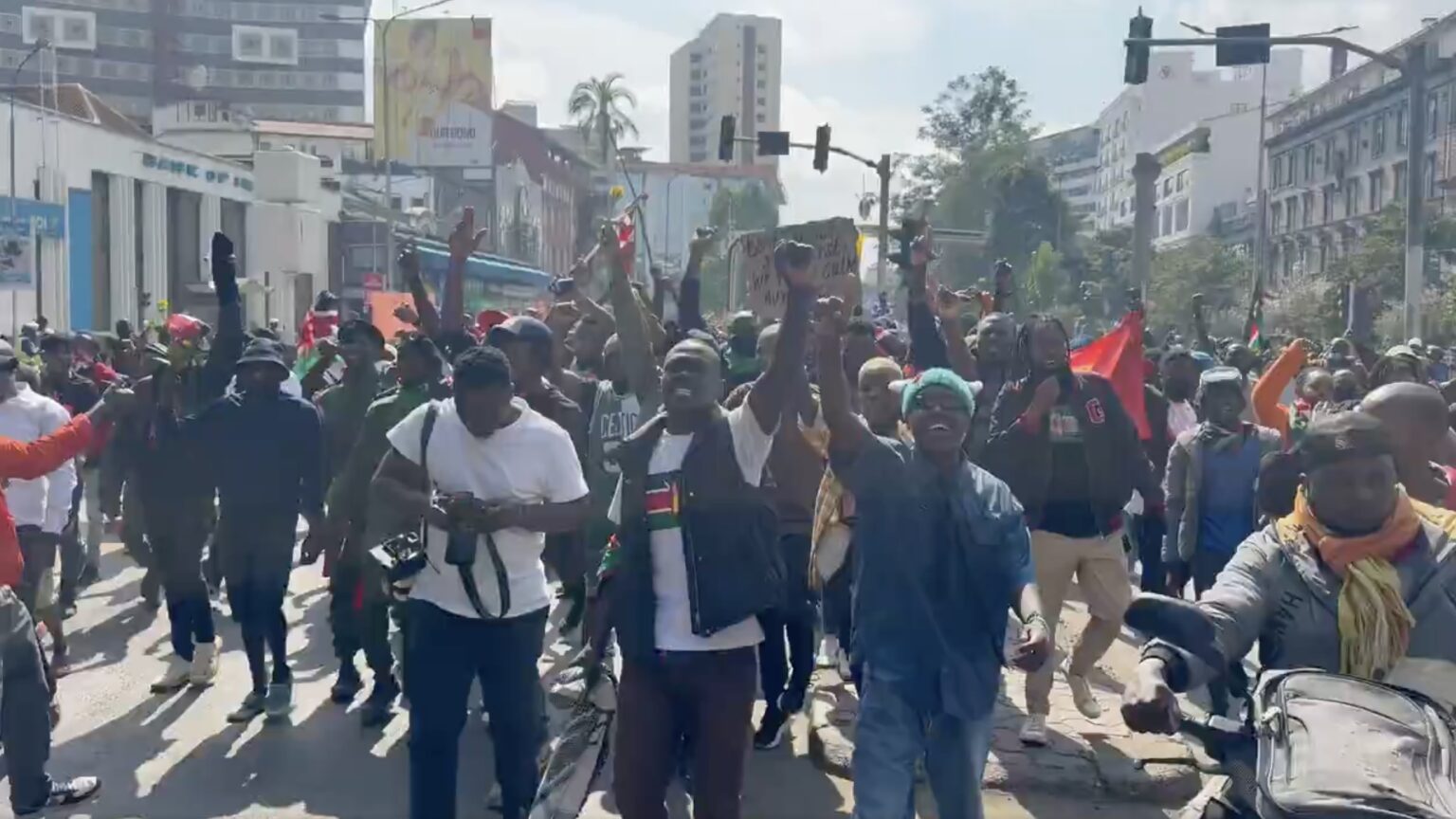
Revolutionary Youth League of Kenya on the streets of Nairobi on June 25. Photo: Screenshot

What was meant to be a solemn commemoration of the first anniversary of the historic anti-Finance Bill protests in Kenya turned chaotic on Tuesday as police clashed with demonstrators across several cities. Police used tear gas and water cannons against largely peaceful protesters, who had gathered to honor those killed during last year’s unrest and to demand justice over recent cases of police brutality and enforced disappearances.

At least 16 people were confirmed dead, with hundreds injured, after law enforcement agencies used excessive force to suppress the gatherings.

“The protests now symbolize indictments of the system itself – a system defined by authoritarianism, police violence, austerity, foreign domination, and the privatization of every public good. The state responded as expected – not with dialogue, but with bullets,” Rodgers, a grassroots organizer with the Nairobi chapter of the Social Justice Movement, told Peoples Dispatch.

The 2024 Finance Bill protests

Last year’s demonstrations, which began in response to the controversial Finance Bill 2024, led to a brutal crackdown that left over 60 young people dead, hundreds injured, and many arrested. The bill, championed by the government of President William Ruto, was widely criticized for introducing punitive taxes on essential goods and services amidst a cost-of-living crisis.

This year’s protests were organized to honor those who lost their lives during the 2024 demonstrations. However, they also served as a platform to raise alarm over recent developments, including the killing of a popular blogger in police custody and a worrying surge in abductions of activists and dissenters.

Read more: Amid economic hardship and repression, Kenyans reject the Finance Bill 2024

Media blackout raises alarm

In what many have called a blatant attempt to stifle freedom of the press, the Communications Authority of Kenya (CA) ordered a suspension of live TV coverage of the protests. Several local stations, including Citizen TV, NTV, KTN were either switched off or restricted, preventing real-time reporting of the police response and protest.

Many people also condemned the presence of infiltrators and hired goons among the protestors. These individuals were allegedly used to discredit the demonstrations by engaging in looting and property destruction tactics used as part of a wider strategy to delegitimize grassroots mobilization and participation in protests.

Despite the violent disruptions, the anniversary protests saw thousands of Kenyans across the country take to the streets. Demonstrators carried placards bearing the names of those killed in 2024 and chanted slogans demanding accountability, justice, and police reform.

Voices from the protests

In dialogue with Peoples Dispatch, Rodgers, a grassroots organizer with the Nairobi chapter of the Social Justice Movement, reflected on the deeper meaning behind the protests:

“The June 25 protest went beyond just being a memorial. It was a continuity of a political statement from the people that they will not fear to remain defiant in the face of systemic oppression. Exactly one year since mass uprisings shook the country in opposition to the punitive Finance Bill 2024 and broader economic injustice, the people came back to the streets with even more clarity and unity.”

We just arrived where comrade Alex Maasai was murdered by Ruto thugs and the Kenya Police, in the morning we visited Central police where Albert Ojwang’ was murdered my Lagat and his criminal gangs #OccupyUntilVictory pic.twitter.com/87b6SI5UiR

— Booker Ngesa Omole ☭ (@BookerBiro) June 25, 2025

Rodgers emphasized that what distinguished this year’s protests was not only their scale – reaching 27 of Kenya’s 47 counties – but the emergence of a clearly articulated political program from below.

Citing reports confirming that between 8 and 16 people were killed and over 400 injured, Rodgers also condemned the regime’s attempt to suppress the truth by shutting down live broadcasts, which he said “exposed repression on free speech and its fear of truth, transparency, and the voice of the people.”

“The people are now conscious that the crisis in Kenya is political as much as it is systemic. It is a crisis of legitimacy, where the ruling class governs through force and deception, abandoning constitutional obligations like Article 43 on economic and social rights.”

He described the protest movement as part of a broader class struggle – pitting a parasitic elite backed by global capital against a rising mass of organized working poor and peasants demanding land, food, dignity, freedom, and power.

“Yesterday was important because it proved this movement is not spontaneous. It is becoming strategic, conscious, and unafraid.”

Unmet demands and growing anger

In the days leading up to the anniversary, momentum had been building both online and offline. Young people, civil society groups, university students, and artists held vigils, digital campaigns, and forums across the country. Yet many of the core grievances that sparked the protests in 2024 remain unresolved:

  • Runaway corruption
  • A bloated government
  • Growing public debt
  • Youth unemployment
  • The erosion of democratic space

As the country grapples with the fallout of this week’s events, people are calling for an independent investigation into the killings, injuries, and abductions. They are also demanding the immediate reinstatement of press freedoms and the prosecution of those responsible for unlawful police actions.

The anniversary protests have made it clear: Kenya’s youth are not willing to be silent, and the demand for social justice is far from over.

Original article by Nicholas Mwangi republished from peoples dispatch under a Creative Commons Attribution-ShareAlike 4.0 (CC BY-SA) license.
Continue Reading16 killed by police in Kenya on anniversary of historic anti-Finance bill protests

Israel kills five journalists in a clearly marked press van in Gaza

Spread the love

Original article by Aseel Saleh republished from peoples dispatch under a Creative Commons Attribution-ShareAlike 4.0 (CC BY-SA) license.

5 journalists were killed in an Israeli air strike on their vehicle near Al-Awda Hospital in Nuseirat, central Gaza Strip, on December 26, 2024. Photo: Mohammed Asad/Middle East Monitor.

Instead of condemning the massacre of the Palestinian journalists, western media outlets have attempted to whitewash Israel’s flagrant crime by adopting its narrative.

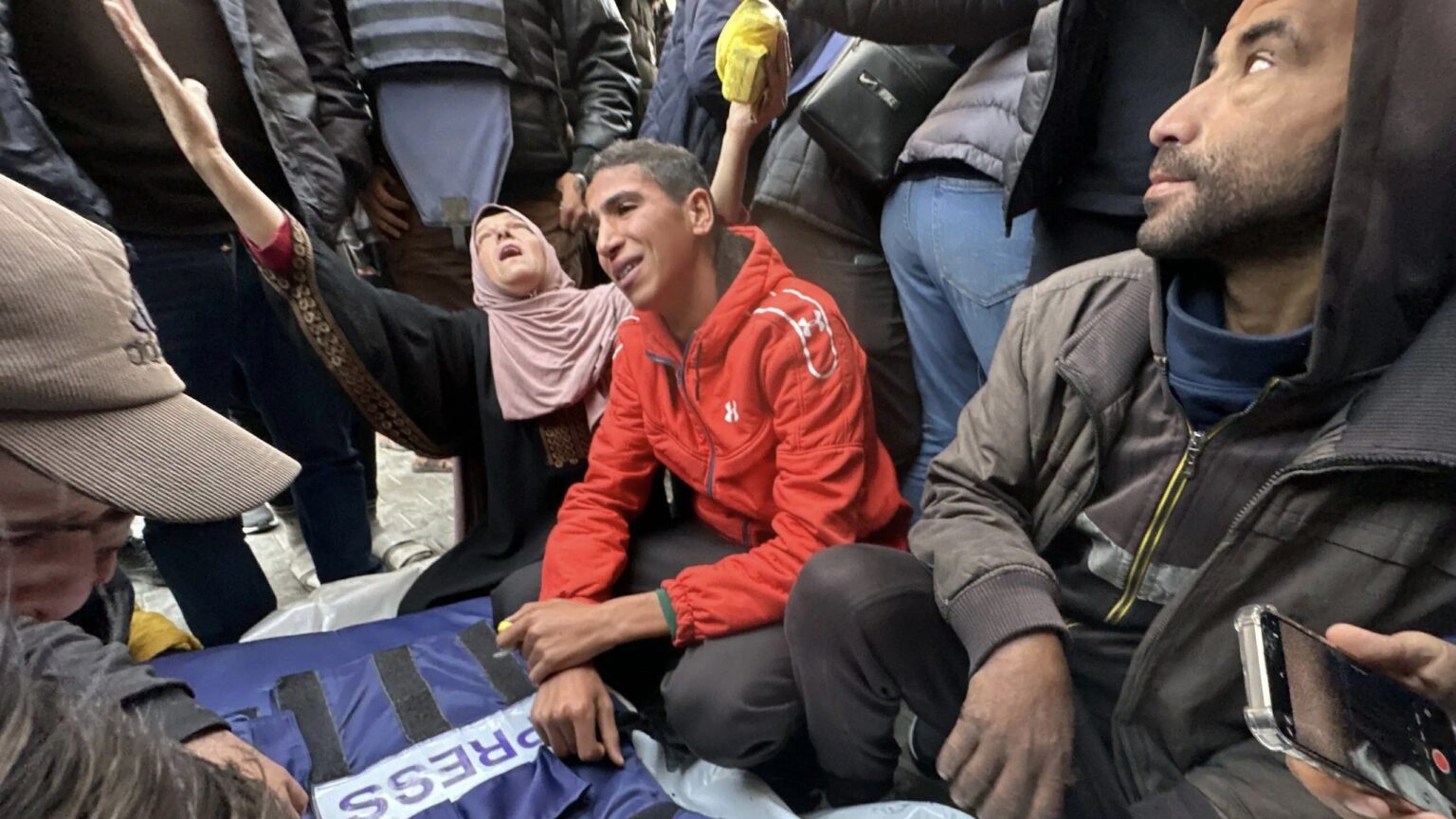
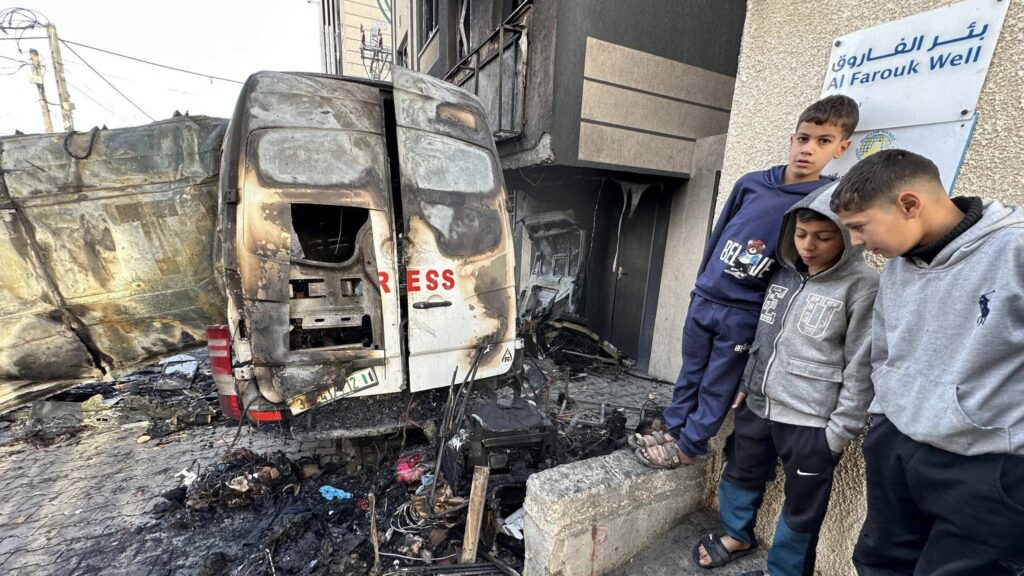
Five Palestinian journalists from Al-Quds Today TV channel were killed in an Israeli airstrike that hit their broadcasting van as they were covering events near Al-Awda Hospital, in Al-Nuseirat refugee camp in the central Gaza strip on Thursday, December 26.

The slain journalists were identified as Faisal Abu al-Qumsan, Ayman al-Jadi, Ibrahim al-Sheikh Ali, Mohammad al-Ladah, and Fadi Hassouna.

Just hours before their van, which was marked with the word “Press” in large red letters, was hit, Ayman al-Jadi recorded a video with his slain colleagues. The video showed Ayman celebrating with them as he was awaiting the birth of his first child, who was born around the same time as he was killed in the airstrike.

Press van that was hit with an Israeli airstrike. Photo: Mohammed Asad/Middle East Monitor

Ayman’s brother Omar al-Jadi recorded and later shared a video of the moment Ayman and his colleagues were killed. In the video, a grief-stricken Omar sobs as the van carrying his brother is set ablaze.

The Palestinian Journalists Syndicate (PJS) condemned the Israeli massacre of the five journalists on Thursday, pointing out that the deadly attack took the death toll of Palestinian journalists and media workers killed by Israel since the beginning of the Israeli genocidal aggression in Gaza to more than 190.

PJS called the murder of the journalists “an attempt to obscure the truth and stifle freedom of expression,” adding that it reflects the extent of the systematic targeting of Palestinian journalists. The syndicate also urged the international community and all human rights organizations to provide urgent protection for Palestinian journalists and take practical steps to stop the crimes committed by the Israeli Occupation Forces (IOF) against them.

For its part, the Committee to Protect Journalists (CPJ) denounced the crime on Thursday. CPJ’s program director in New York, Carlos Martinez de la Serna, clarified in a statement that with the assassination of Al-Quds Today journalists “nine Gazan journalists have been killed in less than two weeks”, urging the international community to act immediately “to protect Palestinian journalists in Gaza and end Israel’s impunity for these killings.”

On December 11, Palestinian broadcaster of local Al-Aqsa Radio Eman al-Shanti was killed alongside her three children and husband in an Israeli airstrike that targeted a residential building in Sheikh Radwan neighborhood, in Gaza City. Four days later, Al-Mashhad News correspondent Mohammad Baalousha was killed after an Israeli quadcopter dropped a bomb on a street within the same neighborhood.

On the same day, Palestinian journalist and editor at a local news agency, Mohammad al-Qrinawi, his wife and children were killed in an Israeli aerial attack that struck their home in Al-Bureij refugee camp in the central Gaza Strip.

One day after Baalousha and al-Qrinawi were murdered, Al Jazeera cameraman Ahmad Baker al-Louh was killed in an Israeli airstrike, which targeted a Palestinian Civil Defense post in Al-Nuseirat refugee camp in the central Gaza Strip.

While the Israeli Occupation Forces (IOF) have been systematically targeting Palestinian journalists and media workers in a bid to cover Israel’s war crimes in Gaza, it has also blocked foreign media outlets from entering the besieged enclave.

According to a report published by Reporters Without Borders (RSF) last October, Israel has implemented diverse methods to orchestrate a media blackout in Gaza. In addition to the targeted killing of journalists, and prohibiting foreign journalists from accessing Gaza, IOF sought to destroy newsrooms and cut off internet and electricity, annihilating the Palestinian media infrastructure.

Meanwhile, western media has continued to whitewash Israel’s war crimes and the slaughtering of journalists by adopting the IOF’s narrative. Echoing Israeli media, The New York Times reported on Thursday, that the five murdered journalists from Al-Quds Today were associated with a militant group.

Original article by Aseel Saleh republished from peoples dispatch under a Creative Commons Attribution-ShareAlike 4.0 (CC BY-SA) license.

Continue ReadingIsrael kills five journalists in a clearly marked press van in Gaza

‘The plan is just to kill’: personal testimonies of Israel’s genocide in Gaza

Spread the love

https://www.middleeastmonitor.com/20241213-the-plan-is-just-to-kill-personal-testimonies-of-israels-genocide-in-gaza

The British Palestinian Committee (BPC) and UK Gaza Community (UKGC) convened a press conference in London on 12 December 2024

by Nasim Ahmed

The British Palestinian Committee (BPC) and UK Gaza Community (UKGC) convened a press conference in London yesterday, bringing together healthcare workers and British-Palestinian voices to expose the scale of Israel’s systematic destruction of Gaza amid an enforced media blackout.

The event, held metres away from BBC Broadcasting House, aimed to break through the information vacuum created by Israel’s targeting of journalists and closure of the besieged Gaza Strip from the world. With 193 journalists killed since 7 October 2023 and systematic restrictions on media access, particularly in northern Gaza, evidence of massacres, mass executions and widespread destruction has largely fallen out of the news cycle.

The attacks in northern Gaza represent the most violent and brutal assaults in the history of Israel’s colonial occupation of Palestine, the organisers pointed out, as speakers prepared to share harrowing testimonies of death and devastation in the Gaza Strip.

Mai Annan, speaking via video link from Gaza where she leads the Reviving Gaza mutual aid project, provided a chilling account of Israeli military tactics. “We started hearing loudspeakers asking the men in the building to come out naked, then they asked the women and children to come out. They lined up the men, and the soldiers began firing at them randomly,” she recounted. “Many were killed, and some were wounded and left to bleed to death. Then they put all the women and children in one room and threw a gas grenade inside. It’s very clear to us that everyone is a target, and the plan is just to kill and kill more.”

They lined up the men, and the soldiers began firing at them randomly. Then they put all the women and children in one room and threw a gas grenade inside.

Dr Mahim Qureshi, a London-based vascular surgeon who recently returned in November after volunteering in Gaza detailed the catastrophic medical situation. “The types of injuries are predominantly blast injuries,” she explained, “but the degree of overcrowding and lack of hygiene, lack of antibiotics and high level of antibiotic resistance means people cannot fight basic infections.” She described how young girls arrived with gunshot wounds to the head, while doctors, lacking basic neurosurgical equipment, were forced to drill through skulls with inadequate tools in desperate attempts to save lives.

Hala Sabbah, the London-based coordinator of the Sameer Project aid group, explained how aid has been weaponised through systematic starvation. “Prior to the genocide 400-500 trucks entered Gaza, starting from October only 50 trucks were permitted,” she explained. “Zionists are collaborating with people on the ground to make sure these trucks are stolen. Not only are the number of trucks limited they are making sure it’s not reaching the victims. Palestinians pay thousands to buy the basic necessities.”

WATCH: Israeli occupation soldier plays sadistic games with toys of Gaza children

Dr Mohamed Ashraf, who worked in northern Gaza during the initial phase of Israel’s assault, shared devastating evidence of the targeting of medical personnel. He displayed photographs of murdered colleagues, speaking of Dr Mosab Sama, abducted from Nasser Hospital with no information about his whereabouts, and Dr Maisara Rais, killed and still buried under rubble with his family. Of his own family’s fate, he explained how he has been contacting hospitals to see if they received the bodies of his wife and daughter – their silence the only indication they might still be alive.

Ahmed Najjar, born in Jabaliya refugee camp, provided testimony of living there for 55 years before this assault. “This wasn’t just another military campaign,” he said, “this was an attempt to erase an entire people. North of Gaza is stripped of its humanity and its home.” His sister was told at gunpoint to abandon her son, while his brother watched helplessly. His father, older than the state of Israel, initially refused to move, saying he was tired of being displaced, before Israel’s relentless bombardment finally forced him to flee to Gaza City.

Dr Loai Nasir reported that 400,000 people remain besieged in northern Gaza, facing severe food insecurity as Israeli authorities consistently deny food deliveries. Ibrahim Assalia testified about the use of unknown chemical agents, describing how his father died after inhaling an Israeli substance. Speaking recently with his family, they told him “they are dying of hunger. People in north Gaza are feeding on grass and trees.”

The conference also unveiled new evidence of British complicity in Israel’s military campaign. A comprehensive report launched by the BPC detailed how British military infrastructure actively supports Israel’s assault on Gaza. Khem Rogaly explained that Britain’s military collaboration “goes far beyond licensing exports.” Britain’s global F35 programmes and export of components are essential for Israel to fly the F35 and bomb Gaza. British parts are central to the regular repairs needed to maintain Israel’s bombing campaign.

The human cost of Britain’s military support was further illustrated through testimony about the devastating medical situation in Gaza. Qureshi described how chronic illnesses are killing Gazans but their numbers are not added to the death toll. She noted that what she witnessed in the south could not compare to the horror unfolding in the north. Healthcare workers shared accounts of performing surgeries without anaesthesia, while Ashraf recounted doctors watching helplessly as patients died from treatable conditions due to lack of basic medical supplies. The toll on medical staff has been both physical and mental, with many forced to work through their own trauma while treating an endless stream of casualties

The systematic targeting of healthcare workers emerged as a recurring theme. According to figures presented at the conference, some 1,800 healthcare workers have been killed since October 2023, with 319 health workers currently detained by Israeli occupation forces. Ashraf spoke of being trained to deal with crises, but never having faced anything like this current situation, with no medical supplies reaching Gaza.

Sabbah detailed how the starvation of Gaza is being systematically engineered. To buy vegetables in northern Gaza now costs hundreds of dollars, she explained. “It’s not a famine,” she emphasised. “It’s manufactured starvation by Israel.”

READ: Smotrich: Without us in the cabinet, the war on Gaza would have ended earlier

“I’m not asking western leaders to see us as humans,” Najjar stated in his closing remarks. “Stop pretending, stop lecturing. We see through your hypocrisy. You think you can erase us – you will not, you will fail.”

The testimonies presented paint a harrowing picture of systematic destruction aimed at making Gaza uninhabitable. Speakers emphasised that while mainstream media attention has shifted elsewhere, the situation in northern Gaza continues to deteriorate, with hundreds of thousands of Palestinians facing what the UN has described as catastrophic hunger.

The evidence presented of British military support for Israel’s campaign comes as legal experts increasingly warn that Israel’s actions constitute genocide. The International Court of Justice (ICJ) is currently investigating genocide charges against Israel following South Africa’s legal action, while the UN’s recent report found Israel’s military actions in Gaza to be consistent with genocidal intent. Amnesty International has joined a growing chorus of human rights organisations in concluding that Israel’s actions in Gaza constitute genocide.

The press conference highlighted how Israel’s media blackout serves to conceal the scale of destruction in Gaza from international scrutiny. Through harrowing firsthand testimonies, damning evidence of British military support and documented accounts of systematic starvation and medical deprivation, the event provided a devastating glimpse of the genocide unfolding in Gaza.

The article above, this work by Middle East Monitor is licensed under a Creative Commons Attribution-NonCommercial-ShareAlike 4.0 International License.

Continue Reading‘The plan is just to kill’: personal testimonies of Israel’s genocide in Gaza