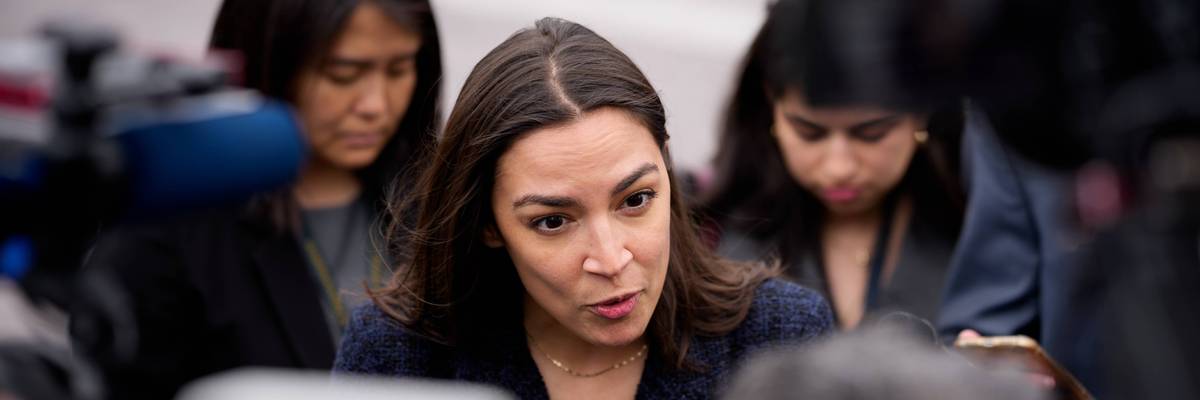
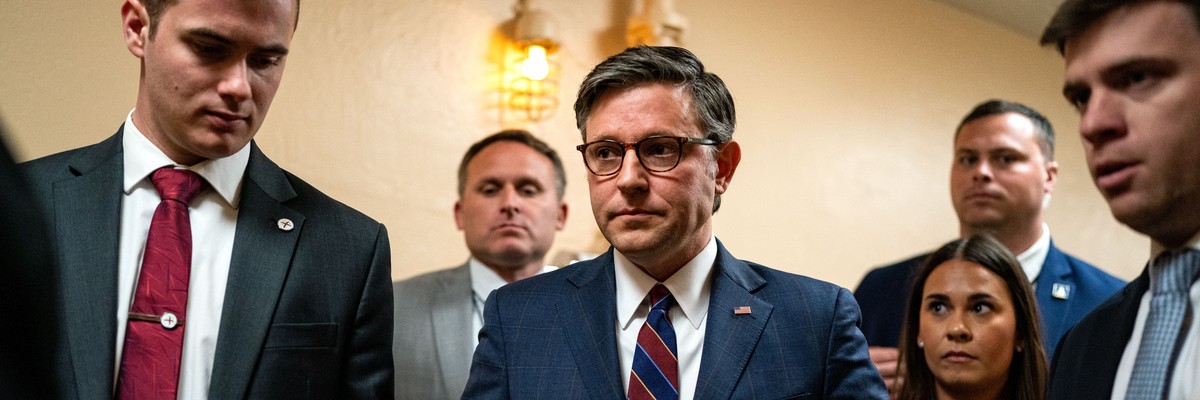
US Rep. Alexandria Ocasio-Cortez (D-NY) speaks to members of the media as she arrives at the US Capitol Building on May 21, 2026 in Washington, DC. (Photo by Andrew Harnik/Getty Images)
“We can’t even raise the minimum wage. Do Republicans really think this stuff is going to happen?”
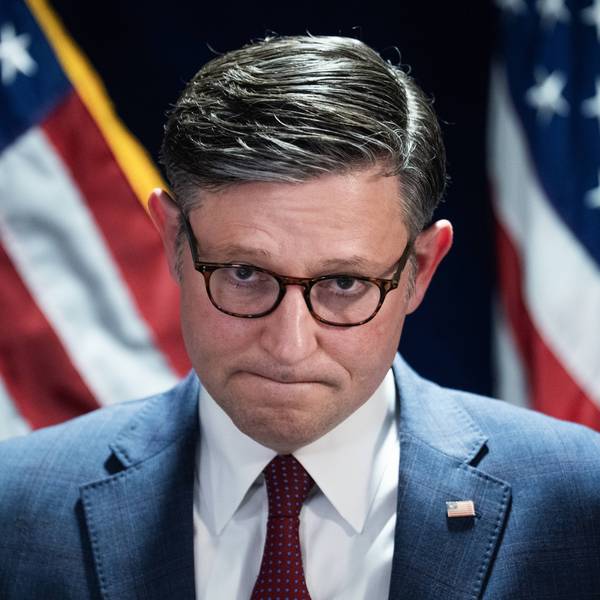
On Thursday, progressive Rep. Alexandria Ocasio-Cortez (D-NY) mocked the GOP’s latest claims that Democratic politicians who support Medicare for All and other broadly popular universal proposals are putting the US on what House Speaker Mike Johnson (R-La.) recently called a “dark road of death to communism.”
“We can’t even raise the minimum wage. Do Republicans really think this stuff is going to happen?” Ocasio-Cortez told a reporter on Capitol Hill after they’d asked whether the recent victories of democratic socialists and other progressives could end up “as full-blown communism.”
Reporter: Isn’t there concern that this slippery slope to socialism inevitably ends up as full-blown communism?
AOC: I mean, no. I think that’s very silly. We can’t even raise the minimum wage. Do they really think communism is going to happen? No. They’re trying to scare people… pic.twitter.com/RiFhqpwd6T
With 78% of Democratic voters supporting an expansion of the Medicare program to everyone in the US—which would end healthcare’s treatment as a for-profit endeavor in the US and put the medical system on equal footing with those in other wealthy countries—a number of Democratic House candidates who support the proposal have won primary races in recent months, including Melat Kiros in Colorado, Claire Valdez in New York, and Adam Hamawy in New Jersey. In Michigan, US Senate candidate Abdul El-Sayed, a Medicare for All advocate, has polled ahead of his centrist opponent Rep. Haley Stevens in numerous recent surveys.
As Republicans aim to maintain control of the Senate and House in the midterm elections—having ripped nutrition assistance and Medicaid away from millions of Americans, driven up healthcare costs for people who have insurance through the Affordable Care Act, supported the invasion of Iran as it has sent gas prices soaring, backed billions of dollars in Pentagonspending and military aid for Israel as Americans struggle to afford essentials, and supported a president who says he doesn’t “think about Americans’ financial situation”—they’ve attempted to revive old claims that the new crop of progressive Democrats “are a danger to you and your family,” as Johnson said this week.
The House speaker called the progressive primary winners “crazy little mini-Mamdanis who are popping up all around the country,” while House Republican Conference Chair Lisa McClain (R-Mich.) warned that “the radical left feels they need to hide what their policies are… Let’s call it what it is: It’s communism.”
Ocasio-Cortez, who is said to be a potential 2028 presidential or Senate candidate, called the warnings “very silly” and suggested they came from lawmakers who are dead-set against healthcare being treated as a right in the US instead of a profit-making business.
“They’re trying to scare people because they don’t want us talking about the fact that we all have a right to healthcare,” said the congresswoman. “So they want to call everything they don’t like communist because if people actually wake up to the fact that their elected officials are screwing them over when they get here, then they’re going to realize they deserve better and that healthcare as a right isn’t crazy, it isn’t pie-in-the-sky.”
“They want to call this stuff communist because they don’t want us to realize that the rest of the developed world has guaranteed healthcare,” she added. “So they want to call it communist because they don’t want you to know that Germany, Italy, the UK, Canada—everybody else—has it better than us, and we spend the most money for the worst care in the modern, developed world.”
In another interview Thursday, Ocasio-Cortez expanded on her condemnation of Republicans’ healthcare policies.
“This administration is killing Americans,” she said. “They are killing people by taking away their healthcare. They are killing women by having them bleed out in parking lots. They are killing seniors by imposing cuts to Medicaid and to Medicare recipients… The fact of the matter is they are for UnitedHealth. They are for Big Pharma. They are for these corporations, and they are cutting your healthcare.”
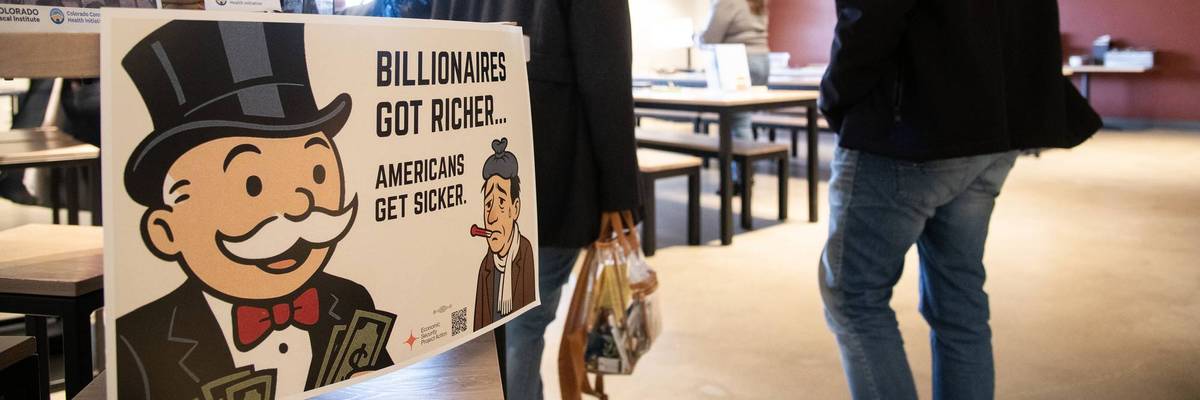
Colorado residents fill out cards and share their stories for content to send to congressional representatives regarding healthcare cuts and the Affordable Care Act during an event called “Don’t Let the Ghouls Gut Our Healthcare!” on November 1, 2025 in Northglenn. (Photo by Tom Cooper/Getty Images for Economic Security Project)
“As working families continue to get squeezed left and right by GOP-driven healthcare cost hikes and bureaucratic red tape, millions more Americans will lose the care they rely on to stay alive and healthy.”
On the heels of data revealing that millions of people have lost health insurance coverage during US President Donald Trump’s second term amid a series of GOP attacks on access to care, polling published Monday shows that a majority of Americans support eliminating private insurers.
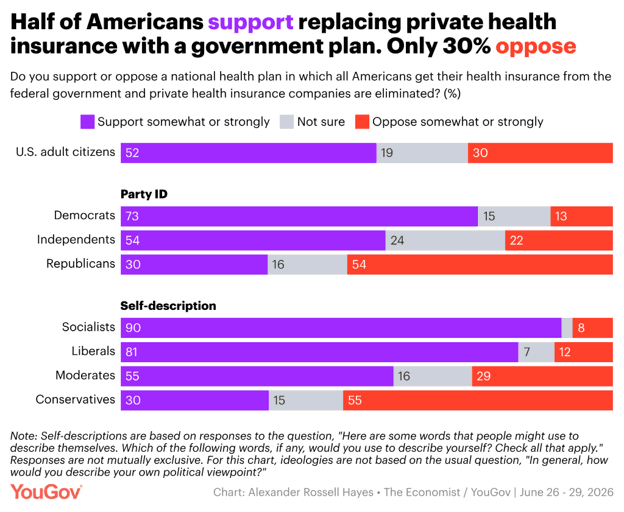
The 1,606 adult US citizens surveyed by The Economist/YouGov June 26-29 were asked: “Do you support or oppose a national health plan in which all Americans get their health insurance from the federal government and private health insurance companies are eliminated?”
Fifty-two percent expressed support, and the proposal was even more popular than that among respondents under age 45 as well as registered Democrats and Independents. Just 30% of those polled were opposed, while the rest said that they were “not sure.”
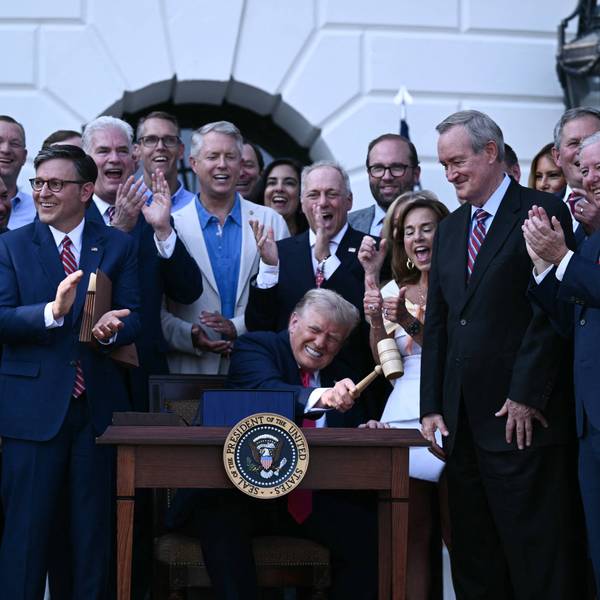
The polling follows the administration’s quiet release of data showing that 4.2 million lost Affordable Care Act (ACA) coverage as of February. Trump and his Republican allies in Congress have come under fire for letting ACA subsidies expire at the end of last year—as well as for enacting the so-called One Big Beautiful Bill Act, which is expected to leave more working-class Americans uninsured over the next decade. Already, Protect Our Care estimates that 3.8 million people have lost coverage under Medicaid and the Children’s Health Insurance Program, bringing the total for Trump’s term to around 8 million.
“A mind-boggling number of Americans have found themselves joining the ranks of the uninsured,” Protect Our Care president Brad Woodhouse said in a Tuesday statement. “And this is just the beginning. As working families continue to get squeezed left and right by GOP-driven healthcare cost hikes and bureaucratic red tape, millions more Americans will lose the care they rely on to stay alive and healthy.”
“These are diabetic patients rationing insulin and parents skipping cancer screenings,” he continued. “These are small business owners and farmers shutting down their life’s work because they can no longer afford to buy insurance on their own. These are moms, veterans, and seniors. These are the millions who will hand Trump and Republicans in Congress a withering rebuke at the ballot box in November for making healthcare unaffordable so they could make billionaires and big corporations richer.”
As premiums soar and Americans begin to endure the consequences of the national Republican healthcare agenda, a sweeping coalition of groups that support a universal single-payer system declared earlier this month that “now is the time for Medicare for All.”
Sen. Bernie Sanders (I-Vt.) and Reps. Pramila Jayapal (D-Wash.) and Debbie Dingell (D-Mich.) have repeatedly introduced the Medicare for All Act in Congress, and support for it has grown among elected Democrats and the US public—as suggested by the new polling.
In a statement about the healthcare findings, the pollsters explained:
While eliminating insurance companies may sound like a radical change to healthcare, the share of Americans who want to replace private insurance with a government health plan (52%) is larger than the share who want to expand the existing Obamacare (the health coverage system established by the Affordable Care Act) (38%). The share who favor repealing Obamacare (28%) is about as large as the share who oppose replacing private insurance with a government plan (30%).
Americans who support a national healthcare plan do not universally see expanding Obamacare as a step in the right direction. Only a little more than half (56%) of the Americans who support creating a national health plan also support expanding Obamacare. On the other hand, most Americans who support expanding Obamacare would also support a national health plan that replaces private insurance (77%).
Although “only 8% of Americans would describe themselves as socialists,” which is “smaller than the shares who describe themselves with several other ideological adjectives offered in a poll question, including progressive (17%), liberal (23%), and conservative (34%),” the pollsters also noted, “many policy proposals championed by democratic socialists draw significant support from Americans.”
For example, majorities of respondents endorsed the government covering the cost of college tuition for all students (55%) and building public housing (57%).
When asked, “Do you think Donald Trump has had the right priorities or hasn’t paid enough attention to the country’s most important problems?” 60% of respondents said the president “hasn’t paid attention to the most important problems.”
The polling comes just over four months away from the November midterm elections, in which Democrats hope to reclaim majorities in both chambers of Congress. Some Democratic candidates, including US Senate hopefuls Graham Platner in Maine and Abdul El-Sayed in Michigan, are explicitly running on support for Medicare for All.
After multiple progressives running to represent various New York districts in the US House of Representatives won their primaries last week, Sanders called their victories proof that Americans “are sick and tired of status quo politics,” while Jayapal similarly celebrated that “bold, people-powered candidates took on the Democratic establishment and won.”
“They ran on Medicare for All. On a public option for housing. On a foreign policy that centers human dignity over political convenience. And they won,” Jayapal said. “This is what happens when movements build power. People-powered movements win.”
Climate science denier Donald Trump confirms that he knows nothing about democracy and that more liquid gold is being secured according to his policy of global privateering.Orcas discuss rotting brain. Front Orca says “Wish someone would lock him up”.
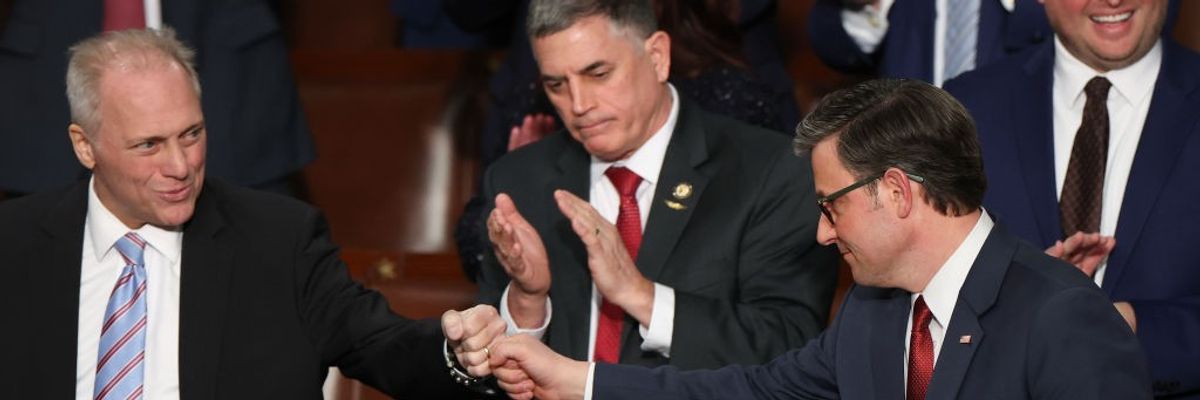
U.S. Rep. Steve Scalise (R-La.), the Republican whip, congratulates House Speaker Mike Johnson (R-La.) on his reelection to the leadership role on January 3, 2025, the first day of the 119th Congress, at the Capitol Building in Washington, D.C. (Photo: Win McNamee/Getty Images)
“Mike Johnson is committing to slashing Social Security and Medicare to get the speaker’s gavel,” said one progressive group.
As Republicans took full control of Congress this week and U.S. President-elect prepared to take office later this month, Democratic lawmakers renewed warnings about how the GOP agenda will harm working people and pledged to fight against it.
“Today, the 119th Congress officially begins. Our top priority over the next two years must be fighting for working families and standing up to corporate power and greed,” Rep. Pramila Jayapal (D-Wash.), chair emeritus of the Congressional Progressive Caucus, said on social media Friday.
“While Republicans focus their energy for the next two years on giving tax breaks to the rich and cutting vital public programs, Democrats will continue working to lower costs and raise wages for all,” Jayapal promised. “We’ll always be fighting for YOU.”
In addition to members of Congress being sworn in on Friday, nearly all Republicans in the House of Representatives reelected Rep. Mike Johnson (R-La.) as speaker and the chamber debated a rules package that Democrats have criticized since it was released by GOP leadership earlier this week.
“Their governance will be marked by consolidated power, scapegoated communities, and campaigns of punishment.”
The package fast-tracks a dozen bills on a range of issues; they include various immigration measures as well as legislation attacking transgender student athletes, sanctioning the International Criminal Court, requiring proof of United States citizenship to register to vote in federal elections, and prohibiting a moratorium on hydraulic fracturing, or fracking, for fossil fuels.
“Speaker Johnson has said that the 119th Congress will be consequential. Today, both in Speaker Johnson’s address and in the rules package the Republicans have passed, Republicans have shown us what the consequences of their leadership will be,” Rep. Delia C. Ramirez (D-Ill.) said in a statement. “In their first order of business, Republicans advanced a legislative package that abuses the power of Congress to persecute trans children athletes, take federal funding away from sanctuary cities like Chicago and Illinois, scapegoat immigrants, erode voting rights, and put new criminal penalties on reproductive care providers.”
“For the first time in history, they seek to make the speakership less accountable to the full body of legislators and to limit our ability to consider emergency bills,” Ramirez noted. “Overall, they are using the rules to make Congress less transparent, less accountable, and less responsive to the needs of the American people. Their governance will be marked by consolidated power, scapegoated communities, and campaigns of punishment.”
Over the past two years, Republicans presided over the least productive Congress in decades.
And now, instead of staking out positions that lower costs, raise wages, or take on the biggest corporations, they’re back to scapegoating immigrants and trans people. pic.twitter.com/0dxW3F6bcc
Speaking out against the package on the House floor, Jayapal said it “makes very clear what the Republican majority will not do in the 119th Congress,” stressing that the 12 bills “do nothing to lower costs or raise wages for the American people.”
These bills also won’t “take on the biggest corporations and wealthiest individuals who profit from the high prices and junk fees and corporate concentration that’s harming Americans across this country,” she said. “Because guess what? These corporations and wealthy individuals are the ones that are controlling the Republican Party for their own benefit.”
Jayapal highlighted the exorbitant wealth of Trump’s Cabinet picks, just a day after the president-elect announced corporate lobbyist and GOP donor Ken Kies as his choice for assistant secretary for tax policy at the Treasury Department—which is set to be led by billionaire hedge fund manager Scott Bessent, as Republicans in Congress try to pass another round of tax cuts for the rich.
GOP lawmakers are also aiming “to make meaningful spending reforms to eliminate trillions in waste, fraud, and abuse, and end the weaponization of government,” Johnson said in a lengthy social media on Friday. “Along with advancing President Trump’s America First agenda, I will lead the House Republicans to reduce the size and scope of the federal government, hold the bureaucracy accountable, and move the United States to a more sustainable fiscal trajectory.”
In other words, responded the Progressive Change Campaign Committee (PCCC), “Mike Johnson is committing to slashing Social Security and Medicare to get the speaker’s gavel.”
Republicans have a slim House majority and Trump-backed Johnson was initially set to fall short of the necessary support to remain speaker, due to opposition from not only Congressman Thomas Massie (R-Ky.) but also Reps. Ralph Norman (R-S.C.) and Keith Self (R-Texas). However, after a private conversation, Norman and Self switched their votes.
“Johnson cut a backroom deal with the members that voted against him so they’d flip their votes. So he will get gavel now. I’m sure in time we’ll find out what he sold out just so he’d win,” Rep. Maxwell Alejandro Frost (D-Fla.) said on social media.
“What did Johnson sell out to become speaker? Social Security or Medicare? Or perhaps veterans?” he asked.
Citing a document circulated ahead of the vote by Johnson’s right-wing critics that lists “failures” of the 118th Congress, the PCCC said: “Looks like all of the above. But his holdouts put Social Security in their first bullet of grievances.”
After the vote, Norman and 10 right-wing colleagues released a letter explaining that, despite sincere reservations, they elected Johnson because of their “steadfast support of President Trump and to ensure the timely certification of his electors.”
“To deliver on the historic mandate earned by President Trump for the Republican Party, we must be organized to use reconciliation—and all legislative tools—to deliver on critical border security, spending cuts, pro-growth tax policy, regulatory reform, and the reversal of the damage done by the Biden-Harris administration,” they added.
Politicoreported that “House Republicans are hoping to start work on the budget targets for critical committees on Saturday—the first step in kicking off their ambitious legislative agenda involving energy, border, and tax policy.”
According to the outlet:
“The Ways and Means Committee is just going to be able to draft tax legislation according to what the budget reconciliation instructions are,” said House Ways and Means Chair Jason Smith (R-Mo.), who will be leading the charge on extensions of… Trump’s tax cuts.
“And so when the conference figures out what they want in those instructions, we’ll be able to deliver according to those parameters,” said Smith, when asked about the primary goal of a GOP conference meeting tentatively scheduled for Saturday at Fort McNair, an Army post in southwest Washington.
That followed Thursday reporting by The Washington Post that Trump advisers and congressional Republicans “have begun floating proposals to boost federal revenue and slash spending so their plans for major tax cuts and new security spending won’t further explode the $36.2 trillion national debt.”
As the newspaper detailed, 10 policies that Republicans have considered are tariffs, repealing clean energy programs, unauthorized spending, repealing the Biden administration’s student loan forgiveness, shuttering the Education Department, cutting federal food assistance, imposing Medicaid work requirements, blocking Medicare obesity treatment, ending the child tax credit for noncitizen parents, and cutting Internal Revenue Service funding.
Congress should not eliminate the Department of Education or cut food stamps and health care funding to finance tax cuts for the wealthiest Americans.https://t.co/AY8CAA9RlO
— Congressman Raja Krishnamoorthi (@CongressmanRaja) January 2, 2025
“The GOP promised to make life easier for working families,” Rep. Katherine Clark (D-Mass.), the Democratic whip, said on social media in response to the Post‘s article. “Now, they want to slash your school budget, raise your grocery costs, and hike your energy bills—all to pay for billionaire tax cuts.”
“We will not allow Republicans to cut Social Security, Medicare, Medicaid, and food assistance to pay for tax cuts for the wealthy,” she added Friday. “No way.”
Zeynep Tufekci (New York Times, 12/6/24) “can’t think of any other incident when a murder in this country has been so openly celebrated.”
The early morning murder of UnitedHealthcare CEO Brian Thompson was met on social media with a “torrent of hate” for health insurance executives (New York Times, 12/5/24). Memes mocking the insurance companies and their callous disregard for human life abound on various platforms (AFP, 12/6/24).
Internet users are declaring that the man police believe to be the shooter, 26-year-old Luigi Mangione, is certifiably hot (Rolling Stone, 12/9/24; KFOX, 12/10/24). A lookalike contest for the shooter was held in lower Manhattan (New York Times, 12/7/24).
If so many people are unsympathetic at best in response to such a killing, that might be a reason to revisit why health insurance companies are so loathed. The rage “was shocking to many, but it crossed communities all along the political spectrum, and took hold in countless divergent cultural clusters,” the New YorkTimes (12/6/24) noted. Mangione was reportedly found with an anti-insurance manifesto that stated “these parasites had it coming” (Newsweek, 12/9/24), echoing a resentment largely felt by a lot of Americans, and targeted fury at UnitedHealthcare specifically.
UnitedHealthcare has always stood out for exceptionally high rate of claims denial generally in the industry (Boston Globe, 12/5/24; Forbes, 12/5/24). For example, a Senate committee found that “UnitedHealthcare’s prior authorization denial rate for post-acute care jumped from 10.9% in 2020 to 22.7% in 2022” (WNYW, 12/7/24).
The Times (12/5/24) reported that the Senate committee found that “three major companies—UnitedHealthcare, Humana and CVS, which owns Aetna—were intentionally denying claims” related to falls and strokes in order to boost profits. UnitedHealthcare “denied requests for such nursing stays three times more often than it did for other services.”
Increasing dissatisfaction
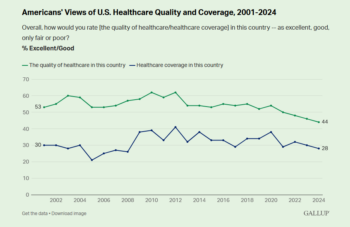
The perception of the quality of US healthcare has been on the decline since 2012 (Gallup, 12/6/24).
On top of that, Americans generally believe their insurance-centered system is a mess. Gallup (12/6/24) reported that “Americans’ positive rating of the quality of healthcare in the US is now at its lowest point in Gallup’s trend dating back to 2001.”
It continued:
The current 44% of US adults who say the quality of healthcare is excellent (11%) or good (33%) is down by a total of 10 percentage points since 2020 after steadily eroding each year. Between 2001 and 2020, majorities ranging from 52% to 62% rated US healthcare quality positively; now, 54% say it is only fair (38%) or poor (16%).
As has been the case throughout the 24-year trend, Americans rate healthcare coverage in the US even more negatively than they rate quality. Just 28% say coverage is excellent or good, four points lower than the average since 2001 and well below the 41% high point in 2012.
Most Americans are unsatisfied with the healthcare system, say the health insurance system is confusing and opaque, and many have skipped or delayed care because of a bad experience or the lack of timely appointments. A small, but not insignificant number, of Americans believe they have had a negative health outcome as result of their experiences within the healthcare system.
When this inefficient system doesn’t literally kill Americans, it can still kill them financially. “Almost a third of all working adults in the United States are carrying some kind of medical debt—that’s about 15% of all US households,” Marketplace (3/27/24) reported. It added: “This debt is also the leading cause of bankruptcies in the country.”
Many news outlets’ pontificators, however, were incensed that anyone would voice frustration with health insurance when an industry CEO has fallen.
‘Not the time to offer criticism’
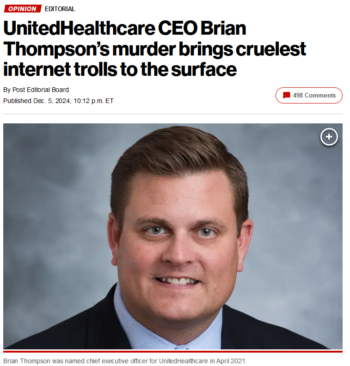
After Brian Thompson’s killing, the New York Post (12/5/24) condemned those on social media who “swooned over his killer, speculated on his motives, and wondered if Timothée Chalamet would play him in the movie.”
Responding to the memes and the jokes, many of which were more about the unjust health insurance system than support for vigilante murder, the New York Post editorial board (12/5/24) asked:
Do the jokes point to a society that has become so desensitized by the coarseness of online discussion, so disassociated from kindness, that a baying mob cheers a man’s murder and cries out for more?
And upon Mangione’s arrest, the Post (12/9/24) complained that on social media, “tasteless trolls showered praise on the Ivy League grad.” The Post (12/11/24) also fretted about fake “Wanted” posters for insurance company executives that the paper considered a “a fear-mongering social media stunt to incite hysteria,” adding that the “murder has also spawned a stream of merchandise sympathetic towards the 26-year-old being sold by online retailers, forcing Amazon to pull them from its website.”
Fox News (12/6/24) quoted one of its own contributors, Joe Concha, saying, “I think this encapsulates the far left’s worldview: If you run a company that isn’t to their liking, you deserve to die.” The network (12/7/24) praised Democratic Sen. John Fetterman of Pennsylvania for “tearing into” a New York article (12/7/24) that the outlet characterized as saying “resentment over denied insurance claims made…Thompson’s murder inevitable.”
The dismay was felt in other corners of right-wing media. At the Free Press (12/5/24), the brainchild of anti-woke crusader Bari Weiss, Kat Rosenfield wrote:
The people celebrating Brian Thompson’s murder by turning him into an avatar for everything wrong with the American healthcare system remind me of nothing so much as Hollywood screenwriters, cunningly manipulating an audience into cheering on unforgivable acts of fictional violence.
This is not the time to offer your criticisms of the health-insurance industry. And there is never a time to believe that corporate executives are, by their very nature, evil people who deserve to be killed. Yet that is what you’ll see if you go on social media right now and look at comments on news stories about this assassination.
Yet all of these outlets at the same time have run support for Daniel Penny, the man recently acquitted for killing a Black homeless man on the New York City subway (National Review, 6/17/23; Free Press, 10/20/24; New York Post, 12/4/24; Fox News, 12/6/24). These outlets likewise expressed support for Kyle Rittenhouse after he gunned down Black Lives Matter protesters (National Review, 11/19/21; Free Press, 11/17/21; New York Post, 11/19/21; Fox News cited by Media Matters, 11/11/21), and for George Zimmerman when he shot Trayvon Martin (National Review, 6/22/20; New York Post, 7/15/13; Fox News, 7/18/12). In other words, it’s fine to defend vigilantes when they kill unarmed Black people or anti-racist activists, but when a CEO’s life is taken, we must solemnly stay silent on the reasons why such a person might be targeted or why bystanders might not be crying.
Piers Morgan (New York Post, 12/10/24) made this clear when he said “I cheered when I heard” Penny’s acquittal, and felt “shocked and saddened when I saw the footage” of the Thompson shooting. “Those two reactions would surely be the correct and appropriate ones for anyone with an ounce of fairness and humanity in their heart,” he said—because Thompson was “a non-violent, non-threatening, non-criminal man in the street,” whereas Penny’s victim was “a dangerous, mentally ill, homeless man.”
Blame it on Medicare
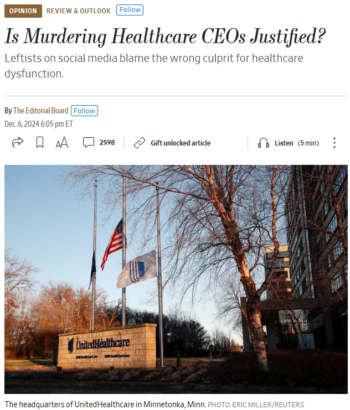
The Wall Street Journal (12/6/24) made the absurd claim that a medical system based on private insurance is better than any other kind of healthcare system.
It was the Wall Street Journal, the more erudite of Murdoch’s media properties, that really addressed the question of why people might hate health insurance companies. The anger was misdirected, the editorial board (12/6/24) said. Rather, we should look to federally funded healthcare if we want to get mad: “Medicare and Medicaid, two government programs, cover about 36% of Americans,” the paper observed; because they “pay doctors and hospitals below the cost of providing care…many providers won’t see Medicaid patients, resulting in delayed care.”
It’s an odd argument, given that people who receive Medicaid report being happier with their health insurance than people who get it through their employers or pay for it themselves—and people with Medicare are the happiest of all (KFF, 6/15/23). If the federal programs are underpaying healthcare providers, the obvious solution would be to increase funding for them—an initiative the Journal would be unlikely to support.
The board (Journal, 10/10/24) later dismissed critiques of the health insurance industry and passed off Mangione as a “disturbed individual” radicalized by the Internet and said it is “a dreadful sign of the times that Mr. Mangione is being celebrated.”
Journal editorial board member Allysia Finley (12/8/24) followed up by placing the blame on the Affordable Care Act (aka “Obamacare”). “Having insurance doesn’t change people’s behavior,” she wrote, but does “cause them to use more care.” The situation, she said, “has gotten worse since Obamacare expanded eligibility” for Medicaid. This portrait of US patients overusing healthcare like sweet-toothed children let loose in a candy store is belied by (among other things) the fact that Americans live 4.7 fewer years than the average of comparable countries (KFF, 1/30/24).
The Journal editorial went on to complain that “some providers prescribe treatments and tests that may be medically unnecessary,” and so “insurers have tried to clamp down on such abuse by requiring prior authorization.” While this “can result in delayed care that is medically necessary…it’s also how insurers control costs.”
In reality, doctors are complaining that insurance bureaucrats are impeding their ability to deliver needed healthcare because of this cost-slashing system (Forbes, 3/13/23). The American Medical Association found “94% of doctors say prior authorization leads to delays in patient care” (Chief Medical Executive, 3/14/23); “one in three doctors (33%) say prior authorization has led to serious adverse events with their patients.”
Journal editorialists appear to believe that doctors are jauntily giving away expensive blood pressure medicine and signing up patients for brain surgery for no particular reason, and the only thing that can stop this carnival of care is some bureaucrat who is trained to say “no.” The reality is that the private insurance system “saves insurance companies money by reflexively denying medical care that has been determined necessary by a physician,” as pediatrician William E. Bennett Jr. (Washington Post, 10/22/19) wrote. This is why people are so unsympathetic to Thompson, who was paid an estimated $10 million annually for imposing medical austerity on patients and providers (PBS, 12/7/24).
Pity the insurance giants
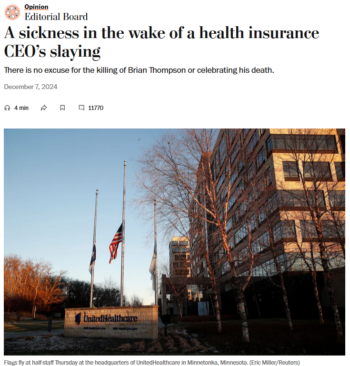
The Washington Post (12/7/24) criticized those who tried to use Thompson’s killing “as an occasion for policy debate about claim denial rates by health insurance companies.” (Note that both the Post and the Wall Street Journal used the same photo of flags at half-mast.)
Right-wing media weren’t the only engaging in scolding. At the Jeff Bezos–owned Washington Post, the editorial board (12/7/24) criticized those “who excuse or celebrate the killing,” as well as those “who do not countenance the killing itself” but “have nevertheless tried to treat it as an occasion for policy debate about claim denial rates by health insurance companies, an admittedly legitimate issue.” The Post added that debate was “fine in principle, but we’re skeptical that this particular moment lends itself to nuanced discussion of a complicated, and heavily regulated, industry.”
The editors nevertheless spent a lengthy paragraph explaining to readers that “controlling healthcare costs requires difficult trade-offs,” and that “even the most generous state-run health systems in other countries also have to face” these trade-offs. The editorial attempted to summon sympathy for
insurers, whose profits are capped by federal law, [and] must contend with consumer demand for ready access to high-priced specialists and prescription drugs—and, at the same time, premiums low enough that people can afford coverage.
Note that insurance company profits are “capped” by requiring them to spend at least 80% of premiums on claims, a percentage known as their loss ratio—but those claims can be paid to providers that are owned by the insurers themselves, “a loophole that makes loss ratio requirements meaningless” (Physicians for a National Healthcare Program, 7/16/21). United Healthcare has been particularly aggressive at this, which is part of the reason its “capped” profits soared to $22.4 billion in 2023.
As for the Post’s assertion that insurance providers should keep “premiums low enough that people can afford coverage,” KFF (10/9/24) found that “Family premiums for employer-sponsored health insurance rose 7% this year to reach an average of $25,572 annually, marking the “second year in a row that premiums are up 7%.” The Center for American Progress (11/29/22) found that employer sponsored insurance “premiums have risen above the rate of inflation and have outpaced wage growth” over the course of a decade. “Escalating grocery bills and car prices have cooled, but price relief for Americans does not extend to health care,” USA Today (10/9/24) reported.
The Post added that all this talk about how Americans are being tortured by the insurance system should wait until next year, “when Congress is to consider whether to keep temporary Obamacare enhancements that have boosted enrollment.”
It is easy to see the material interests of the Washington Post‘s owner at work. Jeff Bezos’ Amazon does not run a health insurance company, but it is fully entrenched in the for-profit medical system. It offers a health insurance marketplace through AmazonFlex, acquired the healthcare provider One Medical last year (NPR, 11/12/23; Forbes, 4/5/24), and offers a pharmacy and other health services.
As one of the world’s richest people, Bezos might have another reason to be worried about people cheering on the murder of CEOs: Amazon is often hated for its monopoly-like grip on online retail (FTC, 9/26/23), as well as charges of price-gouging (Seattle Times, 8/14/24) and union-busting (Guardian, 4/3/24).
‘Last or near last’
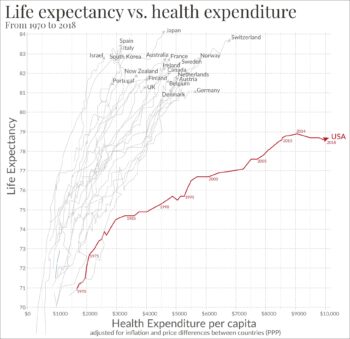
The failure of the US healthcare system in one chart: life expectancy plotted against healthcare spending.
The Washington Post‘s line about the comparable ills of “generous state-run health systems” echoed a similar argument from the Wall Street Journal‘s editorial, which concluded:
Government healthcare is a recipe for more care delays and denials. Witness the fiasco in the United Kingdom, where the Labour government reports that more than 120,000 people died in 2022 while on the National Health Service’s waitlist for treatment. To adapt a famous Winston Churchill phrase, private insurance is the worst form of healthcare, except for all others.
The statement that the British or European health systems are worse for people than the US private insurer–dominated system is simply false. Just months ago, the Commonwealth Fund (NBC, 9/19/24) found that the United States
ranks as the worst performer among 10 developed nations in critical areas of healthcare, including preventing deaths, access (mainly because of high cost) and guaranteeing quality treatment for everyone.
The US “ranked last or near last in every category except one,” precisely because
the complex labyrinth of hospital bills, insurance disputes and out-of-pocket requirements that patients and doctors are forced to navigate put the US second to last in administrative efficiency.
The Commonwealth Fund (CNN, 1/31/23) also found that
the United States spends more on healthcare than any other high-income country, but still has the lowest life expectancy at birth and the highest rate of people with multiple chronic diseases.
Healthcare providers in Mexico and Costa Rica are huge draws for Americans in need of care who can’t make it through America’s Kafkaesque system (NPR, 3/8/23). Spain and Portugal are attracting American retirees, and good low-cost health care is one incentive (Travel + Leisure, 6/20/24).
Retreat to the castle
Apparently the CEOs that Fox News (11/13/24) is so concerned about don’t qualify as “professional elites.”
While the Washington Post’s position clearly falls in line with its material allegiance to a system where its owner sits at the apex, the positions from Murdoch are more interesting. As the Democratic Party has lost support among the working class (NPR, 11/14/24; USA Today, 11/30/24), Murdoch’s outlets have touted Donald Trump and the Republican Party as alternatives for working-class voters.
Murdoch and other purveyors of Republican propaganda have promoted the idea that Democrats serve only financial elites and Hollywood producers, and that protectionist policies under Trump will help US workers (New York Post, 7/16/24; Fox News, 11/13/24). Republicans were able to woo voters by complaining about the high price of gasoline and groceries under the Biden administration (CNBC, 8/7/24).
Now Murdoch outlets are fully retreating into their elite castle and telling the rabble to stop complaining about the lack of access to healthcare. The Republicans and their news outlets have worked hard to recharacterize themselves as something more populist, but the Thompson killing has brought back the old narrative that they are, proudly, the champions of the 1 Percent.
FAIR’s work is sustained by our generous contributors, who allow us to remain independent. Donate today to be a part of this important mission.
House Speaker Mike Johnson (R-La.) speaks to reporters at the U.S. Capitol on July 23, 2024 in Washington, D.C. (Photo by Kent Nishimura/Getty Images)
“Republicans would rather protect their billionaire friends at the expense of everyone else,” said the chair of the Joint Economic Committee.
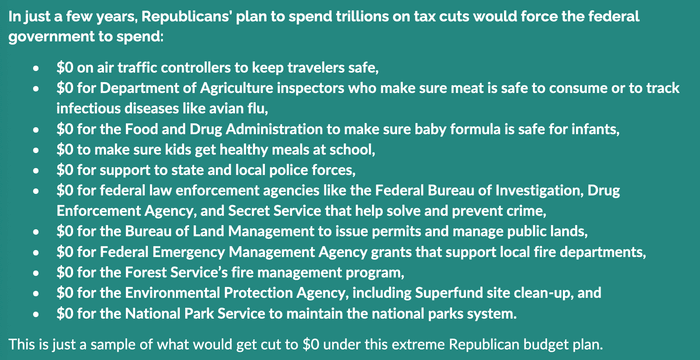
Budget proposals released by congressional Republicans in recent months lay bare the party’s desire to slash taxes for wealthy Americans and large corporations at the expense of key government programs and services, including nutrition assistance, environmental protection, and Medicaid.
That’s according to an analysis released Wednesday by Democrats on the Joint Economic Committee (JEC), which examined budget plans the GOP has released as Congress works to craft and pass government funding bills for the coming fiscal year.
The JEC specifically cites a Fiscal Year 2025 budget proposal published in March by the Republican Study Committee, a panel comprised of three-quarters of the House GOP caucus.
The plan, the JEC Democrats noted Wednesday, “claims to balance the budget by cutting Medicare spending, raising the retirement age for Social Security, capping funding for Medicaid and CHIP, and cutting the rest of non-defense discretionary spending by 31% across the board.”
“This would drive up health costs for American families by increasing premiums for [Affordable Care Act] healthcare plans and getting rid of protections for people with pre-existing conditions,” the new analysis says. “It would also prohibit Medicare from negotiating down prescription drug costs.”
A separate proposal from Republicans on the House Budget Committee claims it would finance “large tax cuts for the wealthy by both slashing key services and assuming that their tax giveaways lead to unrealistic levels of economic growth,” the Democratic report says.
“Analyzing this budget with more reasonable economic assumptions instead shows that budget would likely require the government to eliminate most federal services within a decade,” the report adds.
Sen. Martin Heinrich (D-N.M.), the chair of the JEC, said in a statement Wednesday that “Republicans’ extreme proposals are dangerous for America.”
“While Democrats are fighting to invest in families, Republicans would rather protect their billionaire friends at the expense of everyone else,” said Heinrich. “Kicking 42 million kids off of health insurance, gutting federal investments in public safety, denying veterans hospital care, and getting rid of [Supplemental Nutrition Assistance Program] benefits that help people afford groceries is unconscionable. Americans deserve better.”
Trump has called for an extension of the tax cuts he signed into law in 2017—changes that overwhelmingly benefited wealthy Americans. An extension of the tax cuts would add $4.6 trillion to the deficit of the next decade, according to the Congressional Budget Office.
The former president’s advisers have also reportedly discussed reducing the corporate tax rate from 21% to 15%, a change that would give the largest 100 U.S. companies a tax cut of $48 billion per year.
But earlier this week, UNITE HERE—a union that represents hospitality workers—endorsed Democratic nominee Kamala Harris over the Republican candidate, warning that “another Trump presidency would mean four chaotic years of defending against his attacks on unions, working people, immigrants, women, and others.”
As for Trump’s proposal to eliminate taxes on Social Security benefits, an analysis by the Tax Policy Center’s Howard Gleckman found that the move would reduce “Social Security and Medicare hospital insurance (HI) revenues by $1.5 trillion over the next decade,” harming the programs’ finances while providing “little or no benefit” to lower-income households in 2025.
“Less than 1% of the lowest-income households (those making about $33,000 or less, would get any tax cut at all,” Gleckman observed. “But about 28% of middle-income households would get a tax cut. Among the top 0.1 percent, about 20 percent of households would get a tax cut.”
Gleckman found that “in dollar terms, the biggest winners would be those in the top 0.1% of income, who make nearly $5 million or more.”