Florida Republicans Ripped for Advancing Show-Me-Your-Papers Voter ID Bill

Spread the love

Original article by Jessica Corbett republished from Common Dreams under Creative Commons (CC BY-NC-ND 3.0). 
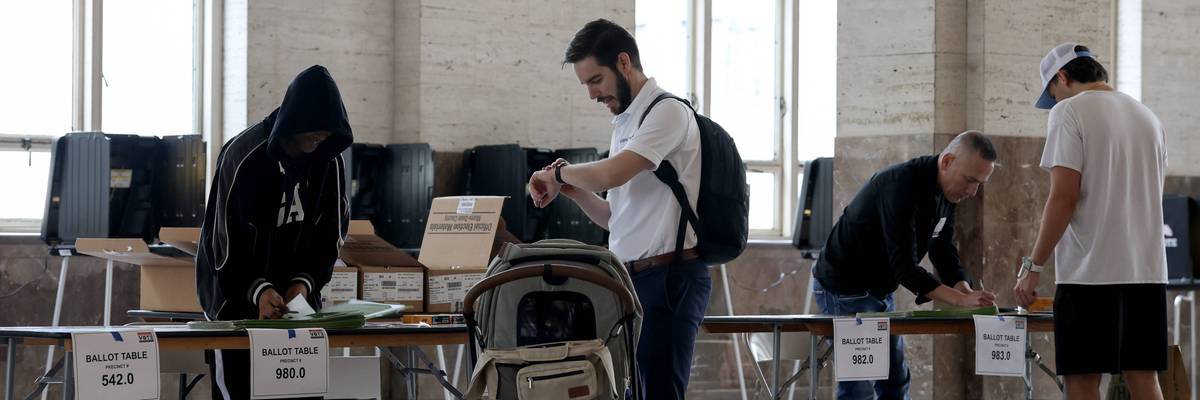
Poll workers help voters as they prepare to cast their ballots on December 09, 2025 in Miami, Florida. (Photo by Joe Raedle/Getty Images)

“This wave of anti-voter legislation is advancing amid ongoing abuses of power that pose unprecedented threats to American democracy,” said the ACLU of Florida’s executive director.

With 251 days until the US general election, Florida Republicans on Wednesday passed a show-me-your-papers bill that opponents warn could prevent thousands of eligible state voters from registering if they don’t have a valid birth certificate or passport, or their documents don’t reflect a name change.

Midterm elections are coming later this year—and they’re a crucial test of our democracy,” ACLU of Florida executive director Bacardi Jackson said in a Wednesday statement. “Moments like this bring new voters into the process and give communities the power to hold leaders accountable—exactly what a healthy democracy demands. But right now, some lawmakers are pushing an anti-voter bill that could shut thousands of eligible people out of our elections and discourage the enrollment of new eligible voters.”

RECOMMENDED…
Speaker Johnson Holds Press Conference On House Passage Of SAVE America Act

Republicans Approve ‘Dystopian’ Voter Suppression Bill That Would Force States to Give Info to DHS
GENIUS Act Presser

‘Most Dangerous Attack on Voting Rights Ever’? New GOP Election Bill Sparks Dire Warnings

The Florida House of Representatives on Wednesday voted 83-31 on HB 991, sponsored by Rep. Jenna Persons-Mulicka (R-78).

“The Florida House version of the bill would only go into effect in January 2027. But under a similar bill set for consideration in the Florida Senate, the new rules would take effect this July, before the November midterm elections,” Democracy Docket detailed. “A House committee already gave preliminary approval to the bill earlier this month.”

Jackson highlighted that “many eligible voters don’t have ready access to an unexpired passport or an original or certified copy of their birth certificate because of logistical and financial barriers. More than 8 million Floridians do not have a valid passport, and because many women legally change their name upon marriage, more than 4.7 million women in Florida do not have a birth certificate reflecting their current legal name—documents this bill would require.”

“At the same time, this proposal would eliminate current, valid forms of ID proving eligibility at the polls, including student IDs, retirement center IDs, and public assistance IDs,” she warned. “Taken together, these changes are not neutral or harmless—they would fall hardest on low-income voters, students, seniors, women, and Black and brown Floridians.”

The ACLU leader also argued that “context matters. This wave of anti-voter legislation is advancing amid ongoing abuses of power that pose unprecedented threats to American democracy.” She specifically pointed to the Safeguard American Voter Eligibility (SAVE) America Act that the GOP-controlled US House of Representatives passed earlier this month.

“We’re seeing parallel efforts nationally to make it harder for eligible voters to cast their ballots—including the SAVE Act being debated in Congress right now—and Florida is leading the way down this authoritarian path,” she said. The federal bill is less likely to get through the US Senate, whose filibuster rule requires the GOP to get some Democratic support to advance most legislation.

“What makes this even more galling is that lawmakers don’t have to do any of this at all—they are choosing to,” said Jackson. “They could enact reforms making it easier for eligible Floridians to vote and have their voices be heard, like the Harry T. and Harriette V. Moore Florida Voting Rights Act, HB 1419/SB 1598. Instead, they are fast-tracking legislation that would make voting harder for eligible Floridians and silence communities that deserve to be heard.”

“We will not stand by while politicians in power seek to entrench their power at the expense of the people’s rights,” she vowed. “We will keep organizing and fighting to reclaim and defend our democracy—because every eligible Floridian deserves to vote.”

Meanwhile, at the federal level, Senate Majority Leader John Thune (R-SD) plans to hold a vote on the SAVE America Act this week. President Donald Trump used his State of the Union address on Tuesday night to increase pressure on Congress to send the bill to his desk.

“I’m asking you to approve the SAVE America Act to stop illegal aliens and others who are unpermitted persons from voting in our sacred American elections—that cheating is rampant in our elections,” Trump said. “It’s very simple: All voters must show voter ID. All voters must show proof of citizenship in order to vote. And no more crooked mail-in ballots except for illness, disability, military, or travel. None.”

Experts have long countered such GOP claims by emphasizing that, as the Brennan Center for Justice put it in a pair of blog posts, “noncitizen voting is already illegal” and “extensive research reveals that fraud is very rare.”

Michelle Kanter Cohen, policy director and senior counsel for the national voting rights group Fair Elections Center, told Democracy Docket on Wednesday that Florida’s voter suppression bill “would do a lot of the same things,” as the SAVE America Act, “in terms of preventing American citizens from voting who don’t have access to documentary proof of citizenship documents.”

“The last thing someone who is on a path to citizenship would want to do is to jeopardize their naturalization by voting illegally,” Kanter Cohen said. “And so people don’t do that. That’s not something that’s happening because it has such dire consequences.”

Original article by Jessica Corbett republished from Common Dreams under Creative Commons (CC BY-NC-ND 3.0). 

Donald Fuhrump says that Amerikkka doesn't bother with crimes or charges anymore, not being 100% Amerikkkan and opposing his real estate intentions is enough.
Donald Fuhrump says that Amerikkka doesn’t bother with crimes or charges anymore, not being 100% Amerikkkan and opposing his real estate intentions is enough.
Orcas discuss Donald Trump and the killer apes' concept of democracy. Front Orca warns that Trump is crashing his country's economy and that everything he does he does for the fantastically wealthy.
Orcas discuss Donald Trump and the killer apes’ concept of democracy. Front Orca warns that Trump is crashing his country’s economy and that everything he does he does for the fantastically wealthy.
Elon Musk urges you to be a Fascist like him, says that you can ignore facts and reality then.
Continue ReadingFlorida Republicans Ripped for Advancing Show-Me-Your-Papers Voter ID Bill

250 million Indian workers and farmers on the streets in a national strike

Spread the love

Original article by Abdul Rahman republished form peoples dispatch under a Creative Commons Attribution-ShareAlike 4.0 (CC BY-SA) license.

The strike was called by the trade unions and farmers groups against anti-workers labor codes and failures of the government to enact a legal support price for farm products.July 09, 2025 by Abdul Rahman

250 million Indian workers and farmers on the streets in a national strike

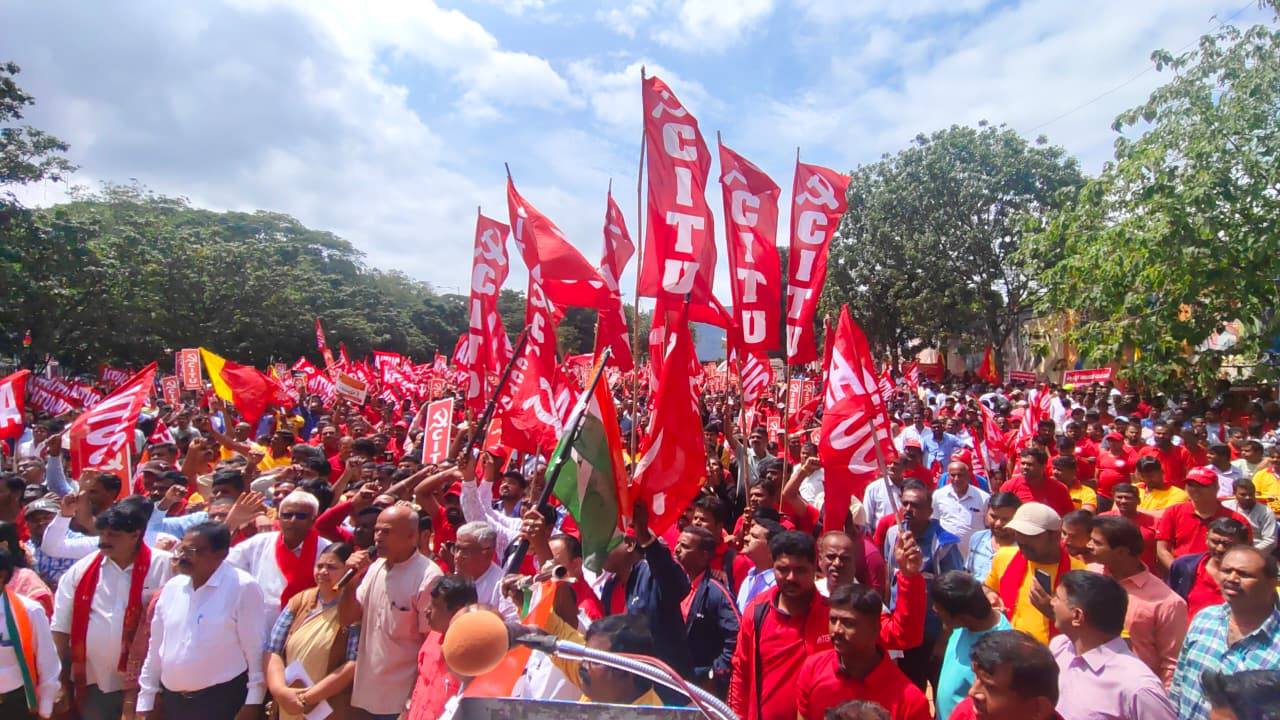
National strike against the “anti-worker” labor codes of the Modi government on July 9. Photo: CPI(M)

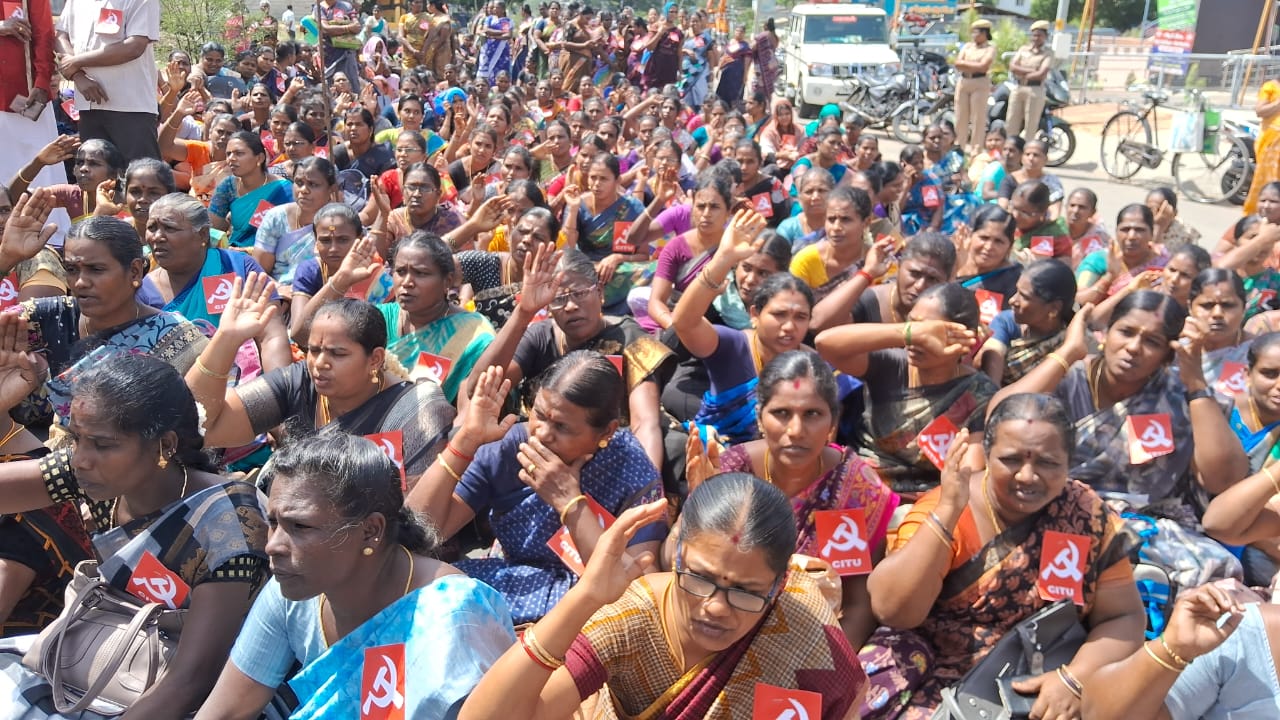
Millions took to the streets all over India on Wednesday, July 9, to observe a national strike call made by Central Trade Unions (CTU). They are striking against the anti-worker policies adopted by the ultra-right-wing government in the country. 

CTU is a platform of all the major trade union federations in the country, spanning the ideological and political spectrum. It includes the Center for Indian Trade Unions (CITU), the All India Trade Union Congress (AITUC), the Indian National Trade Union Congress (INTUC) and several others. 

The strike was also supported by all the major groups of farmers, students, women, and various professional unions such as teachers, journalists, and IT employees in the country. 

According to various estimates, more than 250 million workers and farmers – both in organized and unorganized sectors – directly participated in the strike and protests across the country. 

Workers in other organized sectors such as ports, airports, and banking also participated alongside those in various public sectors.

The strike affected most of the industrial activities in the country, particularly industries related to mining.

#Strike #GeneralStrike बी टी आर वाडको एम्पलाइज यूनियन के साथी अपनी कंपनी एस एफ सी सॉल्यूशन साहिबाबाद के गेट पर हड़ताल को कामयाब बनाते हुए। pic.twitter.com/311IoxICHS

— CPIM DELHI (@CPIMSTATEDELHI) July 9, 2025

In several places, workers blocked the movement of trains, blocked highways, and picketed factory gates to mobilize greater support. In some cases, such as the Kochi refinery in the southern state of Kerala, workers defied court orders and observed the strike.

Picket lines stand strong and militant in front of the factory gate.#9thJulyGeneralStrike pic.twitter.com/V2a33uoQT9

— CITU CENTRE (@cituhq) July 9, 2025

A total shut down of all major business was observed in various states in the country such as Kerala, Tripura, Bihar, Jharkhand, and others.

Anti-worker labor codes must be withdrawn

The workers were demanding immediate withdrawal of the new labor codes enacted by the ultra-right-wing government led by Narendra Modi at the center in 2020. CTU claims the four new labor codes are anti-worker, depriving them of their basic rights, including the right to collective bargaining, which was won through a historic and painful worker’s struggle.

The other major demands include: 

  • The end of the privatization and contractualization of jobs
  • A national minimum wage of Rs. 26,000 (USD 303)
  • Improvements in working conditions across all sectors for all kinds of workers

Trade union workers take out a march in West Bengal. #GeneralStrike #StrikeHard pic.twitter.com/hxrTd0AoYY

— CPI (M) (@cpimspeak) July 9, 2025

The strike also supported the demands raised by the country’s major farmers groups, led by the Samyukta Kisan Morcha (SKM), for a legal minimum support price for all farm produce, the waiving of loans for farmers, an end to all forced land acquisition, and better employment opportunities.

The strike was originally scheduled for May 19. It had to be postponed following the war-like situation in the region created after India attacked several locations inside neighboring Pakistan, accusing it of supporting armed groups who carried out attacks on tourists in Pahalgam.

Popular action defeats government lies

A central protest rally was held in the national capital Delhi. The protest was attended by all the constituents of CTU and SKM, the farmers collective which has extended support to the strike.

Millions of workers, farmers strike in India to protect their basic rights, livelihoods
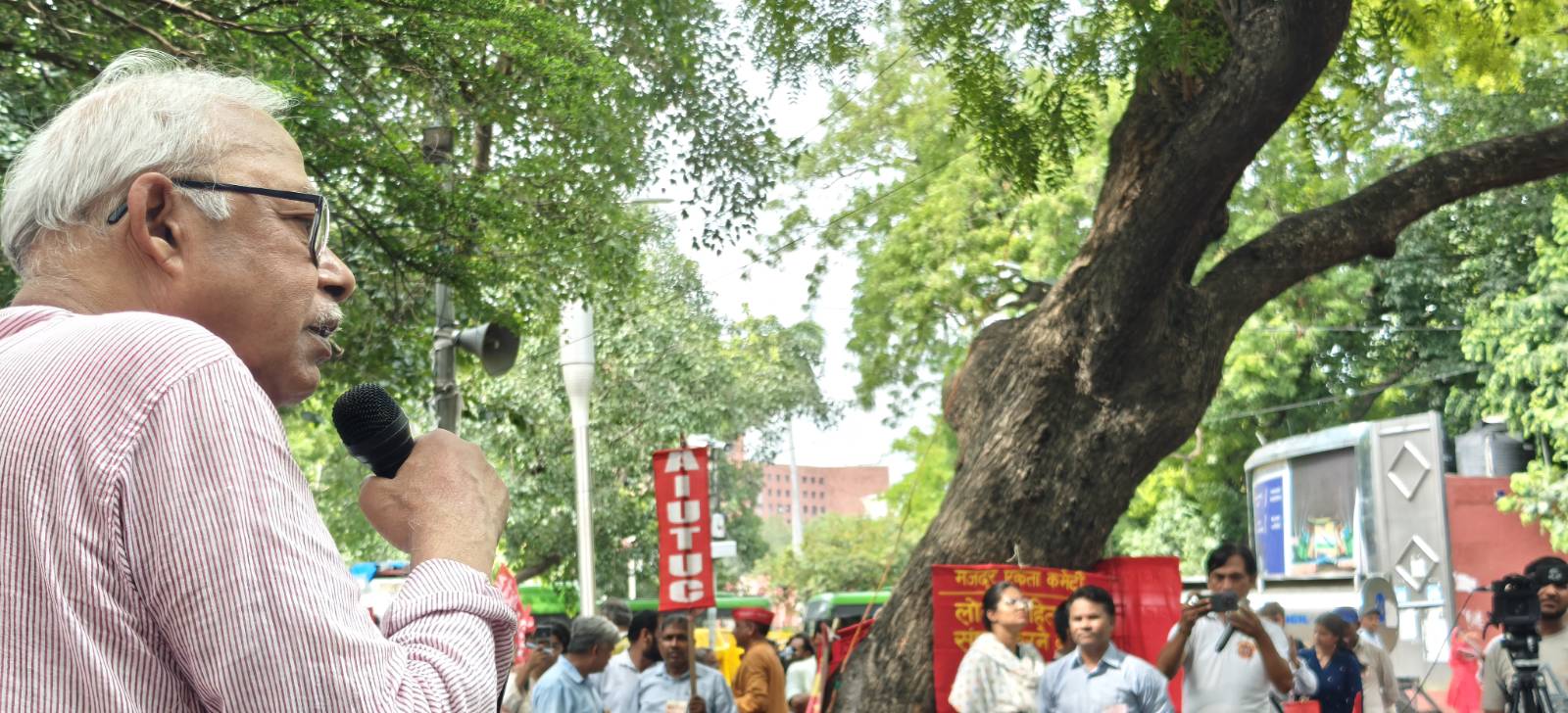
CPI(M) Politburo Member and CITU General Secretary Tapan Sen addresses a strike demonstration in Jantar Mantar, New Delhi. Photo: CPI (M)

Addressing the rally, Tapan Sen, general secretary of CITU and a member of the Communist Party of India (Marxist) polit bureau, claimed that the success of the strike demolishes the myths created by the Modi government about the so-called economic prosperity his government’s policies have created.

Millions strike in India
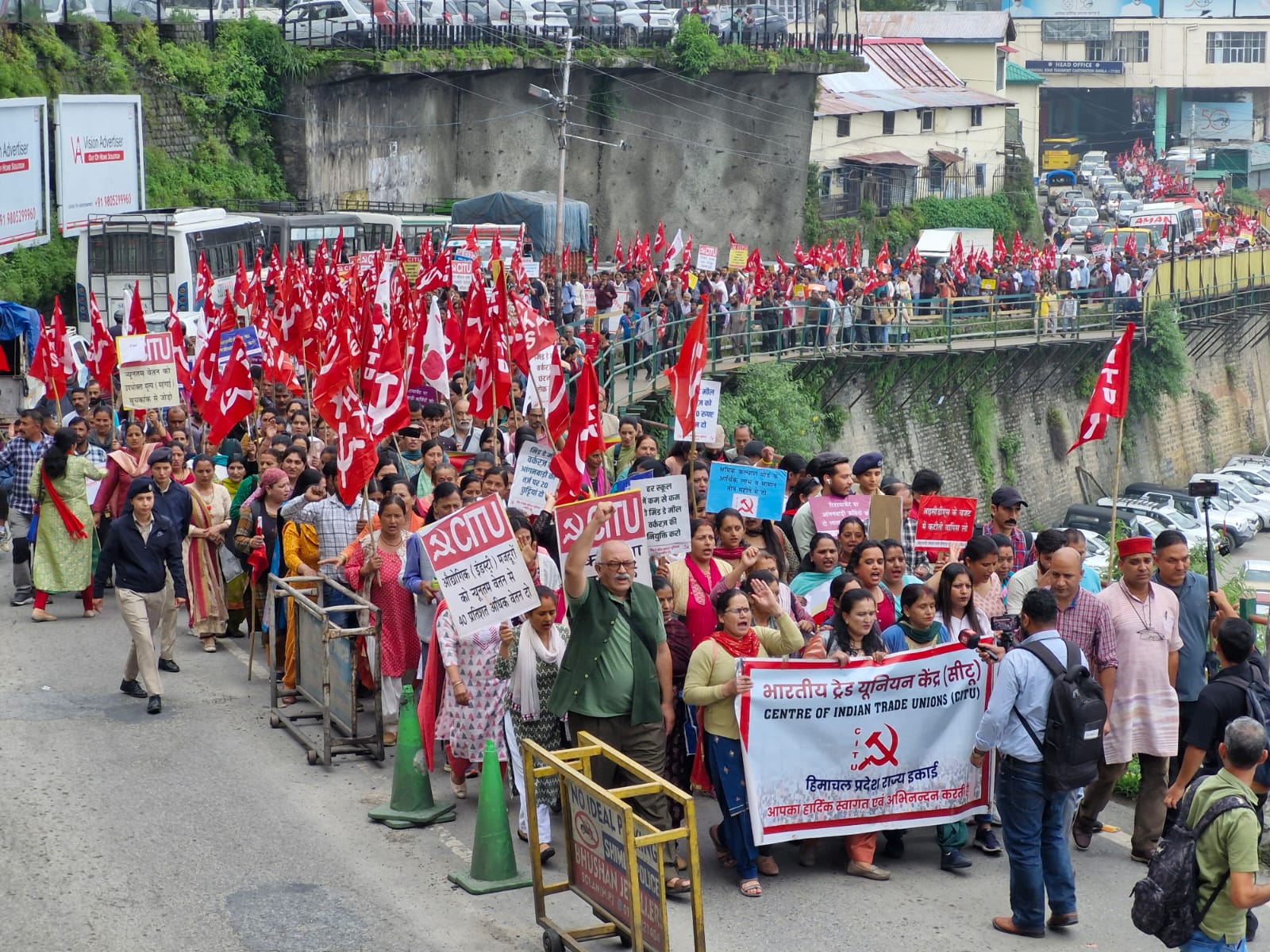
Strike demonstration in Shimla, Himachal Pradesh. Photo: CPI (M)

Most Indians today are struggling to find a decent source of livelihood and those who have one are struggling to protect it from the effects of the various wrongful and pro-corporate policies of the Bharatiya Janata Party (BJP)-led government, Sen underlined.

The lies about India being the third or fourth largest economy in the world, propagated by the present government in the country and magnified by the complicit media, have been exposed by the sheer number of people who participated in today’s strike. It establishes the fact that under Modi’s decade-long rule the condition of the working classes in India has gone from bad to worse, Sen told the protesters gathered at the rally.

Millions strike in India workers and farmers
Photo: CPI(M)

Sen also warned the government against going ahead with the proposed trade deal with the US, claiming that would further compromise the interest of workers and farmers in India.

Amarjeet Kaur, general secretary of the AITUC, claimed that the BJP used pro-government unions to divide the working classes in the country and falsely called the strike “illegal”.

“The attempts to divide the working class, so that the interest of its corporate bosses are protected, was defeated by the successful strike” Kaur declared. She noted that this was the fourth such strike since 2020 and more such strikes will happen in the future, with more intensity, if the government fails to correct its ways and take back the four draconian labor codes, and enact laws which really benefit the working classes of this country.

Original article by Abdul Rahman republished form peoples dispatch under a Creative Commons Attribution-ShareAlike 4.0 (CC BY-SA) license.

Continue Reading250 million Indian workers and farmers on the streets in a national strike

One year of Milei: hunger and resistance

Spread the love

Original article by Pablo Meriguet republished from peoples dispatch under a Creative Commons Attribution-ShareAlike 4.0 (CC BY-SA) license.

Argentine President Javier Milei. Photo: Milei / X

At one year of Milei’s presidency, we take stock of his economic policies, the impact on the working class, and perspectives for the future

A year ago, what many considered unthinkable a couple of years ago happened: Javier Milei, the eccentric libertarian economist who was almost compulsively invited by the media to increase ratings, was sworn in as president of Argentina. Gone was the neoliberal and demure option of the Argentine right wing that managed to triumph with Mauricio Macri, as well as the always latent Peronist option, which could not overcome the obstacles that the government of Alberto Fernandez left in its path.

Milei became a celebrated outsider who confronted his adversaries directly (often insulting and humiliating them), promising to lift the country out of poverty through a radical liberalization of the economy, with bold, or absurd, proposals to dollarize the economy and the eliminate the central bank. Indeed, his style as a guest on television programs was not too far removed from his actions as president of Argentina.

Erika Giménez, social communicator and a journalist with ARG Medios told Peoples Dispatch that Milei arrived with a promise that he was going to “break the State” and end all state social programs and aid to impoverished sectors because they are “a waste of money that prevents Argentina’s resurgence as a great country.” Did he succeed in his grandiose vision? What did the “lion” of Argentina manage to accomplish in his first year of governance?

Falling inflation and rising poverty

One of Milei’s main obsessions was to reduce inflation at all costs. After several setbacks that ended up increasing inflation, in October it was recorded that inflation had risen by 2.3%, the lowest percentage in several years. To achieve this, he had no qualms about firing tens of thousands of state workers (almost 36,000 according to the National Institute of Statistics and Census) and aggressively cutting the number of ministries (from 18 to 9). Social programs that had been a bulwark of the Republic for several decades were eliminated. Of the state workers who survived the layoffs, almost all have seen a reduction in their purchasing power as a consequence of the economic retrenchment policies.

Similarly, despite the fact that year-on-year inflation stood at 193%, retirees’ pensions only increased by 105%, meaning that retired elderly workers today, thanks to Milei’s government, can buy fewer things than before, because their pension was not adjusted for inflation. This incongruity provoked several mobilizations by retirees.

Likewise, Milei has refused to increase the public education budget so as not to affect the much-desired “fiscal balance”, which has led to a decline in the quality of education in the country. Also, hospital workers (doctors, nurses, and others) have reported that they have lost almost 104% of their purchasing power, which puts the country’s health care system at risk.

During Milei’s administration, poverty increased. According to data from the Observatory of the Argentine Social Debt of the Catholic University of Argentina, in the second half of 2023, 41.9% of the inhabitants of the South American country were poor, while, in the first half of 2024, the figure reached 52.9%. Similarly, private consumption fell by 9.8%.

In addition, according to Erica Giménez, inflation is currently decreasing, among other things, because people are not able to buy goods, which causes stores to reduce prices to sell more. This can lead to a distorted view of inflation as the only measure of economic improvement because, in reality, it is actually masking a more serious problem: people have lost purchasing power. “[The decrease in inflation] is quite a deceptive figure because people cannot consume because their salary is not enough to do so…The macroeconomic meters improve (as Milei wants) by not generating fiscal deficit, but this happens at the cost of the increase of unemployment, of retirement pensions, of the most needy, and of so many who are nowadays below the poverty line,” Giménez affirms.

One of the cases which shone a light on the ridiculous nature of his radical adjustment was what happened with the social kitchens, soup kitchens run oftentimes by left and progressive community organizations. Milei’s government and his Minister of Human Capital Sandra Pettovello were involved in a serious controversy when it was shown that, while the kitchens were subjected to serious budget cuts as part of the fiscal adjustment which made it impossible to feed the increasing number of hungry people, several tons of food were rotting in State warehouses. The Argentine courts had to order the immediate distribution of the food.

The defunding of university education

Probably the most important internal challenge faced by Milei during this first year was the massive demonstrations of students, professors, and university workers against the Executive’s refusal to increase the university budget. The Legislature had passed a law allowing for the budget increase, but Milei refused to comply with it and vetoed it completely. This generated a lot of discontent among Argentine students who took to the streets against the austerity policies of Milei’s libertarian government, and even went so far as to take over dozens of universities and hold university classes in the streets as a form of protest.

Giménez says in this regard, “Those who lose the most with [the veto of the law] are the professors of public universities who today are within the poor population…According to several surveys, the majority of the population agrees with the public character of health, education, etc., and of the Argentine State as protector and benefactor of these areas, so Mieli’s discourse against universities did not work because…public university education has great popular support.”

International relations

Milei has repeatedly stated that Argentina was, at some point in its history, the first world power. Therefore, what his government should do, according to his rhetoric, is to turn it into a great world power again. This “messianic” bet is synthesized in the often-used slogan “Make Argentina Great Again”, which evidently is reminiscent of Trump’s MAGA. “But Argentina never had a geopolitical weight that Milei says it once had as a first power,” Giménez tells us.

During the vote on whether or not to lift the US economic blockade of Cuba, Argentina voted along with almost all countries to call for an end to the blockade. In retaliation, Milei fired his foreign minister for this vote. According to Giménez, Argentina has historically voted against the blockade and supported other progressive international issues because it hopes that other countries will support its intention to recover the Malvinas Islands, which are currently under British control. Milei however, has wanted to assume a Trumpist international logic, says Giménez, and has assumed a fight against LGBTIQ+ groups and measures to curb climate change, while manifesting strong support in favor of Israel and the United States.

That is why the discussions at the UN on the prevention of violence against girls and women, the ceasefire in Palestine, and the withdrawal of the Argentine delegation from COP29, show the rejection of certain political causes which the president himself calls “the Cultural Battle”. As part of this battle he has attacked journalists, politicians and intellectuals, and founded the new think tank Faro Foundation whose objective is to: “To promote the ideas of economic liberalism and the historical values of Argentine culture, in order to contribute to the economic and social development of our Nation, fighting the cultural battle.” This confrontational attitude has led him to have several impasses with regional political leaders such as Colombian President Gustavo Petro.

But this confrontational attitude, more typical of a media commentator, has its limits. For example, Giménez reminds us that after announcing before his presidency that he would never negotiate with China because they are communists, Milei eventually had to negotiate with Beijing because of the importance of that country for the Argentine economy.

Read: Milei and Trump: allies in the battle for “freedom” and to combat “wokeism”

Likewise, Milei has openly positioned himself behind the geopolitical line of US President-elect Donald Trump, attending several select meetings organized by the US president. Milei, according to Giménez, intends to position himself, unsuccessfully, as an international leader who will inspire a global political transformation. Perhaps that is why he has made more trips abroad than within the country, especially to the United States. Likewise, his closeness with the International Monetary Fund stands out.

His revisionist ideological struggle

Milei has also had a significant impact on the ideological dispute in Argentina with his bizarre and aggressive speeches.

For example, he said that he would be delighted to drive the last nail in the coffin of former Peronist president Cristina Fernández, who is the subject of a judicial process that seeks to disqualify her politically and put her in prison.

He has also questioned the figures of human rights organizations on the number of dead and disappeared caused by the last military dictatorship in Argentina. His vice-president, Victoria Villarruel, is a descendant of a military family and before his death, had paid a personal visit to Rafael Videla, head of the last military dictatorship. Milei wants Argentines to forget the dictatorship as if it’s something that can be left behind, says Giménez. In order for Milei to advance his political and ideological project to “make Argentina great again”, he must break certain established and socially consensual notions “and generate other discourses closer to capitalism, revisionist, discuss the importance of the university and public employment…and that includes relativizing one of the darkest periods of Argentine history such as the military dictatorship,” Giménez explains.

Milei has vigorously gone after his ambitious goals of economic liberalization and austerity, without asking “at what cost?” The significant rejection of such policies by broad sectors of the population and the deepening of social conflict will continue and intensify. Milei still has three years left in his presidency, so the future of his government is uncertain. What is certain is that he does not seem to be slowing down his pretensions, but rather accelerating the radical neoliberal program that he defends to the hilt.

Original article by Pablo Meriguet republished from peoples dispatch under a Creative Commons Attribution-ShareAlike 4.0 (CC BY-SA) license.

Continue ReadingOne year of Milei: hunger and resistance

Dr. Dizzy’s guide to treating scabies and similar parasites

Spread the love
Human scabies sarcopte seen under an optical microscope (x20). CC licensed, author Arthur Goldstein at Wikipedia.

Dr. dizzy returns with some advice for treating scabies and similar parasites. Give the same treatment a try if you’re getting eaten by annoying non-human parasites like crab lice, bedbugs, bird mites, rat scabies, fox scabies, etc. Parasites are similar in being attracted to Carbon Dioxide (CO2) so they find you through your breath, follow scent tracks, etc. I would expect it to work but it’s worth a try even if it doesn’t.

There are news stories that particularly students are suffering from scabies in the UK. Dr. dizzy gives his advice. At your own risk: I have not had any medical training.

Scabies. This is not advice you’ll get from a doctor or pharmacist. They’re only repeating what they’ve read anyway. You may as well try my advice, you have nothing to lose but your scabies …

Traditional treatment is Malathion from the pharmacist. It’s expensive at about £12/13 for a bottle which is good for 2 treatments. You can buy it repeatedly because – the secret is – you get re-infected.

What you need instead is a spray bottle and some essential oils. The spray bottle is a bottle of Kitchen or Bathroom cleaner repurposed. Buy one for 99p from the cheap supermarket if you can’t find one and clean the kitchen or bathroom really well. Kitchen Cleaner can be used everywhere of course, not just the kitchen.

Essential oils are a matter of choice. A mix of Red Thyme Oil and Clove Oil works well. Be careful to dilute the Clove Oil well. It’s a good choice with a reputation for repelling parasites but can sting. Avoid Lemongrass Oil, I think that it attracts bugs instead of repelling them. Cedarwood Oil smells nice.

Try to get quality essential oils, some are probably fake. Use a thumbnail or small spoon to remove the plastic dropper insert – you can always replace it. Small bottles of 100ml should last weeks or months – use well diluted.

So, you dilute your essential oils in water and put them in your spray bottle. You need to avoid reinfecting yourself so you spray your mattress directly and then your clean bedding. Don’t bother with a mattress encasement for any reason, a waste of time and money. Spray your shoes, coat, canvas bags, clean and spray your car or a car you use so you don’t reinfect yourself.

Take a bath or shower. Shower with purpose following a routine – hands and wrists first, clean them well. Then your hands and wrists again, your arms, then top to bottom so you’re clearing your parasites away. Use a clean towel to avoid reinfection. Dip a flannel or teatowel in your diluted essential oil mix and get it all over your body. This is what you’re using instead of getting the Malathion all over you. You don’t have to be so careful about getting it absolutely everywhere, just a very good effort. Traditional medicine will tell you that scabies don’t go for your head but I’ve seen scabies tracks on someone’s face and forehead. You want to get rid of them, why risk it?

Follow the procedure as soon as you suspect that you may have been exposed.

It’s female scabies that burrow and lay eggs, the males are on the surface. They congregate at the inside of the wrists and you can often see tracks there. Pay particular attention to keeping your wrists and hands clean and ankles to a lesser extent. Some people can have scabies without realising, some people are in psychological denial, I think that there may also be asymptomatic scabies possibly for people taking certain drugs e.g. strong painkillers. You can catch scabies from seats, bus seats, chairs in scummy pubs, toilet seats, etc. Be very suspicious of blankets or towels in a police cell.

[9/12/24 I was in a police cell for four hours yesterday as a victim of road rage. My comments were based on experiences twenty or more years ago. The cells and the regime have changed a great deal for the better since then.

A car driver deliberately drove into me so that there’s a dent in his wheel arch from the end of my bicycle handlebars – car wheels more than a metre in height. He then blamed me for damaging his car. I stayed a safe distance from him while waiting for police. I gave him a smack when he started jumping on my bicycle wheel. Unfortunately I also hit his missus when she jumped in the way to protect him.

*Welsh slang “give him a smack” means far more than literally one slap.]

[About criticising the police: I am recounting my experiences. I’m not going to self-censor to sugarcoat my experiences. This article is about avoiding and treating scabies and similar parasites. I’ve experienced filthy crawling with parasites towels and blankets in police cells which must have been put there deliberately by people i.e. police, who must have been wearing protective clothing. They probably thought that it was very amusing at the time. There are other examples of me criticising the police in this blog e.g. where I say that I was scared for my life when a fat policeman sat on me and I was put in the back of a dog van. It doesn’t mean that I am opposed to the police, it means that these events happened and that I now have a platform.]

[5 Nov 2024: 3 or 4 different essential oils seems to work well. It’s worth cleaning your home using either the 99p cleaner or your essential oil mix. Inaccessible cavities that can’t be cleaned are ideal for parasites e.g. in cavity walls, behind kick plates and between units and walls in kitchens. Wipe laptops and keyboards over – bugs home in on Carbon Dioxide (your breath) and you’re breathing over your laptop or keyboard.]

Article may be altered or extended.

previous Dr. dizzy advice

Continue ReadingDr. Dizzy’s guide to treating scabies and similar parasites

Sheikh Hasina resigns as prime minister and leaves Bangladesh following mass protests

Spread the love

Original article republished from peoples dispatch under a Creative Commons Attribution-ShareAlike 4.0 (CC BY-SA) license.

Sheikh Hasina addresses party rally last year (Photo: Delwar Hossain/ Wikimedia Commons)

The protests, initially led by students demanding reforms in the quota system in government jobs, took a violent turn in the last weeks of July

Prime Minister of Bangladesh Sheikh Hasina resigned and left the country, army chief General Waker-Uz-Zaman announced during an address to the nation in the afternoon of Monday, August 5.

The Army chief also claimed to have taken full responsibility over the government, promising that an interim government would be formed soon after consulting all the opposition parties. He also appealed to the protesters to end their demonstrations with a hope that the violence would stop.

Waker-Uz-Zaman promised that he will make sure that all persons responsible for the killing of protesters are held accountable for their acts.

Despite the announcement of Hasina leaving the country, demonstrations continued throughout the day in Bangladesh. There were reports of Hasina’s former official residence being stormed and Dhaka’s international airport being shut down in the afternoon.

Protesters reportedly blocked roads at different places in the country, vandalized the statue of Sheikh Mujibur Rahman, considered the founder of the nation, as well as the offices of Hasina’s Awami League. Attacks were also carried out against the offices of various other parties, and continued into the evening.

Over 300 people, including security personnel, have been killed and thousands of others have been injured in the protests so far.

The protests in the country have been ongoing for over a month now. The first weeks of the protests saw university students demand reforms in the quota system in the recruitment in government jobs, and were largely peaceful. Protests turned violent after they were allegedly attacked by members of the ruling Awami League Party under the cover of security in the third week of July.

Amid the intensification of the protests, the Hasina government called for all universities to be shut down, imposed a curfew and a communication blockade. A shoot on sight order was also issued to the army deployed to control the violence.

Over 200 people were killed and thousands were injured in clashes between the security forces and protesters in the following week of July.

On July 21, the country’s Supreme Court scrapped most of the quota, fulfilling the central demand of the protesters. Yet, the protests continued with growing demands for action against the perpetrators of the violence and against the government itself.

The second round of protests erupted on Sunday, August 3, with thousands gathered in different major cities in the country calling for Hasina to resign. Chittagong, one of the major centers of quota reform protests witnessed the hundred of thousands of people flooding the streets, waving national flags and shouting slogans against Hasina.

Over 100 people, including over a dozen security personnel, have been killed in Sunday’s protests.

Hasina’s government and her Awami League party had alleged that the violent protests were initiated as a part of a conspiracy against the elected government. Hasina had accused the opposition Bangladesh Nationalist Party (BNP) of collaborating with Jamaat-e-Islami, an extremist group, to provoke violence across the country in order to bring regime change in the country as they could not win popular elections.

According to a source on the ground, the violence during the quota reform movement was used by the imperialist powers led by the US to orchestrate regime change in the country. They also claimed that the new regime would be used to undo the secular and progressive reforms initiated by the Hasina government during her four terms. 

In January’s national elections in Bangladesh, Sheikh Hasina had won her fourth straight term as prime minister since 2009. This was her fifth term as prime minister in total. She was first elected as prime minister in 1996. The US had questioned the legitimacy of the last elections in January.

Original article republished from peoples dispatch under a Creative Commons Attribution-ShareAlike 4.0 (CC BY-SA) license.

Continue ReadingSheikh Hasina resigns as prime minister and leaves Bangladesh following mass protests