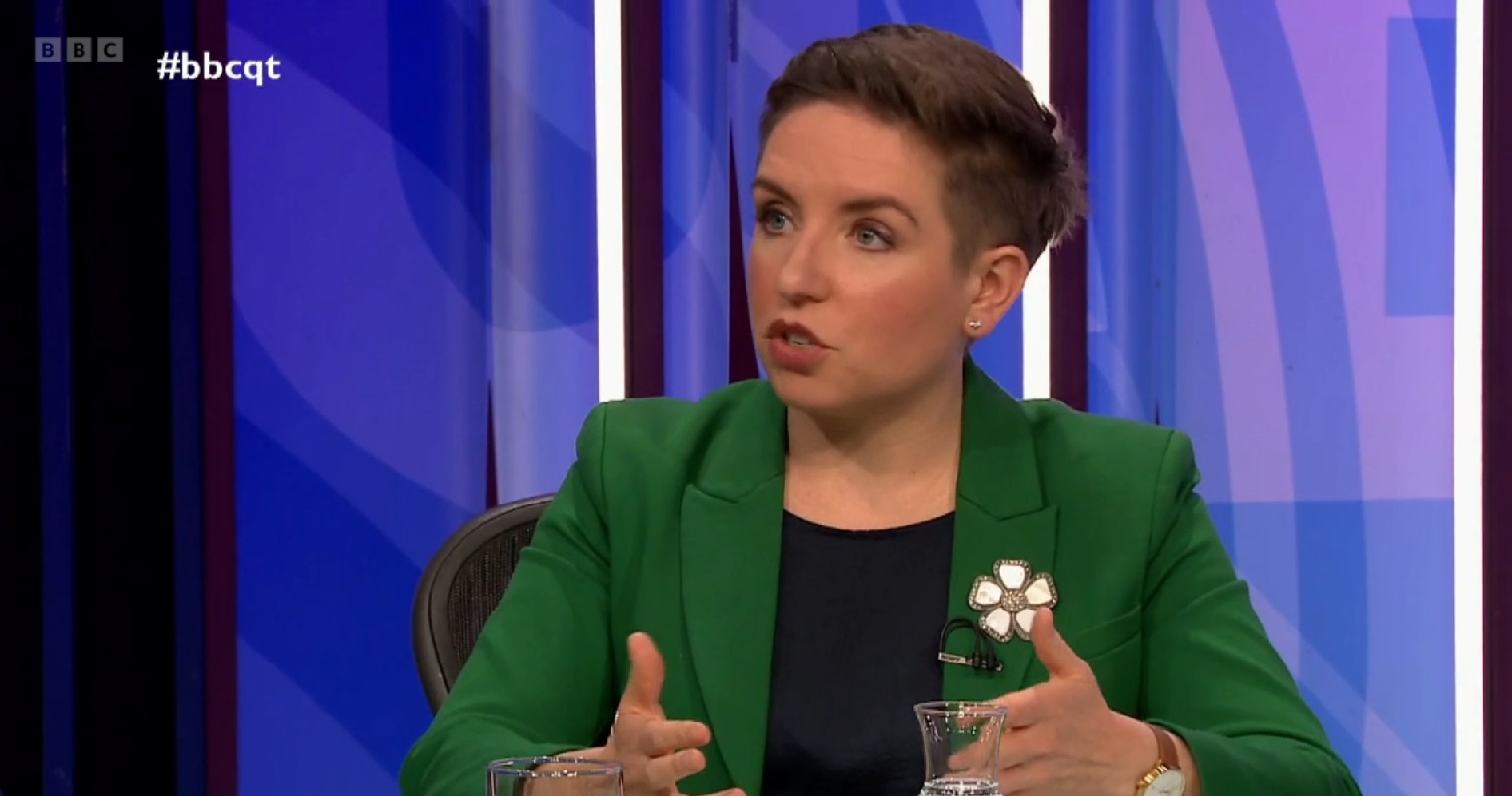
Image of the Green Party’s Carla Denyer on BBC Question Time.
Commenting on Labour’s first 100 days in office, Green Party Co-Leader Carla Denyer MP said:
“The collapse in Starmer’s popularity since taking office has been remarkable. It was clear to me during the election campaign that voters across the country wanted change. After 14 years of Tory failure, they expected Labour to deliver it. The public’s sense of disappointment is palpable.
“Instead, we have a government aligned with Tory austerity. The two-child benefit cap and the scrapping of the Winter Fuel Payment for millions of pensioners are both examples of how this government’s default has been to make the most vulnerable in our society pay. The ‘black hole in our finances’ should, and could, be solved by asking the wealthiest to pay just a fraction more. Instead, Labour seems content with letting the poorest bear the brunt.
“It doesn’t have to be this way. We are one of the richest countries in the world, yet deeply unequal. The Chancellor has hinted that she is willing to borrow more to invest in much-needed infrastructure, which is welcome. But we also need to address the source of everyday revenue spending.
“The last fourteen years have seen the rich get richer, with the top fifth now owning a third of the country’s wealth. It’s only fair that those with the broadest shoulders should now pay a bit more to help our NHS, rebalance society, and improve living standards for everyone. A wealth tax, alongside other changes to the tax system, could deliver this.
“We as a country, and particularly the Labour government, face a political choice. Will they tax more fairly to properly invest in our crumbling frontline services, or will they continue to oversee managed decline and austerity economics? The Greens will, every day, keep pushing for them to properly invest in Britain.”
Keir Starmer commits to play the caretaker role for Capitalism through the “hard times”.
March for Palestine | Mark Kerrison/In Pictures via Getty Images
A new generation across the UK is demanding political representation. But this unstoppable force is meeting an immovable object, the Labour Party
A new generation across the UK is demanding political representation. Yet, this unstoppable force is now meeting an immovable object, the Labour Party.
On one hand, despite its failure to leave behind much grassroots organisation, Jeremy Corbyn’s leadership galvanised millions. This generation now knows what it’s like to have a voice in the political mainstream. It won’t tolerate being shut out of the political process indefinitely. The success of Green and independent candidates at this year’s general election was in part driven by this fact.
Meanwhile, the realities of climate breakdown, renewed austerity and a genocide in Gaza continue to alienate many. The British public backs the renationalisation of energy by a margin of four to one, the introduction of a wealth tax by a margin of eight to one, and a ban on arms exports to Israel by about three to one.
On the other hand, the Labour Party is a fortress. Many advisors and politicians of the Labour right regarded the party’s defeat under Corbyn in 2019 as a lucky escape, and remain terrorised by the prospect of losing their careers to an insurgent political force. Starmerism is a relentless campaign on behalf of this professional political class, which is determined to shut the left out. Their hubris is an existential threat not just to Labour’s role as a political home for the left, but to the party itself.
Both wings of the Labour Party are being blindsided by this process. The Labour right, and the commentariat that lives in its orbit, likes to think in terms of historical cycles and playbooks. The crushing of the post-Corbynite left was a repeat of Kinnock’s expulsion of the Militant Tendency. 2024 was just 1997 with TikTok.
Starmer’s first act in government – blaming the outgoing administration for an economic mess and indicating a shift towards austerity – was both a conscious mimicry of Tory George Osborne and an homage to New Labour’s fiscal hawkishness.
The Labour left’s attachment to the past is more nostalgic. Its leaders – Aneurin Bevan, Tony Benn, Corbyn – are stripped of their failings and revered. Its heroic defeats – the 1981 Deputy Leadership campaign, the Greater London Council’s fight for survival, Corbyn’s general elections – are endowed with their own folklore.
Life on the outside is unthinkable and futile, as illustrated by every past attempt (the Socialist Labour Party, the Socialist Alliance, Respect, the Trade Union and Socialist Coalition, Left Unity) to build an alternative. “It is the Labour Party or it is nothing”, as Bevan once wrote, chiding members of the Independent Labour Party when they split in 1932.
Both wings of Labour are good at producing a sense of collective memory that reinforces the party’s standing as immutable, and which relates new events to past ones. Neither are good at understanding when reality diverges from the historical script.
In 2015, the left challenged for power, and in doing so broke the old system. Tony Blair did not bother to get rid of Tony Benn. Yet Starmer almost immediately expelled Corbyn and changed Labour’s rule to ensure that no one like him could lead the party again. He has already suspended seven MPs for voting to abolish the two-child benefit cap. It is only a matter of time until more feel forced to rebel.
A politics from below
The real politics happens outside parliament. We’ve already witnessed huge protests take shape against the massacre in Gaza, and the coming years could see mass movements and industrial unrest over cuts and living standards. Having lived through the Corbyn years, the participants of these movements are unlikely to be satiated by the prospect of a soft left Labour leader some time in the 2030s.
Labour’s initial plans will provide some relief. The Employment Rights Bill is likely to be the most significant improvement in workers’ rights in decades. The renationalisation of the railways will also prove popular. But what happens once these progressive measures have been exhausted?
The Green Party came second behind Labour in 39 seats. Pro-Palestinian Independent candidates have made inroads into safe Labour areas. For this to have happened while Labour was in opposition is unprecedented. Unless the new government rapidly shifts its approach on public spending, redistribution and green investment, it will face an earthquake.
“Unless the new government shifts its approach on public spending, redistribution and green investment, it will face an earthquake”
To have any success, the post-Corbynite left will have to ditch its obsession with icons and celebrities. Despite its roots in social movements, Corbynism became a tightly centralised project, in which activists were given little, if any, role in determining policy and strategy. Even now, discussion of the left’s future beyond Labour seems to centre on the intentions of Corbyn, his former advisors, prominent commentators, or MPs.
Building a serious political project is about representing a solid base in society. This task flows from organising, and having roots in social and industrial struggle, not how many Twitter followers you have.
The green surge
Much of the left will also have to get over its age-old sectarianism towards the Greens, who have emerged as by far the most serious organised force to Labour’s left.
If you listen to many old Labour left activists, or read many socialist newspapers, you will be presented with a critique of the Greens that is at least two decades old. They are portrayed as ‘Tories on bikes’ and alternative medicine enthusiasts. Their ability to win seats in North Herefordshire and Waveney is said to be the product of triangulation towards right-wing rural voters. The compromises of Green parties in France and Germany are held up as the inevitable destiny of the UK Greens.
On the contrary, the Greens have become a major force precisely by occupying a space to the left of their sister parties in continental Europe. Since the turn of the millennium, their membership has risen twelve-fold to around 60,000. Waves of new members – from the ‘green surge’ of 2014 to today’s recruits – comprise its activist base.
Many joined on a radical environmental basis, but just as many did so to oppose austerity, champion freedom of movement, or fight for Palestinian rights. There might be a case that their time would be better spent in Labour, or that party affiliation often operates more like a consumer identity than a political strategy. But the existence of a genuinely left-wing, and increasingly successful, Green Party in Britain is simply a fact. Any attempt to rebuild the left as an electoral force – from within Labour or outside – must take account of this.
The landscape of the British left following the fall of Corbynism is still emerging. The only people who are definitely wrong are those who claim to know exactly what will happen. Perhaps Starmer will move back to the centre-left. Perhaps the social and industrial movements won’t materialise. There are many socialists – including me – who remain in Labour and will keep chipping away.
One thing we can be certain of is that things will never go back to the way they were before the Corbyn moment. The late 2010s unleashed forces that are only beginning to shape our politics. The left must adapt if it is to survive.
Delegates defy Starmer by voting to reject the callous cut to pensioners’ winter fuel allowance after Unite chief’s barn-storming speech
LABOUR conference defied Sir Keir Starmer today and voted to reject the callous cut to pensioners’ winter fuel allowance.
Delegates backed a motion from Unite the union demanding that the government “reverse the introduction of means-testing for the winter fuel allowance.”
It also urged Labour to scrap the “fiscal rules which prevent borrowing to invest” and introduce a wealth tax on the top 1 per cent and an excess profits tax.
In a barn-storming speech, Unite general secretary Sharon Graham recalled how the 1945 Labour government had rebuilt the country despite debt ratios three times the level of today.
She said: “People simply do not understand, I do not understand, how our new Labour government can cut the winter fuel allowance for pensioners and leave the super-rich untouched.
“This is not what people voted for. It is the wrong decision and needs to be reversed.
“We are the sixth-richest economy in the world. We have the money. Britain needs investment, not austerity mark two. We won’t get any gold badge for shaving peanuts off our debt.
“These fiscal rules are self-imposed and the decision to keep them is like hanging a noose around our necks.
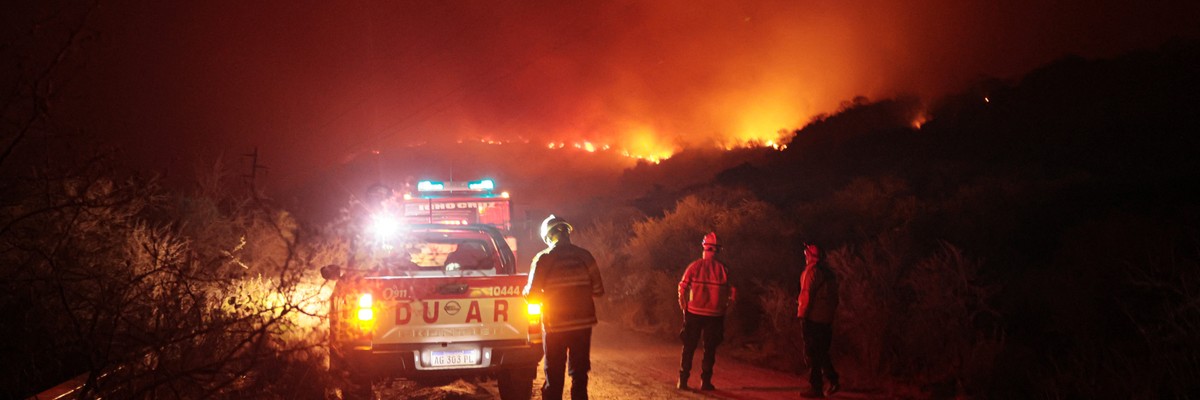
Wildfires are seen in San Marcos Sierra, Cordoba province, Argentina, on September 23, 2024. (Photo: Stringer/AFP via Getty Images)
“The real question isn’t whether we can afford to act, but whether we can afford not to.”
Research published Tuesday estimates that rich countries could mobilize over $5 trillion a year for climate action worldwide by cutting off subsidies to the oil and gas industry, imposing a levy on big polluters, and cracking down on tax evasion by large corporations and the rich.
The new report from Oil Change International (OCI) was released as world leaders gathered in New York City for high-level United Nations General Assembly talks, a meeting that comes less than two months before the COP29 climate summit in Azerbaijan.
OCI’s research, which includes a fact sheet outlining various proposals to raise funds for climate action, stresses that “there is no shortage of public money available for rich countries to pay their fair share on fair terms for climate action at home and abroad.”
“The urgency and extent of growing economic inequality, unfair sovereign debt crises, climate disasters, and fossil fuel profits have created significant momentum towards many of these measures in international and domestic policy spheres,” OCI’s research brief notes. “Finance has been in the spotlight in most major international political fora in the past few years in recognition that our current financial architecture is a major driver of these overlapping crises.”
Among the proposals laid out in OCI’s brief are an equitable end to “public finance, direct subsidies, and state-owned company investments in fossil fuels,” which could raise $846 billion a year globally; a “climate damages tax” on fossil fuel extraction, which could raise $618 billion a year; a 25% minimum corporate tax rate, which could raise $479 billion annually; and a wealth tax on billionaires, which could raise roughly $2.60 trillion a year in the Global North and over $5.6 trillion worldwide.
Laurie van der Burg, OCI’s public finance lead, said that the rich nations most responsible for the climate emergency “owe this money to Global South countries that have not caused this crisis and need fair finance to deliver strong climate plans next year that phase out fossil fuels.”
“This is essential to avoid climate breakdown and save lives,” she added.
The clock is ticking ⏰ Rich nations must deliver a roadmap for at least $1 TRILLION/year by 2025. No more empty promises. It's time to pay up for a just transition! 💚 Read the full report: https://t.co/eKwm0zXitspic.twitter.com/4qjTO5JQ8c
The COP29 climate summit will take place a year after nations agreed at COP28 to transition “away from fossil fuels in energy systems” in a “just, orderly, and equitable manner.”
The success of that pledge, OCI said, depends on rich nations contributing massively to global climate finance after years of falling short of their pledges and continuing to expand fossil fuel extraction and handouts. Worldwide, environmentally harmful subsidies—including fossil fuel subsidies—have surged to $2.6 trillion a year, according to a report released last week.
“Global North countries have a responsibility to redirect their share of these subsidies in support of climate action,” OCI said Tuesday.
The new report comes on the heels of a record-hot summer and amid devastating extreme weather, from massive flooding across Europe and Africa to wildfires in South America.
Andreas Sieber, associate director of policy and campaigns at 350.org, said Tuesday that “the real question isn’t whether we can afford to act, but whether we can afford not to.”
“It is a bitter irony that rich nations hide behind claims of fiscal restraint, yet trillions are still spent on fossil fuel subsidies and militarization,” said Sieber. “The truth is simple: the money exists, but the political will does not. By treating climate finance as a zero-sum game, wealthy countries not only deepen global inequality but also undermine their own futures.”
“The energy transition isn’t charity—it’s an investment in global stability and security,” Sieber added. “Ignoring the need for support only worsens the climate crisis, which knows no borders.”
Apparently, the world is about to get its first trillionaire.
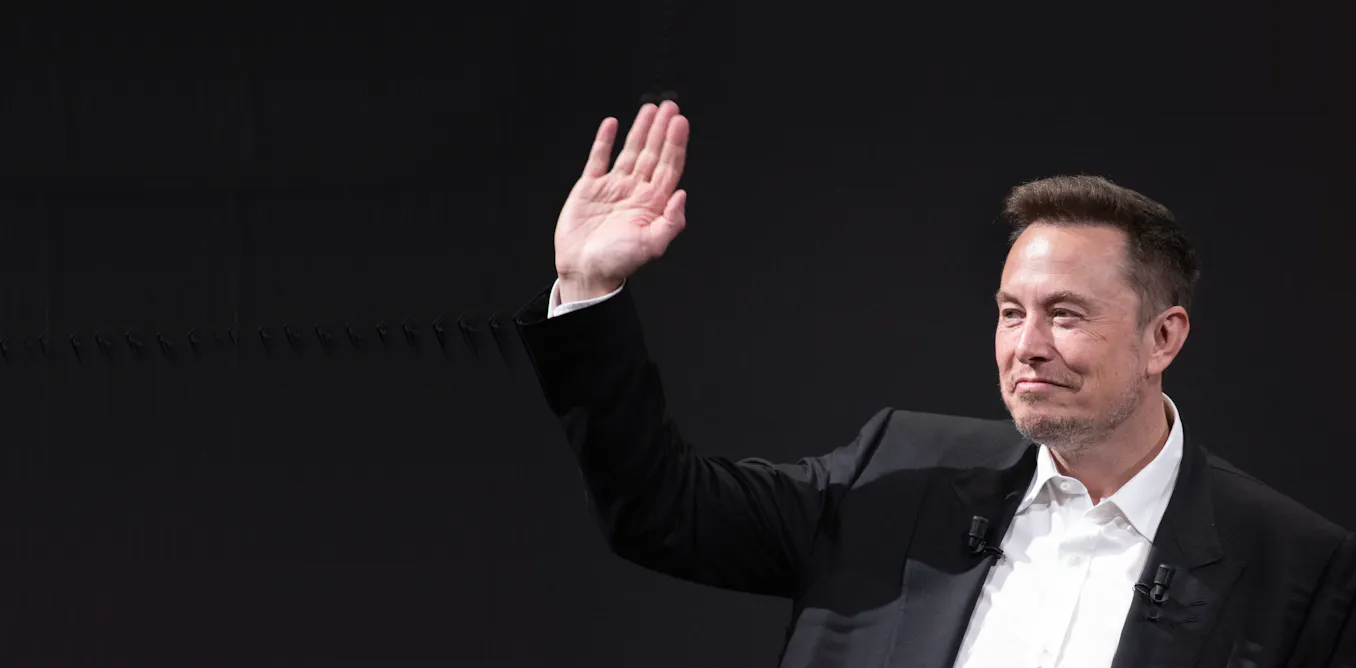
A report from the business intelligence agency Informa Connect says, at his present rate of wealth accumulation, tech billionaire Elon Musk is on track to be the world’s first trillionaire, three years from now.
At the moment Musk is said to be worth US$195 billion (A$293 billion), but if his wealth continues growing at the recent rate of 110% per year, he will hit US$1.195 trillion in 2027.
The next trillionaire after Musk should be Indian mining magnate Gautam Adani, followed by Nvidia chief Jensen Huang and Indonesian mining mogul Prajogo Pangestu, all of whom are on track to hit the milestone in 2028.
The nearly 1 billion human beings who don’t yet have electricity connected to their homes will doubtless be looking on with interest as the tech bros and mining bosses vie to crack 13 digits.
Before examining how it is that someone could ever make a trillion-dollar fortune, and what it might mean for the world for so much of the world’s wealth to be held in the hands of one person, it is important to first try to comprehend how big a trillion actually is.
One trillion seconds last 31,000 years
A million is a big number: it is 1,000 thousands. If you managed to retire with that many dollars in superannuation, you would have saved up more than 90% of your fellow retirees.
One billion is 1,000 millions. It takes 12 days for a million seconds to pass, but 31 years for a billion seconds to tick over.
That means a trillion seconds would equal 31,000 years.
If you had $1 trillion and did no more than stick it in the bank where it earned 4% interest per year you would get $40 billion per year in interest.
No one needs $1 trillion, and it is hard to see how anyone could spend it as fast as it grew, which raises important questions about how societies, economies and democracies will be able to function if and when governments allow trillionaires to emerge.
France’s King Louis XIV spent today’s equivalent of US$200 billion-300 billion building his palace at Versailles, and it was by no means his only palace.
Pyramids and sphinxes didn’t come cheap either, but these sorts of expenditures were seen as needed for beings selected by gods and not entirely mortal.
For mortals, some believe that the entire population benefits when a small minority controls most of the resources on the basis that it builds incentives.
Just as peasants spent millennia awaiting their reward in the afterlife while their rulers enjoyed heaven on earth, in modern economies we are told wealth and prosperity will trickle down to us eventually if we keep working hard.
Unfortunately for most of us, despite the wealth of the richest 200 Australians growing from A$40.6 billion to $625 billion over the past 20 years, neither the Australian economy nor the wages of ordinary Australians are soaring.
High profits are meant to be temporary
Incentives can and do play an important role in our economy.
In the so-called “free market” envisaged by 18th-century economist Adam Smith, if my new farming technique or silicon chip is so good that everyone wants one, it is considered only fair that I get an initial reward.
But after a while, everyone else will be free to compete with me by selling similar goods and in turn stopping me from getting an extraordinary ongoing reward.
The problem is that some markets aren’t free and don’t work properly. It is no accident that the world’s biggest fortunes are held by those who have monopoly rights to sell natural resources or technologies that are protected by patents or systems that lock in users.
That’s bad news for those still waiting patiently for wealth to trickle down or to be spread more evenly.
Technofeudalism keeps profits growing
In his latest book former Greek finance minister Yannis Varoufakis describes the world we now live in as one of technofeudalism in which online platforms have the ongoing opportunity to exploit workers, consumers and producers in ways Smith could not have imagined.
Having created digital platforms where the price of entry is handing over your personal details and preferences, modern tech titans use a new form of alchemy to convert data into knowledge that allows them to keep you on their platform and exploit you or advertisers or suppliers in the belief that you won’t leave.
And while there are physical limits to how big a car factory or fast-food chain can grow, there are almost no physical limits on how much money tech platforms can make by selling ads they didn’t make for products they didn’t make to consumers they know nearly everything about.
Restraining profits is pro-market
It isn’t anti-capitalist to want those profits competed away, it’s pro-market.
When the United States broke up J.D. Rockerfeller’s oil monopoly in the early 20th century, the oil industry prospered rather than vanished. consumers and the businesses that had dealt with Rockerfeller were better off, and so was the economy as a whole.
Democracies have, for now, the power to use taxes and regulations to redistribute the enormous benefits flowing to the new class of billionaires (and soon trillionaires) from the sale of scarce resources and the creation of platforms that keep us trapped.
Whether and how we use that power is up to us, but we mightn’t have it for long. The more the new class of billionaires and trillionaires becomes entrenched, the more it will be able to use the political system to protect their interests rather than those of mere mortals.