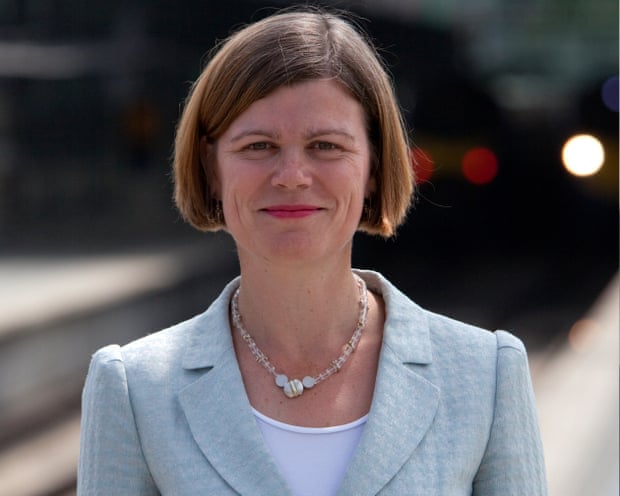
Ministers promised last year to set up new water boards for consumers that would allow them to air complaints. Photograph: Catherine Falls Commercial/Getty Images
[Guardian] Exclusive: Documents reveal water firms have been allowed to advise on how they wish to be held to account
Labour’s new powers for customers to hold water companies to account are a “stitch-up”, campaigners have said, as utilities firms have been advising on how to implement it.
…
Documents released under freedom of information laws reveal the CCW has been consulting water companies on how to set up the new consumer boards that would hold them to account. It said it had “set up an industry advisory group to get ideas, feedback and advice from water companies”.
Feargal Sharkey, the former Undertones frontman turned water campaigner, said: “This is a stitch-up. If water companies are involved in setting this up customers will not get any redress. The people who are important in all of this are the customers who have been extorted by these companies. The CCW is asking the extorters what should be happening to the victims, this is an outrage and a scandal.”
He added: “It sounds like this scheme will be equally inept and dysfunctional.”
Exclusive: 7,280 suspected illegal spills in rivers and sea recorded in first five months of 2026
The number of suspected illegal discharges of raw sewage into rivers and seas by water companies during dry weather increased significantly during the first five months of 2026.
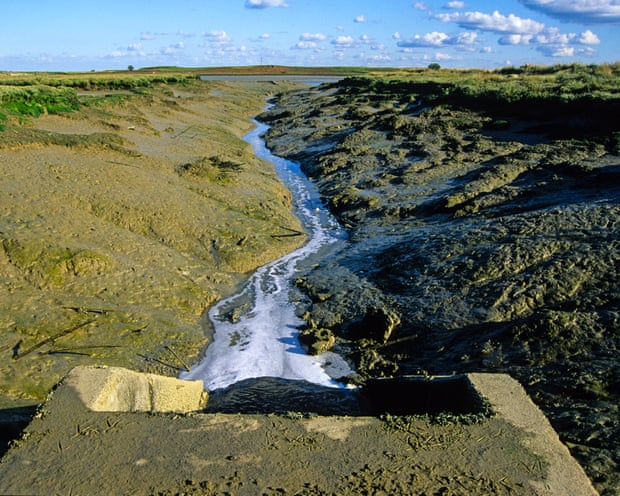
Dumping raw sewage into waterways during dry spells via overflows amounts to pollution. It is considered a breach of the permits given to water companies and is illegal. Discharging during dry weather increases the toxicity of the sewage pollution entering waterways. Rivers have less flow and volume, and there is no rainwater to dilute the sewage pollution entering the waterway.
Last year, in what regulators said was tougher action on sewage pollution, water companies in England were for the first time required to report to the Environment Agency the number of times they discharged raw sewage from combined sewer overflows during dry weather. A dry day spill is flagged when an overflow operates despite little to no rainfall that day and the previous day.
In 2025, water companies in England and Wales reported 8,576 dry spill pollution discharges. But according to freedom of information requests submitted by Environment Agency whistleblower Robert Forrester, the pollution is getting worse, not better, despite the regulator’s promise of tougher action.
UK Prime Minister Andy Burnham’s abrupt abandonment of his flagship pledge to bring Thames Water into public ownership exposes the emptiness of his promises to “reverse Thatcherism.”
Last week Burnham backed down at the very moment the criminal pollution record and financial collapse of Britain’s most distrusted and environmentally destructive privatised utility demanded decisive action and the prosecution of those responsible. He now insists nationalisation would be “too costly,” “too complex,” “too disruptive.”
…
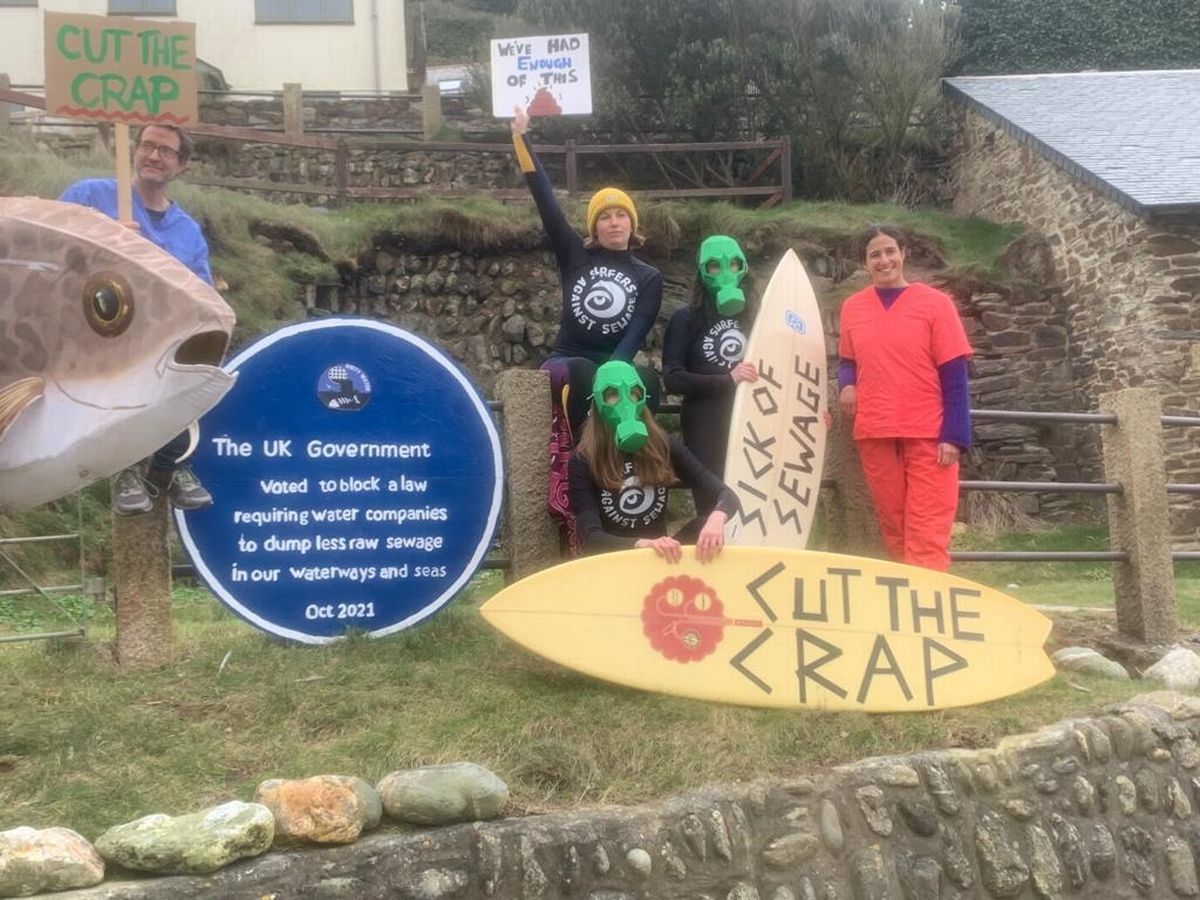
UK Prime Minister Andy Burnham admits to blatently lying and engaging in deception to become leader of the UK Labour Party and Prime Minister.April 2023 Surfers Against Sewage and Extinction Rebellion protests in St Agnes, Perranporth, Truro and Charlestown which unveiled spoof Blue Plaques to the MPs and Conservative Government who allowed raw sewage to be dumped in the sea (Image: Surfers Against Sewage)
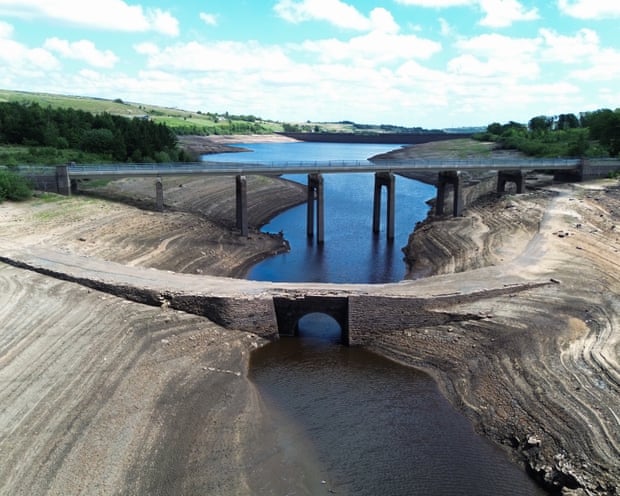
Low water levels at Baitings Reservoir in Ripponden in June after dry weather exposed a 14th-century packhorse bridge. Photograph: Adam Vaughan/EPA
Government and water companies are devising emergency plans for worst water shortage in decades
Water companies and the government are drawing up emergency plans for a drought next year more extreme than we have seen in decades.
Executives at one major water company told the Guardian they were extremely concerned about the prospect of a winter with lower than average rainfall, which the Met Office’s long-term forecast says is likely. They said if this happened, the water shortfall would mean taking drastic water use curtailment measures “going beyond hosepipe bans”.
Droughts are usually multi-year events. While much of England went into drought this summer, with hosepipe bans across large swathes of the country, things were not as bad as they could have been because it had been a rainy autumn and winter the year before. This meant reservoirs were full and that groundwater – storage of water under the soil – was charged up.
But months of record dry weather meant a lot of that water was used, and it has not been replaced, despite roughly average September and October rainfall. Average reservoir storage is at 63.3% compared with the average of 76% for this time of year. Ardingly, in West Sussex, and Clatworthy and Wimbleball in Somerset, are below 30%.
Orcas comment on killer apes destroying the planet by continuing to burn fossil fuels.Donald Trump urges you to be a Climate Science denier like him. He says that he makes millions and millions for destroying the planet, Burn, Baby, Burn and Flood, Baby, Flood.Nigel Farage urges you to ignore facts and reality and be a climate science denier like him and his Deputy Richard Tice. He says that Reform UK has received £Millions and £Millions from the fossil fuel industry to promote climate denial and destroy the planet.
A tanker pumps out excess sewage from the Lightlands Lane sewage pumping station in Cookham, Berskhire which flooded after recent heavy rainfall, January 10, 2024
Water companies record worst-ever environmental performance in England as serious pollution incidents increase by 60% in 2024, Environment Agency finds
EMBATTLED water companies have recorded their worst-ever environmental performance in England, with serious pollution incidents up 60 per cent last year, data from the Environment Agency revealed yesterday.
Thames Water, Southern Water and Yorkshire Water were responsible for 81 per cent of all serious incidents, while Thames Water alone saw cases more than double.
Northumbrian and Wessex Water were the only companies with none.
The agency said only Severn Trent achieved the top four-star rating for 2024, while all nine water and sewage firms in England collectively earned just 19 out of a possible 36 stars — the lowest since the annual performance system began in 2011.
The regulator said the decline marked the end of over a decade of gradual improvement.
Serious pollution incidents causing significant environmental harm rose to 75, their highest since 2013.
The agency partly blamed extreme weather, which strained ageing infrastructure, but said “this is never an excuse.”
It also cited long-term underinvestment and poor maintenance.
April 2023 Surfers Against Sewage and Extinction Rebellion protests in St Agnes, Perranporth, Truro and Charlestown which unveiled spoof Blue Plaques to the MPs and Conservative Government who allowed raw sewage to be dumped in the sea (Image: Surfers Against Sewage)
Nicola Shaw received remuneration from Kelda Holdings as well as Yorkshire Water. Photograph: Graham Turner/The Guardian
Company says extra payments relating to work for Kelda Holdings were covered by shareholders not billpayers
The boss of Yorkshire Water, one of Britain’s biggest water suppliers, has received £1.3m in previously undisclosed extra pay since 2023 via an offshore parent company, the Guardian can reveal.
Nicola Shaw received £660,000 from Yorkshire Water’s Jersey-registered parent company, Kelda Holdings, in the 2023-24 and the 2024-25 financial years. The size of the fees was not disclosed in the annual report of the regulated subsidiary, Yorkshire Water Services.
The utility company at first refused to detail the pay Kelda Holdings had awarded Shaw, saying the parent company was a “private entity registered in Jersey and subject to separate disclosure frameworks”. Only after the Guardian raised questions about the ability of MPs and bill payers to scrutinise the pay awarded did the company reveal the amount of the two payments.
…
Gary Carter, the national officer for GMB, a union representing water workers, said: “This is another case of water companies not listening to the outrage and concerns of the public over the payment of unjustifiable salaries.
“The fact that this salary is hidden and not transparent just further undermines the reputation of water companies. This sort of behaviour has got to end.”
April 2023 Surfers Against Sewage and Extinction Rebellion protests in St Agnes, Perranporth, Truro and Charlestown which unveiled spoof Blue Plaques to the MPs and Conservative Government who allowed raw sewage to be dumped in the sea (Image: Surfers Against Sewage)



 A tanker pumps out excess sewage from the Lightlands Lane sewage pumping station in Cookham, Berskhire which flooded after recent heavy rainfall, January 10, 2024