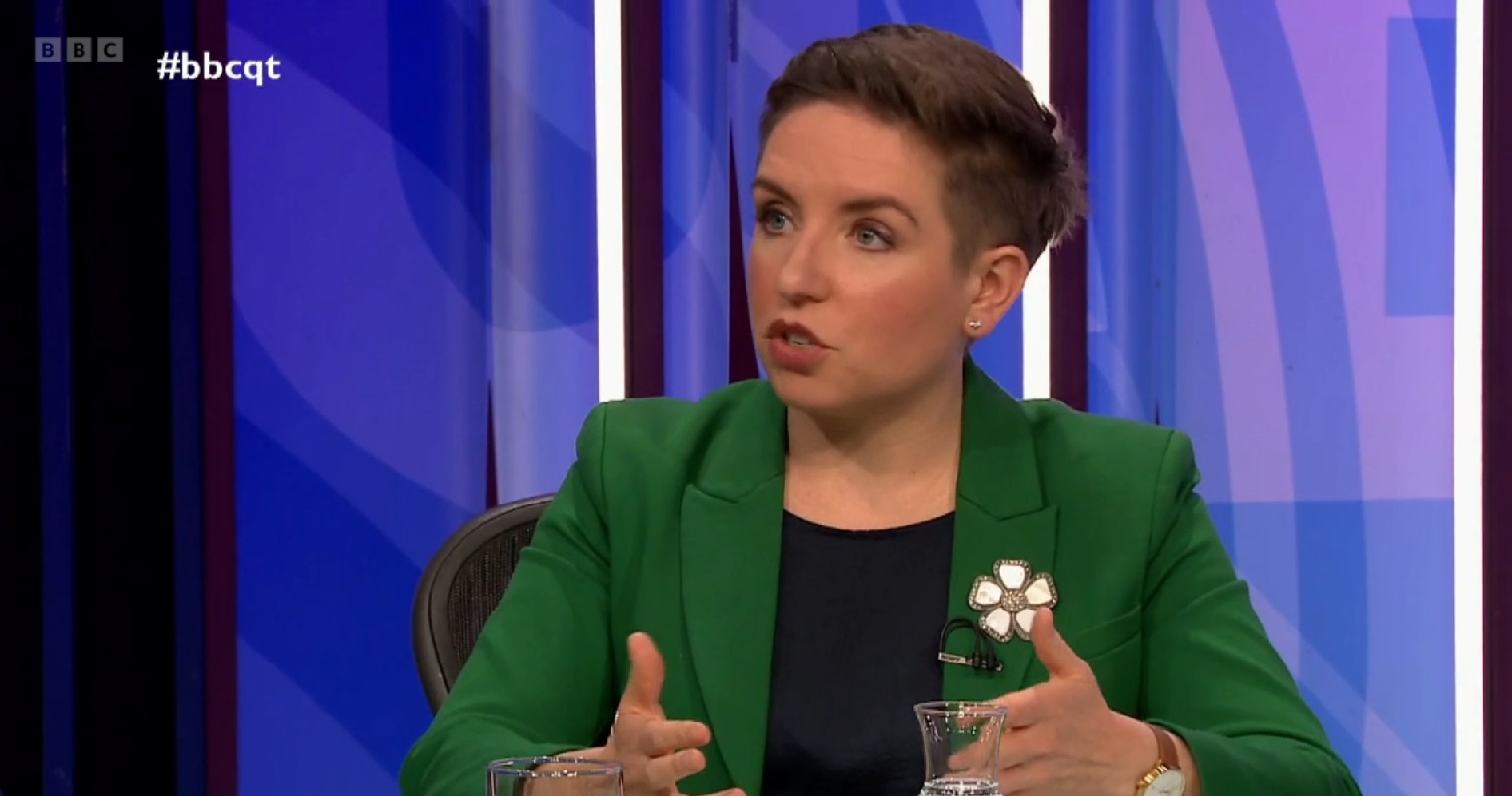
Image of the Green Party’s Carla Denyer on BBC Question Time.
Reacting to Environment Agency figures showing water companies increasing sewage discharges into rivers, Green Party co-leader Carla Denyer said:
“Water companies continue to be allowed to dump ever more sewage into our rivers, waterways and coastal waters while splashing funds at shareholder dividends and fat cat salaries for water bosses.
“The £57bn in payouts from the water industry over the last 30 years should have gone towards improving standards.
“Greens would end this failed experiment in privatisation, bringing the water companies back into public control so we can clean up this industry.”
An investigation by the Guardian published today has revealed that staggering proportions of the public’s water bills are used to service private water firms’ debt. According to the paper’s analysis of financial data over a quarter of some water companies’ revenue goes on servicing debt.
The UK’s largest water firm, Thames Water, uses an astonishing 28 per cent of its revenue to service debt. Southern Water and South East Water both also use more than a quarter of their revenue for the same purpose.
Almost the entirety of water company revenue is made up of customer bills. As of March, the private water firms in England had racked up combined debts of more than £60 billion. Meanwhile, since privatisation of water in England in 1989, private water companies have paid out over £70 billion in dividends to shareholders.
The Guardian notes that Scottish Water, which remains publicly owned, spent just 10 per cent of its revenues financing its debt, less than all of the private water firms in England.
The revelations have led to a furious public backlash and renewed calls for England’s water to be taken back into public ownership.
Labour peer and Left Foot Forward columnist Prem Sikkabranded the situation as ‘daylight robbery’, saying that money had been ‘borrowed to pay dividends, and that ‘companies want more from captive customers’.
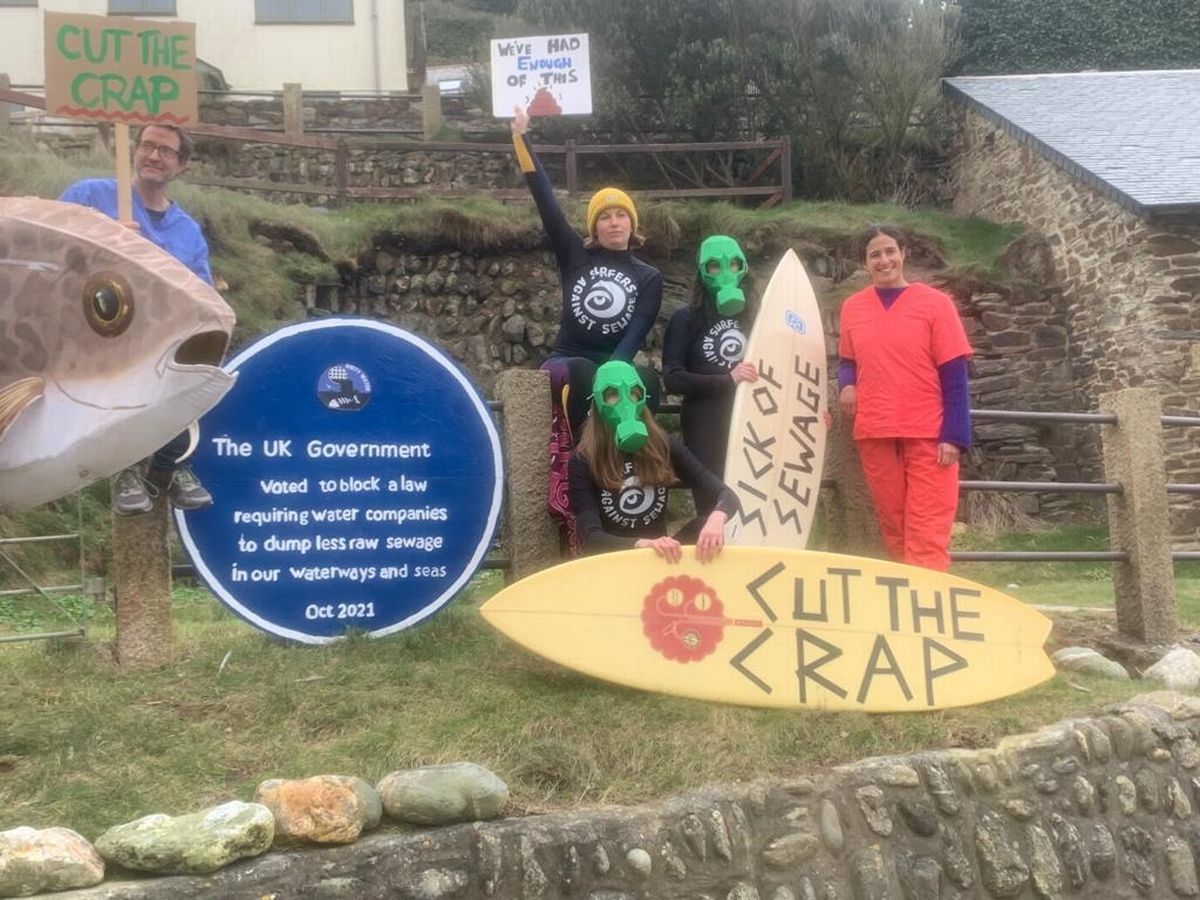
April 2023 Surfers Against Sewage and Extinction Rebellion protests in St Agnes, Perranporth, Truro and Charlestown which unveiled spoof Blue Plaques to the MPs and Conservative Government who allowed raw sewage to be dumped in the sea (Image: Surfers Against Sewage)
The Green Party has reiterated its call for water companies to be brought into public ownership after Water UK apologised for a series of sewage discharges.
The Green Party has reiterated its call for water companies to be brought into public ownership after Water UK apologised for presiding over a rising tide of sewage discharges.
Water UK represents 25 water companies across the UK and said that the public was ‘right to be upset about the current quality of our rivers and beaches’. The companies have also promised to triple funding for sewer system upgrades, cut spilly by up to 25 per cent by 2030, and provide the public with ‘near real-time’ data on sewage spills.
Green Party co-leader Adrian Ramsay said: “Rivers and coastlines up and down the country have faced years of assault at the hands of the water companies and a government that has refused to act.
“Currently water companies can, almost with impunity, dump sewage into our rivers, waterways and coastal waters with an appalling cost to public health and our wildlife. This situation cannot go on.
Three major water companies illegally discharged sewage hundreds of times last year on days when it was not raining, a BBC investigation suggests.
The practice, known as “dry spilling”, is banned because it can lead to higher concentrations of sewage in waterways.
Thames, Wessex and Southern Water appear to have collectively released sewage in dry spills for 3,500 hours in 2022 – in breach of their permits.
Water UK, the industry body, said the spills “should be investigated”.
…
Collectively throughout 2022, Thames, Southern and Wessex illegally started releasing sewage on dry days 388 times – research by the BBC’s climate and data teams suggests – including during last summer when these regions were in drought.
There even appears to have been spills by all three companies on 19 July 2022, the hottest day on record, when temperatures topped 40C in some places and many people tried to cool off in rivers.
Parliamentary committees need to investigate water company accounting, especially as they are continuing with the practices that brought down Carillion.
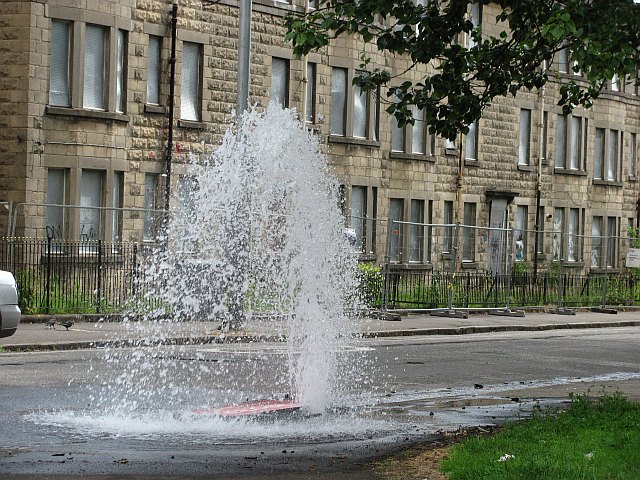
Image of a burst water main.
Prem Sikka is an Emeritus Professor of Accounting at the University of Essex and the University of Sheffield, a Labour member of the House of Lords, and Contributing Editor at Left Foot Forward.
Ever since its privatisation in 1989, the water and sewage industry in England and Wales has set new standards in ripping people off.
Profits are made by not plugging water leaks and by dumping tons of sewage in rivers and seas. More than one trillion litres of water is lost to leaks from crumbling pipes each year. In 2022, raw sewage was dumped into rivers and seas 824 times a day, nearly 301,000 times a year over 1.75m hours. Despite higher demand, no new reservoirs have been built since privatisation. With captive customers and no competition, companies have hiked charges by 40% in real terms. The biggest winners are shareholders. More than 90% of the nine water companies are owned by overseas investors.
Since privatisation, companies have paid £72bn in dividends and another £15bn is expected by the 2030. These are largely funded by over £60bn of debt. To soothe public anxieties, Ministers claim that since 1989 water companies have invested £190bn. Such claims need to be treated with caution as the companies have a history of murky accounting practices.
Thames Water is England’s’ biggest water company. Since 2010, it has been sanctioned 92 times by the regulators and paid fines of £163m. Since privatisation, it has paid £7.2bn in dividends and has debts of around £14bn.
Taking cue from the water company, in June 2023 a Minister told parliament that “Thames Water itself has not paid any dividends for the last six year”. Of course, water companies are not operating as not-for-profit organisations and are masters of financial engineering and obfuscation.
Page 43 of the company’s 2022-23 financial report describes £45m payment (£37m for 2022) to its immediate parent company Thames Water Utilities Holdings Limited as “dividend” which then forwards it to Thames Water Utilities Limited and is still described as “dividend”. The same page then claims that it is not really a dividend because its purpose is to “solely to service debt obligations and group related costs of other companies within the wider Kemble Water Group”. Page 22 of the 2022 accounts of Thames Water Utilities Holdings Limited shows “Dividend Income” of £37.1m. Anything described as a “dividend” in the accounts is a dividend and in the last two years alone this amounts to £82m (£45m + £37m). Since privatisation, vast amounts are likely to have travelled via this route to the company’s ultimate controllers but are not included in the £7.2m of dividends.
Yorkshire Water is also engaged in sleight of hands. Since 2010, it has paid £1.2bn in dividends and claims to have stopped paying dividends from 2017-18. However, page 137 of its 2022-23 financial report states that the company paid £62.3m “dividends” to its parent company. Its 2021-22 accounts (page 99) state that “the Board of Yorkshire Water has approved the payment of £52.6m in dividends.”
… [article continues discussing Water companies’ financial obfuscation.]