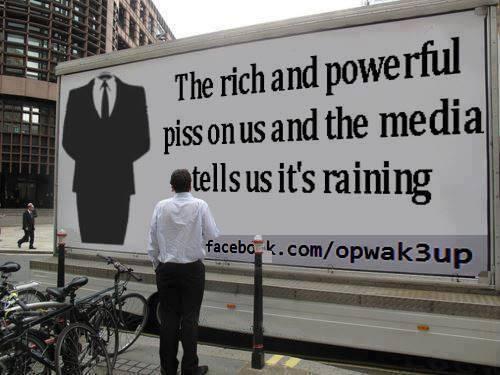
CLIMATE activists lit up the Houses of Parliament on Tuesday night with messages such as “Tax the Super Rich” and “Make Polluters Pay,” ahead of a major mobilisation next month.
The stunt was organised by the direct action group Climate Resistance, part of the Make Them Pay coalition, which is demanding that the wealthy, along with polluting corporations, cover the costs of phasing out fossil fuels.
The action comes ahead of a mass mobilisation called by the coalition in London on September 20.
Trade unions, climate groups and social justice movements are set to unite for the rally, which is demanding that the government speed up a green transition.
The protest will add to a number of demonstrations expected in the capital earlier that week, in response to US President Donald Trump’s second state visit.
Climate Resistance spokesperson Sam Simons said: “As we gear up for the autumn Budget, this government has a simple choice: tax the super-rich and invest in climate action, or cosy up to Nigel Farage and chuck future generations under the billionaire bus.
Nigel Farage urges you to ignore facts and reality and be a climate science denier like him. He says that Reform UK has received millions and millions from the fossil fuel industry to promote climate denial and destroy the planet.Donald Trump urges you to be a Climate Science denier like him. He says that he makes millions and millions for destroying the planet, Burn, Baby, Burn and Flood, Baby, Flood.
The UK government is set to back plans for a third runway at Heathrow, the country’s busiest airport, and to expand two other airports near London: Gatwick and Luton. The move is designed to support the government’s “mission” to grow the economy.
Air transport is notoriously hard to decarbonise. Unlike the energy system, or even road transport, there is no renewable alternative to switch to immediately. If electric or hydrogen planes become reality, it won’t be for many years yet. Therefore it’s not clear this airport expansion can fit within the UK’s legal and arguably moral requirement to cut emissions and remain within its carbon budget.
It certainly goes against what the government’s official advisory body the Committee on Climate Change (CCC) recommends. The CCC’s 2023 report to parliament stated that: “No airport expansions should proceed until a UK-wide capacity management framework is in place to annually assess and, if required, control sector GHG [greenhouse gas] emissions and non-CO₂ effects.”
Those non-CO₂ effects of aviation include water vapour, soot and other gases like nitrous oxides and sulfur dioxide, all released directly into the high atmosphere where they help form heat-trapping clouds. Estimates suggest they could triple the greenhouse impact of aviation.
In 2019, the last year of available data pre-COVID, domestic and international aviation accounted for around 8% of the UK’s total emissions. The non-CO₂ effects makes aviation a larger contributor to climate change than that number suggests.
The sector itself struggles to build a coherent decarbonisation roadmap based solely on “supply-side” improvements to things like fuel efficiency or, in a recent example from EasyJet, thinner paint. The demand side – taking fewer flights, frequent flyer levies, or restrictions on domestic flights as have been introduced in France – is rarely mentioned.
Unfortunately aviation is a prime example of the Jevons effect where any improvement in efficiency has been wiped out by increased demand. With a growing global middle class pursuing a higher consumption lifestyle, aviation emissions continue to grow even while other sectors have shows some efforts to reduce their own.
A third runway at Heathrow was first proposed back in the 2000s. This photo is from a 2016 protest. Dinendra Haria / shutterstock
The UK has mandated that synthetic aviation fuel (SAF), a more sustainable alternative to regular jet fuel, must make up 10% of aviation fuel by 2030. But only 1.2% of aviation fuel is currently SAF and the industry has not published any plans to show it can scale up in time. Indeed, the sector’s own plans for growth will outstrip efforts to decarbonise through synthetic fuel, delivering a neutral effect at best.
The consumer-facing airport sector has also been accused of greenwash. For instance, Luton Airport recently published adverts making the claim that its own expansion would be stopped if it did not meet stringent environmental targets. However, the Advertising Standards Authority found that consumers would naturally believe that would include air traffic and not just terminal operations (a terminal’s heating or lighting is, of course, largely irrelevant when its core business is as emissions-intensive as flying).
The difficulty of decarbonising aviation while the sector still grows is exemplified by the government’s recently launched consultation on adopting the Corsia carbon offsetting scheme for international flights and how it might work with existing cap and trade schemes. All of which encourage or excuse excess emissions through a charging mechanism.
Growing pains
“Kickstarting economy growth” and “Make Britain a clean energy superpower” are two of the UK government’s six “missions”. However, by expanding airports in support of the former, it risks failing the latter.
A new report by thinktank the New Economics Foundation shows that airport expansion could balance out all of the emissions saved by the government’s clean power plans by 2050.
There is evidence that airport expansion can bring some of the economic benefit that government needs. However, another New Economics Foundation report has found that air travel is no longer a catalyst for productivity growth. So the economic benefits of a new runway are really confined to the airport operation itself – projects for engineers and builders, service jobs for people living near Heathrow, and so on.
Aviation is the privilege of the richer part of society, both globally and within the UK. Figures from Our World in Data shows the richest 50% of the global population produces 90% of the aviation emissions.
While many more UK residents have experienced flying than in the past, most flights are still taken by a small, wealthy subset of the population, which will typically capture the largest share of any new capacity. Each year, around half of British residents do not fly at all.
The focus on London airports for the largest scale expansions will shift the balance of the economy further towards south-east England, and increase inequality within the UK economy. And while these plans might bring some of the GDP gains the government is desperate to deliver, all the evidence shows they will be at the expense of its environmental targets.
“Without policies such as regulations or taxes on very polluting investments, it’s unlikely that wealthy individuals making a lot of money from fossil fuel investments will stop investing in them,” says one economist.
The richest tenth of U.S. households are responsible for 40% of all the nation’s greenhouse gas emissions, a study published Thursday revealed, underscoring what progressives say is the need for regulations and taxes on carbon-intensive investments.
Published in PLOS Climate, the study—which was led by University of Massachusetts, Amherst sustainability scientist Jared Starr—analyzed 30 years of U.S. household income data and the greenhouse gas emissions generated in creating that income.
“We find significant and growing emissions inequality that cuts across economic and racial lines,” the paper notes. “In 2019, fully 40% of total U.S. emissions were associated with income flows to the highest earning 10% of households.”
“Among the highest-earning 1% of households (whose income is linked to 15-17% of national emissions), investment holdings account for 38-43% of their emissions,” the publication continues. “Even when allowing for a considerable range of investment strategies, passive income accruing to this group is a major factor shaping the U.S. emissions distribution.”
“It just seems morally and politically problematic to have one group of people reaping so much benefit from emissions while the poorer groups in society are asked to disproportionately deal with the harms of those emissions.”
The study’s findings are consistent with research published in 2021 by the Institute for European Environmental Policy and the Stockholm Environment Institute that estimated the wealthiest 1% of humanity was on track to produce 16% of all global CO2 emissions by 2030. Additionally, a 2022 Oxfam report found that a single billionaire produces a million times more carbon emissions than the average person.
Starr toldThe Washington Post that “as you move up the income ladder, an increasing share of emissions is associated with investments.”
New research by @jaredmstarr and colleagues finds that in 2019, 40% of total U.S. greenhouse gas emissions were associated with income flows to the highest earning 10% of householdshttps://t.co/ypZGWH5MDD
Then there were “super-emitters” with extremely high overall greenhouse gas emissions, corresponding to about the top 0.1% of households. About 15 days of emissions from a super-emitter was equal to a lifetime of emissions for someone in the poorest 10% in America.
The team found that the highest emissions linked to income came from white, non-Hispanic homes, and the lowest came from Black households. Emissions peaked until age 45 to 54, and then declined.
“It just seems morally and politically problematic to have one group of people reaping so much benefit from emissions while the poorer groups in society are asked to disproportionately deal with the harms of those emissions,” said Starr.
The study asserts that “results suggest an alternative income or shareholder-based carbon tax, focused on investments, may have equity advantages over traditional consumer-facing cap-and-trade or carbon tax options and be a useful policy tool to encourage decarbonization while raising revenue for climate finance.”
Lucas Chancel, a French economist who was not part of the study, told the Post that “all Americans contribute to climate change, but clearly not in the same way.”
“Without policies such as regulations or taxes on very polluting investments,” he stressed, “it’s unlikely that wealthy individuals making a lot of money from fossil fuel investments will stop investing in them.”

 Photo: Make Them Pay