Trump’s ICE Jacks Up Weapons Spending by 700%—Including ‘Guided Missile Warheads’

Spread the love

Original article by Julia Conley republished from Common Dreams under Creative Commons (CC BY-NC-ND 3.0).
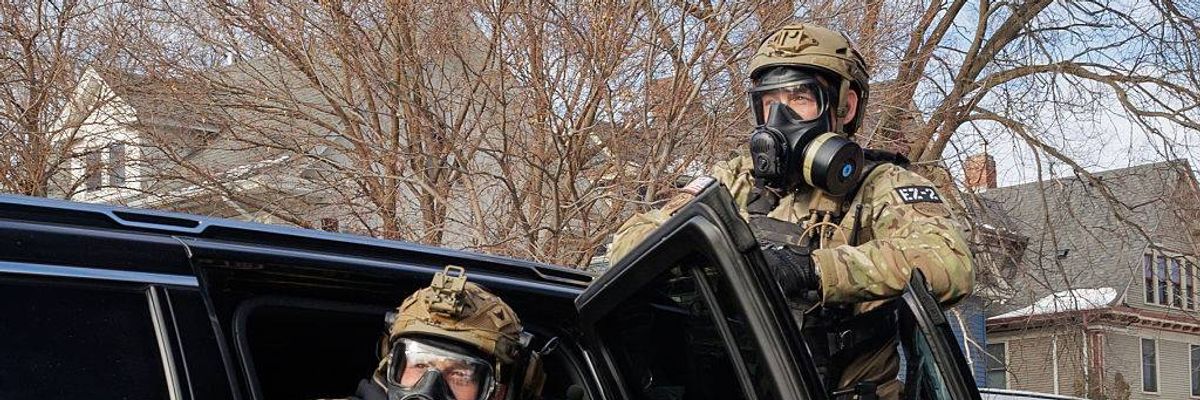
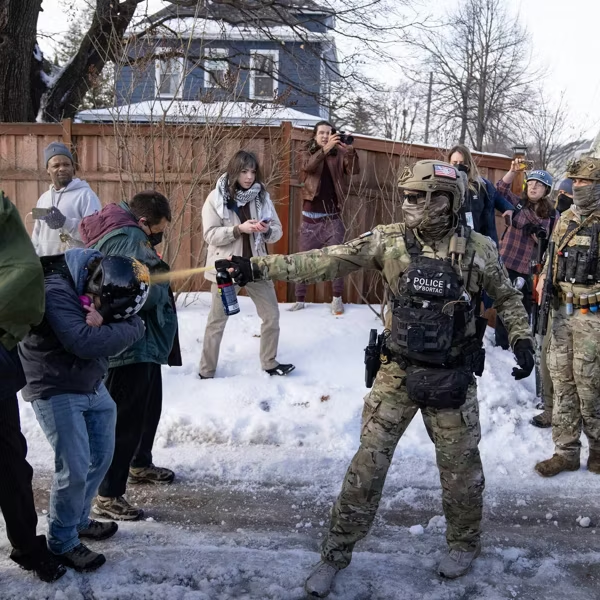
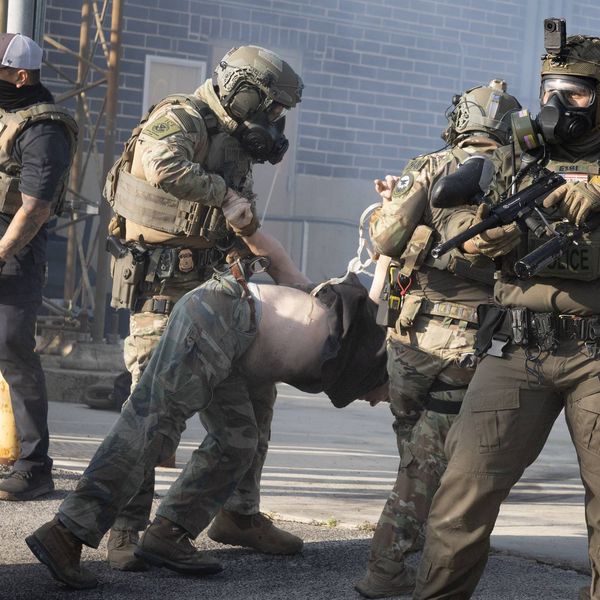
Federal agents target protesters with “less lethal” weapons at the US Immigration and Customs Enforcement building on October 18, 2025 in Portland, Oregon. 
(Photo by Mathieu Lewis-Rolland/Getty Images)

“ICE was always going to be Trump’s private military to deploy domestically against Americans,” said one critic.

The $170 billion in new funding for immigration enforcement operations that the Republican Party included in the One Big Beautiful Bill Act earlier this year led some to warn that the Trump administration was ramping up spending at anti-immigration agencies not just to fund its attacks on migrants, but to deploy federal forces against anyone it wanted to across US communities.

New reporting on Monday detailed just how much US Immigration and Customs Enforcement has spent on weaponry since President Donald Trump took office—weapons that have been purchased as the administration has turned federal agents on US cities such as Chicago and Portland, illustrating how the president is treating increasingly armed ICE officers as his “private military,” as one progressive critic said.

As images spread online of immigration agents deploying pepper spray and tear gas at nonviolent protesters, Judd Legum at Popular Information recently delved into government contracting records from the Federal Procurement Data System and found that ICE has increased its spending on “small arms, ordnance, and ordnance accessories manufacturing” by 700% this year compared to 2024 numbers.

The agency spent $71,515,762 on small arms from January 20—the day Trump began his second term—through October 18.

The number dwarfs ICE’s spending during the first Trump term, during which the agency spent about $8.4 million annually on small arms, and during President Joe Biden’s administration.

The type of weaponry purchased by ICE also raised alarm Monday, with Legum reporting that while most of the agency’s spending was on guns and armor, “there have also been significant purchases of chemical weapons and ‘guided missile warheads and explosive components.’”

“If the immigration enforcement apparatus of the United States were its own national military, it would be the 13th most heavily funded in the world. This puts it higher than the national militaries of PolandItalyAustralia, Canada, Turkey, and Spain—and just below Israel.”

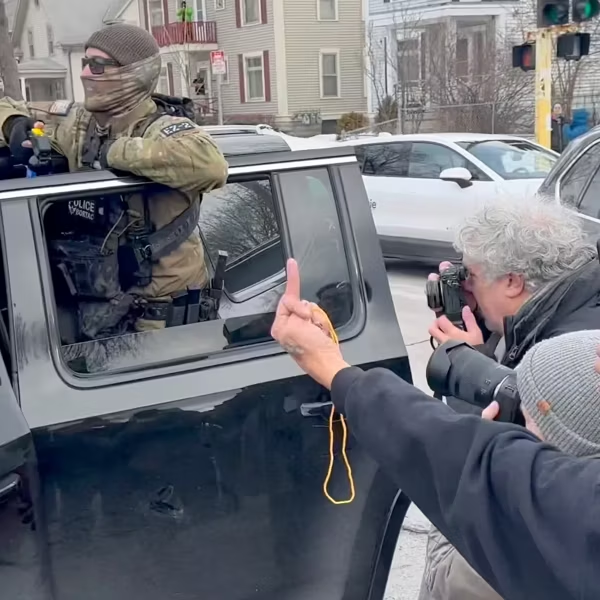
The reporting comes as ICE and other immigration agencies continue to deploy armed, masked agents in major Democratic-leaning US cities, where officers have been filmed and photographed pointing a weapon at a protester; firing a pepper ball at a pastor, and pointing a firearm at bystanders who saw one agent arresting a man.

CBS reporter in Chicago also accused an ICE officer of firing a pepper ball at her vehicle, causing the chemical to “engulf the inside of her truck.”

Sally Duval, a Texas state House candidate in last year’s election, said she was “curious to know why ICE needs ‘guided missile warheads.’”

The report came days after the Trump administration used the US military for what Democratic California Gov. Gavin Newsom called “a profoundly absurd show of force that could put Californians directly in harm’s way,” when the Marines fired 155-millimeter artillery shells over a section of the busy Interstate 5 freeway to celebrate the military branch’s 250th anniversary.

Newsom accused Trump of “using our military to intimidate people [he disagrees] with” and called the exercise “reckless.”

Melanie D’Arrigo, executive director of the Campaign for New York Health, said Legum’s reporting on Monday showed that “ICE was always going to be Trump’s private military to deploy domestically against Americans.”

Legum’s analysis—which likely understated total spending on weapons by Trump’s deportation forces, as it did not include spending by other anti-immigration agencies—followed a report on ICE’s recent funding increase by In These Times.

With the $170 billion included in the OBBBA, reported the outlet, “if the immigration enforcement apparatus of the United States were its own national military, it would be the 13th most heavily funded in the world. This puts it higher than the national militaries of Poland, Italy, Australia, Canada, Turkey, and Spain—and just below Israel.”

The budget, Brandon Lee of the Illinois Coalition for Immigrant and Refugee Rights told In These Times, “shows the misplaced priorities of this administration, where they are cutting healthcare and cutting vital programs for people across the country, and putting all of this money into a domestic terrible force.”

“And it shows the cruelty,” said Lee, “that the Trump administration intends to enact on all people in the United States.”

Original article by Julia Conley republished from Common Dreams under Creative Commons (CC BY-NC-ND 3.0).

Orcas discuss how Trump was re-elected and him being an obviously insane, xenophobic Fascist.
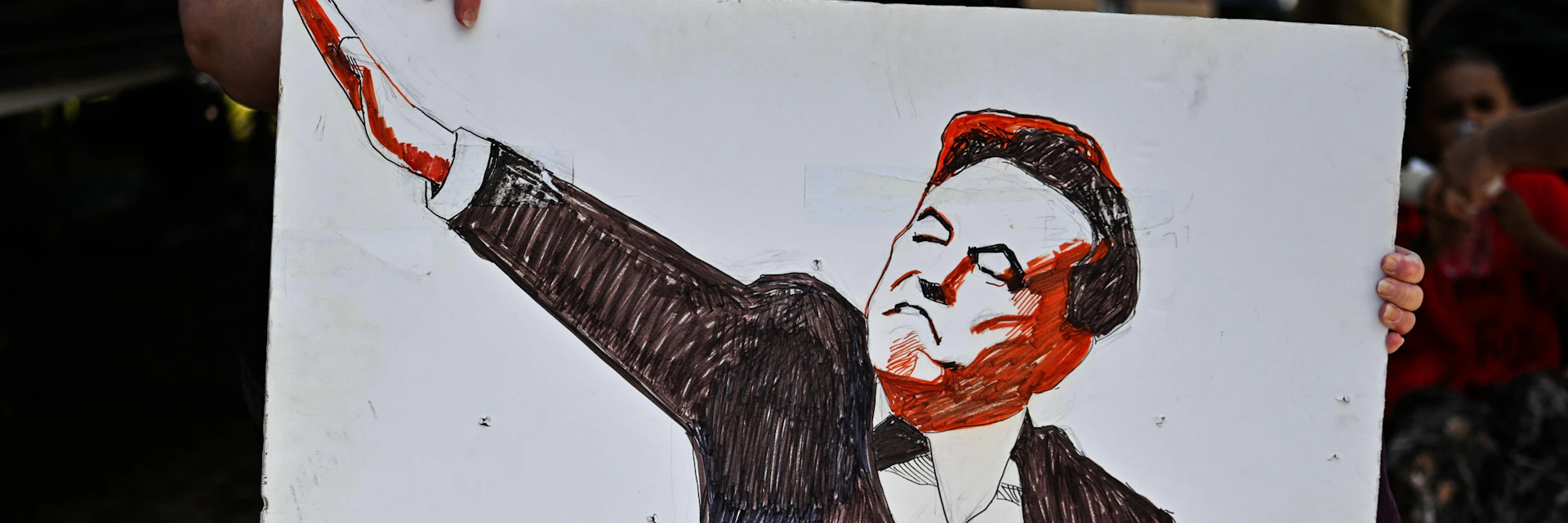
Donald Fuhrump says that Amerikkka doesn't bother with crimes or charges anymore, not being 100% Amerikkkan and opposing his real estate intentions is enough.
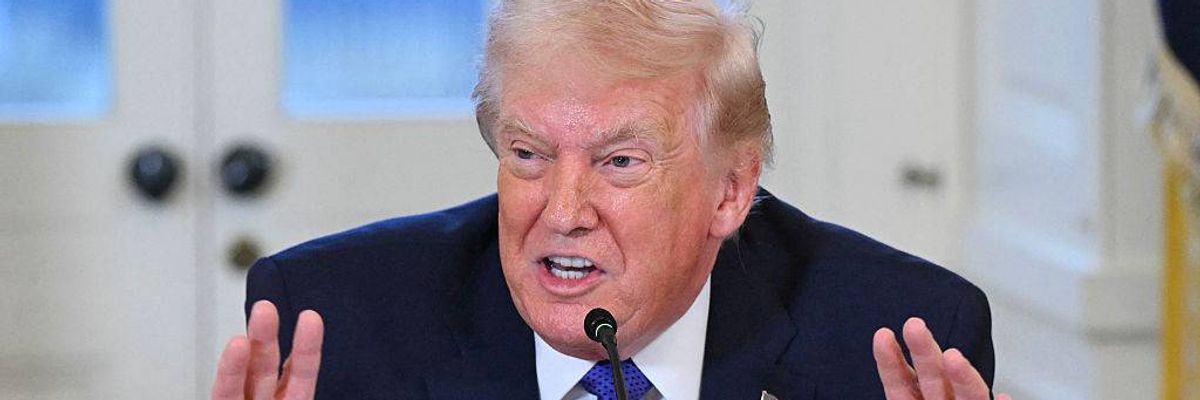
Donald Fuhrump says that Amerikkka doesn’t bother with crimes or charges anymore, not being 100% Amerikkkan and opposing his real estate intentions is enough.

Continue ReadingTrump’s ICE Jacks Up Weapons Spending by 700%—Including ‘Guided Missile Warheads’

China condemns US airstrikes in Caribbean, backs Venezuelan sovereignty

Spread the love

Original article by Brasil de Fato republished from peoples dispatch under Creative Commons Attribution-ShareAlike 4.0 (CC BY-SA) license.

On September 13, 2023, Chinese President Xi Jinping and Maduro held historic talks in Beijing at the Great Hall of the People (Photo: Ministry of Foreign Affairs of the People’s Republic of China via Twitter)

This week, China’s Ministry of Foreign Affairs formally expressed its opposition to US military operations in the Caribbean, following an attack on October 15 that left six people dead on Venezuelan vessels. Spokesperson Lin Jian stated that Beijing “opposes the use or threat of force in international relations” and rejects external interference in Venezuela’s internal affairs.

In response to questions from reporters, Lin Jian criticized Washington’s unilateral actions, which mobilized warships and a nuclear submarine in the region under the pretext of combating drug cartels. The October 15 attack brings the total number of deaths in five recent US military actions against Venezuelan vessels to 27.

China also expressed support for the declaration by 33 Latin American countries on the establishment of a nuclear-weapon-free zone on the continent.

China supports strengthening international cooperation to combat transnational crimes and opposes unilateral law enforcement actions by the United States against vessels from other countries that exceed reasonable and necessary limits,” said the Chinese spokesman.

Venezuelan diplomatic mobilization

This week, the Venezuelan Embassy in Beijing also summoned diplomatic representatives from various countries and international media outlets to denounce what it classifies as a risk of military invasion. Ambassador Remigio Ceballos Ichaso told Brasil de Fato that Washington is conducting “a disinformation campaign aimed at justifying an intervention.”

“Accusing Venezuela of being a drug cartel is completely false, a fiction that they have been trying to impose on the international community for decades,” said Ceballos Ichaso.

The Venezuelan government has received expressions of solidarity from Nicaragua, Bolivia, Colombia, Cuba, and Mexico. Humberto Collado, commercial attaché at the Nicaraguan embassy in China, said that “what the US is doing is threatening a democratic country, its president, and its entire people, undermining the socio-political stability of the region.”

Russian and UN position

Russia criticized US military actions through statements by the Ministry of Foreign Affairs and the Russian ambassador to the United Nations, Vasily Nebenzia, stating that such operations “represent an escalation in the region, violate international law and Venezuelan sovereignty.”

The World Drug Report 2025 from the United Nations Office on Drugs and Crime (UNODC) recognizes Venezuela’s efforts to combat drug trafficking and points out that the country is not among the main international drug corridors. The UN has emphasized that any military or coercive intervention that violates the sovereignty of a member state is contrary to the United Nations Charter.

US sanctions against Venezuela began in 2006, during Hugo Chávez’s administration, intensifying after 2013 with Nicolás Maduro, totaling about a thousand restrictive measures by 2019. These measures resulted in food and medicine shortages, restrictions on access to essential resources, and impacts on the Venezuelan economy.

Internal mobilization

President Nicolás Maduro ordered national defense military exercises with the participation of Bolivarian militias and volunteers, including fishermen and rural residents. The government characterized the mobilization as defensive and voluntary, aimed at ensuring national sovereignty.

In a letter to UN Secretary-General António Guterres, Maduro reiterated Venezuela’s commitment to peace and international law. Foreign Minister Samuel Moncada stated that “the real threat to regional peace is the presence of US military and nuclear weapons in the Caribbean.”

This article was translated from an article originally published in Portuguese on Brasil de Fato.

Original article by Brasil de Fato republished from peoples dispatch under Creative Commons Attribution-ShareAlike 4.0 (CC BY-SA) license.

Donald Fuhrump says that Amerikkka doesn't bother with crimes or charges anymore, not being 100% Amerikkkan and opposing his real estate intentions is enough.
Donald Fuhrump says that Amerikkka doesn’t bother with crimes or charges anymore, not being 100% Amerikkkan and opposing his real estate intentions is enough.
Orcas discuss how Trump was re-elected and him being an obviously insane, xenophobic Fascist.

Continue ReadingChina condemns US airstrikes in Caribbean, backs Venezuelan sovereignty

Trump pledges $20B to Argentina, threatens to cut aid if country votes left

Spread the love

Original article by Pablo Meriguet republished from peoples dispatch under a Creative Commons Attribution-ShareAlike 4.0 (CC BY-SA) license.

President Donald J. Trump and President of Argentina Javier Milei at the White House on Oct 14. Photo: White House

The Milei-Trump meeting secured a USD 20 billion financial bailout for Argentina’s unstable economy. Trump made future aid conditional on Milei winning the upcoming elections.

On October 14, Argentina’s right-wing president, Javier Milei, met with his US counterpart, Donald Trump in Washington. Milei, who arrived in the US capital in the early hours of the morning, hoped to secure a strategic financial bailout of almost USD 20 billion that Trump would sponsor to stabilize the economy, which has been struggling under Argentina’s libertarian government.

Traveling alongside Milei were Karina Milei, the president’s sister and secretary general of the presidency; Patricia Bullrich, minister of security; and Santiago Bausili, head of the Central Bank. Among the topics discussed were the trade relationship between the two countries and China’s influence in Argentina.

Trump saves Milei

“Today we directly purchased Argentine pesos,” said US Treasury Secretary Scott Bessent in a post on X on October 9

He described Argentina’s economic crisis as a “moment of acute illiquidity” in an otherwise “prudent financial strategy” that only the United States can and must save from collapse. 

The South American nation has “strong economic fundamentals” and the structural reforms already underway will “generate significant dollar-denominated exports and foreign exchange reserves,” Bessent said. 

The treasury secretary noted that the IMF also supports Milei’s economic policy.

Additionally, Bessent affirmed: “We have finalized a USD 20 billion currency swap framework with Argentina’s central bank. The US Treasury is prepared, immediately, to take whatever exceptional measures are warranted to provide stability to markets. I emphasized to Minister Caputo that President Donald Trump’s America First economic leadership is committed to strengthening our allies who welcome fair trade and American investment … The Trump administration is resolute in our support for allies of the United States, and to that end, we also discussed Argentina’s investment incentives and US tools to powerfully support investment in our strategic partners.”

Thus, the United States hopes to save the Argentine economy, which – despite the promises of Milei, an economist who for years has become an ideologue of the most radical neoliberalism – is faltering due to a lack of dollars. The orthodox program of reducing the size of the state, privatizing public companies, and cutting back on public policies has managed to improve certain economic indicators, such as the fiscal deficit, but for now it has run into a snag that, apparently, only the prodigious help of the United States can save.

Argentina has lost a large amount of money, causing several investors to begin selling their assets and, consequently, triggering a crisis of monetary illiquidity. With the agreement, Milei secures a historic injection of dollars that the IMF could not have offered him so quickly, considering that last April it already loaned Buenos Aires several billion.

Read More: Milei takes on USD 20 billion in IMF debt and lifts the exchange rate cap

Help or blackmail?

This is of particular interest in view of the upcoming elections in Argentina on October 26; it should not be forgotten that Milei’s party already lost the last elections to Peronism (likely the most significant political force in Argentina over the last 70 years based on social justice, nationalism, and sovereignty) by a landslide. This was acknowledged by President Trump himself at a bilateral press conference, who made future economic aid conditional on Milei’s election victory: “The elections are coming very soon, and it is a very big election that will be watched by the world because [Milei] has done an incredible job, and with that comes some pain. I think the victory is very important … If a socialist, or in the case of New York City, a communist, wins, you feel a lot different about making an investment … If Milei doesn’t win … we will not be generous with Argentina if that happens.”

Trump has received heavy criticism for sponsoring Milei’s bailout, especially from some of his supporters who hoped that the slogan “America First” would materializein an opposite scenario. In addition, several US farmers have complained about Trump’s support, as Argentine soybeans compete with their production and, with this agreement, large landowners based in Argentina could benefit.

For his part, Milei, who has aligned his foreign policy almost mimically behind Washington’s, posted on X: “Thank you very much, President Trump, for receiving me at the White House. Since before becoming president, I have maintained that the Argentine Republic should be a strategic ally of the United States of America, and now that the Argentine people have entrusted me to guide the destiny of our country, fulfilling that promise is another step in the direction we set out on December 10, 2023: Make Argentina Great Again (MAGA). The support that you and your great country have given us is vitally important for the continuity of the long road of reforms we have embarked upon. Argentines know that the world’s leading power will continue to support us unless we return to populism. The situation is crystal clear: if the country strays from the path of freedom and returns to populism, the United States will cease to support our country. Otherwise, they will continue to stand by us.

Without a doubt, Milei’s hope is that long-awaited economic stability will translate into political stability that will allow him to get through the upcoming elections. However, this will be difficult for the government, given the latest polls showing growing discontent among the population over the rising cost of living, the latest corruption scandals (involving Milei’s own sister), and spending cuts that are already affecting millions of students, retirees, single mothers, etc.

Thus, Milei has bet big on Washington, just as Trump and his administration have bet big on the libertarian president. It will soon become clear whether this bet will allow Washington to maintain a totally loyal ally in South America or whether, on the contrary, Milei’s neoliberal project will be undermined by Argentina’s social and economic reality.

Original article by Pablo Meriguet republished from peoples dispatch under a Creative Commons Attribution-ShareAlike 4.0 (CC BY-SA) license.

Donald Fuhrump says that Amerikkka doesn't bother with crimes or charges anymore, not being 100% Amerikkkan and opposing his real estate intentions is enough.
Donald Fuhrump says that Amerikkka doesn’t bother with crimes or charges anymore, not being 100% Amerikkkan and opposing his real estate intentions is enough.
Elon Musk urges you to be a Fascist like him, says that you can ignore facts and reality then.
Orcas discuss how Trump was re-elected and him being an obviously insane, xenophobic Fascist.
Continue ReadingTrump pledges $20B to Argentina, threatens to cut aid if country votes left

Trump’s military escalation against Venezuela repeats the Iraq War blueprint

Spread the love

Original article by Manolo De Los Santos republished from peoples dispatch under a Creative Commons Attribution-ShareAlike 4.0 (CC BY-SA) license.

A US Army soldier watching a burning oil well at Rumaila oil field in Iraq in April 2003. Photo: US Navy

With the suspension of dialogue between the US and Venezuela, the sighting of US B-52 bombers in Venezuelan airspace, and the further lethal US strikes in the Caribbean, the US seems to be accelerating its drive towards war with Venezuela

Lee en español aquí

The mood in the Caribbean grows increasingly tense, as the United States intensifies its military threats. Beneath the deceptive shroud of the “war on drugs,” the United States is actively executing a blueprint for military intervention in Venezuela, employing lethal force and projecting power in a manner that legal institutions and regional leaders have condemned as a profound threat to international order. This aggression is not a law enforcement operation; it is the negation of law, a neocolonial revival of the Monroe Doctrine, designed to shatter the sovereignty of Venezuela, seize control of the world’s largest oil reserves, and install a compliant regime.

A license to kill: the precedent of state murder

A chilling adoption of extrajudicial violence has marked the current escalation. The Trump administration has ordered unilateral military strikes against private vessels near the Venezuelan coast, allegedly to stop drug trafficking. To launch these alarming attacks, the US military has deployed a massive naval force of warships, drones, and special operations forces.

These strikes have resulted in the summary execution of at least 27 people as of recent reports. The most recent lethal strike in the Caribbean resulted in the “elimination” of 6 more people. This is not law enforcement; it is extrajudicial murder and a campaign that now stands as part of a war plan against Venezuela. The administration has characterized the victims, without credible proof, as drug traffickers and “terrorists,” a claim that, even if true, provides no legal authority for the US president to execute whomever it decides.

Read more: Trump chooses war over diplomacy in the Caribbean

Legal and human rights organizations have been unequivocal in their condemnation of this profound and dangerous policy, which replaces established law enforcement procedures with premeditated lethal force. The New York City Bar Association (NYCBA), a key voice on international legal ethics, has strongly denounced these actions. The NYCBA stated explicitly that “Because the recent attacks on Venezuelan vessels and their crews were unauthorized by US law and in violation of binding international law, they were illegal summary executions – murders.” They further argued that these actions violate the fundamental international principle that “No one shall be arbitrarily deprived of his life” under the International Covenant on Civil and Political Rights.

The US government possesses ample legal authority for the Coast Guard to interdict and search vessels suspected of carrying narcotics, followed by prosecution in US courts according to due process requirements. However, in the case of the Venezuelan vessels, the Coast Guard’s Congressionally authorized police function was bypassed; instead, the crews were simply targeted and executed by overwhelming military force. Regional leaders, including Colombian President Gustavo Petro, have condemned the extrajudicial killings, highlighting the profound anxiety across Latin America over a return to unilateral US military action under the cover of anti-narcotics policy.

Read more: Trump’s smokescreen on Venezuela: Exposing the “narco-state” accusation

Escalation: B-52s and the threat of war

Beyond the lethal strikes, the US government has engaged in significant military posturing that amounts to a direct challenge to Venezuelan sovereignty. The sighting of US B-52 bombers in Venezuelan airspace, flying in close range, is a significant escalation. This warmongering has nothing to do with the “war on drugs” and everything to do with regime change to plunder Venezuela’s oil. This reckless push for war is a criminal act of international aggression.

The Trump Administration’s unilateral drone strikes in the Caribbean, combined with the White House’s termination of all negotiations with Venezuela, appear as a precursor for a full-scale regime change operation. This is a critical moment. We must sound the alarm: there is a risk of a new, catastrophic conflict in the region.

The US government’s own officials continue to escalate the crisis with bellicose rhetoric and actions. Secretary of State Marco Rubio, a key architect of the regime-change policy, has consistently refused to rule out a military option, asserting that the Maduro regime has become a “threat to the region and even to the United States.”

Venezuela’s response has been one of principled defense of its sovereignty. Ambassador to the UN, Samuel Moncada has repeatedly sounded the alarm on the global stage, arguing that the US military deployment in the Caribbean is a massive propaganda operation that seeks “excuses to fabricate a conflict” to seize the country’s oil wealth. Moncada affirmed that, “The United States believes that the Caribbean belongs to it because it has been using the expansionist Monroe Doctrine for over 100 years, which is nothing more than a remnant of colonialism.”

President Nicolás Maduro has called on Washington to resume dialogue, stating, “Our diplomacy isn’t the diplomacy of cannons, of threats, because the world cannot be the world of 100 years ago,” while simultaneously mobilizing national defense exercises to ensure the country is prepared for any direct assault. The NYCBA warned that attacks against Venezuelan vessels and reported threats against the Venezuelan government violate the nation’s obligations under the United Nations Charter, with the risk of escalating to open hostilities.

Parallels with the Iraq War: oil, ideology, and deception

The current situation is chillingly reminiscent of the lead-up to the 2003 invasion of Iraq. In that case, the Bush administration justified unilateral action on the basis of “weapons of mass destruction,” but this was a pretext. The true objectives were not limited to oil, but also included achieving profound ideological and political goals – overthrowing a government to reshape Middle Eastern politics and assert dominance.

Read more: In the name of the “War on Drugs”, the US continues to target Venezuelan boats

Washington must learn the lessons of this history. The Bush administration promised a quick victory in Iraq. Instead, the invasions and occupation claimed countless Iraqi lives, resulted in tens of thousands of American soldiers killed or wounded, and destabilized the region. The notion that the US can carry out military invasions into the heart of Latin America without a massive blowback is outlandish.

In the case of Venezuela, the “war on drugs” and the labeling of the government as a “threat” serve as the new rhetorical pretexts. The US interest is multifaceted: it involves securing the world’s largest proven oil reserves and achieving the ideological and political goal of overthrowing a socialist government to assert dominance and reshape Latin American politics. The US seeks to dismantle the Bolivarian Revolution and eliminate a major center of anti-imperialist politics in the hemisphere.

The current escalation is not about law enforcement or counter-narcotics; it is about regime change and plunder. While members of Congress from both Democratic and Republican parties, as well as key voices of public opinion, are increasingly speaking up about the illegality of these strikes and the absence of credible information from the administration, this situation requires much more urgency, once the escalation ladder is climbed, there may be no going back. The international community must recognize this aggressive campaign for what it is: a criminal act of international aggression. The world must stand against this threat of a new, catastrophic conflict.

Manolo De Los Santos is Executive Director of The People’s Forum and a researcher at Tricontinental: Institute for Social Research. His writing appears regularly in Monthly Review, Peoples Dispatch, CounterPunch, La Jornada, and other progressive media. He coedited, most recently, Viviremos: Venezuela vs. Hybrid War (LeftWord, 2020), Comrade of the Revolution: Selected Speeches of Fidel Castro (LeftWord, 2021), and Our Own Path to Socialism: Selected Speeches of Hugo Chávez (LeftWord, 2023).

Original article by Manolo De Los Santos republished from peoples dispatch under a Creative Commons Attribution-ShareAlike 4.0 (CC BY-SA) license.

Donald Fuhrump says that Amerikkka doesn't bother with crimes or charges anymore, not being 100% Amerikkkan and opposing his real estate intentions is enough.
Donald Fuhrump says that Amerikkka doesn’t bother with crimes or charges anymore, not being 100% Amerikkkan and opposing his real estate intentions is enough.
Elon Musk urges you to be a Fascist like him, says that you can ignore facts and reality then.
Orcas discuss how Trump was re-elected and him being an obviously insane, xenophobic Fascist.

Continue ReadingTrump’s military escalation against Venezuela repeats the Iraq War blueprint

Trump chooses war over diplomacy in the Caribbean

Spread the love

Original article by Devin B. Martinez republished from peoples dispatch under a Creative Commons Attribution-ShareAlike 4.0 (CC BY-SA) license.

US President Donald Trump speaking at the State of the Union in March 2025. Photo: POTUS / X

After killing 21 people in a series of airstrikes on boats off the coast of Venezuela, the US closes all diplomatic channels and prepares for further military aggression in the region.

Lee en español aquí

On October 6, US President Donald Trump ordered the termination of diplomacy with Venezuela. Richard Grenell, special presidential envoy, was directed by Trump to halt all diplomatic outreach and talks with Venezuelan President Nicolás Maduro.

The move follows multiple US missile strikes on boats in the Caribbean Sea. Washington claims the operations target drug traffickers, but regional leaders and legal experts say they are escalating into an undeclared war against Venezuela.

Caracas calls for diplomacy, US abandons it for war

Grenell had previously been the primary negotiator between the two governments and was involved in US-Venezuela policy decisions in general.

Back in September, President Maduro sent a letter directly to Trump, calling for diplomacy and refuting the drug-trafficking accusations the White House has levied. He pointed out how crucial Grenell’s work had been in overcoming false reports and misunderstandings that had emerged around deportation flights from the US.

“This issue was swiftly resolved and clarified during discussions with Mr. Richard Grenell. This channel has functioned flawlessly to date,” the letter stated.

Maduro cited UN data demonstrating the country’s “impeccable record in the fight against international drug trafficking”.

“This and other matters will always be open for direct and frank discussion with your special envoy Grenell, so that we can overcome media noise and fake news.”

Weeks later, Grenell’s communication with Caracas was ceased completely by President Trump.

Washington’s total diplomatic disengagement suggests that hardliners like Secretary of State Marco Rubio, who have openly called for regime change in Venezuela, are now freely leading a more aggressive, militaristic approach toward the most oil-rich nation on earth.

On Thursday, October 9, Maduro filed a complaint with the UN Security Council, requesting an emergency session over US military actions in the Caribbean.

Read More: Trump’s smokescreen on Venezuela: Exposing the “narco-state” accusation

Airstrikes at sea

The US military has now carried out airstrikes on at least four small boats in the Caribbean, raising the reported death toll of Washington’s current military aggression in the region to 21. Officials say the campaign aims to combat alleged drug trafficking but have provided no evidence for the claim.

Airstrikes began on September 2, when 11 people – later identified as fishermen – were killed in a missile strike on the first targeted ship off the coast of Venezuela.

Colombian President Gustavo Petro recently announced that the fourth bombed boat was a Colombian vessel, accusing Trump of opening a “war scenario” in the region.

“This is no war against smuggling,” Petro said. “It is a war against oil and it must be stopped by the world.”

The Trump administration has denied Petro’s allegation that the vessel was Colombian, however, an anonymous US official confirmed to the New York Times that Colombian citizens were on board.

The uncharged, untried, and largely unidentified victims of the last month of US aggression are accused of being narcotraffickers by the Trump administration.

The US has deployed at least eight warships, a nuclear-powered attack submarine, several P-8 surveillance planes, and 4,000 military personnel to the waters of the Caribbean, as well as F-35 fighter jets to Puerto Rico.

Read More: “We will blow you out of existence”: Trump’s Caribbean spectacle

The scale and level of aggression, combined with the lack of evidence for drug trafficking accusations, has raised questions about Washington’s true intentions with Venezuela. Sources inside the Trump administration told NBC News in September, “The goal is to force Maduro to make rash decisions that could ultimately lead to his ouster – without American boots on the ground.”

US is waging an “armed conflict” against “unlawful combatants”, declares Trump

Legal experts, US lawmakers, and anti-war groups have asserted that military force in international waters is illegal, violating both international and US law, bypassing due process and law enforcement norms, and lacking any clear justification.

In an apparent attempt to provide some legal basis for the hostilities, President Trump sent a report to Congress last week declaring that the US military is engaged in a “non-international armed conflict” with drug cartels and has killed “unlawful combatants” in the Caribbean.

The president has “designated [cartels] as terrorist organizations, and determined that their actions constitute an armed attack against the United States,” Earl Matthews, the Pentagon’s general counsel told lawmakers, as reported by CNN.

The report sent to Congress is required by law (Section 1543a United States Code) whenever US military forces are engaged in hostilities, but it doesn’t automatically grant or expand the legal basis for a military campaign.

However, Secretary of War Pete Hegseth already cited the recent “legal justification” by President Trump when pressed on Sunday about the most recent airstrike at sea. “We have every authorization needed,” Hegseth told Fox News. “These [cartels] are designated as foreign terrorist organizations.”

Although some senators have questioned “the legal rationale, the mission itself, and the intel surrounding the strikes”, a war powers bill that would have limited Trump’s power, halting further airstrikes on boats without authorization from Congress, was voted down on Thursday, October 9.

The White House insists that its “armed conflict” is legal and constitutional. Yet experts and critics say Trump is waging a secret war against undefined enemies, without fully informing Congress or the people of the US – who overwhelmingly reject US intervention in Venezuela. Polls show that only 16% of Americans would support a US invasion of the country.

Threats of land strikes

Despite widespread opposition, President Trump has openly threatened a direct US attack on Venezuela. During an event on October 5 at Naval Station Norfolk in Virginia, he praised the Navy for how successful the missile strikes on alleged drug boats have been.

“We’ll have to start looking about the land because they’ll be forced to go by land,” he said.

The threat came days after NBC News reported that US military officials had in fact already drawn up plans for drone strikes within Venezuelan territory.

Venezuela belongs to Venezuelans, declares Maduro

Caracas has attempted to open dialogue with special envoy Richard Grenell, President Trump himself, and now the UN Security Council. Amid its diplomatic efforts, the country has also made massive efforts to increase its security and defense capabilities.

On October 6, Maduro announced that Venezuelan security forces had foiled a “false flag” plot by local extremists to bomb the US embassy in Caracas, in an apparent attempt to justify US military provocation. Maduro assured that his administration would reinforce security measures to protect the embassy “despite all the differences we have had with the governments of the United States.”

As soon as the US military deployment was announced by Marco Rubio in August, Venezuela mobilized its 4.5 million members of the Bolivarian National Militia. However, after enlistment campaigns calling on the Venezuelan people to defend the country’s sovereignty against US aggression, 8 million people signed up to join the militia, raising the total size of the force to over 12 million civilian combatants, according to the government. The country has conducted advanced training across the entire territory and the Caribbean Sea to consolidate its defense forces and prepare for any US attack.

“What they want is war in the Caribbean and South America. For a regime change to impose a puppet government and steal the oil, gas, and gold,” the president of the Bolivarian Republic proclaimed during the inauguration of a massive hospital in Caracas.

“But we have news for the North American empire,” he continued. “That oil, that gas, that gold, this land, and this people will continue to belong to Venezuelans. And we will never allow our homeland to be violated or touched. Never!”

Original article by Devin B. Martinez republished from peoples dispatch under a Creative Commons Attribution-ShareAlike 4.0 (CC BY-SA) license.

Donald Fuhrump says that Amerikkka doesn't bother with crimes or charges anymore, not being 100% Amerikkkan and opposing his real estate intentions is enough.
Donald Fuhrump says that Amerikkka doesn’t bother with crimes or charges anymore, not being 100% Amerikkkan and opposing his real estate intentions is enough.
Orcas discuss how Trump was re-elected and him being an obviously insane, xenophobic Fascist.

Continue ReadingTrump chooses war over diplomacy in the Caribbean