SEVEN people have been charged with offences linked to terrorism following a Palestine Action protest at an Elbit Systems UK site.
The Israeli-based defence firm’s site near Patchway, south Gloucestershire, was ram-raided on August 6.
Avon and Somerset Police said a group of people forced their way into the building, using a vehicle to smash through the doors, before employees were “seriously assaulted.”
The force said two of its officers who attended the disruption were also “seriously assaulted in the course of their duties.”
The Crown Prosecution Service said it would be submitting to the court that the alleged offences have a “terrorist connection.”
…
The seven defendants were remanded in custody today, Palestine Action said, adding: “Despite arrests under the Terrorism Act, giving the police the ability to detain without charge for up to 14 days, none of the activists have been charged with terrorism offences.
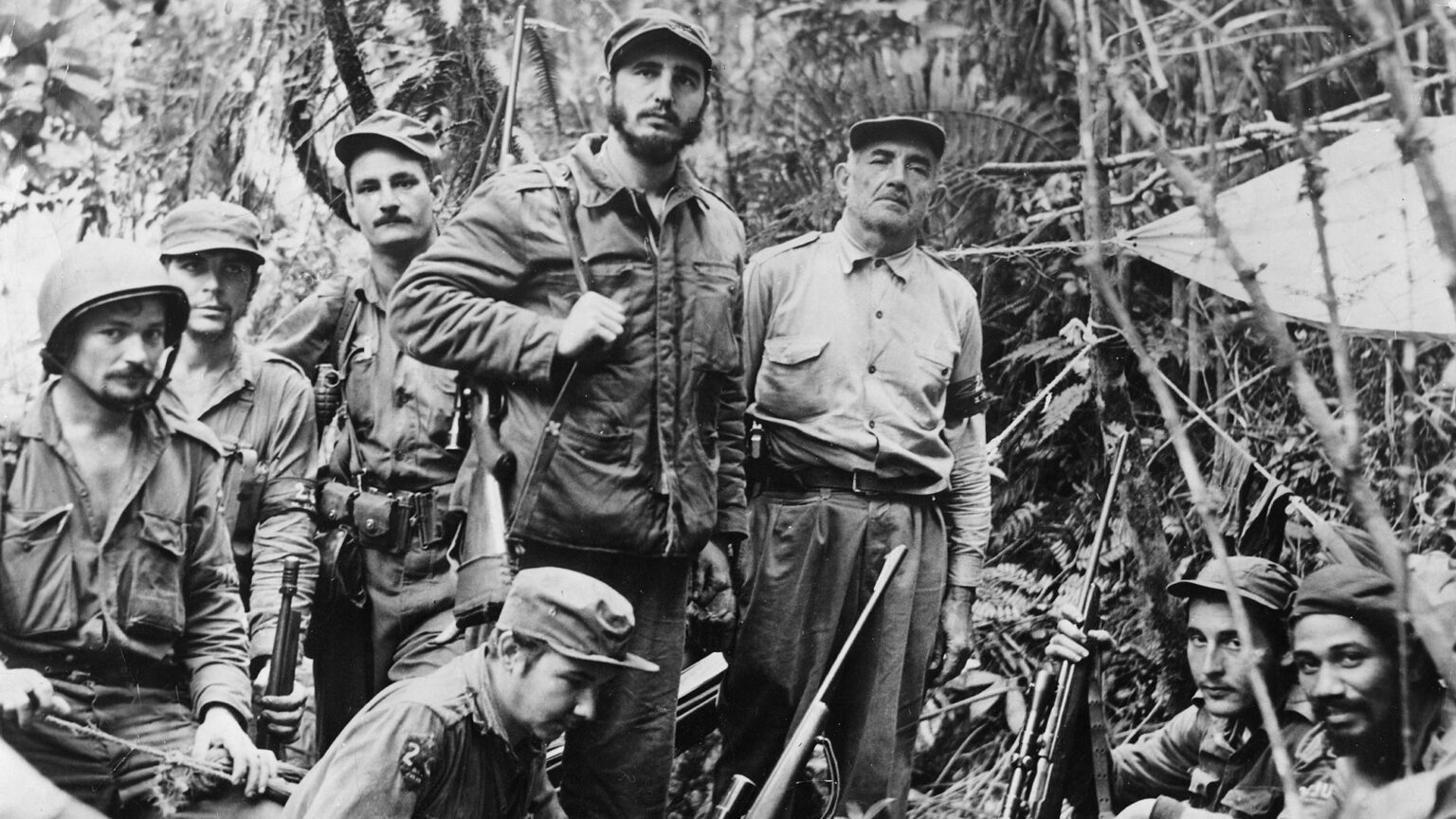
Fidel Castro in the Sierra Maestra with Guillermo García, Ernesto “Che” Guevara, Universo Sánchez, Raúl Castro, Crescentio Pérez, Jorge Sotus, and Juan Almeida. Photo: Wikimedia Commons
August 13 marks the anniversary of the birth of Marxist and communist revolutionary Fidel Castro, one of the most influential political leaders of the 20th century. Read our series of articles about the political life of the revolutionary leader.
Fidel Castro was born in Biran, in the east of the island of Cuba, in 1926, and died in Havana on November 25, 2016. His historical figure however, transcends the time in which he lived. Even when historians study the period in the region before the Cuban Revolution, they always keep in mind that, during the 1950s, on a Caribbean island, social, economic, and political changes would take place that would transform the entire history of the continent.
In this case, Fidel’s name cannot be detached from a process that shook the foundations of the entire Latin American and Caribbean society. Although the “Comandante” himself disavowed the simplification of revolutionary and historical processes to a few names, it seems that human memory prefers to engrave in its memory certain individuals rather than economic forces, cultural disputes, or political ideas. At least this has been the case with Fidel, whose figure is tied to the destiny of a country, just as Bolívar is tied to Venezuela, Juarez to Mexico, and Martí to Cuba.
The young student
Fidel studied at a Jesuit school, and perhaps because of this he always maintained an unyielding intellectual discipline, as well as an almost stoic confidence in the unity of any political group that has clear general objectives. At university, he studied law and social sciences. There he began to read several books on politics while presiding over the Federation of University Students (FEU), a space which he was active in during the struggle against the government of Ramón Grau San Martín, and in which he began to denounce the bloody dictatorship of the infamous Rafael Trujillo in the Dominican Republic.
As president of the FEU, he traveled to Colombia to attend the Inter-American Student Conference and meet personally with Jorge Eliecer Gaitan, the Colombian politician, whose assassination, a few hours before his meeting with the young Fidel, would set off a historical process in Colombian society that began with the famous “Bogotazo”.
Once he finished his university studies, he tried to enter national politics by running for the House of Representatives in 1952, but the disastrous coup d’état of Fulgencio Batista overthrew the government of Carlos Prío Socarrás and prohibited future elections. Fidel tried to denounce Batista before the courts for violating the constitution, but the denunciation was denied. Faced with this adversity, the young Fidel understood that elections and legal denunciations were not an adequate way to engage in political struggle at that time in Cuba.
The beginning of the revolutionary struggle
That is how several young revolutionaries decided to follow the path of armed struggle. On July 26, 1953, they attacked two military bases (the “Moncada” in Santiago de Cuba and the “Carlos Manuel de Céspedes” in Bayamo) which stored thousands of weapons and were located in areas where the people were mostly opposed to the Batista dictatorship. They had hoped that the attack would provoke sympathy among the population and the young military who doubted the dictatorship. But all plans, including the escape plans, failed. More than 80 young revolutionaries were tortured and killed by the repressive forces.
Fidel quickly understood that not every military failure necessarily implies a political failure. In the trial against him, he gave a famous and brilliant self-defense in which he defended two fundamental theses. In the first place, he said that the intellectual author of the attack was named José Martí, implying that the Cuban independence hero, who had died more than 50 years ago, inspired the sovereign ideals of the young revolutionaries. This implied that the revolutionary struggle in Cuba had not ended with Independence from Spain, but continued, thus establishing a political thesis to be followed by the various revolutionary movements in Latin America and the Caribbean during the sixties and seventies of the 20th century: the struggle for independence has not ended because there is still imperialist subjugation. Secondly, he concluded that, although they had been defeated and imprisoned, they were right to act in that way, and that historical time would know how to judge better what at that time seemed a risky adventure of a few young people: “History will absolve me,” Castro said before the judge.
He was imprisoned for almost two years on the Isla de Pinos before being acquitted and banished from Cuba on May 15, 1955. Batista thus hoped to get rid of an uncomfortable political prisoner, although in reality, by doing so, he sentenced himself (in the not-too-distant future) to be defeated militarily and to die in exile in the Spain of fellow dictator Francisco Franco.
After prison, Fidel Castro traveled to the United States and Mexico. In Mexico, he trained (under an ex-combatant of the Spanish Civil War named Alberto Bayo) and organized an expedition of fighters, among them Ernesto “Che” Guevara. The emerging political-military group was called the “26th of July Movement”, in honor of the attack on the military bases. The purpose was clear: to defeat the Batista dictatorship and create a more equitable country. Several months earlier Fidel said in the Palm Garden Hotel in New York City that “In the year 1956 we will be free or we will be martyrs. This struggle began for us on March 10, has lasted almost four years and will end on the last day of the dictatorship or on our last day.”
The Cuban Revolution
Aboard the now revered yacht Granma, a group of 82 expedition members left the coast of Veracruz for Cuba on November 25, 1956. They arrived in Cuba on December 2. Fidel imitated Martí’s military strategy, which consisted of disembarking in the eastern part of the country and approaching the capital from the extreme east of Cuba, passing through the Sierra Maestra, a slight mountain range on the island.
At first, it seemed that the new revolutionary struggle would fail…again. Batista’s army had discovered Castro’s plans and attacked the revolutionary troops with all its might. In Santiago de Cuba, the dictatorship managed to suppress the urban uprising commanded by Frank País, also a member of the Movement 26 of July, in support of the landing of the Granma (which, however, was several days late in arriving). They also quickly discovered the place of arrival of Castro and the rest of the combatants, attacking the guerrillas by air and sea.
After several combats, dispersions, persecutions, and regroupings, only 17 of the 82 original expedition members survived. Despite the obvious adversity, Fidel exclaimed upon meeting with the few survivors: “Now we will win the war!”, which shows a position of historical certainty that Che Guevara would explain years later: “Fidel was certain that, if we left Mexico, we would reach Cuba. If we arrived in Cuba, we would disembark. If we disembarked, we would fight. And if we fight, we will win.
During the coming months, hundreds of new fighters joined Castro’s troops, which were eventually divided into five columns commanded by him, his brother Raul, Camilo Cienfuegos, Che Guevara, and Juan Almeida. However, Batista’s army had more than 70,000 soldiers, so the Movement 26 of July launched a guerrilla war in various parts of the country. Batista launched a military offensive called “Operation Summer”, in which he sent 17 battalions to destroy the Rebel Army, but they were surprised with a series of victories by the revolutionary forces.
Fidel’s popularity began to increase. The Revolutionary Directory, another anti-Batista armed group, attacked the Presidential Palace in Havana to assassinate Batista but were defeated. Despite this, Batista’s invincible image began to be demystified. In addition, the dictatorship increased extrajudicial assassinations and torture against political opponents (the most famous case is the death of Frank País), which eroded the government’s public image. On September 5, the Cienfuegos naval base revolted along with several members of the Movement 26 of July. The government responded to the uprising with a bombing in which more than 400 people died. The majority of the Cuban people repudiated the cruelty with which Batista’s troops acted. The government’s repression only made the revolutionaries more popular.
In addition, after several interviews with international media, Fidel and his followers began to gain support outside Cuba, while denouncing the horrendous crimes of the Batista dictatorship.
During several months of armed struggle, Fidel proved to be the only leader capable of uniting the different factions opposing the dictatorship. The most important political movements recognized that he was the only figure capable of commanding the overthrow of Batista. In addition, Fidel proved to be a very astute military strategist, withdrawing his troops in difficult moments and counter attacking fearlessly when he found the slightest opportunity to gain territory. In this way, he managed to conquer most of the East and Center of the country by the end of 1958. Guevara and his troops managed to take the city of Santa Clara, the last strategic defense of Havana.
Despite the attempt of several military men to carry out an orderly withdrawal of Batista and his troops, Fidel ordered a final attack against the forces of the dictatorship. In this way, Castro sought to curtail the installation of a puppet government and assure the establishment of a truly revolutionary government. “Revolution yes, military coup no!” was Fidel’s phrase repeated by radio throughout the Caribbean island. Batista managed to flee Cuba with the support of US Ambassador Earl T. Smith.
Despite the apparent impossibility of the geopolitical situation, the Cuban Revolution triumphed on January 1, 1959 just to the south of the United States.
Fidel was right: victory was possible in Cuba despite all possible disadvantages. It was a matter of finding the right strategy. The Cuban Revolution inspired dozens of political groups to fight to seize power throughout Latin America and across the Global South, often with Cuban support. Thus began a new era in the history of the Caribbean island, which will never forget the name of Fidel Castro.
Guardian Exclusive: In 2024, 15 national temperature records have been set as weather extremes grow more frequent, climate historian says
A record 15 national heat records have been broken since the start of this year, an influential climate historian has told the Guardian, as weather extremes grow more frequent and climate breakdown intensifies.
An additional 130 monthly national temperature records have also been broken, along with tens of thousands of local highs registered at monitoring stations from the Arctic to the South Pacific, according to Maximiliano Herrera, who keeps an archive of extreme events.
He said the unprecedented number of records in the first six months was astonishing. “This amount of extreme heat events is beyond anything ever seen or even thought possible before,” he said. “The months from February 2024 to July 2024 have been the most record-breaking for every statistic.”
This is alarming because last year’s extreme heat could be largely attributed to a combination of man-made global heating – caused by burning gas, oil, coal and trees – and a natural El Niño phenomenon, a warming of the tropical Pacific Ocean surface that is associated with higher temperatures in many parts of the world. The El Niño has been fading since February of this year, but this has brought little relief.
“Far from dwindling with the end of El Niño, records are falling at even much faster pace now compared to late 2023,” said Herrera.
Facebook founder Mark Zuckerberg pledged $33 million to fight climate change in 2021. Credit: Anthony Quintano / Wikimedia Commons
Chris Rufo, the conservative activist who created a moral panic around ‘critical race theory,’ is headlining.
Meta CEO Mark Zuckerberg has called climate change “one of the most urgent challenges of our time” and pledged tens of millions of dollars to help fight it.
Yet his company Meta, the owner of Facebook and Instagram, is listed as a “gold sponsor” for an event in Alberta next month featuring Barry Cooper, a University of Calgary political scientist who’s argued that there is “growing scientific skepticism” about whether humans are causing the climate to warm.
Another gold sponsor is Koch Industries, the oil and gas company whose billionaire owner Charles Koch, along with his late brother David, has given more than $100 million since 1997 to organizations that dispute or deny climate science, according to Greenpeace calculations.
The event is headlined by Chris Rufo, the U.S. conservative activist who created a moral panic around “critical race theory” and has argued that “transgenderism” is “threatening families and kids all over the United States.”
“It’s pretty unusual,” Sean Buchan, a researcher with the organization Climate Action Against Disinformation (CAAD), said of Meta’s sponsorship. “They generally speaking do their best to have a clean public image. These are some pretty toxic brands to be associated with.”
Meta didn’t reply to detailed questions from DeSmog.
The event, which takes place September 21, is a regional networking conference for the Canada Strong and Free Network, an organization committed to building the country’s conservative movement. “We aim to delve deep into the foundational principles that have shaped our nation and its conservative values,” a description of the conference reads.
Rufo, the keynote speaker, is advertised as being “a prominent figure in the fight against critical race theory in American institutions.” His activism reportedly helped inspire President Donald Trump to sign an executive order banning racial sensitivity training in federal institutions.
The Southern Poverty Law Center describes Rufo as a leader “in the right-wing anti-LGBTQ+ culture war.” And the Guardian reported earlier this year that he maintains a close relationship with a rightwing magazine called IM-1776 that “regularly showers praise on dictators and authoritarians, puffs racist ideologues, and attacks liberal democracy.”
University of Calgary political scientist Barry Cooper has argued there is ‘growing scientific skepticism’ about human-caused warming. Credit: Conversations That Matter
Denying Climate Since 2005
He’ll be joined at the event by Cooper, a longtime climate change denier. Cooper was involved with the release of a 23-minute video from 2005 entitled “Climate Catastrophe Cancelled: What You’re Not Being Told About the Science of Climate Change.”
Through his position at the University of Calgary, Cooper helped facilitate fundraising for an organization called Friends of Science, which in 2014 ran a billboard in Calgary stating that “the sun is the main driver of climate change. Not You. Not CO2.”
Cooper in 2021 wrote a report for the Alberta government where he questioned whether humans are the main driver of climate change and claimed incorrectly that “there are good reasons for a decline in the plausibility of alarmist rhetoric.”
Meta claims to be taking steps to combat misleading climate claims on its platforms, including partnering with “more than 90 independent fact-checking organizations.” The company characterizes misinformation as “false information that outside experts say undermines the existence or impacts of climate change, misrepresents scientific data and mischaracterizes mitigation and adaptation efforts.”
Yet Meta’s enforcement of penalties against accounts that spread false claims is haphazard and lacking, CAAD argued in a report last year. Sponsoring a conservative networking event alongside Koch Industries which features a known climate denier would seem to flout the company’s policies on misinformation entirely, Buchan argues.
“I’m kind of surprised,” he said. “To sponsor something like this so publicly seems like a reputational risk.”
The Whole Truth Five (from left to right) Lucia Whittaker De Abreu, Cressida Gethin, Louise Lancaster, Daniel Shaw and Roger Hallam
FIVE Just Stop Oil (JSO) activists who were given record jail time after attending a Zoom call formally launched an appeal against the sentences, legal charity Plan B Earth announced today.
Roger Hallam, Daniel Shaw, Louise Lancaster, Lucia Whittaker De Abreu and Cressida Gethin were imprisoned for co-ordinating a peaceful action on the M25 over Zoom in November 2022.
The action aimed to press the government to halt new oil and gas licences, something that has since been implemented by Labour since it took office.
They were convicted of “conspiracy to cause a public nuisance” under the Tories’ draconian Police, Crime, Sentencing and Courts Act.
Mr Hallam, co-founder of JSO, was sentenced to five years’ imprisonment — the longest for a peaceful action in Britain — while the four others were each jailed last month for four years.
So far, those convicted for their part in racist riots over the last weeks have been sentenced to between two months and three years in prison.