75% of all journalists killed across the world in 2023 were killed in Israeli war on Gaza, says CPJ

Spread the love

Original article republished from peoples dispatch under a Creative Commons Attribution-ShareAlike 4.0 (CC BY-SA) license.

A protest against the killing of journalists in Gaza. Photo: International Federation of Journalists/X

A report by the Committee to Protect Journalists said that 78 journalists and media workers were killed in Gaza in the first three months of Israel’s war. The report added that the circumstances leading to the killing of these media professionals were difficult to ascertain due to Israel’s refusal to cooperate

Nearly three fourths of all journalists and media workers killed in 2023 were Palestinians who were killed in the first three months of the Israeli war in Gaza, said the annual report of Committee to Protect Journalists (CPJ) released on Thursday, February 15.

According to the CPJ, at least 99 journalists and media workers were killed in 2023. This is the highest number of journalists and media persons killed in a year since 2015 and was a 44% increase from last year when the figure was 69.

Among the 78 journalists and media workers killed in the Israeli war on Gaza, 72 were Palestinians, three were Lebanese and two were Israeli journalists.

The report stated that the details of the circumstances leading to the killing of most of the journalists and media workers in Gaza were difficult to obtain due to Israel’s refusal to cooperate. A large number of family members of those journalists and media workers were also killed in the Israeli bombings and ground offensive which made the task of investigating the circumstances of their killing difficult.

A total of more than  28,700 Palestinians have been killed and nearly 69,000 others have been wounded in the Israeli war in Gaza since October 7. Many journalists have lost their entire families in Israeli attacks.

CJP claimed that at least 78 of the journalists and thirteen media workers were killed on duty in 2023. It also claimed that there were eight more journalists killed last year but the investigation into the circumstances in which they were killed was still not complete.

CJP claimed that a large number of journalists in Palestine were killed deliberately and it has raised the issue with the Israelis.

Most of the Palestinian journalists killed on duty in Gaza were in full gear and easily identifiable when they were targeted in air strikes or during Israeli ground offensives.

Deliberately targeting and killing journalists on duty is a war crime as per international law. Israel often claims that journalists killed in Gaza were members of “terrorist groups” without providing any evidence.

The numbers are much higher, say other groups

Several more journalists and media workers have been killed in Gaza by Israeli forces since December, including Al-Jazeera journalist Hamza al-Dahdouh who was targeted and killed by a missile attack on the car in which he was traveling with another freelance journalist Mustafa Thuraya.

Hamza was the son of prominent journalist Wael Dahdouh, most of whose family members were killed in Israeli strikes earlier. Wael himself was injured in one of the attacks carried out by the Israelis while on duty.

According to estimates by other organizations, the number of Palestinian journalists killed is higher. The Palestinian Journalists Syndicate (PJS) claimed at least 95 journalists or around 8% of all registered journalists in Palestine have been killed by Israel between October 7 and December 19.

According to Palestinian Authority’s media office, the total number of media workers killed in Palestine since October 7 is 126.

PJS claims that most of the journalists killed in Gaza were deliberately targeted by Israeli forces with the intention of “assassination and murder.” Some of the journalists were also threatened by Israeli forces before they were actually killed for covering the Israeli genocide, PJS alleged.

In addition to killing Palestinian journalists, Israel has also resorted to other means of shutting down the spread of information, including media gags, denial of visas to foreign journalists, and repeated shutdowns of the internet and telecommunication services, sometimes for weeks.

“The war [Israeli war in Gaza] is unprecedented in terms of threats to journalists” Jodie Ginsberg, Chief Executive Officer of the CPJ, told Al-Jazeera.

Israel has a long history of targeting and killing journalists. In 2022, Al-Jazeera journalist Shireen Abu Akleh was killed when she was reporting the Israeli military raid on Jenin. CPJ claims there were at least 20 such cases before the current war in Gaza but no one has ever been charged or held responsible for these killings.

Original article republished from peoples dispatch under a Creative Commons Attribution-ShareAlike 4.0 (CC BY-SA) license.
Continue Reading75% of all journalists killed across the world in 2023 were killed in Israeli war on Gaza, says CPJ

UK Government’s New Low Pay Advisor Heads Climate Denial Network

Spread the love

Original article by Adam Barnett republished from DeSmog.

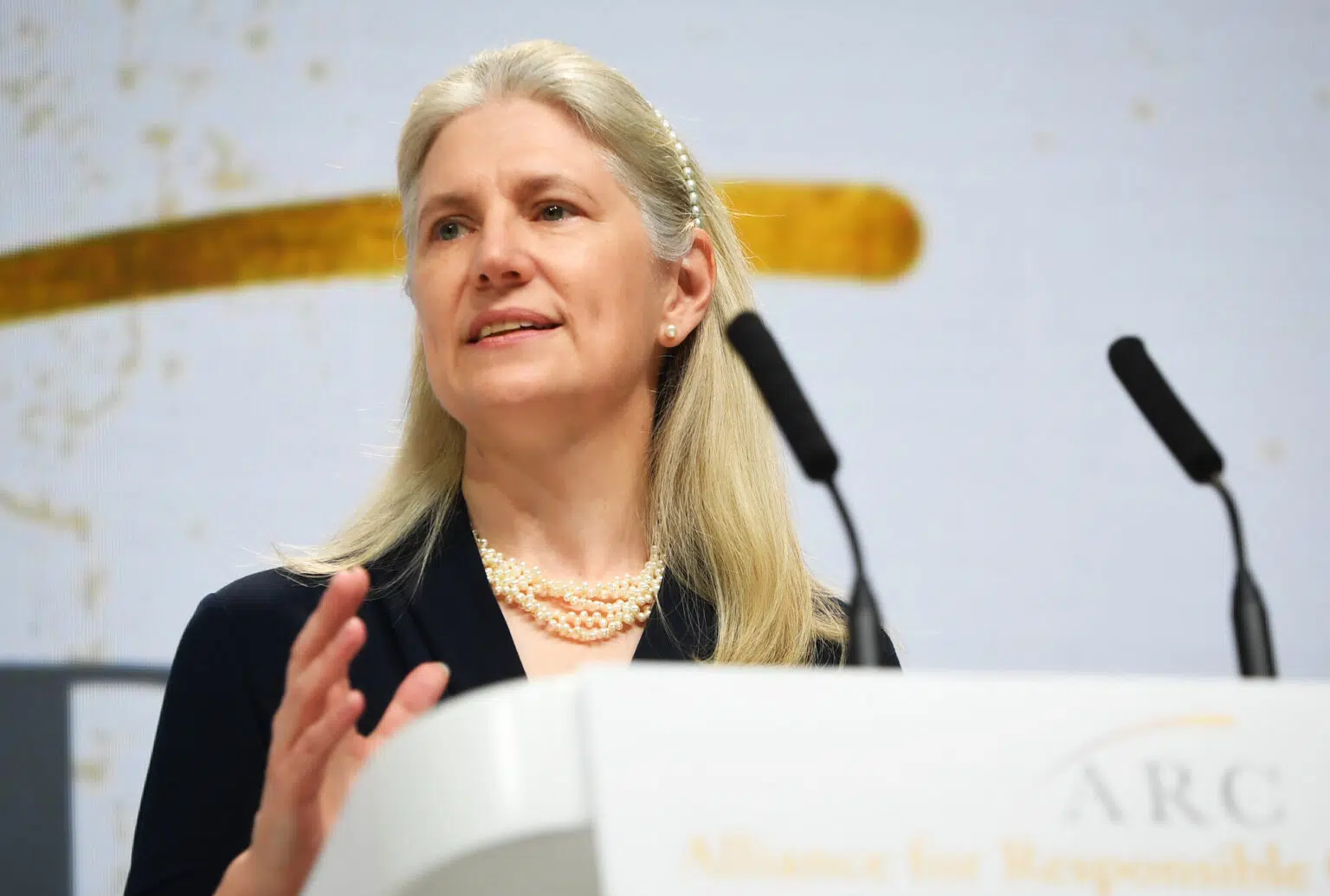
Philippa Stroud, chair of the government’s Low Pay Commission, and CEO of the Alliance for Responsible Citizenship. Credit: ARC (CC0 1.0 DEED)

Tory peer Philippa Stroud, who has close ties to the funders of GB News, has been elevated to a senior advisory role by the government.

A new government advisor on the minimum wage is the head of an international network of climate crisis deniers funded by the owners of GB News, DeSmog can reveal.

Philippa Stroud was appointed chair of the Low Pay Commission, a body reporting to Kemi Badenoch’s Department of Business and Trade, on 30 January. The government-appointed role pays £530 per day for three days of work per month (£19,114 per year).

The Conservative peer is the CEO of the Alliance for Responsible Citizenship (ARC), a new pressure group that shares its funders with GB News and is linked to some of the world’s most prominent climate crisis deniers, including psychologist Jordan Peterson. Stroud has been described by The Telegraph as “the most powerful right-winger you’ve never heard of”.

The appointment comes as senior Conservative Party figures continue to embrace anti-climate politics. On 6 February, former prime minister Liz Truss attacked “net zero zealots” at the launch of her new Popular Conservatism faction. 

Last month, Energy Security and Net Zero Secretary Clare Coutinho met with and praised fuel pricing lobbyist Howard Cox, a Reform UK candidate who wants to “scrap net zero” and claims that “man is not responsible for global warming”.

The government is also pushing ahead with legislation that would require the awarding of annual North Sea oil and gas licences. The Climate Change Committee, the independent body that advises the government on its net zero policies, warned on 30 January that mixed messages, including new fossil fuel projects, have damaged the UK’s international climate standing.

Last year was the first on record to see consistent global warming of 1.5C, according to the EU’s Copernicus Climate Change Service. 

DeSmog has previously revealed that the Conservative Party received £3.5 million in donations from fossil fuel interests and climate science deniers in 2022.

Stroud’s appointment also cements the relationship between the Conservative Party and GB News. On Monday, Prime Minister Rishi Sunak took part in an hour-long town hall event on GB News, following the example of several Conservative MPs who are regular guests and presenters on the right-wing broadcaster. 

Stroud’s ARC project is run by hedge fund manager Paul Marshall and the UAE-based Legatum Group, GB News’s principal backers. The Legatum Institute, a think tank funded by the Legatum Group, gave £50,000 to a faction of the Conservative Party in December. Before taking up her post at ARC, Stroud was CEO of the Legatum Institute. 

“Anti-science climate change denialism has become the secret handshake that ushers in the faithful and bars the door to unbelievers,” Jolyon Maugham, executive director of the Good Law Project, told DeSmog. “This is an appalling betrayal of the principles of sound government – and of our children who need us to be led by science and not by the financial interests of wealthy Tory donors.”

ARC, Stroud, the Legatum Group, and the Low Pay Commission were approached for comment. 

ARC and Legatum

Philippa Stroud was made a life peer by then prime minister David Cameron (now foreign secretary) in 2015, after failing to win a parliamentary seat in 2010. 

The Legatum Group, which has employed Stroud both directly and indirectly since 2016, is one of the largest shareholders in GB News, which frequently attacks climate science and policies. A DeSmog investigation found that one in three GB News hosts spread climate denial on air in 2022. 

GB News’s other major owner is British billionaire Paul Marshall, chairman and chief investment officer of the hedge fund Marshall Wace. DeSmog revealed that, as of June 2023, Marshall Wace owned shares worth $2.2 billion (£1.8 billion) in fossil fuel firms. This included a $213 million (£175.6 million) shareholding in the oil and gas supermajor Chevron, as well as stakes in Shell, Equinor, and 109 other fossil fuel companies. 

In her statement announcing the launch of ARC, Stroud took aim at climate policies, writing that “we risk driving policy interventions to address environmental concerns without having an honest conversation about the trade-offs for the poor at home or in developing and emerging nations”.

Poor and indigenous groups in developing countries will be hit hardest by the impacts of climate change, while those suffering from poverty at home have seen their energy bills soar as successive governments have failed to implement green reforms. 

ARC is fronted by Canadian author Jordan Peterson, who regularly posts about “climate apocalypse insanity” and “eco fascists” to his millions of online followers. Peterson has promoted fringe climate crisis deniers on his YouTube channel and, as revealed by DeSmog, plans to open a new online school also featuring several climate crisis deniers. 

ARC’s advisory board includes writers Bjorn Lomborg and Michael Shellenberger, both of whom have written books downplaying the threats posed by climate change, as well as Tony Abbott, the former prime minister of Australia and a director of the Global Warming Policy Foundation (GWPF), the UK’s principal climate science denial group. 

Late last year, speaking on the outskirts of ARC’s launch conference in London, Abbott claimed climate change has “nothing to do with mankind’s emissions”. ARC advisor Vivek Ramaswamy, who also spoke at the conference, has called climate change a “hoax” and has said that “real emergency isn’t climate change, it’s the man-made disaster of climate change policies that threaten US prosperity.”

The UN’s Intergovernmental Panel on Climate Change (IPCC), the world’s leading climate science body, states it is “unequivocal” that human influence has caused “unprecedented” global warming. 

Kemi Badenoch, whose department appointed Stroud to her new advisory role, also spoke at the ARC conference alongside Levelling Up Secretary Michael Gove. The pair were joined by a number of Conservative MPs. 

Stroud’s appointment to the government’s Low Pay Commission was first trailed by The Telegraph in December. A “Whitehall source” told the paper that Stroud was selected for the three-year post to block a possible left-wing appointment by a Labour government.

Carla Denyer, Green Party co-leader and its parliamentary candidate for Bristol Central said that Stroud’s appointment was “hardly the most appropriate” and that “the Conservatives seem set on placing their people across the quango world before the general election.”

Original article by Adam Barnett republished from DeSmog.

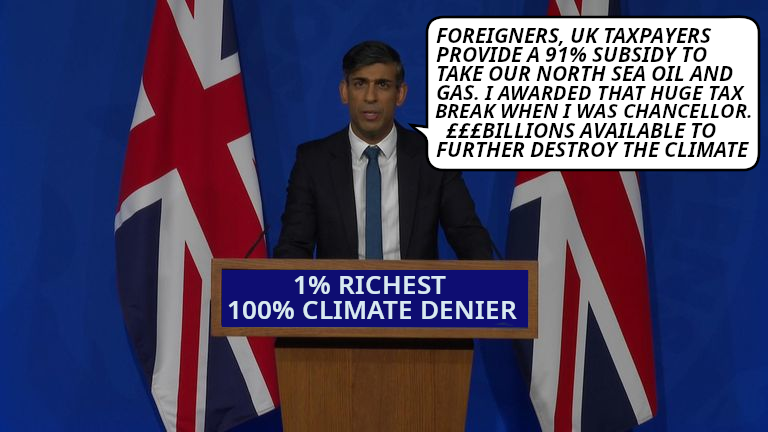
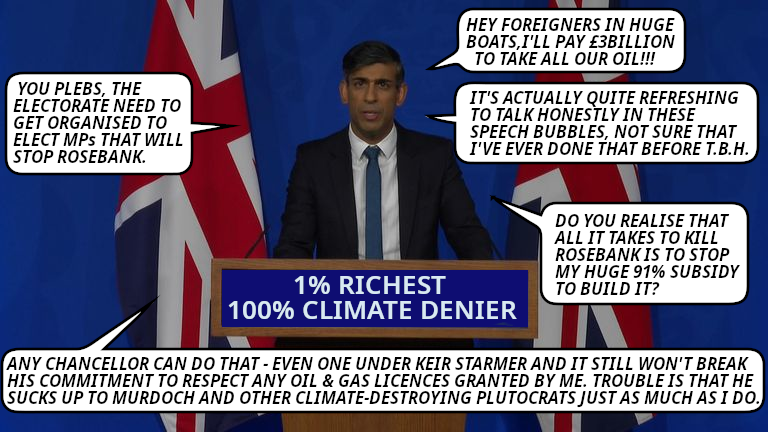
Rishi Sunak on stopping Rosebank says that any chancellor can stop his huge 91% subsidy to build Rosebank, that Keir Starmer is as bad as him for sucking up to Murdoch and other plutocrats and that we (the plebs) need to get organised to elect MPs that will stop Rosebank.
Continue ReadingUK Government’s New Low Pay Advisor Heads Climate Denial Network

Interview: Why global support for climate action is ‘systematically underestimated’

Spread the love

Original article by SIMON EVANS republished from Carbon Brief under a CC license

There is near-universal global public support for climate action, yet people systematically underestimate the commitment of their peers, according to a new study.

The research, published in Nature Climate Change, is based on a globally-representative sample of nearly 130,000 people in 125 countries.

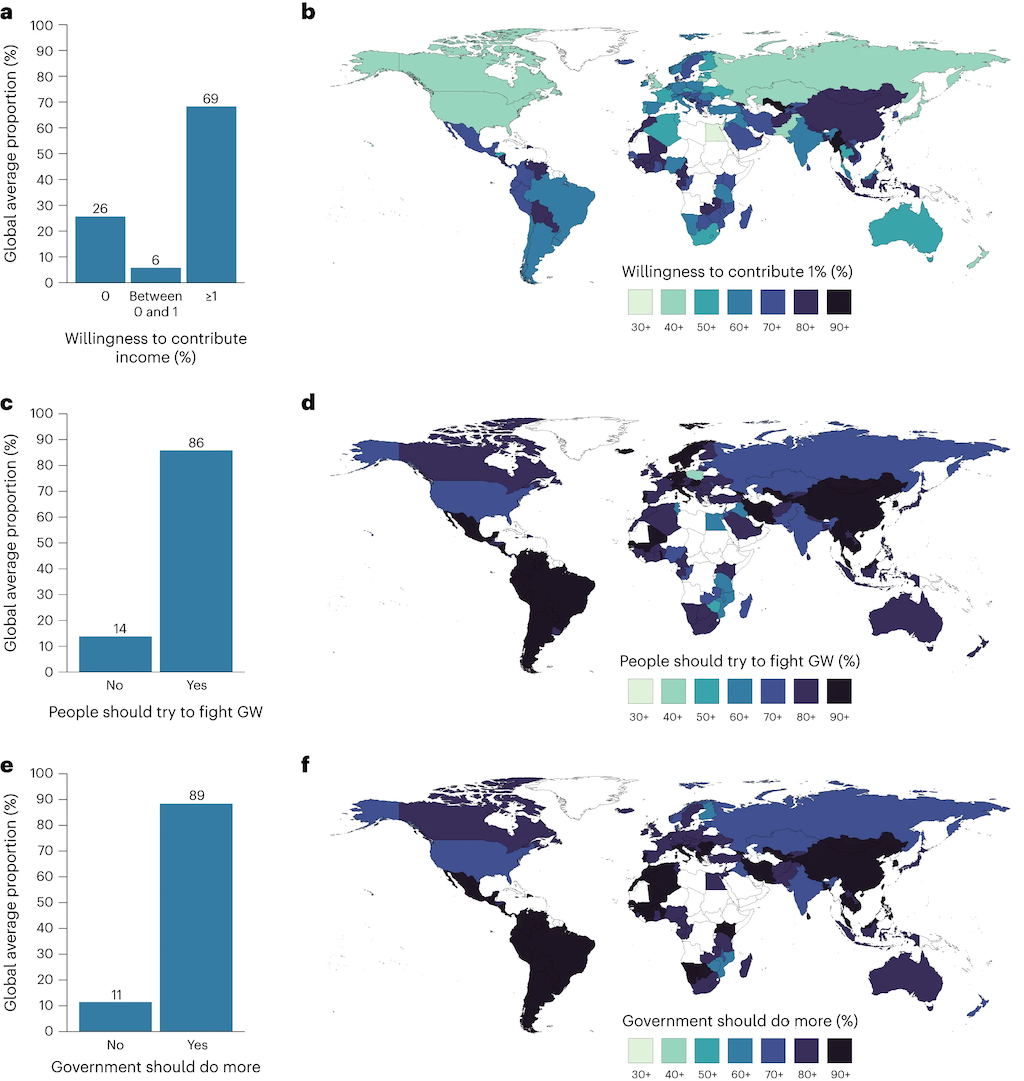
It finds that 86% of people “support pro-climate social norms” and 89% would like their governments to do more to tackle warming. Moreover, 69% say they would be willing to contribute 1% of their income to addressing climate change.

Yet respondents also “systematically underestimate the willingness of their fellow citizens to act”, according to the paper, creating a potentially challenging “perception gap”.

Carbon Brief interviewed the authors of the study to find out more. The questions and their answers are reproduced in full, below. An abridged version of the transcript was first published in DeBriefed, Carbon Brief’s weekly email newsletter. Sign up for free.

Carbon Brief: Your survey of nearly 130,000 people in 125 countries found “almost universal” support (86%) for climate action, with 89% wanting more from governments. Were you surprised? 

Prof Peter Andre, Prof Teodora Boneva, Prof Felix Chopra and Prof Armin Falk: While we did expect to find high levels of approval for climate action in some of the countries that we studied, we were indeed surprised to find that the percentage of the population approving of pro-climate social norms and demanding more political action from their national government is very high in almost all countries in our sample. In 119 of 125 countries, the proportion of individuals who state that people in their country “should try to fight global warming” exceeds two-thirds. In more than half the countries in our sample, the demand for more government action even exceeds 90%.

We were probably misled by the same pessimism that we found to be so widespread across the globe. 69% of the world’s population is willing to contribute 1% of their monthly income to fight global warming. A broad majority of people across the globe is willing to pay a personal cost. In fact, in 114 out of 125 countries, a majority of respondents is willing to fight climate change. However, in 110 out of 125 countries, the majority thinks that they are in the minority: When asked about how many people in their country are willing to contribute, most respondents think that less than half of their fellow citizens would be willing to contribute.

[The figure below, taken from the new paper, shows: (top left) the share of respondents willing to contribute none, up to 1% or at least 1% of their income to tackling climate change; (top right) the same result broken down by country; (middle panel) the share believing that “people should try to fight global warming”; (lower panel) the share wanting governments to do more.]

The figure, taken from the new paper, shows: (top left) the share of respondents willing to contribute none, up to 1% or at least 1% of their income to tackling climate change; (top right) the same result broken down by country; (middle panel) the share believing that “people should try to fight global warming”; (lower panel) the share wanting governments to do more.
Top panel: Willingness to contribute to climate action, %. Middle: Share agreeing that “people should try to fight global warming”. Bottom: Share wanting governments to do more. Each panel shows global (left) and national averages (right). Credit: Andre et al. (2024).

CB: A large majority (69%) said they would be willing to contribute 1% of their income to fight global warming. Do you think this would hold for specific policies, such as a carbon tax? 

PA, TB, FC and AF: The popular support for specific policies will depend on many details that we had to abstract from in the global survey. How effective is the policy? Is it perceived as fair? Who supports the policy in the public debate? So one cannot simply equate support in the survey with support for specific policy proposals. In a representative US sample, we do find that the general demand for more political action is strongly correlated with demand for specific climate policies, such as a carbon tax on fossil fuels, regulatory limits on the CO2 emissions of coal-fired plants, or funding for research on renewable energy. Overall, we think the important conclusion is the following: The large majority of people across the world expresses a general willingness to make costly contributions to fight climate change. This means that we can move the debate forward and focus on how we can best tap into this broad willingness to contribute to best tackle the challenges posed by climate change. 

CB: There has been a resurgence of anti-climate rhetoric from politicians and the media in many countries. Do you think public opinion has shifted since your survey in 2021-22? 

PA, TB, FC and AF: We do not detect any clear time trend within our samples from 2021 and 2022, but do not have data for the most recent months. If we were to speculate, we would not want to fall victim to the same pessimism one more time. We would expect that a large majority would still be in favor of climate action today, and this seems to be in line with more recent research. The year 2023 has been confirmed as the warmest calendar year in global temperature data records going back to 1850. In our study, we find that annual average temperatures strongly correlate with the proportion of people being willing to support climate action. Our best guess is that the support for climate action has increased rather than decreased in the last two years.

CB: You found stronger willingness to contribute among respondents in poorer, hotter and more vulnerable countries. Why do you think richer people are less willing to pay their way? 

PA, TB, FC and AF: Two potential explanations come to mind. First, richer countries are still strongly dependent on fossil fuels. The adaptation costs could therefore be perceived as relatively high and the required lifestyle changes as too drastic. At the same time, richer countries may be more resilient: A country’s GDP per capita reflects its economic capacity to cope with climate change. The most direct and immediate consequences are likely to be concentrated in more vulnerable countries, which have fewer resources to mitigate the negative consequences of the climate crisis. However, it’s important to stress the positive message: the support for climate action is large even in the richest countries in our sample. In the wealthiest quintile of countries, the average proportion of people willing to contribute 1% is 62%. 

CB: You found people systematically underestimated the willingness of their peers to contribute to climate action. Why do you think that is – and how could it be changed? 

PA, TB, FC and AF: The reasons for this perception gap are likely to be manifold. In the past, media and public discussions have given a lot of focus to the small number of climate change sceptics and have fallen prey to the efforts of special interest groups. Moreover, climate change is difficult to tackle. People might mistakenly infer that the slow progress in combating climate change is due to a widespread lack of personal commitment. 

In our view, correcting this perception gap is more important than understanding its origin. Humans are (what behavioral scientists call) “conditional cooperators”. They contribute more to the public good if they believe that others contribute as well. For this reason, pessimism about others’ contributions is harmful. It can constitute a critical obstacle for climate action. We thus conclude in the paper that, “[r]ather than echoing the concerns of a vocal minority that opposes any form of climate action, we need to effectively communicate that the vast majority of people around the world are willing to act against climate change and expect their national government to act”. We hope that our study sparks a debate on this topic, and increases awareness about the large global support for climate action.

Original article by SIMON EVANS republished from Carbon Brief under a CC license

Continue ReadingInterview: Why global support for climate action is ‘systematically underestimated’

Pro-Coal MP Appointed to Lead Influential Cross-Party Environment Group

Spread the love

Original article by Phoebe Cooke and Sam Bright republished from DeSmog.

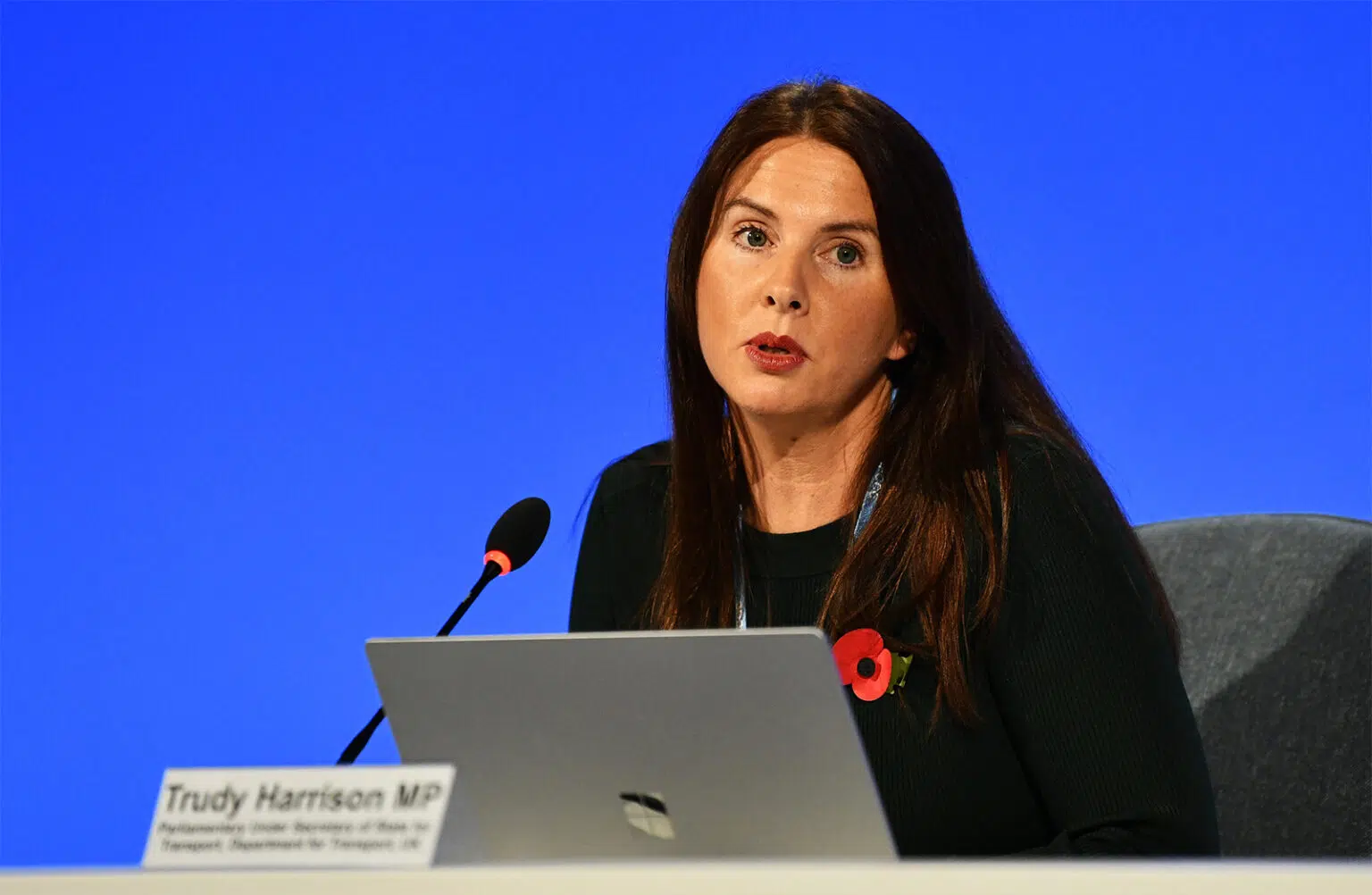
Conservative MP Trudy Harrison. Credit: Justin Goff/UK Government (CC BY-NC-ND 2.0)

Conservatives accused of a “stitch up” as Trudy Harrison replaces Green Tory Chris Skidmore.

A Tory MP who backed the UK’s first new coal mine in over 30 years has been elected to chair the all-party parliamentary group (APPG) on environment.

Desk-banging and jeering were heard in the House of Commons committee room on Wednesday night as lawmakers voted in Trudy Harrison, who represents Copeland in West Cumbria – where the proposed mine in Whitehaven is located. 

Harrison replaces former Conservative MP Chris Skidmore, who resigned from the Commons in January in protest at the government’s move to issue new North Sea Oil and gas licences.

The Copeland MP’s selection was welcomed on social media by the all-party group, which tweeted: “We look forward to working with Trudy as we continue to provide an ambitious, cross-party voice for climate and nature in Parliament.”

Around 40 MPs and peers elected Harrison in the raucous voting session, which was open to all members of the Commons and Lords. 

DeSmog understands that a large number of Conservatives turned out to sway the vote in Harrison’s favour, with several people in the room reporting a frenetic atmosphere. “Hordes of Tories” were said to outnumber Labour MPs, many of whom were running late and barred from entry.

“They clearly felt it a point of principle that they keep control of the chair, regardless who the candidate was – the whole thing was a stitch-up,” a source said, adding: “I think if the public saw how things really work here they would be horrified.”

All-party parliamentary groups have no formal role in Parliament but can often act as an influential forum for debate, and also produce reports, and make policy recommendations. The chair is a pivotal role, tasked with providing direction to the secretariat – the body that formally runs the APPG – as well as leading on the execution of its agenda. 

The appointment of a pro-coal MP in this role comes after a week of shattered climate pledges from both main Westminster parties. On Thursday, the Labour Party announced it would scrap its commitment to spend £28 billion a year on green investments, days after it was reported the Conservatives are poised to ditch a mechanism that could slash emissions from domestic heating.

In January, DeSmog revealed energy secretary Claire Coutinho had accepted thousands of pounds from Michael Hintze, one of the early backers of the UK’s main climate science denial group, the Global Warming Policy Foundation. A member of the group’s board was also appointed to a parliamentary committee on climate change.

“Slowly, slowly, fossil fuel interests are taking over our institutions,” Jolyon Maugham of the Good Law Project told DeSmog. 

Alice Harrison, head of fossil fuels campaigning at Global Witness, said: “it seems the new chair of the All-Party Parliamentary Group on the Environment is also a big fan of coal. The Conservatives want to take us back to the 19th century.”

Coal mine controversy

Harrison, who served as an environment minister until November last year, advocated passionately for the proposed mine in Whitehaven as it became a political flashpoint in discussions over the UK’s commitment to net zero. 

At the 2021 planning inquiry she described the coal as an “environmentally friendly” domestic source for steel. She characterised opposition to the mine as “simply gesture politics”, adding that the coal would help “build the technologies powering us to net zero”.

Levelling up Secretary Michael Gove finally approved plans for the mine in 2022, but it remains deeply controversial. 

Coal is the most polluting fossil fuel, releasing more carbon dioxide than oil or gas when burnt. It also produces toxic elements like mercury, arsenic and soot, which contribute to air pollution. If it went ahead, the mine would emit nine million tonnes of carbon dioxide and 15,000 tonnes of methane a year.

Despite the green light, the mine still only has four percent of the funding required to operate, according to campaigners. A number of legal challenges are also pending.

Scenarios laid out by the Intergovernmental Panel on Climate Change (IPCC) make it clear that global coal use has to collapse to limit global heating to 1.5 degrees and avoid the most devastating impacts of climate change. This week, it was reported that global heating had for the first time  averaged more than this temperature over a 12-month period.

Harrison, like other supporters of the mine in Whitehaven, has argued that the “coking” coal from this mine is suitable for use by the UK steel industry. But industry bosses have said that the Cumbrian coal is too high in sulphur, which rules it out for use  in British and European steelworks. 

West Cumbria Mining, the company behind the project, claims the project will create around 500 jobs. However, Westmorland and Lonsdale Liberal Democrat MP Tim Farron said the government was giving the false hope of jobs for political reasons. The jobs, he said, would be short term because the mine’s business case “didn’t stack up”.

Anne Harris from Coal Action Network told DeSmog: “This appointment makes a mockery of the Environment APPG and shows that this government can never be trusted with this enormous crisis facing humanity.

“In supporting a new coal mine in Cumbria, Harrison is in a minority, and out of touch with the full impacts of climate change and how fossil fuels cause it. It’s a lie to say the proposed coal mine in West Cumbria would be anything other than a climate disaster.”

The all-party parliamentary group exists to “strengthen the influence of parliamentarians on public policy and public debate on the environment, and to assist parliamentarians by improving their access to specialist information.”

Prior to its latest meeting, the Environment APPG had 25 officers (MPs and peers) who participated in its work. These included Green Party MP Caroline Lucas, Shadow Minister for Energy Security Alan Whitehead, Liberal Democrat energy and climate spokesperson Wera Hobhouse, and former Labour environment minister Barry Gardiner. 

Harrison, and the Department for Energy Security and Net Zero did not respond to requests for comment. The APPG for Environment declined to comment.

Original article by Phoebe Cooke and Sam Bright republished from DeSmog.

Rishi Sunak offers huge fossil fuel subsidies to develop fossil fuel extraction in UK.
Continue ReadingPro-Coal MP Appointed to Lead Influential Cross-Party Environment Group

‘We will not rest until we put an end to this monstrosity’

Spread the love

https://morningstaronline.co.uk/article/we-will-not-rest-until-we-put-an-end-to-this-monstrosity

People during a pro-Palestine protest in Whitehall, central London, to call for a ceasefire in the conflict between Israel and Hamas, February 12, 2024

Palestine supporters to mobilise worldwide in call for a ceasefire as Israel mounts attack on Gaza’s last refuge

PALESTINE supporters in Britain and worldwide are expected to mobilise in huge numbers in a Global Day of Action on Saturday as Israel mounts its attack on the Gazan people’s last refuge, Rafah.

With 1.4 million people, mainly refugees, crammed into a city which is customarily home to less than 200,000, the feared effects of the Israeli onslaught have provoked mounting anger and increased calls for a ceasefire.

In Parliament next week, a Commons motion from the Scottish National Party calling for a ceasefire is expected to polarise MPs’ opinions and test Sir Keir Starmer’s authority over his own backbenchers.

Israel’s embassy in London will be among the targets for protests on Saturday for the first time since the weekly demonstrations began in October.

Thousands of people are expected to lobby Scottish Labour’s annual conference in Glasgow to demand that the party call for a ceasefire.

The SNP’s Commons motion calling for a ceasefire is expected to be heard on Wednesday, a week before the Rochdale by-election which has seen Labour dump its own candidate over his comments on Israel’s war on Gaza.

The motion “recognises that the only way to stop the slaughter of innocent civilians is to press for a ceasefire now.”

https://morningstaronline.co.uk/article/we-will-not-rest-until-we-put-an-end-to-this-monstrosity

Continue Reading‘We will not rest until we put an end to this monstrosity’