- Post author:dizzy
- Post published:9 March 2025
- Post category:austerity/Austerity 2/Cost of Living crisis/crap pretend Labour/Keir Starmer/Labour Party/Neo-liberalism/politics/Rachel Reeves
- Post comments:0 Comments
‘Categorically wrong’: Scientists condemn comments by Reform’s Richard Tice that man-made climate change is ‘garbage’
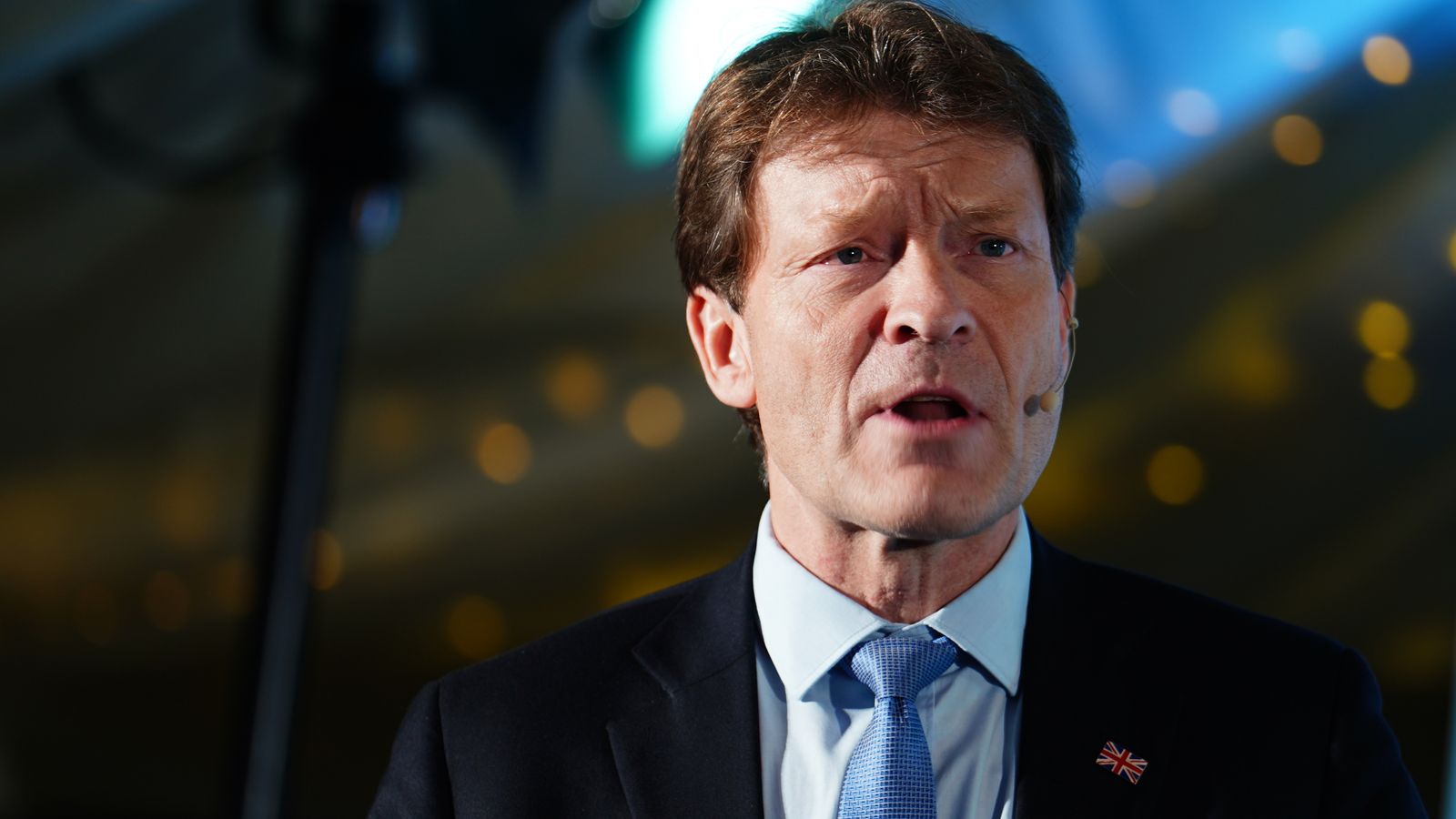
Richard Tice also said the scientists who agreed with him were “not a minority”, though his view is contrary to major consensus.
Scientists have spoken out after Reform UK’s deputy leader dismissed scientific consensus on man-made climate as “garbage”.
Richard Tice MP told Sky’s political correspondent Ali Fortescue: “There’s no evidence that man-made CO2 is going to change climate change. Given that it’s gone on for millions of years, it will go on for millions of years.”
Fortescue challenged him with the findings of more than 200 international scientists that humans activities like burning fossil fuels are to blame for the recent hotter climate.
Human influence is “unequivocal”, said the report, which was signed off by all governments, including fossil-fuel-rich Russia, USA and Saudi Arabia.
“No, that’s absolute garbage,” Mr Tice said. “The climate changed for millions of years before man-made CO2.”
Dr George Adamson from King’s College London said the idea that Richard Tice had “discovered something that climate scientists don’t know about is of course preposterous”.
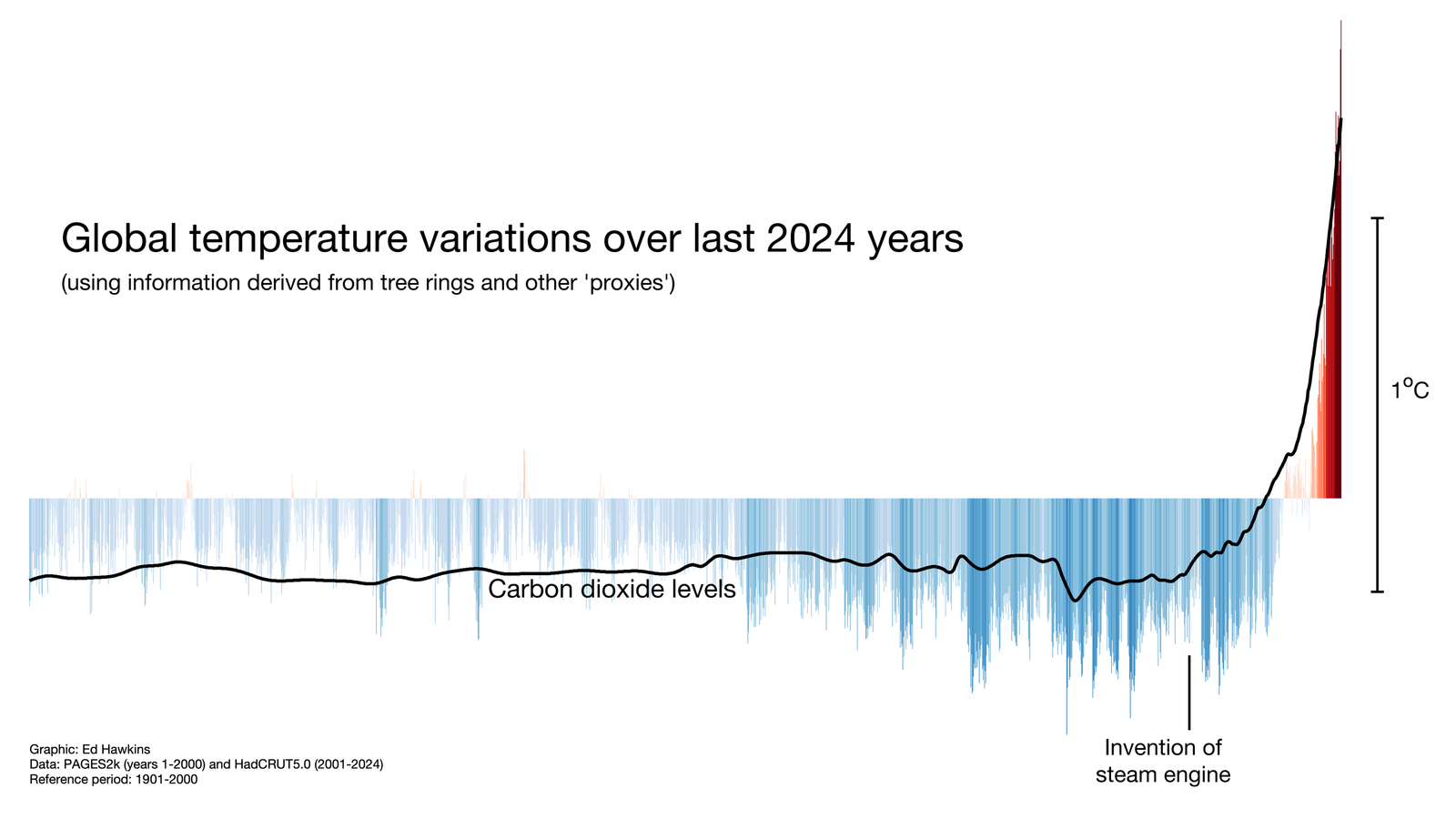
The climate did change for years before humans began burning fossil fuels at scale.
But what alarms scientists now is how quickly it has changed in the last few decades – too fast for nature or societies to keep up.
Many came out today to rebut Mr Tice’s claims.
…

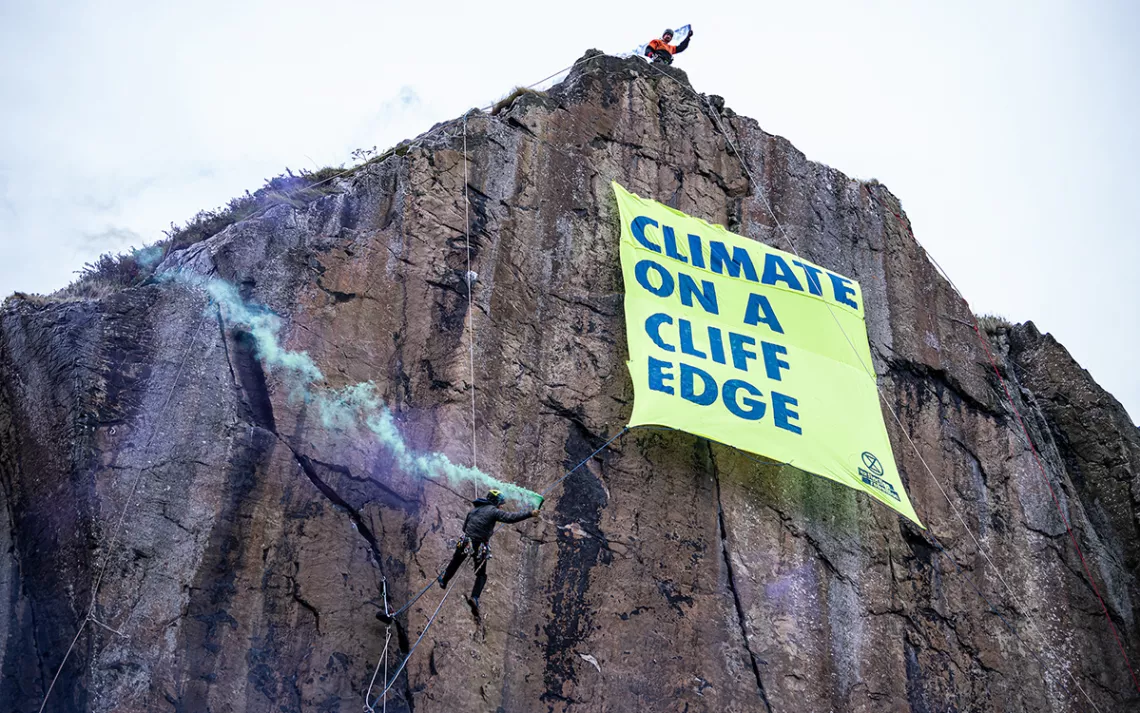
BP has been rowing back on renewables for years. So why was it helped by ‘net zero’ banks?
Original article by Rob Soutar republished from TBIJ under a Creative Commons Attribution-NonCommercial-NoDerivs 3.0 Unported License.

Oil companies’ move to double down on fossil fuels should come as no surprise to anyone – not least its financers
Last week, BP’s CEO Murray Auchincloss said his company had gone “too far, too fast” in its plan to transition away from fossil fuels. BP still says it aims to be a net zero company by 2050 but it will now take a different path to the one it set out in 2021 … doubling down on fossil fuels in the meantime.
Perhaps the move shouldn’t have come as a surprise. After all, BP is a commercial enterprise with a responsibility to deliver returns for its shareholders. And since Russia’s invasion of Ukraine, which led many countries to prioritise energy security over long-term sustainability, oil and gas have remained reliably lucrative.
What’s more, the company made a similar announcement two years ago, saying it would be ramping up its investments in oil and gas.
But if BP had indicated such a significant change in direction so long ago, how did it continue to raise billions from banks that said they’d only do business with “net zero” companies?
Milestone moment?
At the 2021 climate talks in Glasgow, a number of the world’s leading banks made landmark pledges: to slash the footprint of their own operations and, crucially, the emissions of their lending and investment portfolios.
It was hailed as a watershed moment. In theory, the vast stockpiles of money that had supported fossil fuel expansion would now be cut off for companies without net zero ambitions. The same year, the International Energy Agency warned that there must be no new oil and gas projects if the world is to reach net zero by 2050.

Yet throughout 2023, after it said it would invest significantly more in fossil fuels, BP raised more than $5bn with help from “net zero” banks including NatWest, HSBC and Barclays.
The deals illustrate a core problem with the banks’ net zero commitments. A key condition for companies they agreed to do business with was the existence of a “credible” transition plan. But it wasn’t always clear how the banks were assessing that credibility.
Even before Auchincloss’ announcement last week, the world-leading Grantham Research Institute assessed the credibility of oil and gas companies’ transition plans – and found that BP’s fell well short.
That lack of clarity on what was “credible” left the banks with enough wriggle room to maintain relationships with huge fossil fuel companies.
Recommended Articles
 JPMorgan investing ‘sustainable’ funds in mining giant Glencore
- Abramovich may owe UK £1bn in unpaid tax
- ‘Turning a blind eye’: Elizabeth Warren blasts Federal Reserve for letting JPMorgan ‘cook the books’


And those relationships have proved profitable. Since May 2021, global banks that have committed to net zero have poured almost $1 trillion into companies pursuing expansion of oil and gas projects that would push the world beyond its survivable limits.
Looking long-term
The policy environment has changed since Glasgow, when both fossil fuel companies and banks launched net zero targets. BP is not the only company of its kind to have “reset” its core business to oil and gas. But critics say that recent moves to boost fossil fuels and ensure quick returns are alarmingly short-sighted.
In the UK, the costs of getting to net zero are cheaper than was anticipated just five years ago, according to a recent report by the Climate Change Committee. And in a low-carbon economy, fossil fuels could nosedive – leaving the oil and gas fields currently in development as “stranded assets” with little value.
But crucially, the banks face considerable risks too. Their previous promises to work only with clients committed to the transition were made for a reason: they were feeling the pressure from climate-conscious investors.
If the banks are found to have broken these promises, they could well be held to account by regulators – not to mention see their credibility shattered in the eyes of their investors.
Reporter: Rob Soutar
Deputy editor: Chrissie Giles
Editor: Franz Wild
Fact checker: Ero Parksakoulaki
Production editor: Alex Hess
TBIJ has a number of funders, a full list of which can be found here. None of our funders have any influence over editorial decisions or output.
Original article by Rob Soutar republished from TBIJ under a Creative Commons Attribution-NonCommercial-NoDerivs 3.0 Unported License. Corrected a reference to “oil company’s” in the subheading in this version.
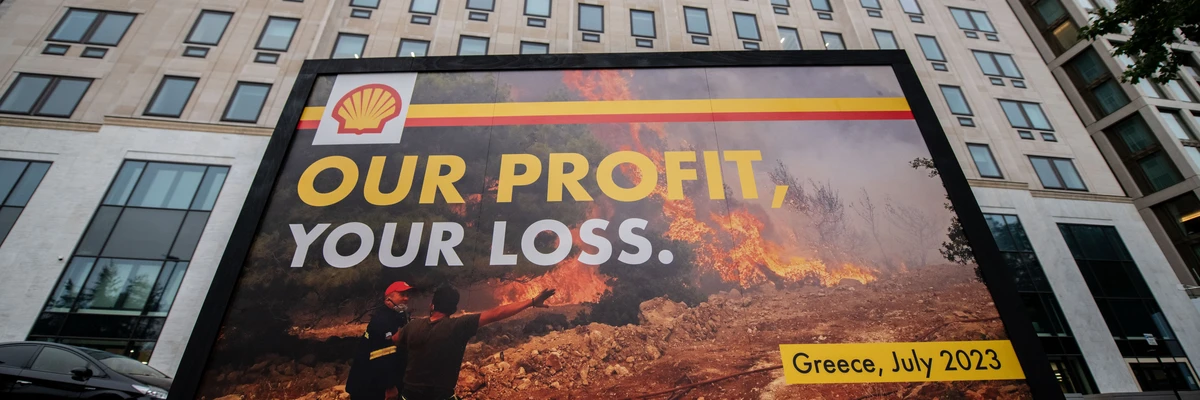

Trump’s scrapping of corporate transparency will strengthen dictators
Original article by Eleanor Rose republished from TBIJ under a Creative Commons Attribution-NonCommercial-NoDerivs 3.0 Unported License.

The White House’s latest move doesn’t just encourage financial crime in the US – it encourages the acceptance of it everywhere else
Another week, another startling development from Donald Trump’s White House. On Sunday, the US Treasury said it will halt enforcement of the Corporate Transparency Act (CTA), a federal law that requires certain companies to declare their owners’ identities.
Scott Bessent, secretary of the Treasury, described the move as “a victory for common sense” that would “unleash American prosperity by reining in burdensome regulations”.
Unleashing prosperity is a nice goal, but the White House’s chosen method will come as a bombshell for anyone who believes in transparency or accountability – both in the US and around the world.
Knowing who owns a company isn’t just a matter of corporate admin. It can serve as a vital tool against dictatorships, which build their power on global networks of financial secrecy. It’s key to tackling money-laundering and fraud. Trump’s actions pull the rug out from international efforts to reveal this hidden world. Autocrats and major criminals around the world will be celebrating.

The CTA was a key plank in Biden’s plans to counter corruption. Passed by Congress in 2021 and brought into force in 2024, it aimed to address the fact that businesses created in the US weren’t previously obliged to disclose the names of their shareholders or the people that ultimately control them.
Speaking in 2022, Himamauli Das of the Treasury’s Financial Crimes Enforcement Network said the CTA would “play an important role in protecting American taxpayers and businesses who play by the rules”.
He added: “It has been far too easy for criminals, Russian oligarchs and other bad actors to fund their illicit activity by hiding and moving money through anonymous shell companies and other corporate structures right here in the United States.”
Investigations from our Enablers team‘Butcher of Hama’: Assad’s uncle used Guernsey fund manager to stash millions looted from SyriaIllegal donations: how does dark money get into UK politics?HMRC fines zero ‘enablers’ of offshore tax evasion in five years
Since the CTA has been in force – and despite some challenges in district courts – that sort of anonymity has been a lot harder to come by. Beneficial ownership details have had to be filed by most domestic corporations and Limited Liability Companies (though not non-profits or publicly traded companies that meet certain criteria). Non-compliance has been punishable with a maximum fine of $10,000 and up to two years in prison.
That progress has now been undone. Once a leading champion of corporate transparency, the US is now basically saying that such measures are harmful red tape.
And the news could have implications beyond US shores. The UK is currently trying to impress the need for transparency requirements on its crown dependencies and overseas territories (CDOTs). Stephen Doughty MP last week said the UK government expects overseas territories to bring in publicly accessible registers this year.
Our Enablers team has spent years reporting on how these places facilitate serious financial wrongdoing: the British Virgin Islands, for instance, have been central to arrangements that helped Roman Abramovich avoid huge amounts of UK tax, funnel half a billion dollars to a now-sanctioned oligarch and bankroll a Dutch football club in secret.
But the recent calls for transparency have not been universally popular with the CDOTs. There’s been some disagreement about what exactly it means and how it should work, as well as some outright pushback.
The BVI, for instance, has proposed a registry that would grant access to a limited amount of information and to a limited number of parties. Which means it wouldn’t be all that transparent.
It’s in situations like this where the White House’s latest move feels especially pertinent. Corruption robs ordinary taxpayers and undermines global security. And the fight for financial transparency – to stop the world’s oligarchs, organised criminals and kleptocrats from stashing their wealth – is one that urgently needs international momentum.
Not only does Trump’s intervention encourage fraudsters and money-launderers to do their business on US turf – it also sends a message of apathy towards financial crime that will be heard around the world.
Reporter: Eleanor Rose
Deputy editor: Katie Mark
Editor: Franz Wild
Fact checker: Ero Parksakoulaki
Production editor: Alex Hess
TBIJ has a number of funders, a full list of which can be found here. None of our funders have any influence over editorial decisions or output.
Original article by Eleanor Rose republished from TBIJ under a Creative Commons Attribution-NonCommercial-NoDerivs 3.0 Unported License.

Fears of starvation in Gaza as Israel continues to blockade humanitarian aid

FEARS grew today that Palestine’s population may once again be on the verge of starvation following a week-long Israeli blockade.
Israel imposed the siege to try to force Hamas to accept a different ceasefire deal to the one agreed in January.
It blocked the entry of aid shipments to Gaza on Sunday, hours after the ceasefire deal’s first phase had expired, sparking fears of hunger and more hardships during the holy month of Ramadan, which began over the weekend.
Hamas spokesman Abdel-Latif al-Qanou said Israel is pursuing “a policy of starvation and collective punishment” in Gaza by keeping land crossings closed and preventing the entry of crucial aid.
The siege is a “flagrant violation of international and humanitarian laws and a war crime that the world must stop and hold its perpetrators accountable,” he said.
“We renew our call to the international community, all human rights and humanitarian institutions and all free people of the world to force the zionist occupation to open the crossings, bring in relief and medical aid – and end the suffering of our people.”
…
