Original article by Josephine Moulds republished from TBIJ under a Creative Commons Attribution-NonCommercial-NoDerivs 3.0 Unported License.

The online game is targeted at pupils as young as seven
Equinor, the company looking to develop the Rosebank oil field in the North Sea, has funded a computer game aimed at UK school children, promoting the idea that fossil fuels are part of a green energy mix.
In an unusually frank admission of lobbying children, a web page promoting the game stated that it “aligns with our work to build future talent pipelines and secure permission to operate at a time of sensitivity around fossil fuels, particularly in light of . . . the Rosebank development”. The story was first revealed by the Norwegian news publication E24.
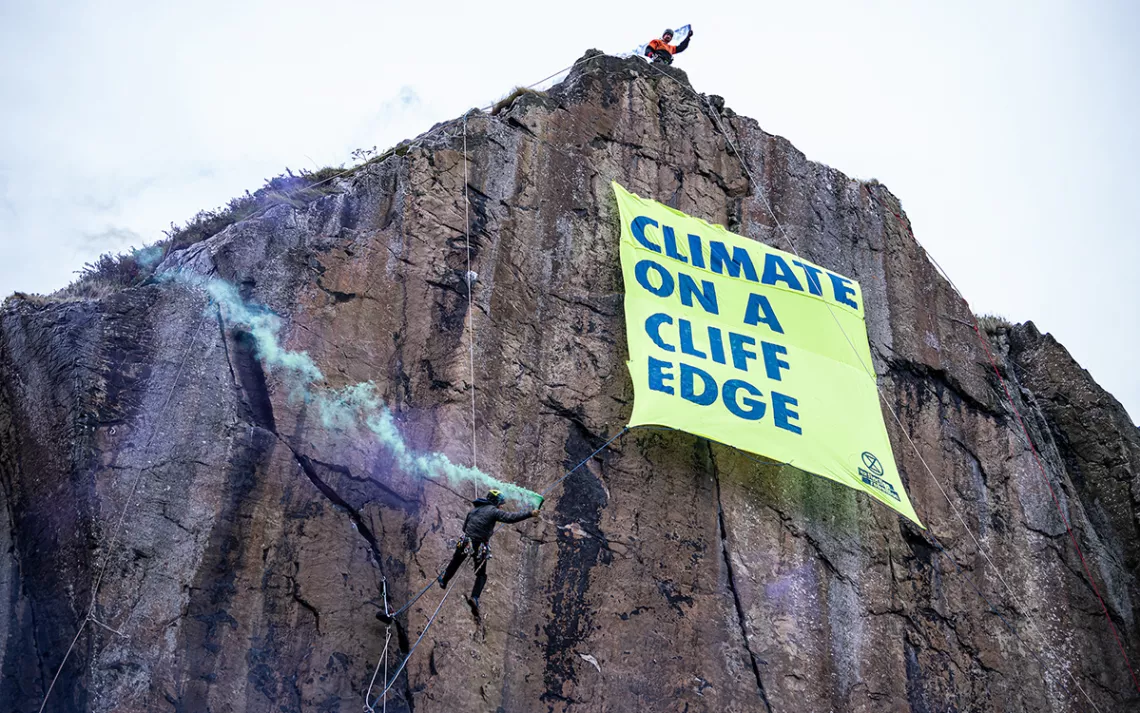
Rosebank – the UK’s largest untapped oilfield – was greenlit by the Conservative government in 2023, prompting condemnation from climate campaigners. That decision was ruled unlawful by the courts in January this year because it had not taken into account the carbon emissions created by burning any oil and gas produced. Equinor, Norway’s state energy company, continues preparation work on the site under its joint venture with Shell. [*1]
 The game lets players choose between renewable energy or fossil fuels to power their city.
Marketing agency We Are Futures, which describes itself as “the go-to partner for building advocacy for brands amongst young people”, developed Equinor’s schools-based, curriculum-linked education programme, Wonderverse. It also received support from the Association for Science Education (ASE), a UK membership organisation for science teachers and technicians.
Read more: £4bn in UK public pensions funding North Sea oil giants drilling new wellsBP has been rowing back on renewables for years. So why was it helped by ‘net zero’ banks?Allianz’s board says it’s time to save the planet. They can start with their own investments
The game was promoted on ASE’s School Science website, which also stated: “With over two-thirds of teens believing the oil and gas industry causes more problems than it solves, Wonderverse helps lay misconceptions to rest by exploring some of the challenges involved in a just energy transition.”
The ASE web page, which has been taken down since the story first broke, said the programme, aimed at 7–14 year olds, is “designed to spark wonder for science and the future of energy”. It includes a game, in which players attempt to build a city that survives until the year 2050, and in-school education materials to “showcase how modern cities use energy resources and the ways the energy transition can be managed”.
While players are encouraged to invest in research into renewable energy, TBIJ successfully ran a city powered by oil and some renewables until 2050. Meanwhile, scientists say there must be huge declines in the use of coal, oil and gas to reach net zero emissions by 2050 and avoid further catastrophic climate change.
 Screenshot from Game Over screen of Energy Town
Charlotte Howell, who leads the climate campaign group Parents for Future, was shocked that Equinor was behind an energy-themed game aimed at UK schoolchildren. She told E24: “We want to know how this can be allowed. I’m horrified that Equinor, as a partly state-owned company, is working against UK ambitions on climate. They are lobbying directly against our children.”
Tessa Khan, executive director at climate campaign group Uplift, said it was “morally indefensible” to pretend that the UK needed Rosebank for energy security when in reality it would accelerate the climate crisis.
Khan told TBIJ: “It’s one thing for Equinor to mislead the public about the benefits of new oil fields like Rosebank, but it is quite another to target children with blatant fossil fuel propaganda disguised as ‘education’. This so-called ‘computer game’ is not about learning – it’s about teaching the next generation to see oil and gas as inevitable, when the climate science could not be clearer that we need to leave new fossil fuels in the ground.”
Equinor told TBIJ it was not aware of the promotional material associated with the game until notified by media, and denied that rolling out the school game is part of a lobbying campaign to promote developing Rosebank.
A spokesperson said: “The overall intention and aim for Wonderverse and Energy Town is to provide schools and teachers with a suite of high-quality resources to help students learn more about where energy comes from, whilst building … the employability skills needed to successfully enter employment. The learning resources have been awarded a green tick by the Association for Science Education, assuring the programme’s quality for use in schools.” They also said the game was developed using data from the International Energy Agency.
ASE’s School Science website provides free online science resources for teachers and students. The site was sponsored by partners including ExxonMobil, which ASE describes as “the world’s leading nongovernmental energy company aiming to meet world energy demand in an economically, environmentally and socially responsible manner”. ExxonMobil is the world’s third most polluting company, according to Carbon Majors, a database of historical fossil fuel production data.
A spokesperson for ASE said the promotional text was provided via briefing materials from We Are Futures. They said the School Science website was no longer actively maintained and will be decommissioned, and that ExxonMobil is no longer a partner of ASE.
We Are Futures, which also works for the UK government and BP, did not respond to a request for comment.
After the court ruling in January, Equinor is set to reapply to the UK government for approval to develop Rosebank. This time it must include information about the emissions that will be produced by burning the oil extracted from Rosebank. According to Uplift, those emissions could be more than the combined annual CO2 emissions of all 28 lowest-income countries in the world, including Uganda, Ethiopia, and Mozambique. Equinor is reportedly “confident” that the project will go ahead and expects it to start up in 2026 or 2027.
Khan said: “If Equinor is serious about supporting the next generation, it should start by walking away from Rosebank and using its power and influence to focus solely on renewable energy. That’s the only way to really protect our children’s future.”
Reporter: Josephine Moulds
Environment editor: Rob Soutar
Deputy editor: Chrissie Giles
Editor: Franz Wild
Fact checker: Frankie Goodway
Production editor: Sasha Baker
TBIJ has a number of funders, a full list of which can be found here. None of our funders have any influence over editorial decisions or output.
Original article by Josephine Moulds republished from TBIJ under a Creative Commons Attribution-NonCommercial-NoDerivs 3.0 Unported License.
*1 by dizzy. Equinor is attempting to develop the Rosebank oil field in partnership with Ithaca Energy, not Shell.


Leave a Reply