Green party leader Zack Polanski (Green Party of England and Wales). Image: Bristol Green Party Creative Commons CC0 1.0 Universal Public Domain Dedication.
Responding to news that Nigel Farage’s Reform UK party has received a £9 million donation from a single donor, Green Party leader Zack Polanski said
“Reform hoovering up vast sums of private donations isn’t a sign of political strength, but a sign of a weakness in the foundations of our democracy. When a single party can be bankrolled by a handful of wealthy individuals, it drowns out the voices of ordinary people and tilts the entire system towards the interests of those elites.
“This is exactly why we need a cap on political donations. Democracy should never be for sale. Every party should compete on ideas, not on the size of their donor spreadsheet.
“While Reform pockets eye-watering cheques, Greens are building a movement powered and funded by people through thousands of new members.
“When we win elections, it will be because of the tens of thousands of people volunteered, not the people who donated tens of thousands. If we want a politics that serves the public, not billionaire backers, then capping donations is essential. Let’s end the influence of big money and put democracy back where it belongs: in the hands of voters.”
Nigel Farage reminds you that he’s the man that brought you Brexit and asks what could possibly go wrong.
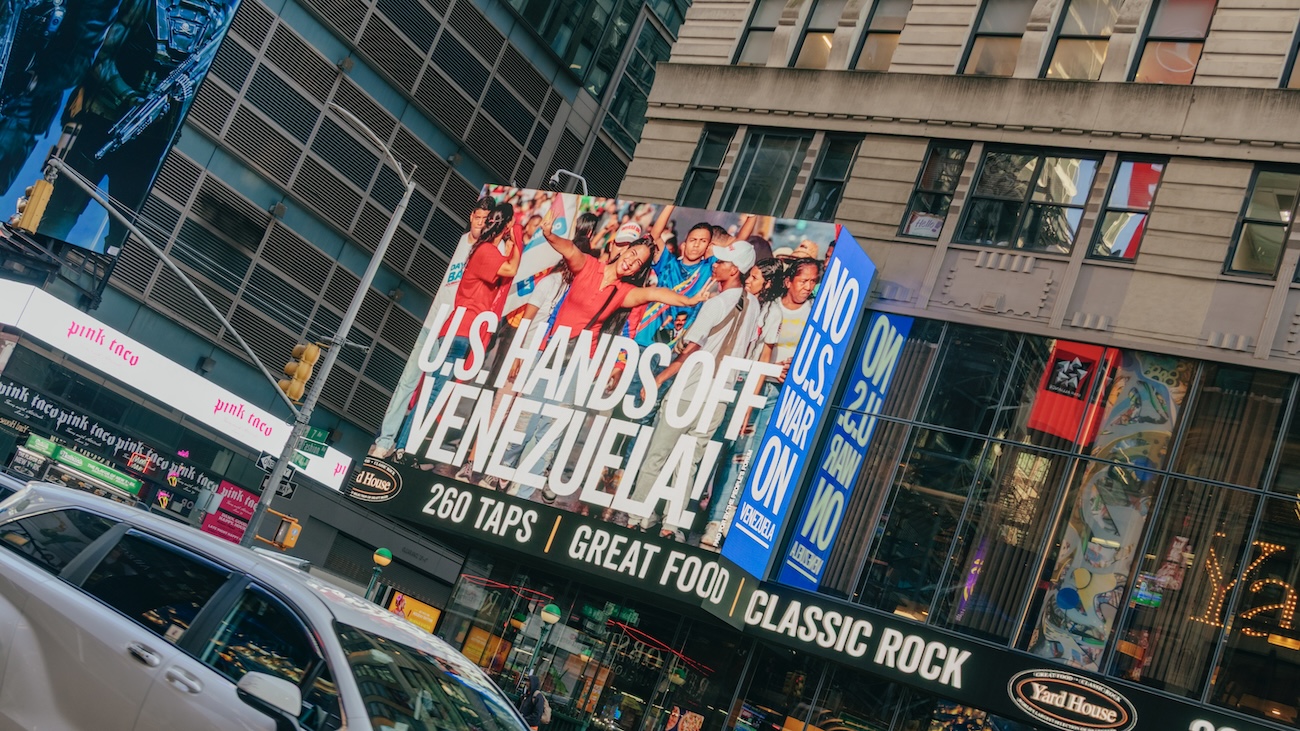
Billboard up in New York City against the US threats against Venezuela. Photo: The People’s Forum
As Trump continues to lodge threats against the Bolivarian Republic, US Congress and grassroots movements mobilize to stop a new war.
The US government has continued to accelerate its drive to war with Venezuela. While rumors circulate about phone calls and possible talks between US President Donald Trump and Venezuelan President Nicolás Maduro, in tandem, the US head of state has continued to launch bizarre and illegal threats and accusations against the South American nation. On Saturday, November 29, Trump unilaterally declared that Venezuelan airspace was closed, despite international law stipulating that only Venezuela has authority over the airspace above its territory and that air traffic above Venezuela has since continued.
While Trump, his Secretary of State Marco Rubio, and the Secretary of War Pete Hegseth have claimed land strikes and “action” against Venezuela could begin imminently and that the country should be on alert, as of now, only the aerial attacks on vessels in the Caribbean have continued. To date, the US missile strikes on boats in the Caribbean have killed at least 83 people. Washington claims they were trafficking drugs, without providing evidence.
Despite Trump’s brazen appetite for war, it appears that public opinion in the United States is against Trump’s escalation against Venezuela. A recent poll conducted by CBS News/YouGOV found that 70% of people in the US would oppose the US taking military action in Venezuela. At the same time, some, albeit limited, bipartisan initiatives have been taken in Congress to attempt to use congressional authority to block Trump from taking military action. From the legislature down to the grassroots movements, opposition to a US war on the Caribbean nation is growing.
Pressure mounts in Congress against Trump’s threats of war
As the Trump cabinet prepares for fresh international law violations, they are already feeling the backlash of ones already committed. Committees in US Congress have reportedly launched investigations into US Secretary of Defense Pete Hegseth for crimes related to missile strikes on boats in the Caribbean, in which the order was reportedly to “kill everybody”.
“These are serious charges, and that’s the reason we’re going to have special oversight,” said Sen. Roger Wicker of Mississippi, the Republican chair of the Senate Armed Services Committee, as reported by PBS.
The mounting scrutiny follows a Washington Post report that details Hegseth’s direction to strike a bombed boat a second time, called a “double tap” strike, even as survivors clung to the edge of the burning vessel. In addition to the investigation, several congressional democrats are calling for Hegseth’s resignation.
When questioned about the targeting of boat strike survivors in an interview with The Hill on December 2, Trump distanced himself from the order and Hegseth blamed Admiral Mitch Bradley for the second strike.
“I moved on to my next meeting. A couple hours later I learned that that commander had made the … correct decision to ultimately sink the boat and eliminate the threat,” said Hegseth.
Adding to the pressure on Hegseth in particular, the Pentagon’s inspector general released a report on Thursday, December 4, concluding that the defense secretary violated department rules and put US forces at risk when he used a signal chat to share details of airstrikes on Yemen back in April.
The renewed scrutiny comes after a bipartisan coalition in both the Senate and the House attempted to check the US president’s ability to carry out deadly strikes in the Caribbean through the War Powers Act.
As opposition continues to build in the legislature, grassroots movements are also mobilizing against the US war drive on Venezuela.
As threat of war grows, so does the people’s resistance
In the same CBS/YouGov poll, 75% of people in the US said that the government needs to show evidence that the boats it is bombing are carrying drugs. Only 13% of Americans believe that Venezuela is a “major threat” to US national security.
“The Trump administration is wildly out of step with public opinion as he threatens to initiate a new forever war with the aim of looting Venezuela’s vast oil resources,” said Brian Becker, National Director of the ANSWER coalition.
After Trump declared Venezuelan airspace to be “closed”, claiming that land strikes would begin “very soon”, a coalition of organizations, including the ANSWER coalition, The Peoples Forum, the Palestinian Youth Movement, the Party for Socialism and Liberation, and others, announced a national day of action on December 6. According to a press release by the coalition, over 50 cities will host protest actions under the slogan “No war on Venezuela – Stop the war before it starts”.
“The Trump Administration’s repeated strikes in the Caribbean have shocked the world as brazen violations of international law,” the coalition asserts.
“Now, Trump is openly threatening to escalate his aggression to land strikes on Venezuelan territory – an unmistakable act of war. This could easily spiral into a ‘boots on the ground’ invasion, and lead to catastrophic death and destruction.”
Organizers expect the day of action to be a “powerful display of the mass opposition” to the US war drive against the Bolivarian nation.
In the wake of decades-long US wars in Iraq and Afghanistan, the growing resistance in Congress and the streets shows that the people of the United States refuse to be dragged into yet another imperialist disaster.
Donald Fuhrump says that Amerikkka doesn’t bother with crimes or charges anymore, not being 100% Amerikkkan and opposing his real estate intentions is enough.
The move came more than six decades after Israel occupied the concerned territories, and over two years after it started its all-out aggression across West Asia.
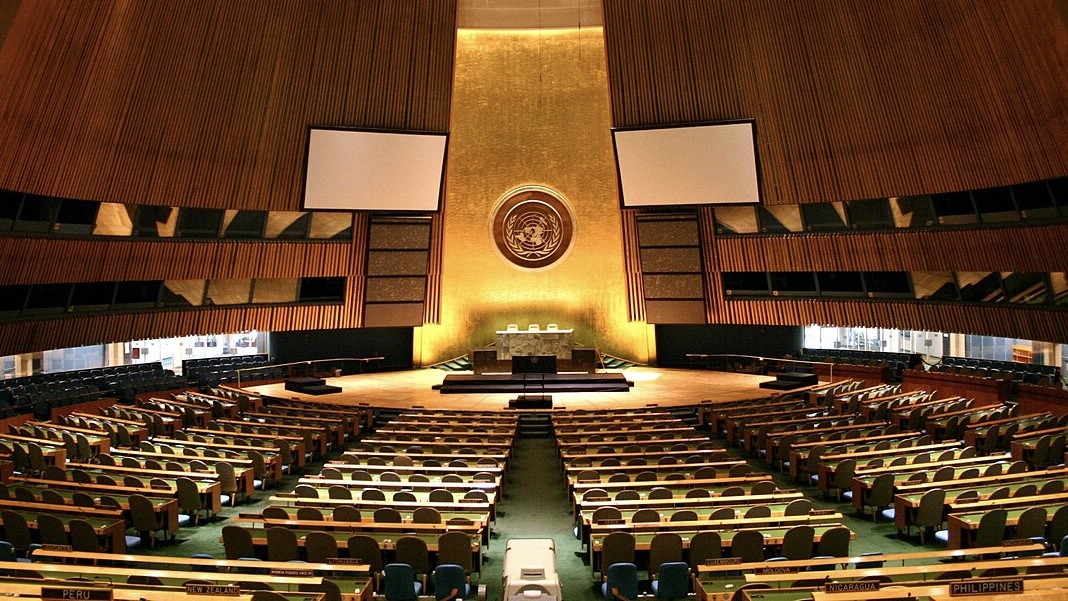
The United Nations General Assembly (UNGA) adopted two resolutions on Tuesday, December 2, demanding Israel withdraw from Palestinian and Syrian territories that it occupied in 1967. These territories include the West Bank (including East Jerusalem), the besieged Gaza Strip, and Syria’s Golan Heights.
It is worth noting that the first resolution, which called for ending the Israeli occupation of the Palestinian territories passed with 151 votes in favor, 11 against, and 11 abstentions. Meanwhile, the second resolution on ending the occupation of the Syrian Golan Heights passed with 123 votes in favor, 7 against and 41 abstentions.
Annalena Baerbock: self-determination is “not a privilege to be earned, but a right to be upheld”
“For 78 years the Palestinian people have been denied their inalienable rights – in particular, their right to self-determination. Now, it is high time that we take decisive action to end this decades-long stalemate,” the President of the UNGA, Annalena Baerbock, stated at the 80th session, during which the resolutions were adopted.
Referring to Israel’s all-out multi-front war across West Asia, Baerbock pointed out that what happened during the last couple of years underscores the importance of the two-state solution to achieve “lasting peace”. A solution, which according to the UN senior official, should have been reached decades ago.
Baerbock emphasised that “self-determination, and the right to live in one’s own state in peace, security, and dignity, free from war, occupation and violence, is not a privilege to be earned, but a right to be upheld.”
UN considers Israel’s annexation of Syria’s Golan Heights as “null and void”
Regarding the Syrian Golan Heights, the resolution adopted by the UNGA considered the decision which Israel made on December 14, 1981 “to impose its laws, jurisdiction and administration on the occupied Syrian Golan” as “null and void”, calling for its withdrawal.
The resolution demanded Israel “withdraw from all the occupied Syrian Golan to the line of 4 June 1967 in implementation of the relevant Security Council resolutions.”
The UNGA further resolved that Israel’s continued occupation and de facto annexation of the Syrian Golan constitute “a stumbling block in the way of achieving a just, comprehensive and lasting peace in the region.”
The United Nations Security Council had already unanimously adopted resolution 497 on December 17, 1981, deciding that the Israeli Golan Heights Law, based on which Israel effectively annexed the Golan Heights, was “null and void and without international legal effect”. The resolution had also called on Israel to rescind its action.
UN resolutions are nominal when Israel is the aggressor
While the UNGA’s resolutions were welcomed by many states including the Palestinian Authority and Syria’s interim government, critics deemed the efforts as nominal, performative, and with a low likelihood of being implemented as long as the United States continues to support Israel unconditionally.
The multiple US vetoes of UN Security Council resolutions calling for a ceasefire during Israel’s genocidal aggression on Gaza, proves this particular argument.
Furthermore, many Palestinians still view the two-state solution as unfeasible and insufficient to address the inalienable Palestinian rights and demands, above all the right of return, and another way to recognize and cover the occupation.
This is reminiscent of late Palestinian writer and revolutionary leader Ghassan Kanafani when he said:
“They steal your bread, then give you a crumb of it. Then they demand you thank them for their generosity. O their audacity!”
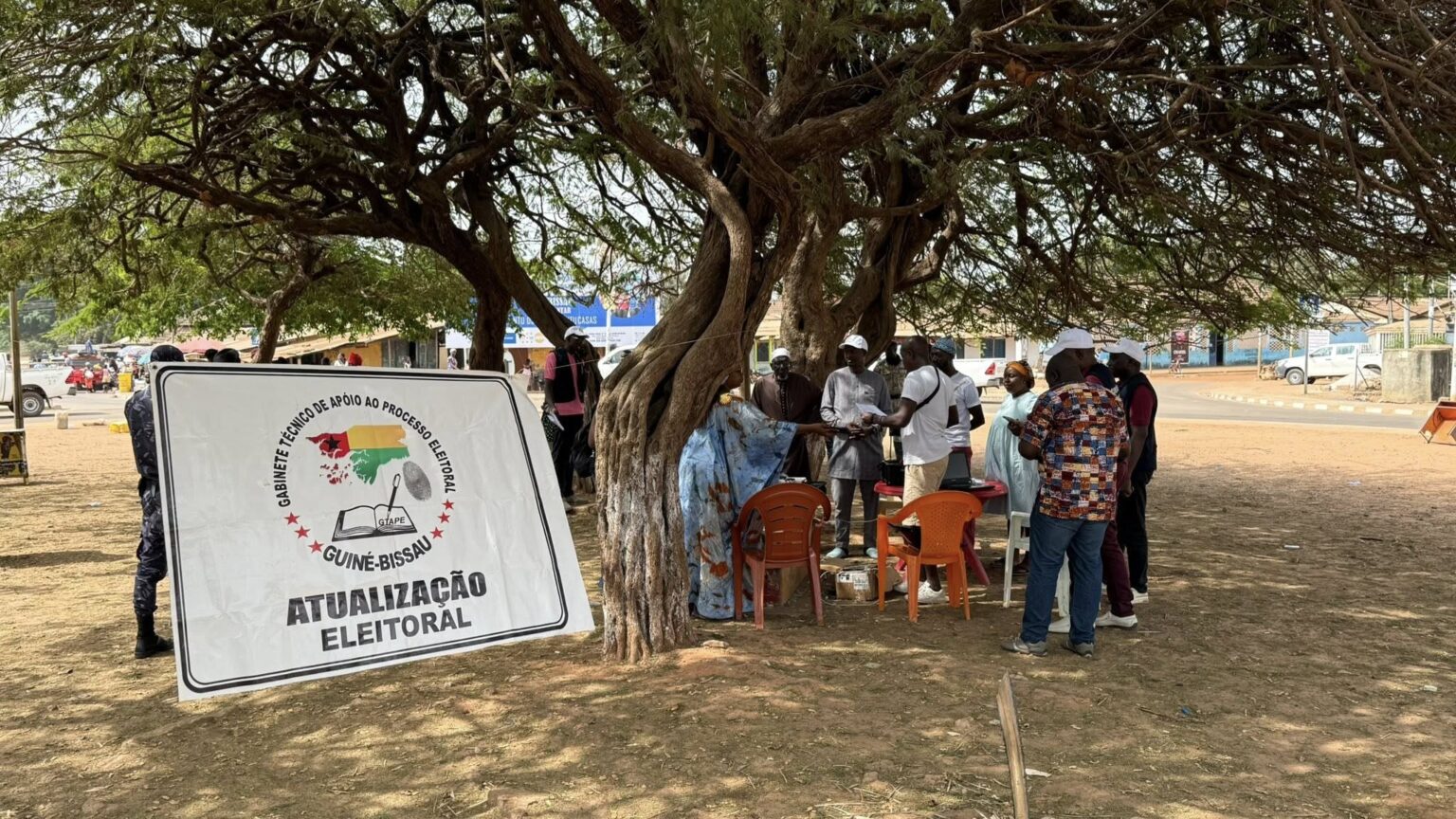
Preparations in April 2025 by Guinea-Bissau’s National Electoral Commission. Photo: CNE Guinea-Bissau
Guinea-Bissau’s election commission has claimed inability to announce election results after soldiers siege ballots and destroy servers holding the voting data after a coup allegedly staged by the outgoing president. Opposition parties accuse the commission of collaboration.
Seizing the ballots, tally sheets, and computers from the offices of Guinea-Bissau’s National Election Commission (CNE), soldiers have destroyed the servers storing the voting data submitted by the various Regional Election Commissions (CREs).
“We do not have the material and logistic conditions to follow through with the electoral process,” Idrissa Djalo, a senior official of the CNE, said on Tuesday, December 2. The CNE’s HQ came under attack on November 26, one day before it was scheduled to announce the results of the Presidential and parliamentary elections held on November 23. However, opposition parties are not convinced by Djalo’s reasoning that the CNE is unable to announce election results under the circumstances.
When the “regional tabulation was concluded at the national level and throughout the diaspora,” on November 26, the “minutes were already in the possession of the… candidates, representatives of the Public Prosecutor’s Office, and the Judicial Police,” said a statement by the National Campaign Directorate for Fernando Dias da Costa.
“Furthermore, a copy of the minutes and all electoral operation documents are delivered to the Regional Governor, who keeps them under his custody and responsibility. [Therefore], it is evident that conditions exist for the conclusion of the electoral process.”
Demanding the “convening of the CNE plenary and the publication of the results”, the statement condemned the “Executive Secretariat of the CNE” for collaborating with the “coup d’état staged by” Embaló in an “attempt to sabotage the electoral process.”
Opposition parties maintain that data submitted by the CREs show that Dias had won with over 50% of the votes. National and international electoral observers had also agreed that incumbent Umaro Sissoco Embaló had been voted out.
Swearing himself in as the president in 2020 at a hotel guarded by soldiers after a disputed election, Embaló has since dissolved the parliament twice. To thwart the return to constitutional order by preventing the transfer of power after losing elections, Embaló staged this coup, according to opposition parties and members of the dissolved parliament.
Claiming to be under arrest while still communicating with the French media, Embaló flew to neighboring Senegal a day after the staged coup on November 27. He was not welcome. Progressive Senegalese protested alongside Guinea-Bissau’s diaspora against hosting him in the country.
Dismissing his claim that he was the victim of a coup as a “sham” orchestrated by himself, Senegal’s Prime Minister Ousmane Sonko said in a parliamentary session on November 28: “We want the electoral process to continue. The [electoral] commission must be allowed to declare the winner.”
The following day, Guinea-Bissau’s diaspora population protested in Paris, London, Portugal’s Porto, and Brazil’s São Paulo, demanding disclosure of the electoral results and release of political prisoners held by the military.
Among the high-profile political prisoners is Domingos Simões Pereira, president of the dissolved parliament and leader of the historic African Party for the Independence of Guinea and Cape Verde (PAIGC), which had led the liberation struggle against Portuguese colonialism. He was Embaló’s main challenger, barred from contesting the election at the last moment.
The PAIGC-led coalition then backed the candidacy of the Party for Social Renewal (PRS) leader Dias, who is said to have won the election. Dias himself narrowly escaped capture by soldiers and has found asylum in Nigeria.
On December 2, security forces detained another member of parliament, Marciano Indi, at the Osvaldo Vieira airport, where he was waiting for his flight to Nigeria’s capital, Abuja, to attend a parliamentary session of the Economic Community of West African States (ECOWAS).
Earlier, on November 27, ECOWAS had suspended Guinea-Bissau from all decision-making bodies. Then on November 29, the African Union (AU) also announced its suspension of the country “from all AU activities until constitutional order is restored.”
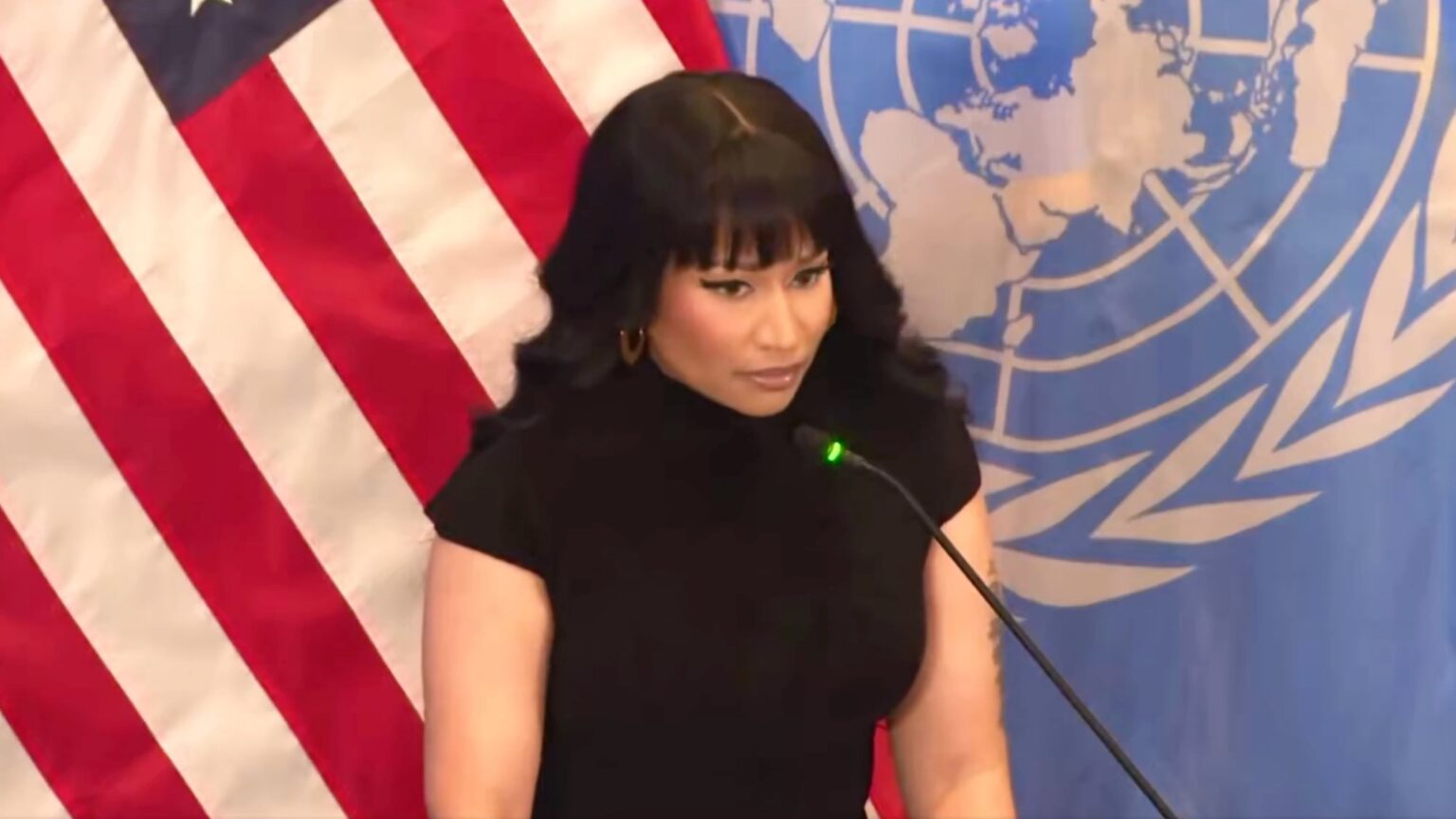
Nicki Minaj repeats US media narrative of Christian genocide in Nigeria at UN event in NY. Photo: screenshot
Analysts argue that framing the conflict as religious persecution masks a deeper geopolitical struggle over Nigeria’s enormous mineral wealth.
The United States intensified its claims that Nigeria is facing a “genocide against Christians” during a special event at the United Nations held in November called “Combating Christian Violence and the Killing of Christians in Nigeria”. The session, led by US Ambassador Mike Waltz, featured American rapper Nicki Minaj as one of the keynote speakers, and further amplified a narrative that Nigerian officials and regional analysts have repeatedly dismissed as misleading and politically motivated.
The UN event follows a recent wave of rhetoric by US President Donald Trump, who alleged widespread, systematic killings of Christians in the West African nation. Nigeria has rejected the accusations, insisting they are based on distorted reports and selective data that ignore the complex security realities in the country. Officials acknowledge the ongoing threat of Boko Haram and other armed groups but argue that the situation cannot be reduced to a one-sided religious persecution narrative.
Media organizations, including the BBC, have also noted that several of the claims circulating in US political circles cannot be independently verified.
Nicki Minaj repeats Trump’s narrative at UN stage
Nicki Minaj, whose earlier social media statements echoed Trump’s message, reiterated her comments at the UN event. She stated:
“In Nigeria, Christians are being targeted, driven from their homes and killed. Churches have been burned, families torn apart, and entire communities live in fear constantly, simply because of how they pray.”
Her remarks closely mirrored the religious persecution framing popularized in US conservative media, which African analysts argue oversimplifies a multidimensional conflict involving poverty, state fragility, armed groups, climate pressures, and competition over land and mineral resources.
African analysts push back
Journalist David Hundeyin, speaking toBreakThrough News, challenged the US framing, saying the violence in northern and central Nigeria cannot be understood simply as a religious conflict. He stressed that:
Boko Haram and affiliated groups have killed between 50,000 and 150,000 people, though the exact numbers remain unclear. The majority of victims have been Muslims, not Christians, since most violence occurs in predominantly Muslim regions of the north and middle belt.
Armed groups attack both Christians and Muslims, and “everyone is dying in numbers … they’re all poor people and powerless.”
According to Hundeyin, framing the conflict as religious persecution masks a deeper geopolitical struggle over Nigeria’s enormous mineral wealth, including rare earth elements crucial for global technology industries. He argues: Presenting the conflict as “Islamists killing Christians” provides a moral pretext for deeper US involvement in a region with strategic resources.
A key part of Hundeyin’s critique is the near-total absence of Muslim deaths in Western coverage. Although Muslims make up the majority of victims, their deaths rarely appear in narratives circulated in US conservative politics, which instead portray Nigeria as the world’s “epicenter of Christian persecution”.
As Pavan Kulkarni wrote in a Peoples Dispatch report last month, “The majority of people killed by the Boko Haram and Islamic State West Africa Province are Muslims, simply because they make up the majority in the northern region these Islamist insurgencies are ravaging. For the same demographic reasons, Muslims are also the majority victims of bandits who kill, loot, and kidnap in the northwest region, where the state is struggling to enforce the rule of law. In the central region, Christian victims of violence are in the majority, not because of their religious identity but because of their occupation: farming. Amid intensifying competition over depleting land and water due to climate change, raids on farmlands by mobile herders, groups of whom are armed, are a serious problem in several African countries suffering desertification.”
The Nigerian government maintains that while terrorism remains a serious challenge, portraying the crisis as a Christian genocide is inaccurate and dangerous. Officials argue that such language obscures the socio-economic drivers of violence, including state collapse in rural areas, the proliferation of weapons, land-use conflicts, and climate-related displacement across the Sahel.
The African Union Commission (AUC), released a statement, reaffirming its commitment to sovereignty, non-interference, religious freedom, and the rule of law as outlined in the AU Constitutive Act, and expressed concern over US allegations accusing Nigeria of targeting Christians and threatening military action, emphasizing that Nigeria is a longstanding and vital AU Member State whose sovereign right to manage its internal affairs, particularly regarding security, human rights, and religious freedom, must be fully respected by all external partners.
Nigeria’s struggles with insecurity demand nuanced understanding rather than a blanket accusation of Christians being targeted in the country.