‘Destruction is not the same as political success’: US bombing of Iran shows little evidence of endgame strategy
Spread the love
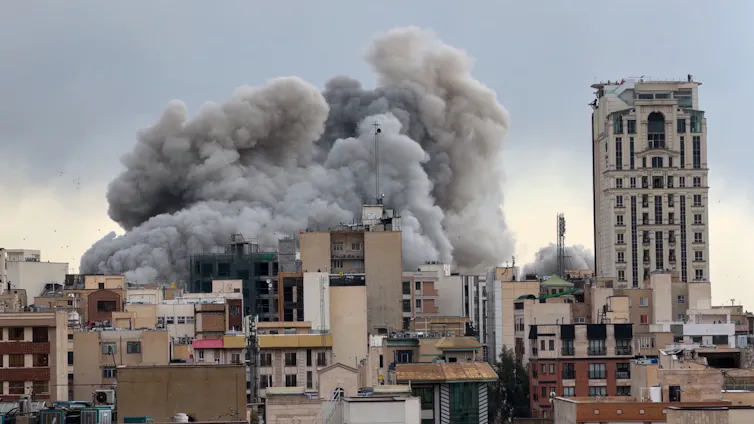
A plume of smoke rises after a strike in Tehran on March 2, 2026. AP Photo/Mohsen Ganji

Farah N. Jan, University of Pennsylvania

Shortly after the opening salvo of U.S.-Israeli attacks on Iran on Feb. 28, 2026 – with missiles targeting cities across the country, some of which killed Supreme Leader Ayatollah Ali Khamenei – President Donald Trump declared the objective was to destroy Iran’s military capabilities and give rise to a change in government.

Framing the operation as a war of liberation, Trump called on Iranians to “take over your government.”

In the first days alone, Israel dropped over 2,000 bombs on Iranian targets, equal to half the tonnage of the 12-day Israel-Iran conflict in June 2025. Heavy U.S. bombing, meanwhile, has targeted Iran’s Revolutionary Guard as well as ballistic missile and aerial defense sites.

The destruction is real. But, as an international relations scholar, I know that destruction is not the same as political success. And the historical record of U.S. bombing campaigns aimed at regime change shows that the gap between the two – the point at which Afghanistan, Iraq and Libya campaigns all stalled – is where wars go to die.

Destruction is not strategy

Decades of scholarship dating back to World War I on using air power to force political change has established a consistent finding: Bombing can degrade military capacity and destroy infrastructure, but it does not produce governments more cooperative with the attacker.

Political outcomes require political processes – negotiation, institution-building, legitimate transitions of power.

Bombs cannot create any of these. Instead, what they reliably create is destruction, and destruction generates its own dynamics: rallying among the population, power vacuums, radicalization and cycles of retaliation.

The American record confirms this. In 2003, the George W. Bush administration launched “Shock and Awe” in Iraq with the explicit aim of regime change. The military objective was achieved in weeks. The political objective was never achieved at all.

The U.S. decision to disband the Iraqi army created a vacuum filled not by democratic reformers but by sectarian militias and eventually ISIS. The regime that eventually emerged was not friendly to American interests. It was deeply influenced by Iran.

In 2011, the Obama administration led a NATO air campaign in Libya that quickly expanded from civilian protection into regime change. Dictator Moammar Gadhafi was overthrown and killed.

But there was no plan for political transition. Chaos and political instability have endured since. Asked what his “worst mistake” was as president, Barack Obama said, “Probably failing to plan for the day after, what I think was the right thing to do, in intervening in Libya.” Libya remains a failed state today.

The intervention also sent a powerful signal to countries pursuing nuclear weapons: Gaddhafi had dismantled his nuclear program in 2003. Eight years later, NATO destroyed his regime.

Even Kosovo, often cited as the success story of coercive air power, undermines the case. Seventy-eight days of NATO bombing did not, by themselves, compel Slobodan Milosevic, president of the Federal Republic of Yugoslavia, to withdraw.

What changed was the credible threat of a ground invasion combined with Russia’s withdrawal of diplomatic support. The political outcome – contested statehood, ongoing ethnic tensions – is hardly the stable governance that air power advocates promise.

The pattern is consistent: The United States repeatedly confuses its unmatched capacity to destroy from the air with the ability to dictate political outcomes.

Why this war?

The recent U.S. attacks on Iran raise a fundamental question: Why is the United States fighting this war at all?

The administration has declared regime change as its objective, justifying the campaign on the grounds of Iran’s nuclear program and missile capabilities.

But that nuclear program was being actively negotiated in Geneva days before the strikes. And Iran’s foreign minister told NBC the two sides were close to a deal. Then the bombs fell.

Iran did not attack America. And it currently does not have the capability to threaten the American homeland. What Iran challenges is Israel’s regional military dominance, and I believe it is Israel’s objective of neutralizing a rival that is driving this operation.

Israel targeted 30 senior Iranian leaders in the opening strikes. Israeli officials described it as a preemptive attack to “remove threats to the State of Israel.” I see the strategic logic for these killings as Israel’s, and Americans are absorbing the costs.

U.S. military bases in Bahrain, Qatar, Kuwait, the UAE, Jordan, and Saudi Arabia have taken Iranian missile fire. American service members are in harm’s way – three have already been killed – not because Iran attacked them, but I believe because their president committed them to someone else’s war without a clear endgame.

Smoke rises from buildings.
Smoke rises from a reported Iranian strike in the area where the U.S. Embassy is located in Kuwait City on March 2, 2026. AFP via Getty Images

Each coercive step in this conflict – from the 2018 withdrawal from the nuclear deal, to the 2020 assassination of Qasem Soleimani, Iran’s most powerful military commander, to the June 2025 strikes – was framed as restoring leverage.

Each produced the opposite, eliminating diplomatic off-ramps, accelerating the very threats it aimed to contain.

The regime is not one man

Decapitation strikes assume that removing a leader removes the obstacle to political change. But Iran’s political system is institutional — the Guardian Council, the Assembly of Experts and the Revolutionary Guard have survived for four decades.

The system has succession mechanisms, but they were designed for orderly transitions, not for active bombardment. The group most likely to fill the vacuum is the Revolutionary Guard, whose institutional interest lies in escalation, not accommodation.

There is a deeper irony. The largest protests since 1979 swept Iran just weeks ago. A genuine domestic opposition was growing. The strikes have almost certainly destroyed that movement’s prospects.

Decades of research on rally-around-the-flag effects – the tendency of populations to unite behind their government when attacked by a foreign power – confirms that external attacks fuse regime and nation, even when citizens despise their leaders.

Iranians who were chanting “death to the dictator” are now watching foreign bombs fall on their cities during Ramadan, hearing reports of over 100 children killed in a strike on a girls school in Minab.

Trump’s call for Iranians to “seize control of your destiny” echoes a familiar pattern. In 1953, the CIA overthrew Iran’s democratically elected prime minister in the name of freedom.

That produced the Shah, the Shah’s brutal reign led to the Iranian Revolution in 1979, and the revolution produced the Islamic Republic now being bombed.

What comes next? And what guarantee is there that whatever emerges will be any friendlier to Israel or the United States?

What does success look like?

This is the question no one in Washington has answered. If the objective is regime change, who governs 92 million people after?

If the objective is stability, why are American bases across the Middle East absorbing missile fire?

There is no American theory of political endgame in Iran — only a theory of destruction. That theory has been tested in Afghanistan, Iraq and Libya – and Iran itself over the preceding eight months. It has failed every time, not because of poor execution, but because the premise is flawed.

Air power can raze a government’s infrastructure. It cannot build the political order that must replace it. Iran, with its sophisticated military, near-nuclear capability, proxy networks spanning the region and a regime now martyred by foreign attack, will likely not be the exception.

U.S. law prohibits the assassination of foreign leaders, and instead Israel killed Iran’s supreme leader while American warplanes filled the skies overhead. Washington has called the result freedom at hand, but it has not answered the only question that matters: What comes next?

Farah N. Jan, Senior Lecturer in International Relations, University of Pennsylvania

This article is republished from The Conversation under a Creative Commons license. Read the original article.

Orcas discuss rotting brain. Front Orca says "Wish someone would lock him up".
Orcas discuss rotting brain. Front Orca says “Wish someone would lock him up”.
Donald Fuhrump says that Amerikkka doesn't bother with crimes or charges anymore, not being 100% Amerikkkan and opposing his real estate intentions is enough.
Donald Fuhrump says that Amerikkka doesn’t bother with crimes or charges anymore, not being 100% Amerikkkan and opposing his real estate intentions is enough.
Elon Musk urges you to be a Fascist like him, says that you can ignore facts and reality then.
Continue Reading‘Destruction is not the same as political success’: US bombing of Iran shows little evidence of endgame strategy

Does international law still matter? The strike on the girls’ school in Iran shows why we need it

Spread the love
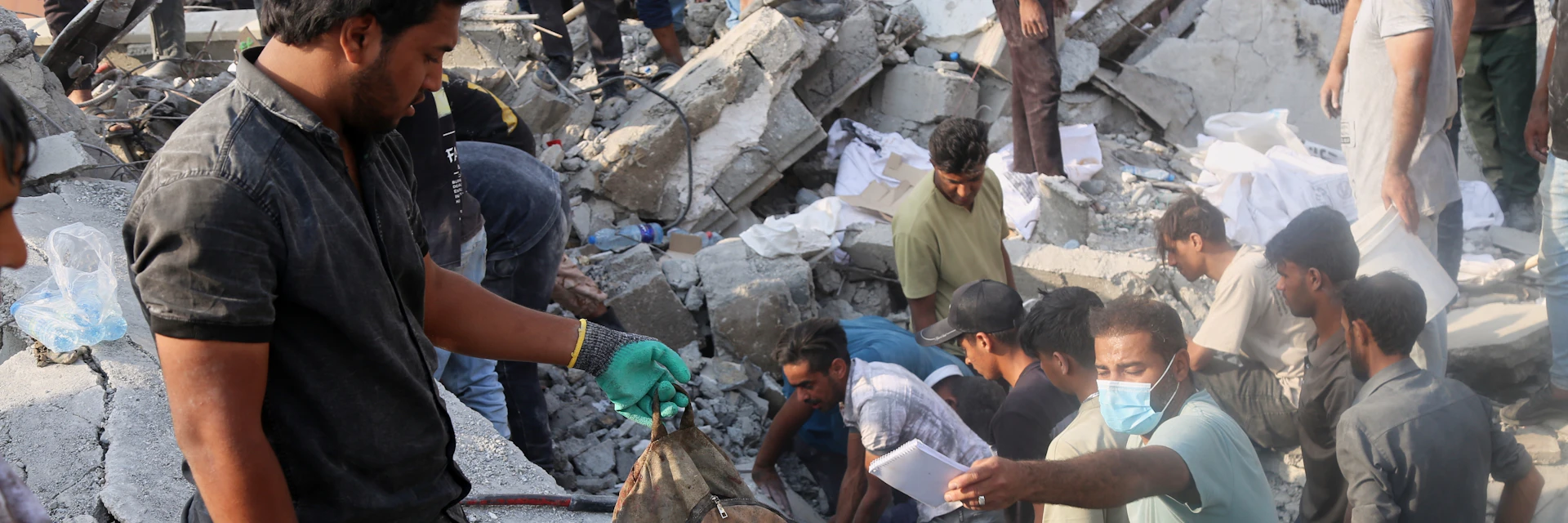
A man holds a children’s backpack as rescue workers and residents search through the rubble of a girls’ elementary school in Minab, Iran, on February 28. Mehr News Agency/AP

Shannon Bosch, Edith Cowan University

As the US and Israel began their joint assault on Iran, reports emerged from Iran that a strike hit the Shajarah Tayyebeh girls’ elementary school in the southern city of Minab.

The school was reportedly packed with young pupils at the time. Iranian authorities say more than 150 people were killed, including children, and 60 more injured (these figures are yet to be independently verified).

Videos verified by international media show rescue workers digging through collapsed concrete, school bags being pulled from the debris, and scorch marks along the remaining walls.


Warning: this gallery contains graphic images.

https://cdn.theconversation.com/infographics/1361/adbf39d3504e3436d439f9d4ab05cc3e394b012d/site/index.html


The New York Times says it has verified videos that show the school next to a naval base belonging to the Iranian Revolutionary Guards Corps, or IRGC, and a strike hitting that base.

Iranian representatives at the United Nations have characterised the strike as a deliberate targeting of civilian infrastructure and labelled it a war crime and a crime against humanity.

Neither the United States nor Israel have publicly confirmed hitting the school. The US military’s Central Command (Centcom) said:

We are aware of reports concerning civilian harm resulting from ongoing military operations. We take these reports seriously and are looking into them. The protection of civilians is of utmost importance, and we will continue to take all precautions available to minimize the risk of unintended harm.

At present, we do not have enough verified facts to reach a firm legal conclusion about what happened.

But given the questions about the legality of the US and Israeli strikes on Iran – and deeper questions about whether we’re witnessing the “death of international law” more broadly – incidents like this illustrate the continuing importance of the law, especially in times of conflict.

Which targets are protected under the law?

In armed conflict, international humanitarian law applies. International humanitarian law is built on foundational principles that must inform all decisions by armed forces concerning what they target:

  • distinction
  • proportionality
  • military necessity

And precautions must be taken to avoid incidental harm to civilians.

So what do these terms mean?

The principle of distinction requires parties to an armed conflict to always distinguish between civilian objects and military objects.

Attacks may only be directed against combatants and military objects. Civilians and civilian objects, such as schools, hospitals and public transport, are protected and may not be directly targeted.

If there is any doubt about whether a target is military or civilian in nature, it must be presumed to be civilian.

Schools are not merely buildings. They are protective spaces, and their destruction can cause immediate loss of life and long-term societal damage.

Children under 18 also enjoy special protection under international humanitarian law. They, too, may not be directly targeted.

This protection is not absolute, however. Any civilian object (including schools) can lose their protected status if they become military objectives. A school used as a military base, artillery position or command post could meet that definition.

So far, we have no evidence the school in Minab was being used for military purposes or that it was intentionally targeted.

Proportionality and precautions in attacks

What, then, if the school was not intentionally targeted, but was incidental collateral damage from an attack directed at the IRGC barracks nearby?

International humanitarian law recognises civilian objects may be affected by attacks on military objectives.

Incidental harm to civilians and civilian objects is only lawful if it satisfies the test of proportionality and military necessity under the law. All feasible precautions must also have been taken to minimise harm to civilians.

So, if a school near a military target is hit, the legality of that strike turns on whether the expected harm to children and the school was excessive compared to the military advantage gained by striking the target.

Also important: did the military commanders take all feasible precautions to assess the effect of the attack on nearby civilians or civilian infrastructure? This includes the specific weapons that are used and the timing of the attack.

Why international law matters

In recent years, we have witnessed a number of countries and their leaders openly flouting international law and the rules-based order. Yet, it would be a profound mistake to conclude that international law has ceased to matter. Even grave breaches do not negate the system itself.

As renowned American international law scholar Louis Henkin famously wrote in 1979:

Almost all nations observe almost all principles of international law and almost all of their obligations almost all of the time.

Henkin’s point was not naïve optimism. Daily compliance of international law remains the norm in diplomacy, trade, aviation, maritime navigation, treaty compliance and peaceful dispute settlement.

Violations do occur – sometimes brazenly – but they are exceptions to an overwhelmingly compliant pattern of behaviour.

The fact that some states breach foundational rules such as the prohibition on the use of force in Article 2(4) of the United Nations Charter does not render international law illusory.

Rather, it underscores the importance of naming breaches for what they are and defending the legal order that most states, most of the time, continue to respect.

If the strike on the Minab school is ultimately shown to have violated the principles of distinction, proportionality and military necessity, it would not prove Henkin wrong; it would prove his point.

International law matters precisely because departures from it can be identified, judged and condemned.

The rubble of a girls’ school is not evidence that the law is meaningless; it is a stark reminder of why the law exists, and why insisting on compliance remains essential.

Shannon Bosch, Associate Professor (Law), Edith Cowan University

This article is republished from The Conversation under a Creative Commons license. Read the original article.

Orcas discuss rotting brain. Front Orca says "Wish someone would lock him up".
Orcas discuss rotting brain. Front Orca says “Wish someone would lock him up”.
Donald Fuhrump says that Amerikkka doesn't bother with crimes or charges anymore, not being 100% Amerikkkan and opposing his real estate intentions is enough.
Donald Fuhrump says that Amerikkka doesn’t bother with crimes or charges anymore, not being 100% Amerikkkan and opposing his real estate intentions is enough.
Elon Musk urges you to be a Fascist like him, says that you can ignore facts and reality then.

Continue ReadingDoes international law still matter? The strike on the girls’ school in Iran shows why we need it

Morning Star Editorial: Imperial ambitions laid bare in US–Israel attack on Iran

Spread the love

https://morningstaronline.co.uk/article/imperial-ambitions-laid-bare-us-israel-attack-iran

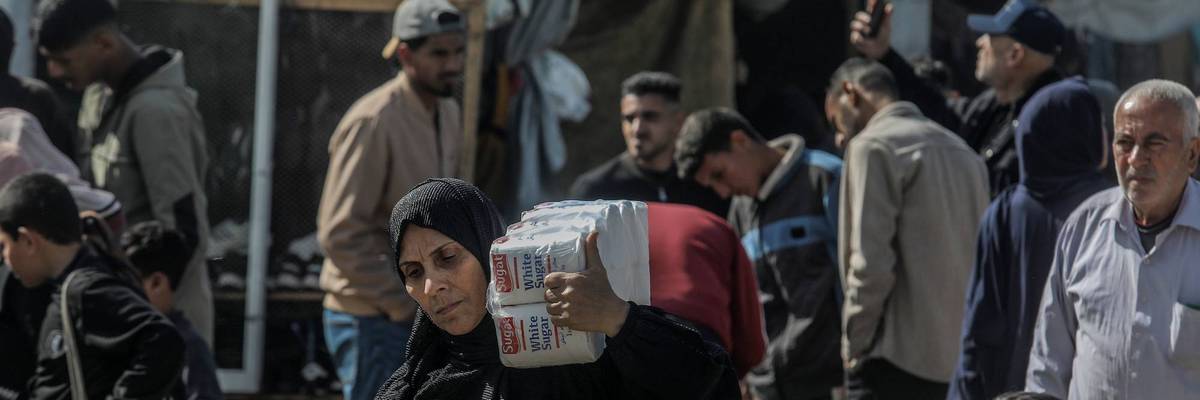
 Defence Secretary Pete Hegseth speaks during a press briefing at the Pentagon in Washington, March 2, 2026

THE attack on Iran by Israel and the US is a breach of international law so clear that the US “defence” secretary sees no reason to dress up his masters’ war as anything other than the exercise of imperial power.

Pete Hegseth has refused to rule out a ground invasion of the 94-million-strong Iranian nation, yet lashed out: “To the media outlets and the political left screaming ‘endless war,’ stop. This is not Iraq. This is not endless.”

Hegseth, and the US joint chiefs of staff chairman General Dan Caine claimed that the attacks were designed to prevent Iran from building a nuclear weapons system. Where this is a task more easily accomplished through negotiations the US/Israeli strategy is rather to target the Iranian leadership and its security forces.

It is clear that while the US is capable of mobilising powerful military assets to strike at Iran’s own military capacity and infrastructure — and the profits to be made in replenishing its hardware, missiles, drones and ammunition will profit US arms corporations — the immediate strategic interests being served are Israel’s.

The assassination of Iran’s leading cleric and state leader Ayatollah Ali Khamenei, and not least the collateral death of dozens of primary schoolchildren, appears to have the effect of mobilising opinion in defence of Iran’s national sovereignty and there is nothing in the US/Israeli strategy that will convince the Arab street or opinion in the global South that the US can be trusted.

The parallel strategy to encourage regime opponents and dissident national groups to take to the streets in an ill-prepared “colour” revolution on the model that put neonazis into office in Ukraine (but largely failed in Georgia) seems unlikely to restore the Pahlavi royalist regime. More likely, it will expose any innocents who believe US promises and take to the streets, to renewed repression.

Disreputable though he is, and dangerous to boot, Hegseth’s frank espousal of imperial war aims unadorned by hypocritical words or faux-liberal sentiments is refreshing when compared to the weasel words of lapsed human rights lawyer Keir Starmer.

He seems aggravated that the Iranians responded to the Israeli/US assault by interdicting Israel and US military bases in the regime. He describes the Iranian response as reckless but not a word about the words and actions of Trump and Netanahayu.

He said: “Our decision that the UK would not be involved with the strikes on Iran was deliberate. Not least because we believe that the best way forward for the region and for the world is a negotiated settlement,” but says: “We have British jets in the air as part of co-ordinated defensive operations which have already successfully intercepted Iranian strikes” and the next day more fully commits British service personnel to join the US/Israeli military operation and allow British bases to be used.

The weasel words are: “…the collective self-defence of longstanding friends and allies, and protecting British lives.”

The friends and allies in the region are a collection of kleptomaniac “royal” families raised to rule by the British empire in the defence of oil profits. They are no friends of the British people but only of our ruling elite.

And now Trump says Starmer was too slow to change to back the US and Israeli assault, adding: “It took far too much time. Far too much time. That’s probably never happened between our countries before. It sounds like he was worried about the legality.”

Either Starmer is worried about the legality but went ahead or he doesn’t care.

It is clear that Trump holds Starmer in contempt. On this question alone he is at one with the British people.

Original article at https://morningstaronline.co.uk/article/imperial-ambitions-laid-bare-us-israel-attack-iran. I am hoping that Morning Star will excuse me for fully republishing their article.

Donald Fuhrump says that Amerikkka doesn't bother with crimes or charges anymore, not being 100% Amerikkkan and opposing his real estate intentions is enough.
Donald Fuhrump says that Amerikkka doesn’t bother with crimes or charges anymore, not being 100% Amerikkkan and opposing his real estate intentions is enough.
Elon Musk urges you to be a Fascist like him, says that you can ignore facts and reality then.
Orcas discuss rotting brain. Front Orca says "Wish someone would lock him up".
Orcas discuss rotting brain. Front Orca says “Wish someone would lock him up”.
Continue ReadingMorning Star Editorial: Imperial ambitions laid bare in US–Israel attack on Iran

Israel Exploits Attack on Iran to Reinstate Gaza ‘Starvation Policy’

Spread the love

Original article by Jessica Corbett republished from Common Dreams under Creative Commons (CC BY-NC-ND 3.0).

Palestinians gather in the market following the targeting of Iran by the US and Israel and the subsequent retaliatory strikes in Khan Younis, Gaza on February 28, 2026. (Photo by Abed Rahim Khatib/Anadolu via Getty Images)

“All the NGOs in Gaza need more food, medicine, medical equipment, fuel, tents, personal care every day. We cannot wait,” said chef José Andrés, founder of World Central Kitchen.

After Israeli and US forces launched an illegal war aimed at forcing regime change in Iran this past weekend, Israel also announced “the closure of the crossings into the Gaza Strip,” which it has bombed and starved for nearly 29 months, killing at least tens of thousands of Palestinians.

Israel’s Coordinator of Government Activities in the Territories (COGAT)—which oversees civilian policy in Gaza and the West Bank—announced on social media Saturday that “several necessary security adjustments have been implemented” because of the operation against Iran, including the closure of Gaza crossings “until further notice.”

RECOMMENDED…

Trump dances in front of a giant US flag screen

Trump Says He’s ‘Entitled’ to Illegal Third Term as Allies Draft Voter Suppression Decree

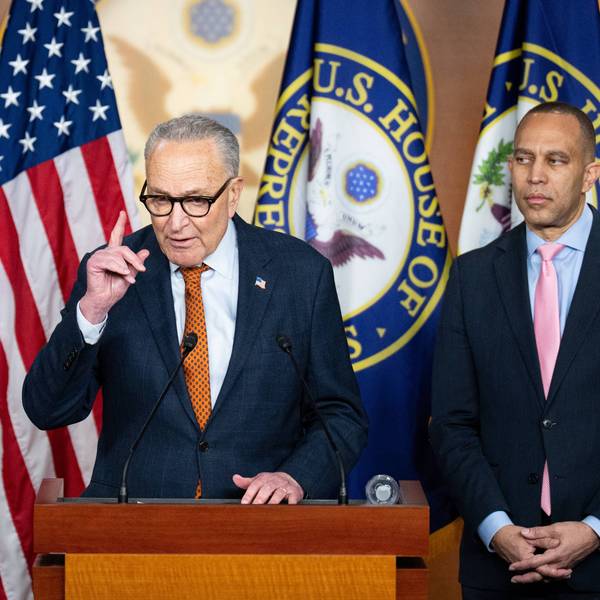
Schumer and Jeffries News Conference

Democratic Leaders Face Backlash Over ‘Cowardly’ Responses to Trump War on Iran

COGAT also claimed that “the closure of the crossings will have no impact on the humanitarian situation” in Gaza, adding that “the substantial quantities of food that have entered since the beginning of the ceasefire amount to four times the nutritional needs of the population,” so “the existing stock is expected to suffice for an extended period.”

However, reports from human rights groups, journalists, and the United Nations have highlighted how Israel’s restrictions have continued to impede evacuations of the sick and severely wounded, and nongovernmental groups’ deliveries of humanitarian aid, despite the October ceasefire deal. Palestinians in Gaza also remain at risk of Israeli forces’ airstrikes, gunfire, and shelling.

“A new chokehold on Gaza,” Philippe Lazzarini, commissioner-general of the United Nations Relief and Works Agency for Palestine Refugees in the Near East, said Monday. “Once again, Israel is renewing its ban on supplies entering Gaza. After more than two years of unspeakable suffering and a spreading man-made famine, people still lack the most basic supplies, despite increases in aid since the ceasefire. UNRWA personnel in Gaza keep providing healthcare, learning, and clean water—but we must be allowed to do much more and certainly not less.”

Even before Israel closed the borders on Saturday, the US-Israel attack on Iran led to Palestinians in Gaza “buying whatever food supplies and goods they could manage,” Al Jazeera reported Monday. “People everywhere rushed to the market to buy sugar, flour, cooking oil, and yeast. Shelves began to empty, and the price of essential goods increased.”

Things got even worse after COGAT’s announcement. Asmaa Abu Al-Khair, a 38-year-old mother of eight, told Al Jazeera at a Gaza City market on Sunday that “I feel great anxiety. Everyone is talking about it—about Iran’s strike and the closure of the crossings—and I cannot afford to buy what I need, while at the same time, I am afraid of famine returning. I have young children.”

Many displaced families living in nearby tents also “do not have the money to buy supplies, nor the space to store them inside the tents,” she said. “We endured so much hardship during the war, and it barely ended with the announcement of a ceasefire. So why close the crossing now? What do we have to do with what is happening? Is what we witnessed not enough? Why play with people’s nerves?”

Since Saturday, critics around the world have also warned about the impacts of Israel shutting off the Palestinian exclave indefinitely, again. Arab Center Washington DC fellow Assal Rad declared on social media that “under the cover of its illegal war on Iran, Israel is continuing genocide in Gaza.”

Mass shooting survivor and former congressional candidate Cameron Kasky similarly said that “the siege on Gaza returns in its fullest force. Illegal wars to advance Israel’s goals are being used for expanding the genocide plans.”

Israel faces a South Africa-led genocide case at the International Court of Justice (ICJ) over the US-backed war on Gaza that it launched after Hamas’ October 7, 2023 attack. The International Criminal Court (ICC) has also issued related arrest warrants for Israeli Prime Minister Benjamin Netanyahu and former Defense Minister Yoav Gallant.

Chef José Andrés said on social media Sunday that World Central Kitchen—which he founded—is cooking 1 million hot meals every day, and if Gaza’s borders stay closed, the group “will run out of food this week.”

“We need food deliveries every single day to feed hungry families who are not part of this war,” he said. “All the NGOs in Gaza need more food, medicine, medical equipment, fuel, tents, personal care every day. We cannot wait… let the humanitarian trucks go through today!”

Responding to Andrés, US Congressman Mark Pocan (D-Wis.) said that “Israel must reopen access to aid groups. If not, Netanyahu must be arrested immediately. He continues war crimes.”

The Hague Group—a coalition of countries that came together last year, led by Colombia and South Africa, with the goal of upholding the ICC and ICJ rulings on Israel and Palestine—responded to COGAT by scheduling an emergency meeting that at least 30 nations are set to attend in the Dutch city for which the organization is named.

The focus of Wednesday’s meeting “is simple,” Varsha Gandikota-Nellutla, the group’s executive secretary, said in a Monday statement. “How do we give international law teeth? Several states have begun enforcing their legal obligations, turning rhetoric into concrete action through The Hague Group’s measures: cutting arms flows, closing ports, and pursuing accountability.”

Ronald Lamola, South Africa’s minister of international relations and cooperation, said that “the application of international law can no longer be selective: punitive for some and totally disregarded by others. The Hague Group exists to translate obligations that arise out of international law into coordinated state action. We invite governments of conscience—those prepared to uphold law in deed as well as word—to join us.”

Francesca Albanese, the UN special rapporteur focused on the occupied Palestinian territories and a target of Trump administration sanctionssaid that “I am honored to attend the upcoming emergency meeting of the The Hague Group.”

“Time has come for decolonized multilateralism, grounded in universal rights and obligations, applied with integrity and free from double standards,” Albanese added. “May European and Arab states join this necessary effort.”

Original article by Jessica Corbett republished from Common Dreams under Creative Commons (CC BY-NC-ND 3.0).

Experiencing issues with this image not appearing. I suspect because it's so critical of Zionist Keir Starmer's support of and complicity in Israel's genocides.
Genocide denier and Current UK Prime Minister Keir Starmer is quoted that he supports Zionism without qualification. He also confirms that UK air force support has been essential in Israel’s mass-murdering genocide. Includes URLs https://www.declassifieduk.org/keir-starmers-100-spy-flights-over-gaza-in-support-of-israel/ and https://youtu.be/O74hZCKKdpA
Keir Starmer objects to criticism of the IDF. He asks how could anyone object to them starving people to death, forced marches like the Nazis did, bombing Gaza's hospitals and universities, mass-murdering journalists, healthworkers and starving people queuing for food, killing and raping prisoners and murdering children. He calls for people to stop obstructing his genocide for Israel.
Keir Starmer objects to criticism of the IDF. He asks how could anyone object to them starving people to death, forced marches like the Nazis did, bombing Gaza’s hospitals and universities, mass-murdering journalists, healthworkers and starving people queuing for food, killing and raping prisoners and murdering children. He calls for people to stop obstructing his genocide for Israel.
Orcas discuss Genocide-supporting and complicit Zionists. Donald Trump, Keith Starmer, David Lammy, Rachel Reeves, Angela Rayner and Wes Streeting are acknowledged as evil genocide-complicit and supporting cnuts.

Continue ReadingIsrael Exploits Attack on Iran to Reinstate Gaza ‘Starvation Policy’

Will Others Follow? Spain Denies Use of Its Bases to US Military for Iran Attacks

Spread the love

Original article by Brad Reed republished from Common Dreams under Creative Commons (CC BY-NC-ND 3.0).

Spanish Prime Minister Pedro Sánchez holds a press conference at the end of a special European Summit in Brussels, Belgium, on January 23, 2026. (Photo by Jonathan Raa/NurPhoto via Getty Images)

“Europe should close all of the US bases on its soil,” said one US foreign policy critic.

The Spanish government has blocked the US military from using its bases to launch attacks on Iran, forcing American aircraft to leave the country.

Speaking at the annual Mobile World Congress conference in Barcelona on Sunday, Spanish Prime Minister Pedro Sánchez denounced that US war on Iran, which was completely unprovoked.

RECOMMENDED…

image shoes US military planes headed to the midde east

‘The Tankers Just Keep Coming’: US Military Movements Spike Fears of Imminent Attack on Iran

U.S.-Israel War Against Iran

‘Unlike the United States,’ Says Security Chief, Iran ‘Has Prepared Itself for a Long War’

“Remember that one can be against a hateful regime, as is the case with the Iranian regime,” Sánchez said, “and at the same time be against a military intervention that is unjustified, dangerous, and outside international law. That one should be against a war initiated without authorization from the US Congress or the UN Security Council.”

According to a Monday report in the Guardian, Spanish Foreign Minister José Manuel Albares emphasized after Sánchez’s speech that Spanish military bases will not be used “for anything that is not in the agreement [with the US], nor for anything that isn’t covered by the UN charter.”

In the wake of the Spanish government’s announcement, anti-war campaigners demanded that other European nations take similar stances.

“Europe should close all of the US bases on its soil,” wrote David Adler, co-general coordinator of Progressive International. “There can be no ‘strategic autonomy’ while the United States maintains the ability to commit wanton violence from imperial installations on European territory.”

Alex Soros, chairman of Open Society Foundations, said that more nations should follow in Spain’s footsteps in trying to curb US aggression.

“Why aren’t more Europeans standing up to an illegal war!” Soros wrote. “Same with Canada! They make nice speeches at conferences, but do little. Spain is becoming the leader of the free world!”

Clare Daly, an Irish former member of European Parliament, encouraged her country to do its part to deny the US a base for airstrikes.

“Spain has denied the US military any use of its territory to carry out unlawful acts of aggression against Iran,” Daly wrote. “Yesterday [Human Rights Organization] Shannonwatch documented two US Air Force Hercules C-130H aircraft landing at Shannon Airport. Is the government going to do anything to uphold Ireland’s international responsibilities?”

Alan McLeod, senior staff writer at MintPress News, quipped that the Spanish government “continues to provide more resistance to Trump’s agenda than all Democrats combined.”

Original article by Brad Reed republished from Common Dreams under Creative Commons (CC BY-NC-ND 3.0).

Orcas discuss Donald Trump and the killer apes' concept of democracy. Front Orca warns that Trump is crashing his country's economy and that everything he does he does for the fantastically wealthy.
Orcas discuss Donald Trump and the killer apes’ concept of democracy. Front Orca warns that Trump is crashing his country’s economy and that everything he does he does for the fantastically wealthy.
Donald Trump explains why he established his Bored of Peace
Orcas discuss rotting brain. Front Orca says "Wish someone would lock him up".
Orcas discuss rotting brain. Front Orca says “Wish someone would lock him up”.
Continue ReadingWill Others Follow? Spain Denies Use of Its Bases to US Military for Iran Attacks