Ceasefire Collapsing as Iran Shuts Down Strait of Hormuz Again, Accusing US of ‘Piracy’

Spread the love

Original article by Stephen Prager republished form Common Dreams under Creative Commons (CC BY-NC-ND 3.0).
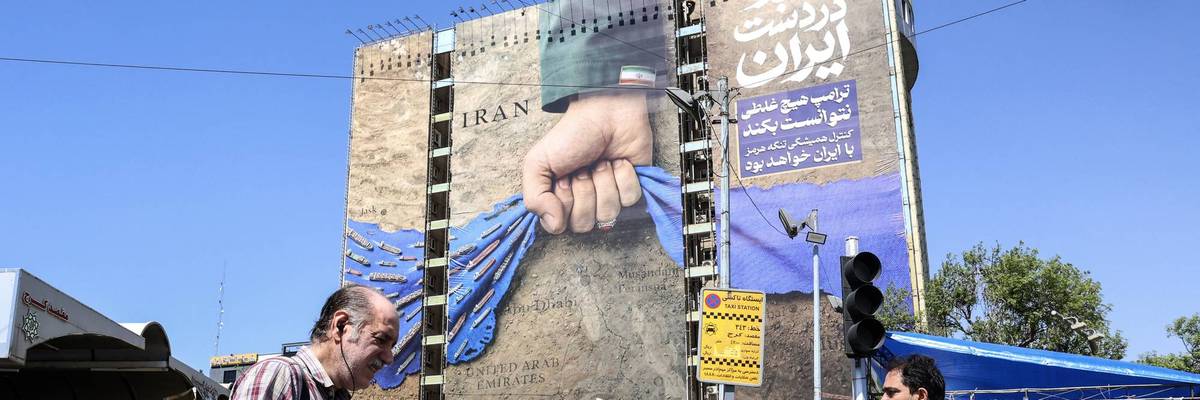
Iranians walk past a large billboard referring to the Strait of Hormuz in Tehran’s Vanak Square on April 15, 2026. (Photo by AFP via Getty Images)

Trump’s recent actions have convinced Tehran that the US is not “a trustworthy partner for any kind of deal,” according to one Iranian professor.

The ceasefire between the US and Iran is in grave peril after Iran announced on Saturday that, in response to the continued US blockade, it would once again impose travel restrictions on the Strait of Hormuz after briefly reopening it on Friday.

Iran has used the strait—through which about 20% of the world’s oil passes—as a chokepoint on Western commerce in response to the illegal US-Israeli war launched in February, and it has been the linchpin of the two-week ceasefire between the two sides, which is scheduled to end Wednesday.

RECOMMENDED…

U.S. Vice President JD Vance Leads U.S. Delegation In Peace Talks With Iran In Pakistan

‘Designed-to-Backfire’: Trump Slammed for Closure of Hormuz Strait as Iran Talks Falter
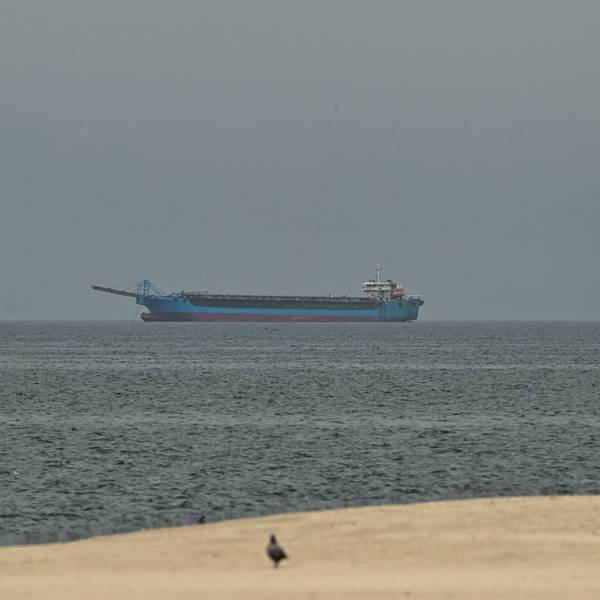
A ship is seen in the Persian Gulf

As US Blockades Strait of Hormuz, Iran Military Warns of Weapons ‘Enemy Has No Idea About’

Tehran announced Friday that the strait was “completely open” again in response to a ceasefire between Israel and Lebanon, which had taken effect. That agreement is also already falling apart following a slew of apparent violations by Israel, which has continued shelling southern Lebanon and demolishing homes even as displaced civilians return.

Iranian officials said they opted to reimpose their blockade of the strait because they believe that by continuing its own naval blockade of Iranian ports and vessels, which began over the past weekend, the US is not upholding its end of the deal.

According to a social media post from US Central Command on Saturday, the US military has already turned around at least 23 ships near the strait since its blockade began on April 13.

US President Donald Trump claimed Friday that Iran had agreed to reopen the strait without conditions, but that the US blockade would “remain in full force” until a broader deal was reached surrounding Iran’s nuclear program.

But Iranian Deputy Foreign Minister Saeed Khatibzadeh said during a panel Saturday that “That is not the term we agreed on.”

Iran’s military headquarters later issued a formal statement declaring that it would begin limiting travel through the strait.

“The Islamic Republic of Iran, following previous agreements met in the negotiations conducted in good faith, agreed to manage the passage of a limited number of oil and commercial ships through the Strait of Hormuz,” the statement said. “Unfortunately, the Americans, with their repeated breaches of trust that are part of their history, continue their acts of piracy and maritime theft under the pretext of a so-called blockade.”

“This strategic waterway is under strict management and control by the armed forces,” it continued. “As long as the United States does not end the complete freedom of movement for vessels from Iran to their destinations and back, the situation in the Strait of Hormuz will remain under strict control and will remain as it was before.”

Islamic Revolutionary Guard Corps (IRGC) gunboats later opened fire on an oil tanker traveling through the strait on Saturday. No injuries were reported.

As Al Jazeera reporter Ali Hashem described, talks between the US and Iran have been brought “back to square one.”

The gap appears increasingly unlikely to be bridged by Wednesday, as Trump continues to demand that Iran allow the US to remove all its enriched uranium, which Iran has said is a nonstarter.

US and Israeli strikes in Iran have already killed more than 1,700 civilians, according to the US-based Human Rights Activist News Agency, and more than 3 million Iranians have been displaced since the war began, according to the United Nations Refugee Agency.

Trump said Friday that perhaps he “won’t extend” the ceasefire and that “the blockade is going to remain. If an agreement is not reached by Wednesday, he said, ”unfortunately, we’ll have to start dropping bombs again.“

The president said that Iran “got a little cute” on Saturday by closing the strait again, but said Iran “can’t blackmail us.”

Shutting the waterway has, however, proven to be one of Iran’s most effective points of leverage against the US. It has caused gas prices to soar above $4 and inflation to ripple through the entire Western economy, further tanking Trump’s already grim approval ratings as the US midterm elections approach.

Jennifer Parker, an adjunct fellow in naval studies at the University of New South Wales, told Al Jazeera that the US blockade of the strait does not have the ability to cripple Iran in the same way Iran can cripple the US.

“It is not the US blockade on Iranian ports that is impacting the majority of shipping going through that strait. It is the attacks the Iranian navy and IRGC have undertaken on civilian ships,” she said. “To solve the problem in the Strait of Hormuz, there either needs to be an agreement for Iran to stop attacking vessels, or a forcible military intervention that stops them from attacking vessels, and then general reassurance across the strait that it is clear of mines and that if the IRGC start trying to attack merchant ships, they will be defended… We are a long way from all of that.”

Iranian professor Mostafa Khoshcheshm said that Trump’s contradictory statements surrounding the ceasefire have convinced Tehran that the United States is not “a trustworthy partner for any kind of deal,” and that, as Trump continues to behave erratically, “Iran will continue the war.”

He told Al Jazeera: “Iran believes it has the upper hand and that this must be established in any future confrontation.”

Original article by Stephen Prager republished form Common Dreams under Creative Commons (CC BY-NC-ND 3.0).

Keir Starmer explains that UK is actively supporting Israel's genocidal expansion and repeats his previous quotation that he supports Zionism "without qualification". Keir Starmer said “I said it loud and clear – and meant it – that I support Zionism without qualification.” here: https://www.jewishnews.co.uk/keir-starmer-interview-i-will-work-to-eradicate-antisemitism-from-day-one/
Keir Starmer explains that UK is actively supporting Israel’s genocidal expansion and repeats his previous quotation that he supports Zionism “without qualification”. Keir Starmer said “I said it loud and clear – and meant it – that I support Zionism without qualification.” here: https://www.jewishnews.co.uk/keir-starmer-interview-i-will-work-to-eradicate-antisemitism-from-day-one/
UK Labour Party government ministers Keir Starmer, Angela Rayner and Rachel Reeves explain that they are partners complicit in Israel's Gaza genocide. The UK has provided Israel with arms, military and air force support. They explain that they don't do gas chambers but do do forced marches, starvation, destroy hospitals, mass-murders of journalists and healthcare workers.
UK Labour Party government ministers Keir Starmer, Angela Rayner and Rachel Reeves explain that they are partners complicit in Israel’s Gaza genocide. The UK has provided Israel with arms, military and air force support. They explain that they don’t do gas chambers but do do forced marches, starvation, destroy hospitals, mass-murders of journalists and healthcare workers.
Orcas discuss Genocide-supporting and complicit Zionists. Donald Trump, Keith Starmer, David Lammy, Rachel Reeves, Angela Rayner and Wes Streeting are acknowledged as evil genocide-complicit and supporting cnuts.

Continue ReadingCeasefire Collapsing as Iran Shuts Down Strait of Hormuz Again, Accusing US of ‘Piracy’

Israel Strikes Lebanon Less Than an Hour After Trump Says It’s ‘PROHIBITED’ From More Attacks

Spread the love

Original article by Stephen Prager republished form Common Dreams under Creative Commons (CC BY-NC-ND 3.0).

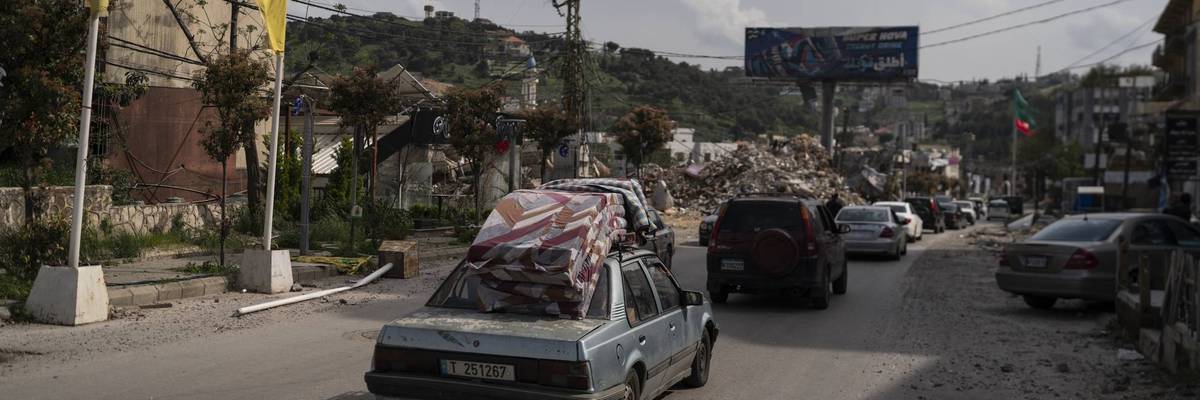
Residents return to check the aftermath of their businesses and houses on the first day of a ceasefire agreement on April 17, 2026, north of Saida in Nabatieh, Lebanon. (Photo by Adri Salido/Getty Images)

“This fragile truce must not be undermined,” said the secretary general of the Norwegian Refugee Council.

Less than an hour after US President Donald Trump announced that Israel was “PROHIBITED” from attacking Lebanon under a 10-day ceasefire reached Friday, an Israeli drone strike reportedly killed at least one person in southern Lebanon.

Citing Lebanese media, The Times of Israel reported that an Israeli drone targeted a motorcycle between the southern towns of Khounine and Beit Yahoun. The Israel Defense Forces have not commented on the attack.

RECOMMENDED…

A woman without a head covering walks by a mural depicting an Iranian hand squeezing closed the Strait of Hormuz

Iran Reopens Strait of Hormuz After Israel-Lebanon Truce as Trump Continues Blockade

Lebanese-Israeli conflict - Beirut

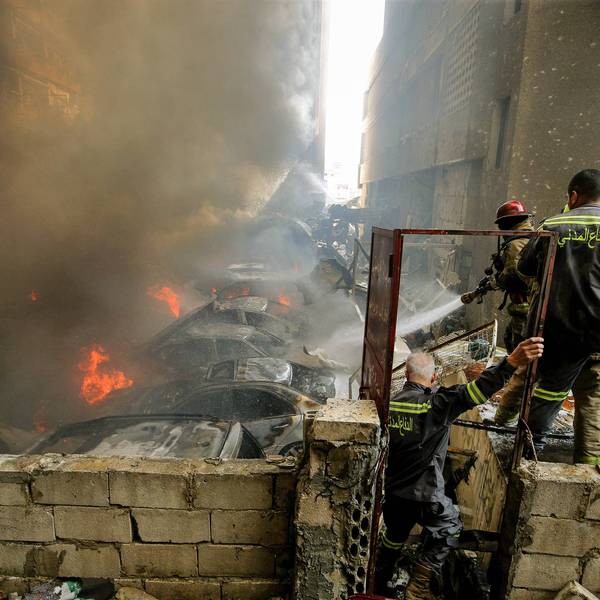
Despite Ceasefire With Iran, Israel Pummels Lebanon With ‘Apocalyptic’ Strikes

It was the latest in what the Lebanese Army said on Friday morning were “a number of violations” of the ceasefire within hours of it going into effect at midnight local time on Friday, as well as “intermittent shelling targeting a number of villages.”

Lebanon’s National News Agency reported that hours after the ceasefire went into effect, Israel struck an ambulance in the town of Khounine, near the Israeli border, which resulted in multiple casualties among the medical workers.

Israeli attacks on Lebanon since early March have killed nearly 2,300 people, according to Lebanese health officials and forced evacuation orders from Israel have resulted in the displacement of more than 1.2 million.

Trump said in a Friday social media post that under the framework reached Friday, “Israel will not be bombing Lebanon any longer. They are PROHIBITED from doing so by the U.S.A. Enough is enough!!!”

The US president has insisted that any agreement between Israel and Lebanon is separate from his ongoing two-week truce with Iran. Although Iran also announced on Friday that, following the Lebanon agreement, it stopped blocking travel through the Strait of Hormuz.

Iranian Foreign Minister Abbas Aragchi has specified that “the passage for all commercial vessels through the Strait of Hormuz is declared completely open for the remaining period of the ceasefire” between Israel and Lebanon.

Trump has claimed that the Iranian government “agreed to never close the Strait of Hormuz again,” and that the US will maintain its naval blockade of Iran.

Israel’s continued attacks on Lebanon have already put the peace deal between the US and Iran in jeopardy. After Iran briefly reopened the strait in response to the two-week ceasefire earlier this month, it began blocking travel again after Israel launched its most devastating attacks on Lebanon of the entire war, which killed hundreds of civilians.

Israel launched the attacks despite Lebanon having initially been announced as a party to the ceasefire, which Israeli Prime Minister Benjamin Netanyahu and then Trump quickly rejected.

After another agreement with Israel was reached on Friday, Lebanese President Joseph Aoun urged that the opportunity “must not be squandered because it may not come again.”

According to the US State Department, the agreement reached Friday still grants Israel the “right to take all necessary measures in self-defense, at any time, against planned, imminent, or ongoing attacks.” However, it is not clear at this time what imminent attack Friday’s strikes were intended to prevent.

Israel routinely violated its previous ceasefire with Lebanon that began in November 2024, with more than 10,000 air and land attacks over the first year, which the United Nations Interim Force in Lebanon (UNIFIL) said demonstrated a “total disregard of the ceasefire agreement.” It has done the same in Gaza, where hundreds of Palestinians have been killed since a ceasefire began in October 2025.

Netanyahu said on Friday that despite the ceasefire, Israel will continue its occupation of Southern Lebanon, where satellite images show the military has totally razed several towns and villages in what Israeli Defense Minister Israel Katz has described as a continuation of the “Gaza model,” which left most buildings in the strip totally destroyed.

Israel’s military spokesperson Avichay Adraee issued an “urgent message” to displaced Lebanese civilians following the ceasefire, urging them not to return to their homes south of the Litani River “until further notice.”

According to The Associated Press, thousands have begun heading home regardless to find their villages reduced to rubble.

“Across the country, roads are already congested with hopeful families trying to return to their homes. That alone shows how deeply people want this war to end,” said Jan Egeland, the Norwegian Refugee Council’s secretary general.

“This fragile truce must not be undermined. We cannot afford a repeat of the ineffective 2024 ceasefire, which saw countless violations. Worryingly, there are already reports of violations by the Israeli army, which also issued a warning against civilians returning to their homes south of the Litani river, home to hundreds of thousands of people,” Egeland said. “For this ceasefire to be meaningful for civilians, it must lead to a real and durable halt in hostilities.”

Original article by Stephen Prager republished form Common Dreams under Creative Commons (CC BY-NC-ND 3.0).

Keir Starmer explains that UK is actively supporting Israel's genocidal expansion and repeats his previous quotation that he supports Zionism "without qualification". Keir Starmer said “I said it loud and clear – and meant it – that I support Zionism without qualification.” here: https://www.jewishnews.co.uk/keir-starmer-interview-i-will-work-to-eradicate-antisemitism-from-day-one/
Keir Starmer explains that UK is actively supporting Israel’s genocidal expansion and repeats his previous quotation that he supports Zionism “without qualification”. Keir Starmer said “I said it loud and clear – and meant it – that I support Zionism without qualification.” here: https://www.jewishnews.co.uk/keir-starmer-interview-i-will-work-to-eradicate-antisemitism-from-day-one/
UK Labour Party government ministers Keir Starmer, Angela Rayner and Rachel Reeves explain that they are partners complicit in Israel's Gaza genocide. The UK has provided Israel with arms, military and air force support. They explain that they don't do gas chambers but do do forced marches, starvation, destroy hospitals, mass-murders of journalists and healthcare workers.
UK Labour Party government ministers Keir Starmer, Angela Rayner and Rachel Reeves explain that they are partners complicit in Israel’s Gaza genocide. The UK has provided Israel with arms, military and air force support. They explain that they don’t do gas chambers but do do forced marches, starvation, destroy hospitals, mass-murders of journalists and healthcare workers.
Orcas discuss Genocide-supporting and complicit Zionists. Donald Trump, Keith Starmer, David Lammy, Rachel Reeves, Angela Rayner and Wes Streeting are acknowledged as evil genocide-complicit and supporting cnuts.

Continue ReadingIsrael Strikes Lebanon Less Than an Hour After Trump Says It’s ‘PROHIBITED’ From More Attacks

“We will never abandon our prisoners alone in their struggle,” says former Palestinian prisoner

Spread the love

This article by Aseel Saleh republished from peoples dispatch under under a Creative Commons Attribution-ShareAlike 4.0 (CC BY-SA) license.

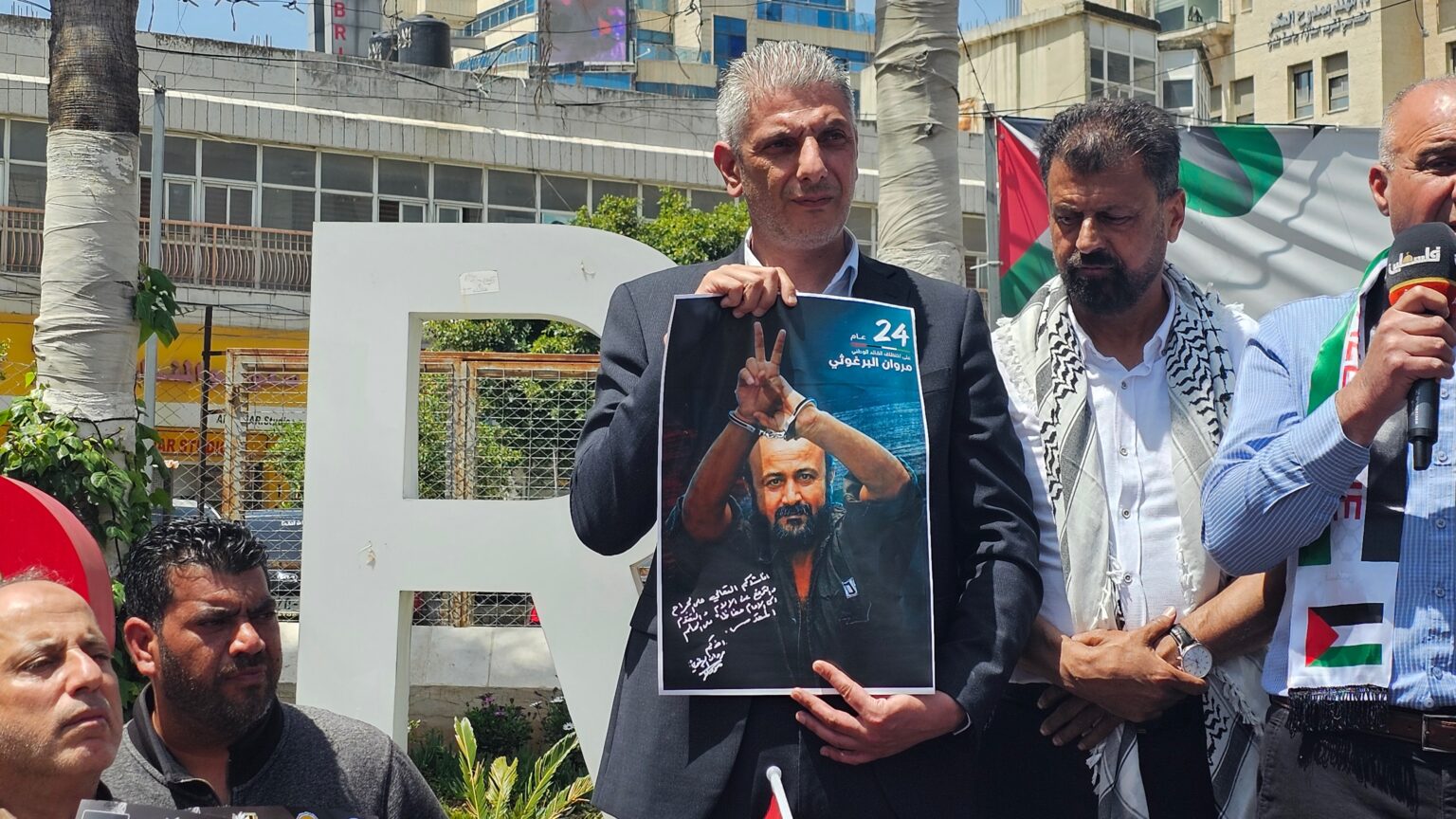
Raed Abu al-Hummus, head of the Palestinian Commission of Detainees and Ex-Detainees Affairs. Photo: Aseel Saleh

The prominent Palestinian official underlined the role of popular movements over the globe in mobilizing support to Palestinian prisoners within an internationalist framework.

For over five decades, Palestinians have observed Palestinian Prisoner’s Day on April 17 as a national day to honor the thousands of Palestinian political detainees held in Israeli occupation prisons, highlight their struggle, and demand their freedom.

In commemoration of the day, which is considered by Palestinians as a sacred occasion of patriotism and loyalty, Peoples Dispatch spoke to Mr. Raed Abu al-Hummus, head of the Palestinian Commission of Detainees and Ex-Detainees Affairs.

Abu al-Hummus, who is also a freed Palestinian prisoner, assumed his new position in the commission with the rank of minister in February 2025, amid highly challenging political and security circumstances.

On the one hand, the restrictions imposed by the Israeli occupation authorities as part of the crackdown on the Palestinian Prisoners’ Movement has made the work of the commission formidable.

On the other hand, the appointment of Abu al-Hummus came immediately following the Palestinian Authority’s decision to cut the stipends of many Palestinian prisoners, under pressure by the United States and the European Union. This in turn, has further burdened the commission, while dealing with the prisoners and their families.

Moreover, the commission has been abandoned by the concerned international human rights organizations, above all the International Committee of the Red Cross (ICRC), which seem to have complied with Israel’s arbitrary measures.

Abu al-Hummus, however, confirmed that the staff of the commission work with a high level of dedication and devotion, and deal with prisoners and their families with great protectiveness and understanding.

“Most of our staff are freed prisoners, who consider the issue of prisoners a personal humanitarian concern not a career,” he argued.

A silent genocide

Underscoring the intense suffering of Palestinian political detainees held in Israeli prisons after October 7, Abu al-Hummus said that while the Israeli genocide was in full swing and live-streamed in Gaza, another silent genocide began inside Israeli prisons and has continued till the moment.

The senior Palestinian official noted that severe torture, deliberate medical neglect, and starvation led to the death of at least 89 Palestinian prisoners inside Israeli jails since October, 2023.

Read more: “We are here to kill you”: Released Palestinian prisoner exposes torture and medical neglect in Israeli prisons

“This is a record-breaking toll in the history of the Palestinian Prisoners’ Movement,” he asserted, adding that the commission also received information about other unidentified fatalities among the detainees, who are kept inside morgues under the administration of the Israel Prisons Service (known as Shabas).

The tally also reveals that the Shabas has already begun to execute Palestinian prisoners by implementing slow killing methods, even before the unlawful bill that mandates the execution of Palestinian prisoners by hanging was endorsed by the Israeli Knesset last month.

Israeli rights groups and lawmakers file petition to overturn the death penalty bill

Regarding the death penalty bill, Abu al-Hummus clarified that it has not entered into force yet, because it is still under review by Israel’s Supreme Court, after a number of Arab lawmakers in the Israeli Knesset and legal rights group Adalah had filed petitions to overturn the law.

The law targets up to 117 prisoners, serving life sentences, but it would not be applied retroactively to Palestinian prisoners currently held in Israeli jails, according to Adalah Director Hassan Jabareen

Yet, Abu al-Hummus speculates that the Israeli government is pushing towards making the law applicable to the special forces of Al-Qassam’s Brigades (known as Al-Nukba), for their role in the October 7 attacks, maybe through legal loopholes.

Challenges facing the Palestinian Commission of Detainees and ex-Detainees affairs

The Palestinian minister explained how the mechanisms and dynamics of the commission’s work after October 7, are different from what was in place prior to that.

Before becoming the head of the Palestinian Commission of Detainees and Ex-Detainees Affairs, Abu al-Hummus was the liaison officer in charge of coordinating the communications between the commission and the prisons, as well as with the ICRC. From his unique vantage point, he has seen how the situation has transformed since October 7.

After October 7, the commission has faced numerous difficulties while attempting to get information about the conditions of the prisoners, particularly those who died inside the prison.

The commission has 65 lawyers who handle their responsibilities in all Israeli military courts and prisons, and submit requests to visit prisoners continuously. Yet, the sheer number of Palestinian prisoners held in Israeli jails and the heavy restrictions imposed by the Israeli authorities, have made these fundamental tasks next to impossible.

Many of the commission’s lawyers were banned from conducting visits on the pretext that they had obtained details from some prisoners more than they were allowed to, or for writing down notes on their hands during the visits.

Moreover, the lawyers were not allowed to conduct any visit for over five and a half months following October 7, because Israel had declared a state of emergency that included detention facilities.

The lawyers were later given the permission for visits, but the challenges have not stopped there as the earliest appointment for each visit was one month and a half after the request was submitted.

When the lawyers arrive at the gates of the prisons, a state of emergency is declared until the prisoners reach the room, where they would meet their lawyers.

In many cases, lawyers are kept for two or three hours without being able to see the prisoners, whom they are supposed to meet. In this case, the Shabas record the visits as if they were conducted, so the prisoners lose the opportunity of meeting their lawyers till the next visit.

The Shabas have used another pressure method when it comes to lawyers’ visits. When prisoners are allowed to have visits, they are tortured from the moment they are taken out from their prison cell until they reach the visiting room.

During the harrowing journey, they are blindfolded, restrained with legcuffs and handcuffs, and dragged in the passageways in spaces where cameras are not installed.

As a result, some prisoners have passed on a message to their lawyers not to return in order to avoid being tortured.

Read more: The Palestinian Prisoners’ Movement: the struggle behind bars

The international community proved to be a facade for the global imperialist capitalist system, says Abu al-Hummus

Abu al-Hummus slammed the international community for its inaction and complete silence towards the Israeli occupation’s flagrant violations against the Palestinian people, in general, and the prisoners, in particular, which have become more evident in the aftermath of Israel’s genocidal aggression on Gaza.

“The last couple of years have exposed the international community and its organizations that proved to be a facade for capitalism and imperialism. They only serve this system, which the United States has led through a unipolar world order,” he asserted.

“These organizations that pretend to be advocating and safeguarding human rights, only serve the global imperialist capitalist system from which they have basically emanated,” the prominent Palestinian official added.

Abu al-Hummus revealed that the ICRC has not paid the needed efforts to locate Palestinians, who were kidnapped by the Israeli Occupation Forces (IOF) from Gaza and subjected to forced disappearance.

“The Palestinian Commission for Detainees and Ex-Detainees Affairs has taken this task upon itself, and used untraditional methods such as reaching out to Israeli sources of information to locate the whereabouts of the Palestinian hostages, and get as much information as possible about their conditions,” he stated.

Abu al-Hummus counts on popular movements across the globe to save Palestinian prisoners

In spite of his deep disappointment in these organizations, Abu al-Hummus counts on the influence of popular solidarity movements across the globe to bring about change and hopefully liberation for the Palestinian people.

“When we read the history of other peoples, we remember that the demonstrations, which swept through the streets of France, contributed to the liberation of Algeria, while mass protests in the United States pushed towards ending the US war on Vietnam,” he maintained.

“It is now the time for the Palestinian people to be liberated with the support of people of conscience around the globe, by bolstering cooperation within an internationalist framework,” Abu al-Hummus continued.

It is a heavy price that we will pay while standing tall, Abu al-Hummus affirms

Abu al-Hummus concluded with a tone of defiance and pride, saying: “The brutality the Palestinian Prisoners’ Movement has endured at the hands of the Israeli occupation, is a heavy price that our people have paid for choosing resistance.” 

“Despite all the atrocities, we will pay this price while standing tall. We will never bow, and we will never abandon our prisoners alone in their struggle. We will spare no effort to improve their conditions, until we free them all,” Abu al-Hummus reaffirmed.

This article by Aseel Saleh republished from peoples dispatch under under a Creative Commons Attribution-ShareAlike 4.0 (CC BY-SA) license.

Keir Starmer explains that UK is actively supporting Israel's genocidal expansion and repeats his previous quotation that he supports Zionism "without qualification". Keir Starmer said “I said it loud and clear – and meant it – that I support Zionism without qualification.” here: https://www.jewishnews.co.uk/keir-starmer-interview-i-will-work-to-eradicate-antisemitism-from-day-one/
Keir Starmer explains that UK is actively supporting Israel’s genocidal expansion and repeats his previous quotation that he supports Zionism “without qualification”. Keir Starmer said “I said it loud and clear – and meant it – that I support Zionism without qualification.” here: https://www.jewishnews.co.uk/keir-starmer-interview-i-will-work-to-eradicate-antisemitism-from-day-one/
Keir Starmer objects to criticism of the IDF. He asks how could anyone object to them starving people to death, forced marches like the Nazis did, bombing Gaza's hospitals and universities, mass-murdering journalists, healthworkers and starving people queuing for food, killing and raping prisoners and murdering children. He calls for people to stop obstructing his genocide for Israel.
Keir Starmer objects to criticism of the IDF. He asks how could anyone object to them starving people to death, forced marches like the Nazis did, bombing Gaza’s hospitals and universities, mass-murdering journalists, healthworkers and starving people queuing for food, killing and raping prisoners and murdering children. He calls for people to stop obstructing his genocide for Israel.
Orcas discuss Genocide-supporting and complicit Zionists. Donald Trump, Keith Starmer, David Lammy, Rachel Reeves, Angela Rayner and Wes Streeting are acknowledged as evil genocide-complicit and supporting cnuts.
Continue Reading“We will never abandon our prisoners alone in their struggle,” says former Palestinian prisoner

Seeds, land, sovereignty: lessons from the Sahel for the International Day of Peasant Struggle

Spread the love

This article by Jonis Ghedi-Alasow republished from peoples dispatch under under a Creative Commons Attribution-ShareAlike 4.0 (CC BY-SA) license.

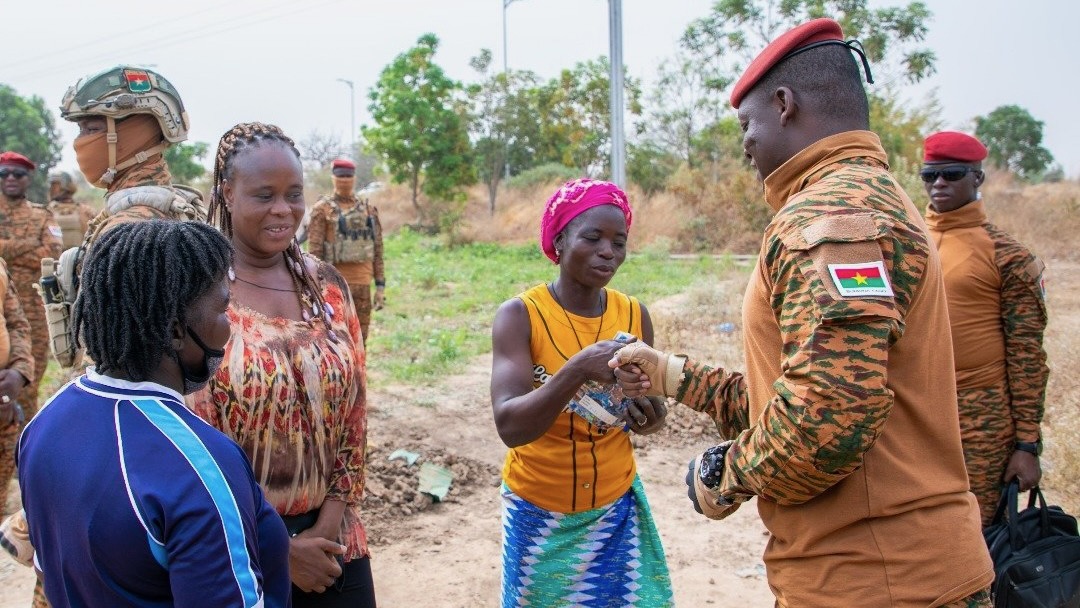
Ibrahim Traore visits women in agricultural production on International Women’s Day. Photo: Burkina Faso Presidency

April 17 is a day that reminds us that the Burkinabé, African, and international peasantry must be the heartbeat of livelihoods in our communities and must therefore be at the center of the claims being made to sovereignty.

On April 17, 1996, military police in Eldorado dos Carajás, Brazil, killed 21 landless workers who were blocking a road to demand agrarian reform. They were members of the Landless Rural Workers’ Movement (MST). Since then, La Via Campesina has designated April 17 as the International Day of Peasant Struggle – a global day to honor those fighting for land, seeds, water, and food sovereignty, and to hold accountable those who profit from their dispossession.

As we observe the 30th anniversary of this day in Africa, we are compelled to pay closer attention to important developments in the Sahel region of our continent, where, when the terrorists arrived, the women of Burkina Faso hid seeds in their hair.

This is not a metaphor. It is also not improvisation. Before colonial borders were drawn across the Sahel, before cash crops displaced subsistence farming, and before structural adjustment dismantled public seed banks, the women of West Africa had long carried seeds on their bodies. Seeds were inherited – the record of generations of cultivated knowledge about which variety survived the dry season and which grew on degraded soil. Seed-keeping was a form of social reproduction as fundamental as any other, and women overwhelmingly carried it. That practice faded under colonial tax regimes, agribusiness inputs, and varieties designed not to be saved. Communities grew dependent on inputs they did not control.

Crisis brought it back. As armed groups (whose proliferation followed directly from NATO’s 2011 intervention in Libya) swept through farming communities across the Sahel – burning fields, killing, and forcing hundreds of thousands from their land – Burkinabé women returned to what their grandmothers knew: concealing seeds beneath their hair. When the terrorists had gone, they brought the seeds out again. They planted once more. The act was both practical and political: what was preserved was not only food but also the cultivated knowledge that makes food sovereignty possible.

Land as weapon, seeds as resistance

Every year, 360,000 hectares of agricultural land are lost in Burkina Faso due to terrorism-driven displacement, climate change, and the cascading effects of a decade of instability. Peasants displaced from their villages either move to cities without support or try to rebuild their lives and livelihoods on unfamiliar, unsuitable, or equally threatened land.

Terrorism serves to weaken and fragment agricultural production. The displacement of Burkinabé peasants benefits those who seek to keep Africa reliant on food imports, international aid, and the “goodwill” of imperialism.

In response, peasant organizations, united under the Coalition for Surveillance of Biotechnological Activities (CVAB), have created an agroecological alternative to dependence on corporate inputs. Their opposition to GMOs and corporate biotechnology is based on structural issues, not sentiment: patented seed systems transfer control of Africa’s food supply to external actors (reflecting the logic of structural adjustment, but applied to agriculture). 

The state behind the seed

These issues are not new. They have been raised by the peasants and the organizations they have built for decades across the African continent. What, then, has changed under Ibrahim Traoré’s government? It is the scope of political possibilities. For the first time since Sankara, the agenda of peasant organizations – including food sovereignty, opposition to GMOs, and prioritizing locally produced food – has gained state support. The Agricultural Offensive launched in 2023 has redistributed tractors and inputs to farmers, redeployed agricultural engineers to rural regions, and achieved grain surpluses for two consecutive years. In his New Year’s address on December 31, 2025, Traoré declared that Burkina Faso had reached food self-sufficiency. In February 2026, the government established and nationalized five major agro-industrial complexes.

Importantly, the Alliance of Sahel States has established APSA-Sahel – the Alliance of Agricultural Seed Producers of the Sahel. Its clear mandate is to develop and distribute locally adapted, climate-resilient seeds; to build an indigenous regional seed market; and to end reliance on foreign seed imports that have left Sahelian farmers vulnerable for decades. The knowledge of locally adapted seed that the women of Burkina Faso have kept in their hair – which is irreplaceable – is now being formalized across three countries. The informal sector is becoming institutionalized.

April 17 and the African peasant

La Via Campesina’s call on April 17, 2025, highlighted that land, water, and territories are not commodities, and the act of conserving and exchanging traditional seeds should not be perpetually criminalized worldwide. The UN Declaration on the Rights of Peasants (UNDROP), adopted in 2018, affirms the collective rights of peasant communities over their seeds, land, and communal ways of life.

Food sovereignty, seed sovereignty, and environmental sovereignty are therefore strategic questions for the Africa Liberation struggle, commemorated on May 25 annually – not secondary concerns. In the Alliance of Sahel States, the fight over seeds is closely connected to the struggle for land, resources, and the right to influence development. It also puts the question of who the beneficiaries of these initiatives should be squarely on the table. In the spirit of April 17, the answer is clear: the Burkinabé, African and international peasantry must be the heartbeat of livelihoods in our communities and must therefore be at the center of the claims being made to sovereignty.

As Africa continues to fight for sovereignty and peasants strive for prosperity, there may be valuable lessons in the Burkinabé practice of preserving seed in women’s hair as a dignified symbol of the land (and continent) of the upright people.

Jonis Ghedi-Alasow is the Coordinator of the Pan Africanism Today Secretariat.

This article by Jonis Ghedi-Alasow republished from peoples dispatch under under a Creative Commons Attribution-ShareAlike 4.0 (CC BY-SA) license.

Continue ReadingSeeds, land, sovereignty: lessons from the Sahel for the International Day of Peasant Struggle

Spanish PM visit to China emphasizes importance of multilateralism and cooperation

Spread the love

This article by Ana Vračar republished from peoples dispatch under under a Creative Commons Attribution-ShareAlike 4.0 (CC BY-SA) license.

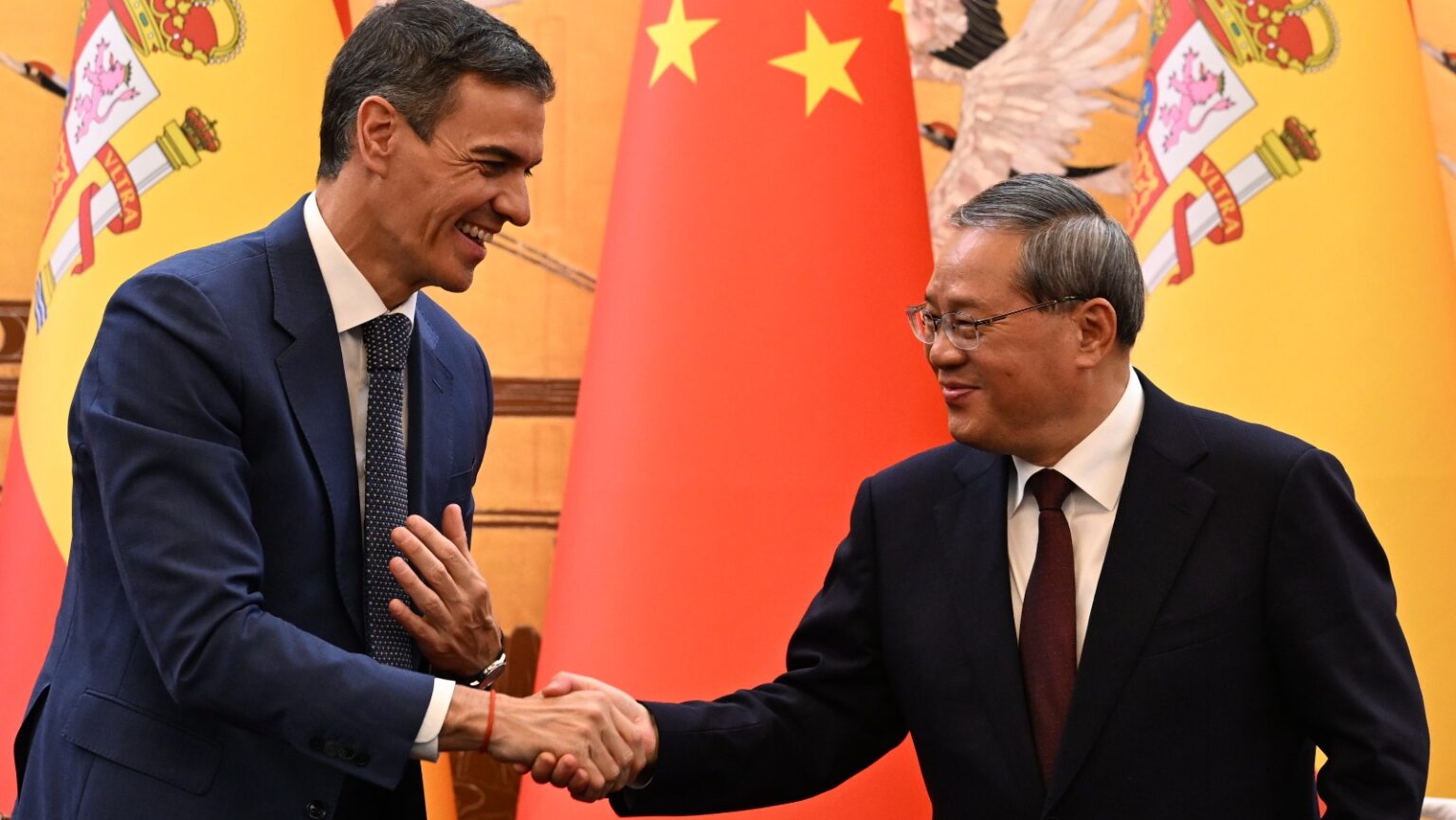
Spanish Prime Minister Pedro Sánchez with Chinese counterpart Li Qiang, April 2026. Source: La Moncloa/X

Spanish Prime Minister Pedro Sánchez completed his fourth visit to China in four years, marked by cooperation agreements and focus on multilateralism and peace.

While European Union officials have largely maintained frosty ties with China, Spanish Prime Minister Pedro Sánchez completed his fourth visit in four years to the Asian country – announcing agreements spanning trade, science, agriculture, food, and other sectors. Between April 11-15, Sánchez met Chinese President Xi Jinping, Prime Minister Li Qiang, and Chairman of the Standing Committee of the National People’s Congress Zhao Leji, signaling an alternative path to other EU member states.

The meetings emphasized cooperation between China and Spain in global affairs, particularly concerning international law and multilateral institutions. “China and Spain are both countries that value principle and justice, and both opt for the right side of history,” Chinese Foreign Ministry Spokesperson Guo Jiakun reported on these exchanges, conveying President Xi’s observations. “The two countries need to jointly uphold true multilateralism, and reject any backslide into the law of the jungle.”

Discussions on multilateralism and diplomacy occurred amid ongoing assaults on several countries in West Asia and Latin America led by the United States and Israel. Throughout these attacks, Chinese and Spanish officials have called for an end to the violence, with the Sánchez administration being the only EU government to stand up to Donald Trump in the early phases of the illegal war he launched on Iran alongside Israeli PM Benjamin Netanyahu.

Read more: Spanish government stands up to US threats, says it will work for peace and international law

During a speech at Tsinghua University in Beijing, Sánchez again emphasized the need for countries to work together for peace and counter those who view multilateralism as outdated. “Because a multipolar world without rules leads to rivalry, and rivalry only gives rise to wars, trade conflicts, and ruin,” he stated.

Instead, the Spanish Prime Minister suggested existing institutions, including the United Nations, should be strengthened in a way to provide fairer representation of Global South countries and others outside the West.

“In my opinion, what is happening today is not a shift in hegemony,” he said. “It is a proliferation of poles – not just of power, but also of prosperity. And this is great news for Europe. Because for the first time in contemporary history, progress is taking root simultaneously in many parts of the world – places that do not resemble one another and do not share the same culture. Nor do they share the same political system or the same social conditions. And they don’t need anyone’s permission to grow.”

Read more: Ibrahim Traoré: We do not want a democracy that kills

Unlike many other Western nations, Sánchez stated, Spain embraces this change. “We do so out of realism, out of pragmatism, and, without a doubt, out of a sense of responsibility,” he said. “But I would also like to emphasize that we do so out of hope.”

While adopting a more constructive approach than other European interactions with China, the Spanish Prime Minister’s visit also raised concerns about equitable trade relations, praising recent EU agreements with various countries – agreements that have raised concerns about likely impacts on local economies and rights – and proposed acting as a bridge in discussions to maintain economic cooperation between China and the European bloc.

This article by Ana Vračar republished from peoples dispatch under under a Creative Commons Attribution-ShareAlike 4.0 (CC BY-SA) license.

Continue ReadingSpanish PM visit to China emphasizes importance of multilateralism and cooperation