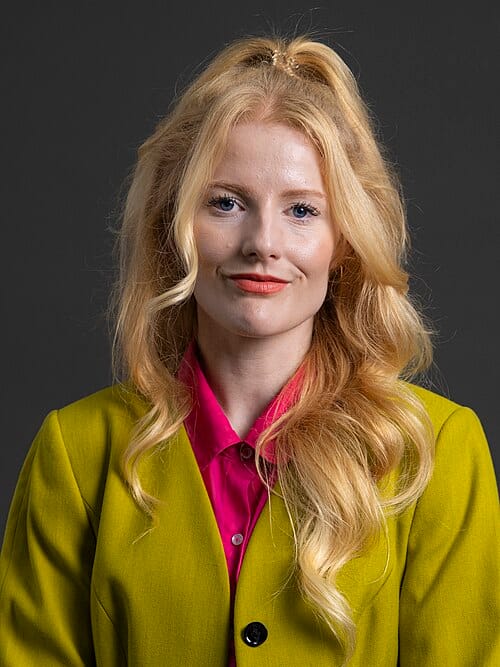
My Green colleagues and I are so incredibly disappointed in this King’s Speech, but it’s not a surprise. In the wake of a devastating set of local election results for the Labour Party, the Prime Minister and the government should have used this opportunity to lay out an urgent, transformative, progressive programme to redistribute wealth, tackle the nature and climate crisis and make life affordable for everyone.
My Green colleagues and I will seek to amend the government’s plans to include the urgent action needed to bring down people’s bills – rent controls, nationalising water, freezing energy prices, and taxing wealth. We need to see these measures despite the Labour Party’s drama, and even if there’s a different Prime Minister this time tomorrow!
I’m disappointed that instead of using this opportunity to get behind the Green Party’s demands, the government has laid out more of the same fiddling around the edges. There’s some positive movement on democratic reform and EU alignment, but also worrying double-downs on airport expansion and their cruel, unworkable immigration policy.
I was elected to give a voice to a politics that represents everyone. This is the first King’s Speech I have been in Parliament to hear, and I haven’t heard anywhere near enough to make meaningful changes to people’s lives. It’s a missed opportunity, it’s disappointing, and it’s out of touch. The people of this country deserve so much more.
The amendment will include:
Freezing energy prices in July to stop them going up by over £300
New powers to control rents
Funding for councils to buy existing homes from private landlords
Water utilities to be brought back into public ownership
Free bus passes for under 22s
Universal free school meals
Further measures to tax fossil fuel companies and the extreme wealth of billionaires and multimillionaires
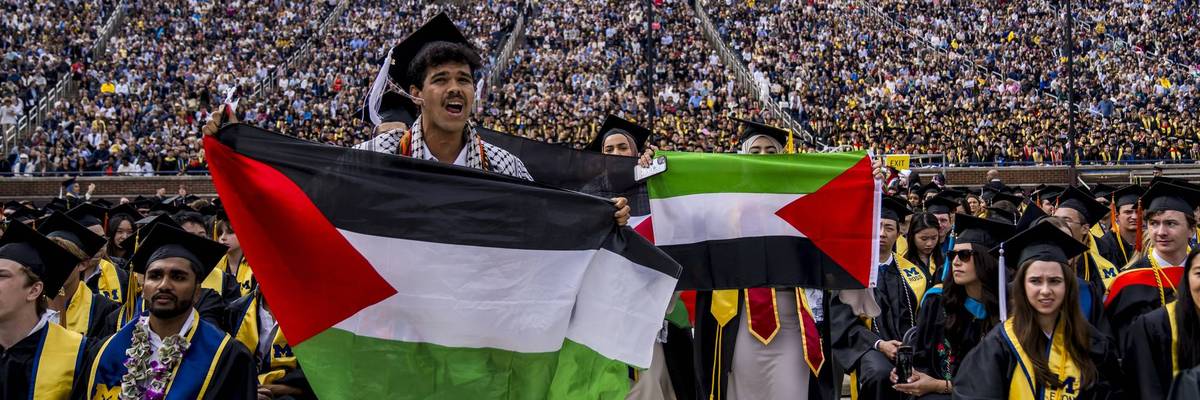
Students protest in support of Palestine during the University of Michigan’s Spring Commencement ceremony on May 4, 2024 at Michigan Stadium in Ann Arbor, Michigan. (Photo by Nic Antaya/Getty Images)
It posits that Israel represents all Jews and therefore criticism of Israel becomes criticism of the Jewish people and it denies the victims of Israel’s behaviors their legitimate right to speak of their pain.
Is it antisemitic to say that Israel is committing genocide in Gaza? More generally, is it “hurtful and insensitive” for someone to acknowledge the suffering that Israel has inflicted on the Palestinian people? In recent weeks, actions by two different institutions of higher learning brought these two questions to the forefront.
On April 15, a group of faculty and student organizations at Le Moyne College in Syracuse, New York, hosted celebrated Pulitzer Prize-winning writer Mosab Abu Toha to speak at the campus. During his appearance, to set the stage for the poems he was to read, Abu Toha shared his experiences living in Gaza during the start of the Israeli assault. He told of the members of his and his wife’s families who had been killed in Israel’s bombing campaigns. Entire families erased, neighborhoods laid waste, memories eradicated. It was, he stated, a genocide.
Days after event, Le Moyne’s president issued a statement apologizing for the discomfort that Abu Toha’s remarks may have created for some in the college community. The letter noted that his use of the word genocide in connection with the state of Israel caused “real hurt” and was leaving “some members of our community to feel unwelcome.” The president concluded by affirming that “antisemitism, along with all forms of bigotry and hate, has no place at Le Moyne.”
Abu Toha responded to the president’s letter with an “open letter” of his own, rejecting the implication that using the word genocide to describe Israel’s actions could be termed antisemitic.
It is worth noting that the assumption underlying this assertion fits hand-in-glove with the claim of real antisemites who argue that the consequences of Israel’s bad behaviors can legitimately be visited on all Jews.
“Seriously?” he asked. “Are the crimes of the Israeli state representative of all Jewish people? I personally refuse to believe that is the case… I never used the word ‘Jewish’ during the entire event; I refuse to conflate the faith of Judaism with the actions of Israel.”
He concluded: “If anyone told you they felt ‘hurt’ because I used the word genocide, then I ask you: How should I feel? How should my wife feel after losing her father? How should my three children feel after losing their grandfather?”
And then, this past weekend, the University of Michigan held its commencement ceremonies. One of the speakers was the president of the faculty senate. He began his short but eloquent remarks by noting that while the university celebrates its athletes and their accomplishments, there are other heroes who should also be celebrated—those who challenged the stale and unjust status quo of the university by opening the doors to inclusion and understanding.
He began by mentioning a young woman who in 1858 challenged the school’s opposition to enrolling women as students. He went on to note the first Jewish faculty member and the Black Action Movement that pressed the university to expand their curriculum to honor the black experience, and closed by recognizing the “student activists… who sacrificed much to open our hearts to the injustices happening in Gaza.”
His remarks were so beautifully constructed and presented that they elicited a roar of approval from those in attendance. The video of the event appearing on the university’s website shows his colleagues and administrators applauding the speech.
Within a few days, the same university president who is seen applauding issued a letter denouncing the professor’s speech as “hurtful and insensitive” and “inappropriate.”
(To avoid “further controversy” the university removed the video of the event—in which the president is seen applauding the speech—from the website).
The question that must be asked, in addition to those noted above, is what is the logic behind this claim that the remarks of both Abu Toha and the faculty senate president were hurtful to the point of being antisemitic?
The place to begin is by asking: “What is antisemitism?” The simplest and clearest definition is that antisemitism is hatred of, stereotyping of, or discrimination against Jewish people because they are Jews. Like other forms of bigotry, it claims that there are inherent characteristics or behaviors that are shared by all Jews, simply because they are Jewish.
Given this, the only way that criticism of Israeli actions can constitute antisemitism is if the critic implies that Israel does what it does because it is Jewish and “that’s the way Jews are,” or if the person making the claim of antisemitism maintains that because Israel says it is a Jewish state that whatever it does represents all Jews and therefore criticism of Israeli policies is the same as criticism of the Jewish people.
This latter position has long been propagated by pro-Israel organizations. Until recently, this proposition was mostly rejected, but it has now come to gain acceptance. It is dangerous precisely because it posits that Israel represents all Jews and therefore criticism of Israel becomes criticism of the Jewish people. It is worth noting that the assumption underlying this assertion fits hand-in-glove with the claim of real antisemites who argue that the consequences of Israel’s bad behaviors can legitimately be visited on all Jews. Interestingly, this is the same logic that has long plagued Arab Americans who have been victims of hate crimes because it was claimed that their ethnicity or religion made them legitimate targets in response to the actions of some Arab groups in the Middle East.
The other consequence is that, as Abu Toha correctly notes, it denies the victims of Israel’s behaviors their legitimate right to speak of their pain and call out, with specificity, the agent who caused it because of the hurt that might cause those who support Israel—or in the case of the University of Michigan, to deny the right of students to empathize with and demand that Palestinian victims be heard, because acknowledging Palestinian pain might also cause hurt feelings.
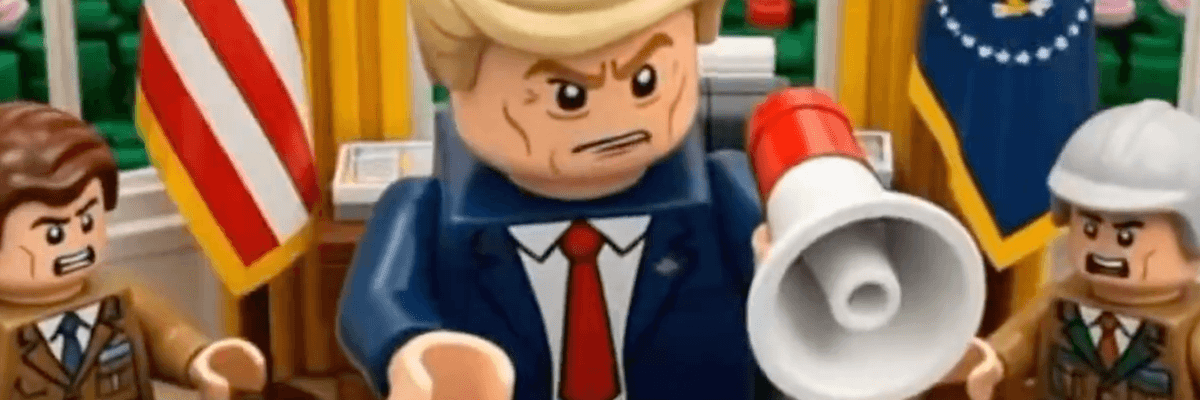
US President Donald Trump is depicted in a Cuba-themed Lego-style video inspired by the viral pro-Iran clip series. (Photo by screen shot/Tere Felipe/X)
Content creator María Teresa Felipe Sosa hailed Cubans as “a people who refuse to submit to the true regime of horror, which the United States represents, as it goes around starting wars throughout the world.”
As the team at Tehran-based Explosive Media keeps churning out viral artificial intelligence-generated Lego-style animated videos condemning the US-Israeli war on Iran, a Cuban version of the clips reacting to President Donald Trump’s threats to attack the island appeared Monday on social media.
First posted by Havana art historian and digital content creator María Teresa Felipe Sosa, the video was shared by users including US investigative journalist Ryan Grim and Explosive Media, which added, “Welcome to the #LRF Cuba,” or Lego Resistance Front.
“The threat that Cuba represents to the United States is the dignity and principles of a people who refuse to submit to the true regime of horror, which the United States represents, as it goes around starting wars throughout the world,” Felipe said Tuesday on social media.
They seek to stifle the lifeblood of this land with the talons of empire and the drums of war, from the north they unleash their poisonous breath seeking to seize what belongs to others. But this soil has roots of steel and a people who cannot be bought with money.
They raise walls of hatred and lies while the island, relying on its own strength, breathes amid 60 years of constant hostile siege—yet we continue to march forward with a firm step. There is no threat that can break our faith; the Cuban knows well how to stand tall.
Here dignity has neither price nor master; we are the guardians of our own dream. My people, stand tall, with fists held high against the invader and their dark assault.
There’s no surrender beneath this burning sun, for it’s known that the homeland must be defended. Resist my brother with your head held high for every victory in the battle-hardened struggle, your love is the compass of our people, for you know that the homeland must be defended.
With no victory in sight in the US-Israeli war on Iran and the American people increasingly wary of yet another war of choice waged by the self-described “president of peace” who’s now attacked 10 countries over the course of his two terms in office, even some Republican lawmakers are warning Trump against attacking Cuba.
Asked if he would support such an attack, Sen. James Lankford (R-Okla.) told The Hill on Tuesday, “No, I would not.”
“There’s a lot of economic pressure you can put on Cuba that makes a big difference by itself,” the hawkish senator added.
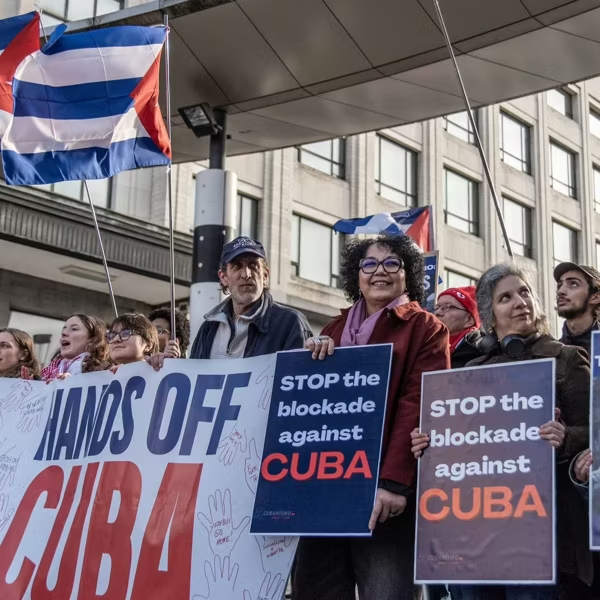
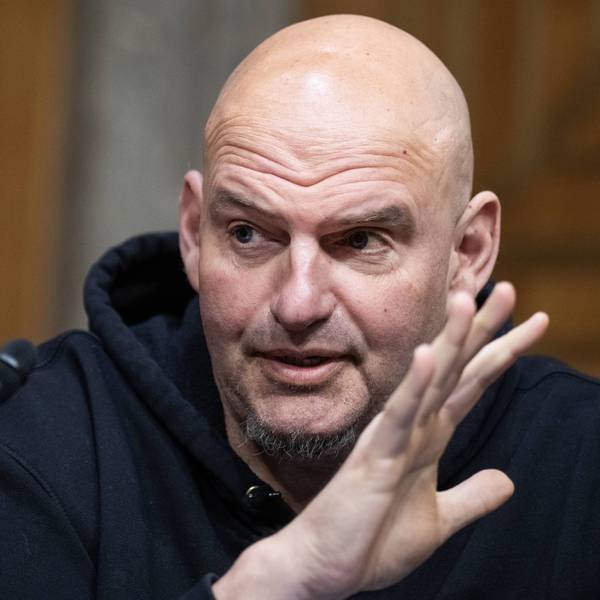
Numerous Democratic lawmakers have consistently opposed any attack on Cuba; however Democratic Sen. John Fetterman (D-Pa.) recently helped sink a Senate war powers resolution aimed at blocking Trump from attacking the country.
More than 6 in 10 Americans surveyed by multiple pollsters in recent months said they oppose a US war on Cuba.
Responding to the renewed US menace under Trump, Felipe recently wrote that “the current threats aren’t anything new, they only confirm a dangerous insistence—that of replacing international law with the law of the strongest.”
“In the face of that, Cuba responds with an uncomfortable and persistent idea—its people does not give up,” she continued. “Cuba is not seeking confrontation. It demands respect. And history, although some prefer to ignore it, has been clear—independence is not negotiated under threat.”
“Once again,” Felipe added, “and against all imperial odds, Cuba will win.”
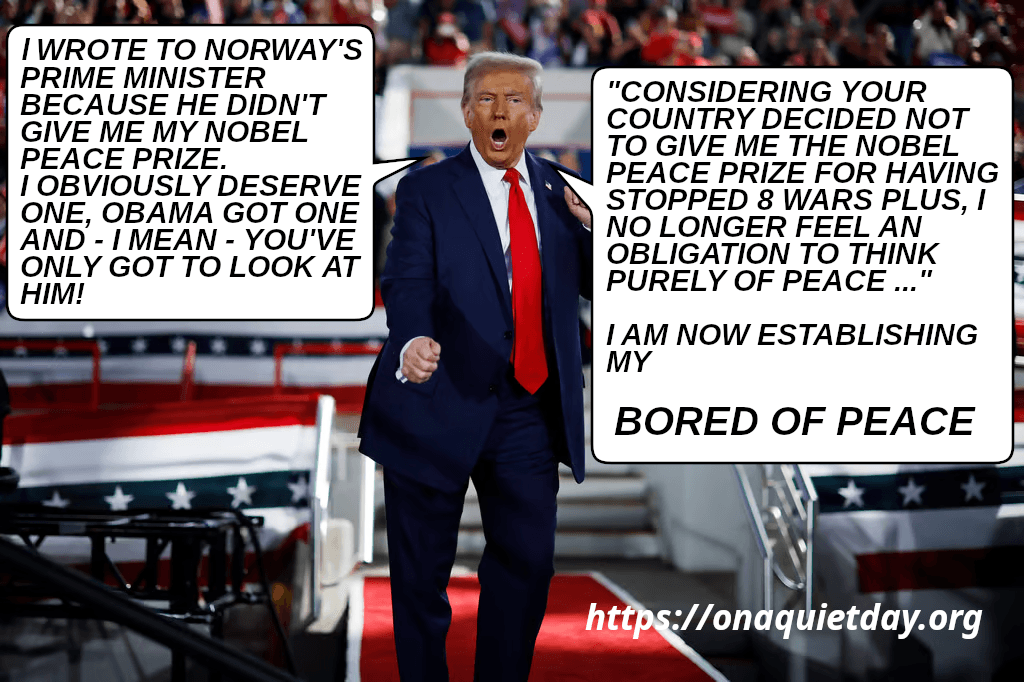
Donald Trump explains why he established his Bored of PeaceOrcas discuss rotting brain, front Orca says disinhibition and swearing are typical and common symptomsDonald Trump warns against following the Onaquietday.org blog, says that he’s heard that she’s a witch with a black cat and a dangerous kitchen.
Coffee prices are displayed at a supermarket in Alhambra, California on May 12, 2026. (Photo by Frederic J. Brown/AFP via Getty Images)
“The only thing Trump has made great again is inflation,” said Rep. Brendan Boyle.
Data released by the US Bureau of Labor Statistics on Wednesday showed continued upward pressure on prices, caused in large part by President Donald Trump’s war with Iran.
The Producer Price Index (PPI), which measures wholesale prices paid by businesses, posted a year-over-year gain of 6% in April, the largest yearly increase since December 2022.
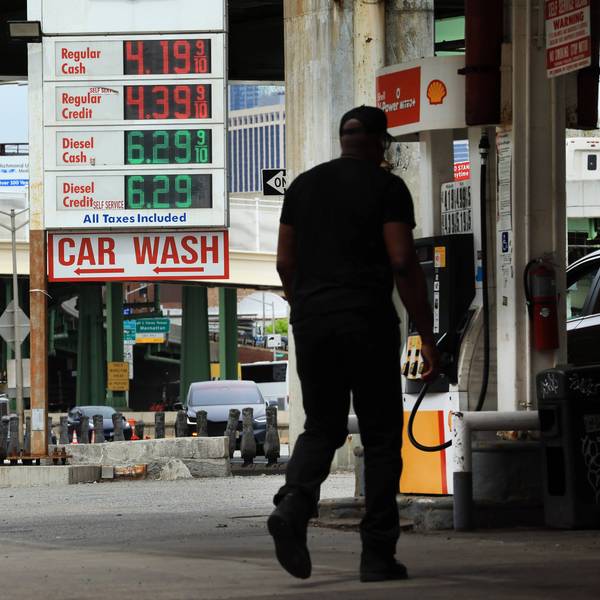
Energy prices, which have surged since Trump launched an unprovoked war with Iran in late February, played a large role in raising wholesale costs, as the report finds “more than three-quarters of the broad-based increase in April can be traced to a 7.8% jump in prices for final demand energy.”
However, energy prices aren’t solely responsible for rising wholesale prices, as the so-called “core” PPI, which excludes the costs of food and energy, posted a yearly increase of 4.4% in April, the largest since February 2023.
PPI is seen as an important gauge of future inflation for consumers, as companies typically pass the costs they pay for inputs onto consumers in the form of price increases.
“What’s in the pipeline now is headed straight for your grocery bill and gas tank,” Groundwork Collaborative added. “The pain isn’t over. It’s just beginning.”
CNN economics reporter Elisabeth Buchwald similarly predicted more hurt for US consumers in the coming months, arguing in a Wednesday article that a 6% increase in PPI shows “the pain will not be short-lived.”
“Even if the United States were to reach a deal with Iran today, it would still take months for shipments of oil held up by the blockade of the crucial Strait of Hormuz to reach American soil,” Buchwald explained. “And even then, it would likely be months—or potentially years—before Americans see gas prices return to levels before the war.”
Wednesday’s PPI report came one day after the Consumer Price Index showed that consumer prices in April rose by 3.8%, the largest yearly increase since May 2023.
Rep. Brendan Boyle (D-Pa.) reacted to the latest inflation data by ripping into the president’s policy decisions, including the Iran war and the global trade war he started shortly after returning to office last year.
“The only thing Trump has made great again is inflation,” Boyle, the ranking member of the House Budget Committee, wrote in a social media post. “His disastrous policies—from his tariff taxes to his war in Iran—are making life even more expensive. We shouldn’t be surprised the guy who managed to bankrupt a casino isn’t an economic mastermind.”
Rep. Maxine Dexter (D-Ore.) linked the increased prices to Trump’s desire to have Congress spend $1 billion of taxpayer money on his proposed White House ballroom.
“Oregonians need real relief from these high costs at the store and the pump,” wrote Dexter. “We must stop the war in Iran and refuse to pay for presidential vanity projects. Oregon families want peace. They need a break, not a ballroom.”
Orcas discuss how Trump was re-elected and him being an obviously insane, xenophobic Fascist.Donald Trump sings and dances, says that it’s fun to kill everyone …Keir Starmer explains that UK is participating defensively in Trump and Israel’s criminal war for Israel’s genocidal expansion in Iran and states that he supports Zionism “without qualification”. Keir Starmer said “I said it loud and clear – and meant it – that I support Zionism without qualification.” here: https://www.jewishnews.co.uk/keir-starmer-interview-i-will-work-to-eradicate-antisemitism-from-day-one/
The government’s latest offensive came after the release of a documentary co-produced by PBS that allegedly exposes the deals Bukele is said to have struck with El Salvador’s most powerful gangs.
Last week, the online newspaper El Faro reported that the government of right-wing Salvadoran President Nayib Bukele froze the bank account and a property belonging to two partners of Trípode S.A., the company that founded and supports El Faro. According to the Ministry of Finance, the measure functions as collateral for alleged debts related to tax evasion.
However, the media outlet’s partners and journalists assert that this is yet another attempt to intimidate the press that has been critical of the Bukele administration and that, at its core, seeks to silence those who expose the right-wing government’s alleged acts of corruption.
The online newspaper El Faro has reported on numerous occasions that the government of right-wing President Nayib Bukele has launched several attacks against its journalists. It all began in 2020, when the president himself announced at a press conference that an investigation into the media outlet for money laundering would be launched.
Following that, the government conducted four audits to examine the source of the media outlet’s funding. Once it could not be proven that the funds were of illicit origin, the government pivoted to investigating the outlet for alleged tax evasion.
Carlos Dada, director of El Faro, told El País: “None of those audits has reached a final ruling; all are currently being litigated. We do not evade taxes. The taxes have been paid, and we have proven it.”
The allegations of deals between Bukele and the gangs
El Faro began facing increased pressure after it revealed alleged pacts between powerful Salvadoran gangs and various governments, including Bukele’s.
In May 2025, several leaders of the Barrio 18 gang claimed that their organization had engaged in negotiations with Bukele before he became president – that is, while he was mayor of San Salvador.
The recent attempt to financially strangle El Faro coincides with the release of a documentary titled “The Deal,” produced in collaboration with the US network PBS, which reconstructs the alleged agreements between the Bukele administration and the MS-13 and Barrio 18 gangs. This documentary has garnered hundreds of thousands of views in less than a month.
“Clearly, this is another step in the escalation we’ve been facing since 2020. Not only through legal channels, but also through economic strangulation, political attacks, false accusations, espionage, and the interception of our communications,” Dada told El País.
In 2023, after several years of investigations, threats of criminal trials, and audits that have proven nothing, the administrative structure was forced to relocate to Costa Rica. In 2022, the newspaper also reported that 22 of its staff members had been subjected to nearly 226 attempts to hack into their electronic devices using the Pegasus spyware.
“We conclude that at least 35 individuals from the media organizations El Faro, GatoEncerrado, La Prensa Gráfica, Revista Digital Disruptiva, Diario El Mundo, El Diario de Hoy, and two independent journalists were hacked using Pegasus. We also identified hacking against civil society organizations in El Salvador, including Fundación DTJ, Cristosal, and another NGO,” Citizen Lab states in a report on the spying on journalists and activists in El Salvador
According to a recent report by the Association of Journalists of El Salvador (APES), nearly 50 journalists and reporters have been forced into exile in 2025 for fear of being imprisoned by the Bukele administration, including the entire main editorial staff of El Faro. In addition, there have been more than 400 attacks against journalists by a government that appears to have no moral qualms about confronting the press with the force of the state.
In this regard,El Faro states in an article: “The government continues to criminalize journalists and media outlets that defy its propaganda. It is using the state apparatus, which is under the control of the Bukele family, to persecute critical voices.” A year after the forced exile of our staff from El Salvador, we have continued to practice journalism and investigate the government, through the publication of monthly magazines, weekly podcasts, international collaborations, and more gatherings of journalists, such as the Central American Journalism Forum.”
Finally, the newspaper stated: “We will continue to practice journalism with the commitment and rigor that has characterized us since 1998. But also with the certainty that, as long as we don’t stop, they won’t stop either.”