Original article by Julia Conley republished from Common Dreams under Creative Commons (CC BY-NC-ND 3.0).

European Union officials said the Copernicus Climate Change Service had issued its latest “stark reminder of why climate action is urgent” when the bloc’s program announced that it observed less sea ice covering the Earth’s oceans last month than at any other point in recorded history.
In the Arctic, sea ice reached its lowest monthly extent on record, at 8% below average, in early February, and it remained below the previous record for the rest of the month.
The oceans were missing an area of ice roughly the size of the United Kingdom last month, according to Copernicus (C3S), and the finding was not an anomaly in recent sea ice observations.
February marked the third consecutive month in which record low sea ice levels for the corresponding month were observed in the Arctic.
C3S reported that in the Antarctic, sea ice levels have rapidly declined in 2025 after appearing to recover to near-record levels in December 2024.
Last month, sea ice near the South Pole reached its fourth-lowest monthly extent, at 26% below average.
C3S said the daily sea ice extent in the Antarctic may have also reached its annual minimum toward the end of the month, which will be confirmed later in March; if confirmed, it would be the second-lowest annual minimum in the satellite record.
“February 2025 continues the streak of record or near-record temperatures observed throughout the last two years,” said Samanatha Burgess, strategic lead for climate at the European Center for Medium-Range Weather Forecasts. “One of the consequences of a warmer world is melting sea ice, and the record or near-record low sea ice cover at both poles has pushed global sea ice cover to an all-time minimum.”
The melting sea ice was recorded as global average temperatures rose 1.59°C (2.8°F) above the pre-industrial average last month, making it the third-warmest February on record.
In Europe, the temperatures that most exceeded averages were recorded last month in parts of Scandinavia, Iceland, and the Alps. Outside of Europe, “temperatures were most above average over large parts of the Arctic.”
The low extent of sea ice will lead to “more solar heat absorbed by the darker oceans,” and “faster warming,” said Simon Oldridge, a climate campaigner.
The loss of sea ice can also lead to the collapse of ocean currents that are crucial for marine life to thrive.
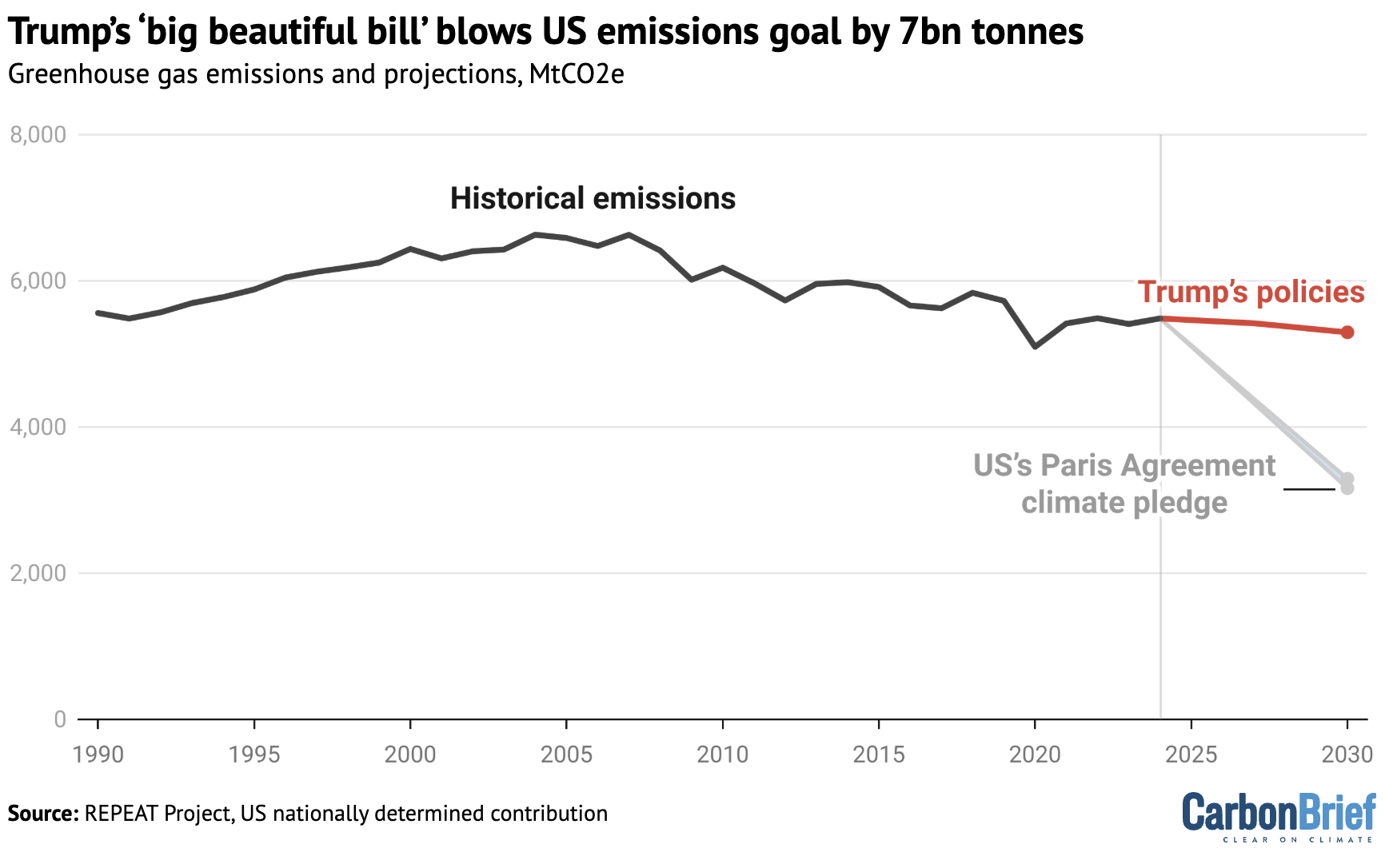
C3S reported on the record-low sea ice levels as campaigners in the U.S. and around the world condemned recent anti-climate actions taken by U.S. President Donald Trump and the Republican Party, including the country’s exit from the Paris climate agreement, the GOP’s passing of a bill to end a federal program aimed at reducing planet-heating methane emissions, and Trump’s push to fast-track fossil fuel projects—as scientists warn that new extractive projects have no place on a pathway to limiting planetary heating and avoiding its worst impacts.
“The environment does not care about politics,” said public health expert Ali Khan. “Keep spewing greenhouse gases and face the consequences.”
Original article by Julia Conley republished from Common Dreams under Creative Commons (CC BY-NC-ND 3.0).


Original article by Jessica Corbett republished from Common Dreams under Creative Commons (CC BY-NC-ND 3.0).

A leading conservation group filed suit Monday to stop U.S. President Donald Trump and billionaire Elon Musk from “gutting” over a dozen of the federal government’s environmental agencies and departments.
This isn’t the Center for Biological Diversity’s first lawsuit targeting Trump’s Musk-led Department of Government Efficiency, but it is the first lawsuit in the country “challenging DOGE’s efforts to eviscerate the agencies charged with protecting the environment, natural resources, and wildlife,” according to a statement from the group.
The suit names as defendants the Environmental Protection Agency and departments of Agriculture, Commerce, Interior, and Transportation, as well as several entities under them: the Animal and Plant Health Inspection Service, Bureau of Land Management, Bureau of Ocean Energy Management, Federal Aviation Administration, Fish and Wildlife Service, Forest Service, National Oceanic and Atmospheric Administration, and National Park Service.
“The world’s richest man has created an alternative power structure inside the federal government for the purpose of controlling spending and pushing out employees.”
“Elon Musk and his hacker minions are tearing apart the federal agencies that protect our public lands, keep our air and water clean, and conserve our most cherished wildlife. The public has every right to know why they’re waging this cruel war on our environment,” said Brett Hartl, the center’s government affairs director.
“Musk has shown that he can and will destroy a federal agency in a single weekend,” Hartl added. “If his deranged antics are allowed to continue, we might never be able to fix the damage to America’s environment.”
The suit alleges “a flagrant violation of the Federal Advisory Committee Act (FACA), which requires transparency, open public participation, and balanced representation when the president or executive branch agencies establish or use nonfederal bodies for the purpose of seeking advice or recommendations.”
Trump’s executive order establishing DOGE directs all agencies to form teams, or what FACA calls advisory committees, controlled by Musk. The complaint argues that “defendants have failed to ensure that the DOGE teams comply with the balance and openness requirements of FACA.”
“Mr. Musk and other billionaire and tech executives working with DOGE stand to benefit personally and financially from the DOGE teams’ work, including by securing government contracts, slashing environmental rules that apply to their companies, and reducing the government’s regulatory capacity and authority, including by targeting specific agencies, statutes, and spending decisions that affect their businesses,” the filing warns.
The complaint notes recent reporting that “Musk is using his influence over the DOGE teams to rapidly consolidate control over large swaths of the federal government, sideline career officials, gain access to sensitive databases, and dismantle agencies and regulatory systems.”
“Since President Trump assumed office—and without any congressional approval—the world’s richest man has created an alternative power structure inside the federal government for the purpose of controlling spending and pushing out employees,” the document adds. “Meanwhile, Musk has been named as a special government employee, which subjects him to less stringent rules on ethics and financial disclosures regarding his role overseeing DOGE and the DOGE teams.”
The new case calling on the court to require compliance with FACA comes after the center filed another federal suit in Washington, D.C. last Thursday with the aim of using the Freedom of Information Act to unveil details about what Hartl said “should be called the Department of Government Evisceration.”
It also follows U.S. Rep. Gerry Connolly (D-Va.), ranking member of the House Committee on Oversight and Government Reform, launching a probe last month into Musk’s official title. The congressman demanded answers from the White House by this coming Thursday.
Original article by Jessica Corbett republished from Common Dreams under Creative Commons (CC BY-NC-ND 3.0).


Original article by Zach D. Roberts republished from DeSmog.

Just a month into President Donald Trump’s chaotic administration, American and international conservatives swooped into the 2025 Conservative Political Action Conference (CPAC) outside Washington, D.C., in mid-February, and took a knee to the president, non-elected billionaire Elon Musk, and their fossil fuel deregulation agenda.
After numerous speeches heralding the MAGA movement by major figures on the right, including Vice President JD Vance, DOGE chief Elon Musk, ex-Trump aide Steve Bannon, and Speaker of the House Republican Mike Johnson, on the last day of the four-day event, Trump himself spoke to the faithful. Basking in chants of “USA, USA,” Trump boasted about withdrawing from the “one-sided” Paris Agreement, saying, “It was a disaster, it was a disaster.”
“I terminated the Green New Scam,” he went on, referring to the Green New Deal, which was never enacted or proposed as an actual bill. “One of the greatest hoaxes ever played on this country is the Green New Scam. We spent trillions of dollars on this nonsense … It really set back our country.”
In a rambling speech bereft of solid policy or facts, Trump also said he “canceled Joe Biden’s insane electric vehicle mandate, where everybody has to have an electric,” again referring to non-existent legislation. Biden did not mandate people to switch to electric cars; he had progressively stricter pollution standards.
Trump’s final reference to the environment in his speech was that “people can buy any type of car they want, except for hydrogen. The only thing you can’t do is buy a hydrogen-powered car. You know why? They said it really works great, but when it doesn’t work, you never find a body. It’s a bet that’s a bad sign.” As of this publication date, no one has been disintegrated by a hydrogen car explosion. He then ended with his signature dance as the Village People’s “YMCA” blared over the loudspeakers.

Trump’s references to fake climate policy was emblematic of this year’s CPAC discussions on the environment. In past years, the conference’s environmental speakers were more “scientific,” with conservative climate denialists showing graphs and data to prove their theories that climate change seemingly does not exist. But with no breakout sessions this year, the gathering was all anti-climate talk and pro-MAGA with zero attempts at science.
Take former UK Prime Minister Liz Truss’s talk on Thursday, Feb. 20, the second day of CPAC. Truss, who had previously served as the UK’s environment secretary, expressed her anger that her move to end the ban on fracking in Great Britain was brought back in 2022 by her predecessor, Prime Minister Rishi Sunak.
Truss was famously only in office for 45 days. “Sadly, I wasn’t in office long enough to actually make [the fracking ban] happen,” she told the conference crowd.
“We have net-zero policies that have decimated our oil and gas industry,” she said. “The net result is we have the highest energy prices in the developed world. And in Britain, we’ve just seen the last steel plant close down last year. We cannot produce our own steel anymore.”
The former Prime Minister, who spent much of her adult life in government, then repeated Trump’s disdain for the “deep state,” saying, “We want to dismantle the British deep state, which is older and more entrenched than the American one.”
“We need a great restoration bill to repeal all of the terrible laws, from the Equality Act to the Climate Change Act, the Human Rights Act to the Constitutional Reform Act,” she said. “We need to eradicate judicial activism in Britain and restore parliamentary sovereignty.”
CPAC has expanded its international influence and speakers over the last few years with annual South Korea and Hungary meetings. Leader of the Reform UK party Nigel Farage, who also attended, has spoken at the conference for many years, and is considered a bit of a celebrity here.
On the first day of the conference, U.S. Energy Secretary Chris Wright’s speech pushed Trump’s “drill baby drill and build baby build” philosophy. The former fracking CEO of Liberty Energy promised that his and Trump’s other cabinet departments would be “working feverishly” to remove regulations to pave the way for higher energy production. He also emphasized removing restrictions the Biden Administration put on fossil fuel appliances like gas stoves.
Last year, gas stoves were the new “plastic straws” in the world of right-wing media as conservative news outlets claimed the Democratic administration was looking to ban them fully, which it was not.

Economic competition with China has been a running theme through many of the speeches at CPAC for years. But now, with the massively successful launch of DeepSeek, finding energy for artificial intelligence operations is a priority. Wright’s speech emphasized the energy use that AI technology will demand and claimed that it will lead to “enormous benefits” in drug discovery and national security. “We want China to lead the way in AI? I would feel naked if their AI was better than ours,” he said.
AI and tech companies donated huge amounts to the Trump campaign, to the tune of tens of millions of dollars. That investment has paid off as the closure of the Consumer Financial Protection Bureau and Trump’s changes at the FTC and FCC to reign in their powers will benefit the tech world immensely. Trump has even rescinded Biden’s executive order warning people about AI.
One of Trump’s first executive orders demanded the nation “unleash Alaska’s extraordinary resource potential.” Environmental rights organization, EarthJustice replied, “While the Trump administration’s plans were made clear in the orders, it’s important to note that the vast bulk of the actions cannot be made unilaterally by the President without cooperation from government agencies, Congress, or other authorities.”
Running throughout CPAC on the big screens in the main ballroom amounted to campaign ads for Alaska Gov. Mike Dunleavy, who wants to leave his job in the 49th state. Called the “worst-kept-secret,” Dunleavy had been auditioning for a gig in the Trump administration, but now that that doesn’t seem to be happening, he’s likely looking at running for Senator against one of his fellow Republicans, Dan Sullivan, who is up for reelection in 2026, or Lisa Murkowski, who is up in 2028. The ad, which features Trump prominently, has the President speaking about how he will work with Dunleavy to provide “energy to Alaska and allies around the world.”
From the CPAC stage, Gov. Dunleavy told the audience that Trump “sees us [Alaska] as a solution to many of America’s problems.” A $44 billion liquified natural gas pipeline project that both Trump and Dunleavy are pushing is oddly not planned to send energy to the lower 48, but to Asian customers. Japan has been trying to curry favor with Trump for access since that could help the nation diversify supplies away from riskier sources like Russia.
President Trump has commanded the new Secretary of the Interior, Doug Burgum, to find new ways to exploit public lands. The goal, Burgum explained in his CPAC speech, is to “sell to our friends and allies.” He claims that doing so will “end our trade deficits” and “the wars abroad.” Ultimately, Burgum claims this work will set up President Trump to “win the Nobel Prize.”
Burgam, a billionaire former two-term governor of North Dakota and a software developer, has extensive ties to the oil and gas industry, including hundreds of thousands in investments. After a brief run for President in 2024, Burgam endorsed Trump.

Burgam will also chair the newly founded National Energy Dominance Council with Energy Secretary Chris Wright as vice chair. The council “will advise President Trump on strategies to achieve energy dominance by improving the processes for permitting, production, generation, distribution, regulation, and transportation across all forms of American energy.” It will also cut “red tape” through axing regulations.
CFACT Was the Lone Climate Group in Hall
Down in the exhibit hall, the tables that many years ago mainly saw small government groups were filled with culture warriors – groups opposed to abortion, trans rights, and other historically underrepresented communities. This year, the lone group in the hall focusing on climate was CFACT, Committee for a Constructive Tomorrow, a “conservative libertarian think tank.”
Nate Meyers, CFACT’s national field coordinator was clear on the group’s approach to the “science” of climate change –“It’s not settled at all,” he said. Meyers verbally added, “™”[trade mark]] as he said the words “climate change” when speaking to DeSmog.
https://www.youtube.com/embed/QKjLqdrm3N0?feature=oembedCFACT’s Nate Myers speaks with DeSmog. Credit: Zach D. Roberts
Collegians for a Constructive Tomorrow is CFACT’s college campus organization, which, according to Myers, has 32 campus groups. Like Charlie Kirk’s Turning Point USA, CFACT aims to capture the minds of young people, according to Myers., “College campuses are so totally captured by the left. Statistically, you’re more likely to be instructed by a Marxist than you are a Republican,” he said.
“That demonstrates a huge need for alternative viewpoints on college campuses,” he added. “And it’s kind of a cliche thing to say, but the children and young people are our future.”
When asked who funds CFACT, Myers mentioned small donations and occasional larger direct donations, emphasizing the grassroots nature of the organization. When DeSmogasked if they received backing from Koch Inc., like many similar climate-denying groups, Myers demurred, saying he wasn’t a fan of Koch.) In the past, CFACT has received large sums from Koch’s Donors Trust, along with all the other usual suspects of right-wing climate denying donors.
Original article by Zach D. Roberts republished from DeSmog.


In a high emissions future, the world’s strongest ocean current could slow down by 20% by 2050, further accelerating Antarctic ice sheet melting and sea level rise, an Australian-led study has found.
The Antarctic Circumpolar Current – a clockwise current more than four times stronger than the Gulf Stream that links the Atlantic, Pacific and Indian oceans – plays a critical role in the climate system by influencing the uptake of heat and carbon dioxide in the ocean and preventing warmer waters from reaching Antarctica.
Using Australia’s fastest supercomputer and climate simulator, Gadi, located at Access National Research Infrastructure in Canberra, the researchers used climate models to analyse the impact of changing temperature, ice melting and wind conditions on the Antarctic Circumpolar Current.
The results, published in Environmental Research Letters, revealed a clear link between meltwater from Antarctic ice shelves and circumpolar current slowdown, and comes less than a week after another paper anticipated a weakening in vital Atlantic Ocean currents.
What they found suggested a “substantial reconfiguration of Southern Ocean dynamics”, with “far-reaching impacts on global climate patterns, oceanic heat distribution, and marine ecosystems”.
Co-author Assoc Prof Bishakhdatta Gayen, from the University of Melbourne, described the result as “quite alarming”.
He explained that as melting Antarctic ice released cold, fresh water into the ocean, this sank and spread towards the equator. That flow of fresh water changed the density variation in the ocean, a key driver of movement, causing the slowdown.
“The ocean is extremely complex and finely balanced. If this current ‘engine’ breaks down, there could be severe consequences, including more climate variability, with greater extremes in certain regions, and accelerated global warming due to a reduction in the ocean’s capacity to act as a carbon sink,” Gayen said.
…
See the original article at https://www.theguardian.com/environment/2025/mar/03/antarctic-circumpolar-current-slow-down-ice-melting-climate