The climate is changing so fast that we haven’t seen how bad extreme weather could get

Spread the love
Andreas Thaller/Alamy Stock Photo

Simon H. Lee, University of St Andrews; Hayley J. Fowler, Newcastle University, and Paul Davies, Newcastle University

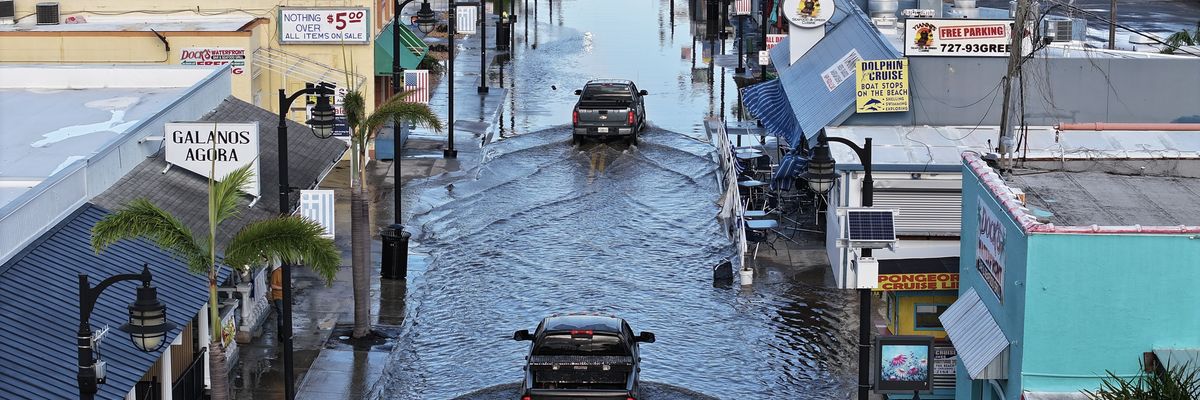
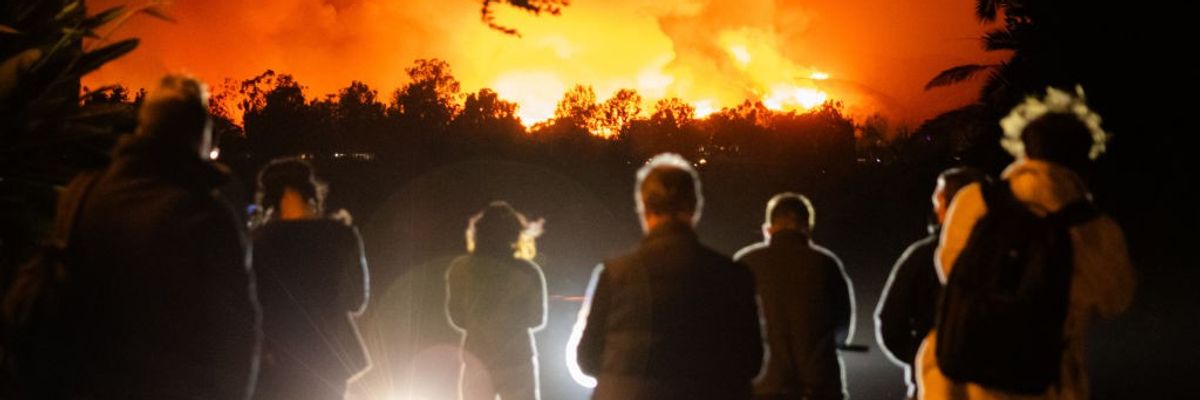
Extreme weather is by definition rare on our planet. Ferocious storms, searing heatwaves and biting cold snaps illustrate what the climate is capable of at its worst. However, since Earth’s climate is rapidly warming, predominantly due to fossil fuel burning, the range of possible weather conditions, including extremes, is changing.

Scientists define “climate” as the distribution of possible weather events observed over a length of time, such as the range of temperatures, rainfall totals or hours of sunshine. From this they construct statistical measures, such as the average (or normal) temperature. Weather varies on several timescales – from seconds to decades – so the longer the period over which the climate is analysed, the more accurately these analyses capture the infinite range of possible configurations of the atmosphere.

Typically, meteorologists and climate scientists use a 30-year period to represent the climate, which is updated every ten years. The most recent climate period is 1991-2020. The difference between each successive 30-year climate period serves as a very literal record of climate change.

This way of thinking about the climate falls short when the climate itself is rapidly changing. Global average temperatures have increased at around 0.2°C per decade over the past 30 years, meaning that the global climate of 1991 was around 0.6°C cooler than that in 2020 (when accounting for other year-to-year fluctuations), and even more so than the present day.

A moving target for climate modellers

If the climate is a range of possible weather events, then this rapid change has two implications. First, it means that part of the distribution of weather events comprising a 30-year climate period occurred in a very different background global climate: for example, northerly winds in the 1990s were much colder than those in the 2020s in north-west Europe, thanks to the Arctic warming nearly four times faster than the global average. Statistics from three decades ago no longer represent what is possible in the present day.

Second, the rapidly changing climate means we have not necessarily experienced the extremes that modern-day atmospheric and oceanic warmth can produce. In a stable climate, scientists would have multiple decades for the atmosphere to get into its various configurations and drive extreme events, such as heatwaves, floods or droughts. We could then use these observations to build up an understanding of what the climate is capable of. But in our rapidly changing climate, we effectively have only a few years – not enough to experience everything the climate has to offer.

Extreme weather events require what meteorologists might call a “perfect storm”. For example, extreme heat in the UK typically requires the northward movement of an air mass from Africa combined with clear skies, dry soils and a stable atmosphere to prevent thunderstorms forming which tend to dissipate heat.

Such “perfect” conditions are intrinsically unlikely, and many years can pass without them occurring – all while the climate continues to change in the background. Based on an understanding of observations alone, this can leave us woefully underprepared for what the climate can now do, should the right weather conditions all come together at once.

Startling recent examples include the extreme heatwave in the Pacific north-west of North America in 2021, in which temperatures exceeded the previous Canadian record maximum by 4.6°C. Another is the occurrence of 40°C in the UK in summer 2022, which exceeded the previous UK record maximum set only three years earlier by 1.6°C. This is part of the reason why the true impact of a fixed amount of global warming is only evident after several decades, but of course – since the climate is changing rapidly – we cannot use this method anymore.

Playing with fire

To better understand these extremes, scientists can use ensembles: many runs of the same weather or climate model that each slightly differ to show a range of plausible outcomes. Ensembles are routinely used in weather prediction, but can also be used to assess extreme events which could happen even if they do not actually happen at the time.

When 40°C first appeared in ensemble forecasts for the UK before the July 2022 heatwave, it revealed the kind of extreme weather that is possible in the current climate. Even if it had not come to fruition, its mere appearance in the models showed that the previously unthinkable was now possible. In the event, several naturally occurring atmospheric factors combined with background climate warming to generate the record-shattering heat on July 19 that year.

The highest observed temperature each year in the UK, from 1900 to 2023

A graph showing the highest observed temperature in the UK between 1900 and 2023.
The hottest days are getting hotter in the UK. Met Office/Kendon et al. 2024

Later in summer 2022, after the first occurrence of 40°C, some ensemble weather forecasts for the UK showed a situation in which 40°C could be reached on multiple consecutive days. This would have posed an unprecedented threat to public health and infrastructure in the UK. Unlike the previous month, this event did not come to pass, and was quickly forgotten – but it shouldn’t have been.

It is not certain whether these model simulations correctly represent the processes involved in producing extreme heat. Even so, we must heed the warning signs.

Despite a record-warm planet, summer 2024 in the UK has been relatively cool so far. The past two years have seen global temperatures far above anything previously observed, and so potential extremes have probably shifted even further from what we have so far experienced.

Just as was the case in August 2022, we’ve got away with it for now – but we might not be so lucky next time.


Imagine weekly climate newsletter

Don’t have time to read about climate change as much as you’d like?
Get our award-winning weekly roundup in your inbox instead. Every Wednesday, The Conversation’s environment editor writes Imagine, a short email that goes a little deeper into just one climate issue. Join the 35,000+ readers who’ve subscribed so far.


Simon H. Lee, Lecturer in Atmospheric Science, University of St Andrews; Hayley J. Fowler, Professor of Climate Change Impacts, Newcastle University, and Paul Davies, Chief Meteorologist, Met Office and Visiting Professor, Newcastle University

This article is republished from The Conversation under a Creative Commons license. Read the original article.

Orcas discuss Donald Trump and the killer apes' concept of democracy. Front Orca warns that Trump is crashing his country's economy and that everything he does he does for the fantastically wealthy.
Orcas discuss Donald Trump and the killer apes’ concept of democracy. Front Orca warns that Trump is crashing his country’s economy and that everything he does he does for the fantastically wealthy.
Neo-Fascist Climate Science Denier Donald Trump says Burn, Baby, Burn.
Elon Musk urges you to be a Fascist like him, says that you can ignore facts and reality then.
Continue ReadingThe climate is changing so fast that we haven’t seen how bad extreme weather could get

Protesters who planned airport disruption jailed

Spread the love

https://www.bbc.co.uk/news/articles/cewd4g0nvx5o

The four protesters were found guilty of conspiracy to intentionally cause a public nuisance

Four Just Stop Oil protesters who were planning to glue themselves to the taxiway at Manchester Airport have been jailed.

Officers arrested Indigo Rumbelow, Margaret Reid, Leanorah Ward and Daniel Knorr as they were making their way to the airport on 4 August 2024.

They were equipped with heavy-duty bolt-cutters, angle grinders, glue, sand, Just Stop Oil high-visibility vests and a leaflet containing instructions to follow when interacting with police.

All four were found guilty of conspiracy to intentionally cause a public nuisance and jailed at Manchester Minshull Crown Court for between 18 and 30 months. Additionally, they were each fined £2,000.

https://www.bbc.co.uk/news/articles/cewd4g0nvx5o

Continue ReadingProtesters who planned airport disruption jailed

Global temperatures could break heat record in next five years

Spread the love

https://www.theguardian.com/environment/2025/may/28/global-temperatures-break-annual-heat-record-next-five-years-world-meteorological-organization

Rising temperatures will increase the risk of extreme droughts like the one currently affecting Yemen. Photograph: Yahya Arhab/EPA

Data also shows small but ‘shocking’ likelihood of year 2C hotter than preindustrial era before 2030

There is an 80% chance that global temperatures will break at least one annual heat record in the next five years, raising the risk of extreme droughts, floods and forest fires, a new report by the World Meteorological Organization (WMO) has shown.

For the first time, the data also indicated a small likelihood that before 2030, the world could experience a year that is 2C hotter than the preindustrial era, a possibility scientists described as “shocking”.

Coming after the hottest 10 years ever measured, the latest medium-term global climate update highlights the growing threat to human health, national economies and natural landscapes unless people stop burning oil, gas, coal and trees.

The update, which synthesises short-term weather observations and long-term climate projections, said there was a 70% chance that five-year average warming for 2025-2029 will be more than 1.5C above preindustrial levels.

The Met Office’s Leon Hermanson, who led the production of the report, said 2025 is likely to be one of the three warmest years on record.

Chris Hewitt, director of climate services at the WMO, described a “worrying picture” for heatwaves and human health. However, he said it was still not too late to limit warming if fossil fuel emissions are cut.

See the original article at https://www.theguardian.com/environment/2025/may/28/global-temperatures-break-annual-heat-record-next-five-years-world-meteorological-organization

Orcas comment on killer apes destroying the planet by continuing to burn fossil fuels.
Neo-Fascist Climate Science Denier Donald Trump says Burn, Baby, Burn.
Elon Musk urges you to be a Fascist like him, says that you can ignore facts and reality then.
Continue ReadingGlobal temperatures could break heat record in next five years

Nigel Farage blasted for ‘fantasy economics’ as Reform claims £225billion savings by axing net zero projects

Spread the love
Nigel Farage explains the politics of Reform UK: Racism, Fake anti-establishmentism, Deregulation, Corporatism, Climate Change Denial, Mysogyny and Transphobia.

https://www.standard.co.uk/news/politics/farage-reform-net-zero-tax-labour-child-winter-fuel-b1229834.html

He is calling for the scrapping of the two-child benefit cap and restoring the winter fuel payment to all pensioner

Nigel Farage’s tax and spend plans were slammed as “fantasy economics” as Reform UK claimed it could save a massive £225 billion over five years by scrapping net zero projects.

The Reform UK leader was seeking to march onto Labour territory by making a series of pledges including axing the two-child benefit limit and restoring the winter fuel allowance for all pensioners.

Mr Farage’s party also wants the threshold for paying the basic rate of income tax to be dramatically increased from £12,570 to £20,000.

Reform sources said the £225 billion figure of savings from ditching net zero projects was based on a report by the Institute for Government.

But the IfG stressed that the bulk of this green investment, highlighted in the paper called “Paying for Net Zero” was due to come from the private sector, not public funds.

Jill Rutter, senior fellow at the IfG, told The Standard: “Cancelling private investment does not save the Government money.”

Nigel Farage reminds you that he's the man that brought you Brexit and asks what could possibly go wrong.
Nigel Farage reminds you that he’s the man that brought you Brexit and asks what could possibly go wrong.
Elon Musk urges you to be a Fascist like him, says that you can ignore facts and reality then.
Continue ReadingNigel Farage blasted for ‘fantasy economics’ as Reform claims £225billion savings by axing net zero projects

Institute of Economic Affairs Under Investigation by the Charity Commission

Spread the love

Original article by Sam Bright republished from DeSmog.
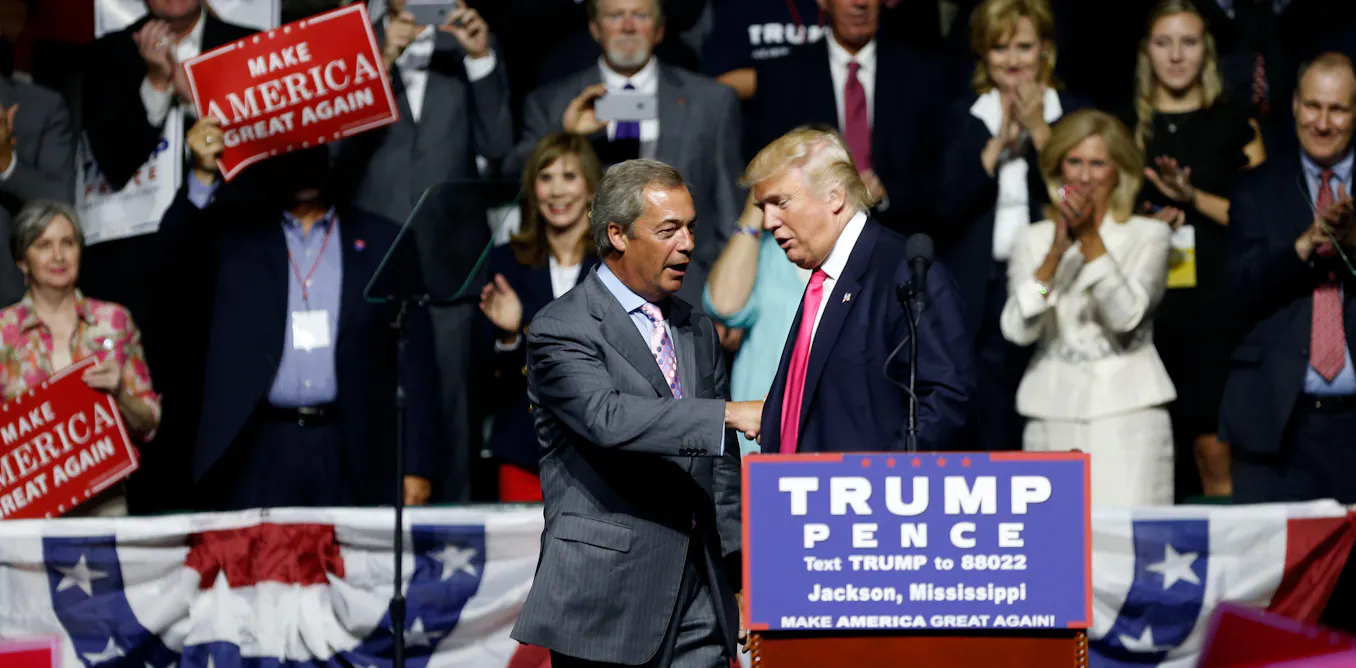
A DeSmog collage. The Institute of Economic Affairs has its headquarters on Lord North Street, Westminster. Credit: Des Blenkinsopp (CC BY-SA 2.0)

The regulator has opened a case against the Tufton Street group.

The Institute of Economic Affairs (IEA) pressure group, which campaigns against clean energy policies, is being investigated by the charities regulator.

The Good Law Project (GLP), a legal advocacy group, yesterday announced that it had been successful in forcing the Charity Commission to open a “regulatory compliance case” against the IEA.

A Charity Commission spokesperson told DeSmog: “We can confirm that, following an internal review, we have opened a regulatory compliance case to assess potential regulatory concerns about the Institute for Economic Affairs.

“Our case will examine the trustees’ management of perceptions of potential political bias, perceptions of a potential lack of transparency around funding, and perceptions that the charity may have pre-determined policy positions which would not be in keeping with its charitable purposes to advance education.”

The IEA is registered as a charity, and the regulator states that “political activity must not become the reason for the charity’s existence.”

In 2018, Greenpeace’s investigative journalism unit Unearthed revealed that the IEA had received funding from oil major BP every year since 1967. In response to the story, an IEA spokeswoman said: “It is surely uncontroversial that the IEA’s principles coincide with the interests of our donors.” 

The IEA also received a £21,000 grant from U.S. oil major ExxonMobil in 2005.

However, the IEA does not publicly declare its donors, and it’s not known if the pressure group has received funding from BP or ExxonMobil in more recent years.

The IEA has extensive influence in politics and the media. It was pivotal to Liz Truss’s short-lived premiership as prime minister, and has boasted of its access to Conservative ministers and MPs.

The IEA is a prominent supporter of the continued and extended use of fossil fuels. The group has advocated for the ban to be lifted on fracking for shale gas, calling it the “moral and economic choice”. The IEA has also said that a ban on new North Sea oil and gas licences would be “madness”, has criticised the windfall tax imposed by the UK on fossil fuel firms, and said that the previous government’s commitment to “max out” the UK’s oil and gas reserves was a “welcome step”.

The IEA is part of the Tufton Street network – a cluster of libertarian think tanks and pressure groups that are in favour of more fossil fuel extraction and are opposed to state-led climate action. These groups are characterised by a lack of transparency over their sources of funding. 

The Charity Commission initially rejected the GLP’s complaint about the IEA, which was lodged in March 2024 and backed by MPs from the Green Party, Liberal Democrats, and the Scottish National Party. The Charity Commission rejected the complaint after just 12 days.

However, after the GLP threatened formal legal action against the Charity Commission for failing to properly consider the evidence against the IEA, it has agreed to open a compliance case.

“We welcome this screeching u-turn from the Charity Commission who raced to clear the IEA last year,” said Good Law Project’s executive director Jolyon Maugham.

“It shouldn’t have taken the threat of legal action to force the regulator to do its job. The IEA’s activities are the polar opposite of public benefit and we’re now urging the Charity Commission to go further in its investigation.”

However, it’s unclear what action, if any, will be taken against the IEA if the regulator finds it in breach of charity rules. A previous case brought against the Global Warming Policy Foundation (GWPF) – the UK’s leading climate science denial group – didn’t lead to any meaningful sanctions against the Tufton Street group.

The GLP accused the GWPF of breaching charity law by spending hundreds of thousands of pounds on one-sided research attacking climate science, and by funding the lobbying activities of its campaign arm Net Zero Watch. However, the Charity Commission asked the GWPF to make only minor changes to its ownership structure and output.

An IEA spokesperson said: “We have received a letter from the Charity Commission and will be responding to them thoroughly in due course.”

Original article by Sam Bright republished from DeSmog.
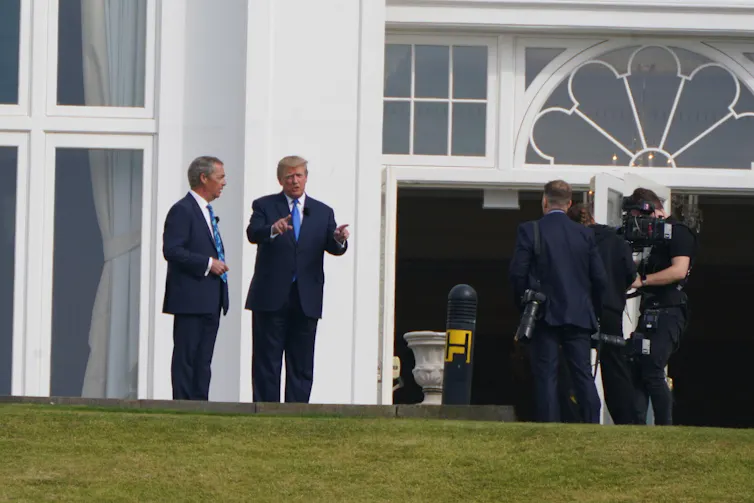
Open Democracy: Think tanks helped Liz Truss crash the UK economy

Continue ReadingInstitute of Economic Affairs Under Investigation by the Charity Commission