Global food prices surge amid Trump’s tariff war

Spread the love

Original article by Abdul Rahman republished from peoples dispatch under a Creative Commons Attribution-ShareAlike 4.0 (CC BY-SA) license.

Photo: UN Food and Agriculture

The United Nations Food and Agriculture Organization’s (FAO) food price index registered a 1% rise in April in comparison to March and a 22% rise compared to the same month last year.

Global food prices recorded an increase in April largely due to the tariff war waged by Donald Trump’s administration in the US, the UN agency Food and Agricultural Organization (FAO) said in a report last week. 

Major food products such as cereals, dairy products, and meat registered a rise in their prices across the globe in April in comparison to March.

Grains and cereals such as wheat, rice, and maize make the largest component of FAO’s food price index. Their prices increased the most, raising its index by 1% month over month. 

The price of dairy products increased by 2.4% month over month while the price of meat soared by 3.2%, making life significantly more difficult for people. Compared to the same month last year, dairy prices rose by 22.9%.

Year over year, the global food prices were higher by 7.6% in comparison to April last year.

The rise in food prices is attributed to several factors, including the seasonal rise in demands. However, the FAO notes that the main driver of the increase is the tariff policies announced by the Trump administration in the US in early April.

“Adjustments to the US’ import tariff policies-including the exemption to Mexico, the leading importer of US maize, and a 90 day pause on import tariffs above 10% for several other trading partners-further contributed to the upward price pressure,” the FAO said.

Fulfilling his threats to impose high tariffs on most of its trade partners Trump announced its “reciprocal tariff” policy in early April. Imports from most of the countries faced tariffs ranging between a minimum 10% to a whopping 145% against China. 

Trump later suspended the imposition of reciprocal tariffs for three months, seeking bilateral agreements with several countries. However, the announcement of the high tariffs has already created uncertainty in the global economy. 

Rise in food prices impacts the poor the most

Though the FAO acknowledged there were several factors impacting the rise in global food prices, such as the reduction in wheat exports from Russia due to sanctions, the war in Ukraine, and a weaker US dollar, the tariff war made the “strongest impact.”

Several economists and experts have already warned of a rise in local food prices, due to the Trump administration’s tariff policies creating a similar or worse impact than the war in Ukraine did in its initial months. 

The global food markets are closely interconnected so major global events may affect prices at the local level – just as they did in the initial days of the war in Ukraine, after European and US sanctions led to a reduction in Russian wheat. 

According to the FAO, its food price index recorded its highest jump in March 2022, immediately after the war in Ukraine started. The rise in prices at the time intensified a cost of living crisis even in relatively richer countries in Europe and intensified food insecurity in the developing and poorest countries.

Increases in food prices affect the poor the most as their share of expenditure on food is higher. It is expected to intensify the existing food crisis situation in most of the developing and poorer countries in Asia and Africa.

If Trump’s tariff war drags on, the prices of fertilizers will also see a jump, affecting agricultural production in the developing world and affecting the prices of food products further, claims Lotanna Emediegwu, who teaches economics at Manchester Metropolitan University. 

US and European sanctions have already negatively affected the global supply of fertilizers from Russia.

Original article by Abdul Rahman republished from peoples dispatch under a Creative Commons Attribution-ShareAlike 4.0 (CC BY-SA) license.

Neo-Fascist Climate Science Denier Donald Trump says Burn, Baby, Burn.
Elon Musk urges you to be a Fascist like him, says that you can ignore facts and reality then.
Continue ReadingGlobal food prices surge amid Trump’s tariff war

The UK’s social security system falls way below international human rights standards: new report

Spread the love
9to9studio/Shutterstock

Koldo Casla, University of Essex

The right to social security is enshrined in several international agreements on human rights. But the UK’s system – even before the disability benefits cuts announced earlier this year – falls way below these standards.

For a new report published today, Amnesty International asked my colleague Lyle Barker and me to review the evidence about the state of the UK’s social security in relation to international human rights law.

The UK has signed and ratified a number of international agreements on human rights. One of these is the 1966 International Covenant on Economic, Social and Cultural Rights (ICESCR), which lays out the right to social security. An accompanying document defines the three key principles of this right as:

  • Availability A social security system established in law, administered publicly, and materially reachable by those who need it.
  • Adequacy Benefits must be suitable, both in amount and in duration, to realise essential socioeconomic rights.
  • Accessibility Everyone should be covered by the social security system, paying particular attention to disadvantaged and marginalised individuals and groups.

The conclusion of our study for Amnesty International is crystal clear: even disregarding the cuts announced in March, the UK’s social security system does not meet these standards.

Availability

Our review of the literature shows a widespread underclaiming of benefits. It has been estimated that in 2024, £22.7 billion in income-related benefits went unclaimed, a £4 billion increase from the previous year.

Gaps in official data hinder a clear understanding of why many people are missing out on the support they are entitled to. But qualitative evidence suggests this is largely due to fear, stigma, bureaucratic and digital hurdles, and eligibility cliff edges for means-tested benefits.

In recent years, the UK government has adopted a contentious and punitive stance toward benefit recipients. Media and political rhetoric have portrayed those who claim benefits as idle or undeserving scroungers.

This stigma harms the mental health and self-esteem of people experiencing poverty. It can result in shame and secrecy, and create barriers to people accessing support they are entitled to.

Our research for Amnesty International concludes that UK claimants do not get enough information and support about their rights to benefits. Combined with the stigma of claiming, the UK is falling far short of making benefits “available” in line with international standards.

Adequacy

Since the austerity policies of the 2010s, the UK’s social security system has become significantly less adequate in supporting vulnerable people and families. The basic rate of universal credit (the main benefit for working-age people on a low income) is at 40-year low in real terms amid a cost of living crisis.

Restrictive policies, such as the benefit cap (introduced in 2013 to set a maximum limit to the total benefits received by a household) and the two-child limit have curtailed access to essential benefits. Although inflation adjustments in the last two years provided some relief, many benefits still fail to keep up with rising living costs.

The two-child limit is the cruellest expression of the inadequacy of the UK’s social security system. Introduced by the Conservative government in 2017, the two-child limit restricts financial support through universal credit to two children. It is likely to be the most significant single cause of child poverty in the UK, including in families where adults work but do not earn enough to make ends meet.

When Labour returned to power, there was much speculation about whether they would reverse the two-child limit. But despite pleas from experts and people with direct experience, the government has persisted in retaining it.

Accessibility

Our study lays out the many barriers to accessibility in the UK’s system. For example, the bureaucratic hurdles in the assessment process, and the disproportionate impact of punitive sanctions on lone mothers and on minority ethnic claimants.

The UK operates a benefits sanction regime, which imposes penalties on claimants who fail to meet certain conditions. These include attending jobcentre appointments or accepting job offers. In general, sanctions and the fear of sanctions erode the trust between benefit claimants and the social security system.

An adult holding a child's hand walk past a jobcentre
Benefits sanctions are just one of the barriers to accessing social security. 1000words/Shutterstock

As it did in its previous review in 2016, in February the UN Committee on Economic, Social and Cultural Rights recommended that the UK review the use of benefit sanctions to ensure they are used proportionately and are subject to prompt and independent dispute resolution mechanisms.

Another accessibility concern is the shift to a digital-by-default system in the 2010s. While intended to make accessing benefits more efficient, it has become an administrative barrier.

Many people, particularly the elderly and others who are less digitally literate, struggle to navigate the benefits system. It excludes people without reliable internet access, underscoring a digital divide that prevents meaningful access to social security.

Meeting standards

Given the evidence, it is no surprise that earlier this year, the UN Committee on Economic, Social and Cultural Rights urged the UK government to assess the cumulative effects of the austerity measures introduced in the 2010s.

In particular, the committee recommended reversing the two-child limit, the benefit cap and the five-week delay for the first universal credit payment, and increasing the budget allocated to social security. These recommendations were made before the changes announced in the spring statement.

To live up to the internationally recognised right to social security, the UK should recognise in law, policy and practice that social security is a human right. And, that it is essential to the fulfilment of other human rights.

Amnesty International recommends the government set up a commission with statutory powers, to produce a strategy for “wholesale reform” of the social security system. The UK must establish a minimum support level and an essentials guarantee, to ensure beneficiaries can consistently meet their basic needs. A good way to start would be abolishing the two-child limit once and for all.

Koldo Casla, Senior Lecturer, Essex Law School, University of Essex

This article is republished from The Conversation under a Creative Commons license. Read the original article.

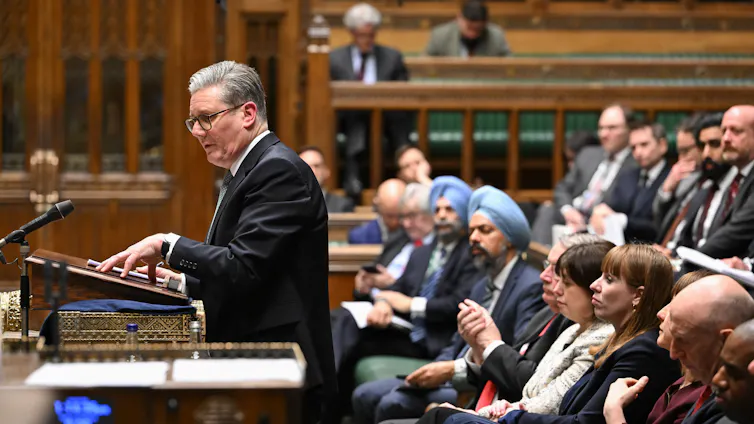
Keir Starmer says that the Labour Party under his leadership all feel a small part of Scunthorpe.
Keir Starmer, Angela Rayner and Rachel Reeves wear the uniform of the rich and powerful. They have all had clothes bought for them by multi-millionaire Labour donor Lord Alli. CORRECTION: It appears that Rachel Reeves clothing was provided by Juliet Rosenfeld.
Continue ReadingThe UK’s social security system falls way below international human rights standards: new report

Ministers privately ruling out scrapping two-child benefits cap

Spread the love

https://www.theguardian.com/society/2025/apr/22/ministers-privately-ruling-out-scrapping-two-child-benefits-cap

In a letter to Keir Starmer, Child Poverty Action Group estimated that the number of children in poverty would rise to 4.8 million by 2029 unless action was taken. Photograph: Adam Angelides/Getty Images

Sources says government is ‘not going to find a way’ to ditch cap despite predictions that child poverty levels will soar

Ministers are privately ruling out scrapping the two-child benefit cap despite warnings from charities that a failure to do so could result in the highest levels of child poverty since records began.

Government sources said charities and Labour MPs who were concerned that wider benefit cuts would push more families into poverty should “read the tea leaves” over Labour’s plans.

“If they still think we’re going to scrap the cap then they’re listening to the wrong people. We’re simply not going to find a way to do that. The cap is popular with key voters, who see it as a matter of fairness,” one source said.

In a letter to Keir Starmer on Tuesday, groups including Barnardo’s, Save the Children UK and Citizens Advice said scrapping the two-child benefit limit would be the most cost-effective way to reduce child poverty.

In their letter to Starmer, they said: “Scrapping the two-child limit is by far the most cost-effective way to reduce child poverty. It would lift 350,000 children out of poverty overnight and result in 700,000 children living in less deep poverty.

“If it is not scrapped, the stark reality is that child poverty will be significantly higher at the end of this parliament than when the government took office, making this the first time a Labour government would leave such a legacy.”

https://www.theguardian.com/society/2025/apr/22/ministers-privately-ruling-out-scrapping-two-child-benefits-cap

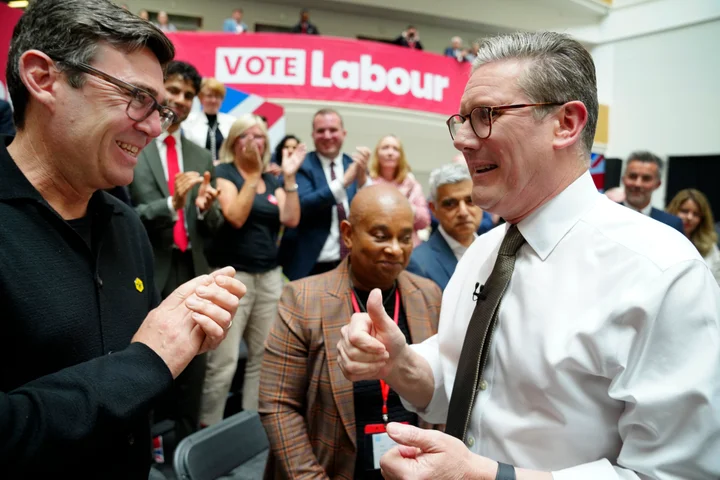
Keir Starmer says that the Labour Party under his leadership all feel a small part of Scunthorpe.
Image of Keir Starmer and a poor child.
Zionist Keir ‘Kid Starver’ Starmer. Image thanks to The Skwawkbox.
Continue ReadingMinisters privately ruling out scrapping two-child benefits cap

NHS cancer patients denied life-saving drugs due to Brexit costs, report finds

Spread the love

https://www.theguardian.com/science/2025/apr/20/nhs-cancer-patients-denied-life-saving-drugs-due-to-brexit-costs-report-finds

Brexit has ‘damaged the practical ability’ of doctors to offer NHS patients life-saving new drugs via international trials, according to the 54-page report. Photograph: Dmitrii Dikushin/Alamy

Guardian Exclusive: Britons found to have ‘lost out’ while rest of Europe benefits from golden age of research and treatments

British cancer patients are being denied life-saving drugs and trials of revolutionary treatments are being derailed by the red tape and extra costs brought on by Brexit, a leaked report warns.

Soaring numbers are being diagnosed with the disease amid a growing and ageing population, improved diagnosis initiatives and wider public awareness – making global collaborations to find new medicines essential.

But five years after the UK’s exit from the EU, the most comprehensive analysis of its kind concludes that while patients across Europe are benefiting from a golden age of pioneering research and novel treatments, Britons with cancer have “lost out” thanks to rising prices and red tape.

Brexit has “damaged the practical ability” of doctors to offer NHS patients life-saving new drugs via international clinical trials, according to the 54-page report obtained by the Guardian.

In some cases, the cost of importing new cancer drugs for Britons has nearly quadrupled as a result of post-Brexit red tape. Some trials have had shipping costs alone increase to 10 times since Brexit.

The extra rules and costs have had a “significant negative impact” on UK cancer research, creating “new barriers” that are “holding back life-saving research” for Britons, the report says.

Article continues at https://www.theguardian.com/science/2025/apr/20/nhs-cancer-patients-denied-life-saving-drugs-due-to-brexit-costs-report-finds

Continue ReadingNHS cancer patients denied life-saving drugs due to Brexit costs, report finds

Raw sewage pumped into UK waterways for 4.7 million hours in 2024: ‘This will only get worse’

Spread the love

https://www.bigissue.com/news/environment/sewage-pollution-uk-waterways-sas-environment/

Sewage is only supposed to be discharged following extreme weather. Image: Jeff Buck (cc-by-sa/2.0)

Some 27% of English billpayers have considered withholding their bill payments due to water supplier failings, a survey shows.

The public don’t believe private companies can fix the worsening sewage crisis, a report has found – and at least a quarter are considering boycotting water bill payments. 

Water bills will surge by an average of £31 per year over the next five years. 

Suppliers have justified the increase – which will bring the average annual bill to £588 by the end of the decade – as the only way to fund fixes to Britain’s crumbling sewage infrastructure.

But according to a blistering new Surfers Against Sewage (SAS) report, just a third (33%) of English adults believe that their supplier will take the necessary action to end sewage pollution.

And around a quarter (27%) have considered withholding their bill payments due to the actions of their water supplier. 

This disillusionment is little surprise. Pollution is surging: Water companies in England have collectively failed their targets to reduce pollution incidents, SAS’s 2024 Water Quality Report shows, with 2,487 incidents recorded in 2024. 

Advertising helps fund Big Issue’s mission to end poverty

That’s more than double the target set by the Environment Agency – and it’s the tip of the iceberg. In 2024 alone, raw sewage was released into UK waterways 592,478 times, for a combined 4.7 million hours. That’s the equivalent of 535 years’ worth of waste, pouring into the lakes and rivers people swim in, kayak through and drink from.

Article continues at https://www.bigissue.com/news/environment/sewage-pollution-uk-waterways-sas-environment/

April 2023 Surfers Against Sewage and Extinction Rebellion protests in St Agnes, Perranporth, Truro and Charlestown which unveiled spoof Blue Plaques to the MPs and Conservative Government who allowed raw sewage to be dumped in the sea (Image: Surfers Against Sewage)
Continue ReadingRaw sewage pumped into UK waterways for 4.7 million hours in 2024: ‘This will only get worse’