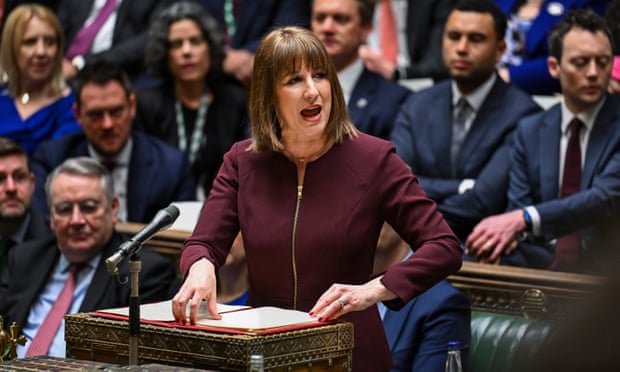
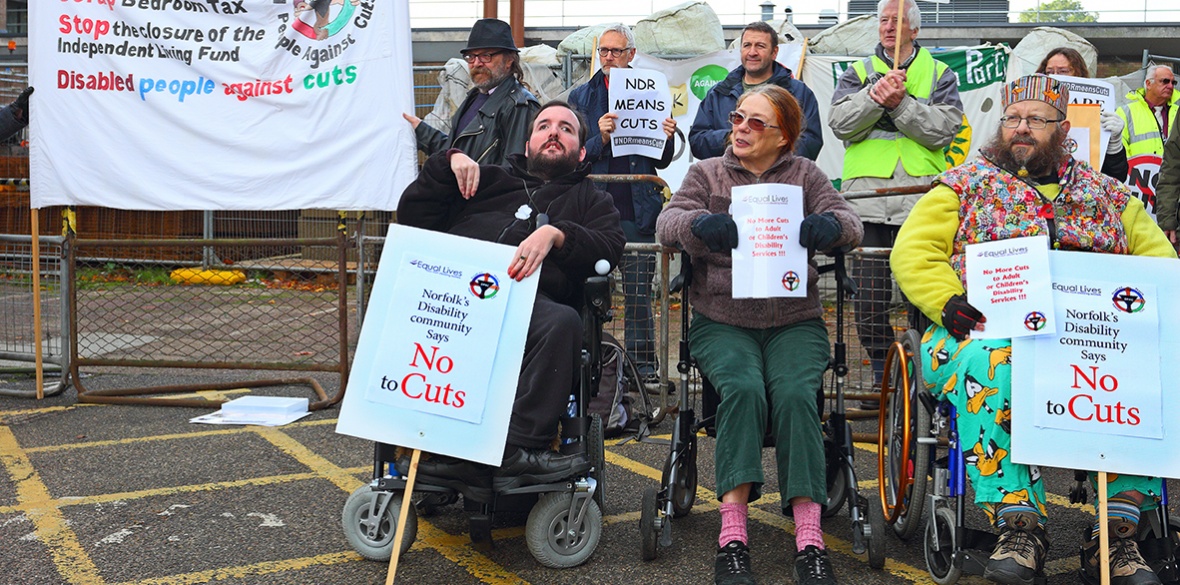
TORY 2015/LABOUR 2025 SPOT THE DIFFERENCE: (Above) Workers and disabled people protesting outside Norfolk County Hall against Norfolk County Council cuts to services on October 2015Photo: Roger Blackwell/flickr/CC
DR DYLAN MURPHY asks why Labour is continuing the Tory war on the disabled, when viable alternatives have been spelt out in detail
IN LATE February of 2025 the UN Committee on Economic, Social and Cultural Rights issued a damning report into the failures of Labour to address income inequality and the deepening levels of poverty in the UK.
The UN committee criticised Labour for failing to address “income inequality or reducing poverty,” which hamper “the progressive realisation of economic, social and cultural rights.’’
Ironically enough, the UN called on Labour to increase spending on housing, health, education and social security in order to reverse the huge damage caused by blue Tory austerity from 2010 to 2024. Since this call the red Tories in power have announced their intention to make massive cuts to public spending across all government departments except defence and maybe health.
On the issue of social security, over which Labour is determined to make killer cuts, the UN expressed serious concern about the impact of blue Tory austerity which had “resulted in severe economic hardship, increased reliance on food banks, homelessness, negative impacts on mental health and the stigmatisation of benefit claimants.”
Of course, food bank usage under Labour continues to grow as does the stigmatisation of benefit claimants which Starmer and company have engaged in with relish over the last few months.
Starmer, Reeves and Kendall seem to take a sadistic glee in attacking the disabled through the platforms of the Tory media using ultra right-wing rags such as The Telegraph and Sun to stigmatise the sick and disabled.
The biggest irony in this recent UN report is its call for Labour to actually increase the value of disability benefits such as PIP so that the UK can meet “the recommendations made by the special rapporteur on extreme poverty and human rights.”
Keir Starmer says pensioners can freeze to death and poor children can starve and be condemned to failure and misery all their lives.Keir Starmer explains the moral case for cutting disability benefits. He says work will set you free.
BRITISH billionaires’ wealth surged by £35 million a day last year, new research reveals, as the rest of the nation worries about energy bills.
According to a report by Oxfam released today, the collective wealth of billionaires in Britain increased to a total of £182 billion in 2024.
The amount would be enough to cover the whole of Manchester in £10 notes one and a half times, the charity said.
The same report revealed that global billionaire wealth grew by $2 trillion (£1.6bn) in 2024 — three times faster than the year before.
Oxfam inequality policy lead Anna Marriott said that the world is on course for the emergence of at least five trillionaires within a decade.
“The global economic system is broken, wholly unfit for purpose as it enables and perpetuates this explosion of riches while nearly half of humanity continues to live in poverty,” she said.
Orcas discuss Donald Trump and the killer apes’ concept of democracy.Keir Starmer, Angela Rayner and Rachel Reeves wear the uniform of the rich and powerful. They have all had clothes bought for them by multi-millionaire Labour donor Lord Alli. CORRECTION: It appears that Rachel Reeves clothing was provided by Juliet Rosenfeld.
Chancellor of the Exchequer Rachel Reeves arrives to meet students on the carpentry course during a visit to Bury College in Greater Manchester, March 20, 2025
…
Fourteen years of Tory rule have cut services to the bone. The notion that “efficiency savings” can slice off further billions without worsening already degraded services is absurd.
Ironically, the cuts are intended to fund increased military spending — though if there is a department renowned for waste it is the Ministry of Defence. The MoD is repeatedly excoriated by the public accounts committee for the huge sums squandered on projects that end up delayed by years or not delivered at all.
Current Defence Secretary John Healey, when in the shadow cabinet, published a report identifying billions it had overspent on projects and billions more paid for cancelled contracts with its often extortionate suppliers. The report noted that the MoD had even been fined £32.6 million by the Treasury for its “poor accounting practices.” Yet it is this department which is having more billions thrown its way.
As for extortionate suppliers, the evidence is plain that besides tying institutions from hospitals to schools into contracts forcing them to repay PFI debts worth multiples of the original loans, many such agreements also tie them into inflexible and costly servicing contracts.
Outsourcing services is massively inefficient, yet remains the norm, despite Reeves’s one-time promise to deliver “the biggest wave of insourcing in a generation.”
As the Prison Officers Association (POA) points out of outsourced prison maintenance, we end up paying through the nose for “crumbling cells, compromised safety and rodent-infested jails.”
“We do not for one minute accept that the privatised model of prison maintenance is more cost effective than insourcing … it is completely delusional to claim it provides best value for the taxpayer,” POA general secretary Steve Gillan observes.
Clearly value for money is not Reeves’s priority — corporate profits are, including at the Treasury’s expense.
Keir Starmer commits to play the caretaker role for Capitalism through the “hard times”.Keir Starmer explains the moral case for cutting disability benefits. He says work will set you free.
“It’s one thing to say the economy is not doing well and we’ve got a fiscal challenge … but cutting the benefits of the most vulnerable in our society who can’t work, to pay for that, is not going to work. And it’s not a Labour thing to do.”
So says former Labour big beast turned centrist-dad podcaster Ed Balls about the government’s welfare reform proposals. Cue furious nods from all those who were hoping and expecting better – or at least not this – from Keir Starmer and Rachel Reeves.
Reactions like these are wholly understandable. After all, the Labour party has long viewed support for the welfare state as both a flag around which the party can rally, and a stick with which to beat the Conservatives.
But while that may have been the case in opposition, in office things have been a little more complicated.
Going all the way back to the MacDonald and Attlee governments, through the Wilson era, and into the Blair and Brown years, Labour governments have often seen fit to talk and act tough to prove to voters, the media and the markets that they have a head as well as a heart. And if that means upsetting some of their MPs, their grassroots members and their core supporters in the electorate, then so be it.
Want more politics coverage from academic experts? Every week, we bring you informed analysis of developments in government and fact check the claims being made.
Welfare encompasses a raft of policies that are as much symbolic as they are substantive. Choosing between them has tangible implications for those directly affected. But those choices also say something – and are intended to say something – about those politicians and parties making that choice.
For Labour governments – and in particular Labour chancellors – cuts in provision, even (indeed perhaps especially) if they involve backtracking on previous commitments, have always been a means of communicating their determination to deal with the world as it supposedly is, not as some of their more radical colleagues would like it to be.
On every occasion, those decisions have provoked outrage: a full-scale split in the 1930s, the resignation of three ministers (including Harold Wilson and leftwing titan Nye Bevan) in the 50s, parliamentary rebellions and membership resignations in the 60s, more generalised despair in Labour and trade union ranks the 70s, and yet another Commons rebellion in the 90s.
But what we need to appreciate is that the fallout is never merely accidental. Rather, it is a vital part of the drama. For the measures to have any chance of convincing sceptical markets and media outlets (as well as, perhaps, ordinary voters) their authors have to be seen to be committing symbolic violence against their party’s own cherished principles.
The proof that sacred cows really are being sacrificed is the anger (ideally impotent anger) of those who cherish them most – Labour’s left wingers. Their reaction is not merely predictable (and expect, by the way, to see Labour’s right wingers employ that term pejoratively in the coming days), it is also functional.
The cruelty is the point
Away from the Labour party itself, both those directly affected by the changes to sickness and disability benefits and those who campaign on their behalf, are – rightly or wrongly – already labelling those changes as cruel. But, likewise (and to put it at its most extreme) the cruelty, to coin a phrase, is the point.
The government will naturally be hoping that, in reality, as few people as possible will be significantly hurt by what it is doing. But the impression that it is prepared to run that risk in pursuit of its wider aim is, in many ways, vital to its success.
As to what that wider aim is? Labour’s essential problem is that, for all its social democratic values, it understandably aspires to become the natural party of government in what is an overwhelmingly liberal capitalist political economy.
It has all too often sought to achieve that, not so much by creating expectations among certain key groups and then rewarding them, as it has by aiming to demonstrate a world-as-it-is governing competence.
That, in the view of its leaders (if not necessarily its followers), is the master key to the prolonged success experienced by the Conservative party – a party which has traditionally enjoyed the additional advantage of being culturally attuned to the market and media environment in which governing in the UK has to be done.
So, no, Ed Balls, you’re wrong: for good or ill, this week’s announcement is very much “a Labour thing to do”.
Keir Starmer commits to play the caretaker role for Capitalism through the “hard times”.Keir Starmer confirms that he’s proud to be a red Tory continuing austerity and targeting poor and disabled scum.
[21/3/25 dizzy: I had better say that I disagree with “… what is an overwhelmingly liberal capitalist political economy”. It’s only that way because the left is denied opportunity. Consider Corbyn’s popularity for example and the many forces that attacked him.]