How the UK’s social security system stopped tackling poverty

Spread the love
Ultraskrip/Shutterstock

Sharon Wright, University of Glasgow

The cost of living is the most important issue for many voters this election. It’s no surprise why. In 2022, nearly 4 million people in the UK experienced destitution, meaning they could not meet their basic physical needs such as having enough to eat and staying warm.

The UK’s social security system is failing in its core purpose to prevent poverty. And yet the Conservatives have promised more crackdowns on welfare, with the prime minister linking this with his pledge to lower taxes.

When the Conservative-Liberal Democrat coalition government came to power in 2010, they inherited a social security system in radically better shape than it is now. What happened?

During the previous Labour governments (1997-2010), 2.4 million people were lifted out of poverty, including 700,000 children. This was done during favourable economic conditions, but was also the result of progressive social security measures such as tax credits and child benefits.


Want more election coverage from The Conversation’s academic experts? Over the coming weeks, we’ll bring you informed analysis of developments in the campaign and we’ll fact check the claims being made. Sign up for our new, weekly election newsletter, delivered every Friday throughout the campaign and beyond.


People received working-age benefit payments for different needs: jobseeker’s allowance, income support for single parents and incapacity benefit for long-term illness and disability. Housing benefit went directly to landlords to cover claimants’ rent.

Enter the global financial crisis. The Conservative-led government’s response was austerity cuts: cutting back on welfare to tackle the budget deficit.

Lowering the value of benefits is the biggest austerity cut to have affected incomes. In 2010, the government switched from uprating the value of benefits each year in line with the retail price index to using a different measure of inflation, the consumer price index, instead. This is usually lower and effectively makes payments worth less.

This was expected to save the government around £6 billion pounds a year. In 2012, the value of benefits was capped to increase at 1% while inflation was forecast at 5.2%.

Benefit sanctions and caps

In 2012, the government introduced a new system of tougher rules and sanctions on people receiving benefits. Conservative politicians said this would end “the ‘something for nothing’ culture”, but the change has had lasting negative effects.

Benefit sanctions were always part of the system, but became extreme in 2012. If, for example, someone misses one Jobcentre appointment their benefit could be reduced or removed for 28 days.

Woman looking worried and tired sat by window with toddler
Many people receiving benefits have been penalised with sanctions. Bricolage/Shutterstock

Nearly a quarter of all jobseeker’s allowance claimants were sanctioned between 2010 and 2015. Research shows that sanctions have “profoundly negative outcomes”, including on people’s mental health.

Other cuts to incomes followed the Welfare Reform Act 2012. The “bedroom tax” penalised social housing tenants who had “extra” bedrooms. The idea was to reduce renters’ housing benefit so they would downsize to a smaller home. However long-term housing shortages mean that smaller properties are rarely available.

In 2013, the household benefit cap was introduced to limit the maximum amount a family could receive in benefits payments. It had the most impact on families with children and those with high rents.

Universal credit

Universal credit, introduced in 2013, was billed as the biggest shake-up of benefits in 70 years. It promised to make work pay and simplify the system. It replaced separate tax credit, unemployment, lone parent, disability and housing payments with a single payment.

Research from think tank the Resolution Foundation suggests that universal credit provides more support for working people who rent their homes than the previous system. But disabled people who cannot work are likely to be much worse off than under the old system.

There are other problems with universal credit. Unlike under the previous system that gave housing benefit straight to landlords, claimants have to pay their rent from a pot of money provided by the government that is almost certainly too small to cover all their costs.

The first universal credit payment takes around five weeks to arrive, meaning people may fall into rent arrears. A result is that some landlords take legal action to evict those receiving universal credit.

Further cuts

In 2015, the Conservatives abandoned targets set by Labour to reduce child poverty. Then in 2016, new legislation slashed spending again. Benefits were frozen for four years.

The two-child limit was applied to tax credits and universal credit in 2017 to remove income for third or subsequent children. Large families faced increased poverty as a result.

In 2020, the pandemic hit. Universal credit and tax credits were raised by £20 per week, but this ended in late 2021. The cost of living crisis has since widened the gap between benefits and prices.

Today, the value of universal credit falls £890 per month short of the cost of living for single people over 25. This is because of the changes to uprating and the benefit freeze.

In Feburary 2024, charity the Trussell Trust published research showing that over half of people on universal credit had run out of money for food in the previous month.

What can the next government do?

The next UK government must make emergency repairs to social security to halt harrowing declines in health and life expectancy. This should ensure a minimum acceptable standard of living, including restoring the value of benefits such as universal credit to cover the costs of living.

Since 71% of children living in poverty are in working families, employers should be required to pay the real living wage. In-work universal credit also needs to top up wages enough to make work pay.

Repairing the social safety net is an enormous challenge, but public support for it has been on the rise for years. In 2010, many people thought benefit claimants didn’t deserve any help. But from 2015 there has been a growing preference to help people receiving benefits.

Sharon Wright, Professor of Social Policy, University of Glasgow

This article is republished from The Conversation under a Creative Commons license. Read the original article.
Continue ReadingHow the UK’s social security system stopped tackling poverty

The Green party’s plans aren’t perfect but they offer a much-needed attempt at climate leadership

Spread the love

The Green party’s plans aren’t perfect but they offer a much-needed attempt at climate leadership

Richard Sulley, University of Sheffield

The Green party’s target is to take four seats at the upcoming UK election. Recognising it has no chance of forming a government, its manifesto is written from the perspective of a future pressure group within Westminster.

In doing so, the party highlights some key ideas and steps that could help the UK achieve meaningful climate action. This provides a refreshing attempt to outline an alternative way forward, at a time when climate leadership is severely lacking from other parties.

The Greens’ manifesto has climate action woven through it and the wording often emphasises the link between climate and socioeconomic issues, as the impacts of a changing climate could push more people into poverty and disrupt global food supply chains. It states: “The solutions to the climate crisis are the same as those needed to end the cost of living and inequity crises, making the future not just more liveable but fairer for us all too.”

The Greens argue that a rebalancing of the economy is required to achieve such a just transition. While the party stops short of calling for degrowth (producing fewer unnecessary goods and services in favour of more socially beneficial economic activity), the focus on a carbon tax and push for investment in public services and renewables could deliver a similar impact.

The party also wants to change how success is measured in the economy, calling for “new indicators that take account of the wellbeing of people and planet, and track our progress towards building a greener and fairer future”. This is the first time an established party has explicitly reframed what the measures of a successful nation should be.

The manifesto embraces an agreed basic standard of living and a set of planetary boundaries that our activities shouldn’t push us beyond, based on the theory of “doughnut economics”. By comparison, the existing model focuses almost solely on economic growth as the key measure of success.

Steps to decarbonise

One of the key issues the Greens want to address is the fact the UK’s housing stock is some of the worst in Europe. A vast programme of insulation and decarbonisation measures is needed across all tenures, and the Greens earmark £50 billion over the length of the parliament for retrofitting buildings. One issue here is that they don’t specify how the current supply chain could be scaled up to achieve this.

The manifesto does recognise that to reduce the UK’s carbon impact, buildings can’t just be demolished and rebuilt. Circularity is needed with zero extraction of new materials in the construction of new homes and buildings.

The Greens propose to tackle this with planning applications to include whole-life carbon and energy calculations. Plus, all materials from demolished buildings will need to be considered for reuse, and increased rates for the disposal of builders’ waste would ensure that this is financially viable.

Significant investment is also needed to upgrade the UK’s energy networks to enable decarbonisation, with another proposed £50 billion assigned to electricity generation, transmission and storage. The manifesto also highlights the potential for greater community involvement in – and direct benefit from – new solar and wind farms, which research suggests can speed up the provision of decentralised energy generation.

Where the Greens diverge most widely from the current energy decarbonisation orthodoxy is on nuclear. Their proposal to cancel funding for research on new technology, namely small modular reactors, appears reactionary at a time where its potential is still being explored.

nuclear power station with huge white clouds of smoke, blue sky
The Green Party would not fund research into small modular nuclear reactors. stocker1970/Shutterstock

In transport, the Greens recognise that simply rolling out the sale of electric vehicles is not enough. They want to expand public transport and active travel (walking and cycling) through a £13 billion investment to deliver public transport as a service rather than for profit.

But this would depend on giving local authorities in England the powers that London has to act as bus operators. Combined Authorities in Greater Manchester, South and West Yorkshire are currently transitioning to a franchised system, but a full “London-style” network is some way off.

The Greens are also the only party to take the bold action of proposing a frequent flyer levy, although they do not detail how it will work. Typically, proposed plans for such levies increase on a sliding scale as the number of flights increases, therefore targeting the 15% of people who make 70% of the trips.

There are also proposals to remove the aviation fuels exemption from fuel duty and introduce a domestic flight ban on journeys that can be done by rail in less than three hours, making this manifesto is an exemplar of action targeted at reducing high consumption in the form of frequent flights.

How would they deliver it?

With all this investment, there’s inevitably a question about how the Greens would pay for their plans. Figures in the manifesto suggest significant government borrowing is needed for such radical changes.

On environmental measures alone, an average annual capital and revenue spend of £40 billion would be required, including £7 billion to be invested in climate adaptation. The entire manifesto requires a budget deficit of £65 billion a year for the next five years, gambled against the as yet unknown costs of inaction.

There are some other ideas on funding. A carbon tax would make polluters pay while providing money to invest in the green transition. And taxing multi-millionaires and billionaires could help fund public services, including renationalised utilities such as water companies.

There is also a question of how practical the plans are. Nothing within the Green party manifesto relies on tech that has yet to be invented or impossible interventions. This is not the stuff of techno-optimism. But there are no cities, regions or devolved nations in the UK that have yet adopted the root and branch transformation this manifesto would require.

However, surveys show most people in the UK want decisions on the overwhelming evidence for climate change and the nature crisis, in order to create a more resilient society. The Green manifesto, then, is an imperfect but sorely needed attempt at climate leadership that reflects the urgency of significant rather than iterative change. That should be welcomed in an election where you could otherwise be forgiven for thinking that a response to the climate emergency was an optional extra.

Richard Sulley, Senior Research Fellow, Sustainability Policy, University of Sheffield

This article is republished from The Conversation under a Creative Commons license. Read the original article.

Continue ReadingThe Green party’s plans aren’t perfect but they offer a much-needed attempt at climate leadership

Scrap to the two-child benefit cap urge Greens

Spread the love
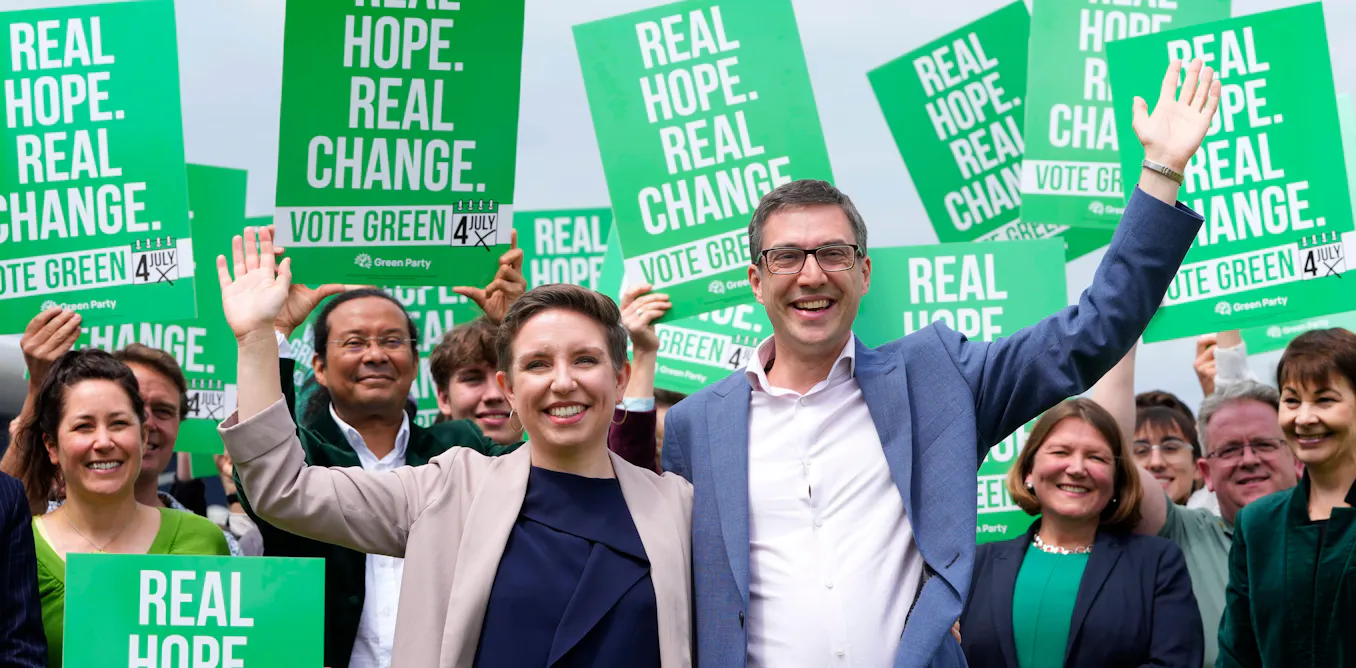
Green Party Co-leader Adrian Ramsay. Wikipedia CC.

The IFS (The Institute for Fiscal Studies) have today warned that 250,000 children will be hit by the two-child benefit cap next year, rising to an extra half a million by 2029. Green Party Co-Leader, Adrian Ramsay, responded saying, 

“Greens have unequivocally pledged to scrap the two-child benefit cap in our fully costed manifesto.

“Today I am urging the Labour Party to show real strength and conviction and join us in making this pledge.

“This one decision could lift 250,000 children out of poverty.

“The power to do this will be in Labour’s hands.

“But I want to be very clear.

“If they fail to do this, elected Green MPs will not let this rest.

“We will push them every day of the next parliament demanding that they do what is right.

“That is what a Green vote will enable – voices in parliament to keep Labour honest on these important issues.”

Continue ReadingScrap to the two-child benefit cap urge Greens

Jeremy Corbyn publishes his manifesto

Spread the love
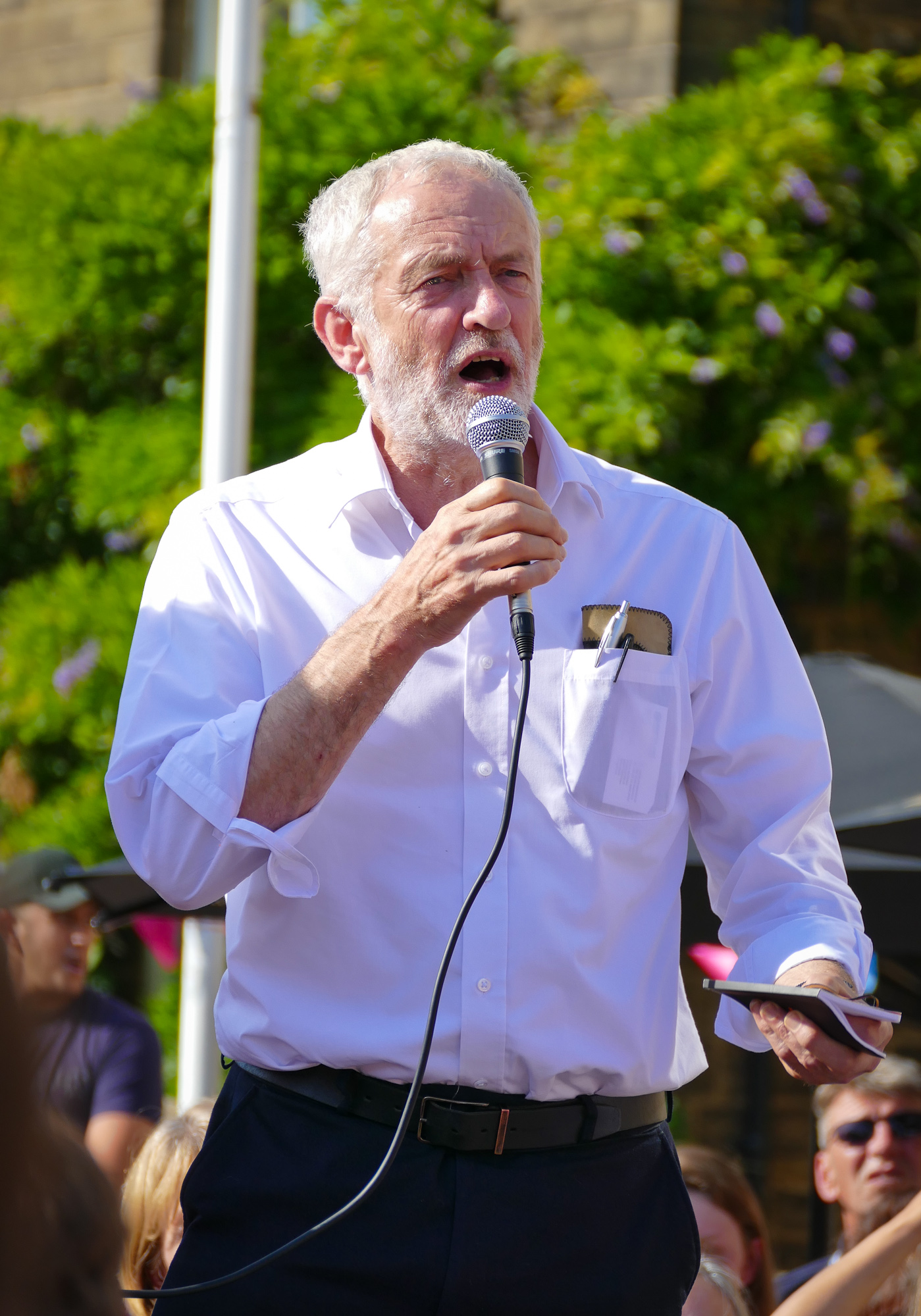
Image of Jeremy Corbyn MP, former leader of the Labour Party
Jeremy Corbyn MP, former leader of the Labour Party

Former leader of the Labour Party Socialist Jeremy Corbyn publishes his manifesto as independent candidate for Islington North.

https://www.votecorbyn.com/manifesto

This manifesto is our manifesto – it belongs to every single person who has written to me over the last 41 years, met me at a community event or simply stopped me in the street. Meeting people, talking to people and working together to bring about a fairer society – that is what being an MP is all about.

The issues facing people in Islington are part of a much wider set of crises. There are more people living in desperate poverty than I have ever known. More rough sleepers struggling to survive. More refugees fleeing the horrors of war and climate catastrophe. We will not solve these crises unless we build a new kind of politics. Our people-powered campaign will demand a redistribution of wealth, ownership and power. For rent controls. For an end to the two-child benefits cap. For a Green New Deal. For safe routes for asylum seekers. For a fully funded, fully public NHS.

This future is no pipedream – our community is proof that a kinder world is possible. I visit community centres which are welcoming, creative places, where people can meet each other, learn, eat together, receive support when they need it, and give it when they are able to. I meet carers doing all they can to support relatives or friends, often in the most difficult circumstances. I meet members of mutual aid groups who are building a new economy, one act of solidarity at a time. If we applied these basic principles across the board, we would create a society that cares for each other and cares for all.

When I vote in Parliament, I do not vote alone. I vote with my community – and this campaign is bringing together people of all ages, faiths and backgrounds in pursuit of a better world. We are offering people something very precious: hope.

Join us at www.votecorbyn.com to prove that when we come together to fight for a better society for everyone, we can win.

CONTENTS


ACTION ON THE COST OF LIVING

End the energy and water rip-off
Fair pay for Islington workers
Abolish the two-child benefit cap
Universal basic income
Wealth tax


HOUSING IS A HUMAN RIGHT
Security for renters
Build social housing
Housing insulation
Leasehold reform
Cladding justice


DEFEND OUR NHS
End privatisation
Support our doctors and nurses
Mental health
A National Care Service
Reproductive health


A GREENER ISLINGTON
A Green New Deal
Protect our parks
Save our buses
Walking and cycling
Animal welfare


EDUCATION FOR ALL
Save our schools
Education is not a commodity
Lifelong learning
Update our curriculum


A SAFER ISLINGTON
A public health approach
Tackling hate crime and extremism
A fairer criminal justice system


HUMAN RIGHTS ARE UNIVERSAL
Peace
Reparations
Refugees are welcome here
Migrant justice


OUR DEMOCRACY
The right to protest
The right to strike
Decentralisation
Local public ownership
Media and sport

Click here to download the manifesto

Continue ReadingJeremy Corbyn publishes his manifesto

Nearly one million people only £10 a week away from poverty, study finds

Spread the love
Image of cash and pre-payment meter key

https://www.bigissue.com/news/poverty-uk-joseph-rowntree-foundation-general-election/

There have been six prime ministers since this country last made sustained progress on reducing poverty

Nearly one million people in the UK are only £10 a week away from poverty, a study has found, in what has been called a “stain on the moral conscience of our nation”. 

Analysis from poverty charity Joseph Rowntree Foundation (JRF) has revealed that alongside the estimated 14.2 million people in poverty in the UK, further millions are “teetering on the edge” and unable to afford essentials. 

The JRF’s research found that just under a million people, including 200,000 children, are now within £10 a week from the poverty line. 

An additional 3.2 million people in the UK – equivalent to the population of Wales – are only £40 a week from deep poverty. 

The charity added that seven million households across the country had gone without essentials, like showers, toiletries or adequate clothing, in the last six months – or had gone hungry, or cut or skipped meals in the last 30 days. 

For those already in poverty, large numbers are close to “deep” or “very deep” poverty lines, meaning they are living on incomes of less than 50% or 40% of the UK average.

Around six million people were reported as living in very deep poverty in 2022/23, which is 1.5 million more than two decades ago.

Politicians are missing a ‘level of urgency’ on poverty

The JRF’s CEO Paul Kissack called on the government to act on rising poverty levels, as well as those “teetering on the edge” of poverty, telling whoever wins the general election on 4 July to “make reversing this dismal trend a priority”. 

“There have been six prime ministers since this country last made sustained progress on reducing poverty,” he explained, referencing when poverty last fell consistently in the UK, between 1999/2000 and 2004/2005 under Tony Blair. 

“During that time we’ve seen a sustained rise in the number of people in deep poverty, with hardship and destitution growing even faster.”

He added: “Our political leaders must be specific and ambitious about how they will tackle poverty. But so far there hasn’t been anything like the level of urgency from either Rishi Sunak or Keir Starmer that we need to see. Pointing to future growth as a panacea just won’t cut it.  

“Tonight’s (4 June) debate is a chance for both leaders to set out their plans and demonstrate they are serious about addressing hardship. Failure to act is a political and moral choice ≠ and one they should expect to be judged on.” 

https://www.bigissue.com/news/poverty-uk-joseph-rowntree-foundation-general-election/

Continue ReadingNearly one million people only £10 a week away from poverty, study finds