Category: Cost of Living crisis

  • The Green party’s plans aren’t perfect but they offer a much-needed attempt at climate leadership

    Spread the love

    The Green party’s plans aren’t perfect but they offer a much-needed attempt at climate leadership

    Richard Sulley, University of Sheffield

    The Green party’s target is to take four seats at the upcoming UK election. Recognising it has no chance of forming a government, its manifesto is written from the perspective of a future pressure group within Westminster.

    In doing so, the party highlights some key ideas and steps that could help the UK achieve meaningful climate action. This provides a refreshing attempt to outline an alternative way forward, at a time when climate leadership is severely lacking from other parties.

    The Greens’ manifesto has climate action woven through it and the wording often emphasises the link between climate and socioeconomic issues, as the impacts of a changing climate could push more people into poverty and disrupt global food supply chains. It states: “The solutions to the climate crisis are the same as those needed to end the cost of living and inequity crises, making the future not just more liveable but fairer for us all too.”

    The Greens argue that a rebalancing of the economy is required to achieve such a just transition. While the party stops short of calling for degrowth (producing fewer unnecessary goods and services in favour of more socially beneficial economic activity), the focus on a carbon tax and push for investment in public services and renewables could deliver a similar impact.

    The party also wants to change how success is measured in the economy, calling for “new indicators that take account of the wellbeing of people and planet, and track our progress towards building a greener and fairer future”. This is the first time an established party has explicitly reframed what the measures of a successful nation should be.

    The manifesto embraces an agreed basic standard of living and a set of planetary boundaries that our activities shouldn’t push us beyond, based on the theory of “doughnut economics”. By comparison, the existing model focuses almost solely on economic growth as the key measure of success.

    Steps to decarbonise

    One of the key issues the Greens want to address is the fact the UK’s housing stock is some of the worst in Europe. A vast programme of insulation and decarbonisation measures is needed across all tenures, and the Greens earmark £50 billion over the length of the parliament for retrofitting buildings. One issue here is that they don’t specify how the current supply chain could be scaled up to achieve this.

    The manifesto does recognise that to reduce the UK’s carbon impact, buildings can’t just be demolished and rebuilt. Circularity is needed with zero extraction of new materials in the construction of new homes and buildings.

    The Greens propose to tackle this with planning applications to include whole-life carbon and energy calculations. Plus, all materials from demolished buildings will need to be considered for reuse, and increased rates for the disposal of builders’ waste would ensure that this is financially viable.

    Significant investment is also needed to upgrade the UK’s energy networks to enable decarbonisation, with another proposed £50 billion assigned to electricity generation, transmission and storage. The manifesto also highlights the potential for greater community involvement in – and direct benefit from – new solar and wind farms, which research suggests can speed up the provision of decentralised energy generation.

    Where the Greens diverge most widely from the current energy decarbonisation orthodoxy is on nuclear. Their proposal to cancel funding for research on new technology, namely small modular reactors, appears reactionary at a time where its potential is still being explored.

    nuclear power station with huge white clouds of smoke, blue sky
    The Green Party would not fund research into small modular nuclear reactors. stocker1970/Shutterstock

    In transport, the Greens recognise that simply rolling out the sale of electric vehicles is not enough. They want to expand public transport and active travel (walking and cycling) through a £13 billion investment to deliver public transport as a service rather than for profit.

    But this would depend on giving local authorities in England the powers that London has to act as bus operators. Combined Authorities in Greater Manchester, South and West Yorkshire are currently transitioning to a franchised system, but a full “London-style” network is some way off.

    The Greens are also the only party to take the bold action of proposing a frequent flyer levy, although they do not detail how it will work. Typically, proposed plans for such levies increase on a sliding scale as the number of flights increases, therefore targeting the 15% of people who make 70% of the trips.

    There are also proposals to remove the aviation fuels exemption from fuel duty and introduce a domestic flight ban on journeys that can be done by rail in less than three hours, making this manifesto is an exemplar of action targeted at reducing high consumption in the form of frequent flights.

    How would they deliver it?

    With all this investment, there’s inevitably a question about how the Greens would pay for their plans. Figures in the manifesto suggest significant government borrowing is needed for such radical changes.

    On environmental measures alone, an average annual capital and revenue spend of £40 billion would be required, including £7 billion to be invested in climate adaptation. The entire manifesto requires a budget deficit of £65 billion a year for the next five years, gambled against the as yet unknown costs of inaction.

    There are some other ideas on funding. A carbon tax would make polluters pay while providing money to invest in the green transition. And taxing multi-millionaires and billionaires could help fund public services, including renationalised utilities such as water companies.

    There is also a question of how practical the plans are. Nothing within the Green party manifesto relies on tech that has yet to be invented or impossible interventions. This is not the stuff of techno-optimism. But there are no cities, regions or devolved nations in the UK that have yet adopted the root and branch transformation this manifesto would require.

    However, surveys show most people in the UK want decisions on the overwhelming evidence for climate change and the nature crisis, in order to create a more resilient society. The Green manifesto, then, is an imperfect but sorely needed attempt at climate leadership that reflects the urgency of significant rather than iterative change. That should be welcomed in an election where you could otherwise be forgiven for thinking that a response to the climate emergency was an optional extra.

    Richard Sulley, Senior Research Fellow, Sustainability Policy, University of Sheffield

    This article is republished from The Conversation under a Creative Commons license. Read the original article.

  • Scrap to the two-child benefit cap urge Greens

    Spread the love
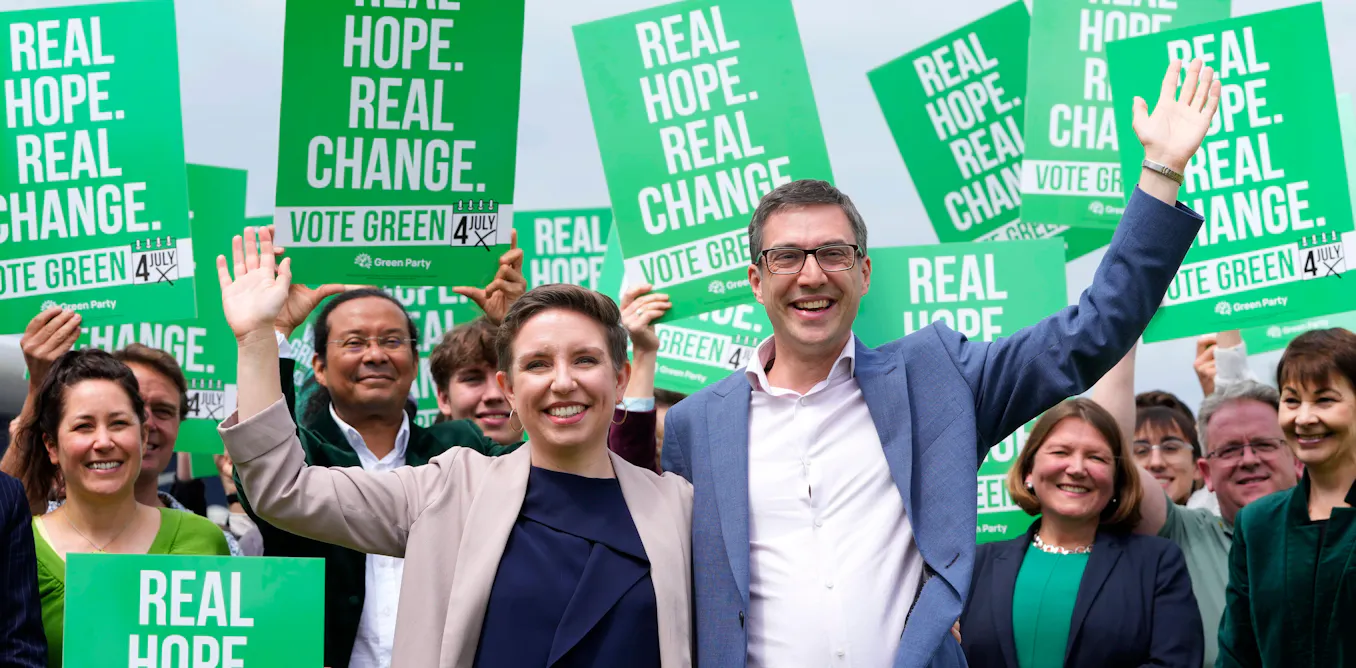
    Green Party Co-leader Adrian Ramsay. Wikipedia CC.
    Green Party Co-leader Adrian Ramsay. Wikipedia CC.

    The IFS (The Institute for Fiscal Studies) have today warned that 250,000 children will be hit by the two-child benefit cap next year, rising to an extra half a million by 2029. Green Party Co-Leader, Adrian Ramsay, responded saying, 

    “Greens have unequivocally pledged to scrap the two-child benefit cap in our fully costed manifesto.

    “Today I am urging the Labour Party to show real strength and conviction and join us in making this pledge.

    “This one decision could lift 250,000 children out of poverty.

    “The power to do this will be in Labour’s hands.

    “But I want to be very clear.

    “If they fail to do this, elected Green MPs will not let this rest.

    “We will push them every day of the next parliament demanding that they do what is right.

    “That is what a Green vote will enable – voices in parliament to keep Labour honest on these important issues.”

  • Jeremy Corbyn publishes his manifesto

    Spread the love
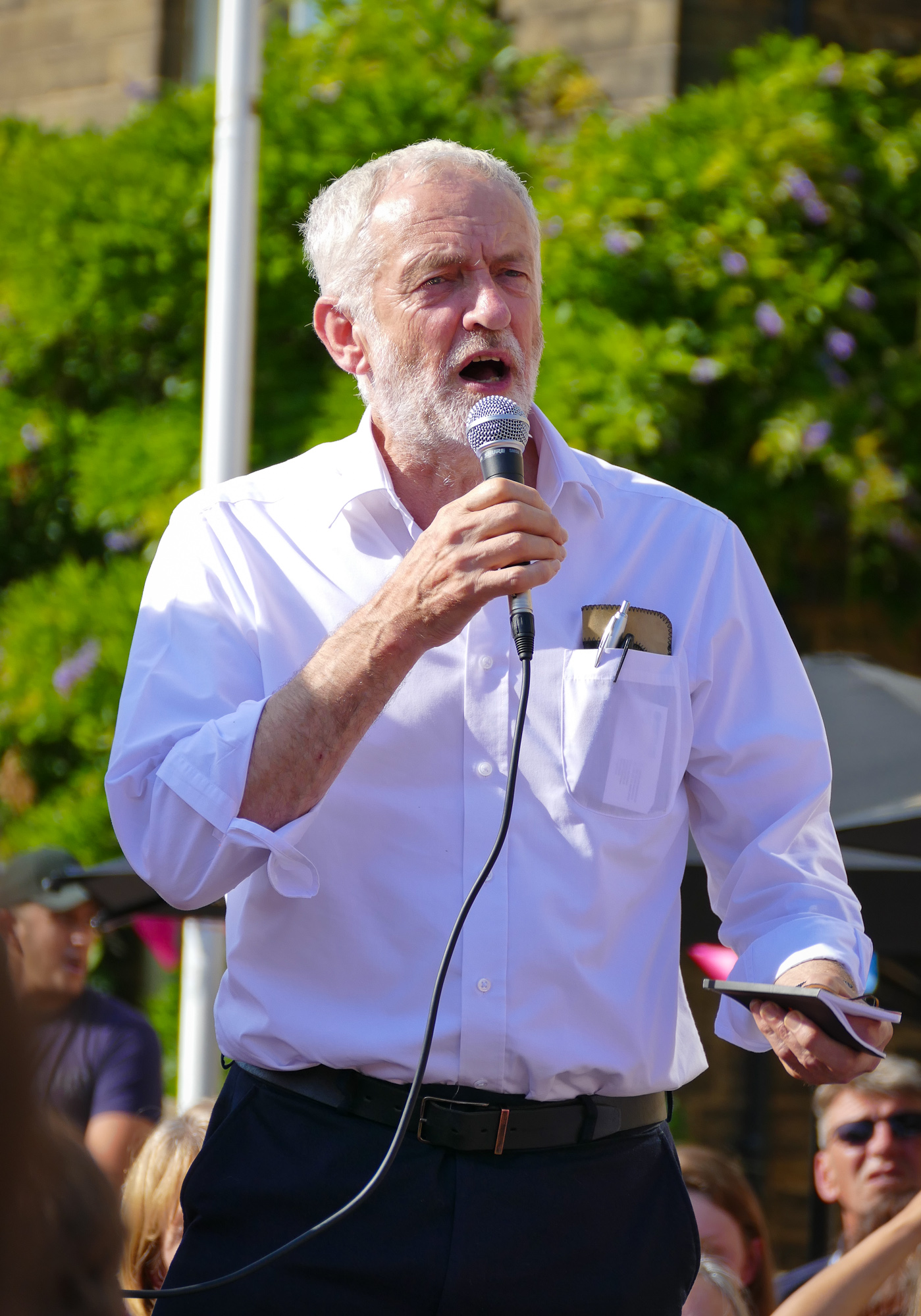
    Image of Jeremy Corbyn MP, former leader of the Labour Party
    Jeremy Corbyn MP, former leader of the Labour Party

    Former leader of the Labour Party Socialist Jeremy Corbyn publishes his manifesto as independent candidate for Islington North.

    https://www.votecorbyn.com/manifesto

    …

    This manifesto is our manifesto – it belongs to every single person who has written to me over the last 41 years, met me at a community event or simply stopped me in the street. Meeting people, talking to people and working together to bring about a fairer society – that is what being an MP is all about.

    The issues facing people in Islington are part of a much wider set of crises. There are more people living in desperate poverty than I have ever known. More rough sleepers struggling to survive. More refugees fleeing the horrors of war and climate catastrophe. We will not solve these crises unless we build a new kind of politics. Our people-powered campaign will demand a redistribution of wealth, ownership and power. For rent controls. For an end to the two-child benefits cap. For a Green New Deal. For safe routes for asylum seekers. For a fully funded, fully public NHS.

    This future is no pipedream – our community is proof that a kinder world is possible. I visit community centres which are welcoming, creative places, where people can meet each other, learn, eat together, receive support when they need it, and give it when they are able to. I meet carers doing all they can to support relatives or friends, often in the most difficult circumstances. I meet members of mutual aid groups who are building a new economy, one act of solidarity at a time. If we applied these basic principles across the board, we would create a society that cares for each other and cares for all.

    When I vote in Parliament, I do not vote alone. I vote with my community – and this campaign is bringing together people of all ages, faiths and backgrounds in pursuit of a better world. We are offering people something very precious: hope.

    Join us at www.votecorbyn.com to prove that when we come together to fight for a better society for everyone, we can win.

    CONTENTS


    ACTION ON THE COST OF LIVING

    End the energy and water rip-off
    Fair pay for Islington workers
    Abolish the two-child benefit cap
    Universal basic income
    Wealth tax


    HOUSING IS A HUMAN RIGHT
    Security for renters
    Build social housing
    Housing insulation
    Leasehold reform
    Cladding justice


    DEFEND OUR NHS
    End privatisation
    Support our doctors and nurses
    Mental health
    A National Care Service
    Reproductive health


    A GREENER ISLINGTON
    A Green New Deal
    Protect our parks
    Save our buses
    Walking and cycling
    Animal welfare


    EDUCATION FOR ALL
    Save our schools
    Education is not a commodity
    Lifelong learning
    Update our curriculum


    A SAFER ISLINGTON
    A public health approach
    Tackling hate crime and extremism
    A fairer criminal justice system


    HUMAN RIGHTS ARE UNIVERSAL
    Peace
    Reparations
    Refugees are welcome here
    Migrant justice


    OUR DEMOCRACY
    The right to protest
    The right to strike
    Decentralisation
    Local public ownership
    Media and sport

    Click here to download the manifesto

  • Nearly one million people only £10 a week away from poverty, study finds

    Spread the love
    Image of cash and pre-payment meter key
    Image of cash and pre-payment meter key

    https://www.bigissue.com/news/poverty-uk-joseph-rowntree-foundation-general-election/

    There have been six prime ministers since this country last made sustained progress on reducing poverty

    Nearly one million people in the UK are only £10 a week away from poverty, a study has found, in what has been called a “stain on the moral conscience of our nation”. 

    Analysis from poverty charity Joseph Rowntree Foundation (JRF) has revealed that alongside the estimated 14.2 million people in poverty in the UK, further millions are “teetering on the edge” and unable to afford essentials. 

    The JRF’s research found that just under a million people, including 200,000 children, are now within £10 a week from the poverty line. 

    An additional 3.2 million people in the UK – equivalent to the population of Wales – are only £40 a week from deep poverty. 

    The charity added that seven million households across the country had gone without essentials, like showers, toiletries or adequate clothing, in the last six months – or had gone hungry, or cut or skipped meals in the last 30 days. 

    For those already in poverty, large numbers are close to “deep” or “very deep” poverty lines, meaning they are living on incomes of less than 50% or 40% of the UK average.

    Around six million people were reported as living in very deep poverty in 2022/23, which is 1.5 million more than two decades ago.

    Politicians are missing a ‘level of urgency’ on poverty

    The JRF’s CEO Paul Kissack called on the government to act on rising poverty levels, as well as those “teetering on the edge” of poverty, telling whoever wins the general election on 4 July to “make reversing this dismal trend a priority”. 

    “There have been six prime ministers since this country last made sustained progress on reducing poverty,” he explained, referencing when poverty last fell consistently in the UK, between 1999/2000 and 2004/2005 under Tony Blair. 

    “During that time we’ve seen a sustained rise in the number of people in deep poverty, with hardship and destitution growing even faster.”

    He added: “Our political leaders must be specific and ambitious about how they will tackle poverty. But so far there hasn’t been anything like the level of urgency from either Rishi Sunak or Keir Starmer that we need to see. Pointing to future growth as a panacea just won’t cut it.  

    “Tonight’s (4 June) debate is a chance for both leaders to set out their plans and demonstrate they are serious about addressing hardship. Failure to act is a political and moral choice ≠ and one they should expect to be judged on.” 

    …

    https://www.bigissue.com/news/poverty-uk-joseph-rowntree-foundation-general-election/

  • Anti-poverty charity urges politicians to set out plan to tackle ongoing hardship for low-income households

    Spread the love

    https://leftfootforward.org/2024/06/anti-poverty-charity-urges-politicians-to-set-out-plan-to-tackle-ongoing-hardship-for-low-income-households/

    ‘We need our politicians to set out how they will bring an end to this relentless reality of hardship in the general election campaign.’

    The Joseph Rowntree Foundation (JRF) has called on all politicians to urgently address the reality of years-long hardship for families on low incomes.

    The call was made following research conducted by the anti-poverty charity which found that the bottom 20 percent of low-income households are facing the same levels of hardship as they were last year, despite inflation falling.

    The findings of the Savanta survey of 4,092 adults in the UK in low-income households were scaled by the JRF to population level.

    From May 2022 to May 2024, the number of households going without essentials, such as showers, heating, and adequate clothing, ranged from 6.9 million to 7.3 million. Around 5 million households continue to go hungry, skip meals and cut back on food.

    …

    On May 24, during his general election campaign launch in Scotland, Keir Starmer said the party will not be able to afford to scrap the two-child benefit cap if Labour wins the next general election.

    The policy was introduced by the Tories in 2017, and prevents parents from claiming child tax credit or universal credit for third or subsequent children. It is said to be one of the biggest drivers of rising child poverty – up from 3.6 million children below the poverty line in 2010/11 to 4.2 million in 2021/22.

    Starmer said that while he was committed to ending child poverty he would not make promises he couldn’t afford. The announcement caused disquiet among senior Labour politicians. Andy Burnham, the Greater Manchester mayor, said he should promise that “when there is the headroom to do something, this clearly should be at the front of the queue.”

    https://leftfootforward.org/2024/06/anti-poverty-charity-urges-politicians-to-set-out-plan-to-tackle-ongoing-hardship-for-low-income-households/

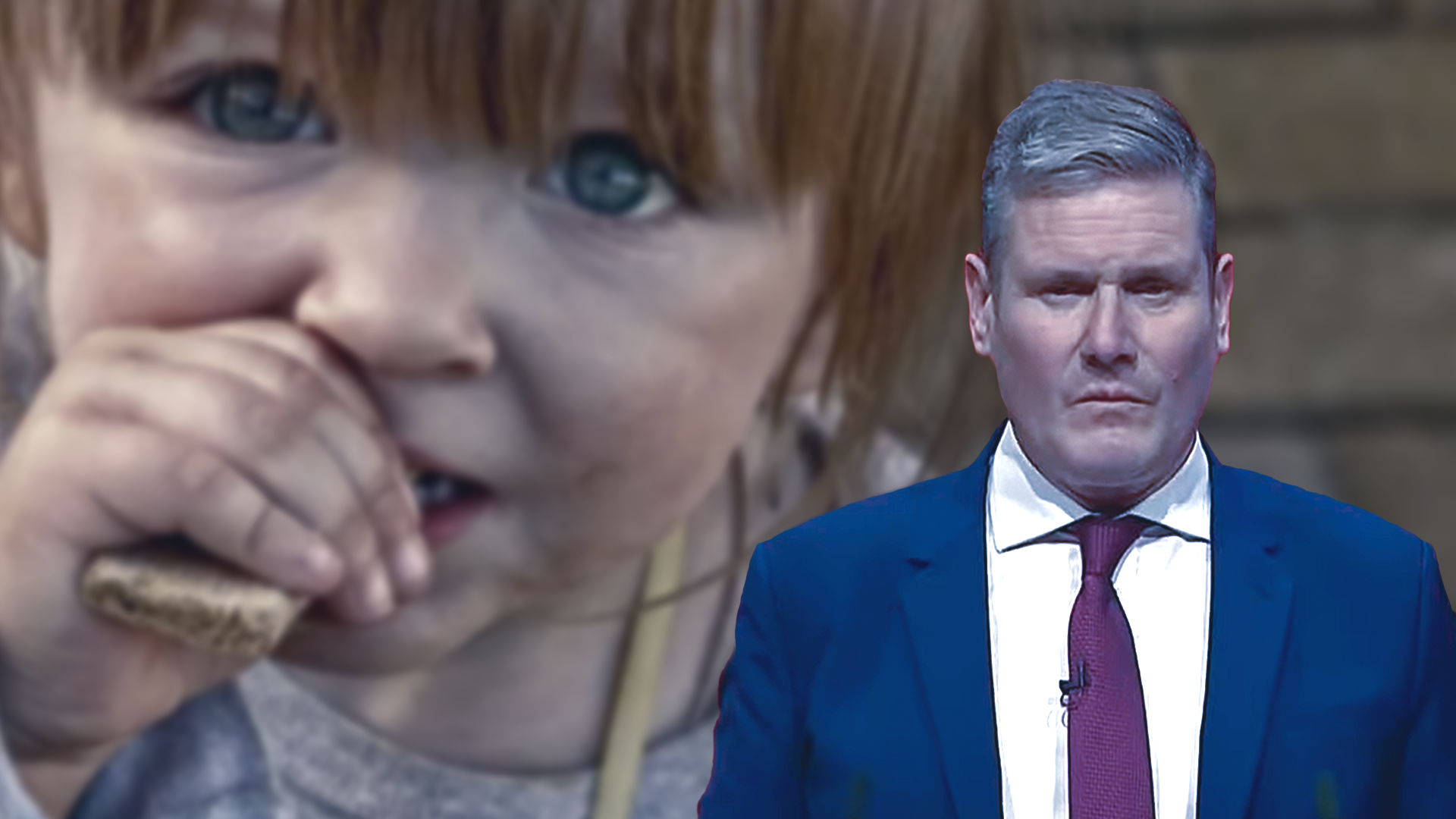
    Image of Keir Starmer and a poor child.
    Zionist Keir ‘Kid Starver’ Starmer. Image thanks to The Skwawkbox.