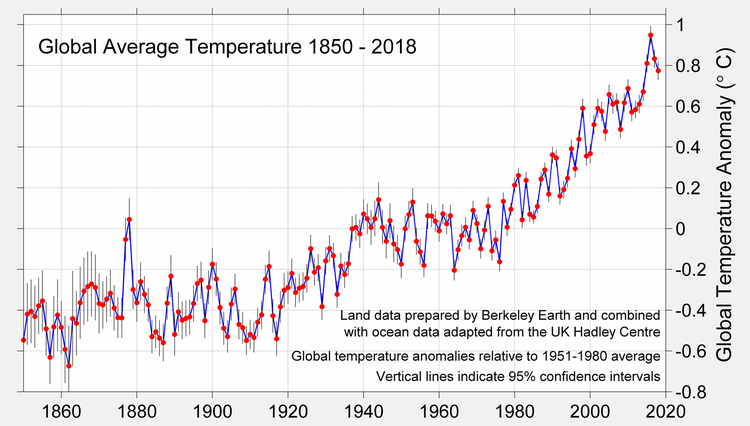
National plans to cut carbon fall far short of what’s needed to avert dangerous climate change, according to the UN Environment Programme.
Their Emissions Gap report says country pledges will fail to keep the global temperature under 1.5C this century.
The Unep analysis suggests the world is on course to warm around 2.7C with hugely destructive impacts.
...
Just a few days before COP26 opens in Glasgow and another scientific report on climate change is “another thundering wake-up call”, according to the UN Secretary General, Antonio Guterres.
If you’ve ever been seasick, “stable” may be the last word you associate with the ocean. But as global temperatures rise, the world’s oceans are technically becoming more stable.
When scientists talk about ocean stability, they refer to how much the different layers of the sea mix with each other. A recent study analysed over a million samples and found that, over the past five decades, the stability of the ocean increased at a rate that was six times faster than scientists were anticipating.
Ocean stability is an important regulator of the global climate and the productivity of marine ecosystems which feed a substantial portion of the world’s people. It controls how heat, carbon, nutrients and dissolved gases are exchanged between the upper and lower layers of the ocean.
So while a more stable ocean might sound idyllic, the reality is less comforting. It could mean the upper layer trapping more heat, and containing less nutrients, with a big impact on ocean life and the climate.
How the oceans circulate heat
Sea surface temperatures get colder the further you travel from the equator towards the poles. It’s a simple point, but it has enormous implications. Because temperature, along with salinity and pressure, controls the density of seawater, this means that the ocean surface also becomes denser as you move away from the tropics.
Seawater density increases with depth too, because the sunlight that warms the ocean is absorbed at the surface, whereas the deep ocean is full of cold water. The change in density with depth is referred to by oceanographers as stability. The faster density increases with depth, the more stable the ocean is said to be.
Our series on the global ocean opened with five in-depth profiles. Look out for new articles on the state of our oceans in the lead up to the UN’s next climate conference, COP26. The series is brought to you by The Conversation’s international network.
It helps to think of the ocean as divided into two layers, each with different levels of stability.
The surface mixed layer occupies the upper (roughly) 100 metres of the ocean and is where heat, freshwater, carbon and dissolved gases are exchanged with the atmosphere. Turbulence whipped up by the wind and waves at the sea surface mixes all the water together.
The lowest layer is called the abyss, which extends from a few hundred metres depth to the seafloor. It’s cold and dark, with weak currents slowly circulating water around the planet that remains isolated from the surface for decades or even centuries.
Dividing the abyss and the surface mixed layer is something called the pycnocline. We can think of it like a layer of cling film (or Saran Wrap). It’s invisible and flexible, but it stops water moving through it. When the film is ripped into shreds, which happens in the ocean when turbulence effectively pulls the pycnocline apart, water can leak through in both directions. But as global temperatures rise and the ocean’s surface layer absorbs more heat, the pycnocline is becoming more stable, making it harder for water at the ocean’s surface and in the abyss to mix.
Why is that a problem? Well, there’s an invisible conveyor belt of seawater which moves warm water from the equator to the poles, where it’s cooled and becomes more dense and so sinks, returning back to the equator at depth. During this journey, the heat absorbed at the ocean’s surface is moved to the abyss, helping redistribute the ocean’s heat burden, accumulated from an atmosphere that’s rapidly warming due to our greenhouse gas emissions.
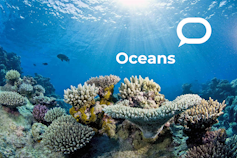
If a stabler pycnocline traps more heat in the surface of the ocean, it could disrupt how effectively the ocean absorbs excess heat and pile pressure on sensitive shallow-water ecosystems like coral reefs.
Increasing stability causes a nutrient drought
And just as the ocean surface contains heat that must be mixed downwards, the abyss contains an enormous reservoir of nutrients that need to be mixed upwards.
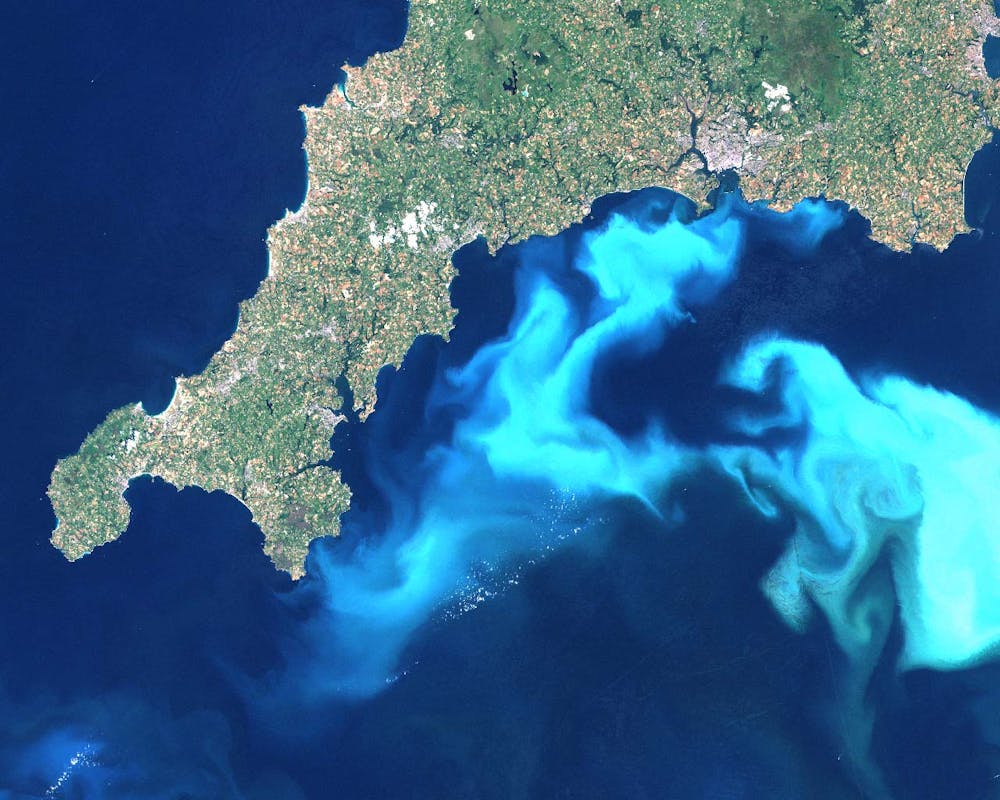
The building blocks of most marine ecosystems are phytoplankton: microscopic algae which use photosynthesis to make their own food and absorb vast quantities of CO₂ from the atmosphere, as well as produce most of the world’s oxygen.
Phytoplankton can only grow when there is enough light and nutrients. During spring, sunshine, longer days and lighter winds allow a seasonal pycnocline to form near the surface. Any available nutrients trapped above this pycnocline are quickly used up by the phytoplankton as they grow in what is called the spring bloom.
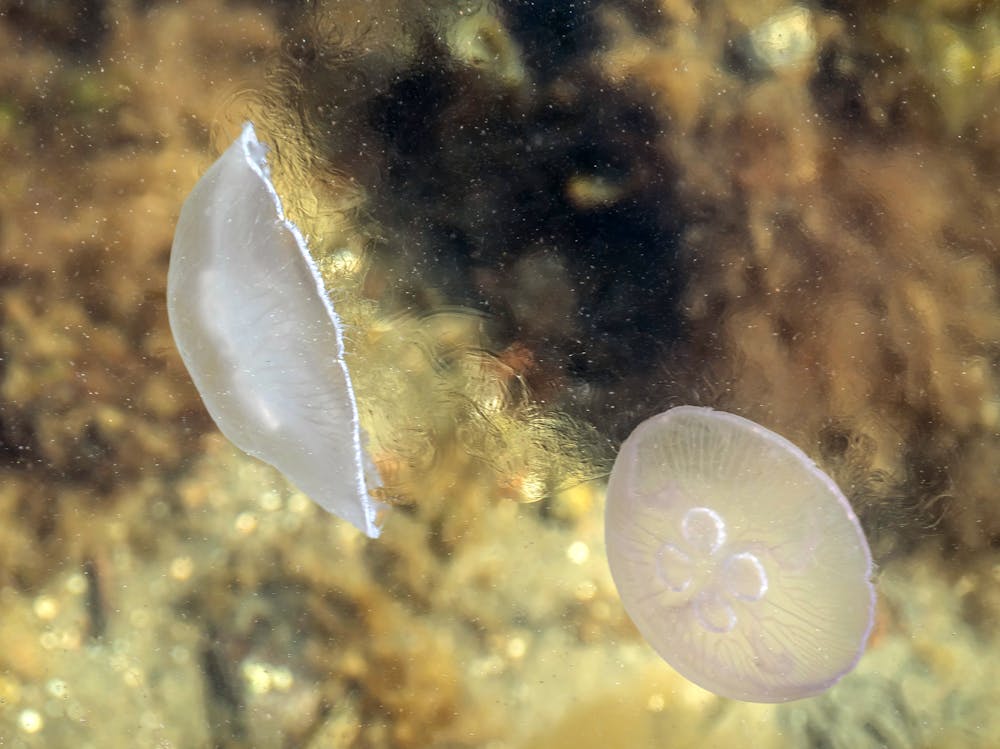
For phytoplankton at the surface to keep growing, the nutrients from the abyss must cross the pycnocline. And so another problem emerges. If phytoplankton are starved of nutrients thanks to a strengthened pycnocline then there’s less food for the vast majority of ocean life, starting with the tiny microscopic animals which eat the algae and the small fish which eat them, and moving all the way up the food chain to sharks and whales.
Just as a more stable ocean is less effective at shifting heat into the deep sea and regulating the climate, it’s also worse at sustaining the vibrant food webs at the sunlit surface which society depends on for nourishment.
Should we be worried?
Ocean circulation is constantly evolving with natural variations and human-induced changes. The increasing stability of the pycnocline is just one part of an extremely complex puzzle that oceanographers are striving to solve.
To predict future changes in our climate, we use numerical models of the ocean and atmosphere that must include all of the physical processes responsible for changing them. We simply don’t have computers powerful enough to include the effects of small-scale, turbulent processes within a model that simulates conditions over a global scale.
We do know that human activity is having a greater than expected impact on fundamental aspects of our planet’s systems though. And we may not like the consequences.
A total of 28 trillion tonnes of ice have disappeared from the surface of the Earth since 1994. That is stunning conclusion of UK scientists who have analysed satellite surveys of the planet’s poles, mountains and glaciers to measure how much ice coverage lost because of global heating triggered by rising greenhouse gas emissions.
The scientists – based at Leeds and Edinburgh universities and University College London – describe the level of ice loss as “staggering” and warn that their analysis indicates that sea level rises, triggered by melting glaciers and ice sheets, could reach a metre by the end of the century.
“To put that in context, every centimetre of sea level rise means about a million people will be displaced from their low-lying homelands,” said Professor Andy Shepherd, director of Leeds University’s Centre for Polar Observation and Modelling.
The scientists also warn that the melting of ice in these quantities is now seriously reducing the planet’s ability to reflect solar radiation back into space. White ice is disappearing and the dark sea or soil exposed beneath it is absorbing more and more heat, further increasing the warming of the planet.
Science doesn’t tell anyone what to do, it merely collects and presents verified information. It is up to us to study and connect the dots. When you read the IPCC SR1.5 report and the UNEP production gap report, as well as what leaders have actually signed up for in the Paris agreement, you see that the climate and ecological crisis can no longer be solved within today’s systems. Even a child can see that policies of today don’t add up with the current best available science.
We need to end the ongoing wrecking, exploitation and destruction of our life support systems and move towards a fully decarbonised economy that is centred on the wellbeing of all people, democracy and the natural world.
If we are to have a chance of staying below 1.5C of warming, our emissions need to immediately start reducing rapidly towards zero and then on to negative figures. That’s a fact. And since we don’t have all the technical solutions we need to achieve that, we have to work with what we have at hand today. And this has to include stopping doing certain things. That’s also a fact. However, it’s a fact that most people refuse to accept. Just the thought of being in a crisis that we cannot buy, build or invest our way out of seems to create some kind of collective mental short circuit.
This mix of ignorance, denial and unawareness is at the very heart of the problem. As it is now, we can have as many meetings and climate conferences as we want. They will not lead to sufficient changes, because the willingness to act and the level of awareness needed are still nowhere in sight. The only way forward is for society to start treating the crisis like a crisis.
The long-awaited climate-emergency post. I have taken some time to decide what’s necessary to say. This post may be revised and expanded but the main points will remain.
Climate change, the climate emergency or crisis is a fact. The poles are melting, sea levels are rising, seas are turning to acid, polar bears and penguins have nowhere to live. It’s taken repeated record temperatures and a little girl for it to be accepted such was the power of climate denial.
Political parties that deny climate change – right-wing parties like UKIP and Nigel Farage’s Brexit party “In terms of policy, there’s no difference (to UKIP)…” are sucking up to the ultra-rich showing that they present no threat to their interests. ed: many prominent Brexiteers are climate change enthusiasts.
It is safe to assume that the World’s plants and animals do not have a concept of ownership. They do however have as much right to live, to exist. The rich do not own the planet and do not have the right to destroy it.
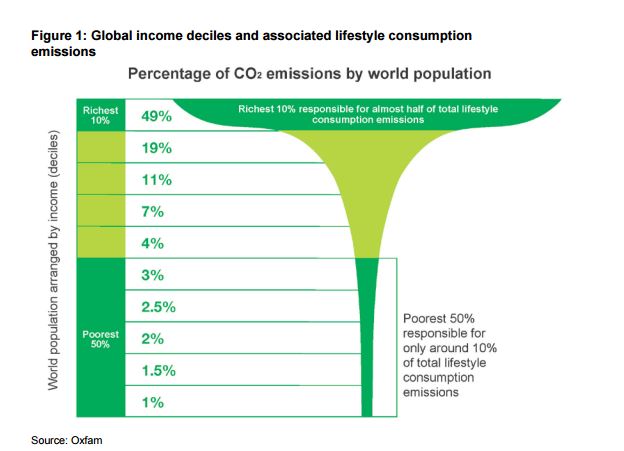
Unless you’re filthy rich, it’s unlikely whatever you do is going to make any noticeable difference. It is the rich who have superyachts and private jets. It is the rich who fly abroad for meals. It is the rich who travel with entourages. It is the rich that own private islands.
There is an exception – a secondary lesser class of human that is climate-dirty: those who travel a great deal especially those that commute by airplane. People who fly regularly are climate-dirty.
A wider issue: the rich are in charge. Wars are conducted at their behest and for their benefit. The whole bullshit narrative of terrorism and consequent anti-Muslim racism is for them. It is their bullshit narrative to divide and control, to weild their influence. There is one main nation-state behind terrorist attacks, often aided by another one or two nation-states with police and intelligence agencies playing along with it, turning a blind eye. Terrorist attacks are often timed for political objectives of no advantage to Islamists. You have to be really stupid to believe that a disabled old man could achieve so much from a cave in Afghanistan and that it didn’t provide the excuse for yet another war for the dirty black stuff.
edit: I am aware that I have power and influence which I tend to regard as transitory and temporary. The climate emergency is a big deal and I am laying the blame exactly where it belongs.
later: I need to write about corporate climate destruction while this post is about lifestyle climate destruction. Corporate solar exploration appears particularly futile and climate destructive. Trips to outer space for the rich? ed: It’s space tourism for the rich to further destroy the planet.