Climate Scientist Leaves ExxonMobil’s Board With Little to Show for It

Spread the love

Original article by Emily Sanders, ExxonKnews republished from DeSmog.

Susan Avery, the first climate scientist on ExxonMobil’s board, is stepping down. Credit: Tess Abbot/WHOItn (CC BY-SA 4.0).

Advocates had hoped Susan Avery’s nomination would be a turning-point moment for the company’s climate approach. It wasn’t.

This story was published in partnership with ExxonKnews

When Susan Avery was first nominated to ExxonMobil’s board in 2017 after pressure from shareholder advocates to bring on a climate scientist, many hoped that her expertise could help steer the oil major in a new direction. Avery — a physicist and atmospheric scientist — had spoken during her extensive career of the need to “get off fossil fuels as much as possible.” 

More than seven years later, Avery is set to exit her role as chair of Exxon’s Environment, Safety, and Public Policy Committee with those hopes seemingly dashed. Evidence continues to mount that the oil giant is still spreading climate disinformation to delay action on fossil fuels, and it recently sued shareholders who proposed that it pursue emissions cuts.

Avery’s decision not to stand for re-election to the board was “for reasons unrelated to the company,” according to a February filing with the U.S. Securities and Exchange Commission. Avery, 74, is just shy of Exxon’s mandatory retirement age, though that was not cited in the filing — directors can run for re-election until they’re 75

The end of her tenure has reignited debate about the role of a scientist on the board of a major oil company with a legacy of spreading science denial and ignoring internal expertise.

“People wanted to give her an opportunity to change things from within, and I think there was an expectation that she would take that responsibility seriously,” said Kathy Mulvey, accountability campaign director for the Union of Concerned Scientists, a nonprofit advocacy organization that supported Avery’s nomination at the time. But Avery’s ability or willingness to change the company “certainly has not borne out in reality,” Mulvey said.

Avery’s selection came after a shareholder proposal requested that Exxon nominate someone with a “high level of climate change expertise” for its board. The company’s unusual lawsuit against other shareholders could chill further attempts to sway its business model that way. Avery’s last day will be May 29, overlapping with the company’s annual shareholder meeting, where a growing number of outraged shareholder groups and state pension funds now plan to vote against prominent members of the board, including CEO Darren Woods. 

With climate lawsuits against the company moving closer to trial, a growing number of states exploring legislation to make companies like Exxon pay for climate damages, and tensions with investors so high, “serving on ExxonMobil’s board is a high-stakes poker game,” Mulvey said. As Avery closes out her tenure with more than $3.8 million in compensation and stock value from the company, Mulvey said, “it’s not surprising” if Avery “decided to cash in her chips and go home.”

Neither Avery nor Exxon responded to requests for an interview.

Business as Usual During Avery’s Tenure

Avery, the former president of the Woods Hole Oceanographic Institution in Massachusetts and  professor emeritus at the University of Colorado Boulder, was brought onto the board during Woods’ first month as CEO. “Avery’s leadership experience in multiple academic and scientific organizations, coupled with her breadth of scientific and research expertise, reinforce the corporation’s long-standing technical and scientific foundation,” the company said as it announced her appointment.

At the time, Exxon was battling subpoenas from attorneys general in New York and Massachusetts, both investigating the company for concealing its knowledge about the dangers of burning fossil fuels. The oil giant was just beginning to experience the fallout of early revelations about its historic climate deception; the tip of that iceberg was unearthed by Inside Climate News, the Los Angeles Times, and Columbia Journalism School in 2015. 

Behind the scenes, Exxon was taking a far less amenable tone in response to criticism of its climate approach.

Kill the story,” Exxon media relations manager Alan Jeffers told Reuters’ Houston bureau chief in a 2016 email, responding to a request for comment on a Center for Media and Democracy press release accusing the American Legislative Exchange Council of abusing its nonprofit status by lobbying against climate action on behalf of Exxon.

In the years to follow, Exxon would become the target of lawsuits from state and local governments alleging the company defrauded consumers, lawmakers, and the public in order to delay climate action and protect its oil and gas profits. Evidence shows the oil giant continued to spread anti-science disinformation and internally strategize to manipulate the public’s understanding of its role in the climate crisis well into Avery’s time on the board.

A congressional report released last month following a years-long investigation found that Exxon and other oil majors’ campaigns of deception “evolved from denying climate science to spreading disinformation and perpetuating doublespeak.” Avery is mentioned in more than a dozen of the documents that members of Congress obtained from Exxon — but they’re almost entirely redacted. 

The investigation found that while Exxon publicly touted its support for the Paris Agreement “since its adoption in 2015,” executives privately admitted that the company did not actually intend to meet the agreement’s goals. The oil giant’s plans are far afield from allowing it to hit those targets, according to a March analysis by think tank Carbon Tracker, which placed Exxon among the five lowest-ranking companies on its scorecard. Exxon’s climate pledges don’t align with its actions, according to one peer-reviewed study, and are “misleading at best, dishonest at worst,” according to Carly Phillips, a research scientist at the Union of Concerned Scientists.

During Avery’s tenure, the company also used advertising firms and funded partnerships with academic institutions to lend credibility to its climate pledges and promotion of “low-carbon solutions” like algae biofuels, which the company abandoned after spending millions advertising that as a climate fix. And Exxon worked to shift blame for its role in the climate crisis to consumers, according to a study of the company’s public communications by climate disinformation experts Naomi Oreskes and Geoffrey Supran. 

“The people who are generating those emissions need to be aware of and pay the price for generating those emissions,” Exxon’s Woods said in a recent Fortune interview.

A November report from the International Energy Agency found that oil and gas companies account for less than 1% of clean energy investment globally. “‘When the energy world changes, so will we’ is not an adequate response to the immense challenges at hand,” the report concludes.

But Exxon has vastly expanded its investments in fossil fuels, more than doubling its oil production in the Permian Basin after sealing a $60 billion deal to acquire Pioneer Natural Resources last year. Exxon and two other oil companies told Guyana that they plan to spend more than $12.9 billion on an offshore oil project there, the country said last summer. The company’s 2023 Global Outlook predicts an increase in methane gas use of more than 20% by midcentury. 

In a 2021 hearing as part of a House Oversight Committee investigation, Woods refused to pledge that the company would stop funding disinformation and lobbying against climate action. 

Exxon is expanding its investments in fossil fuels. Credit: Mike Mozart (CC BY-NC-ND 2.0)

Like a Cancer Doctor on the Board of a Tobacco Company’

The same committee asked Avery to testify at a later hearing, but she never did. Instead, Avery appeared to use her expertise and position to lend credibility to Exxon’s claims of climate leadership.

“I’m proud to work on key issues related to climate risk at ExxonMobil,” she said in Exxon’s 2023 “Advancing Climate Solutions” report. “With my experience as an atmospheric scientist and a leader at a global research organization, I am committed to helping to advise the Board on public issues of significance. … The members of the [Environment, Safety and Public Policy] Committee are united in our commitment to position ExxonMobil as an industry leader in pursuing sustainable solutions that improve quality of life and meet society’s evolving needs.”

Sarah Myhre, another climate scientist and program director for climate advocacy and democracy reform at the Glaser Progress Foundation, contends that Avery compromised her scientific integrity to “performatively greenwash one of the most horrifically damaging, nefarious, and fraudulent corporations that has ever existed.”

“It’s like a cancer doctor on the board of a tobacco company [promoting] tobacco as a health product, something that is helping people live healthier, more vibrant lives. They’re taking all of their scientific bona fides and accreditation, and they’re using it for this outcome, which ultimately protects the tobacco company [as it] continues to kill people or damage their lives irrevocably,” Myhre said.

Michael Mann, a climate scientist who was subject to years of attacks from climate denialists funded by Exxon, described Avery’s service to the company as a “betrayal.” 

Avery’s decision “comes across as entirely transactional: climate scientist lends their imprimatur to the world’s largest publicly-traded fossil fuel company, under fire for their history of promoting disinformation and delay tactics, for seven years, and gets 4 million dollars in return,” Mann said in an email. “What is there that doesn’t look bad here?” 

Silencing Dissent at Exxon

What’s not known is whether Avery ever advised Exxon to change course. The company has a history of concealing the warnings of its own scientists and retaliating against whistleblowers — even recently. 

“The ability of a board member to move a company forward partially depends on the multiple stakeholder voices that the company is hearing and whether they’re willing to listen to them,” said Timothy Smith, senior policy advisor at Interfaith Center on Corporate Responsibility, an organization that coordinates the work of shareholder groups. 

Exxon’s lawsuit against two shareholder groups, filed in January, came in response to the shareholders’ proposal asking the company to limit its Scope 3 emissions, which arise from the use of its products and make up about 85% of its total greenhouse gas emissions. (Exxon’s “net zero” ambitions and emissions reduction plans don’t account for Scope 3 emissions at all.) 

Shareholder resolutions such as these are intended for a vote by a company’s stockholders. When firms want to keep proposals off the ballot, the established process is to appeal to the Securities and Exchange Commission. Exxon, which sued instead, claimed the groups were driven by an “extreme agenda” that is “calculated to diminish the company’s existing business.”

That claim was “really duplicitous because they know full well that this same agenda has been raised with them by other investors over the decade,” said Smith, arguing that the company has “become more confrontational and defensive rather than be a leader in this space.” 

The shareholders, Arjuna Capital and Follow This, withdrew their proposal. But Exxon continued with its lawsuit, defending the decision in its 2024 proxy statement and arguing that the “proposal process is being abused by those who treat shareholder democracy as a venue for activism.” A judge ruled Wednesday that the case can proceed against one of the shareholders, U.S.-based Arjuna Capital, but not the Netherlands-based Follow This.

Mulvey, of the Union of Concerned Scientists, said Exxon would rather battle its own investors than consider transparency about or a change to its fossil fuel business.

“Not only do they continue to fight back against mandatory climate disclosure and public policies that would hold them accountable, but it is also trying to undermine the notion that those who own the company should have a say over its direction,” she said.

Tensions could come to a head at Exxon’s annual shareholder meeting as Avery steps aside. Shareholder advocacy groups like Majority Action have urged other investors to vote against the company’s entire board of directors, which CalPERS, America’s largest pension fund, has announced it will do. The Illinois State Treasurer and California State Treasurer have made similar recommendations to their state pension funds, and the New York state pension fund plans to vote against all but two of the board members.

“The [International Energy Agency] has laid out a plan to transform our energy system in line with the 1.5°C pathway. We’re at a critical juncture of how this is going to occur — and Exxon  appears to be hellbent on foreclosing on that urgent and necessary discussion,” said Majority Action’s senior research analyst, Bryant Sewell. “These directors have to be held accountable.”

Original article by Emily Sanders, ExxonKnews republished from DeSmog.
Continue ReadingClimate Scientist Leaves ExxonMobil’s Board With Little to Show for It

BP and Shell ‘Shaped’ UK Carbon Tax Proposals, Private Emails Show

Spread the love

Original article by Adam Bychawski republished from DeSmog

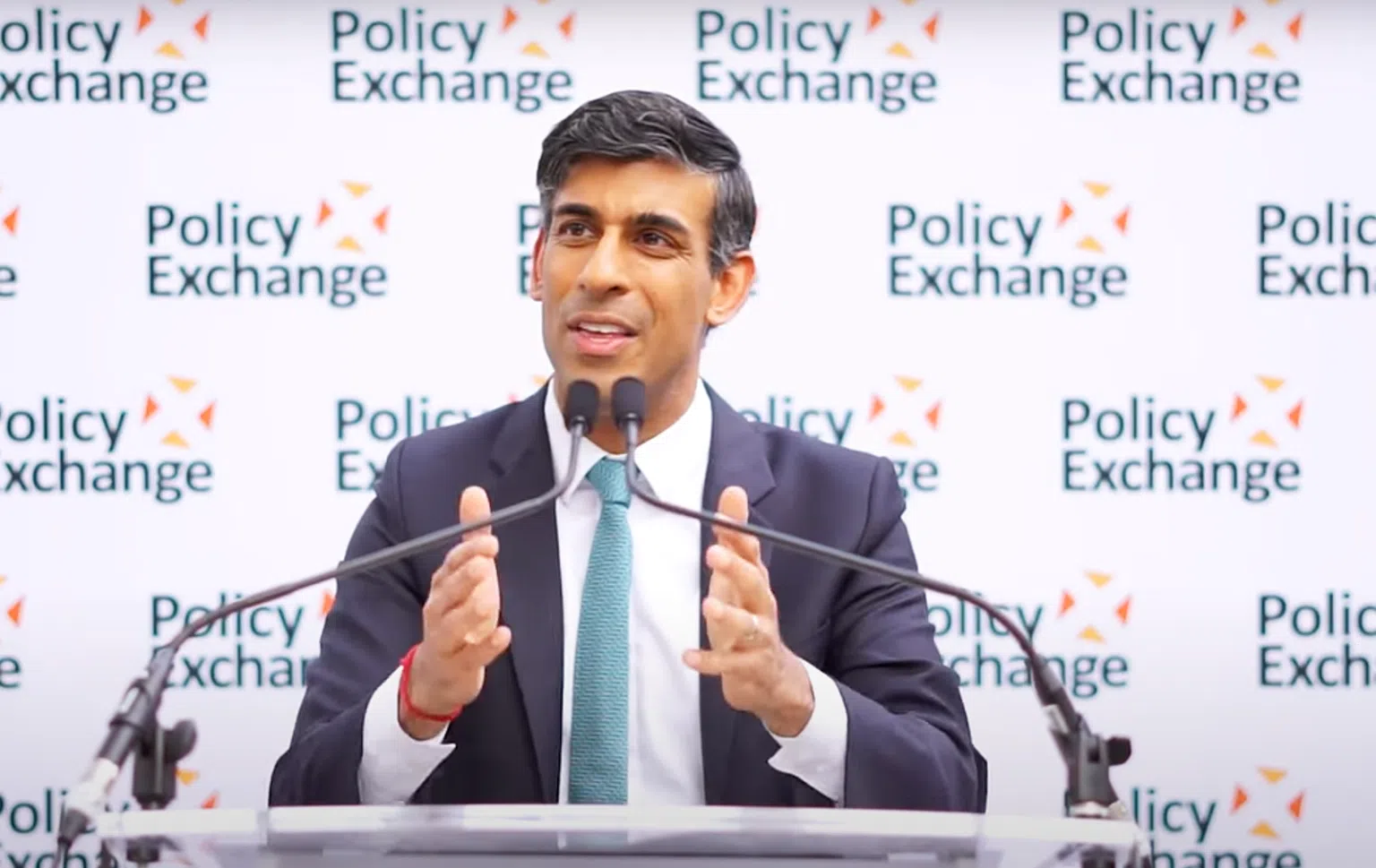
Prime Minister Rishi Sunak at the 2023 Policy Exchange summer reception. Credit: Policy Exchange / YouTube

Internal documents expose how oil and gas majors were given the chance to influence a report by the Policy Exchange think tank.

Fossil fuel giants BP and Shell were given “ample opportunity” to privately influence proposals for taxing oil and gas companies that were later backed by the government, new documents reveal.

Internal BP emails show that its UK executives were reassured by a controversial oil industry group that they could “shape [the] internal thinking” of a 2018 report on carbon taxes produced by the right-wing think tank Policy Exchange.

The emails were among hundreds of documents released by a powerful committee of U.S. politicians last week as part of its three year-long investigation into how the oil industry has worked to undermine efforts to tackle climate change.

Policy Exchange has been credited by Prime Minister Rishi Sunak for helping to draft laws that have cracked down on climate protests, and has in the past received money from the oil and gas major ExxonMobil. 

The think tank was commissioned to produce a report on carbon pricing by the Climate Leadership Council (CLC), a controversial U.S. non-profit whose “founding members” include BP, Shell and TotalEnergies, car manufacturers Ford and General Motors as well as multinationals like Unilever and Microsoft. 

The think tank’s recommendations largely mirrored the CLC’s proposal for a rising tax on carbon emissions, a controversial idea that has been accused of being a favoured policy of the fossil fuel industry. The report also proposed that several UK environmental regulations be phased out to reduce the “burden on business.”

The UK has taxed carbon emissions since 2005, first under an emissions trading scheme created by the European Union. 

The scheme works by setting a maximum overall cap on the amount of carbon emissions that the energy and manufacturing industry can emit. Polluters are given allowances that allow them to emit only a set quota of carbon; if they exceed their allowances they can be fined. To avoid being fined, companies can buy additional allowances from other companies who have excess allowances because their emissions are lower than their quota. 

Every year, the EU reduces the overall cap on emissions, meaning that the price of allowances – also known as a carbon price – rises, which the bloc says acts as an incentive to reduce emissions.

However, according to Bill McGuire, professor emeritus of geophysical and climate hazards at UCL, the policy is popular among oil and gas companies.

“Paying a carbon tax is preferable to stopping all exploration, keeping fossil fuels in the ground and changing business models to embrace renewables – which is what is required – and they have obviously come to the conclusion that, given their colossal profits, this is something they can easily handle,” he said.

After the UK left the EU in 2016, the UK government began devising its own replacement trading emissions scheme, which the Policy Exchange report sought to influence. 

The report was cited last December in a policy paper for the government’s new, long-term emissions trading scheme, used to justify the claim that “Carbon pricing is an effective, market-based way of allowing businesses to make economically rational decarbonisation investment decisions.”

Policy Exchange acknowledged at the time that the report was financially supported by the CLC, which claimed to be a “strategic partner”. However, the think tank said it was “not intended to represent the views of the council or of its founding members on UK or EU matters.”

Internal BP emails reveal that the British oil company’s bosses were initially alarmed that the CLC had commissioned the report and sought a meeting with the council’s founder.

According to the emails, BP was able to use this meeting to lay out “various potential policy, political and commercial concerns” with the content of the report, given the firm’s “unique position in the UK and the timing.”

After the meeting, Paul Jefferiss, then BP’s head of group policy, reassured Andrew Mennear, BP’s director for UK government affairs, that “I don’t think there is immediate cause for concern.”

Jefferiss noted that, “There will be ample opportunity for UK-focused CLC members (BP, Shell, Unilever) to input perspectives and shape the internal thinking” of the report before it is published. 

BP also appears to have been offered the chance to collaborate with the council on a communications strategy around its release.

Jolyon Maugham, director of the Good Law Project, said: “While the BBC launders Policy Exchange as ‘centre right’, and the charities so-called regulator sits on its hands, the revealed reality is that Policy Exchange is acting like a front for the oil and gas industry.”

Policy Exchange, the CLC, and BP have been approached for comment. 

‘Another Form of Greenwashing’

Climate experts are divided over whether the policy of taxing carbon is effective, and past scandals have led to accusations that it is being used as a smokescreen by the fossil fuel industry.

McGuire believes that a carbon tax is “ultimately just another form of greenwashing and a sop to the [oil] sector’s critics”.

However, other experts, like Adam Bell, director of policy at consultancy firm Stonehaven and a former head of strategy at the Department for Business, Energy and Industrial Strategy, believe that carbon taxing can be effective.

“Carbon pricing can only be part of a policy approach to tackling climate change, it can’t be the solution by itself. Fossil fuel companies will survive while there is demand for what they produce. You’ve got to eliminate that demand if you want to eliminate them”.

To do that, you should “focus on getting renewables built and heat systems and transportation electrified,” he said.

The CLC has led calls for a federal carbon price in the U.S. and has attracted criticism in the past for attaching conditions to its proposals that would be favourable to the fossil fuel industry. It has previously proposed the repealing of federal emissions regulations, the Environmental Protection Agency (EPA) losing its authority to regulate carbon emissions, and legal immunity for companies from any prosecution over their role in climate change.

The CLC dropped the latter provision from its proposal in 2019 because it was “distracting focus away from the many economic and environmental upsides of the plan”, but critics have questioned whether it remains privately committed to the idea.

In 2021, the CLC “suspended” Exxon from its list of founding members after one of its lobbyists was caught on camera saying that the oil company had only pledged to support a carbon tax because it was unlikely to ever become law.

Policy Exchange’s report likewise proposed that some environmental regulations “be phased out thus reducing the regulatory burden on business” after the introduction of a carbon tax, though it claimed that “this will in no way reduce environmental protection”.

In an afterword to the report, CLC’s founder Ted Halstead, and Martin Feldstein and George P. Shultz, two economists who served under Ronald Reagan’s administration, wrote that the plan “will help free businesses from unnecessary regulation”.

Steve Tooze, a spokesperson for Extinction Rebellion said, “These emails are the smoking gun that blows fatal holes in Policy Exchange’s already-tattered and frankly laughable claims to be an independent research ‘think tank’”.

Policy Exchange

At the 2022 Conservative Party conference, Jacob Rees-Mogg, at the time serving as business, energy and industrial strategy secretary, said: “I believe that where Policy Exchange leads, governments have often followed.”

The think tank, which has charity status, chooses not to disclose its donors and was given the lowest possible rank by openDemocracy’s Who Funds You? project, which rates the funding transparency of think tanks.

OpenDemocracy previously uncovered that Exxon donated $30,000 to Policy Exchange’s American fundraising arm in 2017, the same year its UK carbon pricing report was being drafted.

The think tank would go on to author a report in 2019 that proposed tough new policing laws to crackdown on climate protestors. Rishi Sunak later credited Policy Exchange for helping the government draft what would become the Police, Crime, Sentencing and Courts Act, which explicitly targeted groups like Extinction Rebellion.

Sunak is an alumni of Policy Exchange, having worked there before his 2015 election to Parliament, as is Claire Coutinho, his energy security and net zero secretary. The think tank has significant access to ministers, having held more than a hundred meetings with the government since 2012.

DeSmog revealed in August 2023 that Policy Exchange engaged in a high-level influencing campaign over the UK’s North Sea oil and gas policies, and echoed the fossil fuel lobby by emphasising the importance of hydrogen power and carbon capture utilisation and storage (CCUS) to the green transition.

The evidence unearthed by U.S. politicians has further demonstrated how fossil fuel giants have been downplaying the climate crisis and lobbying against green laws, despite being provided with academic research showing the scale of the problem.

BP was warned by Princeton University researchers in 2016 that climate change accelerated in part by new global supplies of shale gas could lead to catastrophic events such as “mass extinctions and unprecedented famine.” 

Yet, despite acknowledging internally the concern that “gas doesn’t support climate goals,” the firm embarked on a marketing campaign to “advance and protect the role of gas – and BP – in the energy transition.”

Original article by Adam Bychawski republished from DeSmog

Rishi Sunak on stopping Rosebank says that any chancellor can stop his huge 91% subsidy to build Rosebank, that Keir Starmer is as bad as him for sucking up to Murdoch and other plutocrats and that we (the plebs) need to get organised to elect MPs that will stop Rosebank.
Image of InBedWithBigOil by Not Here To Be Liked + Hex Prints from Just Stop Oil's You May Find Yourself... art auction. Featuring Rishi Sunak, Fossil Fuels and Rupert Murdoch.
Image of InBedWithBigOil by Not Here To Be Liked + Hex Prints from Just Stop Oil’s You May Find Yourself… art auction. Featuring Rishi Sunak, Fossil Fuels and Rupert Murdoch.
Continue ReadingBP and Shell ‘Shaped’ UK Carbon Tax Proposals, Private Emails Show

New report accuses fossil fuel companies of greenwashing, but profits are up

Spread the love

https://www.energymonitor.ai/features/new-report-accuses-fossil-fuel-companies-of-greenwashing-but-profits-are-up

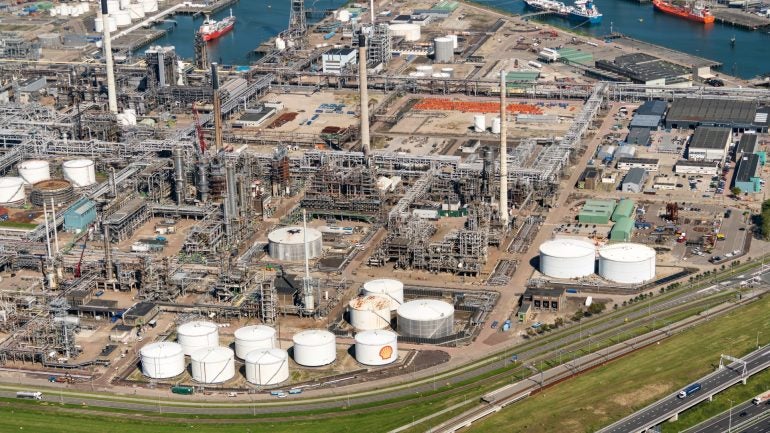
Aerial view of Shell Pernis in Rotterdam, Holland, taken 7 September 2023. Photo: Aerovista Luchtfotografie/Shutterstock.

A new report by the Senate Committee on the Budget details how fossil fuel companies have avoided tackling the climate crisis.

Last week, US Democrats released a report three years in the making detailing the ways that large fossil fuel producers including ShellBP and Exxon have sought to avoid responsibility for the climate crisis.

The 65 page-long report, jointly authored by the Democrats House Committee On Oversight And Accountability and the Senate Committee on the Budget, contains files subpoenaed from big oil companies that “demonstrate for the first time that fossil fuel companies internally do not dispute that they have understood since at least the 1960s that burning fossil fuels causes climate change and then worked for decades to undermine public understanding of this fact and to deny the underlying science”.

Previous documentation has shown that companies including Exxon knew about human-made climate change since at least 1981, and files released earlier this year suggest it may have been known since the 1950s. The importance of this report lies in proving that fossil fuel companies not only knew, but privately believed the science despite public rejection.

The files also show the tactics used by major fossil companies to discredit climate activism, the report says, among them “pivot[ing] from outright climate denial to a new strategy of deception. Instead of misrepresenting the science and the consequences of climate change, they pivoted to misrepresenting their business plans, their investments in low carbon technologies, the alleged safety of natural gas, and their support for various climate policies and emission reduction targets”.

Net zero?

Most major oil companies have made net zero pledges based on the Paris Agreement goal of net zero by 2050, but the report claims they are unlikely to be met. BP, for instance pledged to reach net zero on oil and gas by 2050, but is at the same time ramping up oil production.

The New York Times reported earlier this year that BP’s interim CEO Murray Auchincloss was clear that it would pursue an increase in fossil fuel production to meet demand, and internal documents gathered by the committees show that it was unwilling to publicly state a commitment to net zero in 2019.

In an internal email thread discussing a press request for comment, an official said “it goes a bit too far to state or imply support for net zero by 2050, because that would require policy likely to put some existing assets at risk, and we haven’t discussed that internally”.

This lack of action is further highlighted in a report released by thinktank Carbon Tracker in March, which suggests that companies including Shell and BP are far from hitting Paris Agreement goals.

https://www.energymonitor.ai/features/new-report-accuses-fossil-fuel-companies-of-greenwashing-but-profits-are-up

Continue ReadingNew report accuses fossil fuel companies of greenwashing, but profits are up

Exxon’s Own Research Confirmed Fossil Fuels’ Role in Global Warming Decades Ago

Spread the love

https://insideclimatenews.org/news/02052024/from-the-archive-exxon-research-global-warming/

Exxon’s Richard Werthamer (right) and Edward Garvey (left) are aboard the company’s Esso Atlantic tanker working on a project to measure the carbon dioxide levels in the ocean and atmosphere. The project ran from 1979 to 1982. Credit: Courtesy of Richard Werthamer

Top executives were warned of possible catastrophe from greenhouse effect, then led efforts to block solutions.

At a meeting in Exxon Corporation’s headquarters, a senior company scientist named James F. Black addressed an audience of powerful oilmen. Speaking without a text as he flipped through detailed slides, Black delivered a sobering message: carbon dioxide from the world’s use of fossil fuels would warm the planet and could eventually endanger humanity.

“In the first place, there is general scientific agreement that the most likely manner in which mankind is influencing the global climate is through carbon dioxide release from the burning of fossil fuels,” Black told Exxon’s Management Committee, according to a written version he recorded later.

It was July 1977 when Exxon’s leaders received this blunt assessment, well before most of the world had heard of the looming climate crisis.

A year later, Black, a top technical expert in Exxon’s Research & Engineering division, took an updated version of his presentation to a broader audience. He warned Exxon scientists and managers that independent researchers estimated a doubling of the carbon dioxide (CO2) concentration in the atmosphere would increase average global temperatures by 2 to 3 degrees Celsius (4 to 5 degrees Fahrenheit), and as much as 10 degrees Celsius (18 degrees Fahrenheit) at the poles. Rainfall might get heavier in some regions, and other places might turn to desert.

https://insideclimatenews.org/news/02052024/from-the-archive-exxon-research-global-warming/

Continue ReadingExxon’s Own Research Confirmed Fossil Fuels’ Role in Global Warming Decades Ago

Exxon Criticized ICN Stories Publicly, But Privately, Didn’t Dispute The Findings

Spread the love

https://insideclimatenews.org/news/02052024/exxon-pivot-from-denial-to-deception/

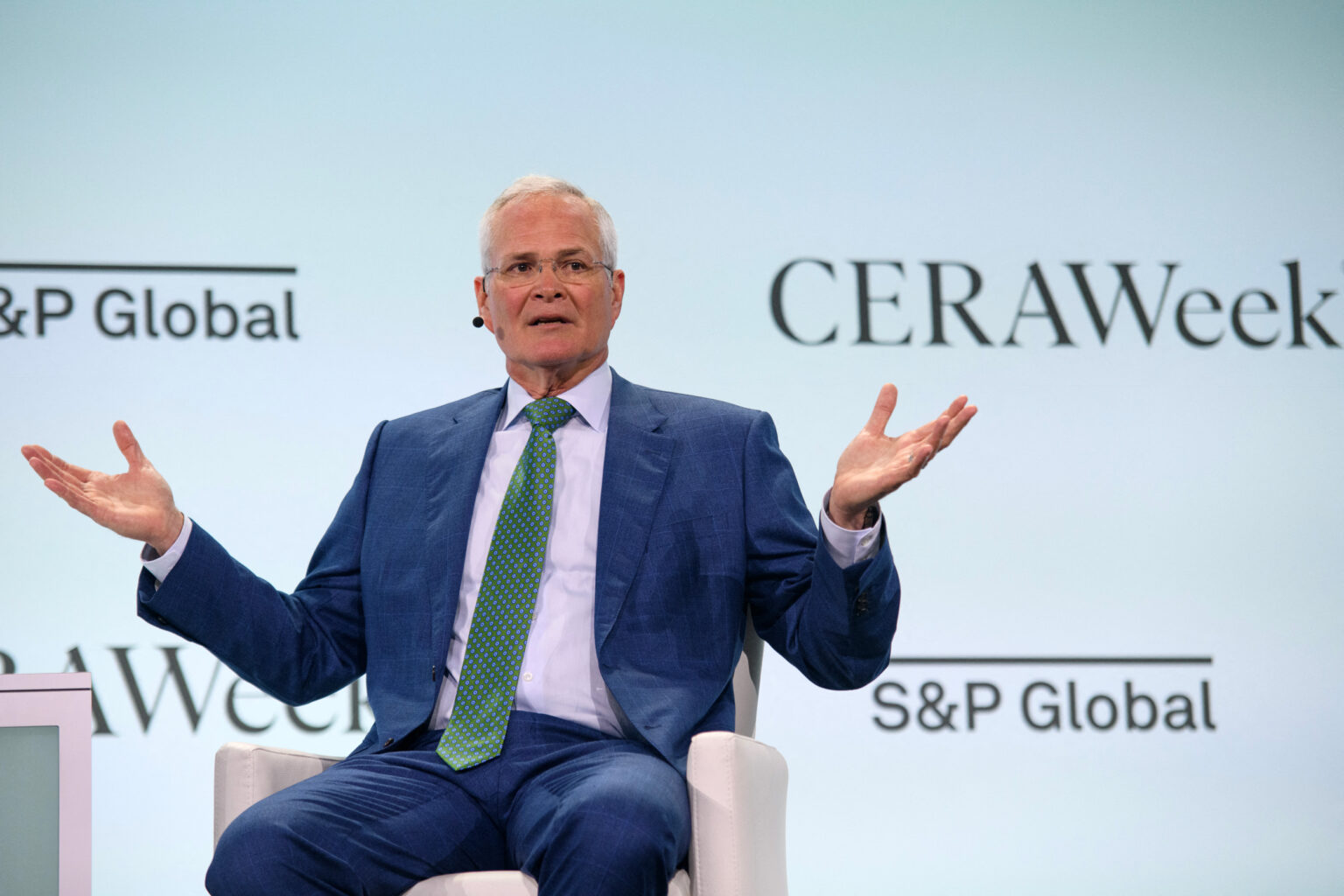
Exxon Mobil Chairman and CEO Darren Woods speaks during the CERAWeek oil summit in Houston, Texas, on March 18. Credit: Mark Felix/AFP via Getty Images

Congressional Democrats say newly released documents trace oil industry’s pivot from denial to deception.

In the wake of Inside Climate News’ 2015 stories on ExxonMobil’s research confirming fossil fuels’ role in global warming, the oil giant hit back with a #GetTheFacts social media campaign calling the reporting “misleading,” “baseless,” and “politically motivated.”

But in internal discussions, Exxon’s communications team grappled with how to respond when “we actually don’t dispute much of what these stories report,” according to one of 4,500 documents newly released by Congressional Democrats after a two-and-a-half-year investigation of industry disinformation on climate change.

At a hearing on Wednesday, Senate Budget Committee Chairman Sheldon Whitehouse (D-R.I.) said that the new documents show the evolution of the oil industry’s response to climate change. Instead of an outright denial of the science, Whitehouse said the oil companies engaged in what he called “Climate Denial Lite.”

Big Oil, Whitehouse said, is now “pretending it is taking climate change seriously—while secretly undermining its own publicly stated goals.”

https://insideclimatenews.org/news/02052024/exxon-pivot-from-denial-to-deception/

Continue ReadingExxon Criticized ICN Stories Publicly, But Privately, Didn’t Dispute The Findings