HSBC’s secretive loan to a coal company bulldozing a village
Original article from The Bureau of Investigative Journalism republished under Creative Commons Attribution-NonCommercial-NoDerivs 3.0 Unported License.
HSBC made a secretive multimillion-dollar loan to an energy company that is bulldozing a village in western Germany to expand a huge coal mine, just three months after the bank pledged to stop funding coal.
HSBC, which claims it is “helping to lead the transition to a more sustainable world”, approved the $340m deal with energy giant RWE after internal discussions in which senior figures at the bank recommended that its involvement should not be publicised.
Violent clashes broke out at the site of the mine on Wednesday as riot police tried to drag away protesters to make way for the bulldozers under the glare of the world’s media. Hundreds of environmental activists have set up camp in Lützerath, the last of several villages to be sacrificed for the 35 km2 Garzweiler mine, which is owned by RWE, one of Europe’s largest energy companies.
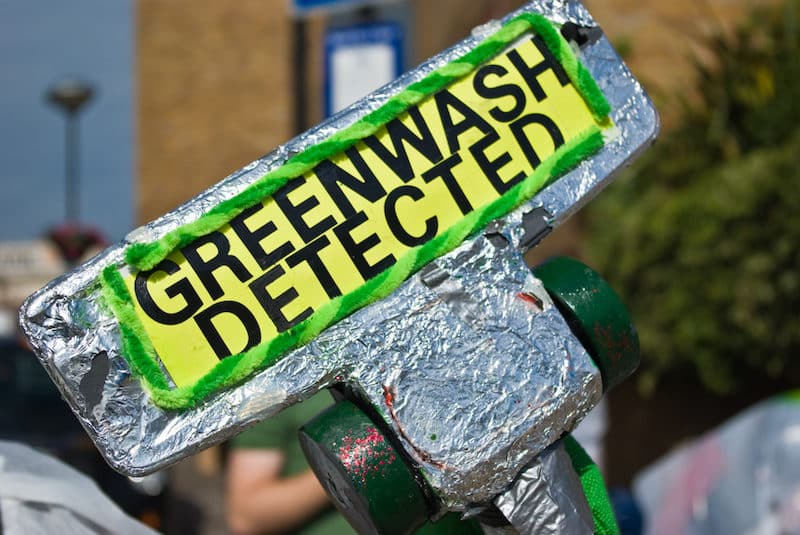
HSBC bankers raised concerns about the expansion of the mine and the demolition of the villages but ultimately greenlit the deal. The disclosure of the loan will mark a further blow to the bank, which has raised at least $2.4bn in so-called “sustainable finance” for companies worsening the climate crisis and recently had a series of adverts banned by UK regulators for greenwashing.
According to data from Refinitiv, RWE borrowed a total of $5.4bn in loans arranged by a group of 25 banks including HSBC, Barclays and Santander. All three have committed to aligning their financing and investments with net zero by 2050.
At COP27 last year the UN secretary general, António Guterres, said that it was reprehensible to use “bogus net-zero pledges” to cover up “messy” fossil fuel expansion. “It is rank deception,” he added. “This toxic cover-up could push our world over the climate cliff. The sham must end.”
HSBC told the Bureau: “Details of this [deal] and all its participating banks are in the public domain, as is normal. We have processes to ensure our financing aligns with our policies, which include an expectation on clients to produce and implement credible transition plans.”
Barclays declined to comment on the RWE loan but said it is phasing out financing of thermal coal mining and coal-fired power generation. Santander declined to comment.
‘We don’t want our name associated with it’
At the end of 2021, HSBC committed to withdraw financing from clients that are expanding the production of thermal coal and phase out funding for coal-fired power and thermal coal mining.
Bankers asked internally whether lending money to RWE would comply with this policy and raised concerns about RWE’s plans to demolish several villages. The Garzweiler mine produces 25m tonnes of lignite – the dirtiest form of coal – every year.
After several meetings, the sustainability and reputational risk department approved the deal but said that RWE should not publicise HSBC’s involvement.
An HSBC banker, who asked to remain anonymous, said of the deal: “We’re saying, ‘We don’t want our name to be associated with it, but here are the funds and please don’t tell anyone that we gave you the funds.’ I acknowledge that this approach is questionable.”
The deal was initially structured as a sustainability-linked loan, meaning its terms include a commitment from RWE that it will hit certain climate targets by 2025. But the penalty it would face for failing to do so is a tiny increase in the interest it pays on the loan. This would come to $86,700 a year for a company whose most recent annual revenues were $26bn.
Sustainability-linked loans are meant to encourage polluters to transition to more environmentally friendly operations, but companies that raise funds through the loans do not face any restrictions on how that money is used.
The HSBC banker said: “There is no guarantee that the [RWE loan] won’t be used to help pay a supplier, or pay salaries of contractors involved in the coal mine project.”
A condemned village
The vast Garzweiler open-cast mine has already swallowed 13 villages, according to Friends of the Earth Germany. Thousands of residents have been resettled and churches, schools and village halls have all been bulldozed to satisfy the voracious demand for energy in a heavily industrialised area.
Local residents and environmental activists across Germany have campaigned to protect another six neighbouring villages that were slated for demolition and appear to have had some success. RWE recently said that it would stop using coal in 2030 and so would drop its plans to raze five of the villages.
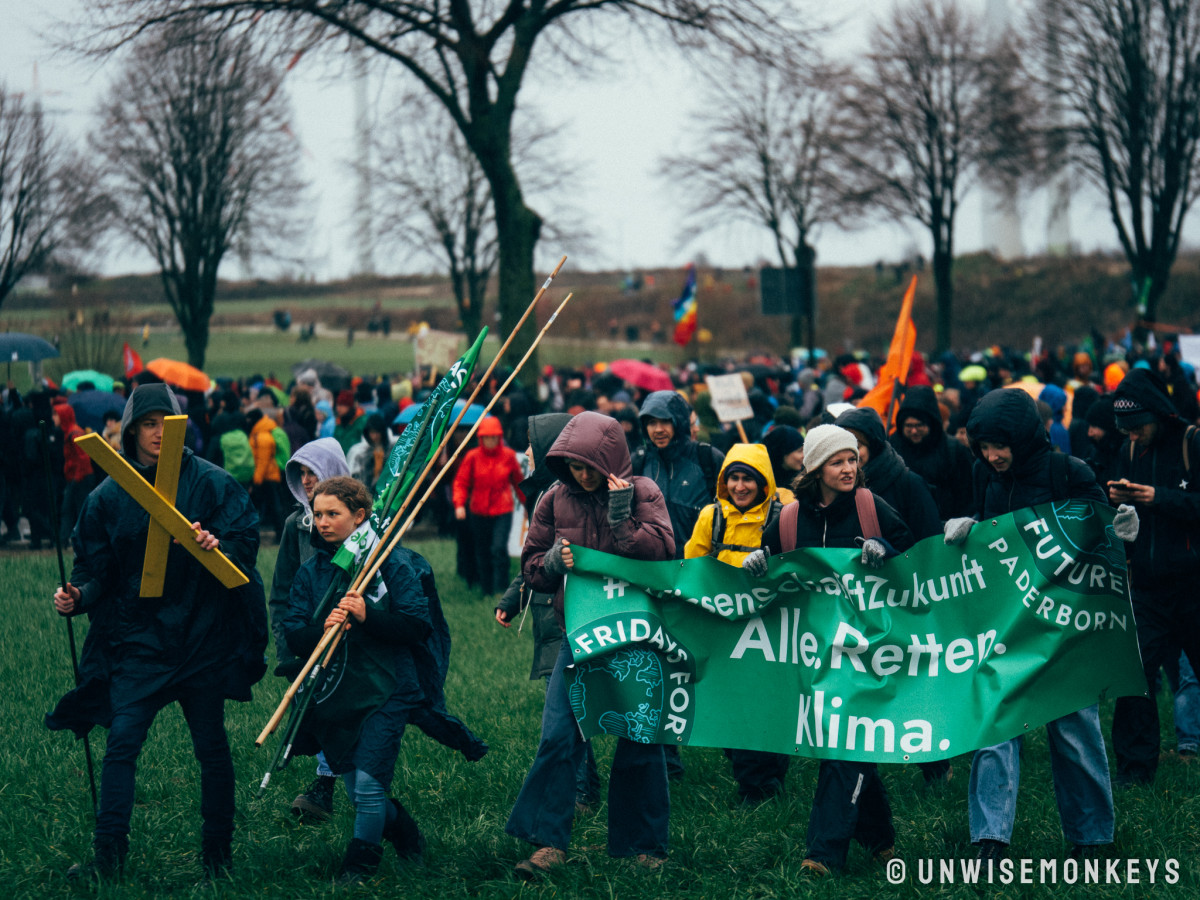
That just leaves Lützerath, where police are battling to evict hundreds of activists who have been living in abandoned buildings and makeshift treehouses for the past two and a half years. They have built a skate hall, farmed their own food and run workshops on climate justice.
Eckardt Heukamp was Lützerath’s last remaining resident until he moved out last year. “You saw how the church was torn down and dug up, how the villages have vanished,” he told the Times. “At some point you just say to yourself that it can’t keep going on like this, being subjugated and driven into a corner all the time.”
The showdown between the authorities and occupying activists escalated on Wednesday as riot police armed with batons moved in to evacuate the area, hauling out protesters and making arrests as fires burned in the streets of the village.
Just a few hundred metres away, one of the world’s largest land vehicles continues to carve away at the earth, bringing the edge of the mine ever closer to Lützerath.
Meaningless targets
In order to secure the loan, RWE committed to reducing its carbon emissions per unit of power generated, across all its energy sources. This means that, as long as it adds enough wind and solar power into the mix, the company could in fact increase its emissions from coal – and its planet-warming emissions overall.
It also committed to increasing the proportion of energy it generates from renewables and the amount it is investing in sustainable energy.
The penalty if RWE fails to meet all three targets is an increase in the interest it pays on the loan of less than 0.03 percentage points.
“It’s almost meaningless,” said Tariq Fancy, BlackRock’s former chief investment officer for sustainable investing. “Because the only thing that really changes behaviour in financial markets is when you change incentives. And you can’t change incentives with something so miniscule.”
Critics say RWE – which is Europe’s largest emitter of CO2 – could single-handedly stop Germany meeting its climate targets. Catharina Rieve of the German Institute for Economic Research said this will be the case if the company follows through with its plan to burn 280m tonnes of coal from the Garzweiler mine before 2030.
RWE told the Bureau it disputed this projection because the EU’s emissions trading system means that “if one company emits less, other companies elsewhere can emit more”.
The company added: “In the current energy crisis, ensuring security of supply is vital. At the same time, protecting the climate remains one of the key challenges of our time. RWE supports both. The company invests billions of euros into accelerating the energy transition.”
The HSBC banker said it was questionable to view a company as transitioning to net zero while it was expanding coal extraction, and that the bank’s attempts to challenge polluters on their transition plans was minimal.
HSBC decided the loan should not be classified as “sustainability-linked” internally, even though environmental targets remained part of the agreement. The bankers agreed it should not count towards HSBC’s target to contribute up to $1tn in sustainable finance by 2030 because of RWE’s plan to expand the Garzweiler mine and demolish several villages.
Barclays and Santander declined to comment on whether they are counting their parts of the RWE loan package towards their internal sustainable finance targets.
HSBC told the Bureau: “We have been clear we will finance energy companies who are taking an active role in transitioning to a net zero energy future, and we remain committed to this goal amid the double challenge of tackling climate change and an acute energy crisis in Europe.”
RWE is not the only company expanding fossil fuel production that has borrowed money under the guise of sustainable finance. Refinitiv data shows that Chrysaor – now part of the UK North Sea’s biggest producer of fossil fuels – raised $4.5bn with a sustainability-linked loan arranged by HSBC, Barclays, Lloyds, Natwest and a number of other banks.
One of the biggest oil producers in the US, Occidental Petroleum, raised $4bn, and the world’s biggest oil services provider Schlumberger raised $912m, also with sustainability-linked loans arranged by HSBC and other banks.
Tony Burdon, chief executive at Make My Money Matter, which campaigns for greener investments, said: “HSBC took an important first step in ceasing direct finance towards fossil fuel expansion projects. But as this report so clearly shows, they haven’t gone far enough.
“By continuing to provide sizeable corporate loans to companies involved in fossil fuel expansion such as RWE, HSBC is not just damaging the environment and displacing communities, they’re undermining their own climate targets.”
Lead image: Riot police stand in front of burning barricades as activists stage a protest in Lützerath. Credit: Bernd Lauter / Getty
Reporter: Josephine Moulds
Environment editor: Robert Soutar
Impact producer: Grace Murray
Global editor: James Ball
Editor: Meirion Jones
Production editors: Alex Hess and Frankie Goodway
Fact checker: Andrew Wasley
This reporting is funded by The Sunrise Project. None of our funders have any influence over the Bureau’s editorial decisions or output.
Original article from The Bureau of Investigative Journalism republished under Creative Commons Attribution-NonCommercial-NoDerivs 3.0 Unported License.