After Helping Convince Trump to Attack Iran, Kushner Solicits Billions for His Private Equity Firm

Spread the love

Original article by Jake Johnson republished from Common Dreams under Creative Commons (CC BY-NC-ND 3.0).
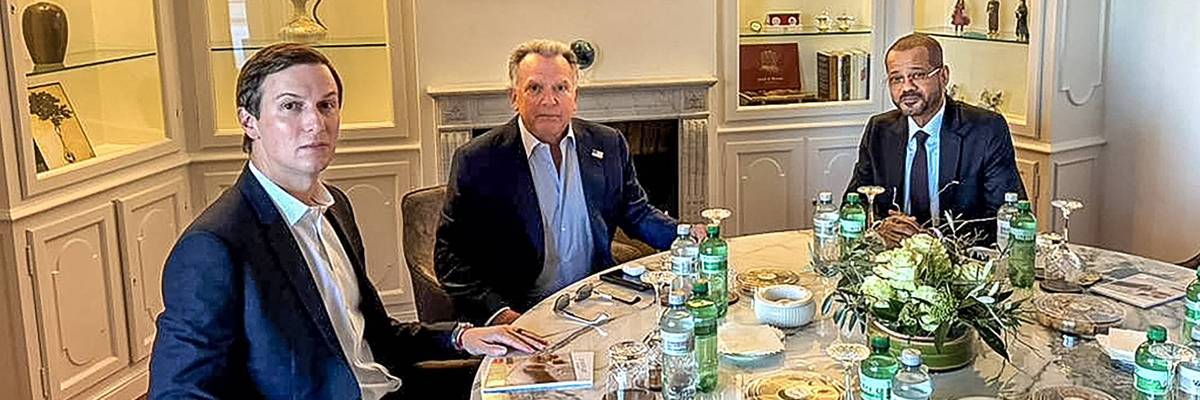
US special envoys Steve Witkoff and Jared Kushner hold a meeting with Omani Foreign Minister Badr Albusaidi in Geneva on February 26.  (Photo by Omani Foreign Ministry/AFP via Getty Images)

“While US servicemembers die in another forever war in the Middle East, Donald Trump’s ‘peace envoy’ is raising money for his private equity firm,” wrote US Sen. Elizabeth Warren.

Jared Kushner, US President Donald Trump’s son-in-law, is reportedly trying to entice governments in the Middle East to invest billions in his private equity firm while he simultaneously works as “a special envoy for peace”—a role he appears to have used to help convince Trump to wage war on Iran.

The New York Times reported late last week that Kushner “has spoken with potential investors in recent weeks about raising $5 billion or more for Affinity Partners, his investment firm.”

RECOMMENDED…

Trump Sons Accused of Trying to Profit Off Father’s Iran War With Drone Investment
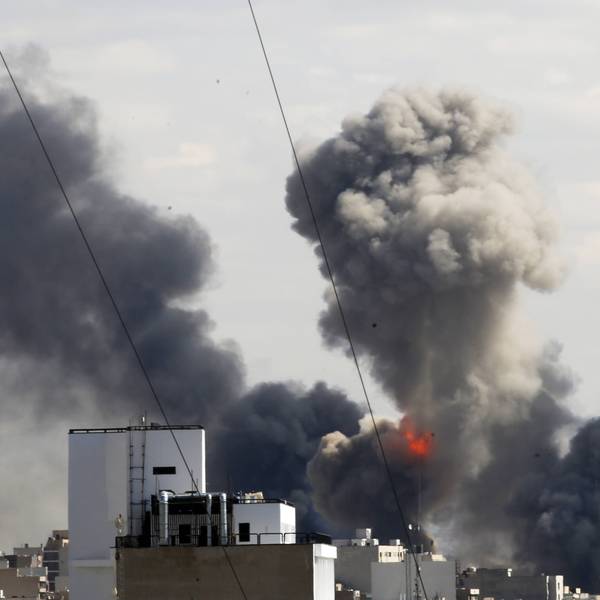
Trump Sons Accused of Trying to Profit Off Father’s Iran War With Drone Investment

Explosions heard in Tehran as new Israeli airstrikes hit Iranian capital

‘Insane This Is Legal’: Bettors Make Huge Profits From Suspiciously Timed Wagers on Iran War

Citing five unnamed people with knowledge of the talks, the Times reported that “Affinity’s representatives have already met with Saudi Arabia’s Public Investment Fund,” Affinity’s largest investor. Saudi Arabia’s leader, Crown Prince Mohammed bin Salman, reportedly played a significant role in the behind-the-scenes lobbying campaign urging Trump to attack Iran—Saudi Arabia’s top regional rival.

Bin Salman controls the Saudi Public Investment Fund, which pumped $2 billion into Kushner’s firm in 2022.

“Mr. Kushner’s fundraising is expected to stretch on for the better part of this year,” the Times added. “The efforts show the blurring of the lines between public service and private profit-seeking during Mr. Trump’s second term. Only a few weeks ago, in his role as Mr. Trump’s ‘peace envoy,’ Mr. Kushner met in Geneva with Iran’s foreign minister. The US and Israeli bombing campaign in Iran began shortly after those meetings concluded without a deal on Iran’s nuclear program.”

Last week, Trump said he decided to attack Iran in coordination with Israel—whose prime minister, Benjamin Netanyahu, is a personal friend of Kushner’s—because the president “thought they were going to attack us,” a view he claimed to have reached after listening to “what Steve [Witkoff] and Jared and Pete [Hegseth] and others were telling me.”

US Sen. Elizabeth Warren (D-Mass.) wrote in response to the Times reporting that “while US servicemembers die in another forever war in the Middle East, Donald Trump’s ‘peace envoy’ is raising money for his private equity firm.”

Abbas Araghchi, Iran’s foreign minister, wrote in a social media post on Sunday that a “fair and equitable deal” between the US and Iran “was within reach” before Trump and Netanyahu started bombing.

“Those providing poor advice to POTUS are responsible for bloodshed,” Araghchi wrote, attaching a screenshot of the Times story on Kushner’s fundraising efforts. “This war is imposed on both Americans and Iranians.”

Judd Legum, founder and author of the Popular Information newsletter, noted last week that Kushner’s participation in the Geneva diplomatic talks that preceded the US-Israeli assault on Iran “violated his pledge not to be involved in foreign policy in a second Trump administration.”

On Monday, Legum observed that Kushner also said in December 2024 that his private equity firm would not “have to raise capital for the next four years,” allowing him to “avoid any conflicts” of interest.

Trump formally named Kushner a “special envoy for peace” last month, a move that means the president’s son-in-law is now required by law to file a financial disclosure report. Kushner has just days left before the 30-day deadline to file the disclosure.

Donald Sherman, president and CEO of Citizens for Responsibility and Ethics in Washington, wrote in a letter to the White House last week that “Mr. Kushner’s history of financial gains resulting from his time as a White House advisor during President Trump’s first term raises serious concerns about potential conflicts of interest that must be addressed before Mr. Kushner participates in any additional matters that may relate to his own financial interests or those of his investors.”

“The risk of Mr. Kushner’s potential conflicts is particularly concerning because his private investment firm has very publicly done significant business with foreign partners who also have interests in the conflicts on which he has been assigned to work,” Sherman noted.

Original article by Jake Johnson republished from Common Dreams under Creative Commons (CC BY-NC-ND 3.0).
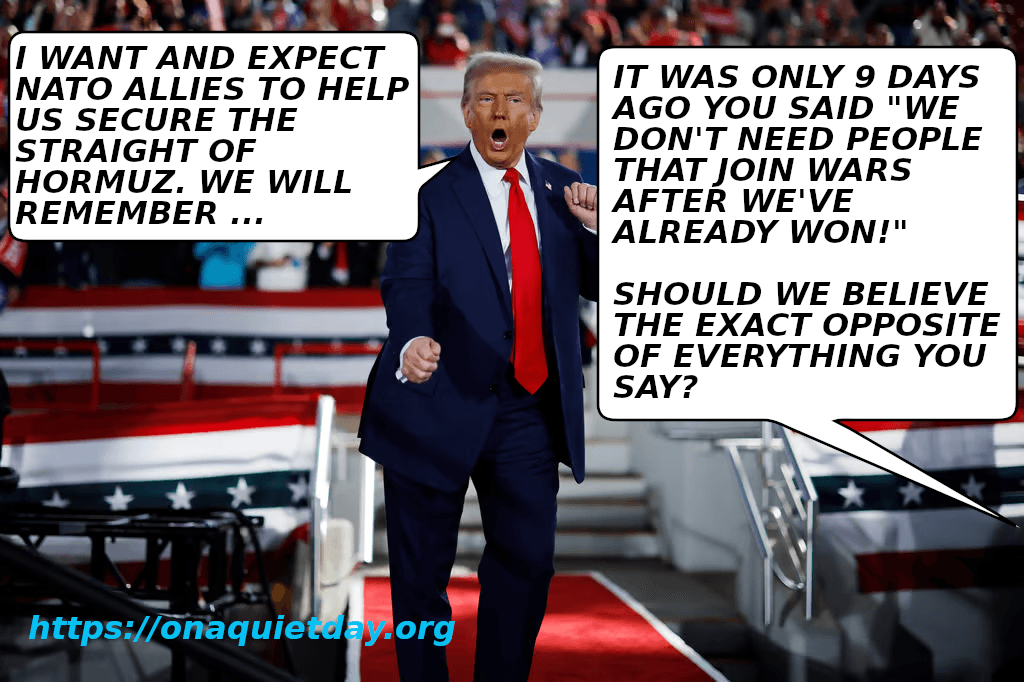
Donald Trump calls for help from NATO allies in securing the Straight of Hormuz despite saying only 9 days ago that they don't need people to join wars after they've already won.
Donald Trump calls for help from NATO allies in securing the Straight of Hormuz despite saying only 9 days ago that they don’t need people to join wars after they’ve already won.
Climate science denier Donald Trump confirms that he knows nothing about democracy and that more liquid gold is being secured according to his policy of global privateering.
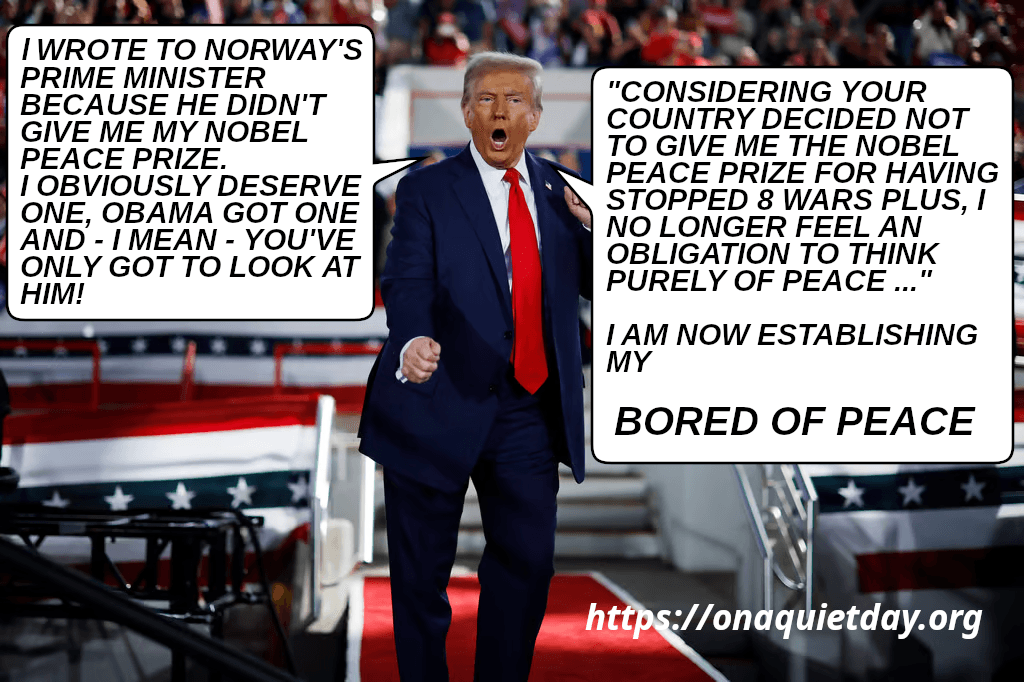
Donald Trump explains why he established his Bored of Peace

Continue ReadingAfter Helping Convince Trump to Attack Iran, Kushner Solicits Billions for His Private Equity Firm

‘Not Our War’: US Allies Rebuff Trump Demands to Help Clean Up His Iran Disaster

Spread the love

Original article by Brad Reed republished from Common Dreams under Creative Commons (CC BY-NC-ND 3.0).
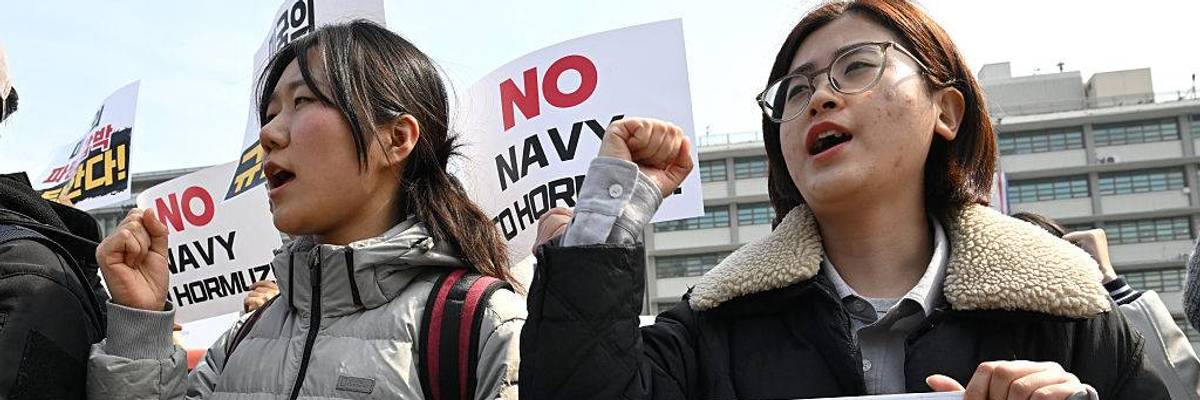
South Korean protesters hold placards during a protest against Trump’s request to dispatch warships to the Strait of Hormuz in front of the US embassy in Seoul on March 16, 2026. (Photo by Jung Yeon-je / AFP via Getty Images)

“What does Trump expect from a handful of European frigates that the powerful US Navy cannot do?” said one German official.

US allies are giving President Donald Trump the cold shoulder after he demanded that they send their militaries to help him reopen and secure the Strait of Hormuz, which has been shut down by the Iranian government in response to US and Israeli attacks.

Reuters chief national security correspondent Phil Stewart collected reactions from several US allies to Trump’s demands in a Monday social media post, and they show little appetite for helping the president out of the jam he created when he launched an unprovoked and unconstitutional war with Iran more than two weeks ago.

RECOMMENDED…

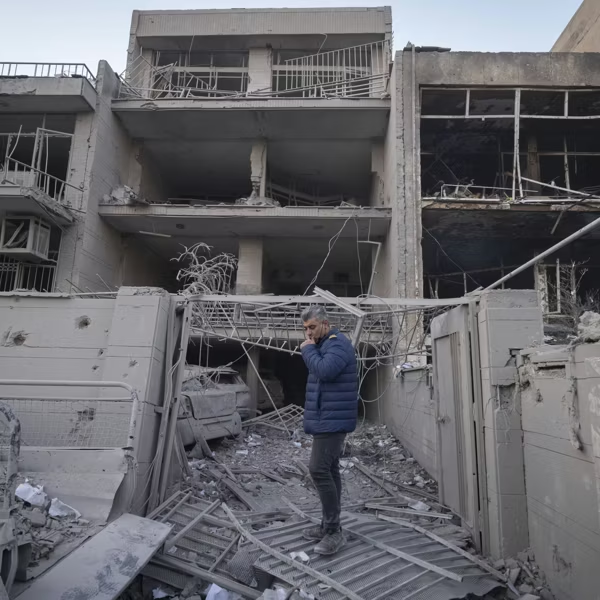
U.S.-Israeli Attack On Police Headquarters

Warnings of Further Catastrophe After Trump Says Only Deal for Iran is ‘Unconditional Surrender’

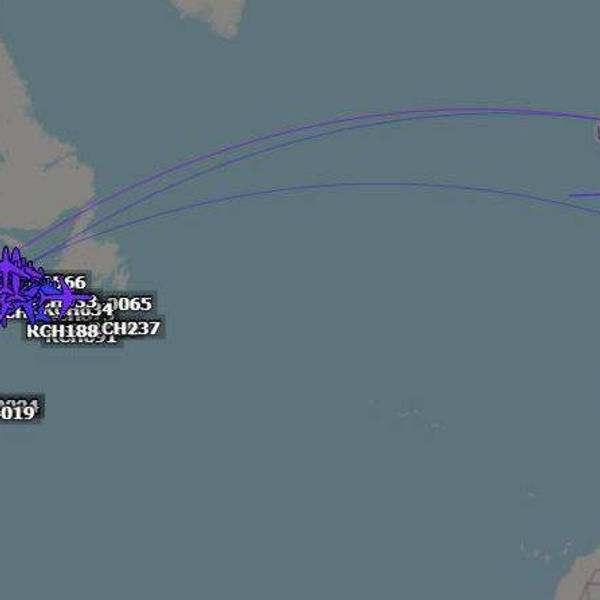
image shoes US military planes headed to the midde east

‘The Tankers Just Keep Coming’: US Military Movements Spike Fears of Imminent Attack on Iran

German Defense Minister Boris Pistorius spoke bluntly about his country’s unwillingness to get involved in what has become a regional conflict in the Middle East that has sent global energy prices soaring and is threatening to upend the global economy.

“What does Trump expect from a handful of European frigates that the powerful US Navy cannot do?” Pistorius asked. “This is not our war, we have not started it.”

UK Prime Minister Keir Starmer stated flatly that his nation would not be “drawn into the wider Iran war,” and insisted that only a diplomatic solution could ease the crisis.

“We are working with others to come up with a credible plan for the Strait of Hormuz to ensure that we can reopen shipping and passage through the Strait,” he said. “Let me be clear, that won’t be and it’s never been envisioned to be a NATO mission.”

Catherine King, a member of Australian Prime Minister Anthony Albanese’s cabinet, said there were no plans to have the Australian military participate in Trump’s efforts to reopen the strait.

“We won’t be sending a ship to the Strait of Hormuz,” King said. “We know how incredibly important that is, but that’s not something that we’ve been asked or that we’re contributing to.”

Japanese Prime Minister Sanae Takaichi didn’t completely rule out sending escort ships to help oil tankers navigate the strait, but she emphasized there are no plans to do so at the moment.

“We have not made any decisions whatsoever about dispatching escort ships,” said Takaichi. “We are continuing to examine what Japan can do independently and what can be done within the legal framework.”

Trump started publicly calling on US allies to assist in reopening the strait in a Saturday Truth Social post, in which he said “hopefully China, France, Japan, South Korea, the UK, and others, that are affected by this artificial constraint, will send Ships to the area so that the Hormuz Strait will no longer be a threat by a Nation that has been totally decapitated.”

Trump repeated his demands to US allies while talking with reporters on Air Force One on Sunday, arguing that getting the strait reopened was in the interest of all nations.

“Really, I’m demanding that these countries come in and protect their own territory, because it is their territory,” Trump said. “You could make the case that maybe we shouldn’t be there at all, because we don’t need it. We have a lot of oil.”

Original article by Brad Reed republished from Common Dreams under Creative Commons (CC BY-NC-ND 3.0).

Donald Trump calls for help from NATO allies in securing the Straight of Hormuz despite saying only 9 days ago that they don't need people to join wars after they've already won.
Donald Trump calls for help from NATO allies in securing the Straight of Hormuz despite saying only 9 days ago that they don’t need people to join wars after they’ve already won.
Climate science denier Donald Trump confirms that he knows nothing about democracy and that more liquid gold is being secured according to his policy of global privateering.
Donald Trump explains why he established his Bored of Peace

Continue Reading‘Not Our War’: US Allies Rebuff Trump Demands to Help Clean Up His Iran Disaster

Iran: We did not ask for negotiations or ceasefire

Spread the love

This work by Middle East Monitor is licensed under a Creative Commons Attribution-NonCommercial-ShareAlike 4.0 International License.

Iranian Foreign Minister Abbas Araghchi (C) participates in the traditional Quds Day rally in the capital Tehran on March 13, 2026. [Fatemeh Bahrami – Anadolu Agency]

Iran’s Foreign Minister Abbas Araghchi said Tehran had not requested a ceasefire or negotiations.

In an interview with CBS News, Araghchi said: “We have never asked for a ceasefire and we have not even asked for negotiations.”

He added that Iran was prepared to defend itself “for as long as it takes” until Donald Trump is convinced that “the war is illegitimate and there is no victory in it.”

“We are strong enough and see no reason to talk to the Americans,” he said.

Araghchi also said Iran was targeting “only American assets, American facilities and American military bases”.

He added that territory in Gulf countries was being used to launch attacks on Iran, saying there were “many examples” of this.

READ: Israel plans at least 3 more weeks of war with Iran, says military spokesperson

This work by Middle East Monitor is licensed under a Creative Commons Attribution-NonCommercial-ShareAlike 4.0 International License.

Donald Trump sings and dances, says that it's fun to kill everyone ...
Donald Trump sings and dances, says that it’s fun to kill everyone …
Climate science denier Donald Trump confirms that he knows nothing about democracy and that more liquid gold is being secured according to his policy of global privateering.
Donald Trump explains why he established his Bored of Peace

Continue ReadingIran: We did not ask for negotiations or ceasefire

Trump fell into Iran’s trap

Spread the love

This work by Middle East Monitor is licensed under a Creative Commons Attribution-NonCommercial-ShareAlike 4.0 International License.

United States President Donald Trump departs the White House en route to Hebron, Kentucky in Washington DC, United States, on March 11, 2026. [Celal Güneş – Anadolu Agency]

by Tamer Ajrami

President Trump is not only failing to learn from history. He is also failing to learn from what is happening right now.

This was not a small tactical mistake. Trump walked into a war with no exit plan, then realised too late that Iran had set the battlefield for a war of exhaustion, not a quick victory. Washington is now stuck between two costly choices: it cannot pull back because that would look like failure, and it cannot go deeper because that risks a long war with no guaranteed results.

As the war moves into its third week, harder questions are rising inside Washington: what does “victory” even mean; and how can it be achieved while Iran still holds the strongest pressure point in this confrontation: the Strait of Hormuz?

The Strait of Hormuz is Trump’s weak point

Trump’s biggest miscalculation was believing that firepower alone could force Iran to surrender before Iran turned Hormuz into a global pressure tool. Reality is different. Control of the strait is not an American decision. It is an Iranian one.

READ: US spent $12B since start of strikes on Iran, says White House economic adviser

And the worst part is that disruption does not require a large army in the traditional sense. One incident, one strike (by an Iranian soldier on a small boat, with an RPG on his shoulder), or even a rise in perceived risk can panic markets and push up oil prices, shipping insurance, and transport costs.

That puts Washington in a double trap:

If it declares “mission accomplished” and withdraws while Hormuz is still under threat, it will look like it lost the war economically.

If it escalates to force the strait open, it enters a wider war with higher costs and no clear guarantees.

The Israeli promise that pulled Washington into trouble

A major part of the trap was set before the first strike. The war was built on an Israeli assumption: if Iran’s top leadership is hit, the state will collapse and the public will rise in the streets to bring down the system. This was sold to Trump as a shortcut: one decisive blow, rapid internal collapse, and political change without a long war.

That assumption failed. The system did not collapse, and the streets did not explode as expected. Iran reorganized leadership quickly and blocked any political vacuum that outsiders were counting on. This has also created tension inside the alliance. Washington wants to focus on Iran and Hormuz. Israel pushes to widen the war, including major escalation in Lebanon. That spreads military and political effort and raises the cost.

The Gulf wants a quick win, but the war is not in Trump’s hands

Some Gulf states want a fast end; on Washington and Tel Aviv’s terms; because they see that as the return of stability and manageable energy prices. That creates political pressure on Trump to intensify strikes. 

But more strikes do not solve the Hormuz problem. Firepower can destroy targets, but it cannot restore market confidence overnight, and it cannot stop Iran from keeping the strait under constant risk.

Worse still, a prolonged war may open other maritime fronts, such as Bab al-Mandab. That would mean the crisis moves from one chokepoint to another; from one shock to the next.

Conflicting goals: Open Hormuz or SOLVE the nuclear file?

Washington is now trying to achieve two competing goals:

  • Secure the Strait of Hormuz enough to calm markets. And, 
  • Deal with nuclear materials and enriched uranium stored in complex, fortified sites.

But talk of a “quick solution” to the nuclear issue points to dangerous scenarios: forces on the ground, technical operations, long timelines, and huge risks. This brings Washington back to the same problem: Trump entered expecting a short campaign, then found himself facing a war that demands costs he does not want to pay.

READ: Iran: We did not ask for negotiations or ceasefire

The real exhaustion: Weapons, defenses, and endless involvement

A war is not measured only by how many strikes are launched. It is measured by what is burned each day: air defences, expensive ammunition, and the political room to keep going.

As attacks continue, the key questions become: can Washington sustain this pace? Can its allies absorb the economic and security backlash?

Iran, meanwhile, is betting on time. It does not need to defeat the US militarily. It only needs to keep the war going long enough to turn it into a global burden: higher oil prices, higher inflation, weaker investment, and a political crisis inside Washington that cannot be covered by victory speeches.

Therefore, Trump entered a war with no exit

Trump fell into Iran’s trap because he bet on a quick collapse that never happened, and he tried to “close the file” by force without having the tools to close it. Now he faces a clear dilemma:

  • He cannot declare victory while Hormuz remains under pressure.
  • He cannot end the war without concessions, guarantees, or a settlement.
  • And every new escalation risks wider fronts and deeper economic damage.

This is not a war that will be decided by tough speeches. It will be decided by who can carry the cost longer. Iran, at least so far, is trying to make that cost global, not local, and to show that in this war, economics may be stronger than missiles in deciding when it ends.

OPINION: The war on Iran started with missiles, but oil price can end it

The views expressed in this article belong to the author and do not necessarily reflect the editorial policy of Middle East Monitor.

This work by Middle East Monitor is licensed under a Creative Commons Attribution-NonCommercial-ShareAlike 4.0 International License.

Donald Trump sings and dances, says that it's fun to kill everyone ...
Donald Trump sings and dances, says that it’s fun to kill everyone …
Climate science denier Donald Trump confirms that he knows nothing about democracy and that more liquid gold is being secured according to his policy of global privateering.
Donald Trump explains why he established his Bored of Peace

Continue ReadingTrump fell into Iran’s trap

Israeli army begins ground offensive in Lebanon, defense minister says

Spread the love

This work by Middle East Monitor is licensed under a Creative Commons Attribution-NonCommercial-ShareAlike 4.0 International License.

Israeli Defense Minister Yisrael Katz attends a press conference, held by Israeli Defense Ministry, with senior military officials in Israel on March 12, 2026. [Elad Malka (IMoD) /Handout – Anadolu Agency]

Israel’s defense minister confirmed on Monday that the Israeli military has begun a ground offensive in Lebanon, as regional escalation continues to expand, Anadolu reports.

“The IDF (army) has begun a ground maneuver in Lebanon to remove threats and protect the residents of the Galilee and the north,”Katz said in comments carried by the Yedioth Ahronoth newspaper during a situational assessment at the Kirya military headquarters in Tel Aviv.

“Hundreds of thousands of residents of southern Lebanon who have evacuated and are evacuating from their homes will not return to their homes south of the Litani area,” he added.

Katz said Prime Minister Benjamin Netanyahu has instructed the military to dismantle what he described as “militant infrastructure” in Lebanese villages along the border.

READ: Israel to mobilise 450,000 reservists as ground operation in Lebanon considered

This work by Middle East Monitor is licensed under a Creative Commons Attribution-NonCommercial-ShareAlike 4.0 International License.

Donald Trump sings and dances, says that it's fun to kill everyone ...
Donald Trump sings and dances, says that it’s fun to kill everyone …
Climate science denier Donald Trump confirms that he knows nothing about democracy and that more liquid gold is being secured according to his policy of global privateering.
Donald Trump explains why he established his Bored of Peace

Continue ReadingIsraeli army begins ground offensive in Lebanon, defense minister says