Robbing welfare to pay for military expansion

Spread the love

https://morningstaronline.co.uk/article/robbing-welfare-pay-military-expansion

 Chancellor of the Exchequer Rachel Reeves meeting members of the military during a visit to Rheinmetall BAE Systems Land (RBSL) in Telford, Shropshire, for an announcement on defence funding, March 24, 2025

While promising massive housebuilding with ‘no fiscal cost,’ DIANE ABBOTT MP reveals the government relies on planning reforms alone rather than public investment, as military expansion becomes the only significant investment

IN POLITICS, one should never over-promise and then under-deliver. At the same time, overall policy should be grounded in something more than wishful thinking. It is highly regrettable that the Chancellor made both these errors in delivering her Spring Statement.

Before the statement, all the talk was of enormous sums that would become available for desperately needed investment. At the same time, there was a strong campaign to refute any idea that the government was pursuing yet another round in the failed austerity experiment of its predecessors.

In the event, both were untrue. The actual new investment is extremely small and is mostly directed towards military and security investment, which is a completely wasteful and dangerous diversion of resources. A somewhat larger sum is planned to be “saved” by yet further attacks on welfare.

In effect, more spending on the military is being paid for by more attacks on the vulnerable, the sick and disabled people.

The Treasury has itemised the sums which illustrate these dangerously wrong priorities. By 2029-30, they project that the annual total of capital investment will have increased by £4.6 billion. But most of this does not properly fall into the category of investment at all, because it is military spending. You cannot produce something else from bombs, bullets and missiles.

Once military and security funding are excluded, real new productive investment amounts to less than £1.9bn at the end of this parliament. It does not qualify as investment. In terms of impact on the economy or living standards, it is a trivial amount.

Military spending is the only significant area of government spending which is seeing any significant rise in government capital spending. It aligns with Trump’s policy and begins to meet his demands. But we know that he will come back for more. There is already talk of doubling military spending as a proportion of GDP to 5 per cent.

Now, and in the future, that can only come from cutting spending elsewhere. Of course, if the economy were booming, then increases in welfare, in spending on public services, in genuine public investment and even increases in military spending could all take place simultaneously. But no-one is suggesting a boom is likely or even possible.

In reality, the rise in military spending is only possible by restraining spending on public services and cutting welfare. This increased military budget is being paid for by sick and disabled people. The economy will not get the public investment it needs and living standards and public services will both remain constrained. These choices are morally, politically and economically wrong.

Diane Abbott is Labour MP for Hackney North and Stoke Newington.

Original article at https://morningstaronline.co.uk/article/robbing-welfare-pay-military-expansion

Keir Starmer says that the Labour Party under his leadership all feel a small part of Scunthorpe.
Keir Starmer confirms that he's proud to be a red Tory continuing austerity and targeting poor and disabled scum.
Keir Starmer confirms that he’s proud to be a red Tory continuing austerity and targeting poor and disabled scum.
Continue ReadingRobbing welfare to pay for military expansion

Keir Starmer sends UK jets to further support US-Israeli Fascism

Spread the love

dizzy

UK Labour Party government ministers Keir Starmer, Angela Rayner and Rachel Reeves explain that they are partners complicit in Israel's Gaza genocide. The UK has provided Israel with arms, military and air force support. They explain that they don't do gas chambers but do do forced marches, starvation, destroy hospitals, mass-murders of journalists and healthcare workers.
UK Labour Party government ministers Keir Starmer, Angela Rayner and Rachel Reeves explain that they are partners complicit in Israel’s Gaza genocide. The UK has provided Israel with arms, military and air force support. They explain that they don’t do gas chambers but do do forced marches, starvation, destroy hospitals, mass-murders of journalists and healthcare workers.

There’s a story very recently published on the BBC about UK sending military jets to the Middle-East. Keir Starmer is quoted stating that these military jets are being sent to de-escalate the situation. Is he on a different planet? Can somebody please ask him how military jets can de-escalate a conflict?

He’s taking us for fools. We know very well that these jets are going to support Israel. Keir “I support Zionism without qualification” Starmer is a total genocide-supporting mass-murdering total cnut. So, UK is going to support Israel in an illegal war after supporting Israel’s Gaza genocide from the outset.

Experiencing issues with this image not appearing. I suspect because it's so critical of Zionist Keir Starmer's support of and complicity in Israel's genocides.
Genocide denier and Current UK Prime Minister Keir Starmer is quoted that he supports Zionism without qualification. He also confirms that UK air force support has been essential in Israel’s mass-murdering genocide. Includes URLs https://www.declassifieduk.org/keir-starmers-100-spy-flights-over-gaza-in-support-of-israel/ and https://youtu.be/O74hZCKKdpA
Continue ReadingKeir Starmer sends UK jets to further support US-Israeli Fascism

Work and pensions secretary tells MPs controversial disability benefit reforms will go ahead next year

Spread the love

https://news.sky.com/story/work-and-pensions-secretary-tells-mps-controversial-disability-benefit-reforms-will-go-ahead-next-year-13382300

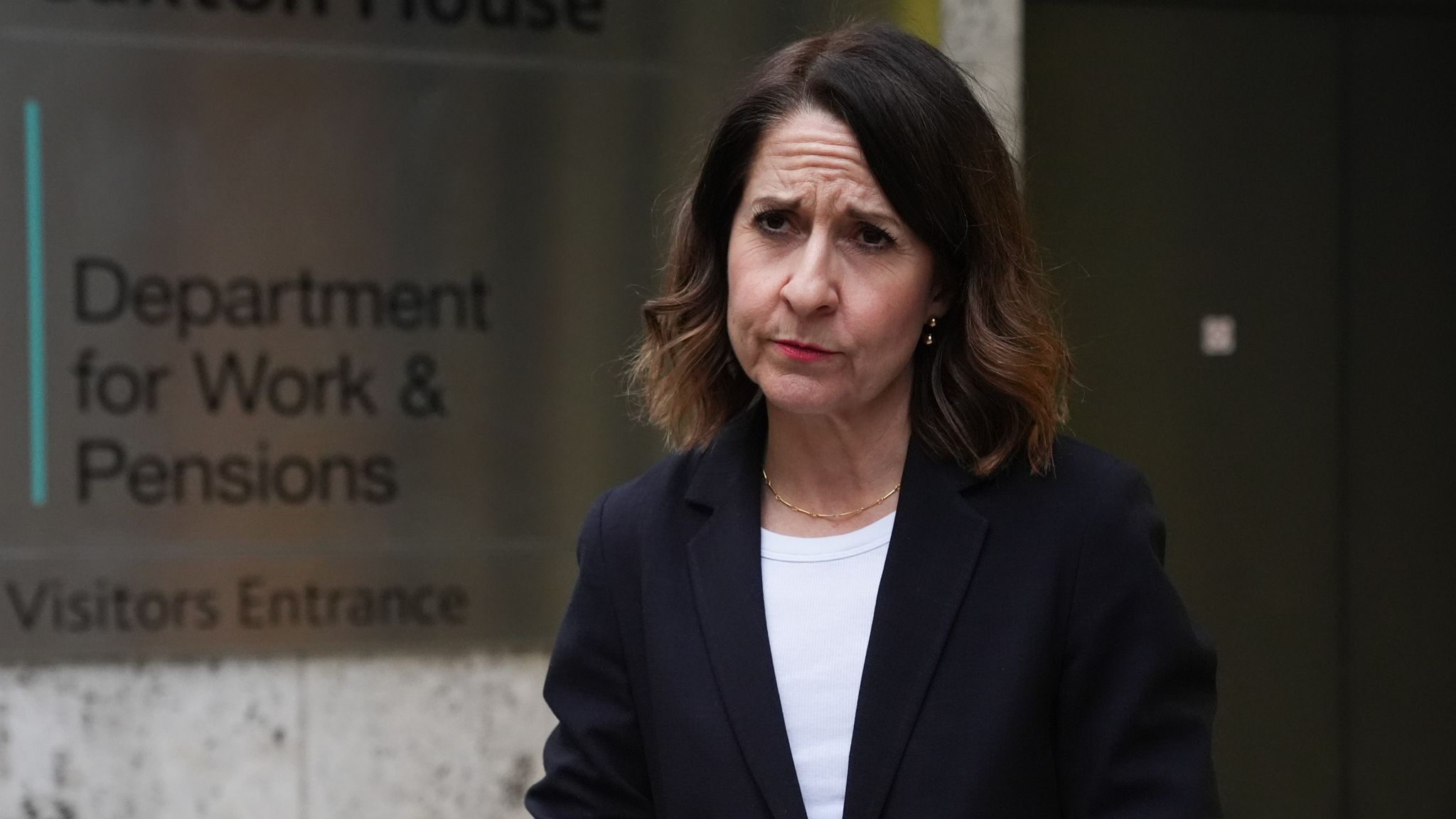
Work and Pensions Secretary Liz Kendall. File pic: PA

Liz Kendall rejects calls to delay the changes until a full assessment is carried out of the impact on employment, poverty and health.

The government has told MPs it will not back down from its controversial reforms to disability benefits, which are set to be introduced to parliament later this month.

More than 100 Labour MPs are thought to have concerns about the plans to cut nearly £5bn from the welfare bill by restricting personal independence payments (PIP) and the health top-up to Universal Credit.

Charities say the changes will have a “catastrophic” effect on vulnerable people.

The chair of the Commons’ Work and Pensions Committee wrote to the secretary of state, Liz Kendall, last month, calling on the government to delay the changes until a full assessment is carried out of the impact on employment, poverty and health.

Labour MP Debbie Abrahams wrote that while there was a case for reform to disability benefits, “the evidence indicated [these changes] might not improve outcomes for most claimants, but instead push many into poverty and further away from the labour market”.

‘Reforms are needed now’

But Ms Kendall has written back, in a letter made public on Wednesday, to reject the idea because the bill needs final approval from parliament in November in order for the changes to take effect in 2026.

Article continues at https://news.sky.com/story/work-and-pensions-secretary-tells-mps-controversial-disability-benefit-reforms-will-go-ahead-next-year-13382300

Keir Starmer says that the Labour Party under his leadership all feel a small part of Scunthorpe.
Keir Starmer explains the moral case for cutting disability benefits. He says work will set you free.
Continue ReadingWork and pensions secretary tells MPs controversial disability benefit reforms will go ahead next year

The political opportunism behind Reform UK’s support for abolition of the two-child limit on benefits

Spread the love
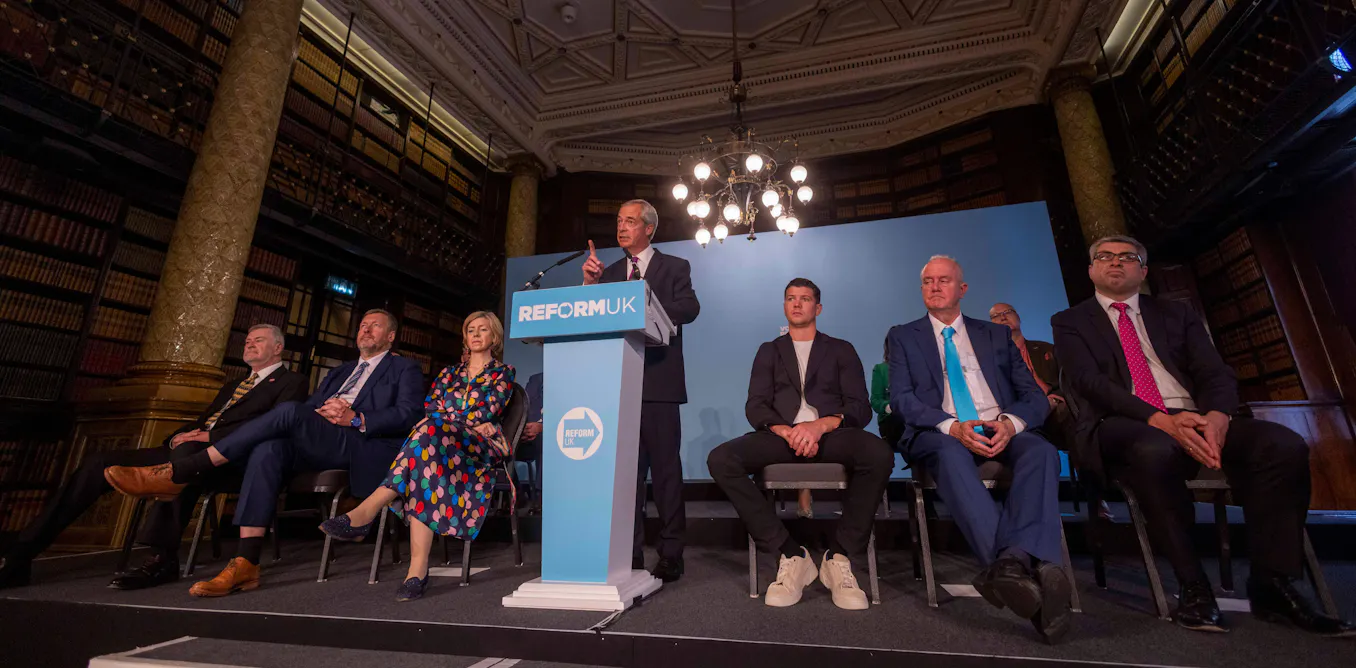
Nigel Farage speaks at a Reform UK press conference in London in May 2025. Karl Black / Alamy Stock Photo

Chris Grover, Lancaster University

The leader of Reform UK, Nigel Farage, recently announced that if in government, his party would abolish the two-child limit on benefits. This social security policy restricts the payment of means-tested benefits to the first two children of a family.

Farage explained the announcement as being pro-natalist – intended to encourage a higher birth rate – as well as being “pro-worker”. Farage said that the abolition of the two-child limit “makes having children just a little bit easier” for “lower paid workers”.

He noted that Reform wanted “to encourage people to have children”. Such arguments are familiar in the European political right, although the UK’s Conservative opposition criticised Reform’s proposal.

To be in government, Reform has two possible routes: to build a coalition of voters for it, or to split left-leaning voters. Its proposal to abolish the two-child limit may be aimed at both.

On the one hand, it might be supported by left-leaning voters who are able to accept Reform’s broader policy agenda. On the other hand, it might be aimed at encouraging left-leaning voters who find Reform’s agenda problematic to move to parties (such as the Greens and Liberal Democrats) who are less equivocal in their commitment to abolishing the two-child limit than the Labour government.

Social security policies winning votes

Social security policies have long been used as part of political strategising. The situation with the two-child limit is complicated, though, because both anti- and pro-natalist views of social security (and it predecessors) have been popular at particular moments.

Political and popular arguments have long been made that supporting the poorest families leads to them having too many children. This, so the argument goes, reproduces, rather than addresses, the poverty they face. Examples can be found, for instance, in the 1834 poor law commission report in relation to “bastardy” and large families, Sir Keith Joseph’s 1970s focus upon the “cycle of deprivation”, as well as “underclass” arguments in the 1980s and 1990s.

The two-child limit was announced in the 2015 budget and introduced in 2017 with the reasoning that “those in receipt of tax credits should face the same financial choices about having children as those supporting themselves solely through work.”

Three children playing
The two-child limit on benefits restricts welfare payments for children to the first two children in a family. Len44ik/Shutterstock

In contrast, the architect of the British welfare state, William Beveridge, noted in 1942 that children’s allowances (now child benefit) would help “housewives as mothers” in their “vital work in ensuring the adequate continuance of the British race and of British ideals in the world.” The 1945 Labour election victory in support of the welfare state suggests pro-natalist policies can contribute to electoral success.

The expansion of tax credits in the 1990s and 2000s were partly explained in pro-natalist terms. Tony Blair, for instance, noted: “The working tax credit enables half a million mothers to choose to stay at home.” That, in other words, tax credits enabled women to choose having and raising children over paid work.

Recent polling, however, suggests that the anti-natalist two-child limit polls well among voters, especially Reform voters. In 2024, for example, YouGov found 60% of Britons thought the two-child limit should be kept. The figure was 84% for Reform voters.

Targeting voters

The abolition of the two-child limit may have been adopted to increase Reform’s appeal to left-leaning voters. Providing additional support for families through social security may be attractive to voters concerned with social injustice. The two-child limit increases child poverty. Affected families are unable to provide even the most basic needs, such as food, clothing and heating.

Nevertheless, Reform’s proposal is also embedded in caveats and would be paid for through means appealing to its existing voters. So, for example, Farage emphasised that the abolition of the two-child limit would be restricted to only British families. It would not be extended to families “who come into the country and suddenly decide to have a lot of children”.

By keeping the two-child limit for migrant families, Reform’s proposals are consistent with existing immigration and asylum policies. It has been observed in an inquiry by All Party Parliamentary Groups on poverty and on migration that policies like this are, at least in part, “designed to push people into poverty in the hope that it will deter others from moving to the UK.” And, therefore, the abolition of the two-child limit can be seen as part of Reform’s pledge to severely curtail immigration.

Farage also argued that the abolition of the two-child limit would be paid for by other policies that are central to Reform’s electoral agenda. These include stopping asylum seekers being housed in hotels and the abolition of net zero policies. It is also consistent with Reform’s view that jobs in Britain should be filled by British people. This, it believes, will help reduce reliance on migrant labour from overseas.

There is little evidence that the introduction of the two-child limit had the desired impact on lowering poorer households’ birth rates. And it is unclear whether the proposed abolition of the two-child limit rooted in a British-only, pro-natalist agenda is enough to attract left-leaning voters.

These voters might, for example, be more concerned with Reform’s position on immigration and asylum seeking, as well as the social injustice of the undoubted poverty in which families subjected to the two child limit on benefits live.

Reform’s strategy then may be to further encourage those voters to turn from its closest rival – the Labour party – to other political parties. Whichever is the case, the situation will undoubtedly shift if the Labour government does take the step of abolishing the two-child limit.

Chris Grover, Professor in Social Policy, Lancaster University

This article is republished from The Conversation under a Creative Commons license. Read the original article.

Nigel Farage explains the politics of Reform UK: Racism, Fake anti-establishmentism, Deregulation, Corporatism, Climate Change Denial, Mysogyny and Transphobia.
Continue ReadingThe political opportunism behind Reform UK’s support for abolition of the two-child limit on benefits

Spending review: Rachel Reeves is about to make a £600 billion gamble on growth

Spread the love

Steve Schifferes, City St George’s, University of London

UK chancellor Rachel Reeves faces her biggest test with the government’s departmental spending plans for the three years from next April until the general election. With nearly £600 billion a year to spend, her decisions will impact on every aspect of public life and shape the political weather for years to come.

She believes the key to reviving Labour’s fortunes as its poll ratings tumble lies in boosting economic growth.

So the government has promised that its policies will increase the UK’s anaemic growth rate and enhance productivity. Reeves is looking to capital spending on big projects that will boost the economy, such as the £14.2 billion government investment in a new nuclear power plant at Sizewell in Suffolk.

Last year she revised the government’s fiscal rules to give herself the space to borrow an extra £113 billion over three years to transform Britain’s ageing infrastructure. She has already made it clear that she wants to boost transport investment outside of London, as well as invest in research and development, including green energy.

But there are challenges ahead. In the first place, the effect of infrastructure investment takes a long time to feed through. This is partly because of the lag between planning the projects and when they come on-stream.

It will take time before the full effect will be felt on productivity, which has been growing more slowly than expected. The Office for Budget Responsibility (OBR) suggested in March that the latest government plans for planning reform might increase productivity by just 0.2% in the longer term.

There are also some real trade-offs as to where the increased capital investment will go – and which sectors will benefit most. The chancellor has emphasised her commitment to putting more money into projects outside London and south-east England that have had less public investment in the past.

But London and the south-east is where productivity is highest and where further investment might have a bigger effect on economic growth.

It appears that there may be less funding for social housing, which may threaten the government’s ambitious target of building 1.5 million homes over the parliament. There may also be less available to repair schools and hospitals.

And the plans to boost defence spending on expensive military equipment – such as frigates and fighter planes – will also count as capital spending. As such, it could further reduce the amount available for infrastructure investment.

The departmental trade-offs

Despite the relative abundance of cash for infrastructure, the tighter fiscal rules on day-to-day spending mean that many departments are facing a squeeze on their budgets. The government plans to allow total day-to-day departmental spending on average to rise by just 1.2% per year in real terms during the next three years. This probably spells a real-terms cut for some “unprotected” departments.

This is because the money will not be distributed equally. The Department of Health and Social Care gets 40% of all departmental spending and is likely to be the big winner.

It has already received a big increase in the last spending round, with an 11% increase in capital spending is likely to get even more to realise an ambitious ten-year plan for improving services in the NHS in England.

If health spending were to go up by 2.5% (well under its historic average), this could mean very little increase for many other government departments. And if it is increased by 3.5% this will imply real-terms cuts for other areas.

The situation is made more difficult by the government’s decision to prioritise two other areas: defence and schools. For defence, it is committed to raising spending to 2.5% by 2027 and to 3% in the next parliament.

And for education, Reeves has pledged an extra £4.5 billion per year for more teachers, childcare places and free school meals. The decisions have a strong political dimension, as health and education tend to be the most popular spending priorities among the public.

two primary-aged schoolgirls sitting at their desks.
Boosting the education spend tends to play well with the UK public. Monkey Business Images/Shutterstock

The spending review, however, only covers half of total government spending. The more unpredictable part is annually managed expenditure, mainly on benefits and interest payments on government debt.

The Treasury sets an overall target (known as the spending envelope) on how much will be spent in these areas. But it now faces a crunch point over the unpopular decisions to cut disability benefits and keep the two-child benefit cap.

Reeves’ partial U-turn on the winter fuel payment, which will now be paid to 9 million pensioners, will cost an additional £1.25 billion a year but may have been a political necessity.

But a full U-turn on the two other issues will be much more expensive. Taken together, such a change might breach the fiscal rules, which give only £10 billion of “headroom” in a total government budget of more than £1.2 trillion. So while there will be some rowing back, the finances suggest any more major U-turns are unlikely.

To make matters worse, these spending plans are based on an economic forecast made by the OBR in March. This did not include the effect of US president Donald Trump’s tariff plans. Since then, both the IMF and the OECD downgraded their UK growth forecasts for both 2025 and 2026, and despite a recent small upgrade by the IMF, growth is still significantly lower than previously expected.

Even though Britain seems to have secured a deal with the US, the effect of tariffs on global growth will still damage the UK’s prospects as a trading nation.

This will make it harder for the government to meet its fiscal targets in the autumn budget while sticking to the departmental spending plans. The chancellor will then have three options. She can look for more cuts in benefits spending.

She could try to find other sources of tax revenue, for example by tweaking the rules on taxing pensions or extending the freeze on upgrading tax bands. Or, more radically, she could modify the fiscal rules to give herself more flexibility – for example by having only one economic forecast a year, as the IMF has suggested.

Ultimately Labour’s electoral prospects will depend on whether it has succeeded in boosting living standards. While the productivity drive could work, the UK economy remains at the mercy of wider global economic forces.

Steve Schifferes, Honorary Research Fellow, City Political Economy Research Centre, City St George’s, University of London

This article is republished from The Conversation under a Creative Commons license. Read the original article.

Continue ReadingSpending review: Rachel Reeves is about to make a £600 billion gamble on growth