The BlackRock letters: inside Labour’s ‘close partnership’

Spread the love

Original article by Ethan Shone republished from Open Democracy under a Creative Commons Attribution-NonCommercial 4.0 International licence

Keir Starmer and Rachel Reeves hosting an investment roundtable discussion with BlackRock CEO Larry Fink and members of the BlackRock executive board at 10 Downing Street  | Frank Augstein – WPA Pool/Getty Images

Jonathan Reynolds told the investment bank that he looked forward to working together to “change the face of our UK”

Senior executives from BlackRock, one of the world’s most controversial companies, last week sat down opposite Keir Starmer and chancellor Rachel Reeves in Downing Street.

The government’s laser-focus on private investment as the key means of driving economic growth has inevitably led to a reliance on the world’s big money machines, such as BlackRock. But this is a relationship that Labour initially developed in opposition – and which has only become cosier since the party entered government.

The meeting on Thursday between Starmer, Reeves, investment minister Poppy Gustafsson and several members of BlackRock’s board was not the first time that senior figures from the world’s largest asset manager have met with ministers in recent months.

BlackRock CEO Larry Fink also made a star turn at Labour’s investment summit in October and posed for pictures with the prime minister when he visited New York in September. Senior BlackRock figures also attended a summer reception for business leaders at No 10, as openDemocracy revealed previously.

‘On a personal note’

As Starmer’s cabinet ministers were appointed in July, hundreds of companies contacted them to offer their congratulations, pitch their value to the government, and request meetings. Inevitably, some had more success than others in obtaining access to their targets. BlackRock was one of them.

With around $10tn (yes, trillion) under its management, BlackRock is among the most powerful financial institutions on the planet. To many, it is also among the most “evil”, because it continues to pump billions into fossil fuels and arms companies, and its reach extends into almost every aspect of the economy and society.

At 5pm on Monday 8 July, a managing director at the investment giant emailed Jonathan Reynolds, who’d been appointed the UK’s new secretary of state for business and trade just a few days earlier.  

“Dear Secretary of State,” the executive wrote, “on behalf of all of us here at BlackRock, please find attached a formal letter of congratulations from myself and our UK Chair, Sandra Boss. 

“And may I add, on a personal note, it is a pleasure after all these years to address you as such!”

The BlackRock executive was Anthony Manchester, a former senior civil servant who held roles across various government departments between 2001 and 2015, including the Treasury and Cabinet Office.

The attached letter began with the same pleasantries and congratulations expressed by Manchester, before highlighting BlackRock’s broad range of clientele and the scale of their footprint across the breadth of the UK economy, name-dropping British Airways, Rolls Royce and AstraZeneca as investments. 

Next came the key point: 

“As you know, we also share the government’s view that infrastructure investment can play a critical role in improving economic growth and productivity. We believe infrastructure is poised to become one of the fastest-growing segments in private markets globally.

“As our Chairman and CEO Larry Fink has recently written, private capital market financing, combined with policy pragmatism, are necessary to meet countries’ infrastructure needs and thereby enhance economic growth and productivity.

“We would welcome the opportunity to meet with you to discuss our work on funding the projects and enterprises that drive the economy and building the UK’s case as an investment destination. We will work with your team to get this meeting in the diary.

“Until then, congratulations once again on your appointment.”

Cutting through the corporate glaze, we can roughly understand the point being made here. In effect, BlackRock is highlighting that Labour’s entire political project rests on the willingness of companies like BlackRock to plough private capital into the foundational components of our society (and extracting massive profits in the process). 

Reynolds’ reply to BlackRock, when it eventually came in August, gushed with praise for the firm and the wider financial services sector. 

“Partnership with the Financial Services sector will be critical to developing and delivering on our industrial strategy and supporting small businesses. The sector underpins UK investment and trade, and its continued success is critical to lay the strong foundations for economic growth that this country needs.”

Reynolds added: “I would like to thank you for your long-standing investment in the UK, and partnership in driving growth, jobs and innovation. Blackrock has an impressive reach driving investment into the UK across sectors of our economy and your work is vital to economic growth. Funding our priority projects and investment in infrastructure is an important part of this…”

“We do not underestimate the importance of the UK’s Financial Services sector to the wider economy, or its potential to help deliver social value and the clean energy transition. To succeed we need everyone to play their part. I am looking forward to working with you in this common endeavour of national renewal. 

“Together, we will change the face of our United Kingdom for the better.

“Thank you for your kind offer to meet. I would be delighted to accept this invitation. My Private Office will be in touch with you to arrange a suitable time. Thank you once again for writing and I look forward to working with you.”

‘Getting BlackRock to rebuild Britain’

In the asset management space, BlackRock has historically been a fairly hands-off investor, the bulk of its holdings being significant but typically not controlling shares in many of the world’s biggest companies – generally between 5-10% – according to Brett Christopher’s survey of the industry, Our Lives in Their Portfolios: Why Asset Managers Rule the World.

Think of an industry, then think of the top companies within it, and there’s a fairly good chance that BlackRock has shares in it. Christophers notes that, as a proportion of its overall holdings, investments placed in infrastructure – things like the electricity grid, water systems, and toll roads – were relatively small. 

But in January this year, the firm announced it would purchase Global Infrastructure Partners, which controls around $170bn worth of assets worldwide, including Gatwick Airport and Hornsea 1, a project to build the world’s largest offshore windfarm in the North Sea. This purchase, which was completed last month, reportedly makes BlackRock the second largest asset manager in the infrastructure space, after ‘the vampire kangaroo’, Macquarie. 

Critics will argue that when asset managers own significant chunks of infrastructure, their priority is their investors (including sovereign wealth funds and pension funds), rather than society, or even the planet. The primary purpose of infrastructure, the argument goes, becomes the generation of profit, rather than providing a working, reliable service. In practice, this might mean cutting investment while raising prices.

BlackRock and its ilk buying up the UK’s infrastructure would be controversial enough, but the way in which Labour is seeking to encourage this process is even worse. Writing in The Guardian ahead of the general election, economist Daniela Gabor said Labour’s plan for getting back into government amounted to: “get BlackRock to rebuild Britain”. 

She wrote: “Labour’s strategy raises a bigger set of questions about the type of state we want. Starmer’s vision for government-by-BlackRock reduces the question of state capacity to ‘how do I get BlackRock to invest in infrastructure assets?’ This model involves the state in effect subsidising the privatisation of everyday life.” 

In simple terms, the government’s plans to use public funds to ‘derisk’ private investment means that the taxpayer takes on much of the risk involved, while the private sector stands to reap most of the benefits. This is particularly true of essential infrastructure, which the government cannot let fail and so must step in to cover losses in the event that something goes wrong.

Gabor continues: “This doesn’t only make it harder to bring public goods back into public ownership; it also allows big finance to tighten the grip on the social contract with citizens, and to become the ultimate arbiter of climate, energy and welfare politics, which will have profound distributional, structural and political consequences.”

Immediately after the Downing Street meeting yesterday, Starmer took to social media to trumpet his sitdown with BlackRock. His message echoes the tone and substance of BlackRock’s letter to Reynolds months prior.

He wrote that the government’s mission, to “deliver growth, create wealth and put more money in people’s pockets” can “only be achieved by working in close partnership with businesses and investors”. 

The prime minister continued: “BlackRock has a big footprint in the UK, and supports thousands of jobs across the country. Their insight on how we can put the UK on the world’s stage as a top investment destination and turbocharge growth is invaluable. Delighted to welcome them to Downing Street today to continue my government’s partnership with leading businesses.”

Exactly which people’s pockets are about to be filled with more money remains unclear. 

Original article by Ethan Shone republished from Open Democracy under a Creative Commons Attribution-NonCommercial 4.0 International licence

Keir Starmer, Angela Rayner and Rachel Reeves wear the uniform of the rich and powerful. They have all had clothes bought for them by multi-millionaire Labour donor Lord Alli. CORRECTION: It appears that Rachel Reeves clothing was provided by Juliet Rosenfeld.
Continue ReadingThe BlackRock letters: inside Labour’s ‘close partnership’

Calls for energy support intensify as temperatures expected to plunge

Spread the love

https://morningstaronline.co.uk/article/calls-energy-support-intensify-temperatures-expected-plunge

The temperature control of a radiator in a domestic home

DEMANDS for more energy support for vulnerable households intensified today as temperatures are expected to plummet this week.

Some areas rose above 16°C on Sunday, but the Met Office forecast a sharp drop by last night, with temperatures potentially plunging to -8°C in parts of Scotland.

Meteorologists warned that the cold spell would continue tomorrow, with parts of England becoming as chilly as -3°C.

The cold snap comes just over a month after energy regulator raised the price cap by 10 per cent, while 6.5 million households remain trapped in fuel poverty.

Peter Smith of National Energy Action said: “Millions of people will endure these freezing conditions at the same time as unaffordable energy bills and unmanageable energy debt.

“At this exceptionally difficult time for vulnerable households, we see a desperate need for a larger energy discount or a new social tariff to provide long-term protection.

https://morningstaronline.co.uk/article/calls-energy-support-intensify-temperatures-expected-plunge

Continue ReadingCalls for energy support intensify as temperatures expected to plunge

Morning Star Editorial: Neither ‘free trade’ nor protection but socialism

Spread the love

https://morningstaronline.co.uk/article/editorial-neither-free-trade-nor-protection-socialism

President-elect Donald Trump speaks at meeting of the House GOP conference, November 13, 2024, in Washington

DONALD TRUMP is forcing the labour movement around the world to take an attitude towards trade.

The bland assumptions of free trade which have been accepted as the norm for decades are going to be challenged by the new US administration.

This week Trump has announced that he will impose punitive tariffs “on day one” on China and on immediate neighbours Canada and Mexico.

These are in response to alleged failures in the three countries in controlling migration towards the United States and/or the illicit export of constitutive elements of fentanyl, part of the vast drug addiction problem that has developed in the US.

As such, these tariffs can be seen for what they are — attempts to bully countries into line with US policy, including into dealing with internal problems which Washington seems unable to fix on its own.

They are of a piece with the promiscuous use of sanctions by both Republican and Democratic administrations to coerce foreign states into supporting aggressive US policies around the world. Those should be opposed by anyone who values national independence and international law.

https://morningstaronline.co.uk/article/editorial-neither-free-trade-nor-protection-socialism

Continue ReadingMorning Star Editorial: Neither ‘free trade’ nor protection but socialism

Business backs government ban on new oil and gas licensing

Spread the love

https://morningstaronline.co.uk/article/businesses-backs-government-no-new-oil-and-gas-licensing

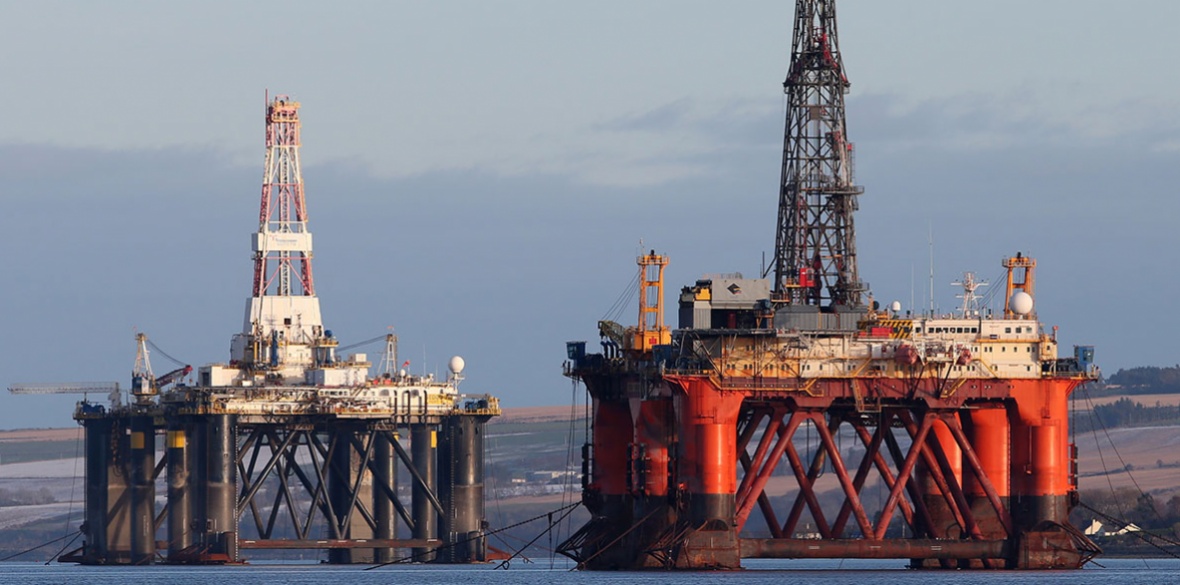
An oil platform standing amongst other rigs that have been left in the Cromarty Firth near Invergordon in the Highlands of Scotland, February 15, 2016

BUSINESSES across Britain have backed the Labour government’s ban on new oil and gas licensing in the North Sea, according to new research today.

The study, carried out by Public First on behalf of fair transition think tank Uplift, found that 70 per cent of British business leaders and 65 per cent in Scotland backed the policy, 54 per cent believed it would benefit their business, and 77 per cent believed phasing out fossils fuels was in the public interest.

In Scotland, the heart of Britain’s fossil fuel industry, 82 supported wider UK government efforts to end use of fossil fuels for energy.

And despite 47 per cent believing the pace of change to be too slow, a majority believe it will be achieved by the government’s 2050 target.

Fifty-two per cent of business leaders in Scotland expressed confidence that new jobs would be created to replace the tens of thousands lost as North Sea oil and gas production dwindles.

But echoing the views of trade unions, they argue it is governments’ responsibility to support workers through that shift.

article continues at https://morningstaronline.co.uk/article/businesses-backs-government-no-new-oil-and-gas-licensing

Continue ReadingBusiness backs government ban on new oil and gas licensing

COP29 puts world on course for more extreme weather – and more deaths

Spread the love

Original article by Paul Rogers republished from Open Democracy under a Creative Commons Attribution-NonCommercial 4.0 International licence.

After a disappointing COP29, we should prepare for more extreme weather events like the floods that hit Valencia last month
 | David Ramos/Getty Images

Summit proves change won’t come until floods and wildfires are killing tens of thousands in rich Global North cities

While COP29 in Baku narrowly avoided collapsing, its results were bitterly disappointing for delegations from across the Global South, who ended up with barely a quarter of the annual $1.3trn of support they were seeking by 2035 to respond to climate breakdown.

Quite apart from other factors, more than 1,500 pro-carbon lobbyists worked hard to limit progress and ensure that burning oil, gas and coal at profit continues for as long as possible whatever the global consequences. After all, the world’s fossil fuel industries rake in around a trillion dollars in profits a year.

Meanwhile, more and more examples are emerging of accelerating climate breakdown. The flooding in Valencia is just one, but scarcely noticed in Europe is the thoroughly weird weather being experienced in the eastern United States.

This autumn there have been over five hundred wildfires in New Jersey alone, a 5,000-acre fire has been burning for a week on the New York-New Jersey border prompting a voluntary evacuation, and New York City’s Fire Department was called out to deal with 271 brush fires in the first two weeks of November alone.

As if timed for that and certainly released with COP29 in mind, Carbon Brief, a website covering the latest developments in climate science, climate policy and energy policy, has mapped every published study on ‘impossible’ weather events – record heatwaves or storms that would not have happened without the overall global climate changes.

The first such study came in 2004, the year after weeks of extreme heat hit Europe and killed 70,000 people across the continent over several months. That early example of an ‘impossible’ weather event kick-started a new field of research known as ‘extreme event attribution’, which looks at how climate change has influenced extreme weather.

There are now 600 studies of 750 such extreme events spanning the past 20 years – a tiny fraction of the total number of these kinds of events. Of these 750, Carbon Brief found that scientists and researchers had concluded that 74% were made more likely or more severe because of climate change.

This has added to the growing sense of urgency right across the climate science community coupled with a highly critical view of the whole COP process. Even before the dismaying summit in the Azerbaijani capital, both last year’s COP in Abu Dhabi and the year before in Egypt were notable for their lack of progress even as the urgency of preventing climate breakdown was becoming more and more obvious.

There are other risks to global security including nuclear weapons, pandemics, cyber warfare, AI misuse and the progressive destruction of biodiversity, but climate breakdown is different from all of these. It is not a future risk, it is a current happening, it is accelerating, and we now have very few years left to get on top of it. If we don’t then a worldwide catastrophe with many hundreds of millions dying and societal collapse will become increasingly likely.

Does it have to be like that?

As things stand, in terms of changing attitudes, developments in renewables, resistance of the fossil carbon industries and, of course, Donald Trump’s looming presidency in the US, a reasonable prognosis for the next decade has three elements.

First, the use of renewable energy resources does continue to increase but not at anything like the rate required, so net carbon emissions will continue to rise, not fall, for most of the next ten years. Second, resistance to decarbonisation will continue from many quarters, no doubt now including the White House. Finally, severe weather events will become both more common and more destructive.

Eventually, and it might take more than a decade, the disasters will be so great, including sudden weather events in rich cities in the Global North killing many tens of thousands of people, that public pressure across the world will force governments to respond. There will be no alternative to engage in truly transformative change.

But what that means is that the task ahead by then will be hugely greater than if the transformation starts much sooner, so timescales become crucial, especially what can speed up the process.

There is, though, one thing to remember at a time of widespread pessimism. If nations had got their act together 25 years ago after the Kyoto Protocols, were signed we would be in a far more favourable position worldwide than we are now. We are acting more than two decades late.

But climate breakdown is not happening as a slow, steady process of change, creeping up almost unawares. If that had been the case then with all the reasons not to act, especially the global fossil carbon lobby, we would have been in an even worse position now. Instead, it is happening at variable rates in two respects, some parts of the world – such as the polar regions – are warming up much faster than others and extreme weather events are happening much more often.

We are therefore getting a foretaste of what will affect everyone a few years before it does, and this gives us just a little more time to act. It means that the next ten years, and perhaps even the five years to 2030, will be the key time for us to come to terms with the transformation in society that is essential for global well-being. That is possible, just.

Original article by Paul Rogers republished from Open Democracy under a Creative Commons Attribution-NonCommercial 4.0 International licence.

Continue ReadingCOP29 puts world on course for more extreme weather – and more deaths