Zelensky meets Starmer and NATO secretary general Mark Rutte. (Photo: Simon Dawson / No 10 handout)
British aid is being used to open up Ukraine’s wrecked economy to foreign investors and enhance trade with the UK.
Amid the devastating war in Ukraine, British economic aid to the country is focused on promoting pro-private sector reforms and on pressing the government to open up its economy to foreign investors.
Recently-published Foreign Office documents on its flagship aid project in Ukraine, which supports privatisation, note that the war provides “opportunities” for Ukraine delivering on “some hugely important reforms”.
The government in Kyiv has in recent months been responding positively to these calls. Last month, president Volodymyr Zelensky signed a new law expanding the privatisation of state-owned banks in the country.
It follows the Ukrainian government’s announcement in July of its ‘Large-Scale Privatisation 2024’ programme that is intended to drive foreign investment into the country and raise money for Ukraine’s struggling national budget, not least to fight Russia.
Large assets slated for privatisation currently include the country’s biggest producer of titanium ore, a leading producer of concrete products and a mining and processing plant.
Ukraine envisaged privatising the country’s roughly 3,500 state-owned enterprises in a law of 2018, which said foreign citizens and companies could become owners.
The process stalled as a result of coronavirus and then Russia’s invasion in February 2022. But hundreds of smaller-scale enterprises are now being privatised, bringing in revenues of UAH 9.6bn (£181m) in the past two years.
“The resumption of privatisation amid the full-scale war is an important step, which is already yielding results,” Ukraine’s economy minister Yulia Svyrydenko said last month.
Another law enacted in June 2023 allows large-scale assets to be sold to foreigners or Ukrainians during the current martial law regime.
In this photo taken from video released by Russian Defense Ministry Press Service on October 26, 2022, a Yars intercontinental ballistic missile is test-fired as part of Russia’s nuclear drills from a launch site in Plesetsk, northwestern RussiaPhoto: Russian Defense Ministry Press Service via AP
The threshold for Russia’s use of nuclear weapons was formally lowered by President Vladimir Putin today. [19 Nov 2024]
This followed a decision by US President Joe Biden to let Ukraine strike targets inside Russian territory with longer-range missiles supplied by Washington.
The updated doctrine says an attack against Russia by a non-nuclear-armed power with the “participation or support of a nuclear power” will be seen as their “joint attack on the Russian Federation.”
It warns that any massive aerial attack on Russia could trigger a nuclear response but avoids any firm commitment and mentions the “uncertainty of scale, time and place of possible use of nuclear deterrent.”
An extra 260,000 children are on the breadline since before the Covid pandemic. Photograph: Orlando Britain/Alamy
Exclusive: Study finds almost quarter of UK population living in poverty, reaching the highest level this century
More than one in three children and a quarter of adults are living in poverty in the UK as deprivation levels rise to the highest in the 21st century, according to a landmark report.
The study by the Social Metrics Commission (SMC), which uses measures recently adopted by the UK government, found the cost of living crisis had plunged 2 million more people into severe hardship since 2019.
In total, more than 16 million people are defined as living in poverty, or 24% of the UK population – the highest since comparable records began in 2000.
Children accounted for the biggest rise of any social group falling into poverty, the report found, with an extra 260,000 on the breadline since before the Covid pandemic, meaning a record 36%, or 5.2 million children, were in deprivation.
It is likely to reignite calls for Labour to scrap the two-child benefit cap as, of those 5.2 million children, more than half (55%) lived in families with three or more children. About one in four of the children in poverty lived in a single-child household, with the same proportion in a two-child family.
Keir Starmer says pensioners can freeze to death and poor children can starve and be condemned to failure and misery all their lives.Zionist Keir ‘Kid Starver’ Starmer. Image thanks to The Skwawkbox.
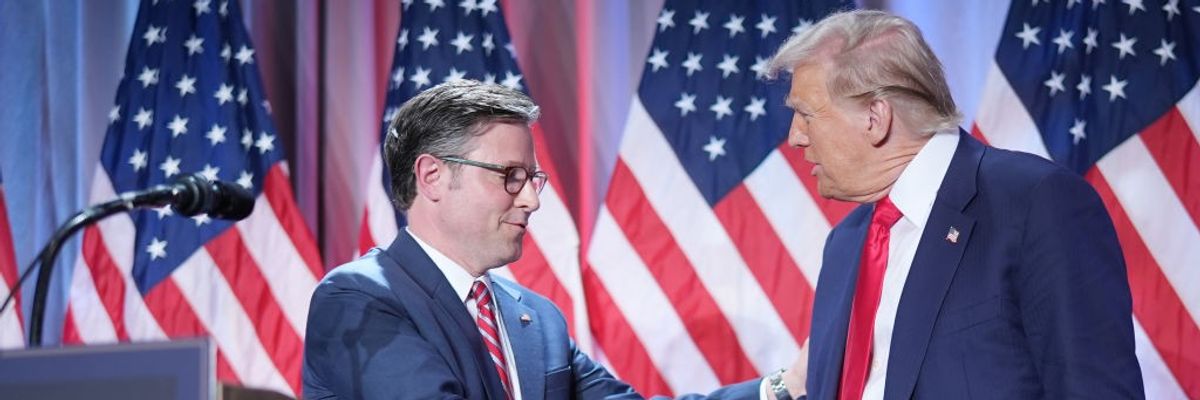
U.S. House Speaker Mike Johnson shakes hands with President-elect Donald Trump at a House Republican conference meeting on November 13, 2024 in Washington, D.C. (Photo: Andrew Harnik/Getty Images)
“We urge the House of Representatives to reject this dangerous bill and to protect our freedom of speech and our right to dissent,” said the president of Oxfam America.
House Republicans have revived and are looking to push through legislation this week that would hand President-elect Donald Trump’s incoming administration sweeping power to investigate and shut down nonprofit organizations, including news outlets and humanitarian groups.
The bill, H.R. 9495, failed to pass the House last week despite bipartisan support because the Republican leadership attempted to pass the measure using a fast-track procedure that requires a two-thirds majority vote. More than 50 Democrats, including Rep. Adam Schiff (D-Calif.) and other prominent members, backed the legislation in last week’s vote, along with 204 Republicans.
This time, the GOP is attempting to advance the bill through regular order, meaning it can pass with a simple majority. The Republican-controlled House Rules Committee is scheduled to hold a markup hearing for H.R. 9495 on Monday.
After learning of the hearing, advocacy organizations that mobilized against the bill redoubled their warnings about its dire implications for free expression and the right to dissent—particularly in the hands of a would-be authoritarian who has vowed to prosecute his political enemies.
“The bill we defeated days ago is back,” the U.S. Campaign for Palestinian Rights wrote on social media over the weekend. “Representatives are trying to ram through H.R. 9495, a repressive bill that could shut down nonprofits & student groups supporting Palestinian rights.”
The legislation, if passed, would give the Treasury Department the authority to unilaterally strip nonprofits of their tax-exempt status by designating them supporters of terrorism. As of this writing, Trump has not announced his pick to lead the Treasury Department.
While the bill provides a brief period for an accused nonprofit to defend itself, the ACLU said the provision “is a mere illusion of due process,” noting that the federal government would be able to “deny organizations its reasons and evidence against them, leaving the nonprofit unable to rebut allegations.”
Abby Maxman, president and CEO of Oxfam America, warned in a statement after Republicans revived the bill that H.R. 9495 “would grant the Trump administration, and any future administration, the ability to silence and censor its critics, curb free speech, target political opponents, and punish crucial organizations that speak truth to power and help people in the United States and around the world.”
“This bill would increase the powers of the president at the expense of all of our freedoms, and could impact not only organizations like Oxfam, but other nonprofits, news outlets, or even universities who dare to dissent,” said Maxman. “It could put our ability to respond to some of the worst humanitarian crises at risk and prevent us from delivering lifesaving aid to some of the world’s most marginalized people.”
“This bill follows the same playbook Oxfam has seen other governments around the world use to crush dissent. Now we are seeing it here at home,” Maxman added. “We urge the House of Representatives to reject this dangerous bill and to protect our freedom of speech and our right to dissent.”
It’s not clear whether the U.S. Senate, narrowly controlled by Democrats, would bring H.R. 9495 to the floor for a vote if it passes the House this week, or whether President Joe Biden would sign it into law. But Republicans will gain full control of Congress and the White House starting in January, giving them the ability to push the legislation through at a later date.
“Their rush to reconsider this bill is solely to offer Trump more and more power, while Trump’s nominees for key national security posts this week indicate how he will be using it,” Rep. Lloyd Doggett (D-Texas), a leading opponent of the measure, toldThe Intercept on Friday.
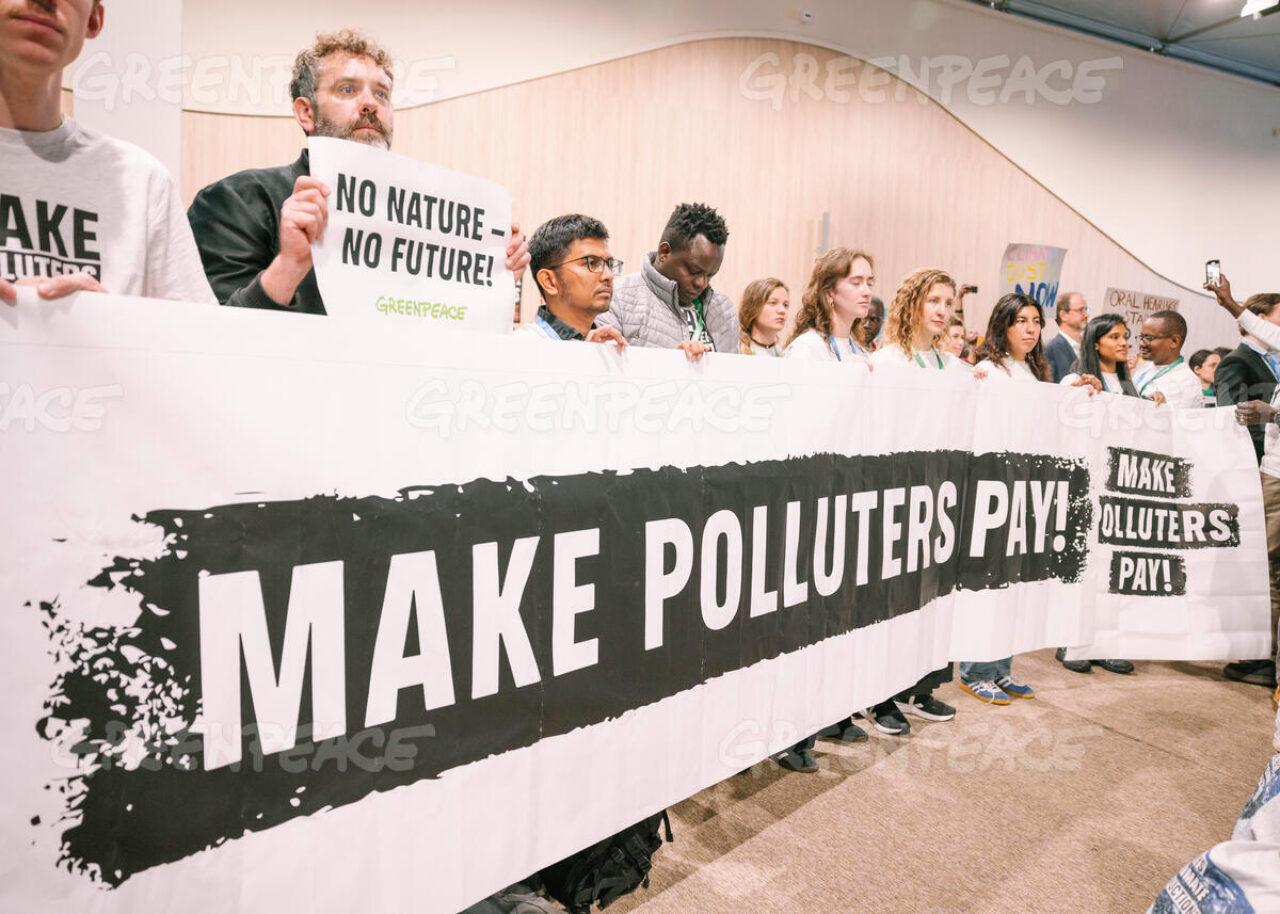
A small tax on just seven of the world’s biggest oil and gas companies could grow the UN Fund for Responding to Loss and Damage by more than 2000% and help address the costs of extreme weather events, according to new analysis published today by Greenpeace International and Stamp Out Poverty. The organisations are calling for a long term global tax on fossil fuel extraction, with year-on-year increases, combined with taxes on excess profits and other levies.
A ‘Climate Damages Tax’ would put a cost on every tonne of carbon emitted by the coal, oil and gas extracted – starting at $5 per tonne and rising each year thereafter. If it was imposed on ExxonMobil, Shell, Chevron, TotalEnergies, BP, Equinor and ENI it could raise $15 billion in the first year alone to help the world’s most climate-vulnerable countries pay for the escalating cost of damage caused by climate change. Currently, just $702 million has been pledged to the loss and damage fund, while the combined profits of those fossil fuel companies exceeds $148 billion.
Greenpeace activists display a billboard during a protest outside Shell headquarters on July 27, 2023 in London. (Photo: Handout/Chris J. Ratcliffe for Greenpeace via Getty Images)
Earlier this month, Barbados Prime Minister Mia Mottley, French President Emmanuel Macron and Kenyan President William Ruto stated their support for a Climate Damages Tax.
The briefing also highlights the financial costs of some of this year’s worst weather events that have been attributed to climate change, totalling over $64bn. These include Hurricane Beryl, Hurricane Helene, the heatwave in India in May, Typhoon Carina/Gaemi, the floods in Brazil in May, and the floods in Kenya and Tanzania in April. The costs of damage from the disasters surveyed range from US$2.9bn (Typhoon Carina) to US$ 25bn (heatwaves in India), and present just a fraction of the total cost of loss and damage globally over the last year.
A Climate Damages Tax imposed only on wealthy OECD countries could play an essential role in helping the poorest and most vulnerable to rebuild after climate-related disasters. Increasing annually by US$5 per tonne of CO2-equivalent based on the volumes of oil and gas extracted, the tax could raise an estimated US$900 billion by 2030 to support governments and communities around the world as they face growing climate impacts.
“While oil and gas giants keep raking in grotesque levels of profit from exploiting resources, the damages resulting from the industry’s operations are disproportionately borne by people who did not cause the crisis,” said David Hillman, Director of Stamp Out Poverty. “A climate damages tax – along with other levies on fossil fuels and high-emitting sectors – will make polluters pay for the cost of climate impacts, as well as supporting workers and affected communities in the transition to clean energy, jobs, and transport.”
“Who should pay? This is fundamentally an issue of climate justice and it is time to shift the financial burden for the climate crisis from its victims to the polluters behind it,” said Abdoulaye Diallo, Co-Head of Greenpeace International’s Stop Drilling Start Paying campaign. “Our analysis lays bare the scale of the challenge posed by climate loss and damage and the urgent need for innovative solutions to raise the funds to meet it. We reject Big Oil’s assault on people and democracy and call on governments worldwide to adopt the Climate Damages Tax and other mechanisms to extract revenue from the oil and gas industry.”
The Loss and Damage Fund was announced at COP27 in Egypt to help developing countries pay for impacts of natural disasters caused by climate change. Recently renamed the Fund for Responding to Loss and Damage (FRLD), it currently has US$702 million in pledged funds. According to Greenpeace International and Stamp Out Poverty’s calculations, a Climate Damages Tax levied on seven major international oil and gas companies would add in the first year alone US$15.02 billion, corresponding to over 21 times what is currently pledged to the fund.
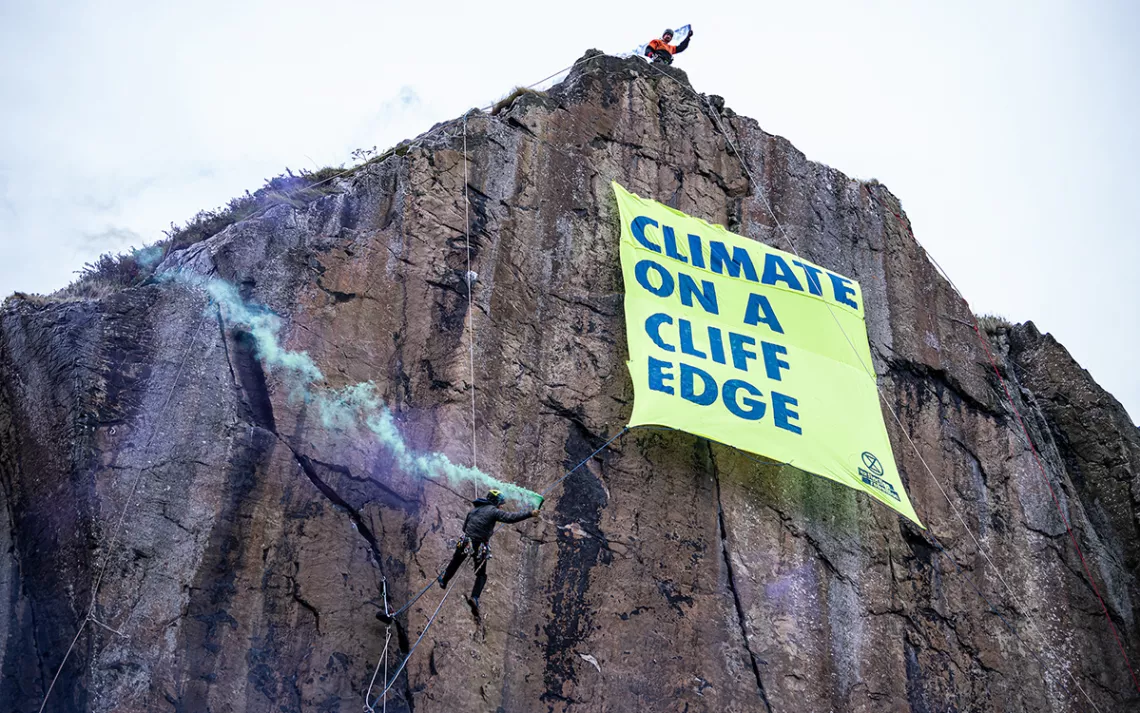
Experienced climbers scale a rock face near the historic Dumbarton castle in Glasgow, releasing a banner that reads “Climate on a Cliff Edge.” One activist, dressed as a globe, symbolically looms near the edge, while another plays the bagpipes on the shores below. | Photo courtesy of Extinction Rebellion and Mark Richards