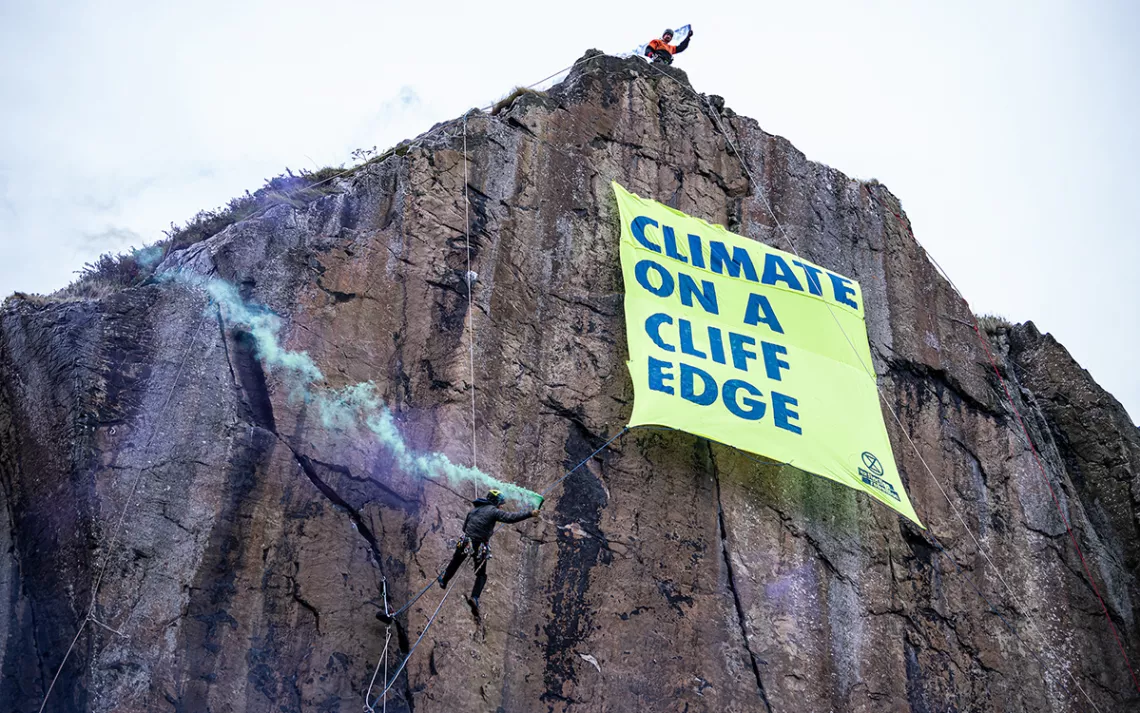
Experienced climbers scale a rock face near the historic Dumbarton castle in Glasgow, releasing a banner that reads “Climate on a Cliff Edge.” One activist, dressed as a globe, symbolically looms near the edge, while another plays the bagpipes on the shores below. | Photo courtesy of Extinction Rebellion and Mark Richards
Without action on climate crisis, far greater numbers will also experience floods, wildfires and droughts, according to report
Eight times as many children around the world will be exposed to extreme heatwaves in the 2050s, and three times as many will face river floods compared with the 2000s if current trends continue, according to the UN.
Nearly twice as many children are also expected to face wildfires, with many more living through droughts and tropical cyclones, according to the annual state of the world’s children report.
…
The report, released on Wednesday, World Children’s Day, forecasts how the climate crisis, demographic shifts (sub-Saharan Africa and south Asia are projected to have the largest child populations in the 2050s) and breakthrough technologies will affect children’s lives in the future.
The report said technologies such as artificial intelligence (AI) will bring benefits and risks to children, who are already interacting with AI embedded in apps, games and learning software. The digital divide remains stark, however. In 2024, almost 95% of people in high-income countries are connected to the internet, compared with about 25% in low-income countries.
“Children are experiencing a myriad of crises, from climate shocks to online dangers, and these are set to intensify in the years to come,” said Catherine Russell, Unicef’s executive director. “The decisions world leaders make today – or fail to make – define the world children will inherit … Decades of progress, particularly for girls, are under threat.”
Much of the emphasis of the report is on the impact of the climate crisis on children, nearly half of whom (approximately 1 billion) live in countries that face a high risk of environmental disasters. Even before they take their first breath, children’s brains, lungs and immune systems are susceptible to pollution, disease and extreme weather. As they grow, their education, nutrition, safety, security and mental health are shaped by the climate and environment.
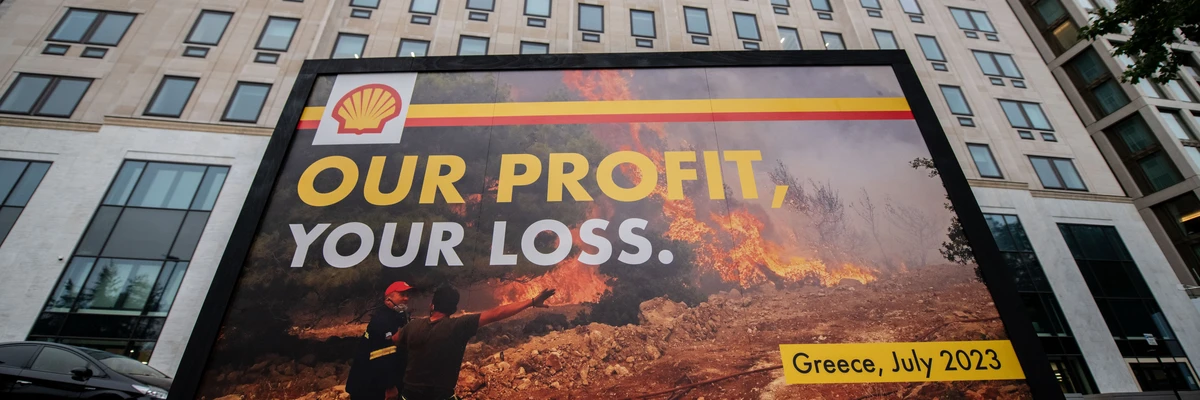
Greenpeace activists display a billboard during a protest outside Shell headquarters on July 27, 2023 in London. (Photo: Handout/Chris J. Ratcliffe for Greenpeace via Getty Images)
Jeremy Clarkson spreads well-worn conspiracy theory that casts inheritance farm tax policy as plot to “replace farmers with migrants”.
A network of conspiracy theorists has jumped on the inheritance tax debate to fuel an anti-green “culture war”, experts say.
Thousands of farmers demonstrated in Westminster on Tuesday against the Labour government’s plans to remove an inheritance tax exemption on agricultural assets, with tractors blocking roads outside parliament.
The policy, which raises inheritance tax on farms worth more than £1 million to 20 percent from April 2026, has been criticised by the National Farmers’ Union (NFU), the Conservative Party, the Liberal Democrats, The Green Party and others, with disputes about how many farms will be affected.
But social media analysis by DeSmog shows how the protests have also been exploited by a number of high-profile individuals and groups, spreading conspiracy theories about a left-wing government plot to take away people’s freedoms under the guise of climate action.
These include TV presenter Jeremy Clarkson, who has repeatedly cast doubt on the role of human-caused greenhouse gas emissions on climate change. The campaign group ‘No Farmers, No Food’, which has spread false claims about governments forcing people to “eat bugs”; the Together Declaration, which has cast doubt on the safety of life-saving Covid-19 vaccines; and Reform UK, the anti-immigration party which campaigns to “scrap net zero” and open new coal mines, were all active at the protest.
The protests have also attracted the attention of international commentators, among them Donald Trump ally Elon Musk, who shared a Guardian column defending the policy, adding: “Britain is going full Stalin.” Musk is increasingly commenting on UK politics, posting during the summer’s far-right riots: “Civil war is inevitable.”
DeSmog has contacted Clarkson, NFNF and Together for comment.
Conspiracy Theories
Jeremy Clarkson, who presents the “Clarkson’s Farm” documentary series, was a celebrity speaker at the protests, calling for Labour to “back down” on the policy and receiving widespread media attention. In a column for The Sun newspaper on 8 November, Clarkson described Labour’s centre-left chancellor Rachel Reeves as “an admirer of communists”.
He wrote: “I’m becoming more and more convinced that Starmer and Reeves have a sinister plan. They want to carpet bomb our farmland with new towns for immigrants and net zero windfarms. But before they can do that, they have to ethnically cleanse the countryside of farmers.”
The comments echo alarmist claims made in the Netherlands since 2019 that the government is using green policies to take land from farmers in order to house asylum seekers. Far-right parties have won major election victories in the country in part thanks to the public anger expressed in farmers’ protests.
Clarkson has commented on farmers’ protests in the Netherlands and Germany. In January he wrote a piece for The Times titled: “Apparently it’s far-right to grow food.” DeSmog has reported on how farmers’ protests on a range of issues have been “hijacked” and blamed on green policies.
Clarkson’s claims also echo the “Great Reset”, a post-Covid conspiracy theory which claims that the World Economic Forum (WEF) and other international “elites” are using green policies to impose a socialist dictatorship on the world.
These claims have also been promoted by ‘No Farmers, No Food’ (NFNF), a campaign group which had a significant presence at Tuesday’s protests.
As DeSmog reported in February, the group is run by PR executive and GB News pundit James Melville and backed by the Together Declaration, a climate denial and conspiracy theory group set up in 2021 to oppose Covid-19 lockdowns.
In January, NFNF shared a post on X which said: “Farmers stand between us and WEF’s desire for us to ‘EAT BUGS, own nothing and be happy’.” The same month, Melville shared a post which read: “Farmers across Europe are mass protesting the globalists trying to crush them. Between Bill Gates, the CCP [Chinese Communist Party] & the WEF, we’re going to have no private farmland left. They want you eating bugs.”
Earlier this week Melville posted that “farmers are the lightning rod in so many key battles that determine our way of life”, including “the net zero debate”. He added: “It’s probably the most important fight for the very fabric of British society right now.”
Clarkson has also written columns in The Sun this month attacking Labour’s energy policies and mocking prime minister Keir Starmer’s attendance at COP29, the UN climate summit taking place in Azerbaijan, as “virtue signalling” and “a complete waste of time”.
In 2021, Clarkson told the Sunday Times that he bought his £4.25 million farm, Diddly Squat, in order to avoid paying inheritance tax. When asked about this by the BBC at the protest on Tuesday, he said the question was “classic BBC”, and that the real reason was that he wanted to “shoot pheasants”.
Anti-Net Zero Agenda
Attending the protests was Alan D Miller, a businessman who founded the Together Declaration in August 2021. At Tuesday’s protest he was photographed alongside Clarkson, who was holding a placard which read: “With Our Farmers #Together”.
Miller posted a video of himself on GB News on X with the caption: “the obsession with net zero has far too much virtue signalling & far too little open honest transparent debate.”
As DeSmog reported in May, research by the cross-party think tank Demos found that Together was responsible for all online posts attacking low-traffic neighbourhoods (LTNs) in 2023. In the same year, the group published an open letter which said, “We have no confidence in the process for ensuring ongoing safety of the Covid-19 vaccines”.
In 2023, Together also launched its “No to Net Zero” campaign which attacked the premise and implementation of net zero, saying that the targets are based on “wildly exaggerated fears about the future” and that “modern industry and farming are not what is killing us, it is what is keeping us alive.”
The farmers’ protest was supported by Ben Pile, Together’s “cabinet member for net zero”, who posted on X that farmers should “please remember that no part of the UK’s green agenda is your friend. All of it is intended to deprive you of your livelihood, one way or another. That is its design.”
Pile is a climate crisis denial blogger who has falsely claimed that “the evidence for anthropogenic climate change is neither as strong nor as demanding of action as is widely claimed”.
This wing of the farmers’ protest was also supported by Reform UK, the right-wing populist party led by Nigel Farage MP. In a post on X, the party’s official account, used the NFNF slogan: “All the Reform MPs are at today’s farmers protest in Westminster. We are sending a message. No farmers, no food.”
A YouGov poll published this week found that just one in three Reform voters believe in man-made climate change.
Farage was also interviewed by Miller at the demonstration. In a video posted on X by Together, Farage called for similar farmers’ protests “in every market town in the country” and warned that these policies could cost Labour 100 seats in parliament.
Culture War
Labour has staunchly defended the inheritance tax plans, which it says will affect only 500 of the UK’s 209,000 farms.
Environment secretary Steve Reed said it was “only right” to ask the “wealthiest landowners and the biggest farms to pay their fair share”, citing the “£22 billion fiscal hole” inherited from the Conservative government.
However, Tom Lancaster, a land, food and farming analyst at the Energy and Climate Intelligence Unit (ECIU), argues that the policy is likely to do more harm than good.
“The risk of this tax reform is that it distracts from the government’s climate and nature objectives, angering the very farmers we need to deliver these goals,” he told DeSmog.
“It’s hard to argue that the long-term costs of damaging their relationship with farmers to such an extent is worth the relatively small amount of money that it will raise, and it is also clear that in rushing the reform, they have missed an opportunity to use APR [Agricultural Property Relief] to further wider aims on the environment and tenancy reform.”
He added that the policy had been helpful for political opportunists. “The way these reforms have been handled – sprung on farmers after all the signals were to leave the reliefs alone – is also a gift to those who would seek to ferment a culture war in farming,” he said.
“There is nothing so appealing to a culture warrior as a betrayal narrative, and this gives them that on a plate.”
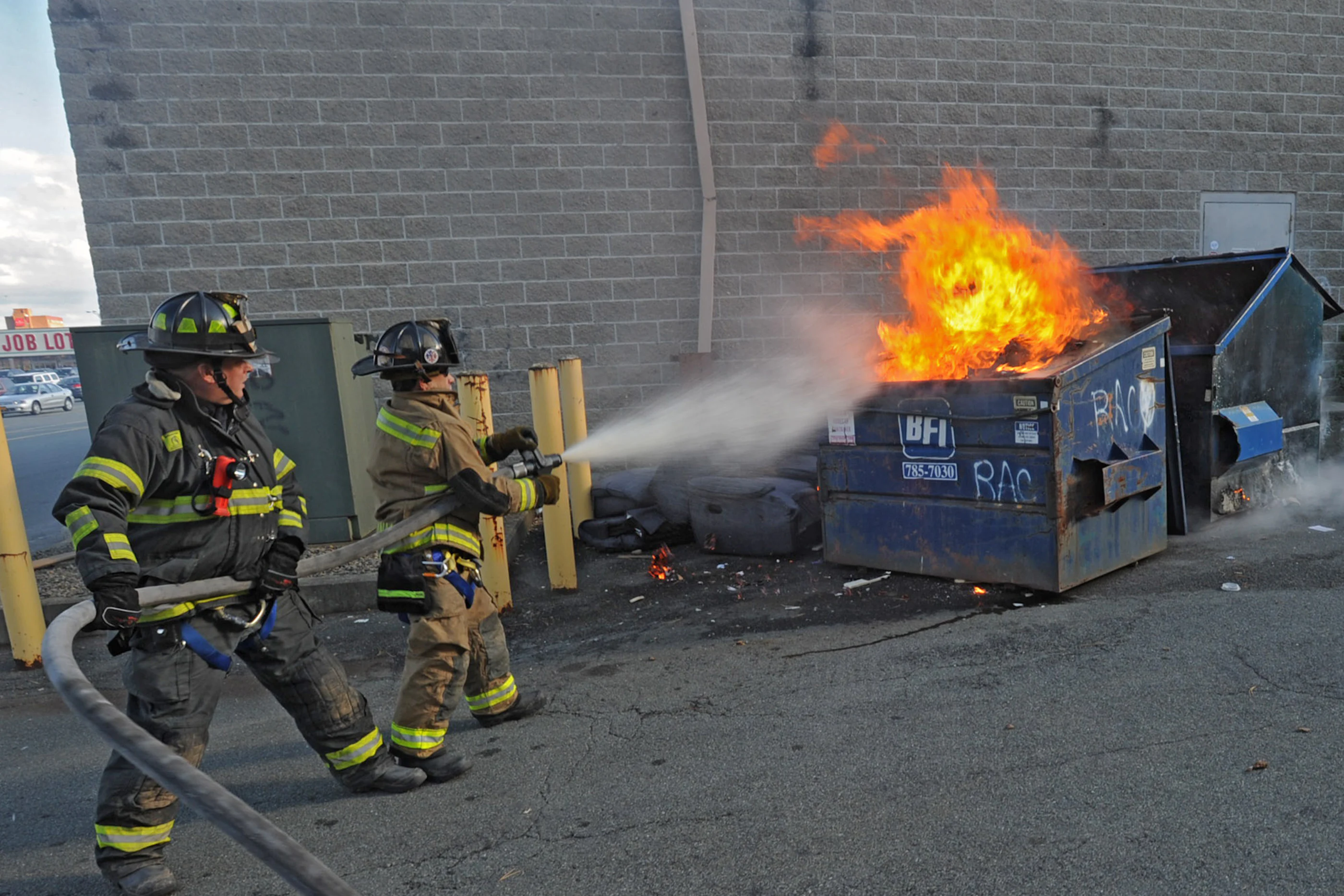
Albany firefighters put out a fire in a dumpster. Lori Van Buren/Getty Images
With the president-elect choosing his rogues’ gallery of future appointees, the political press is really wearing out its go-to synonym for crazy.
…
The meaning of mainstream media euphemisms has always been pretty plain to me, even before I entered the business. But just as I need my daughter, Alice, to translate when she says, “John is rizzing up trade”—it means “John is flirting with someone attractive”—it stands to reason that a new generation might need help with the word fiery. It means “sociopathic or clinically insane.”
The one person who hasn’t been called “fiery” or “firebrand” lately is Robert Kennedy Jr. I find this omission puzzling, given that Trump’s nominee for health and human services secretary practically stepped out of a textbook on abnormal psychology: whale-beheader, dead-bear fancier, sex diarist, etc. And that’s before we plumb RFK Jr.’s novel opinions against vaccines and fluoridation. Maybe the press feels squeamish about the worm that ate part of Kennedy’s brain. But they don’t come much fierier.
…
America’s firebrand in chief is Donald Trump. We’ve all been witnessing Trump’s mental derangement for so long that when the press describes Trump as “fiery” it has come to mean more than just “toxic and unhinged.” It means “more toxic and unhinged than usual.”
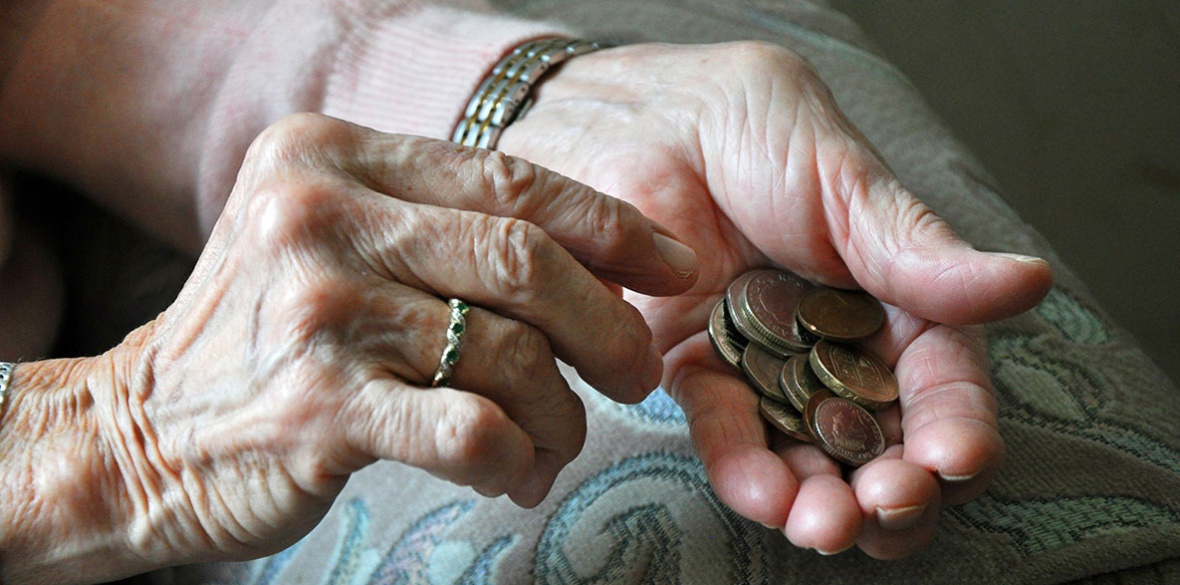
PENSIONER anger erupted at Labour as government figures conceded that 100,000 older people risk being pushed into poverty by the cut in winter fuel payments.
The National Pensioners Convention (NPC) renewed demands that ministers do a U-turn on the controversial cut, announced by Chancellor Rachel Reeves shortly after assuming office.
NPC general secretary Jan Shortt said she was “gravely concerned” by figures included in an analysis revealed by the Department for Work and Pensions this week.
These showed that the removal of the benefit will plunge around 50,000 pensioners into relative poverty next year, and the same number again by the end of the decade.
Ms Shortt said: “We find it completely unacceptable that an extra 50,000 to 100,000 older people will fall into poverty as a result of the decision to means-test the winter fuel payment.
“The message to older people is that the government is happy to accept them as collateral damage. The government must know these older people are not the ‘broadest shoulders’ they keep saying must pay to fix the economic deficit.
Original article by Fin Johnston republished from TBIJ under a Creative Commons Attribution-NonCommercial-NoDerivs 3.0 Unported License.
Project has sold credits to EasyJet, British American Tobacco and Ernst & Young
A carbon offsetting project set up by Harvard University’s endowment fund has sold millions of junk credits to major international companies, the Bureau of Investigative Journalism (TBIJ) can reveal.
After establishing the scheme in 2012 on land it has bought in Uruguay, Harvard ended its involvement when it sold the land across two deals in 2017 and 2019 worth a combined $450m. But the project is still active today and has sold enough credits to have supposedly offset over 5 million tonnes of CO2 emissions – roughly equivalent to what a million cars would produce in a year.
EasyJet, British American Tobacco and Ernst & Young are all among the biggest buyers of credits from the project.
The current owner of the project told TBIJ it had received no revenues from sales of carbon credits to these companies. A spokesperson for the Harvard fund said it does not comment on individual investments.
The project was given the green light to sell carbon credits in 2012 by Verra, the carbon credit standards body. But in 2022 it was given a rating of zero by an agency that assesses the effectiveness of carbon offsetting schemes.
The rating means that the credits, which should each represent one tonne of emissions avoided or removed from the atmosphere, represent no change. In other words, the project has had no effect on the environment at all.
The Guanaré Forest Plantations Project, a vast reforesting scheme, was set up following the 2006 purchase of an area of land in eastern Uruguay about the size of Washington DC. It was ultimately paid for by the university’s endowment fund, Harvard Management Company (HMC), a $50bn vehicle which invests to support research and student bursaries.
Though the land was bought through two companies set up by HMC, and the running of the project was outsourced to a Uruguayan forestry company, all the money made from sales of carbon credits went to the Harvard fund.
[section omitted: What is carbon offsetting?]
Carbon offsets allow companies to make up for the carbon emissions they create by paying to avoid or remove emissions elsewhere. Each carbon credit represents a ton of carbon dioxide either removed from the atmosphere or prevented from entering it in the first place.
Offsetting has been the subject of much debate. Some argue it is necessary and provides much-needed incentives for investors to channel their money into green initiatives. Others have said it offers polluting companies a way to avoid reducing their own greenhouse gas emissions.
The $2bn global market for carbon offsets has been hit by a number of recent scandals – with reports claiming that many credits do not represent genuine carbon reductions.
On day one of this year’s Cop climate talks in Baku, an early agreement was reached over rules around the creation of a global carbon market, in theory paving the way for rich countries to pay for cheap climate action abroad.
The coffee company Lavazza also bought credits from the project to offset the emissions of a supposedly “carbon neutral” coffee capsule it launched in 2022.
Renoster, the agency that gave the project a zero rating, raised three criticisms of the scheme. The first hinged on a factor known as “additionality”, which exists to prevent companies from going about their normal business – for example running a commercial timber project – and selling carbon credits on top. If a project could run without carbon finance, then it cannot be considered additional.
Documents submitted to Verra state that the project’s objective is to create “high value” timber products. Renoster ruled that carbon finance had ultimately made no difference. “We believe that these trees were going to be planted regardless of the project,” it said.
The second criticism was that the scheme’s “baseline assumptions” were wrong. A baseline number is something given to every carbon offsetting project, against which its removals are measured. The project had a baseline of 0, meaning no emissions whatsoever would have been removed from the atmosphere if the scheme did not exist.
Renoster said that baseline was “not a reasonable assumption for the region” because large portions of nearby land were already being converted from pasture to eucalyptus plantations.
Renoster’s third criticism was that the project was unlikely to run its full course, which was projected to be 100 years.
“We do not believe that Guanaré’s carbon credits represent true emissions reductions,” Renoster’s chief science officer, Elias Ayrey, told TBIJ. “We would not consider carbon neutrality claims based on these particular credits to be legitimate.”
The current owners of the project said: “Carbon credits have been critical for achieving the rates of return that investors required when the project started.” They said this cash means they can let the trees grow for longer before they are harvested.
A second agency, BeZero Carbon, also assessed the project and raised similar concerns around additionality and baseline assumptions. It found that the project had a “low” likelihood of achieving the purported emissions avoidance or removal.
The project has also been criticised by World Rainforest Movement, an organisation that monitors the Uruguayan forestry industry, which said: “Industrial tree plantations in Uruguay have led to land concentration by a small group of corporations and investment funds. They replace an extremely important ecosystem – grasslands – to plant tree monocultures, destroying biodiversity and watersheds.”
A BAT spokesperson told TBIJ that its carbon neutrality claim was independently validated in 2021. Lavazza said it had removed the claims from its products and is dedicated to transparency in all its sustainability initiatives.
An EasyJet spokesperson told TBIJ that it transitioned away from offsetting in 2022 but until then “had robust due diligence processes in place”.
Ernst & Young said it selects offsetting projects which have been certified against internationally recognised standards and continues to work on its due diligence procedures. It said it retired all remaining credits in this project in 2023.
This story was updated on 20 November 2024 to clarify the response given to TBIJ by the Harvard fund.
Reporter: Fin Johnston Global health editor: Fiona Walker Deputy editor: Chrissie Giles Editor: Franz Wild Impact producer: Paul Eccles Production editor: Alex Hess Fact checker: Somesh Jha
TBIJ has a number of funders, a full list of which can be found here. None of our funders have any influence over editorial decisions or output.
Original article by Fin Johnston republished from TBIJ under a Creative Commons Attribution-NonCommercial-NoDerivs 3.0 Unported License.