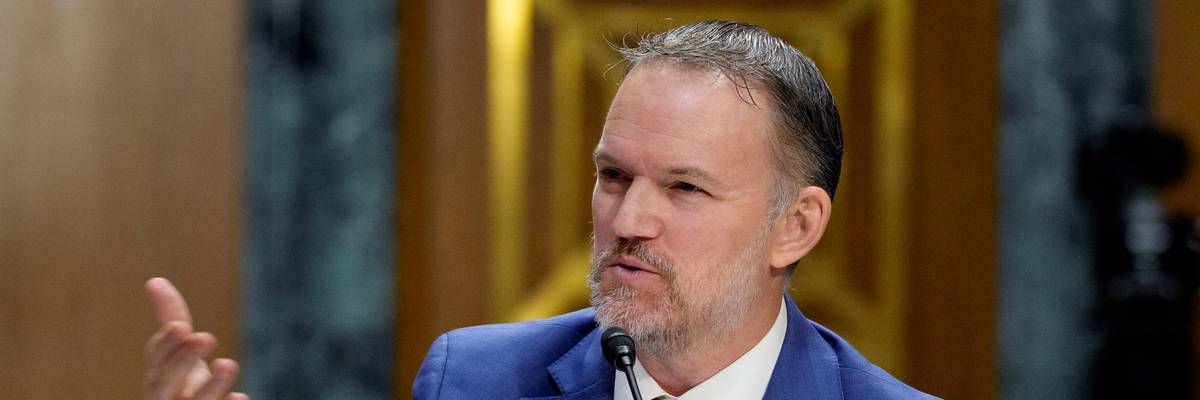
US Trade Representative Jamieson Greer speaks during a Senate Finance Committee hearing on July 22, 2026 in Washington, DC. (Photo by Andrew Harnik/Getty Images)
“These new tariffs are more of the same: a nationwide sales tax that will make life even harder for families already struggling under the costs of Trump’s reckless war in Iran.”
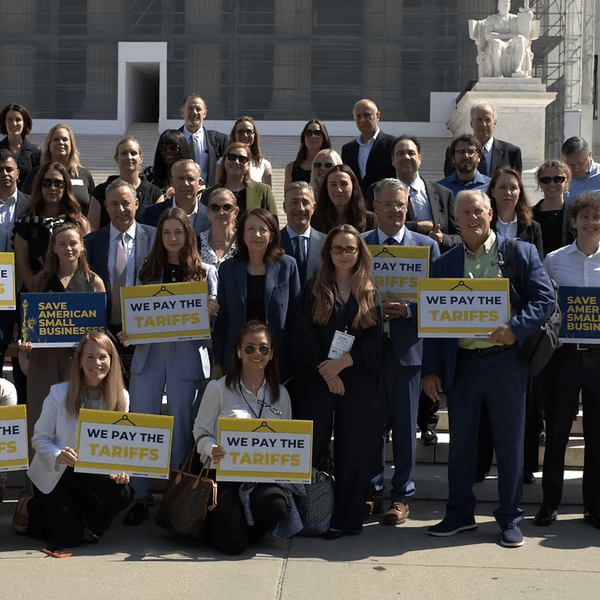
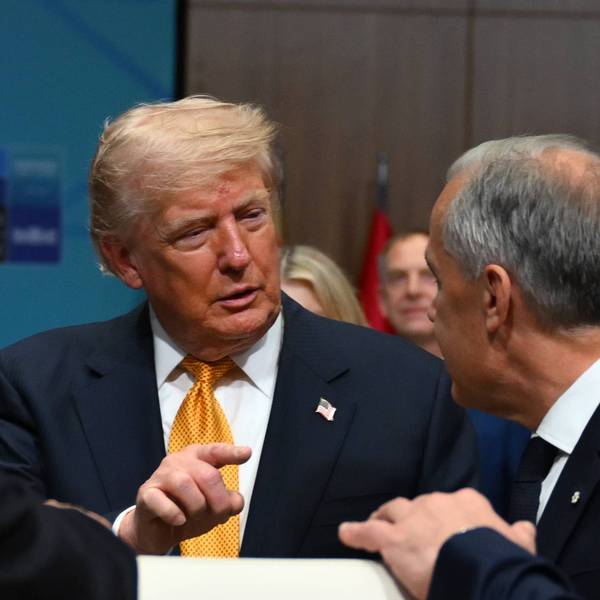
President Donald Trump on Thursday unveiled a new package of tariffs targeting 60 countries that account for over 99% of US imports, a move that—if upheld in court—would cost Americans an estimated $100 billion per year in the form of higher costs.
The duties, ranging from 10% to 12.5%, were announced as part of the president’s effort to maneuver around repeated court rulings against his sweeping tariffs, including by the conservative-dominated US Supreme Court. Jamieson Greer, the Trump administration’s top trade official, pointed to Section 301 of the Trade Act of 1974 to justify the new tariffs, introduced with the purported goal of penalizing countries “for their failure to impose and effectively enforce a prohibition on the importation of goods produced with forced labor.”
Observers questioned the administration’s pretext. “Magically, the US tariff probe on forced labor practices is done perfectly in time to replace the generalized but expiring Section 122 tariffs,” noted Bloomberg’s Josh Wingrove, referring to the legal authority Trump cited for earlier tariffs.
Rep. Mike Levin (D-Calif.) acknowledged that “Section 301 is a law Congress passed,” but added, “What was passed in 1974 was authority to respond to specific unfair trade practices after investigation.”
“What is being done with it now is a tariff on 99% of American trade, set by Trump, with no expiration, no vote, and no ceiling,” said Levin. “If a delegation that broad is lawful, then the tariff power in Article I means very little. The Supreme Court struck down the last version of this policy in February. The response was to avoid Congress and find a different statute and rebuild substantially the same tariffs, effective the same minute the old ones lapsed.”
The list of countries targeted by the Section 301 tariffs includes Canada, Australia, Brazil, China, Mexico, Russia, Norway, the United Kingdom, and Vietnam.
The Progressive Policy Institute said Thursday that the new tariffs would “likely cost Americans $100 billion a year” collectively—though the group’s trade director, Ed Gresser, said the administration’s order “looks vulnerable to challenge, and courts would have good reason to strike it down.”
“Its vague claims about forced labor abroad do not hold up,” said Gresser. “Constitutionally, it is likely impermissible as an attempt to use a law designed for problem-solving abroad to impose a general tariff increase. And legally, Section 301 requires administrations to demonstrate ‘unreasonable acts, policies, or practices’ which impose a burden on US commerce, which this executive order fails to do. While making emotive claims about forced labor, it neither presents evidence that the listed countries are buying goods made with the use of forced labor, nor demonstrates that if they were, this would impose the statutorily required ‘burden on US commerce.’”
Rep. Brendan Boyle (D-Pa.), the top Democrat on the House Budget Committee, said in a statement that “these new tariffs are more of the same: a nationwide sales tax that will make life even harder for families already struggling under the costs of Trump’s reckless war in Iran.”
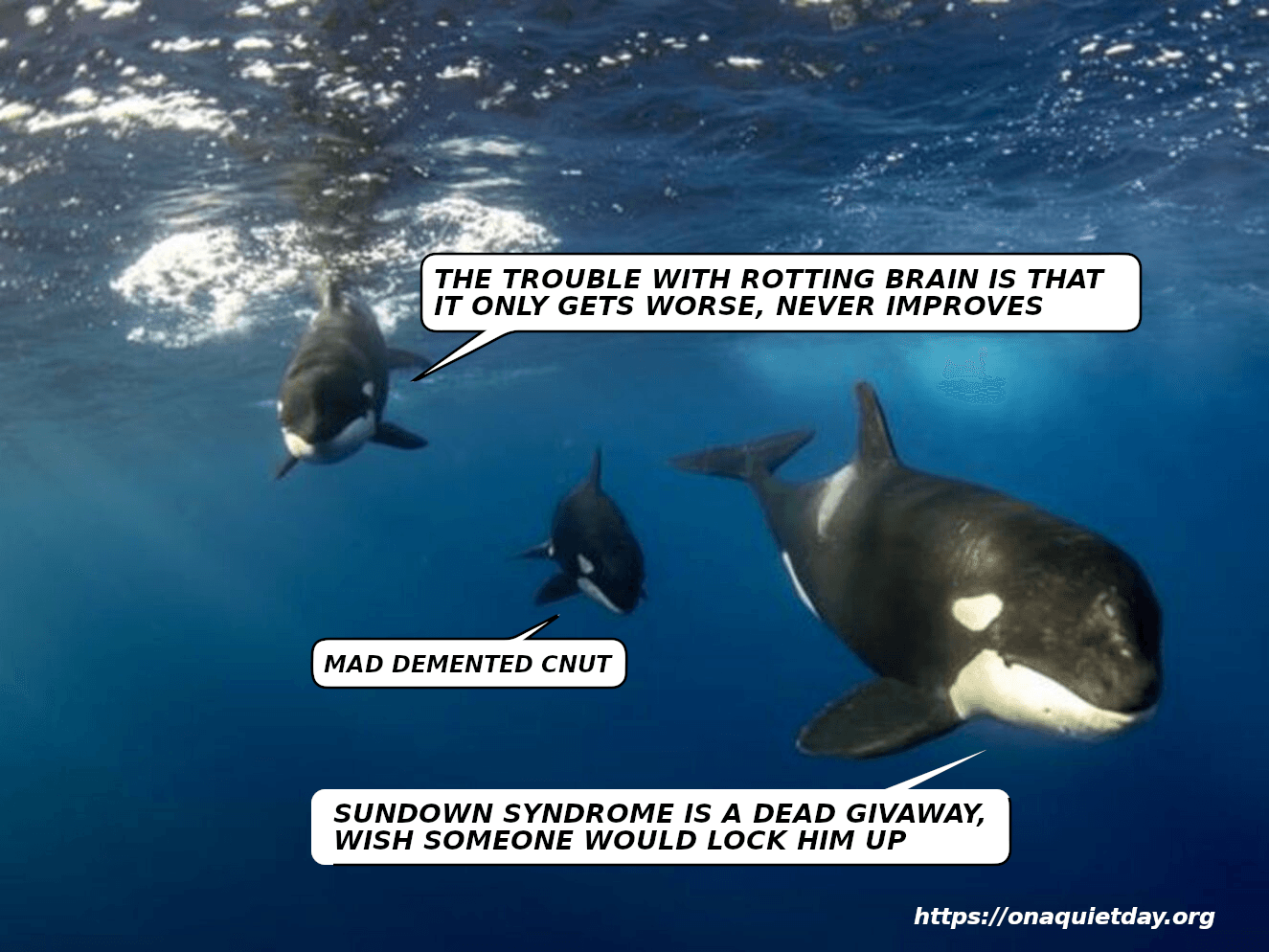
Orcas discuss Donald Trump and the killer apes’ concept of democracy. Front Orca warns that Trump is crashing his country’s economy and that everything he does he does for the fantastically wealthy.Orcas discuss how Trump was re-elected and him being an obviously insane, xenophobic Fascist.Orcas discuss rotting brain, front Orca says Sundown Syndrome is a dead givaway and he wishes someone would Lock Him Up
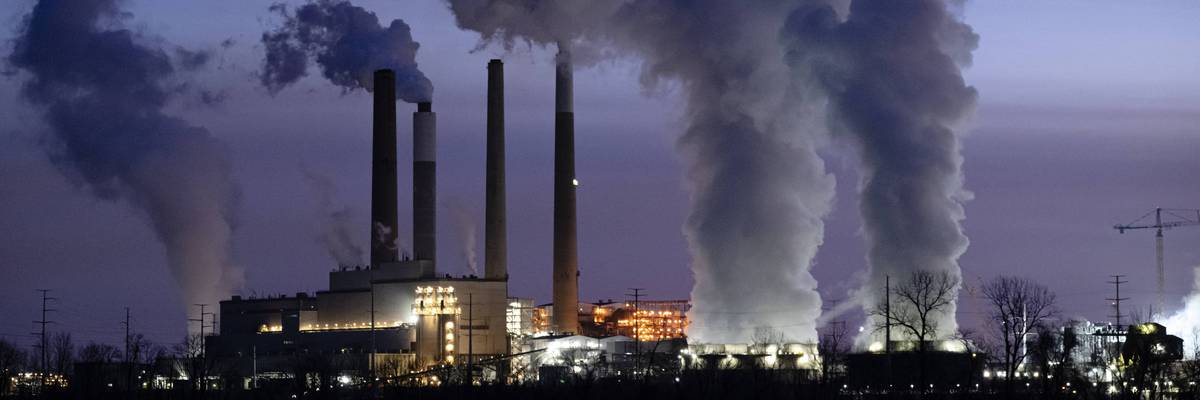
Mill Creek Generating Station, a coal-fired power plant in Louisville, Kentucky, is seen on February 14, 2026 in Elizabeth, Indiana. (Photo by Jon Cherry/Getty Images)
One critic of the president recently said that he’s “forcing higher power bills” on Americans while “fattening the wallets of his cronies—all with billions of our tax dollars.”
President Donald Trump’s administration has dedicated over $1 billion to boosting the coal industry, and on Thursday announced a report about reserves beneath federally managed public lands, with Interior Secretary Doug Burgum claiming that the polluting fossil fuel “is more important than ever to the production of electricity.”
“These 34 coal mines control more than 4.2 billion short tons of reported coal reserves. Most of the coal mines (31) and more than 98% of the reported coal reserves are on federal lands west of the Mississippi River,” according to the report. “Of all the states, Wyoming has the most coal mines on federal lands (14) and produces the most coal from federal lands.”
“The USGS estimates that more than 355 billion short tons of available coal resources remain beneath federal lands in the conterminous United States,” the document details. “Alaska contains substantial quantities of coal resources. The USGS estimates that Alaska has at least 140 billion short tons of identified available coal resources but may ultimately have as much as 5.5 trillion short tons of coal resources.”
A US Department of the Interior statement announcing the report highlights that if the reserves accounted for in the document were produced, “that would be enough coal to supply all the nation’s needs for at least 600 years at the current rate of consumption.”
Scientists have long argued that the international community must stop burning coal—plus oil and gas—to prevent a worst-case scenario future as the planet’s inhabitants already face a fossil fuel-driven climate emergency and its relatedextreme weather.
However, climate crisis-denying Trump—who returned to the White House backed by Big Oil’s campaign cash—and his Cabinet have spent his second term pushing polluting sources of energy, particularly as his illegal war on Iran drives up global prices, with oil surpassing $100 per barrel on Thursday.
Staying on message, Burgum declared in Interior’s Thursday statement that “American Energy Dominance is more important than ever, and so is beautiful clean coal’s role in the production of electricity needed to fuel our future prosperity.”
“Thanks to the USGS’s rigorous and independent assessment, we’re better equipped to manage America’s vast public lands responsibly while supporting energy security and economic opportunity,” he continued.
Sharing the statement on the social media platform Bluesky Thursday, sciencejournalist Emily Willingham said, “What an abuse of the USGS, the environment, and our intellects.”
An ore deposit geologist named Elizabeth also ripped the statement on Bluesky, writing: “There is a lot messed up with this press release, but the thing that bothers me the most is how poorly it is written. What an embarrassment!”
The USGS report came just two days after the Energy and Labor departments signed a memorandum of understanding (MOU) creating a framework to accelerate the deployment of artificial intelligence, automation, and other emerging technologies in the mining sector.
Acting Secretary of Labor Keith Sonderling said, “It is our commitment to you that this MOU will further President Trump’s promise to restore coal as a key driver of America’s energy supply chain and American coal will again be the envy of the world for generations to come.”
While attacking clean energy initiatives, including offshore wind projects, the administration “has bolstered coal, the dirtiest and most expensive fossil fuel,” The Guardian reported earlier this month.
According to the newspaper:
In September, the Department of Energy announced it would spend $625 million to “expand and extend the life of” coal-fired power plants, allocating $350 million to “modernize” coal plants, $175 million to fund coal projects powering rural communities, and $50 million to upgrade wastewater management systems to extend coal plants’ lifespans.
Last month, the agency also set aside up to $500 million from the Defense Production Act to “expand and reinvigorate” the capacity of 13 coal plants, and to help build a coal export terminal in Oakland, California. A week later, the department announced an additional $3.6 million to “refurbish or retrofit” nine existing coal plants.
Former Democratic Washington Gov. Jay Inslee, a climate advocate and Trump critic, told the paper that the president is “forcing higher power bills” on Americans “by blocking clean energy, then he’s fattening the wallets of his cronies—all with billions of our tax dollars.”
“We pay more,” he said, “Republicans rubber-stamp it, and Trump’s donors walk off with the bag.”
Explainer by dizzy: Coal is regarded as an unnecessary, particularly highly-polluting fossil-fuel
Power-mad orange gasbag Donald Trump says Burn, Baby, Burn.Donald Trump urges you to be a Climate Science denier like him. He says that he makes millions and millions for destroying the planet, Burn, Baby, Burn and Flood, Baby, Flood.Nigel Farage urges you to ignore facts and reality and be a climate science denier like him and his Deputy Richard Tice. He says that Reform UK has received £Millions and £Millions from the fossil fuel industry to promote climate denial and destroy the planet.
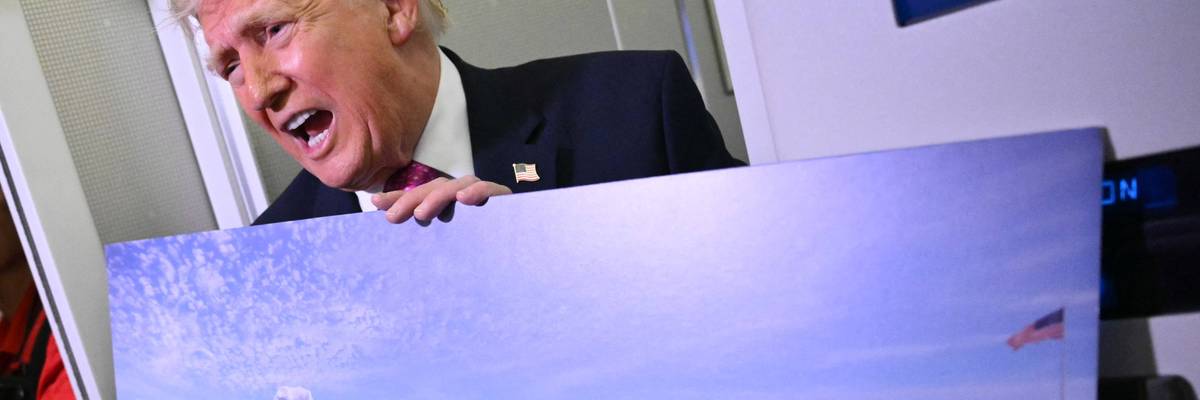
US President Donald Trump holds a rendering of the East Wing modernization as he speaks to reporters aboard Air Force One en route to Joint Base Andrews, Maryland, on March 29, 2026. (Photo by Mandel Ngan / AFP via Getty Images)
Attempting to rig elections, fighting wars nobody wants, and constructing gaudy vanity projects are apparently more important to him than whether his own voters can afford food, housing, and healthcare for their families.
US President Donald Trump holds a rendering of the East Wing modernization as he speaks to reporters aboard Air Force One en route to Joint Base Andrews, Maryland, on March 29, 2026.
(Photo by Mandel Ngan / AFP via Getty Images)
Voters Are Realizing that Trump Doesn’t Care About Them
Attempting to rig elections, fighting wars nobody wants, and constructing gaudy vanity projects are apparently more important to him than whether his own voters can afford food, housing, and healthcare for their families.
This month, the bipartisan 21st Century ROAD to Housing Act became law—without President Donald Trump’s signature, exactly as he’d threatened. It’s a small, recent example of a much bigger habit: Trump keeps showing voters exactly how little he thinks of them. The bill wasn’t controversial at all. It was negotiated by both parties’ top committee members and aimed squarely at lowering housing costs. But Trump let it sit for weeks rather than sign it, hoping to extract an unrelated voter-suppression bill in return.
At this point, childish behavior from the president shouldn’t be surprising.
In his first inaugural address, President Trump claimed to be the champion of America’s “forgotten men and women.” But it was a lie from the start. He never cared about the poor and marginalized. He cared about cutting taxes for his friends; scapegoating immigrants for the struggles of the working class; and restoring a mythical era of American “greatness” characterized by the supremacy of straight, white, Christian males.
Although his lie was obvious, it was also effective. In 2016, Trump won around one-eighth of voters who’d supported Sen. Bernie Sanders (I-Vt.) in the Democratic primaries. In 2024, he significantly increased his share of the Black and Hispanic vote. It might seem surprising that supporters of a democratic socialist would vote for a Reagan-style tax cutter or that minorities would support someone who campaigned on mass deportations, but desperation and repeated betrayals make voters do unnatural things. They (rightly) believed that the establishment of both parties had failed to serve their interests, so they voted for the candidate who portrayed himself as the enemy of that establishment.
Trump is perfectly happy to sacrifice the well-being of Americans, including his own supporters, to serve his own ego.
Thankfully, Americans are waking up. Trump’s approval rating has dropped to around 36% as it’s become increasingly obvious where his priorities lie. One source described as a “White House ally” recently told Politico that Trump “doesn’t care about anything beyond SAVE, Iran, and the ballroom.”
Attempting to rig elections, fighting wars nobody wants, and constructing gaudy vanity projects are apparently more important to him than whether his own voters can afford food, housing, and healthcare for their families.
He doesn’t even try to hide it anymore.
He said that the housing bill he recently refused to sign was just “of minor importance.” A few months earlier, he explicitly said he wants to keep housing prices high, favoring elderly GOP voters sitting on hundreds of thousands of dollars in unearned equity over young families struggling to buy their first home. These gaffes give Democrats an opening they can’t fail to ignore—and a path forward to lead on housing, which is the No. 1 issue for young voters according to a CNBC survey released in July.
Democrats should skip the smaller fixes, like banning rent-pricing algorithms—that’s kind of like blaming the weather forecaster for the rain, and it’s why Colorado Gov. Jared Polis vetoed such a ban. Instead, they should marshal public and private funds toward large-scale building projects with generous affordable-housing quotas, the approach Mayor Zohran Mamdani is pursuing in New York.
They should also seize on the opportunity that Trump’s highly unpopular war in Iran presents.
Trump revealed his total apathy on this front when he told a reporter in May that he doesn’t “think about Americans’ financial situation” when conducting his war with Iran.
In this case, he’s telling the truth. Trump is perfectly happy to sacrifice the well-being of Americans, including his own supporters, to serve his own ego.
All he cares about now is being remembered as “a capital G, Great Man of history,” Jonathan Swan, co-author of the new book Regime Change: Inside the Imperial Presidency of Donald Trump, explained in a recent interview. “He wants to reshape the world. I don’t think he would have gone to war in Iran in the same circumstances in Term 1. I don’t think he would have rolled the dice on what he did in Venezuela… He wouldn’t have started a trade war with the whole world.” But now that he has no more elections to win, Trump is perfectly willing to show his true colors.
Democrats running for office can seize this opportunity as well by throwing Trump’s “no new wars” campaign promise back in his face and by promising to banish the liberal warmongers who staffed previous Democratic administrations.
Republicans have done everything they can to give themselves an edge in the midterms: racist redistricting, a new court ruling that injects even more money into politics, and contrived fearmongering about communism. But if Democrats can finally convince voters that Trump doesn’t care about them—which shouldn’t be too hard since he’s constantly saying exactly that—we’ll get the blue wave we’re hoping for and then some.
This work by Middle East Monitor is licensed under a Creative Commons Attribution-NonCommercial-ShareAlike 4.0 International License.
President Donald Trump (L) greets Lebanese President Joseph Aoun (R) upon his arrival at the White House in Washington, D.C., United States, on July 21, 2026. [Mehmet Eser – Anadolu Agency]
Lebanese President Joseph Aoun said Friday that his meeting with US President Donald Trump was “fruitful,” adding that the time had come to end the war permanently, according to the Lebanese Presidency, Anadolu reports.
In a statement, the presidency said Aoun made the remarks while receiving EU Ambassador Sandra De Waele, along with a delegation of ambassadors and chargés d’affaires.
Lebanon remains committed to the path of reforms and will continue working to achieve its goals despite the war, Aoun said.
“The continued presence of the UN Interim Force in Lebanon (UNIFIL) remains the best option for the coming phase,” he said, adding that if this was not possible, an alternative force should be created to replace it.
Aoun called on the EU to support the implementation of the “framework formula,” saying Lebanon’s stability would reflect positively on the stability of countries across the region.
For her part, De Waele said Lebanon stood at a crossroads and was at the beginning of a new chapter, adding that the EU supported its path toward security, stability and reforms.
Since March 2, 2026, Israel’s offensive on Lebanon has killed 4,329 people and injured 12,233 others, according to Lebanon’s Health Ministry, while Israel continues to occupy areas in the south despite the agreement.
Israel occupies areas in southern Lebanon, some for decades and others since the 2023-2024 confrontations, and advanced more than 10 kilometers (6.2 miles) into Lebanese territory during the current offensive.
Orcas discuss rotting brain, front Orca says he wishes someone would lock him up, small Orca speaks bluntly.Keir Starmer objects to criticism of the IDF. He asks how could anyone object to them starving people to death, forced marches like the Nazis did, bombing Gaza’s hospitals and universities, mass-murdering journalists, healthworkers and starving people queuing for food, killing and raping prisoners and murdering children. He calls for people to stop obstructing his genocide for Israel.
This work by Middle East Monitor is licensed under a Creative Commons Attribution-NonCommercial-ShareAlike 4.0 International License.
US President Donald Trump (2nd L) is welcomed by Saudi Crown Prince Mohammed bin Salman Al Saud (R) as he arrives at Malik Khalid Airport, for the first leg of his three-country Middle East tour in Riyadh, Saudi Arabia on May 13, 2025. [Bandar Al-Jaloud/Saudi Royal Court – Anadolu Agency]
The United States and Saudi Arabia took a step toward nuclear cooperation on 22nd July 22 2026, when U.S. Energy Secretary Chris Wright and Saudi Energy Minister Prince Abdulaziz bin Salman signed a Section 123 Agreement. It creates the legal basis for civilian nuclear trade and comes with a bilateral safeguards agreement. Washington presented it as the foundation of a decades-long, multibillion-dollar partnership favouring American companies.
One day later, however, President Donald Trump introduced a condition that was absent from the original announcement: Saudi Arabia must normalize relations with Israel through the Abraham Accords or “the deal is off.”
The ultimatum turns what had looked like a completed nuclear framework into a politically conditional bargain, creating uncertainty for Riyadh, Congress, and prospective U.S. suppliers.
Scope, legal and commercial framework, timeline, and significance
Section 123 of the Atomic Energy Act requires nine nonproliferation criteria, including peaceful-use guarantees, safeguards, physical-security requirements, and U.S. consent rights over enrichment, reprocessing, and retransfers of American-origin material. The agreement does not authorize a reactor by itself; it enables licensing, exports, fuel services, training, and technical cooperation. For Saudi Arabia, the agreement opens the door to American reactors, fuel services, training, and regulatory support. For Washington, it promises exports, jobs, and lasting influence. Cooperation could extend to research and peaceful applications beyond electricity generation.
The difficult question is uranium enrichment. Unlike the US–UAE “gold standard,” under which Abu Dhabi renounced enrichment and reprocessing, the Saudi agreement may leave that door open. Washington and Riyadh could study enrichment inside the kingdom, perhaps using tightly controlled American technology or a sealed “black box” system. That might reduce the risk, but enrichment on Saudi soil would still carry serious proliferation implications.
The agreement is expected to last roughly 30 years. Saudi Arabia must choose technology, sites, financing, and suppliers while expanding regulatory capacity. Large reactors require years of licensing and construction, while most small modular designs remain commercially immature. The agreement is an enabling framework, not a construction schedule. Trump’s new condition now makes even that framework uncertain.
Commercially, the agreement strengthens companies such as Westinghouse and emerging small-reactor suppliers. Success will depend on financing, project costs, and whether American vendors can match state-backed competitors.
Benefits for Saudi Arabia and US opportunities
Saudi electricity demand is climbing as its population, industries, cooling needs, desalination plants, and Vision 2030 projects grow. Nuclear plants could provide steady low-carbon power while reducing the oil and gas burned at home, leaving more hydrocarbons for export or higher-value uses.
Desalination strengthens the case. As the world’s largest producer of desalinated water, Saudi Arabia could use nuclear facilities for electricity and process heat with lower direct emissions. Nuclear power could also complement solar after sunset and during peak demand. The Saudi National Atomic Energy Project includes reactors, fuel-cycle capabilities, and applications in industry, medicine, research, and water. A domestic program could create specialized jobs and support engineering and manufacturing, but it should complement cheaper renewable and efficiency options.
Saudi Arabia must still decide where nuclear power belongs within its expanding solar and gas systems. Reactors offer steady output but require large upfront commitments and management of construction risk. A phased program beginning with strong regulation, workforce development, and one carefully selected project would be more practical than announcing a large fleet before local institutions are ready.For the United States, benefits extend to fuel, maintenance, safety systems, and training. Continued involvement provides leverage over standards and safeguards, while Saudi investment could support the American nuclear supply chain.
Principal challenges and risks
Nonproliferation remains the central concern. Saudi Arabia has a comprehensive safeguards agreement with the IAEA but has not adopted the Additional Protocol, which gives inspectors wider access to search for undeclared activity. Riyadh should accept it before receiving sensitive technology or material.
The concern is simple: technology used to produce reactor fuel can also make weapons-grade material. Crown Prince Mohammed bin Salman has said Saudi Arabia would pursue a bomb if Iran acquired one. Even tightly controlled enrichment could give Riyadh a latent capability and weaken the precedent established by the UAE.
The bilateral safeguards agreement, IAEA monitoring, U.S. consent rights, and export licensing can reduce risk, but only with access, transparency, and enforcement. Arrangements must also address spent fuel, reprocessing, waste, cybersecurity, physical protection, and dual-use knowledge.
Cost is another challenge. Large nuclear projects often face delays and overruns, especially in newcomer countries. Saudi Arabia needs an independent regulator with adequate staff, authority, and expertise, alongside credible plans for emergencies, waste, decommissioning, liability, and oversight.
Congress will review the agreement for 90 days of continuous session. Lawmakers will focus on enrichment and safeguards. Supporters will emphasize jobs and influence; critics will reject weaker standards. Israel’s concern is equally direct. It fears Saudi enrichment could encourage an arms race and will likely demand firm limits, tougher inspections, and a clear link between nuclear cooperation and normalization.
Comparison with alternatives and US competitiveness
Without an attractive American offer, Saudi Arabia could select Russia’s Rosatom, China’s CNNC, South Korea’s KEPCO, or French suppliers. Russia and China can offer state financing, integrated fuel services, and fewer political conditions, but choosing them would expand their strategic influence and weaken U.S. visibility into the Saudi program. South Korea and France offer credible commercial and safety records, although some projects may still depend on U.S.-origin technology and approvals.
Washington therefore faces a difficult balance. Terms that are too restrictive could push Riyadh toward suppliers demanding less transparency, while too much flexibility could weaken global nonproliferation standards. A U.S.-operated or technically sealed enrichment facility might offer a compromise, but only with the Additional Protocol, continuous monitoring, clear termination rules, and the removal of sensitive material during a crisis.
Regional context: Iran, Abraham Accords, and stability
The agreement comes amid renewed conflict with Iran and uncertainty over Tehran’s nuclear program. For Riyadh, nuclear cooperation strengthens ties with Washington, reduces dependence on Russian or Chinese technology, and signals continued American investment in the kingdom’s security. Trump’s July 23 ultimatum goes beyond using nuclear cooperation as an incentive. By declaring that “the deal is off” without normalization, he has made the Abraham Accords a condition for implementation. That may give Washington leverage for a wider regional bargain, but it also leaves Riyadh with less room to maneuver. Saudi leaders continue to demand credible progress toward Palestinian statehood and face strong regional opposition to normalization, particularly during the Iran war. A public ultimatum may therefore harden positions instead of bringing an agreement closer.
With strong safeguards, the agreement could show that civilian nuclear energy and regional security can advance together. But if enrichment rules look permissive, Iran may cite the deal to defend its own program, while Egypt, Turkey, and others could demand similar rights. Depending on implementation, the agreement could either reinforce deterrence or accelerate regional nuclear hedging.
Conclusion: Opportunities vs. risks
The agreement offers real benefits: diversified Saudi electricity generation, support for desalination and industry, commercial opportunities for US companies, and stronger bilateral ties. American participation is preferable to withdrawing and leaving the market to suppliers offering less transparency.
But engagement alone will not be enough, and normalization cannot replace nuclear safeguards. Success requires Saudi adoption of the Additional Protocol, enforceable limits on enrichment and reprocessing, congressional oversight, credible waste and security plans, and sustained regional diplomacy. Trump’s ultimatum could produce a broader strategic bargain, but it could also stall an energy agreement Washington had already presented as complete.
Ultimately, the deal’s value will depend on whether the United States can combine nuclear commerce, nonproliferation discipline, and realistic diplomacy without allowing one objective to undermine the others.
Orcas discuss rotting brain, front Orca says he wishes someone would lock him up, small Orca speaks bluntly.Keir Starmer objects to criticism of the IDF. He asks how could anyone object to them starving people to death, forced marches like the Nazis did, bombing Gaza’s hospitals and universities, mass-murdering journalists, healthworkers and starving people queuing for food, killing and raping prisoners and murdering children. He calls for people to stop obstructing his genocide for Israel.