Category: Nigel Farage

  • With Planet Set to Overshoot 1.5°C Threshold, Emissions Must Still Be Cut Rapidly to Limit Damage: UN Report

    Spread the love

    Article by Julia Conley republished from Common Dreams under Creative Commons (CC BY-NC-ND 3.0).
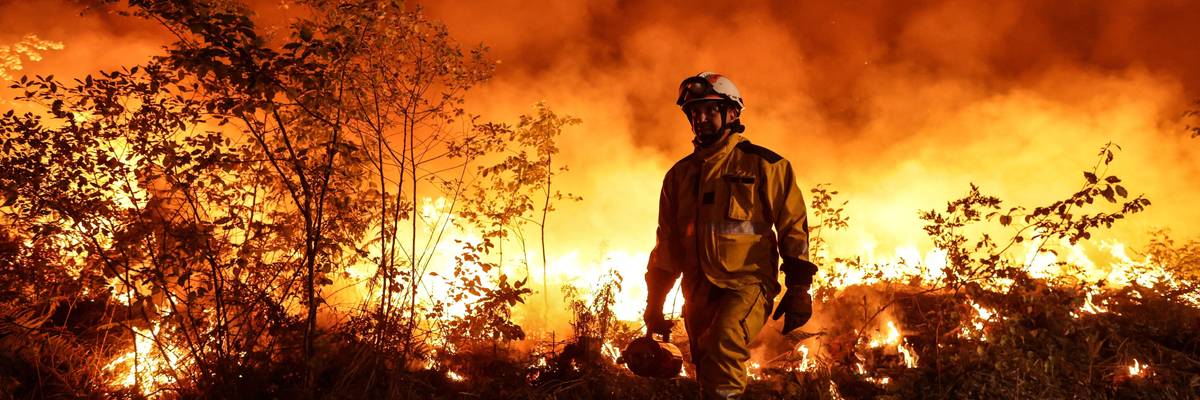
    Tactical firefighters set a backfire to a plot of land to prevent the wildfire from spreading as the winds change in Louchats, France, on July 17, 2022. (Photo by Thibaud Moritz/AFP via Getty Images)

    “Overshoot doesn’t have to mean surrender,” said one campaigner. “The size and length of that overshoot is still being written by the decisions governments make this year.”

    The world has officially moved past the point where preventing a temperature rise above 1.5°C will be possible, scientists said in a United Nations report released Wednesday, which made clear that communities can expect sea levels to continue rising, heatwaves to intensify, and hurricanes, wildfires, and flooding to become more frequent and dangerous—all climate impacts that experts have long warned about as policymakers have failed to rapidly draw down greenhouse gas emissions.

    But the authors of the report, published by the UN Environment Program (UNEP) and titled “Limiting Overshoot,” emphasized that the inevitable temperature rise must not be viewed as a point of no return, and that steps can and must be taken to ensure the overshoot of the 1.5°C goal is only temporary.

    RECOMMENDED…

    US-POLITICS-VOTE-TEXAS

    Talarico Protests as Texas Swing County Plans to Close 92 Polling Places

    US President Donald Trump

    ‘The President of the United States Is Mentally Unwell’: Deranged Trump Posts AI Slop of Iran Bombing

    The best-case scenario is now a peak global temperature of 1.8°C, said the report’s dozens of authors, with an “overshoot, peak, and decline” pathway still possible before the end of this century if policymakers ensure that planet-heating fossil fuel emissions are drastically reduced—starting immediately.

    The report is the first ever to establish the inevitability of overshooting the 1.5°C goal that countries were tasked with working toward when the Paris climate agreement was signed in 2015, and to chart a path toward ensuring the planet can ultimately make its way back down to 1.5°C—hopefully limiting the time above the threshold to a few decades.

    If the world remains above 1.5°C over preindustrial temperatures long-term, said UNEP Executive Director Inger Andersen, “there are no good outcomes.”

    Last year, global temperatures were already about 1.3°C to 1.4°C above the preindustrial average, The Washington Post reported, and the effects on the Earth have been made clear as wildfires have engulfed parts of Canada and South America; a glacial collapse led to flooding that killed more than 1,000 people in Nepal last week; and extreme heat killed more than 1,000 people across Europe this summer.

    “Across the globe, extreme heatwaves are already proving that climate impacts will strike faster, hit harder, and last longer—costing more lives and causing deeper disruption,” said Andersen. “Now is the time we must double down on climate action. We can—and must—get on the right path. By cutting greenhouse gas emissions, strengthening resilience and adaptation, and ensuring exceedance of 1.5°C is as small and short as possible.”

    The scientists said planet-heating fossil fuel emissions must be slashed by 55% by 2035 and almost entirely eliminated by the middle of the century to limit the global temperature rise to 1.8°C above preindustrial levels.

    Climate scientist Joeri Rogeli of Imperial College London, a lead author of the report, told the Post that swift action is crucial, as “for every five years that humanity delays reducing emissions… the peak temperature the world will ultimately face rises by at least a 10th of a degree.”

    The scientists emphasized that avoiding the 1.5°C limit would have been a less daunting goal than reversing the temperature rise. Policies that continue allowing oil, gas, and coal companies to extract fossil fuels will make both goals difficult to achieve.

    The report was released weeks after President Donald Trump terminated offshore wind energy projects in the US—the latest of several renewable energy projects he’s killed—and moved to take ownership of Venezuelan oil fields. Recent global climate summits have been attended by an outsized number of corporate lobbyists for fossil fuel industries, weakening the climate commitments that have come out of the meetings.

    Fenton Lutunatabua of 350.org Pacific noted that the report was also released as Pacific countries meet at the 55th Pacific Islands Forum Leaders Meeting.

    “All eyes are on one of the world’s largest fossil fuel exporters, Australia, and how they act on this urgent warning,” said Lutunatabua. “The climate crisis is here and any delay in mitigation, in phasing out coal, oil, and gas, will only make our adaptation pressures harder and more expensive to bear.”

    The report emphasizes that even if the world is able to reduce planetary heating once global temperatures shoot above 1.5°C, some impacts of continued fossil fuel extraction will be irreversible, including the melting of glaciers and the extinction of some species.

    But UN Secretary-General António Guterres was among those who said “an overshoot of ambition” is now required to mitigate the damage as much as possible.

    “This summer’s scorching heat, raging wildfires, and deadly floods are a warning of what lies ahead. We must make the overshoot above 1.5 degrees as small and short as possible,” said Guterres.

    Along with rapidly cutting emissions, the report calls “carefully governed carbon dioxide removal (CDR)—the process of removing carbon from the air and storing it through afforestation or other means—an essential part of the mix.”

    CDR methods—from planting forests to act as carbon sinks to technological fixes—come with limitations and are potentially reversible. Forests that are planted could be destroyed by wildfires, while CDR technology is largely unproven and can be energy-intensive—negating many of the benefits.

    “Overall, even optimistic CDR scaling is unlikely to deliver a temperature reversal beyond a few tenths of a degree this century,” reads the report. “This emphasizes the importance of focusing on reducing greenhouse gas emissions.”

    Richard Betts, a climate scientist at the University of Exeter and another report author, told the Post that CDR cannot be relied upon as a “get-out-of-jail-free card.”

    At 350.org, head of campaigns and networks Savio Carvalho said that “there is no version of ‘limiting overshoot’ that doesn’t start with ending new coal, oil, and gas expansion today.”

    “This report confirms what communities on the frontlines of the climate crisis have been telling us for years: that delay is not a neutral act, it is a decision,” said Carvalho. “We’ve just watched a glacier collapse bury Himalayan communities under mud and water, and we’re watching Pacific nations lose land to the sea in real time. UNEP is right that overshoot doesn’t have to mean surrender: The size and length of that overshoot is still being written by the decisions governments make this year, on fossil fuel phase-out, technology transfer, and on finance for the countries least responsible and most exposed.”

    Murat Kurum, Türkiye’s minister of environment, urbanization, and climate change and the president-designate of the 31st UN Climate Change Conference (COP31), said the upcoming summit scheduled for November “must turn this urgency into concrete action.”

    “Every fraction of a degree matters, and every year spent in overshoot increases climate risks and the potential for irreversible losses,” said Kurum. “The Overshoot Report makes clear that exceeding 1.5°C should not be seen as a new destination, but as a pathway we must urgently work to minimize and reverse. This requires rapid and sustained emissions reductions, alongside ambitious adaptation to protect people, communities, and ecosystems.”

    “We need to accelerate global electrification, reduce methane emissions from waste, strengthen the climate resilience of cities, and enhance the resilience of marine and coastal ecosystems,” he added. “The choices we make today will determine how high temperatures peak, how long they remain there, and how safely we can return to 1.5°C.”

    Article by Julia Conley republished from Common Dreams under Creative Commons (CC BY-NC-ND 3.0).

    Donald Trump urges you to be a Climate Science denier like him. He says that he makes millions and millions for destroying the planet, Burn, Baby, Burn and Flood, Baby, Flood.
    Donald Trump urges you to be a Climate Science denier like him. He says that he makes millions and millions for destroying the planet, Burn, Baby, Burn and Flood, Baby, Flood.
    Nigel Farage urges you to ignore facts and reality and be a climate science denier like him and his Deputy Richard Tice. He says that Reform UK has received £Millions and £Millions from the fossil fuel industry to promote climate denial and destroy the planet.
    Nigel Farage urges you to ignore facts and reality and be a climate science denier like him and his Deputy Richard Tice. He says that Reform UK has received £Millions and £Millions from the fossil fuel industry to promote climate denial and destroy the planet.
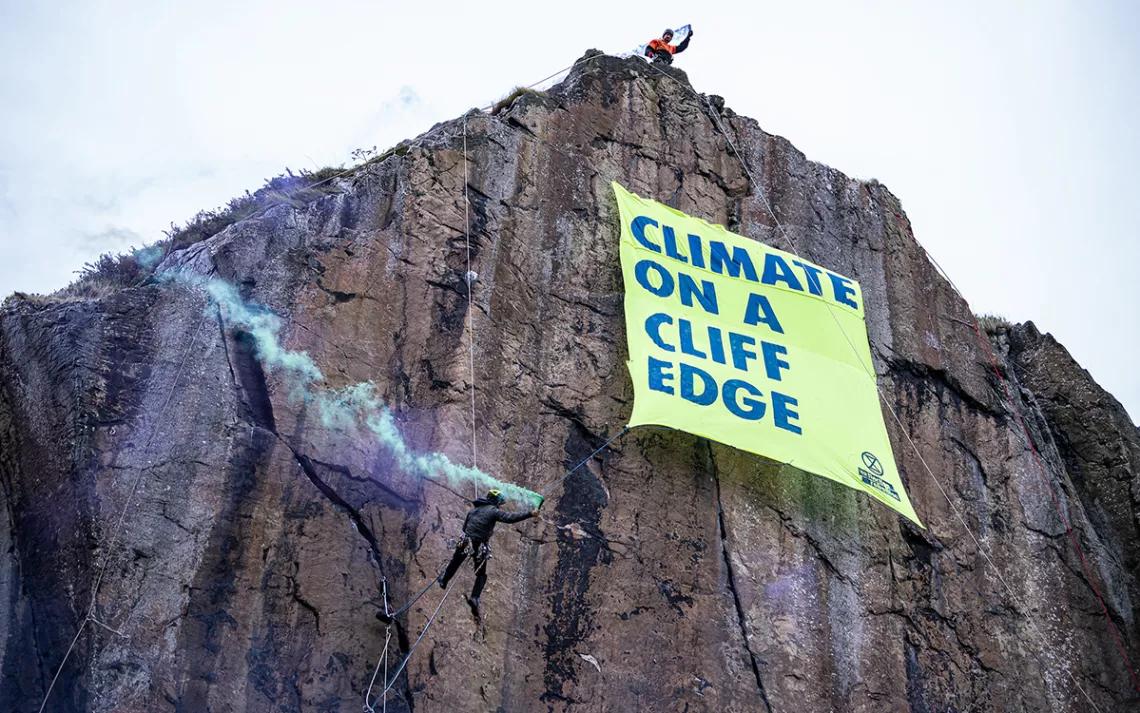
    Experienced climbers scale a rock face near the historic Dumbarton castle in Glasgow, releasing a banner that reads “Climate on a Cliff Edge.” One activist, dressed as a globe, symbolically looms near the edge, while another plays the bagpipes on the shores below. | Photo courtesy of Extinction Rebellion and Mark Richards
    Experienced climbers scale a rock face near the historic Dumbarton castle in Glasgow, releasing a banner that reads “Climate on a Cliff Edge.” One activist, dressed as a globe, symbolically looms near the edge, while another plays the bagpipes on the shores below. | Photo courtesy of Extinction Rebellion and Mark Richards

    Natural Disaster Expert: Elites Have NO PLAN for Climate Collapse. Aaron Bastani meets Bill McGuire

  • ‘Declare a Worldwide Climate Emergency’: Death Toll in Nepal-Tibet Floods Tops 1,000

    Spread the love

    Article by Jessica Corbettrepublished from Common Dreams under Creative Commons (CC BY-NC-ND 3.0).

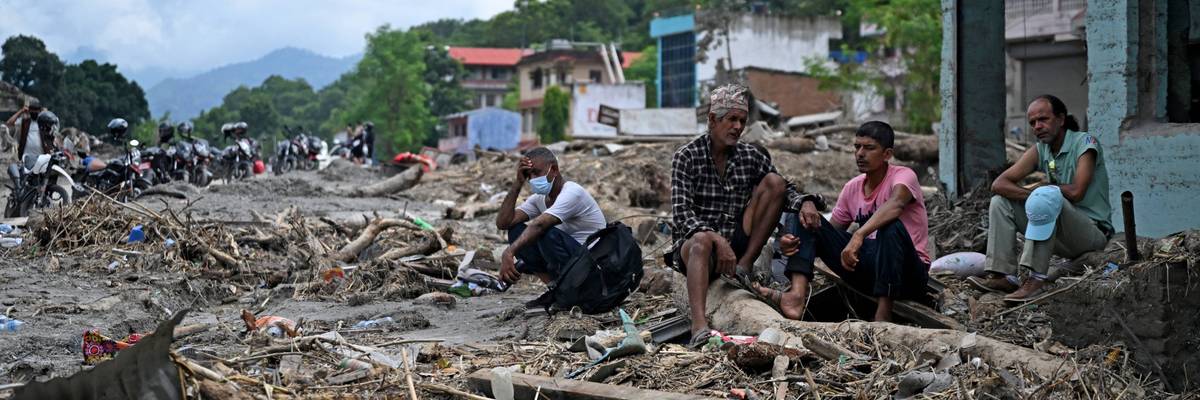
    Residents sit beside debris following flash floods in Devighat, in Nepal’s Nuwakot district, on August 31, 2026. (Photo by Arun Sankar/AFP via Getty Images)

    “The glacial collapse and deluge,” one scientist said, “was the structural failure of a mountain itself, nature’s latest commentary on the deadly consequences of human-caused planetary warming.”

    With more than 1,000 people dead as of Tuesday and rescue teams still searching for the thousands missing after a glacial collapse in the Himalayas that created a flooding crisis in Nepal and Tibet last week, campaigners, politicians, and scientists reiterated the need for global climate action.

    China confirmed at least 16 people are dead and 546 are missing in Tibet, including 261 foreign nationals, while Nepal reported 1,003 deaths and 3,916 more unaccounted for, including 583 foreigners, according to The Associated Press. Among those missing in Nepal are about 900 workers from a dozen hydropower projects, 500 of whom are believed to be trapped in tunnels.

    RECOMMENDED…

    A flash flood and mudslide swept through Nepal's Rasuwa district along the border with Tibet

    With 350+ Dead and 1,300 Missing, Nepal Carnage Seen as Climate Disaster

    US-POLITICS-VOTE-TEXAS

    Talarico Protests as Texas Swing County Plans to Close 92 Polling Places

    Thousands have been rescued since last Wednesday, and as the AP noted, “authorities in Nepal have been burying bodies in temporary graves until they can be identified. They are preserving DNA samples, photographing distinguishing facial features, and recording other identifying details. Each body is assigned a reference number to help families identify and claim the remains later.”

    Nepali Prime Minister Balendra Shah has emphasized in recent days that “the flood in the Bhote Koshi River in Rasuwa was not an ordinary flood,” and “it is now time for us to strongly raise with the international community the issue of the disasters we are experiencing as a result of climate change.”

    In a Monday interview with The New York Times, Maheshwar Dhakal from Nepal’s Ministry of Agriculture, Forest, and Environment also linked the disaster to human-caused climate change and said that “those who have contributed the least are suffering the most.”

    Dhakal estimated the recovery cost at $5 billion, and shared his government’s letter to the United Nations’ fund for such disasters, which says in part that “early action in Nepal would send a signal that the fund is capable of responding with humanity, speed, flexibility, and solidarity when climate-vulnerable countries face losses and damages beyond their capacity to address alone.”

    Declare a world-wide #climate emergency www.nytimes.com/live/2026/08… #nepal #floods #flooding

    — Nikolas Kozloff (@nikolaskozloff.bsky.social) 2026-08-27T20:29:42.867Z

    Stefan Rahmstorf, a scientist at the Potsdam Institute for Climate Impact Research in Germany, highlighted on social media Tuesday that experts have long warned about the kinds of disasters seen in the Himalayas over the past week.

    “Why are climate scientists not surprised about mountains being destabilized by glacier melt and permafrost thaw?” he asked. “Because they have long predicted that as a result of global heating.”

    Bill McGuire, professor emeritus of geophysical and climate hazards at University College London, wrote in a Tuesday column for The Guardian that “the increasingly temperamental behavior of the Earth beneath our feet teaches us that global heating is all-pervasive. It will intrude into every aspect of our lives and livelihoods, and leave no part of the planet untouched. As the world processes the horror of the events in Nepal and Tibet, it is a lesson that we ignore at our peril.”

    Also writing for the British newspaper on Tuesday, Michael Mann, a renowned climate scientist at the University of Pennsylvania, similarly stressed that “the glacial collapse and deluge in Nepal and Tibet was not a freak weather event; it was the structural failure of a mountain itself, nature’s latest commentary on the deadly consequences of human-caused planetary warming. And it was the exclamation point on a summer of extremes, illustrating with a sole unnatural disaster the apocalyptic future that lies in store if we fail to take dramatic climate action.”

    Mann pointed to the lack of such action in the United States—the world’s largest historical climate polluter—where President Donald Trump openly courted Big Oil on the campaign trail and has served the climate-wrecking fossil fuel industry’s interests since returning to the White House last year, from declaring a national energy emergency and ditching the Paris Agreement, again, to waging a war on renewable power projects.

    “Trump and enabling congressional Republicans continue to double down on policies favoring fossil fuel extraction and dependence at the very time we need to be moving even more quickly away from fossil fuels toward clean energy,” Mann wrote. “These extreme events underscore the urgency of taking action now, and—while there are many things we can do—one of the greatest opportunities Americans will have to affect climate policy is the upcoming midterm election. You can make support for urgent and dramatic climate action a litmus test issue as you go to the voting booth.”

    Highlighting that dozens of Americans are among those still missing in Asia, the US-based watchdog group Public Citizen argued on social media Tuesday that “this isn’t just a climate change catastrophe. It’s a crime. For decades, Big Oil knew fossil fuels would lead to disasters like this. Big Oil must be held accountable.”

    In 2024, the group published a legal memo detailing how local or state prosecutors in the United States could bring criminal charges against Big Oil for deaths from extreme heat made more likely by the fossil fuel-driven climate emergency. With rapidly advancing attribution science, the approach could also be applied to other disasters linked to the human-caused crisis.

    Greenpeace International also demanded accountability for the industry on Tuesday, saying that “it makes us SICK to think of people losing their homes, their livelihoods, and the people they love to fires, floods and storms, while fossil fuel companies make billions. A FRACTION of those obscene profits could help communities rebuild. MAKE POLLUTERS PAY.”

    “Make oil, coal, and gas corporations pay their fair share for the damage they cause,” the advocacy group added. “Introduce new taxes or fines on them to help communities at home and around the world rebuild from climate disasters and invest in climate solutions.”

    Article by Jessica Corbettrepublished from Common Dreams under Creative Commons (CC BY-NC-ND 3.0).
    Donald Trump urges you to be a Climate Science denier like him. He says that he makes millions and millions for destroying the planet, Burn, Baby, Burn and Flood, Baby, Flood.
    Donald Trump urges you to be a Climate Science denier like him. He says that he makes millions and millions for destroying the planet, Burn, Baby, Burn and Flood, Baby, Flood.
    Nigel Farage urges you to ignore facts and reality and be a climate science denier like him and his Deputy Richard Tice. He says that Reform UK has received £Millions and £Millions from the fossil fuel industry to promote climate denial and destroy the planet.
    Nigel Farage urges you to ignore facts and reality and be a climate science denier like him and his Deputy Richard Tice. He says that Reform UK has received £Millions and £Millions from the fossil fuel industry to promote climate denial and destroy the planet.
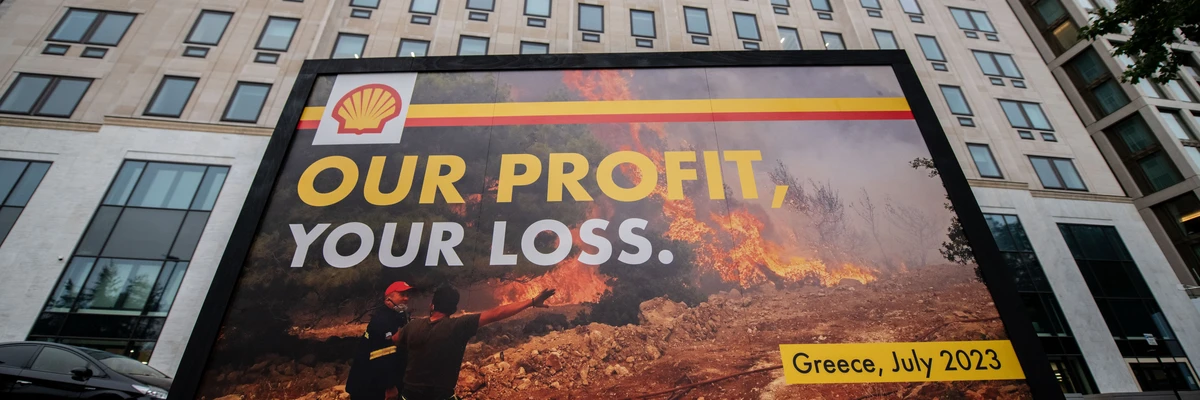
    Greenpeace activists display a billboard during a protest outside Shell headquarters on July 27, 2023 in London.
    Greenpeace activists display a billboard during a protest outside Shell headquarters on July 27, 2023 in London. (Photo: Handout/Chris J. Ratcliffe for Greenpeace via Getty Images)

    Natural Disaster Expert: Elites Have NO PLAN for Climate Collapse. Aaron Bastani meets Bill McGuire

  • Nepal‑Tibet disaster linked to climate change – a glaciologist explains

    Spread the love
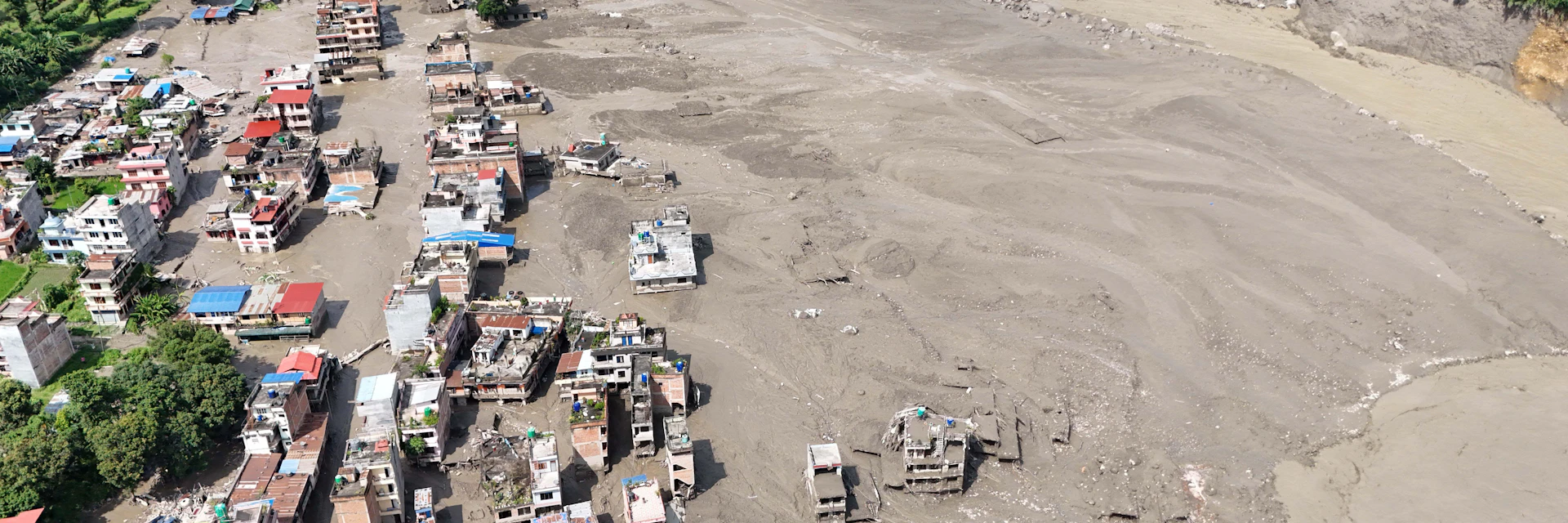
    A flash flood triggered by an avalanche of ice and rock near Nepal’s border with Tibet has caused hundreds of deaths and massive destruction. Sopa/Alamy

    Jonathan Bamber, University of Bristol

    The cause of the huge floods and debris flow on the border between Nepal and Tibet, which has caused hundreds of deaths, appears to have been an ice avalanche – the result of a huge piece of a glacier collapsing and cascading down the mountain more than 1,000 metres to the valley floor. The Conversation asked Jonathan Bamber, a professor of glaciology at the University of Bristol, about the risks of glaciers melting faster than ever.

    Is this region particularly at risk from glacier melt?

    The greater Himalayan region, called High Mountains Asia (HMA), is often referred to as the third pole because it contains more glacier ice than anywhere outside the polar regions. Many of those glaciers lie along the northern border of Nepal and China, forming an east-west arc of the Himalayas. Tibet is an autonomous region of China.

    Eight of the 14 peaks above 8,000m lie in Nepal. Its northern half is extremely mountainous and precipitous, making it susceptible to landslides, rockfalls and glacier-related hazards such as glacial lake outburst floods and ice cliff collapses. When glaciers flow over steep bedrock slopes, the ice fractures into what are called seracs: ice cliffs that are inherently unstable and break off from time to time.

    Are glaciers melting more quickly now?

    It should come as no surprise that in a warming world, ice melts faster. Since the start of the industrial revolution, typically taken to be 1850, the world has warmed by 1.4°C.

    A shot from above of an ice dammed lake in the Himalayas.
    An ice-dammed lake. Author’s own, CC BY

    However, that warming is a global average and there are large regional variations. The Arctic has warmed by more than double that amount, and the Himalayan region has also warmed by more than the global average . The rate of warming has accelerated significantly over about the last four decades. As a consequence, glaciers around the world have been melting faster.

    The most comprehensive assessment of glacier melting (called glacier mass balance) combines satellite observations with ground-based data to reconstruct melt rates from 1976-2024. They find that the rate is greater for the most recent decade compared with the long-term mean for every region except Iceland. For the HMA, the increase is about 25%. For the European Alps, it is more than double.

    What are the consequences?

    When glaciers melt, the primary consequence is the release of meltwater that flows, seasonally, into meltstreams which then feed into larger river systems. However, the glaciers lie on permafrost: ground that is permanently frozen to some depth. As this permafrost warms and thaws, the rock, ice and mud become unstable, resulting in rockfalls and destabilisation of ice in steep terrain.

    In the case of the Nepal-Tibet disaster, imagine a block of ice some 600m wide and about 50m thick collapsing. That represents around half a million tons of ice crashing into the valley.

    Serac collapses are more common during warmer periods, when surface melting weakens the ice. That is why mountaineers try to pass serac barriers at night or in the early morning, before the sun has warmed them.

    A further consequence of glacier melt is the formation of lakes dammed by ice or moraines (debris left behind by glacier melt) at the glacier front. These lakes form glacial lake outburst floods that occur when the dam fails. Many trails in Nepal and India carry warning signs for these.

    Floods in Nepal have caused hundreds of deaths.

    What else should nations be doing?

    Increased glacier melting is one of many consequences of living in a warming world. The unprecedented wildfires across Spain and France, the heatwaves across Europe, more intense and common droughts are all consequences of a climate system that is out of equilibrium. The UK declared a climate emergency in 2019, as has the EU and a number of other states.

    Progress has been made in reducing our dependency on carbon-intensive fossil fuels, but emissions are still increasing. One definition of an emergency is an existential threat that requires immediate action. Not enough has been done to tackle this yet, despite the encouraging words from many governments and states.

    We have the know-how and technology to address the climate crisis. What is lacking is the political will and vision. If this is not forthcoming, melting glaciers are just one aspect of this human-made climate crisis, and the consequences will be devastating.

    Jonathan Bamber, Professor of Glaciology and Earth Observation, University of Bristol

    This article is republished from The Conversation under a Creative Commons license. Read the original article.

    Donald Trump urges you to be a Climate Science denier like him. He says that he makes millions and millions for destroying the planet, Burn, Baby, Burn and Flood, Baby, Flood.
    Donald Trump urges you to be a Climate Science denier like him. He says that he makes millions and millions for destroying the planet, Burn, Baby, Burn and Flood, Baby, Flood.

    Natural Disaster Expert: Elites Have NO PLAN for Climate Collapse. Aaron Bastani meets Bill McGuire

  • UN urges action to reverse 1.5°C overshoot

    Spread the love

    https://www.euractiv.com/news/un-urges-action-to-reverse-1-5c-overshoot

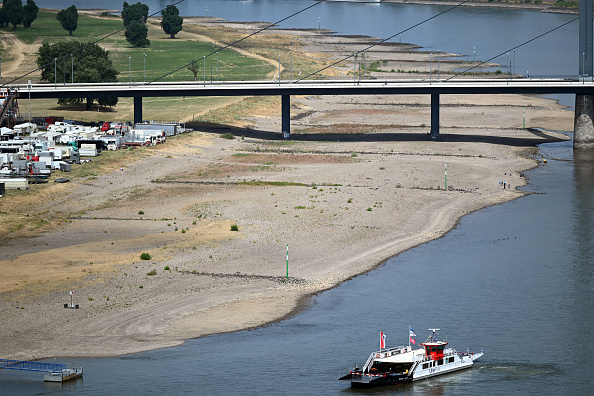
    [Photo by Federico Gambarini/picture alliance via Getty Images]

    World must slash emissions to limit irreversible climate damage

    The world must rapidly change course as it drifts beyond the global warming limit of 1.5°C above pre-industrial temperatures, the United Nations Environment Programme (UNEP) has warned in a new report.

    The UN and climate scientists have already conceded that the red line agreed in Paris over a decade ago will be crossed. The three-year average last year exceeded the limit agreed in Paris in 2015, many are betting on 2026 being among the hottest years ever, and 2027 looks set to be hotter still.

    “We must make the overshoot as small and short as possible,” UN Secretary-General António Guterres said in a statement ahead of the report’s publication on Wednesday. This means “limiting how high temperatures rise and how long they remain above 1.5°C,” he said.

    At a time of growing political resistance to climate action, Guterres called for an “overshoot of ambition” that would include a faster phase-out of fossil fuels and sharp cuts to methane emissions.

    …

    Continues at https://www.euractiv.com/news/un-urges-action-to-reverse-1-5c-overshoot

    Nigel Farage urges you to ignore facts and reality and be a climate science denier like him and his Deputy Richard Tice. He says that Reform UK has received £Millions and £Millions from the fossil fuel industry to promote climate denial and destroy the planet.
    Nigel Farage urges you to ignore facts and reality and be a climate science denier like him and his Deputy Richard Tice. He says that Reform UK has received £Millions and £Millions from the fossil fuel industry to promote climate denial and destroy the planet.
    Donald Trump urges you to be a Climate Science denier like him. He says that he makes millions and millions for destroying the planet, Burn, Baby, Burn and Flood, Baby, Flood.
    Donald Trump urges you to be a Climate Science denier like him. He says that he makes millions and millions for destroying the planet, Burn, Baby, Burn and Flood, Baby, Flood.
    Orcas discuss how Trump was re-elected and him being an obviously insane, xenophobic Fascist.
    Orcas discuss how Trump was re-elected and him being an obviously insane, xenophobic Fascist.

  • Summer of 2026 was UK’s hottest on record, Met Office says

    Spread the love

    https://www.theguardian.com/uk-news/2026/sep/01/summer-2026-uk-hottest-on-record-provisional-met-office-data

    A person using an electric fan to cool down on the underground in London. Education, health services and transport all suffered in the heat. Photograph: Tolga Akmen/EPA

    Meteorologists say mean average temperature of 16.5C was made 130 times more likely by climate crisis

    This year’s summer was the UK’s hottest on record, according to provisional data, and the Met Office said the season’s mean temperature was made 130 times more likely by the climate crisis.

    Record-breaking and back-to-back heatwaves have scorched much of Europe. In England, temperatures peaked at 38.1C (100.1F) at Kew Gardens in London on 13 August, and June had already been confirmed as the country’s hottest since records began in 1884. Scientists have said these heatwaves are only possible because of the climate crisis driven by burning fossil fuels.

    The Met Office said an average mean UK temperature of 16.5C made this summer provisionally the warmest on record as well as the warmest season in a series going back to 1884. England, Wales and Northern Ireland broke their respective mean temperature records for summer while Scotland recorded its joint sixth hottest summer.

    This is the second year in a row that temperature records have been broken, with 2025 and 2026 both the warmest UK summers since records began.

    The infamous summer of 1976 is now the seventh warmest on record in terms of mean temperature.

    …

    Article continues at https://www.theguardian.com/uk-news/2026/sep/01/summer-2026-uk-hottest-on-record-provisional-met-office-data

    Donald Trump urges you to be a Climate Science denier like him. He says that he makes millions and millions for destroying the planet, Burn, Baby, Burn and Flood, Baby, Flood.
    Donald Trump urges you to be a Climate Science denier like him. He says that he makes millions and millions for destroying the planet, Burn, Baby, Burn and Flood, Baby, Flood.
    Nigel Farage urges you to ignore facts and reality and be a climate science denier like him and his Deputy Richard Tice. He says that Reform UK has received £Millions and £Millions from the fossil fuel industry to promote climate denial and destroy the planet.
    Nigel Farage urges you to ignore facts and reality and be a climate science denier like him and his Deputy Richard Tice. He says that Reform UK has received £Millions and £Millions from the fossil fuel industry to promote climate denial and destroy the planet.
    Orcas comment on killer apes destroying the planet by continuing to burn fossil fuels.
    Orcas comment on killer apes destroying the planet by continuing to burn fossil fuels.