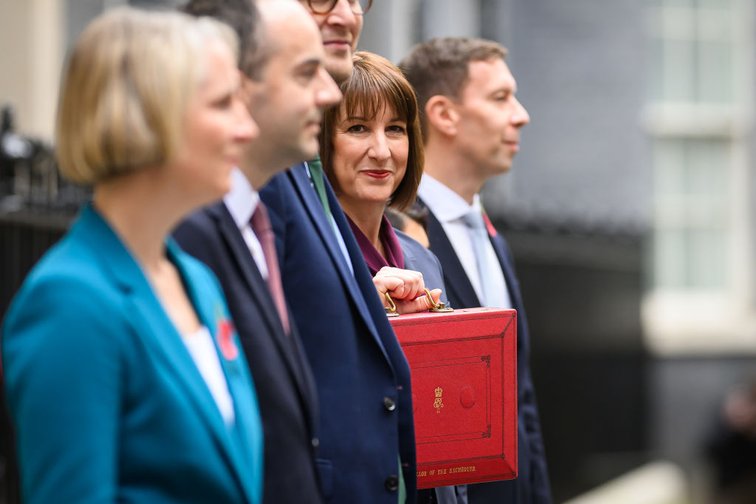
The Prime Minister is facing a growing internal backlash from Labour MPs after Treasury sources indicated Rachel Reeves is likely to give her backing for the proposed Rosebank development (Image: PA/Henry Nicholls)
WESTMINSTER politicians are reportedly at “breaking point” with Keir Starmer over the potential of approving a new oil and gas field in the North Sea.
The Prime Minister is facing a growing internal backlash from Labour MPs after Treasury sources indicated Rachel Reeves is likely to give her backing for the proposed Rosebank development.
MPs have reportedly called for Starmer to reiterate his own commitments to no further oil and gas licences.
Last week a judge ruled the Rosebank development, which was given the green light by the previous Tory administration, as unlawful following a legal challenge brought by Greenpeace and Uplift.
Previously the energy secretary, Ed Miliband, described the licence issued to Rosebank as “climate vandalism”.
Reeves is reportedly supportive of a new application for environmental consent for the North Sea development, despite Labour’s manifesto promising not to issue any new exploration licences.
MPs who are concerned about the climate emergency are reported to be likely to make their appeals directly to Keir Starmer about the importance of being seen to stand by the party’s manifesto commitment of no new oil and gas licences.
The Treasury is at the centre of a move to refocus the government’s agenda on ‘growth at all costs’ | Leon Neal/Getty Images
Exclusive: Government is inviting lobbyists and their clients to play a major role in the deregulatory agenda
“Growth comes from business, not the government.”
That was the message a government minister delivered to hundreds of corporate lobbyists, including those representing banks, arms companies and pharmaceuticals, during a webinar this morning.
Lord Livermore, the financial secretary to the Treasury, made the comments at the online event, which was the first in a series aimed at encouraging lobbyists to play a major role in the government’s ‘growth at all costs’ agenda.
In the call, which openDemocracy attended, Livermore made clear that Number 10 sees this agenda as being driven by corporations, while the government is a secondary actor that “work[s] in partnership with business”.
Also present among the 700 attendees were lobbyists representing tech firms, energy giants and consultancies, and those working for agencies including Hanbury, Headland, Lexington, Brunswick, Cavendish and Grayling.
These people and their clients are a “huge and important part” of the government’s plans, Livermore said, stressing that ministers are “really keen to draw on… the expertise that exists within your organisations and your clients”.
He added that the government’s focus is on getting rid of “stifling regulation that has for too long held business back” and “removing barriers to growth that we, in partnership with business, identify”.
The treasury minister also discussed Great British Energy’s role in “derisking investment” and providing capital for public-private partnerships, to make renewable infrastructure investment more attractive to the market.
While the government has been unapologetic about its outreach to business as a means to drive growth, Labour’s critics say an ever-closer relationship with lobbyists only heightens the impression of a government that does not have an agenda of its own.
Speaking to openDemocracy after the call, Green Party deputy leader Zack Polanski said: “With inequality rife, the government should be listening to the people who keep our country running and those suffering, not hosting desperate mass Zoom calls with arms dealers and oil giants.”
Cutting red tape
Setting out the government’s priorities, Livermore put a particular focus on achieving major reform to the planning system to encourage more commercial and infrastructure projects, and getting rid of regulations that “stand in the way of businesses investing”.
Livermore talked up the recent ousting of the head of the competitions regulator and his replacement with a former Amazon executive as evidence that the government is taking seriously its deregulatory agenda.
He also mentioned the recent push for regulators to submit proposals for growth and said Labour’s National Wealth Fund will “help catalyse private investment into sectors where at the moment, perhaps there’s a too high degree of risk”.
“We can use the National Wealth Fund to help derisk some of those investments,” said the minister. Economists describe this process as the state stepping in to improve the private returns on infrastructure assets.
Livermore continued that the fund could be used to “guide investments, particularly into the kind of clean energy investments of the future that we want to see”.
The government-lobbyist calls are being led by a new partnerships team in No 10 fronted by James Carroll, who has previously worked for the party on external relations and business engagement.
Also on the call was a senior executive at Anacta UK, described by The Times as the “first Starmerite lobbying firm”, and a banking lobbyist who is also involved in the running of Labour in the City, a group which convenes Labour supporters who work in financial services.
Lobbyists were able to submit questions during the call. One criticised “some parts of the business community” which have been “vocally critical about the government’s handling of the economy so far,” describing it as “unhelpful”.
They then asked: “How can firms who don’t want to talk down the UK but would rather promote a more positive narrative about the many opportunities open to British businesses best work with the government to do so?”
This prompted Carroll to quip: “I promise I haven’t planted that question.”
Carroll then rounded out the call by reiterating the importance the government places on developing this relationship with lobbyists.
“Just to emphasise,” he said, “your clients [and] your expertise is critical to delivering these ambitious national missions the prime minister has set out and the chancellor reiterated this week.”
Polanski, the Green’s deputy leader, said the plans to derisk investment “amounts to privatising the rewards and socialising the risks”.
He added: “Regulation exists for a reason, Grenfell stands as a towering reminder of lives lost and the total failure of standards.
“This isn’t growth for the many, just more wealth for the super-rich while the rest of us are told to look up at their private jets and wait for the trickle down.”
The chancellor is under fire after a study cited as evidence for expanding the terminal to boost the UK’s economic growth was ordered by Heathrow itself
Rachel Reeves was facing criticism on Saturday night as it was confirmed that a report she cited as evidence that a third runway at Heathrow would boost the UK economy was commissioned by the airport itself.
Experts and green groups also challenged Reeves’s view that advances in the production of sustainable aviation fuel (SAF) had been a “gamechanger” that would substantially limit the environmental damage of flying, saying the claims were overblown and did not stand up to scrutiny.
…
Alex Chapman, senior economist at the NEF, said: “It is very concerning that the chancellor appears to be basing her support for Heathrow expansion on a figure from a report commissioned by Heathrow airport.
“Even more worrying is the fact that the methodology they have applied is one that the Department for Transport has previously decided is not fit for purpose, and that the report uses forecast data supplied by the airport itself.
“Heathrow expansion represents a major threat to the UK’s climate goals and flies in the face of scientific advice. To ensure that the claimed economic benefits are concrete, assessments should be carried out by independent government economists following best-practice methodology.
“NEF’s analysis has identified a wide range of weaknesses in the economic case, which have emerged since it was last fully appraised in 2015. Not least, the decline of business air travel, the surge in outbound leisure travel and the negative impacts on wider regions of the UK – all of which erode the potential growth benefit.”
Analysis by climate crisis website Carbon Brief suggests that, using the government’s own figures, SAF will barely cut emissions by 2040, and any reduction will be wiped out by rising flight numbers.
[Guardian] Exclusive: MPs and ministers say they would oppose Starmer if he tries to approve Rosebank development
Senior Labour figures are warning of a serious fight if Keir Starmer tries to give the go-ahead to a giant new oilfield off Shetland later this year.
MPs and ministers have told the Guardian they are prepared to oppose the UK prime minister should he try and give final consent to the Rosebank development, which is Britain’s biggest untapped oilfield.
Many in the party see the battle over Rosebank as the next front in the struggle between its environmental wing and those around Rachel Reeves who want to push for economic growth above all else. The chancellor signalled her support for a third runway at Heathrow this week as part of the government’s latest push to stimulate the economy.
One ally of the energy secretary, Ed Miliband, who is leading the government’s climate agenda, said the former Labour leader would have a “punchy” response for any attempt to give consent to Rosebank. The ally said: “Ed will come to that fight armed with a lot of evidence about what Rosebank will do to our carbon emissions.”