Failing UK anti-pollution scheme needs ‘complete rethink’, experts say

Spread the love

Original article by Adam Ramsay republished from OpenDemocracy under a Creative Commons Attribution-NonCommercial 4.0 International licence.
Government accused of ‘deliberately undermining’ green policies after slashing financial penalties for big polluters

Scientists and campaigners have slammed the government’s decision to hand unexpectedly large subsidies to the biggest polluters – making it far cheaper to pollute in the UK than in the EU.

The Emissions Trading Scheme (ETS) requires major polluters to have a ‘permit’ for each tonne of CO2 they emit. They are given some for free but have to buy more on the open market – receiving fewer free ones every year to encourage them to slash their emissions.

But the government has quietly announced changes to the scheme that will see polluting industries given far more free permits than anticipated, according to a new report in the Financial Times.

The move means emitting a tonne of carbon in the UK now costs big polluters just £47, compared to £75 in the EU. It comes weeks after openDemocracy revealed the government gave free permits to a controversial Russian cargo airline the day after Russia’s full-scale invasion of Ukraine.

Leo Murray, an expert in emissions trading, told openDemocracy that the decision to slash the cost of polluting “should trigger a complete rethink of the entire scheme”, which he branded “the worst possible way to price carbon in our economy”.

The ETS, which replaced a similar EU scheme after Brexit, has been beset with difficulties. openDemocracy’s previous investigations have found that some of the biggest polluters were handed vast de-facto subsidies under the scheme, while others – including highly polluting incineration firms and owners of private jets – were exempt entirely.

Over-allocating permits can only be read as a deliberate move to undermine the shift away from fossil fuels

Leo Murray, We Are Possible

Murray, who is the director of the environmental campaign group We Are Possible, said: “It is so telling that the UK can’t even let the most market-friendly climate policy approach in the whole toolbox do its work without deliberately intervening to make sure it is totally ineffective at reducing emissions.

“Over-allocation of permits was the biggest reason why the EU ETS, which our own scheme is a pale shadow of, failed to reduce emissions for most of the first phases of its existence, so repeating this mistake can only be read as a deliberate move to undermine the economy-wide shift away from fossil fuels.”

Murray’s frustration was echoed by Natalie Bennett, a Green Party member of the House of Lords, who said: “We heard much talk, during the [Brexit] referendum campaign and subsequently, of a so-called ‘Green Brexit’… The hollowness of that claim, the reality that we could – and do – have far lower environmental and climate standards is today being driven home with great force.

Bennett continued: “The EU is continuing to – if not quickly enough – advance in climate action and on the protection of nature and human health, while the UK falls further and further behind.”

The EU is continuing to advance in climate action, while the UK falls further and further behind

Natalie Bennett, Green Party

Aaron Thierry, a climate expert at Cardiff University, added that the government’s decision to cut the cost of polluting shows that “the UK is continuing to backslide on its climate pledges”.

He added: “That this is happening even as we see extreme temperatures around the world topple all-time records, with southern Europe’s grain harvest down 60%, India forced to ban rice exports and fires around the Mediterranean, is an absolute scandal. Rishi Sunak is a danger to us all.”

Earlier this month, thousands of openDemocracy readers wrote to their MP to call on the government to stop giving away free pollution permits to big polluters. You can join them here, or sign our open letter to the government here.

Original article by Adam Ramsay republished from OpenDemocracy under a Creative Commons Attribution-NonCommercial 4.0 International licence.

Continue ReadingFailing UK anti-pollution scheme needs ‘complete rethink’, experts say

World cannot meet climate targets relying on carbon capture and storage

Spread the love

[Hopefully globalwitness will not mind me quoting them at length. Rishi Sunak’s UK government has been promoting CCS recently.]

https://www.globalwitness.org/en/campaigns/fossil-gas/world-cannot-meet-climate-targets-relying-carbon-capture-and-storage/

Fossil fuels

United Kingdom

Unable to ignore the catastrophic emissions produced by burning fossil fuels, the fossil fuel industry has turned to carbon capture and storage (CCS) as a solution that allows them to carry on business as usual.

But with serious concerns about this unproven technology, Global Witness and Friends of the Earth Scotland have commissioned world-renowned climate scientists at the Tyndall Centre in Manchester to assess the role of fossil fuel-based Carbon Capture and Storage (CCS) in the energy system, and its ability to help to achieve the Paris Agreement goal of limiting global average temperature increases to 1.5°C.

This ground-breaking research finds that CCS cannot be relied on to deliver global 2030 emissions reductions, whilst the majority of CCS that exists is being used to extract more oil. It finds:

Current status of fossil fuel-based CCS in the energy system

  • The scale of deployment of CCS to date is significantly less than proponents have predicted, with only 26 CCS plants currently in operation globally.
  • Global operational CCS capacity is currently 39MtCO2 per year, this is about 0.1% of annual global emissions from fossil fuels and less than Scotland’s territorial emissions in 2018.There is no operational CCS capacity in the UK or the EU at all.
  • 81% of carbon captured to date has been used to extract more oil via the process of Enhanced Oil Recovery (EOR). This means CCS is being predominantly used for carbon-emitting oil extraction that wouldn’t have otherwise been possible.
  • Current CCS projects usually target 90% capture at peak capacity. The Petra Nova facility missed capture targets by around 17% between starting in 2017 and its mothballing in May 2020.

Key implications for delivering Paris Agreement goal to limit warming to 1.5°C

  • Fossil fuel-based CCS is not capable of operating with zero emissions. Many projections assume a capture rate for CCS of 95%, however, capture rates at that level are unproven in practice.
  • Fossil fuel-based CCS will continue to entail residual, process and supply chain greenhouse gas emissions. There must be consideration of whether fossil fuel hydrogen with CCS is sufficiently low-carbon relative to remaining carbon budgets.
  • Even if the technology is to become economically and technically viable at scale, optimistic forecasts do not anticipate significant CCS capacity until at least the 2030s.
  • A focus on CCS will not help achieve 2030 CO2 emission reduction targets being adopted by Governments, which have to be met if we are to prevent a climate catastrophe. The research emphasises the real danger of reliance on CCS in energy for delivering these vital emission reductions, given they cannot be expected to any degree until at least 2030.

On the basis of this research, Friends of the Earth Scotland and Global Witness believe the promotion of CCS in energy is a distraction from the rapid growth of renewable energy and energy efficiency required. We urge instead reliance on technologies that can deliver the emissions reductions required by 2030 if we are to deliver on the Paris Agreement goals.

Download a summary brief of the report produced by Global Witness and Friends of the Earth Scotland: Downloads

The full report is available to download from the Tyndall Centre website and below.

Full Report: A Review of the Role of Fossil Fuel Based Carbon Capture and Storage in the Energy System

https://www.globalwitness.org/en/campaigns/fossil-gas/world-cannot-meet-climate-targets-relying-carbon-capture-and-storage/

Continue ReadingWorld cannot meet climate targets relying on carbon capture and storage

Climate chaos – with the UK government wilfully looking the other way

Spread the love

https://morningstaronline.co.uk/article/f/climate-emergency-wilfully-looking-other-way

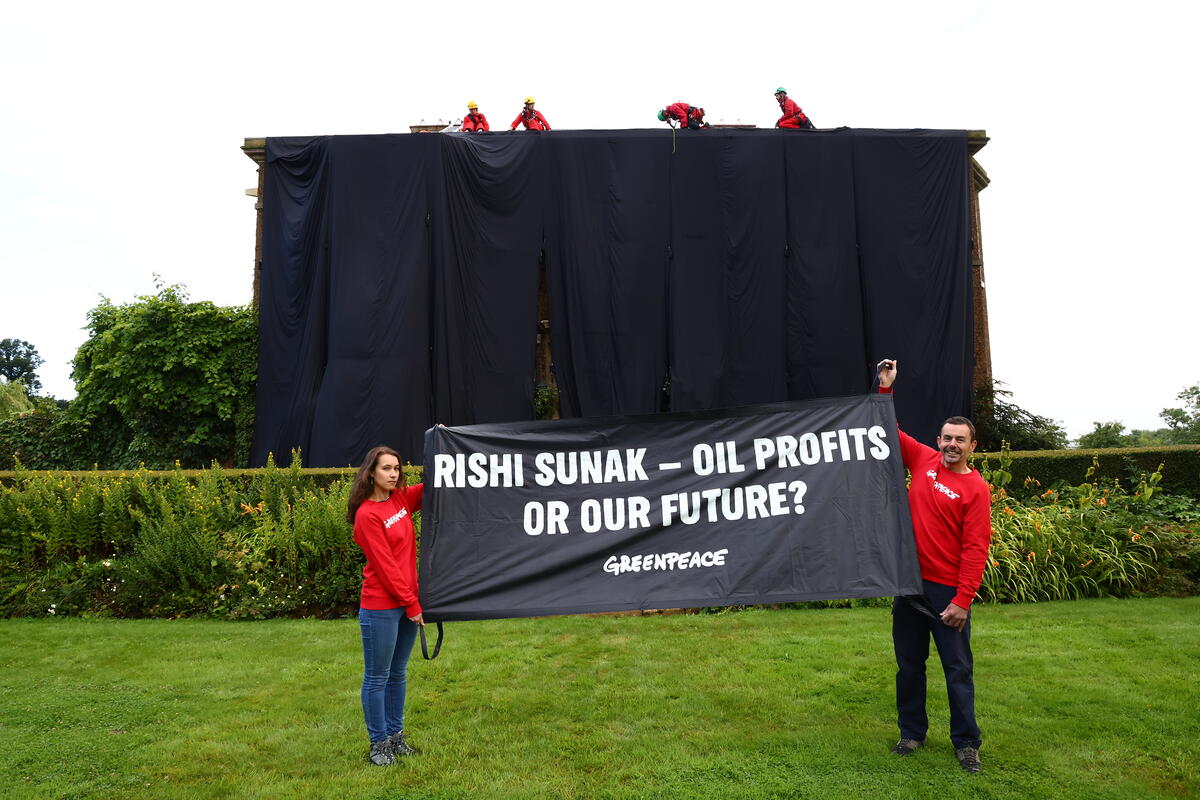
Greenpeace cover Rishi Sunak's home in black oily fabric in protests at Sunak's intended huge expansion of North Sea fossil fuel exploration.
Greenpeace cover Rishi Sunak’s home in black oily fabric in protests at Sunak’s intended huge expansion of North Sea fossil fuel exploration. Image © Greenpeace.

The British government’s current policies are about as far from being consistent with Britain’s net zero plan as it is possible to be, argues RICHARD HEBBERT

Last week Sunak announced that his government is granting over 100 new licences for oil and gas exploration in the North Sea, claiming in a peculiarly Orwellian statement that to do so is “consistent with the UK’s net zero plan.”

It isn’t. How could it possibly be?

Nor should we forget that the Tory government has approved the opening of a new coalmine in Cumbria and effectively banned on-shore windfarms — one of the quickest, cheapest and cleanest forms of renewable energy.

The British government cannot be ignorant of the manifest signs that the Earth’s climate is racing towards catastrophe, even quicker than has been previously forecast and yet it wilfully looks the other way.

https://morningstaronline.co.uk/article/f/climate-emergency-wilfully-looking-other-way

Continue ReadingClimate chaos – with the UK government wilfully looking the other way

‘Terrifying’: Scientists Raise Alarm Over Unprecedented Global Ocean Heat

Spread the love
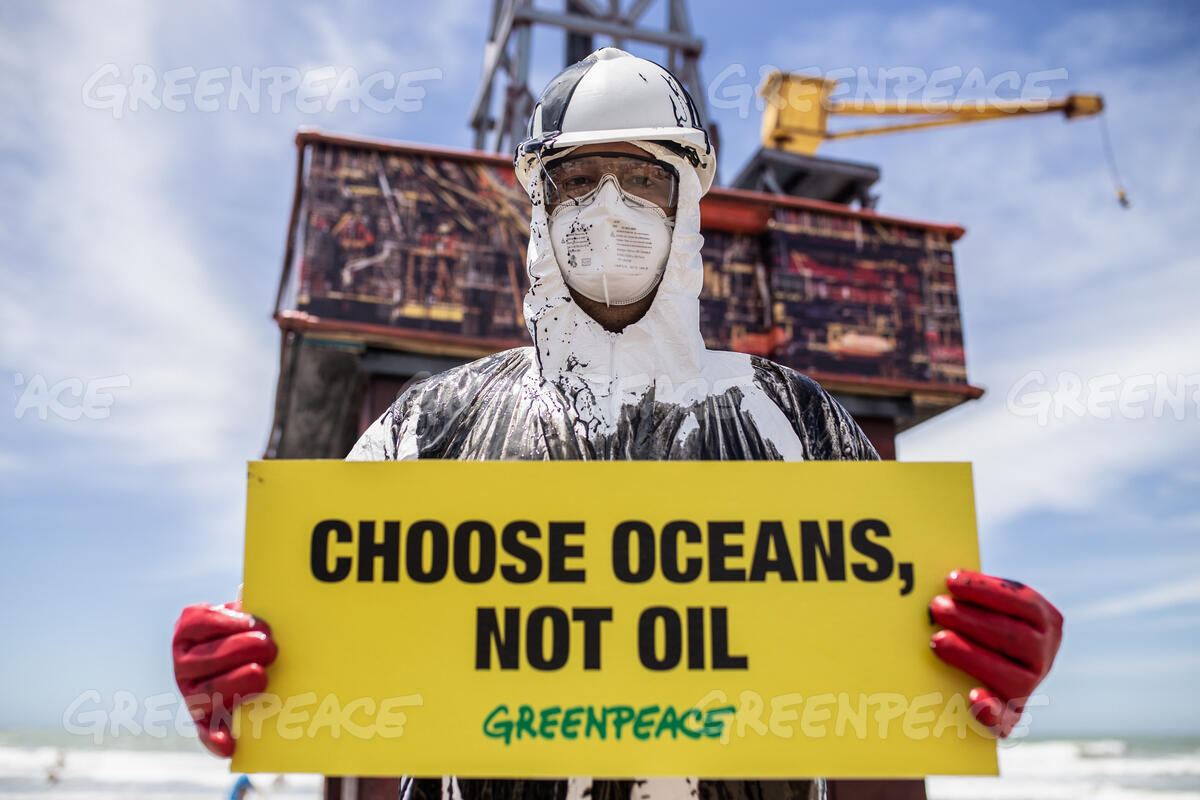
Greenpeace image, sign reads CHOOSE OCEANS, NOT OIL

Original article by JULIA CONLEY republished from Common Dreams under Creative Commons (CC BY-NC-ND 3.0).

The global average ocean surface temperature is expected to rise even further in the coming months as El Niño strengthens.

Climate scientists on Friday said the rapidly rising temperature of the planet’s oceans is cause for major concern, particularly as policymakers in the top fossil fuel emissions-producing countries show no sign of ending planet-heating oil and gas extraction.

The European Union’s climate agency, Copernicus Climate Change Service, reported this week that the average daily global ocean surface temperature across the planet reached 20.96°C (69.7°F), breaking the record of 20.95°C that was previously set in 2016.

The record set in 2016 was reported during an El Niño event, a naturally occurring phenomenon which causes warm water to rise to the surface off the western coast of South America. The weather pattern was at its strongest when the high ocean temperature was recorded that year.

El Niño is forming this year as well, but has not yet reached its strongest point—suggesting new records for ocean heat will be set in the coming months and potentially wreak havoc in the world’s marine ecosystems.

Samantha Burgess, deputy director of Copernicus, told the BBC that March is typically when the oceans are at their hottest.

“The fact that we’ve seen the record now makes me nervous about how much warmer the ocean may get between now and next March,” she told the outlet.

The warming oceans are part of a feedback loop that’s developed as fossil fuel emissions have increasingly trapped heat in the atmosphere.

Rising levels of carbon dioxide in the atmosphere are warming the oceans, leaving them less able to absorb the emissions and contributing to intensifying weather patterns.

“Warmer sea surface temperatures lead to a warmer atmosphere and more evaporation, and both of these lead to more moisture in the atmosphere which can also lead to more intense rainfall events,” Burgess told “Today” on BBC Radio 4. “And warmer sea surface temperatures may also lead to more energy being available for hurricanes.”

The warming ocean could have cascading effects on the world’s ecosystems and economies, reducing fish stocks as marine species migrate to find cooler waters.

“We are seeing changes already in terms of species distributions, prevalence of harmful algae blooms popping up maybe where we would not necessarily expect them, and the species shifting from warmer southern locations up into the colder regions as well which is quite worrying,” Helen Findlay, a biological oceanographer at the Plymouth Marine Laboratory in the United Kingdom, toldThe Evening Standard.

“We are also seeing more species coming up from the south, things like European anchovy or recently examples of Mediterranean octopus coming up into our waters and that is having a knock-on impact for the fish that we catch, and consequences of economics,” she added.

Certain parts of the world’s oceans provoked particular alarm among scientists in recent days, with water off the coast of Florida hitting 38.44°C—over 101°F—last week.

The National Oceanic and Atmospheric Administration told the BBC that ocean temperatures in that area typically hover between 23°C and 31°C at this time of year.

Since scientists first began measuring ocean temperatures using satellites and research buoys about four decades ago, the global average sea surface temperature has gone up by roughly 0.6°C.

On social media, climate scientists urged news outlets to explicitly connect the rising ocean temperatures to fossil fuel companies and the policymakers who are enabling them to continue fueling the climate emergency—such as British Prime Minister Rishi Sunak, who announced more than 100 new oil and gas licenses in the North Sea this week.

The New York Times this week reported “terrifying Earth breakdown but barely [mentioned] the cause is the fossil fuel industry,” said National Aeronautics and Space Administration climate scientist Peter Kalmus.

“The more we burn fossil fuels, the more excess heat will be taken out by the oceans, which means the longer it will take to stabilize them and get them back to where they were,” Burgess told the BBC.

Original article by JULIA CONLEY republished from Common Dreams under Creative Commons (CC BY-NC-ND 3.0).

Continue Reading‘Terrifying’: Scientists Raise Alarm Over Unprecedented Global Ocean Heat

Climbers drape Sunak’s £2m mansion in oil-black fabric as PM commits to fossil fuel frenzy

Read more about the article Climbers drape Sunak’s £2m mansion in oil-black fabric as PM commits to fossil fuel frenzy
Greenpeace cover Rishi Sunak's home in black oily fabric in protests at Sunak's intended huge expansion of North Sea fossil fuel exploration. Image © Greenpeace.
Spread the love

Greenpeace activists have climbed onto the roof of Rishi Sunak’s £2m country mansion in protest at his backing for a major expansion of oil and gas drilling amid a climate crisis

Four Greenpeace activists climbed onto the roof of the Prime Minister’s £2m manor house in Yorkshire earlier this morning in protest at his backing for a major expansion of North Sea oil and gas drilling amidst a summer of escalating climate impacts.

After reaching the top of the building using ladders and climbing ropes, the activists unfolded 200 sq metres of oil-black fabric to cover a whole side of the luxury mansion. At the same time, two activists unfurled a banner emblazoned with the words “Rishi Sunak – Oil Profits or Our Future?” across the grass in front of the manor house. 

Sunak’s government has come under heavy criticism for pushing ahead with plans to hand out around 100 new oil and gas licences in the North Sea, and even hinting at additional ones in future. He has also indicated that he will approve drilling at Rosebank – the UK’s largest undeveloped oil field. The controversial move flies in the face of multiple warnings from the government’s own climate advisers, the International Energy Agency and the UN Secretary General that any new fossil fuel projects risk tipping the world into the danger zone above 1.5C of warming. 

The move, part of a series of climate policy row-backs following the Uxbridge by-election results, comes amidst a summer of devastating wildfires, floods and heatwaves. July has seen the hottest three-week period ever recorded, the three hottest days on record, and the warmest ocean temperatures ever for this season.

Campaigners are warning that any new oil and gas from the North Sea will do nothing for our energy security or bills despite government rhetoric. The companies that own it will simply export it overseas, and any that is sold back to us will be done so at the international market price. 

Commenting on the protest, Philip Evans, Greenpeace UK’s climate campaigner, said:

“We desperately need our prime minister to be a climate leader, not a climate arsonist. Just as wildfires and floods wreck homes and lives around the world, Sunak is committing to a massive expansion of oil and gas drilling. He seems quite happy to hold a blowtorch to the planet if he can score a few political points by sowing division around climate in this country. This is cynical beyond belief.

“Sunak is even willing to peddle the old myth about new oil and gas helping ordinary people struggling with energy bills when he knows full well it’s not true. More North Sea drilling will only benefit oil giants who stand to make even more billions from it, partly thanks to a giant loophole in Sunak’s own windfall tax.

“The experts are clear – we can’t afford any new oil and gas, and the fossil fuel industry certainly doesn’t need another helping hand in destroying the climate. What we need is a clean, affordable energy system fit for the 21st century. It’s time for Sunak to choose between Big Oil’s profits or our future on a habitable planet.”

The Sunak government is also expected to approve Rosebank, the largest undeveloped oil field in the North Sea. And thanks to a loophole in Sunak’s windfall tax, the UK public will foot the bill for 91% of the development costs as the Norwegian oil giant that owns it, Equinor, will be handed £3.75billion of public money to develop the field whilst being able to rake in tens of billions in profits.

There is wide agreement that there should be no new oil and gas exploration or development. Former Tory Net Zero Tsar, Chris Skidmore, has called for Rosebank to be halted, and former COP President and Tory MP, Alok Sharma, has also spoken out against Rosebank, highlighting that it won’t help bring down energy bills. 

Activists in swimwear queue up outside Sunak’s heated pool to highlight electricity grid scandal

Continue ReadingClimbers drape Sunak’s £2m mansion in oil-black fabric as PM commits to fossil fuel frenzy