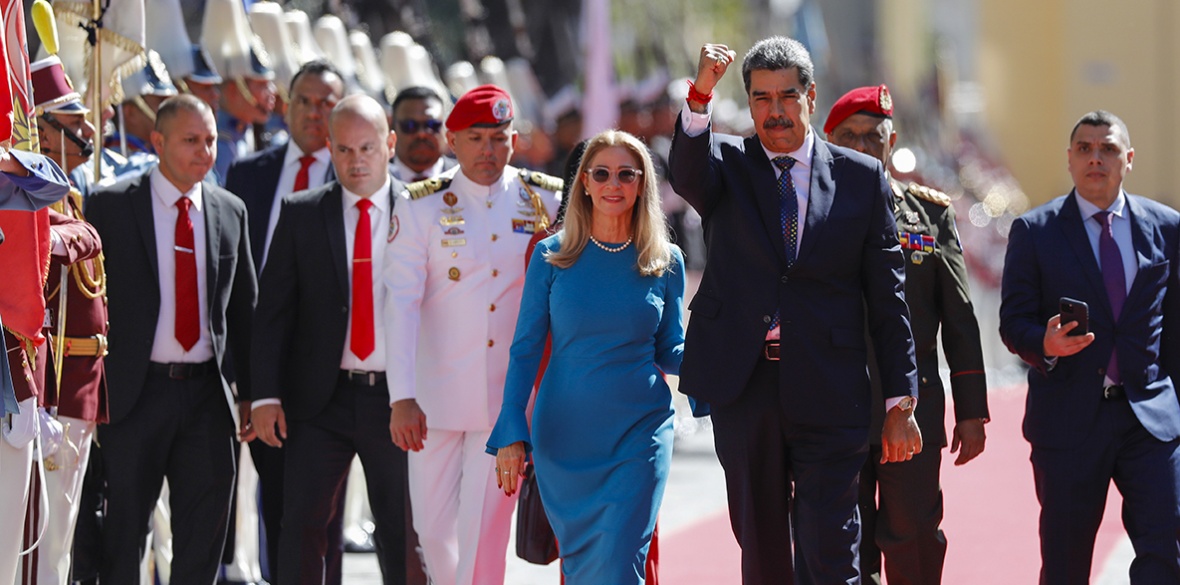
Venezuelan President Nicolas Maduro and his wife Cilia Flores arrive at the National Assembly for his swearing-in ceremony for a third term in Caracas, Venezuela, January 10, 2025
VENEZUELAN President Nicolas Maduro was sworn in for a third term of office today.
The occasion was marked by the US government saying that it had increased the reward for information leading to Mr Maduro’s arrest, with $25 million (around £20.4m) now being offered.
During the swearing-in ceremony in the capital Caracas, the president highlighted his loyalty to the legacy of his legendary predecessor Hugo Chavez.
“If anything characterises the 500-year history of the people of this land called Venezuela, it is the history of heroic, wonderful resistance against all forms of domination, against all forms of colonialism and against all imperialisms,” Mr Maduro said.
RISING RIGHT: Activists wearing masks of far-right politicians (L-R) Marine Le Pen, former Polish Prime Minister Mateusz Morawiecki, Vox leader Santiago Abascal, Hungarian Prime Minister Viktor Orban and Italian Prime Minister Giorgia Meloni protest before the EU elections, Madrid, May 19 2024
Driven on by novel forms of hard-right populism like Modi and Trump, European neofascists are skillfully rebranding themselves and taking power by copying the left’s language — just as they did in the last century, writes JOHN GREEN
AROUND the world, we have been witnessing the rise of new right-wing and neofascist political forces at the same time as we have experienced the demise or marginalisation of strong left-wing forces.
We face a new and more virulent Donald Trump presidency in the US, we have seen the success of Giorgio Meloni’s Fratelli d’Italia party in Italy, Modi’s fundamentalist Hinduism in India, Javier Milei’s neoliberal extremism in Argentina, Victor Orban’s authoritarian regime in Hungary and the jack-in-the-box rise of Nigel Farage, who sees himself as a prime minister in waiting, here in Britain.
…
The right loves using the German fascists’ full name, National Socialist German Workers Party, rather than the shortened term Nazi in order to deliberately conflate fascism with socialism and communism in the public’s mind.
As we know, Hitler only belatedly incorporated the term socialist into his party’s name in order to sow confusion and win over working-class voters, which he managed to do very successfully. The National Socialists were soon demasked as firm upholders of rampant capitalism, not socialism.
Of course, drawing comparisons between 1930s Germany and our world today can be dangerous, but there are undoubted parallels from which we can learn. Once again, world capitalism is in a deep crisis, and fascism is seen in some quarters, once again, as offering an apparent way out.
Just as the Nazis did, the neofascists today, recognising the widespread anger among large sections of the population at the way the super-wealthy are destroying our societies with impunity, are pretending to attack the unaccountable oligarchs and super-wealthy tech CEOs, big pharma and authoritarian government.
This is, however, mere rhetoric in order to win over the disaffected working classes; they have no intention of doing anything about the super-rich and tech monopolies who are or will be funding them.
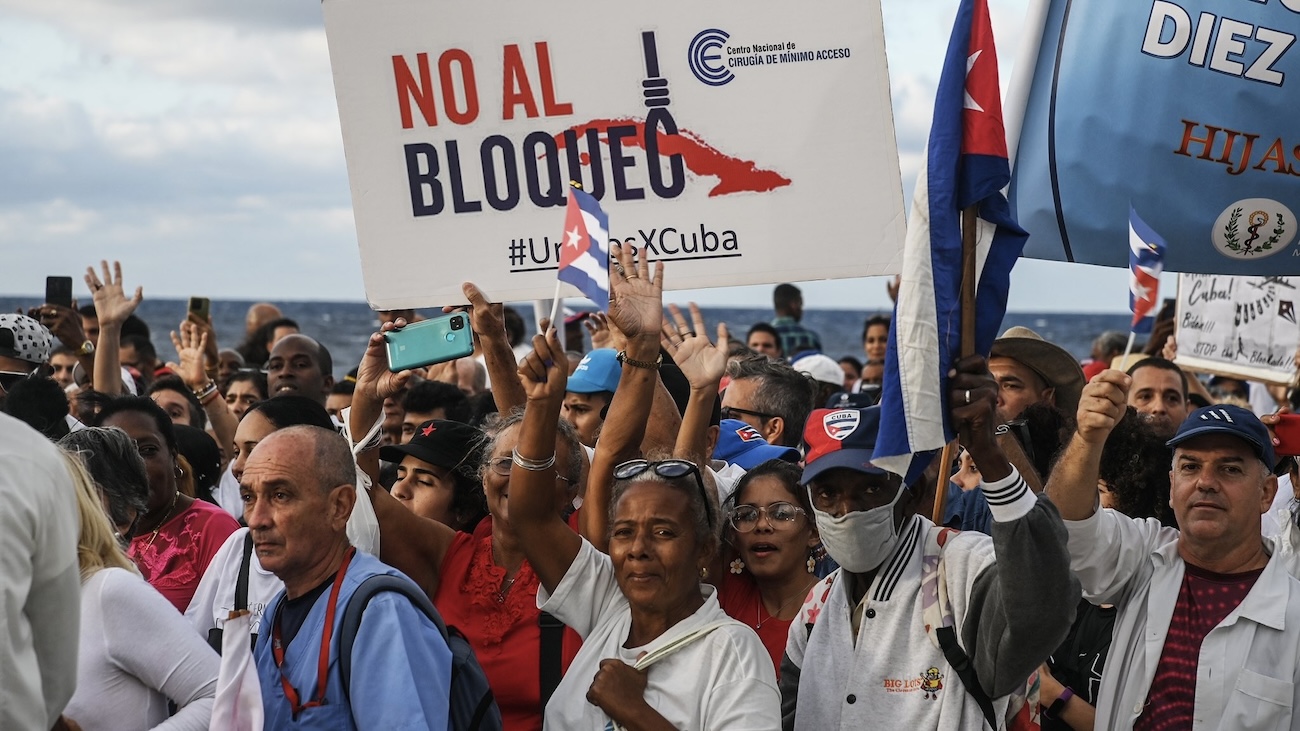
Over half a million Cubans filled the Malecón on Friday December 20 in a massive march against the US blockade. Photo: Presidencia Cuba
Hundreds of thousands of Cuban people participated in the mass demonstration against the six-decade US blockade of Cuba and the inclusion of Cuba on the US state sponsors of terrorism list.
“President Biden, take Cuba off the infamous list!” exclaimed the over half a million Cubans who marched on Havana’s malecón to the US Embassy. The mass march was called for by Cuban President Miguel Díaz-Canel earlier this week to demonstrate the absolute and total rejection of the Cuban people to the six-decade US-imposed blockade on the island as well as the inclusion of Cuba to the US State Sponsors of Terrorism list (SSoT) which together have wreaked havoc on the island’s economy.
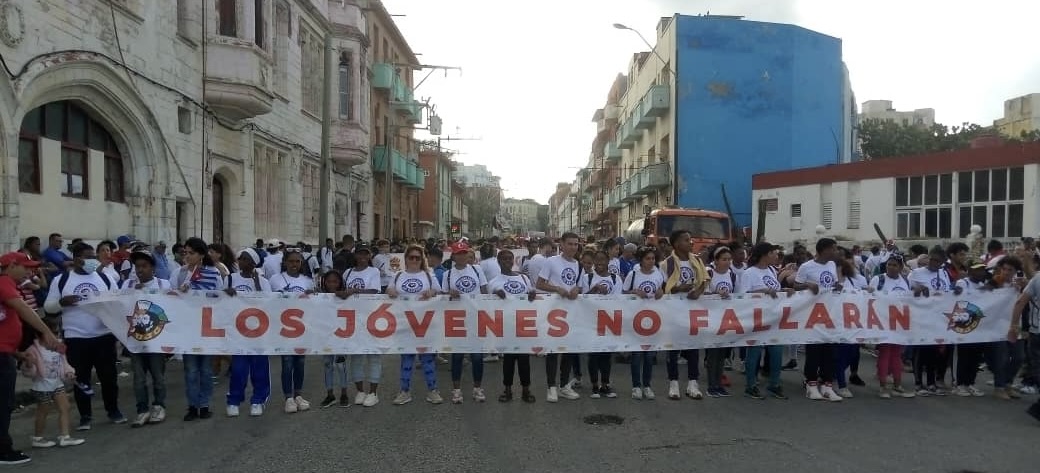
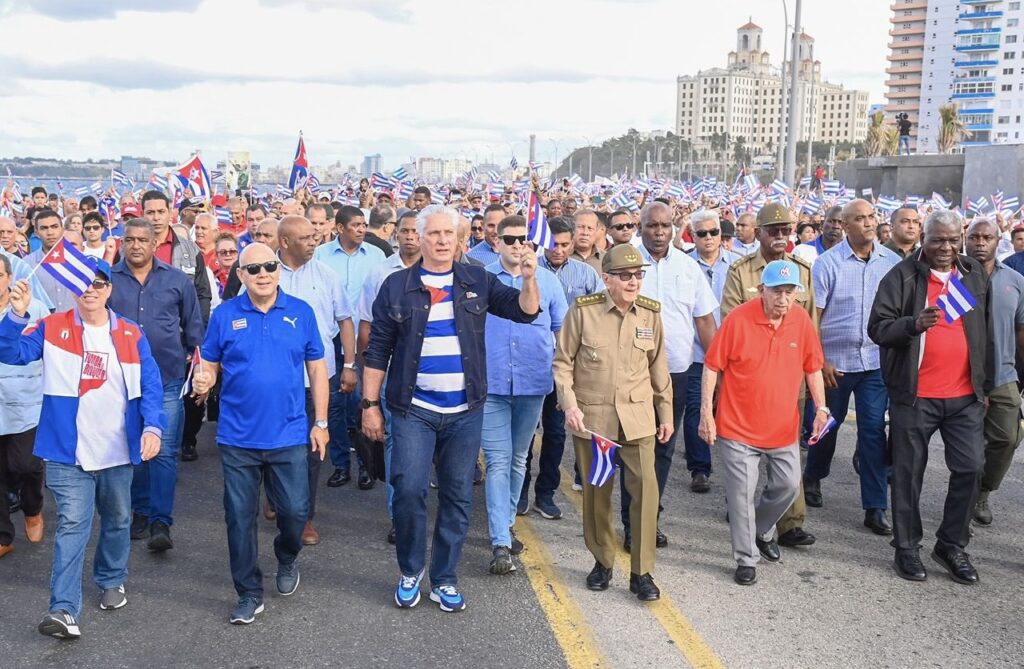
The march was led by Cuban President Miguel Díaz-Canel and General Raúl Castro who were flanked by over half a million Cubans from all sectors of life including students, doctors, construction workers, artists, and more. Cuban youth and students who participated in the massive mobilization carried banners reading “the youth will not fail!” and “this is the revolution!”
“The youth will not fail!” Photo: UJC
The mass mobilization began at the Anti-Imperialist Tribunal José Martí on the malecón, which is located directly in front of the US Embassy. There, the Cuban president delivered an address wherein he condemned the inaction of Joe Biden in reversing the policies of his predecessor Donald Trump which have tightened the economic and financial stranglehold on Cuba. Biden, he said, “has done nothing to move away from the line of reinforced blockade and economic asphyxiation of Cuba left as a legacy by the Republican administration that returns to the Oval Office in January.”
He also highlighted that people from across the US and the world have in the recent period called attention to the inhumane US policy that goes against international law, “In recent weeks and days there have been numerous pronouncements from US leaders and from other parts of the world demanding that Biden make use of his authority to at least remove the name of a nation that should never have been on this spurious list.”
He emphasized that, “When our international trade is persecuted and financial transactions are impeded, the people of Cuba are being denied food, medicine, fuel, goods, supplies and merchandise essential for their survival.”
In addition to condemning the illegal blockade, Díaz-Canel also alerted the Cuban people that there are currently paramilitary groups training in the south of Florida with the intention of carrying out terrorist attacks against Cuba. “They are based in South Florida and do not hide to train. They do it publicly, in plain sight and with the protection of local authorities, even violating their own laws and international treaties.”
The president’s announcement was both a warning and an attempt to expose the deep hypocrisy of calling Cuba a sponsor of terrorism, whilst in plain view of US authorities, these groups, “organize, promote and finance terrorist actions against social and economic structures in Cuba.” This phenomenon is not new and he reminded the people of how the US sheltered “self-confessed terrorists” and CIA agent Luis Posada Carriles and Orlando Bosch who were the architects of numerous criminal attacks against the Cuban people, the worst one being the 1976 bombing of a Cuban aircraft which resulted in the death of 73 people. “Knowing such antecedents,” Díaz-Canel stated, “no US ruler can classify Cuba as a terrorist state.”
Cuban President Miguel Díaz-Canel and General Raúl Castro marching on the malecón. Photo: Presidencia Cuba
The demand to end the over 60-year US blockade on Cuba and remove the country from the SSoT list has become even more urgent in light of the energy crisis on the island. In recent months, Cuba has suffered a series of blackouts due to its major challenge in accessing fuel to keep its power plants operating.
The election of far-right leader Donald Trump as president has also awoken fears that he may intensify existing unilateral coercive measures against Cuba.
However, as manifested in the mass mobilization, the Cuban people have vowed to remain firm in the face of any threat lodged at them by the US government and maintain that they are open to dialogue with any US administration based on mutual respect and equality.
In concluding his address, Cuban President Miguel Díaz-Canel declared, “If the United States persists in its determination to undermine our sovereignty, our independence, our socialism, it will only find rebellion and intransigence! Every administration that has tried has been outlived by the Cuban Revolution, and it will continue to be so. This is a march, yes, a very anti-imperialist march! Against US imperialism and its pretension to impose itself in Cuba by force or seduction, we will march now and always!”
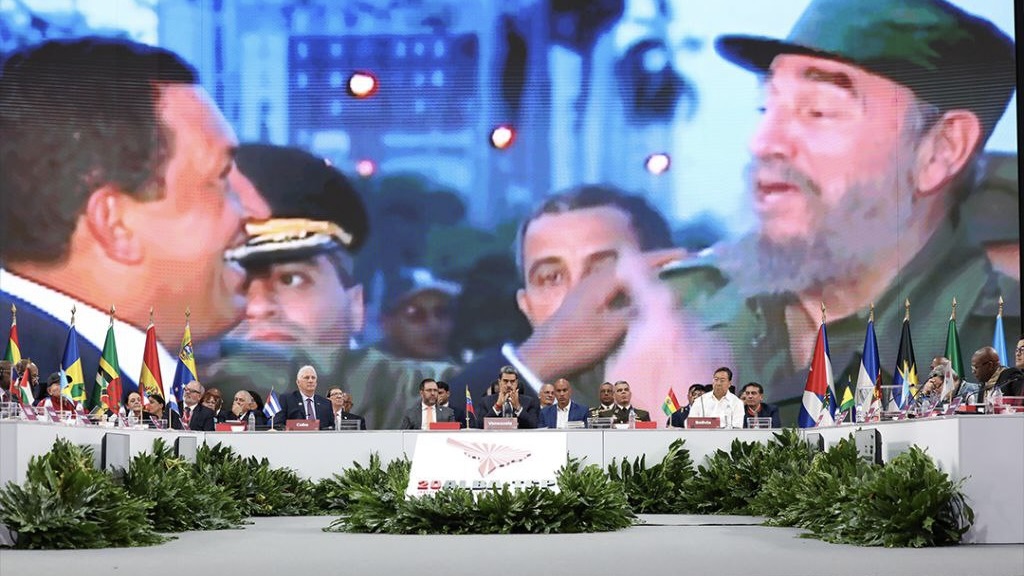
Heads of State Summit of ALBA-TCP in Caracas, Venezuela. Photo: ALBA-TCP
ALBA-TCP was founded in 2004 in an attempt to counter the US proposal of creating a “free trade zone of the Americas
December 14 marked the 20th anniversary of the creation of the Bolivarian Alliance for the Peoples of Our America-People’s-Trade Agreement (ALBA-TCP). ALBA-TCP was created in 2004 as a geopolitical alternative to the devastating advance of neoliberalism in the region.
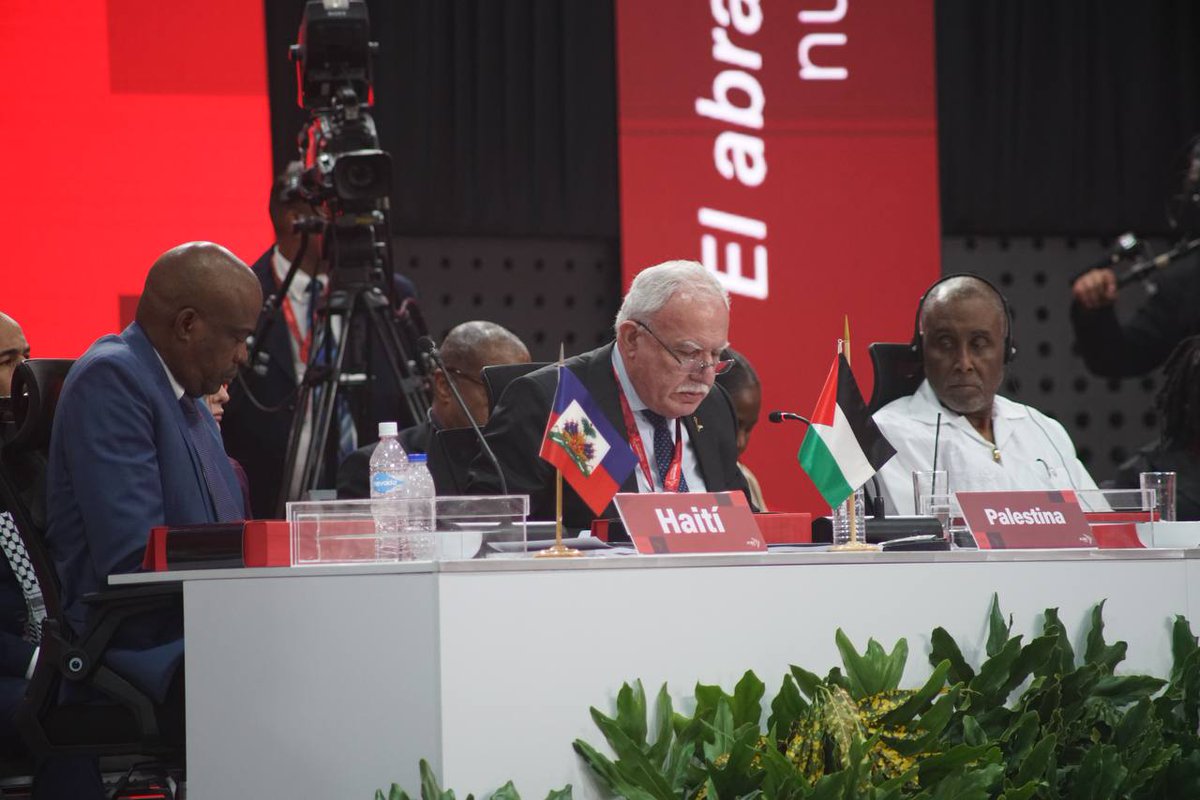
The project was founded on December 14, 2004, in Havana by Cuban President Fidel Castro and Venezuelan President Hugo Chávez. Currently, the organization has 10 member countries and four countries considered “special guests.” In 2006, Bolivia signed its membership; in 2007, Nicaragua; in 2008, Dominica; in 2009, Antigua and Barbuda and St. Vincent and the Grenadines; in 2014, St. Kitts and Nevis and Grenada; and in 2021, St. Lucia. The special invited countries are Syria, Haiti, Suriname, and now Palestine.
To commemorate the 20 years, social movements, political parties, and heads of state gathered in Caracas, Venezuela for the 24th Heads of State Summit as well as parallel meetings. The event was attended by the host, Venezuelan President Nicolás Maduro; Bolivian President Luis Arce; Cuban President Miguel Díaz-Canel; Nicaraguan President Daniel Ortega; Prime Minister of St. Vincent and the Grenadines, Ralph Gonsalves; Prime Minister of Dominica, Roosevelt Skerrit; and the Prime Minister of Antigua and Barbuda, Gaston Browne.
Independence and solidarity among countries
In their addresses during the Summit on December 14, the heads of state and invited countries stressed the importance of solidarity among countries seeking alternative ways of development and the need for unrestricted solidarity among people struggling against imperialist attacks. They also demonstrated their support for Nicolás Maduro and his victory in the last presidential elections.
Miguel Díaz-Canel said “We reiterate the strongest support for the Bolivarian revolution, led by President Nicolás Maduro…We also call for the elimination of the blockade against Cuba …We cry out for a free Puerto Rico and declare our solidarity with Haiti, our Cuban doctors are there…We reiterate our demand for a ceasefire in Gaza and condemn the attacks perpetrated by Israel against Lebanon, Syria, and Iran.”
The Bolivian President, Luis Arce, highlighted the historical importance of ALBA in its fight against economic projects promoted by the United States such as the FTAA (Free Trade Area of the Americas): “The embrace of Hugo Chávez and Fidel Castro not only marked history but also manifested the defeat of the hegemonic project of the FTAA. ALBA was born, ALBA placed the human being at the center, promoting that a better world is possible. Bolivia reaffirms, once again, its commitment to ALBA-TCP, because it is a resistance that raises its voice against the unjust and criminal blockade against Cuba…ALBA is also a firm voice against the arbitrary and unilateral measures imposed against Venezuela and Nicaragua, which affect the welfare of our peoples.”
Nicolás Maduro said, “We must win the battle of life and truth in the streets, networks, media, and walls, as well as in the conscience and spirituality of the people.” He also added the importance of the struggle of the people to be masters of their destiny without imperial impositions or impositions of any kind. In the same line of discourse, Nicaraguan President Daniel Ortega said “From Nicaragua we reaffirm our commitment to ALBA. We will continue to fight the battle.”
The Prime Minister of Dominica, Roosevelt Skerrit stated “We congratulate the electoral triumph of President Nicolas Maduro on July 28. We wish him all the best…We also want to reaffirm our solidarity with the people of Cuba, a brave people for whom we have our greatest respect and love; we will never cease to lend our voice against the United States to eliminate the blockade against Cuba.”
Ralph Gonsalves, Prime Minister of St. Vincent and the Grenadines, harshly criticized US interference in the development of the past Venezuelan elections “Perhaps [the US government] thinks it is superior,” he said in this regard. He also stressed that the creation of ALBA-TCP was a fundamental invention for the emancipation of the American people, “ALBA is the product of the geniuses of our peoples.”
Inclusion of Palestine to ALBA-TCP
At the current summit, it was announced that Palestine had been included as a “brotherly country” and was included as a “permanent guest”. According to the resolution of the Heads of State, ALBA-TCP condemns the attacks against the Palestinian population and the “illegally occupied territories” and rejects “the merciless and inhuman genocide committed by the State of Israel, the occupying power, as well as its plan of spoliation, invasion, and domination.” Likewise, they denounced the support of several governments currently collaborating with the actions of the Israeli army and called for an “immediate ceasefire…From the heart of the peoples and governments of this alliance, we declare Palestine a brother country of the ALBA-TCP, and reaffirm our commitment to the defense of the Palestinian cause, which is the defense of humanity,” reads the resolution.
In this regard, Riyad al-Malki, advisor to the President of State for International Affairs of Palestine said “History will remember those who stood on the side of justice, ALBA’s lasting solidarity with Palestine is a testimony of freedom and collective resistance.” Furthermore, Malki added “This Alliance is a living testimony of collective integration to challenge imperialism and ensure a just world. These values resonate with the Palestinian struggle, an end to the illegal occupation.”
A call for counter-hegemonic struggle
The joint document signed by all the countries highlights the historical importance of ALBA-TCP in the struggle for a more equitable world: “Twenty years after this giant step, we pay homage to the founding leaders, Hugo Chávez Frías and Fidel Castro Ruz, who adopted that December 14, 2004, in Havana, Cuba, the vision of the future embodied in the founding documents of ALBA, which have allowed us to walk united until the present, animated by the ancestral force that led our peoples to be free and that encourages us to continue integrated in this Alliance for Life.”
Similarly, it was stressed that the existence of this multilateral organization operates as a possibility to create a region that resists the impositions of the most developed countries: “Today, we want to ratify before our peoples, the counter-hegemonic, democratic, anti-imperialist and anti-fascist nature of our Alliance and renew our commitment to help and protect each other, to continue building together a future of shared goals under the founding principles of complementarity, cooperation, social justice, defense of our sovereignty and solidarity.”
In this sense, Luis Arce stressed that “In the face of the challenges of a world threatened by fascism and neo-fascism, ALBA is not an option, ALBA is a necessity that must continue with firm steps, reaffirming the founding principles of solidarity, justice, and cooperation…ALBA is not only an alliance, it is a promise for the future, a living resistance, an instrument for the most dispossessed, and a reminder that together, as peoples, we are invincible.”
Objectives and principles of ALBA-TCP
According to ALBA’s official website, the fundamental objective of the project is “to achieve integral development, ensure social equality and contribute to guaranteeing the quality of life, good living, independence, self-determination and identity of the peoples.” For this very reason, the principles of ALBA-TCP propose that political decisions be made horizontally and take into account the economic differences of its members without meaning that the importance of each of the members is underestimated.
The principles shared by the countries are “trade and investment should not be ends in themselves, but instruments to achieve sustainable development; special and differentiated treatment, according to the level of development of the various countries; economic complementarity and cooperation; cooperation and solidarity; the creation of the Social Emergency Fund; the integrative development of communications and transportation; the sustainability of development; energy integration; the promotion of investments of Latin American capital in the region; the defense of Latin American and Caribbean identity and culture; respect for intellectual property; and the agreement of multilateral positions and in negotiations with countries and blocs in other regions.”
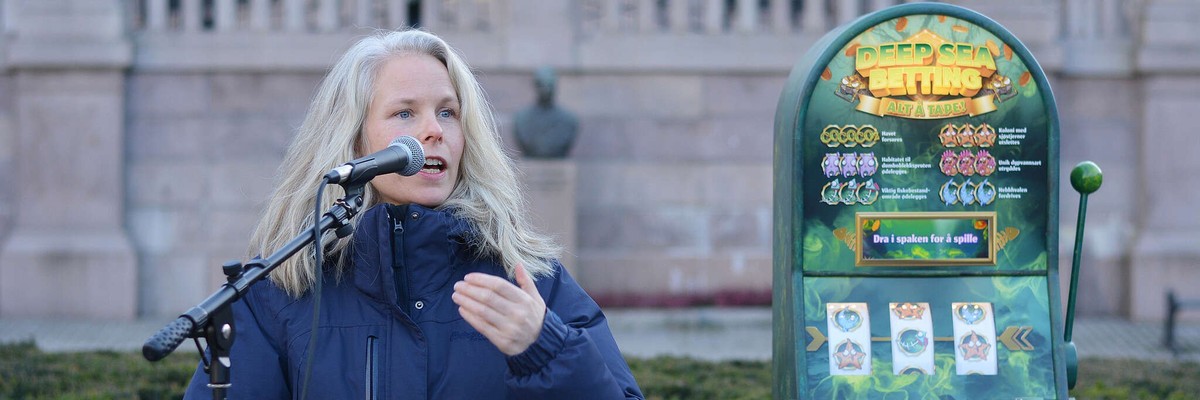
Kirsti Bergstø, leader of the Socialist Left Party, speaks at a protest against deep-sea mining outside Norwegian Parliament. (Photo: Greenpeace)
One campaigner called it “a testament to the power of principled, courageous political action, and… a moment to celebrate for environmental advocates, ocean ecosystems, and future generations alike.”
Environmental organizations cheered as Norway’s controversial plans to move forward with deep-sea mining in the vulnerable Arctic Ocean were iced on Sunday.
The pause was won in Norway’s parliament by the small Socialist Left (SV) Party in exchange for its support in passing the government’s 2025 budget.
“Today marks a monumental victory for the ocean, as the SV Party in Norway has successfully blocked the controversial plan to issue deep-sea mining licenses for the country’s extended continental shelf in the Arctic,” Steve Trent, CEO and founder of the Environmental Justice Foundation, said in a statement. “This decision is a testament to the power of principled, courageous political action, and it is a moment to celebrate for environmental advocates, ocean ecosystems, and future generations alike.”
“Today, thanks to the SV Party and all those around the world who spoke up against this decision, the ocean has won. Now, let’s ensure this victory lasts.”
Norway sparked outrage in January when its parliament voted to allow deep-sea mining exploration in a swath of its Arctic waters larger than the United Kingdom. Scientists have warned that mining the Arctic seabed could disturb unique hydrothermal vent ecosystems and even drive species to extinction before scientists have a chance to study them. It would also put additional pressure on all levels of Arctic Ocean life—from plankton to marine mammals—at a time when they are already feeling the impacts of rising temperatures and ocean acidification due to the burning of fossil fuels.
“The Arctic Ocean is one of the last pristine frontiers on Earth, and its fragile ecosystems are already under significant stress from the climate crisis,” Trent said. “The idea of subjecting these waters to the destructive, needless practice of deep-sea mining was a grave threat, not only to the marine life depending on them but to the global community as a whole.”
“Thankfully, this shortsighted and harmful plan has been halted, marking a clear victory in the ongoing fight to protect our planet’s blue beating heart,” Trent continued.
In June, Norway announced that it would grant the first exploratory mining licenses in early 2025. However, this has been put on hold by the agreement with the SV Party.
“This puts a stop to the plans to start deep-sea mining until the end of the government’s term,” party leader Kirsti Bergstø said, as The Guardian reported.
Norway next holds parliamentary elections in September 2025, so no licenses will be approved before then.
The move comes amid widespread opposition to deep-sea mining in Norway and beyond. A total of 32 countries and 911 marine scientists have called for a global moratorium on the practice. More than 100 E.U. parliamentarians wrote a letter opposing Norway’s plans specifically, and the World Wide Fund for Nature (WWF) has sued to stop them.
“This is a major and important environmental victory!” WWF-Norway CEO Karoline Andaur said in a statement. “SV has stopped the process for deep seabed mining, giving Norway a unique opportunity to save its international ocean reputation and gain the necessary knowledge before we even consider mining the planet’s last untouched wilderness.”
Haldis Tjeldflaat Helle, the deep-sea mining campaigner at Greenpeace Nordic, called the decision “a huge win.”
“After hard work from activists, environmentalists, scientists, and fishermen, we have secured a historic win for ocean protection, as the opening process for deep-sea mining in Norway has been stopped,” Helle said in a statement. “The wave of protests against deep-sea mining is growing. We will not let this industry destroy the unique life in the deep sea, not in the Arctic nor anywhere else.”
Sorry, this content could not be embedded. [X/twitter embed still broken … Is there a work-around?] X
However, Norway’s Arctic waters are not entirely safe yet.
Prime Minister Jonas Gahr Stoere, of the Labour Party, toldTV2, on Sunday, “This will be a postponement.”
The government said that other work to begin the process of deep-sea mining, such as drafting regulations and conducting environmental impact surveys, would move forward. Norway is currently governed by the Labour and Center parties. The two parties leading in polls for September’s elections—the Conservatives and Progress Party—also both back deep-sea mining, according toReuters.
“If a new government attempts to reopen the licensing round we will fight relentlessly against it,” Frode Pleym, who leads Greenpeace Norway, told Reuters.
Other environmental groups tempered their celebrations with calls for further action.
Trent of the Environmental Justice Foundation said that “while today is a cause for celebration, this victory must not be seen as the end of the struggle.”
“We urge Norway’s government, and all responsible global actors, to make this a lasting victory by enshrining protections for the Arctic Ocean and its ecosystems into law, and coming out in favor of a moratorium or ban on deep-sea mining,” Trent added. “It is only through a collective commitment to sustainability and long-term stewardship of our oceans that we can ensure the health of the marine environment for generations to come.”
Trent concluded: “Today, thanks to the SV Party and all those around the world who spoke up against this decision, the ocean has won. Now, let’s ensure this victory lasts.”
Andaur of WWF said that this was a “pivotal moment” for Norway to “demonstrate global leadership by prioritizing ocean health over destructive industry.”
As WWF called on Norway to abandon its mining plans, it also urged the nation to reconsider its exploitation of the ocean for oil and gas.
“Unfortunately, we have not seen similar efforts to curtail the Norwegian oil industry, which is still getting new licenses to operate in Norwegian waters, including very vulnerable parts of the Arctic,” Andaur said. “Norway needs to explore new ways to make money without extracting fossil fuels and destroying nature.”
Greenpeace also pointed to the role Norway’s pause could play in bolstering global opposition to deep-sea mining.
“Millions of people across the world are calling on governments to resist the dire threat of deep-sea mining to safeguard oceans worldwide,” Greenpeace International Stop Deep-Sea Mining campaigner Louisa Casson said. “This is a huge step forward to protect the Arctic, and now it is time for Norway to join over 30 nations calling for a moratorium and be a true ocean champion.”