Category: the filthy rich

  • Pathways Carbon Capture Project Is Not Viable, Expert Warns

    Spread the love

    Original article by Taylor Noakes republished from De Smog.

    ‘Public funding of CCS is a costly gamble,’ said IEEFA energy finance analyst Mark Kalegha. Credit: IEEFA

    New report says CCS proposal is a subsidy-dependent ‘financial risk’ with ‘limited revenue potential.’

    Pathways Alliance’s flagship carbon capture and storage project is not financially feasible without massive and consistent subsidies.

    This is according to the most recent analysis of the venture, conducted by the Institute for Energy Economics and Financial Analysis (IEEFA), which identified multiple financial challenges.

    The Pathways Alliance, a lobby group representing Canada’s six largest tar sands oil producers, proposed a massive carbon capture and storage (CCS) hub based near Cold Lake, Alberta, in 2022. The build-out includes a 400-kilometer pipeline network connecting the CCS hub with 13 tar sands facilities. The group’s members are responsible for approximately 95 percent of the tar sands’ annual output.

    “The growing realization that carbon capture and storage projects are likely to require permanent government subsidies resets the discussion about the viability of CCS as a tool to effectively reduce carbon emissions,” Mark Kalegha, the IEEFA’s energy finance analyst for Canada and author of the report, said in a statement. 

    “Public funding of CCS is a costly gamble that may not yield tangible returns on Canada’s journey towards achieving net-zero emissions,” Kalegha stated. 

    “This is a financial risk the government should reconsider taking on.”

    Among the study’s key findings, the IEEFA determined that the total costs — such as interest, insurance, depreciation, and taxes — for existing commercial-scale carbon capture plants in Alberta are approaching thresholds that threaten profitability. In addition, operating costs are increasing at roughly twice the rate of the amount of carbon dioxide that’s captured. 

    Critics argue that Pathways will actually use the project for enhanced oil recovery (EOR), which is what carbon capture technology was initially developed to do in the 1970s. Companies have used other notable CCS projects explicitly in this way. In fact, Pathways Alliance has publicly stated on several occasions that it hopes its decarbonization efforts could result in increased oil production. Critics argue the oil industry proposes using carbon capture for EOR as a means to prolong fossil fuel production while appearing to work towards emissions reduction. Canadian federal and provincial governments have enthusiastically supported carbon capture initiatives by the oil and gas sector, despite the concerns and objections of environmentalists. 

    But Kalegha is not convinced the Pathways project would be used for EOR. Instead, he believes the alliance’s business case is based on the use of Emission Performance Credit (EPCs) under Alberta’s TIER (Technology Innovation and Emissions Reduction) carbon pricing system. That said, the IEEFA isn’t certain the necessary operating revenue will manifest.

    “An effective cap on emission performance credit (EPC) pricing of $170 (CAD) per tonne limits project revenue potential, while a looming oversupply of carbon EPCs is an example of risks to project cash flows,” the IEEFA report states. 

    The report further notes that the option to combine Clean Fuel Regulation credits with EPCs is available to the ACTL (Alberta Carbon Trunk Line—one of the two operational carbon capture projects the IEEFA study investigated), but that this significant financial benefit is not currently available to the Pathways project.

    The report warns that “without substantial efficiency improvements, the cost per tonne of CO2 captured is likely to exceed the revenue that the project can generate for each tonne captured.”

    Kalegha noted that there is no guarantee carbon credits will trade for $170 and their value could face a limitless fall. “There is a severe oversupply risk, and over time, operating costs will likely increase while potential revenue will be stagnant,” he said.

    The report indicates that an underperforming and unprofitable carbon capture project would invariably “struggle to bring lasting positive economic benefits to host communities and become dependent on external financial subsidies to maintain operations.”

    Even under optimal conditions, “the Pathways project may struggle to break even,” the IEEFA noted. It further stated that real-world carbon capture operations are rarely optimal, echoing analysis by the International Institute for Sustainable Development (IISD), which also concluded carbon capture’s costs are persistently high in Canada, and unlikely to come down. 

    Though details about Pathways’ project are scant — which the IEEFA noted in its report — the institute determined that Pathways could have an estimated annual carbon dioxide storage capacity of 10 to 12 million tonnes. If completed, it would be among the largest carbon capture facilities in the world.

    Safety Risks

    Whether storing such a large amount of CO2 is safe is a vitally important but unanswered question. The release of an estimated 100,000 to 300,000 tons of CO2 at Lake Nyos, Cameroon, in 1986 killed about 1,700 people and 3,500 livestock animals. The rupture of a CO2 pipeline near Satartia, Mississippi, in 2020, resulted in dozens of hospitalizations, the town’s evacuation, and a chaotic emergency response that underlined the public’s unfamiliarity with large-scale carbon dioxide poisoning.

    A May 2024 article in The Narwhal revealed that Pathways Alliance made it clear to the federal government that it fully expects to depend on federal government subsidies in the tens of billions of dollars. 

    In a letter to several federal ministers — including then-Finance Minister Chrystia Freeland and Environment Minister Steven Guilbeault — Pathways requested the government cover 50 percent of its estimated operating costs. The same letter also asked if the project would be eligible to generate Clean Fuel Regulation (CFR) for bitumen and crude oil exported using carbon capture technology. Pathways also demanded the federal government forgo an environmental impact assessment. At the provincial level, Pathways broke its project into 126 parts to avoid triggering an automatic environmental assessment.

    Despite the growing body of evidence against the plan, it nonetheless maintains considerable political support in Canada. In October 2024, the Globe and Mail reported that the Canada Growth Fund (CGF) proposed funding support for the project. The CGF is a public fund of $15 billion (CAD) that supports implementing new technologies to reduce emissions, managed by the Public Sector Pension Investment Board.

    “The Pathways Alliance has been in negotiations with the CGF for over a year, and wants the CGF to provide carbon contracts to mitigate financial risks and guarantee revenues,” Julia Levin, associate director of national climate with Environmental Defence, wrote in a statement to DeSmog. Levin noted that those negotiations ramped up last fall, and a decision is expected soon.

    Despite Pathways’ request to abandon the environmental impact assessment, Levin also noted that the federal government is reviewing the project.

    “In late November, following the Government of Alberta’s denial to conduct an impact assessment of the project, eight First Nations submitted a request that the federal government exercise its discretion to designate the Pathways Project for a federal impact assessment, given their concerns about the project impacts and the lack of a robust regulatory framework,” said Levin. “Minister Guilbeault has until the beginning of March to decide whether or not to designate the project.”

    Little evidence exists showing carbon capture is effective at reducing emissions among Canada’s few extant commercial CCS projects and CCS projects worldwide.

    Video rendering of Shell’s Quest carbon capture project. Credit: Shell / YouTube

    “Neither Quest nor the Alberta Carbon Trunk Line (ACTL) have managed to keep up with projected capture rates,” said Kalegha during a recent IEEFA webinar, referring to Shell’s massive Quest CCS facility in Alberta. “Boundary Dam is struggling as well,” he added, referring to the Saskatchewan coal plant that received a $1 billion retrofit to capture carbon. The IEEFA estimates that the Boundary Dam CCS effort has never exceeded a 60 percent capture rate, despite claims by CCS advocates that it captures carbon at a rate exceeding 90 percent.  

    “There’s a global trend of underperformance when it comes to carbon capture,” he noted.  

    Kalegha’s analysis also points to considerable risk factors. He said that operating costs at ACTL and Quest appear to have doubled, while capture rates at both facilities have remained relatively flat. In addition, Pathways Alliance’s project will have to grapple with the combined performance of 13 separate carbon capture facilities.

    While the oil and gas industry claims carbon capture technology is improving, Kalegha doesn’t see any data to support this.

    “Current CCS projects in Canada are heavily subsidized by the public, anywhere between 50 to 85 percent,” he said during an IEEA online seminar. “This is a very expensive, subsidy-dependent technology experiencing severe technological challenges. The question is who should bear this risk?” 

    Julia Levin is doubtful the Pathways Alliance partners are sincerely interested in committing any of their own funds to the project. She noted in a statement to DeSmog that Canadian Natural Resources Limited (CNRL) only committed $90 million to carbon capture in its 2025 budget, compared with $45 million to move offices.

    “CNRL’s 2025 budget reveals that the Pathways Alliance has no plans to invest their own funds into carbon capture and storage, instead insisting the public cover over $12 billion of their costs,”  Levin noted. 

    “Ninety-million dollars is an insignificant amount of money, compared with the cost of carbon capture projects, as well as CNRL’s operating budget and yearly profits,” she added 

    “If these companies seriously believed in carbon capture as a waste management solution for their operations and were intent on moving these projects forward, they would be willing to invest more of their own funds,” Levin pointed out. “Instead they’re using the promise of capturing emissions one day as a rationale to delay the energy transition and weaken climate policy.” 

    Original article by Taylor Noakes republished from De Smog.
  • Capitalism’s Free Speech Trap: Bezos Shows How Billionaires Set the Boundaries of Debate

    Spread the love

    Original article by Peter Bloom republished from Common Dreams under Creative Commons (CC BY-NC-ND 3.0). 

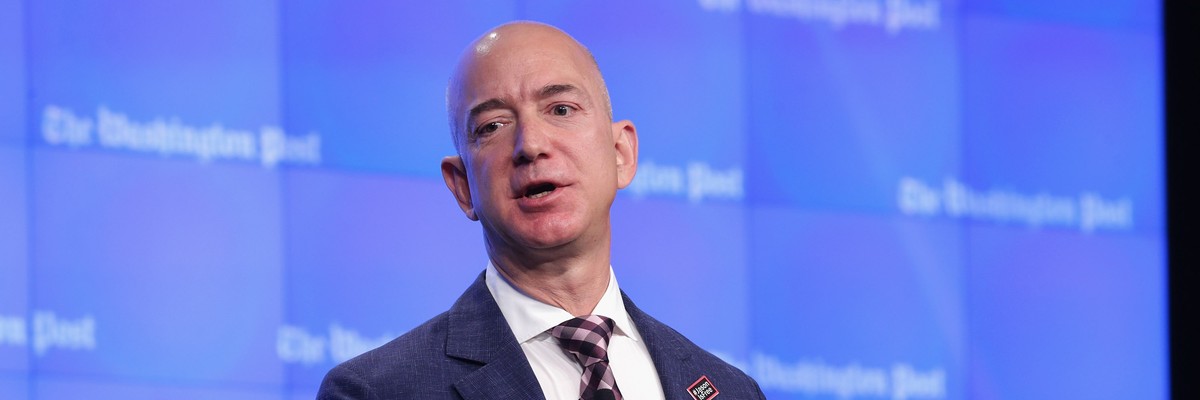
    Amazon founder and Washington Post owner Jeff Bezos delivers remarks during the opening ceremony of the media company’s new location January 28, 2016 in Washington, D.C. (Photo: Chip Somodevilla/Getty Images)

    The Washington Post’s shift toward free-market advocacy is not simply an editorial decision; it is a strategic move to reinforce the dominant ideological framework that benefits the billionaire class.

    The recent directive by Jeff Bezos that The Washington Post editorial section should promote “personal liberties and free markets” is a stark reminder of how freedom under capitalism often boils down to the freedom of economic elites to dictate the parameters of public discourse. While Bezos has suggested that social media provides alternative perspectives, thus absolving his newspaper of the responsibility to represent diverse viewpoints, his decision is part of a broader trend of billionaire media ownership shaping acceptable discourse.

    This phenomenon is visible across digital platforms as well. Elon Musk’s control over X (formerly Twitter) has demonstrated how ownership can shape public debate—both through direct interventions, such as the alleged suppression of progressive perspectives, and through more subtle changes to platform algorithms. Similarly, Mark Zuckerberg’s Meta has faced repeated allegations of privileging certain political narratives while suppressing others, including ending its “fact checking” policy that could challenge far-right viewpoints.

    Perhaps the most glaring contradiction in Bezos’ advocacy for free markets is the extent to which he, and other billionaires like him, have benefited from state intervention as part of an intentional strategy of “corporate welfare.”

    In each case, the rhetoric of “free speech” is selectively applied. While these platforms and newspapers claim to support open debate, their policies ultimately reflect the ideological preferences of their owners. This demonstrates a fundamental truth: In capitalist societies, freedom of expression is often contingent on the interests of those who control the means of communication. The Washington Post’s shift toward free-market advocacy is not simply an editorial decision; it is a strategic move to reinforce the dominant ideological framework that benefits the billionaire class.

    The Myth of Meritocracy and the Far-Right’s War on DEI

    Bezos’ framing of free markets as inherently linked to personal liberties exposes a deeper ideological assumption—namely, that economic success is the result of individual talent and merit rather than systemic privilege. This assumption is not unique to Bezos but is foundational to the way many economic elites understand their own wealth and influence.

    The logic behind Bezos’ editorial direction is similar to the arguments used by the contemporary far-right to attack Diversity, Equity, and Inclusion (DEI) initiatives. The opposition to DEI is rooted in a desire to preserve the myth that success is determined purely by hard work and ability, rather than by racial, gender, or class privilege. By rejecting policies that acknowledge structural inequalities, The far-right seeks to uphold a narrative that justifies existing economic and social hierarchies.

    This worldview is deeply intertwined with the ideology of neoliberalism, which insists that markets are neutral mechanisms that reward the most capable individuals. However, history shows that markets are anything but neutral. The barriers faced by marginalized groups are not simply the result of individual shortcomings; they are the product of centuries of systemic exclusion. The far-right’s attack on DEI serves to obscure these realities, just as Bezos’ insistence on free markets seeks to erase the role of privilege and power in determining economic outcomes.

    By positioning The Washington Post as a champion of free markets, Bezos is promoting the idea that capitalism functions as a pure meritocracy. This serves not only to legitimize his own position but also to delegitimize calls for policies that challenge structural inequality, whether in the form of DEI programs, labor protections, or wealth redistribution measures.

    The Illusion of the Free Market and Its Political Implications

    Perhaps the most glaring contradiction in Bezos’ advocacy for free markets is the extent to which he, and other billionaires like him, have benefited from state intervention as part of an intentional strategy of “corporate welfare.” The notion of a truly free market, where economic actors compete on equal footing without government interference, is a fantasy. In reality, corporations like Amazon have thrived not because of unregulated competition, but because of significant government support.

    From tax incentives to government contracts, Amazon has received billions in subsidies that have allowed it to dominate the retail and logistics industries. Moreover, the U.S. government plays a critical role in enforcing corporate-friendly trade policies, suppressing labor movements, and protecting the interests of multinational corporations abroad. These interventions are rarely acknowledged in discussions of free markets, yet they are crucial to understanding the power dynamics of contemporary capitalism.

    If freedom under capitalism ultimately means the freedom of the wealthy to dictate the terms of discourse, then the very concept of free speech is in jeopardy.

    Politically, Bezos’ editorial directive at The Washington Post serves to strengthen a broader ideological alignment between neoliberal economics and far-right nationalism. By framing free-market capitalism as an essential component of personal liberty, Bezos is laying the groundwork for a political agenda that fuses economic libertarianism with nationalist conservatism. This is significant because it provides an ideological foundation for challenging emerging economic policies that deviate from neoliberal orthodoxy—such as the rise of protectionism in response to globalization.

    This alignment between free-market ideology and far-right nationalism is not new. Historically, neoliberalism has often coexisted with reactionary politics, as seen in the economic policies of figures like former U.S. President Ronald Reagan and former U.K. Prime Minister Margaret Thatcher. Today, this synthesis is being revived as right-wing populists seek to defend corporate interests while simultaneously appealing to nationalist sentiments. Bezos’ intervention in The Washington Post should be understood within this broader context: It is not just about shaping editorial policy but about consolidating an ideological framework that benefits economic elites while limiting the scope of acceptable political debate.

    The Dangers of Billionaire-Controlled Media

    Bezos’ decision to impose a free-market ideology on The Washington Post is not an isolated event; it is part of a larger trend in which media ownership is used to shape public discourse in ways that serve elite interests. This phenomenon extends beyond traditional journalism to social media platforms, where billionaires like Musk and Zuckerberg wield immense power over the flow of information.

    At its core, this issue is about more than just media bias—it is about the fundamental tension between democracy and concentrated economic power. A truly free and open society requires a diversity of perspectives, yet the dominance of billionaire-controlled media threatens to constrain the range of acceptable debate. If freedom under capitalism ultimately means the freedom of the wealthy to dictate the terms of discourse, then the very concept of free speech is in jeopardy.

    The consolidation of media power in the hands of a few ultra-wealthy individuals raises urgent questions about the future of democratic debate. If we are to challenge the ideological hegemony of economic elites, we must first recognize the mechanisms through which they shape public discourse. Bezos’ editorial mandate is not just about The Washington Post—it is a reflection of the broader struggle over who gets to define the boundaries of political and economic debate in the 21st century.

    Original article by Peter Bloom republished from Common Dreams under Creative Commons (CC BY-NC-ND 3.0). 

  • ‘We Are Governed by Children’: Disgust as Trump and Vance Bully Zelenskyy in Oval Office

    Spread the love

    Original article by Jake Johnson republished from Common Dreams under Creative Commons (CC BY-NC-ND 3.0). 

    U.S. President Donald Trump and Ukrainian President Volodymyr Zelenskyy meet in the Oval Office of the White House on February 28, 2025. (Photo: Saul Loeb/AFP via Getty Images)

    “An utter embarrassment for America. This whole sad scene,” wrote U.S. Sen. Chris Murphy.

    A White House meeting on Friday between U.S. President Donald Trump, Vice President JD Vance, and Ukrainian President Volodymyr Zelenskyy rapidly devolved into chaos as the two American leaders took turns berating Zelenskyy with television cameras rolling and the global public looking on.

    Both Trump and Vance bizarrely demanded that Zelenskyy show more gratitude for the military aid the U.S. has provided Ukraine since Russia launched its full-scale invasion in February 2022 and pressured him to accept an as-yet-undefined deal to end the war.

    Vance told Zelenskyy he must “say thank you” and chided him for “trying to fight it out in the American media when you’re wrong,” but Trump intervened to say, “I think it’s good for the American people to see what’s going on here… that’s why I kept this going so long.”

    “You have to be thankful,” Trump told the Ukrainian president, who has repeatedly thanked the American public for the U.S. government’s military assistance.

    “You don’t have the cards,” Trump continued as Zelenskyy tried in vain to interject. “You’re buried there, your people are dying, you’re running low on soldiers.”

    Insisting that Russian President Vladimir Putin can’t be trusted to uphold a bilateral cease-fire, Zelenskyy is demanding security guarantees against a future Russian attack in any agreement to end the conflict—a demand that Trump has thus far rejected.

    “Your country is in big trouble,” Trump, who falsely suggested last week that Ukraine started the war, told Zelenskyy during the Oval Office meeting, which was meant to kick off talks regarding U.S. access Ukraine’s rare earth minerals.

    Zelenskyy left the White House on Friday without signing a minerals deal.

    “You’re either going to make a deal or we’re out,” Trump told Zelenskyy during Friday’s meeting, a clear threat to withdraw U.S. support for Ukraine. “And if we’re out, you’ll fight it out and I don’t think it’s going to be pretty.”

    Observers were aghast at Trump and Vance’s conduct during Friday’s meeting, which was likened to an ambush. At one point, as Trump responded dismissively to Zelenskyy’s call for security guarantees as part of any cease-fire deal, Ukraine’s ambassador to the United States was seen with her head in her hands.

    “Wow. Just wow,” said CNN‘s Dana Bash following the meeting.

    Zeteo‘s Mehdi Hasan wrote on social media that it is “insane that this just happened.”

    “We are governed by children,” he added.

    Watch the full exchange:

    U.S. lawmakers also voiced disgust over Trump and Vance’s behavior, with Sen. Chris Murphy (D-Conn.) writing that the meeting was “an utter embarrassment for America.”

    Shortly after the meeting concluded, Trump took to his social media platform to accuse Zelenskyy of disrespecting the U.S. “in its cherished Oval Office.”

    “He can come back when he is ready for peace,” Trump added as backlash over his treatment of Zelenskyy continued to pour in.

    “Trump berates Zelensky, the leader of a democratic country courageously fighting Russian imperialism, while he allies himself with Putin, a dictator who started the bloodiest European war in 80 years,” U.S. Sen. Bernie Sanders (I-Vt.) wrote on social media.

    “Sorry, President Trump,” Sanders added. “We believe in democracy, not authoritarianism.”

    Original article by Jake Johnson republished from Common Dreams under Creative Commons (CC BY-NC-ND 3.0). 

  • Critics Warn Trump ‘Flatly Illegal’ Firings at NOAA Will ‘Cost Lives’

    Spread the love

    Original article by Brett Wilkins republished from Common Dreams under Creative Commons (CC BY-NC-ND 3.0). 

    U.S. Sen. Chris Van Hollen (D-Md.) speaks at Ritchie Coliseum on the campus of the University of Maryland on June 24, 2024 in College Park, Maryland. (Photo: Kevin Dietsch/Getty Images)

    “Today’s mass layoffs of NOAA staff signals a grim new reality: one where career federal scientists will be recklessly discarded,” said one campaigner.

    Critics on Thursday decried the Trump administration’s firing of National Oceanic and Atmospheric Administration staffers, part of Elon Musk’s Department of Government Efficiency’s plan to eviscerate the federal government.

    Following the playbook of Project 2025, a blueprint for gutting the federal government, the Commerce Department this week fired hundreds of NOAA staffers, many of them specialized climate scientists and weather forecasters.

    In addition to issuing weather watches and warnings, NOAA monitors and studies the planet’s climate.

    We’re mobilizing scientists to protect NOAA and we need you too. Get involved:

    — Union of Concerned Scientists (@ucs.org) 2025-02-26T21:02:13.322Z

    U.S. Sen. Chris Van Hollen’s (D-Md.) office said in a statement that the senator stressed that the firings “would be plainly unlawful and pointed to the Merit Service Protection Board’s decision yesterday that stayed the terminations of multiple federal employees on probationary status.”

    “I take this opportunity to remind the department of its legal obligation to notify the Senate and House Committees on Appropriations regarding the large-scale termination of employees,” the senator added. Specifically, Section 505 of Title V, Division C of Public Law 118–42—a provision of the American Relief Act, 2025 (Public Law 118–158)—states, in part:

    None of the funds provided under this act, or provided under previous appropriations acts to the agencies funded by this act that remain available for obligation or expenditure in fiscal year 2024… shall be available for obligation or expenditure through a reprogramming of funds that… reduces by 10% funding for any program, project, or activity, or numbers of personnel by 10%; or…results from any general savings, including savings from a reduction in personnel, which would result in a change in existing programs, projects, or activities as approved by Congress; unless the House and Senate Committees on Appropriations are notified 15 days in advance of such reprogramming of funds.

    “Other agencies in my subcommittee’s jurisdiction have cited ‘ poor performance‘ to move forward with drastic layoffs,” Van Hollen added. “This has been exposed as a lie. Many terminated probationary employees have already come forward with evidence of recent glowing performance reviews, laying bare the flimsy pretext of these firings as gross misrepresentations of fact. The department must not become a purveyor of such lies and must comply with its legal obligations.”

    Juan Declet-Barreto, senior social scientist for climate vulnerability in the Climate and Energy Program at Union of Concerned Scientists, said in a statement that “today’s mass layoffs of NOAA staff signals a grim new reality: one where career federal scientists will be recklessly discarded, and the lifesaving science they do will be significantly undermined.”

    “When testifying under oath, Howard Lutnick assured congressional members that if confirmed as commerce secretary, NOAA wouldn’t be dismantled under his watch—a promise that was broken today,” Declet-Barreto added. “It seems either Lutnick willingly lied to Congress and the American people or that he has caved in record-breaking time to the destructive agenda of the Trump-Musk regime.”

    Oceana U.S. vice president Beth Lowell said that “our oceans have become political carnage, but the real victims are hardworking Americans—the people you care about—and our future generations.”

    “These are American jobs that warn us about severe weather, protect our most vulnerable marine life like whales and turtles, ensure abundant fisheries, and maintain a healthy ocean for those whose livelihoods depend on it,” Lowell added. “We’re calling on Congress to save NOAA from these disastrous cuts, while also protecting American jobs, communities, and the oceans.”

    More than 2,000 scientists have signed a letter to members of Congress and the Commerce Secretary urging protection of NOAA.

    Original article by Brett Wilkins republished from Common Dreams under Creative Commons (CC BY-NC-ND 3.0). 

    Neo-Fascist Climate Science Denier Donald Trump says Burn, Baby, Burn.
    Neo-Fascist Climate Science Denier Donald Trump says Burn, Baby, Burn.
    Elon Musk urges you to be a Fascist like him, says that you can ignore facts and reality then.
    Elon Musk urges you to be a Fascist like him, says that you can ignore facts and reality then.

  • Thoughts of the day 27 May 2025

    Spread the love
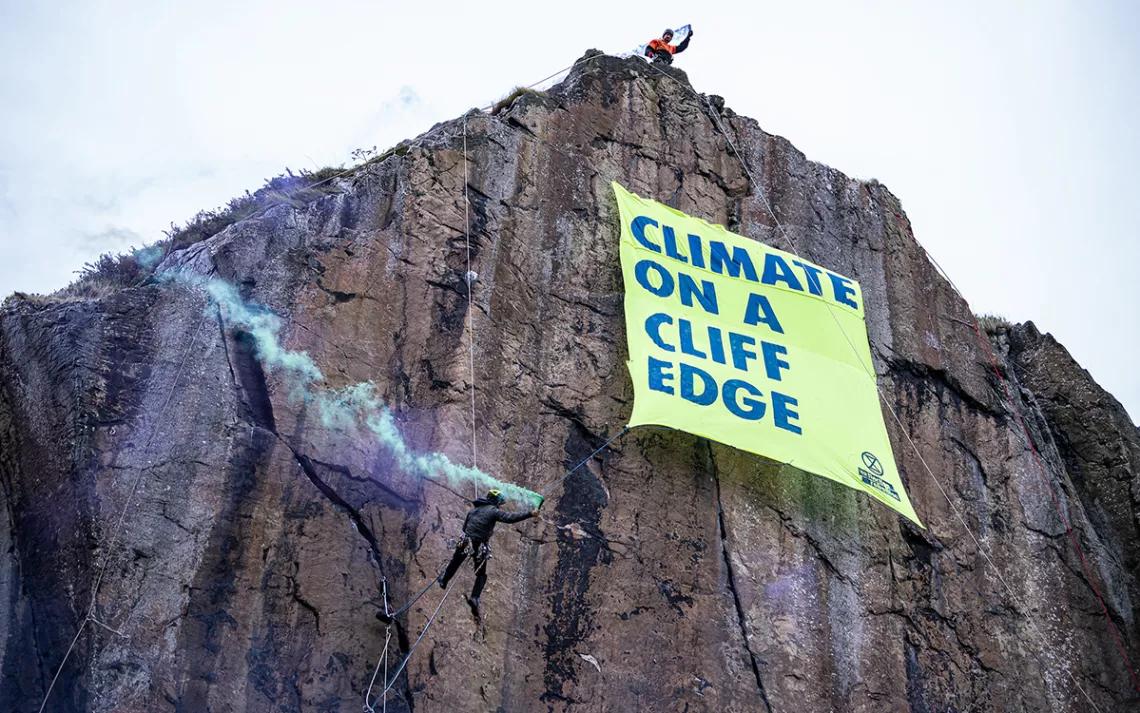
    Experienced climbers scale a rock face near the historic Dumbarton castle in Glasgow, releasing a banner that reads “Climate on a Cliff Edge.” One activist, dressed as a globe, symbolically looms near the edge, while another plays the bagpipes on the shores below. | Photo courtesy of Extinction Rebellion and Mark Richards
    Experienced climbers scale a rock face near the historic Dumbarton castle in Glasgow, releasing a banner that reads “Climate on a Cliff Edge.” One activist, dressed as a globe, symbolically looms near the edge, while another plays the bagpipes on the shores below. | Photo courtesy of Extinction Rebellion and Mark Richards

    So BP representing the fossil fuels industry and the filthy rich has given the climate, biodiversity and all humanity an unambiguous big two fingers. They’re saying fekk you, our profits come before anything, we continue to destroy the climate and all else. Despite the UK government saying no new licences in the North Sea we don’t know where they’re at with licence decisions pending for Rosebank and Jackdaw and government support for airport expansions at Gatwick and Heathrow. If they were serious about climate there would be no hesitation in refusing all these projects. Then there’s the big orange slug that Starmer is reporting to today. The planet can’t afford any of this. Capitalist scum have already fekked the climate, it’s going to get destroyed at a far greater rate now and these absolute bstards are pulling out all the stops.

    Neo-Fascist Climate Science Denier Donald Trump says Burn, Baby, Burn.
    Neo-Fascist Climate Science Denier Donald Trump says Burn, Baby, Burn.