The siege of Kamal Adwan Hospital: When Israel made a hospital, its staff, and patients, military targets
Original article by Aseel Saleh republished from peoples dispatch under a Creative Commons Attribution-ShareAlike 4.0 (CC BY-SA) license.
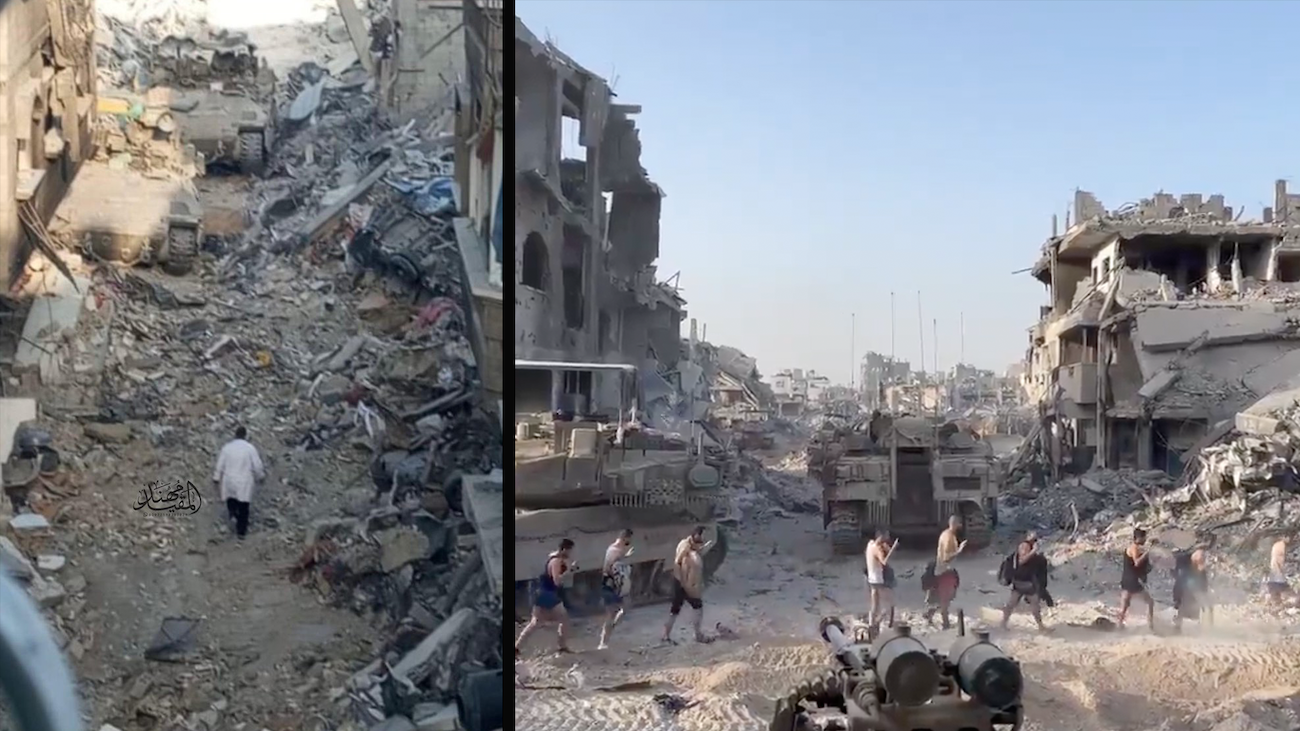
As part of its ethnic cleansing policies, Israel continues to systematically target medical facilities and health workers across the Gaza strip.
The Israeli Occupation Forces (IOF) set Kamal Adwan Hospital on fire on Friday, December 27, putting the largest medical facility in the northern part of the besieged enclave out of service. Kamal Adwan is located in Beit Lahiya in the northern Gaza Strip and was one of the last functioning hospitals in the area.
According to the Director of Gaza’s Health Ministry, Munir al-Bursh, the IOF ordered 350 people including 75 patients and their escorts along with 185 medical staff to evacuate the hospital, and move to a nearby school sheltering displaced people.
Gaza’s Health Ministry stated that it has completely lost contact with medics inside the Kamal Adwan Hospital since the IOF stormed the facility.
The whereabouts of the hospital director, Dr. Hussam Abu Safiya, are currently unknown. Dr. Safiya had been providing constant updates on Israel’s siege of the hospital for the last several months and pleading for international institutions to take action to stop Israel’s attacks. On December 2, 2024, he penned a column in the New York Times titled, “I’m One of the Last Doctors in This Hospital in Gaza. I’m Begging the World for Help.” In the essay, he wrote, “We feel as if the rest of the world is wrapped up in a different world from the one we are in. We are suffering and paying the price of the genocide that is happening to our people here in the northern Gaza Strip.”
Notably, in its report on Israel’s final siege on the hospital, the Times depicts the travesty at Kamal Adwan as collateral damage in Israel’s “offensive against Hamas militants” uncritically repeating Israel’s allegation that “the hospital was a stronghold for Hamas and that it was carrying out ‘targeted operations’ in the area.”
In a statement published on Friday, the World Health Organization (WHO) slammed Israel’s arson attack on the hospital, which used to serve over 400,000 Palestinian citizens. “This morning’s raid on Kamal Adwan Hospital has put this last major health facility in north Gaza out of service. Initial reports indicate that some key departments were severely burnt and destroyed during the raid,” the statement reads.
“60 health workers and 25 patients in critical condition, including those on ventilators, reportedly remain in the hospital. The patients in moderate to severe condition were forced to evacuate to the destroyed and non-functional Indonesian Hospital. WHO is deeply concerned for their safety,” the statement continues.
The WHO clarified that the raid on Kamal Adwan Hospital followed Israel’s escalating restrictions on the organization and its partners to access the hospital. The raid also came after repeated attacks on the hospital and its vicinity since early October. The organization considered the assault on the hospital as part of the systematic dismantling of the health system in Gaza, labeling it as a “death sentence for tens of thousands of Palestinians in need of health care.”
For its part, the Palestinian Presidency slammed the attack considering it as “part of Israel’s ongoing campaign of genocide and displacement against the Palestinian people”, and a “serious and blatant violation of international law and international agreements and conventions that protect medical facilities and personnel during armed conflicts.”
The Palestinian Presidency urged global health organizations, including WHO, Doctors Without Borders (MSF), and other international humanitarian bodies “to fulfill their responsibilities toward stopping this crime against the Palestinian healthcare sector.”
The Palestinian Islamic Resistance Movement (Hamas) condemned the attack calling it a “war crime” committed amid “international inaction and full complicity from the US administration.”
In an Al Jazeera interview on Friday, Hamas official Osama Hamdan refuted Israeli claims that there were Palestinian fighters in the hospital and stated that Kamal Adwan Hospital has been subjected to a massacre for 75 days. Hamdan added that the attack on the hospital is part of an attempt by Israel “to end all manifestations of civilian steadfastness in northern Gaza.”
One day prior to setting the facility to fire, Israeli fighter jets launched an airstrike on a building opposite of Kamal Adwan Hospital. At least 50 people were killed in the attack, including three health workers. Earlier in the month, IOF placed booby trapped devices around the hospital, and eyewitnesses said they saw explosive robots and hidden bombs deployed around the facility.
Kamal Adwan was not the only major medical facility to be targeted by IOF in Gaza during the past two weeks. Israel also intensified its attacks on the Indonesian Hospital in Beit Lahiya, and the Al-Awda Hospital in Jabalia refugee camp north of Gaza city, which has prompted doctors and authorities in Gaza to request immediate intervention by the international community.
Yet, despite the numerous cries for help and warnings of dangerous escalation by Gaza’s health workers, Israel has been able to proceed with the destruction of healthcare and its genocide of the Palestinian people thanks to the full backing it enjoys by the United States government.
Original article by Aseel Saleh republished from peoples dispatch under a Creative Commons Attribution-ShareAlike 4.0 (CC BY-SA) license.


- One year since the abduction of Dr. Ahmed Muhanna, Gaza health workers endure more attacks
- Gaza hospital patients face starvation amid Israeli blockade
- Gaza faces complete medicine shortage amid ongoing Israeli blockade
- Dr. Adnan Al-Bursh’s death by torture underscores brutal targeting of health workers by Israel
- Israeli attacks on Palestinian healthcare amount to crime against humanity, UN inquiry warns