TikTok, Oracle, and Israel: the new geopolitics of algorithms

Original article by Miguel Ruíz republished from peoples dispatch under a Creative Commons Attribution-ShareAlike 4.0 (CC BY-SA) license.

Larry Ellison speaking at a conference. Photo: Wikimedia Commons

The pending purchase of TikTok, blessed by the Trump-Netanyahu duo, once again sets off alarm bells regarding the marriage of economic, geopolitical, and military interests.

Lee en español aquí

Launched in 2017 by the private Chinese company ByteDance, TikTok quickly became one of the most important social networks on the planet. By early 2025, it had 1.6 billion active users, more than half of them outside China, of whom an estimated 170 million are North American; 1 in 5 people in the US get their news from this network, 4 in 10 among the 18-29 age group. Today, it is the fastest-growing platform among the younger segments of the global population.

The US government has waged a long battle to force ByteDance to sell the US branch of TikTok to a group of “domestic” capitalists, citing national security concerns and threatening to ban the platform in the US if the deal did not go through. On September 25, the White House announced through an Executive Order signed by Trump, “Save TikTok by Protecting National Security”, the terms under which the transaction would take place. According to the document, the app in the US “will be majority-owned and controlled by US persons and will no longer be controlled by any foreign adversary, as ByteDance Ltd. and its affiliates will own less than 20% of the entity, with the remainder held by certain investors.” Who are these mysterious “certain investors” that the Executive Order does not directly mention?

None other than a consortium led by the giant Texas-based company Oracle, which already stored TikTok data in the US. Its main shareholder is an 81-year-old American tycoon who, unlike Elon Musk, is relatively unknown to the public: Larry Ellison. Ellison, in addition to being the new owner, would also take on key roles in managing security, data, and algorithm auditing. In a nutshell, he will be the new boss of the vertical video platform in the United States, a company valued at USD 14 billion. But perhaps the most relevant aspect of the case is not the amount of the transaction, but its long-term implications for power. As a BBC article states, “Investors will control the algorithm that powers the US version of TikTok, and Americans will occupy six of the seven seats on the board of directors that will oversee it.”

Why is Larry Ellison’s role (geo)politically relevant, and what does Israel have to do with it?

What is admitted need not be proved, as the old adage goes. The day after the announcement, before an audience of podcasters and TikTokers at the Israeli consulate in New York, a blunt Benjamin Netanyahu declared: “Weapons change over time; the most important ones are social media,” adding that the purchase of TikTok “is the most important purchase being made right now.” A purchase that, incidentally, had been preceded a month earlier by the appointment of Erica Mindel, a US citizen and former Israeli military instructor, as the company’s new Director of Public Policy for Hate Speech. So did Israel buy TikTok? It depends on how you look at it. The key lies with Larry Ellison and his ties to the genocidal state. So who is this Ellison?

The owner of Oracle – cloud applications, databases, and servers, with 160,000 employees around the globe – is currently the second richest person on the planet (behind only Musk), with a fortune valued at USD 350 billion, according to Forbes. He lives on the Hawaiian island of Lanai, which he bought in 2012 for USD 300 million; he is a shareholder in X and Tesla; he owns almost 50% of the media giant Paramount-Skydance (including CBS), valued at USD 28 billion. An interesting fact provided by Forbes: “Ellison never finished college. He started out creating databases for the CIA.” His trusted business partner: Safra Catz, Oracle’s CEO since 2014, born in Israel and, like Ellison, a personal friend of … Netanyahu. According to a press release, “a few months before the start of the genocidal war in Gaza, Catz met with Netanyahu to discuss the expansion of Oracle’s projects in the Israeli-occupied territories.” But this is not an isolated incident. The close relationship between the new owner of TikTok and Israel goes back a long way, so much so that on one occasion Ellison even offered Netanyahu a seat on Oracle’s board of directors.

According to data provided by the BDS Movement, in 2019, Oracle leased an underground data center in Har Hotzvim, Jerusalem, to provide Israeli banks, health funds, and military forces with AI processing and information storage services; in 2021, it became the first multinational technology company to sell cloud services to Israel within the occupied territories; in 2022, it hosted soldiers and software developers from the Israeli army’s C41 Corp. to learn how to use Oracle’s cloud for military purposes…

It is no coincidence that Catz, Oracle’s all-powerful CEO, states that “for employees, it’s clear: if you’re not pro-US or pro-Israel, don’t work here”; nor is it surprising that some of her employees commented to The Intercept that “the atmosphere is horrible, people are terrified to even mention Palestine.” According to the same source, as soon as Israel’s military retaliation in Gaza began in October 2023, Catz demanded that the inscription “Oracle Stands with Israel” appear on all company screens in more than 180 countries. In the same context of the aggression against Palestinians in Gaza, Oracle developed the “Words of Iron” project, in collaboration with Israeli ministries, “to help the country elevate pro-Israel content and counter critical narratives on TikTok, Instagram, and Twitter.” In other words, a weapon at the service of propaganda, in that theater of operations that has now become fundamental, as Netanyahu himself knows: cognitive warfare. The Intercept also reports that a year ago, Oracle partnered with one of Israel’s largest defense companies, Rafael Advanced Defense Systems, on an AI project to provide “fighters with rapid, actionable information on the battlefield.” In other words, war on the ground.

The relationship with Trump and his consolidation as media emperor

However close Ellison’s relations with the State of Israel and its army may be (he has also been a major donor to the US organization Friends of the Israel Defense Forces (FIDF), which channels millions of dollars to the soldiers of that country) it would have been very difficult for his company to win the approval of the Trump administration if its owner were not close to the president of the United States himself. After many years of donating to both parties but closer to the Democrats – an admirer of Clinton, disenchanted with Obama – Ellison’s balance began to shift toward the Republican side, especially its more radical wing. In 2016, he donated a significant sum to Marco Rubio in the Republican primaries and, according to Wiredlater became a “reliable donor and fundraiser for the Republican Party during the 2020 and 2024 cycles,” which allowed him to become very close to Donald Trump. Although perhaps somewhat exaggerated, one of Trump’s advisers interviewed by that website referred to the Oracle owner as “the shadow president of the United States.”

In any case, what is certain is that Netanyahu and Trump’s personal friend will not be satisfied with his latest acquisition from the Chinese. The US media has been reporting in recent weeks that the Ellisons, Larry and his son/heir David, are going for more. They now have their sights set on the acquisition of Warner Brothers Discovery – which includes CNN. According to the national media watchdog organization FAIR, if the sale goes through, it would “create an unprecedented level of media consolidation” in the history of global media, including powerful news channels, film production companies, cable television … to which must be added control over TikTok. The danger of hyper-concentration of media power has been pointed out by various groups. Massachusetts Senator Elizabeth Warren warned that regulatory agencies should block the potential merger “because it is a dangerous concentration of power.” Or, as professor of digital sociology Steven Buckley points out: “It is not a sign of a healthy democracy when billionaires buy up all the cultural consumption media.” For now, regardless of whether this latest move by the Ellison clan comes to fruition, his purchase of TikTok, blessed by the Trump-Netanyahu duo, once again sets off alarm bells regarding the marriage of economic, geopolitical, and military interests; just at a time when global awareness seems to be awakening to the urgent need to stop the war machines of Israel and the United States.

Miguel Ruíz is a Mexican-Ecuadorian sociologist. He holds a PhD in Latin American Studies (UNAM). He has been a professor and researcher at various universities in Mexico and Ecuador. He currently teaches at the Faculty of Social and Human Sciences and is a member of the Institute of Economic Research, both at the Central University of Ecuador.

Original article by Miguel Ruíz republished from peoples dispatch under a Creative Commons Attribution-ShareAlike 4.0 (CC BY-SA) license.


Orcas discuss Genocide-supporting and complicit Zionists. Donald Trump, Keith Starmer, David Lammy, Rachel Reeves, Angela Rayner and Wes Streeting are acknowledged as evil genocide-complicit and supporting cnuts.

Continue ReadingTikTok, Oracle, and Israel: the new geopolitics of algorithms

400,000 in Mexico City’s Zócalo celebrate one year of Claudia Sheinbaum’s government

Original article by Tallis Boerne Marcus republished from peoples dispatch under a Creative Commons Attribution-ShareAlike 4.0 (CC BY-SA) license.

Mexican President Claudia Sheinbaum greets supporters in the Zócalo on October 5, marking one year of her administration. Photo: MORENA / X

In her speech to a full Zócalo, Sheinbaum reviewed her government’s major accomplishments in a year of global turbulence largely amid a US tariff war and military threats

Mass mobilizations have been a feature of Claudia Sheinbaum’s first year presiding over Mexico, and to finish her first “accountability” tour of Mexico and mark one year of governance, she had her biggest yet. More than 400,000 people came out to watch her speak for nearly an hour on Sunday, October 5, reflecting on her and the party’s achievements in the first year of her term, and the continued “fourth transformation” of Mexico.

In recent weeks, Sheinbaum has visited all 31 states of Mexico, outlining her administration’s current projects, plans and results in each state.

The communication strategy of MORENA, the governing party, is very front-facing, with both Sheinbaum and her predecessor Andrés Manuel López Obrador hosting daily press conferences from Monday to Friday, and then generally traveling to one or two parts of Mexico over the weekend. This has proven extremely effective in countering the narratives from the large press corporations that own and operate the majority of Mexican media outlets, as well as of course maintaining closer communication and accountability with the people of Mexico.

Sheinbaum has faced significant challenges in her first year, most notably due to relations with the administration of US President Donald Trump, with problems ranging from tariff threats even to members of his administration suggesting unilateral military intervention against Mexico. While Trump has threatened Mexico with tariffs at every turn, Sheinbaum’s firm but open stance has proved effective in negotiations with Trump and today the country has managed to achieve important exceptions to the aggressive tariff regime.

Sheinbaum arrives at one year in charge with historic levels of approval, depending on the poll you choose your approval rate is somewhere between 72% and 79%. While other countries around the world aren’t as comprehensive in approval polls as Mexico, this likely makes Sheinbaum the most popular leader in the world.

Her approval is above 70% in all states of Mexico and remarkably, she even has over 70% approval from voters of the three opposition parties in Mexico, the centrist party Movimiento Ciudadano and the right-wing parties of PAN and PRI.

So, how did she get to that level of popularity and what are her challenges in maintaining or growing it? Here are some of the points mentioned by Sheinbaum in her speech and the highlights from her first year governing Mexico.

Reiterating economic achievements

  • Sheinbaum began by reiterating some of the economic achievements, both that MORENA has accomplished since 2018, and some of the present moment.
  • Between 2018 and 2014, 13.5 million Mexican, Mexico is now the second least unequal country in the Americas, behind only Canada, and the income gap between the richest and poorest was reduced from 27 to 14 times over.
  • Annual inflation has settled at 3.7% percent, unemployment is at 2.7%, a record level of foreign direct investment was reached and annual economic growth is expected at 1.2%.

Sheinbaum’s initiatives from her first 12 months.

  • Sheinbaum created three new social programs. One is Salud Casa por Casa, a door-to-door free healthcare system for the elderly, where healthcare professionals come into their home for regular check ups. Another is Pensión Mujeres Bienestar, which gives women their pension from 60 years of age, rather than 65, to recognize unpaid work in the home. The final is Beca “Rita Cetina”, which is a universal scholarship for all secondary students in public schools, this is a payment every two months of 1900 pesos (USD 103) to cover schooling costs.
  • The constitutional recognition of several rights, such as the right for women to live lives free from violence, the right of access to the internet, the right of access to housing, the right to social programs and more.
  • Mexico has served more than 86,000 deported Mexicans who have been deported from the US in special comprehensive care centers, under a program called ‘Mexico embraces you”. This includes registering them into Mexicans social security systems to assist them with access to housing, employment and transportation to their area of origin, as well as food and shelter in the meantime.
  • Sheinbaum said the “4T is bringing back the trains”, with many rail projects underway, after they were previously privatized in the late 90s. These make up more than 3000kms of railway across the country, including two trains from Mexico City, to Pacucha and Queretaro respectively, and further expansion of the Interoceanic train, which is a key part of Mexico’s attempt to create an alternative trade corridor to the Panama Canal.
  • Sheinbaum emphasized the administration’s goal to “promote equality and the recognition and just development of women in Mexico.” The current government has created The Secretariat for Women as an official government ministry, opened a national support line for women, has opened the first 678 free centers for women that focus on comprehensive care for women, but the administration is aiming to build 2,500 in total. The government is also aiming to build 1,000 early education and childcare centers, which will provide free childcare to children from 40 to 1,000 days old.
  • Sheinbaum has also made access to water a key feature of her first year in charge. About four billion cubic meters of water have been de-privatized, a new agricultural irrigation technology program is being developed across 13 states, and there are 20 new strategic drinking water and sanitation projects.
  • The Sheinbaum administration will build 1.7 million homes, 400,000 of those for Mexicans without social security, and the rest with accessible loan offers for those who earn less than two minimum wages.
  • Another key feature of her first year in charge has been more scientific investment and projects, with funding for scientific research projects increasing by 193%. These include the production of an electric car, a project for Mexico to make its own semiconductors, the production of observation satellites and more.

Security

A challenge moving forward for Sheinbaum will be continuing to manage the security situations, although her early strategies have proved effective.

52% of Mexicans rank insecurity and drug trafficking as the most important issue affecting the country, and 63% of Mexicans living in urban areas consider it unsafe to live in their city. This figure rose from the previous year, but in fairness, levels were historically low before.

Sheinbaum and Omar Garcia Harfuch, her secretary of security, have taken a different approach to security than AMLO had. Sheinbaum and Garcia Harfuch also worked together when Sheinbaum was the mayor of Mexico City, and homicides dropped 50% in the six years they worked together.

Sheinbaum’s shift was towards a more direct and carefully coordinated strategy against crime and drug trafficking was clear. In her first 100 days of governing operations against criminal groups went up 597%, arrest numbers grew by 1216%, confiscated weapons went up 5811% and drug seizures went up 1000%.

The results have been swift, with Sheinbaum reporting a 32% reduction in homicides over her first year. Between September 2024 and July 2025, there was an average of 64.9 homicides per day. While these numbers are stark, it is a marked improvement from the 98.5 per day that Mexico was experiencing in 2018, when MORENA first came to power.

In 2007, before Felipe Calderon’s aggressive, US-backed security strategy, Mexico was experiencing 24.3 daily homicides.

Mexico also recently managed to get the United States to sign an agreement to attempt to limit the inflow of weapons from the US into Mexico. This is a huge point for Mexican security as even the US itself has recognized that 74% of weapons used by organized crime groups in Mexico arrive illegally from the United States.

However, Mexican political commentator and editor of Mexico Decoded, Viri Rios makes the point that this agreement focuses only on increased border surveillance and inspection, and misses the core problem of dangerous weapons being too easily acquired and severely unregulated in the US.

In theory, the US agreeing to this new policy will give them more accountability for the guns that continue to arrive in Mexico.

Early results are extremely promising, but Sheinbaum’s grapple with security and US relations will be critical moving forward.

Tallis Boerne Marcus is an Australian journalist currently based in Mexico City.

Original article by Tallis Boerne Marcus republished from peoples dispatch under a Creative Commons Attribution-ShareAlike 4.0 (CC BY-SA) license.

Continue Reading400,000 in Mexico City’s Zócalo celebrate one year of Claudia Sheinbaum’s government

Protests continue in Peru, as polls register 96% rejection of Boluarte

Original article by Pablo Meriguet republished from peoples dispatch under a Creative Commons Attribution-ShareAlike 4.0 (CC BY-SA) license.

Graffiti in Lima condemning police repression of protests. Photo via Joxe Carlos / X

Protesters are demanding an end to the government with the highest disapproval rating on the entire continent. Boluarte, however, says she will not resign.

Another massive mobilization took place on October 4 in Lima, Peru’s capital, against the government of Dina Boluarte. With this mobilization, it has now been three weeks in a row that thousands of Peruvians have taken to the streets to demand an end to the proposed pension reform, corruption, insecurity, and police abuse.

But, as several analysts have pointed out, the protests are no longer focused solely on specific issues, but on raising the demand for an end to the Boluarte government. Boluarte took office after the overthrow of then-President Pedro Castillo, and led to the deaths of more than 60 Peruvians following massive protests between 2022 and 2023.

Protests in Lima

On Saturday, October 4, the streets of downtown Lima were once again filled with cries against the government and the national congress. The demonstrations were attended by young people, university students, workers, transport workers, and various collectives who denounced the Peruvian state structure as corrupt due to the presence of political and economic mafias. The General Confederation of Workers of Peru (CGTP) also joined the demonstration.  

The demonstration marched through the city center along Abancay Avenue until it reached the National Congress, one of the institutions most criticized by the protesters. It did not take long for the police, as has been customary during the Boluarte administration, to quickly repress the protesters. Tear gas, pellets, and baton blows were the order of the day.

The resistance

However, journalist Ricardo Rodríguez argues that perhaps the most important aspect of the protests is not the repression, but rather the ability of Peruvians to mobilize in the face of a government that refuses to step aside: “It’s not just about bullets, tear gas, or arrests. What those in power fear – and are already beginning to feel – is that these young people are not just taking to the streets: they know, they understand, they articulate. They organize in a decentralized manner; they mobilize without waiting for permission; they use social media not as a showcase but as a tool for coordination; they demand not crumbs, but real change.

Rodríguez also pointed out that there is a spirit of rejection not only of the current government, but of a system that offers no opportunities for growth for Peruvians, felt most strongly among young people: “Many reject the economic model that offers them precariousness, miserable wages, and old age without decent pensions. The proposed reform is not the only cause: it is the trigger for accumulated resentment against decades of broken promises and state neglect.”

Transport workers’ strike

In addition to the demonstrations on Saturday, October 4, several dozen transport companies in Peru staged protests against the government of Dina Boluarte on October 7.

Their main demand is that the government take action to stop the growing wave of insecurity and extortion suffered by transport workers at the hands of organized crime groups. Attacks on transport workers have caused the deaths of 47 drivers.

At various points in Lima, transport workers stopped work and gathered in the streets to demand a change in the state’s security policy, even blocking roads to make themselves heard.

France 24 correspondent Francisco Zacarías reported that there were clashes between protesters and police. He also stated that President Boluarte “downplayed” the transport strike and said that the protests “will not solve the problem,” which has further provoked the transport unions.

Transport workers strike Lima
Sign on a bus reads “We want to work and return home. We do NOT want to die working. We have family and children that wait for us at home.” Photo via X

Almost total rejection of the Boluarte government and Congress

Currently, Peru’s Congress has one of the lowest approval ratings among the country’s various state institutions, reaching almost total rejection. Not far behind, President Boluarte has a 96% disapproval rating, according to an IPSOS poll.

In this regard, IPSOS CEO Alfredo Torres stated: “This is something that has never been seen before in history, nor has it been seen in other countries. A poor approval rating for any president is 20% in favor and 80% against, but a 96% disapproval rating is extremely high. It is absolute rejection, absolute distrust. People no longer expect anything. It is also outrageous that scandals continue to emerge and nothing happens.”

“I will not resign,” says Boluarte

Faced with periodic protests and a huge crisis of legitimacy, President Boluarte stated that she has no intention of leaving power before the 2026 elections. According to Boluarte, Peru has become a prime destination for foreign investment, so her administration is more than justified.

“If those small-time leaders believe that with riots, violence, hatred, and the desire to impose an anarchic world, they are going to change the history of Peru … We are seeing other countries that have done the same and have failed governments,” Boluarte said.

However, Boluarte will still have to endure protests that seem to be increasing in frequency in line with the disapproval of her mandate.

Original article by Pablo Meriguet republished from peoples dispatch under a Creative Commons Attribution-ShareAlike 4.0 (CC BY-SA) license.

Continue ReadingProtests continue in Peru, as polls register 96% rejection of Boluarte

‘Insulting and counterproductive’

https://morningstaronline.co.uk/article/insulting-and-counterproductive

 Protesters take part in a demonstration outside the Foreign, Commonwealth and Development Office (FCDO) in Whitehall, London, calling for the government to protect the crew of Madleen, June 9, 2025

Jewish campaigners condemn Starmer’s claim that demonstrations against genocide are ‘un-British’

JEWISH campaigners have condemned Sir Keir Starmer’s “insulting” claim that demonstrations against genocide were “un-British.”

The Prime Minister’s remarks, made today, came ahead of several student protests on the anniversary of October 7, and the national march for Palestine this weekend.

An inter-university march set off in the capital from King’s College at 2pm, before passing the London School of Economics, University College London and ending at the gates of SOAS.

Joining them was Mark Etkind, the son of a Holocaust survivor, who said: “As we speak today, weapons made in Britain are contributing to the deaths of children and others in Gaza — that has to stop now in order to save those lives, so these brave student protesters have to keep demonstrating until that genocide stops.”

He accused the government of having slandered the students, making them out to be insensitive to October 7, “while ignoring the obvious fact that their priority is to … oppose the ongoing conflict which Britain unfortunately is complicit in.”

Rallies also took place in Sheffield, Glasgow and Edinburgh, where the institution’s principal emailed students warning them to “think carefully about their actions” ahead of the protest.

Edinburgh’s Justice for Palestine Society called it a “blatant attempt to suppress campus discourse on an ongoing genocide.”

Writing in the Times, Sir Keir said it was “un-British to have so little respect for others,” echoing comments made by Home Secretary Shabana Mahmood, who described Palestine protests held following Thursday’s attack on a Manchester synagogue as “fundamentally un-British.”

Naomi Wimborne-Idrissi, media officer for Jewish Voice for Liberation, said: “Those who protest are in despair at our government’s abject failure to take any kind of meaningful action to make the bombing, shooting, burning and starvation stop.

“For leaders of that government to accuse protesters of ‘un-Britishness’ is both insulting and counterproductive.

Article continues at https://morningstaronline.co.uk/article/insulting-and-counterproductive

Keir Starmer objects to criticism of the IDF. He asks how could anyone object to them starving people to death, forced marches like the Nazis did, bombing Gaza's hospitals and universities, mass-murdering journalists, healthworkers and starving people queuing for food, killing and raping prisoners and murdering children. He calls for people to stop obstructing his genocide for Israel.
Keir Starmer objects to criticism of the IDF. He asks how could anyone object to them starving people to death, forced marches like the Nazis did, bombing Gaza’s hospitals and universities, mass-murdering journalists, healthworkers and starving people queuing for food, killing and raping prisoners and murdering children. He calls for people to stop obstructing his genocide for Israel.
Orcas discuss Genocide-supporting and complicit Zionists. Donald Trump, Keith Starmer, David Lammy, Rachel Reeves, Angela Rayner and Wes Streeting are acknowledged as evil genocide-complicit and supporting cnuts.
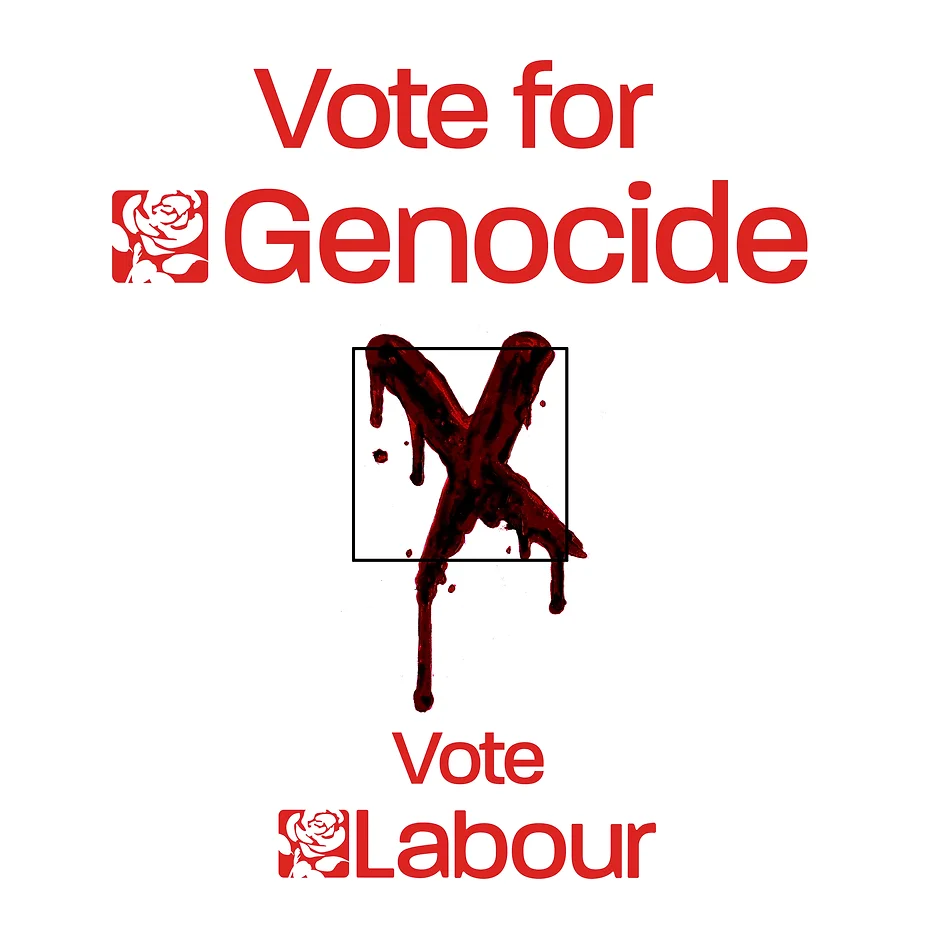
Vote Labour for Genocide.
Continue Reading‘Insulting and counterproductive’

Tory plan to scrap net zero target puts UK climate leadership at risk

Kemi Badenoch wants to scrap the UK’s Climate Change Act. Danny Lawson / PA

Sam Fankhauser, University of Oxford

In the mid-2000s, soon after becoming Conservative leader, David Cameron hugged a husky on a trip to the Arctic, in what was widely described as an attempt to “detoxify” the Tory brand. Eighteen years later, Kemi Badenoch has promised to scrap the law that once made that rebranding credible.

Her announcement that the Conservatives will repeal the 2008 Climate Change Act if they win the next general election has the potential to be a major own goal – politically, environmentally and economically.

To understand why, we need to remember how the Climate Change Act came about. The bill was put forward by the Labour government of Gordon Brown, but it had enthusiastic support from the Conservative opposition, which tabled several amendments to strengthen it. Cameron had concluded that green policies were a good way to modernise his party and lead it back into power.

It worked, both for Cameron, who became prime minister in 2010, and for UK climate policy, which has enjoyed a unique period of consensus and stability. Over seven governments, multiple economic crises, Brexit, COVID-19 and the war in Ukraine, there has been clarity about Britain’s climate change objectives. Policies were chopped and changed, often to the frustration of investors, but the institutional framework was stable and widely appreciated.

The Climate Change Act gives the UK a statutory long-term emissions target – initially an 80% cut from 1990 levels by 2050, strengthened to net zero by 2050 by Theresa May, another Tory prime minister.

Progress is managed through a series of five-year carbon budgets, legislated 12 years in advance and monitored by a powerful independent body, the Climate Change Committee (CCC). For much of its existence, the CCC has been chaired by yet another environmentally-minded Tory, Lord Deben (John Gummer). It is this framework the Conservatives now say they want to dismantle.

Husky hugger David Cameron visits Svalbard, Norway, in 2008. Andrew Parsons / PA

Yet the Climate Change Act has delivered, both in terms of process and substance. Indeed, the UK model has been emulated around the world. Nearly 60 countries have UK-style climate change laws and over 20 countries have CCC-style advisory bodies, cementing the UK’s position as a climate leader.

The act gives the UK a steady institutional rhythm. Relevant businesses and other organisations know the formal set pieces, such as the CCC’s annual report to parliament, and can time their interventions accordingly.

When colleagues and I interviewed people from business and civil society about the act a few years ago, they emphasised the predictable process, the clear rules on accountability and the evidence-based discourse it has enabled. This all reduces uncertainty and enables long-term planning.

Importantly, the Climate Change Act has delivered environmentally too. Compared to 1990, UK greenhouse gas emissions are down by 50%. The UK economy now uses three times less carbon per unit of economic output than in 1990. Emissions are at their lowest level since 1872.

This trend started before the act, but it was helped and accelerated by it. This is perhaps most noticeable in the radical transformation of the electricity sector: coal has been completely phased out, while offshore wind and other renewables have flourished.

Most people want climate action

Voters value this progress more than politicians appreciate. A University of Oxford survey found that internationally public support for climate action is almost twice as high as policymakers assume. In the UK, three out of four people are fairly or very concerned about climate change.

Badenoch’s announcement comes just as households are starting to reap the financial benefits of clean technology. Colleagues and I have estimated that four out of five UK households, particularly those owning a car, would be better off if net zero was achieved. The typical savings are £100-£380 per household and year.

It is true that households do not yet see the benefits of renewables on their energy bills. We are still paying for the high costs of early investments in clean power, before technology and sheer scale brought the price down.

Successive governments have chosen to recoup these learning costs through electricity bills, rather than general taxation, which would have been easier on most households. But recent analysis suggests renewables are now cutting electricity prices by up to a quarter.

The policy uncertainty generated by the Tory announcement and similar pronouncements by Reform UK will eventually find its way into the risk premiums for investors, though for the time being this effect is still small.

But the reputational damage is immediate. Undoing the act would signal that the UK no longer values the long-term stability that has driven clean investment and made its climate policy admired around the world.

Climate policy requires debate. Deeply political choices need to be made about different decarbonisation strategies, how to pay for necessary investments or the role of controversial technologies like nuclear energy. The past 17 years have shown that these debates are best had within an agreed framework, with support from all major parties. That is what the Climate Change Act provides.


Don’t have time to read about climate change as much as you’d like?
Get a weekly roundup in your inbox instead. Every Wednesday, The Conversation’s environment editor writes Imagine, a short email that goes a little deeper into just one climate issue. Join the 45,000+ readers who’ve subscribed so far.


Sam Fankhauser, Professor of Climate Economics and Policy, Smith School of Enterprise and the Environment, University of Oxford

This article is republished from The Conversation under a Creative Commons license. Read the original article.

UK Conservative Party leader Kemi Badenoch explains her reality that the Earth is flat, the Moon is made of cheese and that she was born from Unicorn horn dust
UK Conservative Party leader Kemi ‘not a genocide’ Badenoch explains her reality that the Earth is flat, the Moon is made of cheese and that she was born from Unicorn horn dust
Nigel Farage urges you to ignore facts and reality and be a climate science denier like him. He says that Reform UK has received £Millions and £Millions from the fossil fuel industry to promote climate denial and destroy the planet.
Orcas discuss how Trump was re-elected and him being an obviously insane, xenophobic Fascist.
Continue ReadingTory plan to scrap net zero target puts UK climate leadership at risk